Published: July 2025 | Editorial review and quality control: Martina N.
Most people who search for the top 10 STDs are not looking for a trivia list. They want to know whether what they are feeling, or not feeling at all, points to something they caught from a partner, and what to do about it. That second part is where general STI guides usually drop the ball. They list infections without explaining how to read your own exposure or when a test gives you a reliable answer.
This guide covers the ten infections behind the vast majority of new diagnoses in the U.S., based on CDC's STI surveillance reports. For each, you will see how it spreads, what symptoms (if any) tend to show up, how soon a test can detect it, and whether treatment clears the infection or manages it long term. The structure mirrors what someone trying to make a decision actually needs, not what a textbook orders alphabetically.
Key Takeaways
- Most cases of chlamydia, gonorrhea, HPV, and early HIV produce no symptoms. Testing on the basis of risk, not symptoms, is what catches them.
- Window periods between exposure and reliable test detection range from roughly one to twelve weeks. Testing too early is one of the most common causes of a false-negative result.
The Top 10 STIs at a Glance
Sexually transmitted infections fall into three biological categories that determine how they are treated: bacterial, viral, and parasitic. Bacterial and parasitic infections respond to antibiotics or antiparasitics and clear with treatment. Viral infections stay in the body but are usually controlled, sometimes silenced, with antiviral therapy. The table below summarizes the ten infections that account for nearly all new U.S. diagnoses, their main symptom patterns, and whether they are curable.
| STI | Type | Common Symptoms | Curable? |
|---|---|---|---|
| Chlamydia | Bacterial | Often none; possible discharge or burning | Yes |
| Gonorrhea | Bacterial | Discharge, pain during urination | Yes |
| Syphilis | Bacterial | Painless sore, later rash | Yes |
| Herpes HSV-1 | Viral | Cold sores, sometimes genital lesions | No (manageable) |
| Herpes HSV-2 | Viral | Genital blisters, tingling, recurrence | No (manageable) |
| HPV | Viral | Warts or no symptoms | Most cases clear on their own |
| HIV | Viral | Brief flu-like phase, then long asymptomatic period | No (treatable to undetectable) |
| Trichomoniasis | Parasitic | Itching, discharge, irritation | Yes |
| Hepatitis B | Viral | Fatigue, jaundice, often silent | Vaccine-preventable; suppressible if chronic |
| Hepatitis C | Viral | Often none; long-term liver effects | Curable in over 95% of cases |
Bacterial, Viral, and Parasitic: Why the Category Matters
The category an infection falls into shapes everything that follows: whether antibiotics resolve it, whether a vaccine prevents it, whether antiviral medication is the standard of care, and how testing detects it.
Bacterial infections (chlamydia, gonorrhea, syphilis, mycoplasma genitalium) are caused by single-celled organisms that respond to antibiotics. Caught early, treatment is a short course of medication and follow-up testing. CDC's chlamydia fact sheet notes that untreated bacterial infections can cause pelvic inflammatory disease, infertility, or onward transmission to partners.
Viral infections (herpes HSV-1, herpes HSV-2, HPV, HIV, hepatitis B, hepatitis C) embed in cells the immune system cannot clear in the same way. HIV is managed with antiretroviral therapy that can drive viral load to undetectable levels and, at that point, eliminate sexual transmission. Hepatitis C is now curable in over 95 percent of cases with roughly 8 to 12 weeks of direct-acting antivirals, per WHO's hepatitis C fact sheet. Hepatitis B has a highly effective vaccine and antiviral suppression for chronic cases. Herpes outbreaks are shortened with antivirals like valacyclovir or acyclovir.
Parasitic infections (trichomoniasis) are caused by single-celled parasites and resolve with a short course of antiparasitic medication, typically metronidazole or tinidazole, per CDC STI treatment guidelines.
CDC updated its gonorrhea treatment guidance to a single ceftriaxone injection because older fluoroquinolone and azithromycin regimens have lost effectiveness in many regions. If you test positive for gonorrhea, the standard of care now is clinic-administered ceftriaxone, not an oral antibiotic prescription.
Why So Many Cases Stay Silent
One of the most counterintuitive facts about STIs is how many produce no obvious symptoms at all, even at the point of testing positive. Chlamydia is the clearest example. The CDC chlamydia fact sheet notes that most infected people, especially women, have no symptoms or only mild ones that get mistaken for other issues. Gonorrhea is similar. HPV nearly always clears without notice. Early HIV often presents as a brief flu-like episode that resolves before anyone connects it to a specific exposure.
This is the central reason public-health screening guidance does not wait for symptoms. Annual chlamydia and gonorrhea screening is recommended for sexually active women under 25, and for older women with risk factors, precisely because relying on symptoms misses the majority of infections. The same logic applies to HIV testing at least once for everyone aged 13 to 64, per CDC HIV screening guidance, and more often for people with ongoing risk.
The practical takeaway: feeling fine does not rule out infection. If you have had a new partner, condomless sex with someone whose status you do not know, or a reason to suspect exposure, testing answers what symptoms cannot. Many people who test positive describe the result as a surprise precisely because they had no warning signs to act on.
CDC recommends annual chlamydia and gonorrhea screening for all sexually active women under 25, regardless of symptoms. HIV testing is recommended at least once for everyone aged 13 to 64, with more frequent testing for people with ongoing risk factors.
How Transmission Actually Happens
There is still a lot of misinformation about how STIs move between people. Penetrative sex is one route, but it is not the only one. Each infection has a transmission pattern that determines what kind of contact carries risk.
Skin-to-skin contact is the dominant route for herpes and HPV. That is why these two can pass between partners even when condoms are used correctly, since condoms do not cover every area of skin involved. Oral sex carries real risk for gonorrhea, chlamydia, herpes, and syphilis, all of which can colonize the throat or transfer to and from the mouth. Genital-fluid contact is the main route for chlamydia, gonorrhea, and HIV. Blood contact (most commonly through shared needles) is the route most associated with hepatitis B, hepatitis C, and HIV, though HIV also transmits sexually.
As a quick reference, the main transmission routes:
- Skin-to-skin contact: herpes and HPV, even without penetrative sex
- Oral sex: gonorrhea, chlamydia, herpes, syphilis
- Genital fluids: chlamydia, gonorrhea, HIV, trichomoniasis
- Blood contact: hepatitis B, hepatitis C, HIV
What Symptoms Look Like in Real Life
When STI symptoms do appear, they rarely look like the dramatic version most people picture. Painful lesions, dramatic discharge, and obvious sores happen, but more often the signs are subtle and easy to attribute to something else. Mild itching gets blamed on irritation or shaving. A change in discharge gets written off as a normal cycle variation. Burning during urination gets diagnosed (often incorrectly) as a urinary tract infection at urgent care.
Trying to match a body sensation to a Google search result is a losing strategy. Symptom overlap between infections is wide, and the same infection presents differently in different people. NHS guidance on STIs is direct about this: when there is reason to suspect exposure, the reliable next step is testing, not interpretation. Common subtle patterns to watch for:
- Mild itching, often mistaken for irritation or shaving rash
- Light or changed discharge, often written off as a normal variation
- Burning or stinging during urination, often confused with a UTI
- Small bumps or skin changes, often assumed to be ingrown hairs
The Window Period: Why Timing Matters
Even the best at-home or lab test can miss an infection if it is used too soon after exposure. The window period is the gap between when an infection enters the body and when a test can reliably detect it. Testing inside the window can produce a false negative, leaving someone reassured when they should still be testing later.
Windows vary by infection and by test type. Bacterial infections (chlamydia, gonorrhea, trichomoniasis) typically become detectable around the one to two-week mark. Syphilis antibodies take longer, usually three to six weeks. HIV antigen-antibody tests detect infection in roughly two to six weeks after exposure, with fourth-generation lab tests on the faster end of that range, per CDC HIV testing guidance. Rapid antibody-only HIV tests (the technology used in most at-home kits) typically need 3 to 12 weeks for reliable detection. Herpes antibody seroconversion can take up to 12 to 16 weeks.
If you tested early and the result was negative, that is a useful first data point, not a final answer. A repeat test once the full window has passed is what closes the question. The table below maps conservative ranges for the most common rapid-screening windows used in practice.
| STI | Earliest Reliable Detection | Recommended Retest Window |
|---|---|---|
| Chlamydia | 1–2 weeks | 2–3 weeks after exposure |
| Gonorrhea | 1–2 weeks | 2–3 weeks after exposure |
| Trichomoniasis | 1–2 weeks | 2 weeks after exposure |
| Syphilis | 3–6 weeks | 6–12 weeks after exposure |
| HIV (rapid antibody) | 3–4 weeks | 6–12 weeks after exposure |
| Herpes (HSV-2 antibody) | 3–6 weeks | 12–16 weeks after exposure |
| Hepatitis B | 3–6 weeks | 8–12 weeks after exposure |
| Hepatitis C | 3–8 weeks | 8–12 weeks after exposure |
Curable, Manageable, or Preventable: What Treatment Looks Like
Hearing the words lifelong or incurable makes a diagnosis feel heavier than it usually is in practice. The day-to-day experience of treating an STI in 2026 has changed dramatically from what most people picture.
Bacterial infections (chlamydia, gonorrhea, syphilis, mycoplasma genitalium) and the parasitic infection trichomoniasis are curable with a short course of antibiotics or antiparasitics, typically taken at home, with a follow-up test to confirm clearance. Resistant gonorrhea is becoming more common, which is the main reason CDC updated treatment guidance to use ceftriaxone rather than older regimens.
HIV is treatable to the point of being non-transmissible. People on suppressive antiretroviral therapy with sustained undetectable viral loads do not sexually transmit HIV, a position captured in CDC's Undetectable = Untransmittable guidance. Hepatitis C is now curable in over 95 percent of cases with 8 to 12 weeks of direct-acting antivirals, per WHO's hepatitis C fact sheet. Hepatitis B has a vaccine that prevents infection entirely and antiviral suppression for chronic cases.
Herpes and HPV stay in the body but rarely affect day-to-day life in the dramatic ways people fear. Antiviral medication reduces herpes outbreak duration and lowers transmission risk. The HPV vaccine prevents the strains responsible for nearly all cervical cancers; routine vaccination is recommended through age 26, with shared clinical decision-making through age 45, per ACIP HPV vaccine recommendations.
Many sexually transmitted infections cause no symptoms at all. Without testing, infections can be passed unknowingly to sex partners or progress to long-term health problems.
What At-Home Testing Looks Like Today
If your mental image of STI testing involves a cold clinic, a long wait, and an uncomfortable conversation, that image is increasingly out of date. At-home rapid testing has changed how millions of people approach screening, and the underlying technology is the same lateral-flow chemistry that powers rapid pregnancy tests and most rapid COVID tests.
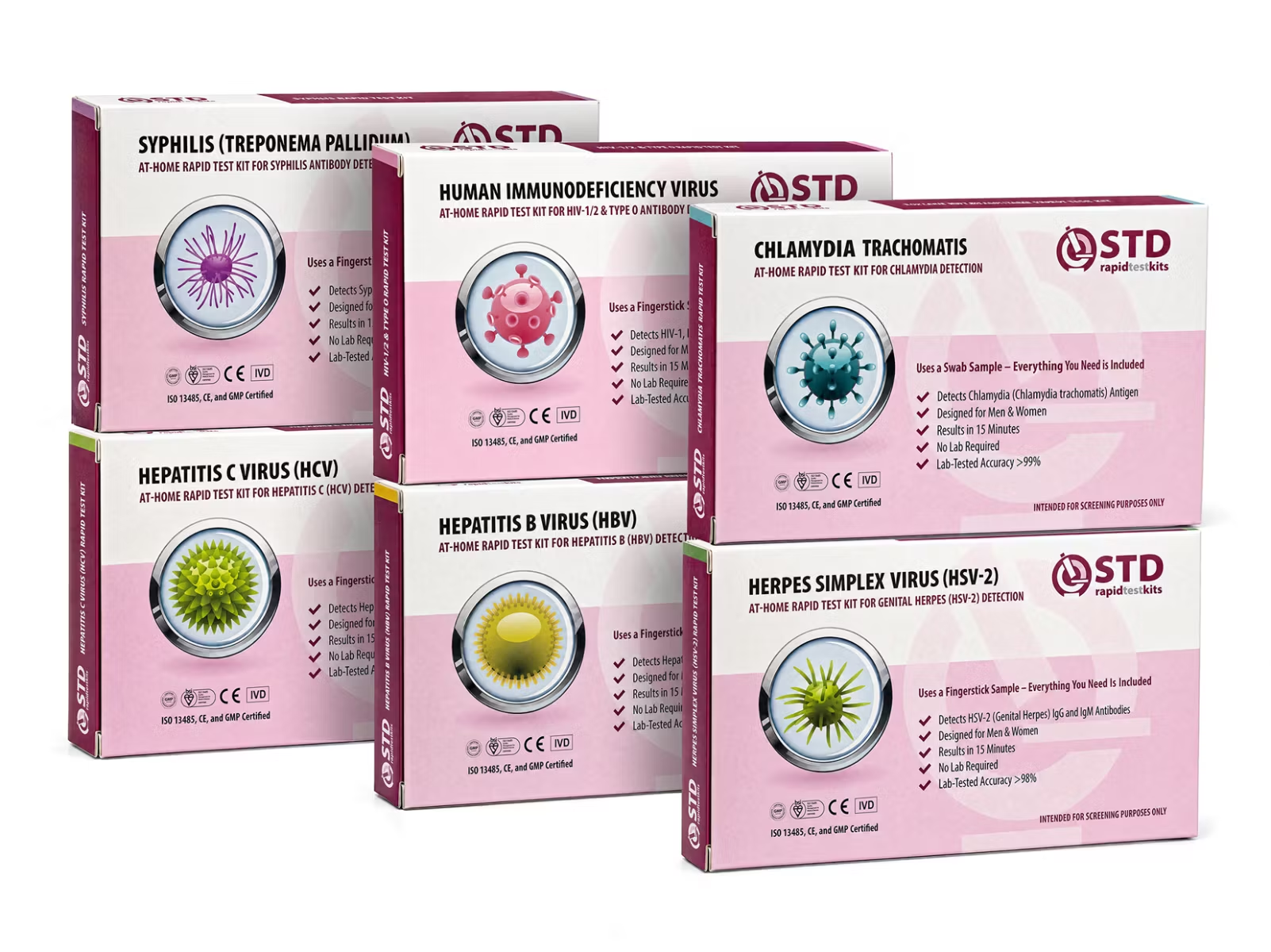
An at-home rapid STI kit typically includes a self-collected sample (a vaginal or penile swab for chlamydia, gonorrhea, trichomoniasis, and HPV; a fingerstick blood drop for HIV, syphilis, hepatitis B, hepatitis C, and herpes), a test cassette, a buffer reagent, and instructions. Sample collection takes a couple of minutes. The cassette displays a result band in roughly 15 to 20 minutes. The result is private to the person taking the test.
Lateral-flow rapid tests are screening tools. They are not equivalent to laboratory NAAT (nucleic acid amplification testing), which remains the analytical gold standard for chlamydia and gonorrhea, per CDC STI clinical guidance. A positive at-home result is worth confirming through a clinician or lab. A negative result, taken during the recommended window, is reassuring for screening purposes.
stdrapidtestkits.com sells the at-home rapid test kits described below; the product links in this article go to products on this site.

Anxiety Reduces When Uncertainty Does
Most STI guides skip the emotional half of the experience, but it usually drives the timeline more than the symptoms themselves. The anxious spiral after a possible exposure is well documented in primary-care literature: looped self-monitoring, repeated symptom searches, and a tendency to read every minor sensation as confirmatory evidence.
What public-health counselors consistently report is that uncertainty creates more sustained distress than a confirmed result, including a confirmed positive result. The reason is functional. A confirmed negative removes the need for monitoring. A confirmed positive opens a clear treatment pathway. An indefinite I-don't-know keeps the loop running without resolution.
Delaying testing rarely protects mental health. It extends the open loop instead of closing it. Booking a test, or ordering one to your address, is the single action that moves the situation from open-ended worry to a defined next step. The result, whatever it is, becomes something to act on.
Shame is the largest single reason people postpone testing, according to public-health behavioral research. Reframing testing as routine health maintenance, the same as a blood-pressure check or a cholesterol screen, helps the action feel less weighted than the topic implies.

Three Things That Matter More Than the List Itself
Memorizing the names of ten STIs is less useful than internalizing three operating principles that apply across the whole category.
Exposure matters more than assumptions about a partner. The most common pattern in new diagnoses is not reckless behavior. It is a single unprotected encounter with someone whose own status was unknown to them. CDC surveillance consistently shows that most new infections trace to people who did not know they were positive at the time.
Symptoms are unreliable as a stop-test signal. Most chlamydia and HPV cases are asymptomatic. Most early HIV is asymptomatic after the brief acute phase. Most syphilis chancres are painless and easy to overlook. Waiting for a clear symptom before testing means most cases are missed.
Timing changes what a test can tell you. A negative result inside the window period is not a final answer. A test at the right time is. Knowing the window for each infection is what makes an at-home or clinic result meaningful instead of misleading.
For all three concerns (exposure-based screening, asymptomatic detection, and correct-window timing) a multi-panel home kit covers the ground in one order, which is the most common reason readers choose the 6-in-1 over single-infection kits.
FAQs
- Can you have an STI and feel completely normal?
- Yes, and that pattern is the norm rather than the exception. Most chlamydia infections, most early HIV infections after the brief acute phase, and most HPV infections produce no noticeable symptoms. CDC surveillance and screening guidance is built around this fact: testing on the basis of risk, not symptoms, is what catches the majority of new cases.
- Which STI is the most commonly diagnosed in adults?
- Chlamydia has been the most reported bacterial STI in the U.S. for years, according to CDC surveillance. HPV is the most common overall, though it is diagnosed less often because most cases clear without notice. Among adults under 25, annual chlamydia and gonorrhea screening is recommended because rates remain highest in that age group.
- How soon after sex would symptoms typically show up?
- It depends on the infection, and many infections produce no symptoms at all. Gonorrhea symptoms, when present, can appear in 2 to 14 days. Chlamydia in 1 to 3 weeks. Herpes in 2 to 12 days. Syphilis in 10 to 90 days. HIV's brief acute phase in 2 to 4 weeks. Symptoms appearing 48 hours after sex are usually unrelated to STI exposure.
- Do condoms protect against every STI?
- Condoms substantially reduce risk for fluid-transmitted infections (chlamydia, gonorrhea, HIV, hepatitis B). They reduce but do not eliminate risk for skin-to-skin infections (herpes, HPV, syphilis) because contact can occur in areas a condom does not cover. They remain the single most effective barrier method available, but their effectiveness varies by infection route.
- Which STIs are curable and which are not?
- Curable with antibiotics: chlamydia, gonorrhea, syphilis, mycoplasma genitalium. Curable with antiparasitics: trichomoniasis. Curable with antivirals: hepatitis C in over 95 percent of cases. Manageable long term: HIV (with antiretroviral therapy, often to undetectable status), hepatitis B (antiviral suppression), herpes (antiviral medication for outbreaks). Most HPV cases clear on their own without treatment.
- Can I test too early and get a false negative?
- Yes, and this is one of the most common reasons people get a false sense of reassurance. Each infection has a window period during which the body has not yet produced enough antibody or antigen for a test to detect it. Testing inside the window is still useful as a first data point, but a follow-up test once the window has passed is what gives you a reliable answer.
- Are at-home rapid STI tests reliable?
- Modern at-home rapid tests use lateral-flow chemistry, the same technology as rapid COVID and pregnancy tests, with published sensitivity and specificity figures available on each product page. They are reliable when used within the right window period and with correct sample collection. They are screening tools, so a positive result is worth confirming through a clinician or laboratory NAAT.
- What is the right next step after a positive at-home result?
- Take a photo of the result for your records, then book a confirmatory test with a clinician or sexual-health clinic. Treatment for bacterial infections is usually a short course of antibiotics from your provider. For viral infections, the conversation shifts to ongoing care and partner notification. A positive at-home result is the start of a defined treatment pathway, not a final diagnosis.
How We Sourced This Article: Our article was constructed based on current advice from the most prominent public-health and medical organizations, including the U.S. Centers for Disease Control and Prevention, the World Health Organization, and the U.K. National Health Service, and then translated into plain English with the situations real readers face in mind. Window-period ranges and treatment summaries are aligned with CDC's STI clinical guidance current as of 2026. Where a single number is cited, the linked source supports it; where ranges are given, they reflect what the cited authority publishes rather than a single test's manufacturer claim.
- U.S. Centers for Disease Control and Prevention, STI surveillance and clinical guidance hub: case counts, screening recommendations, and current treatment regimens for all ten infections covered in this article.
- U.S. Centers for Disease Control and Prevention, HIV testing technology and window-period guidance: source for the antigen/antibody vs. antibody-only detection ranges quoted in the window-period section.
- World Health Organization, Hepatitis C fact sheet: source for the over-95-percent cure rate and 8-to-12-week direct-acting antiviral regimen referenced in the treatment section.
- U.K. National Health Service, STI overview: symptom-pattern descriptions and the general guidance that testing replaces symptom interpretation when exposure has occurred.
- Mayo Clinic, Sexually transmitted diseases overview: clinical symptom descriptions for the bacterial and viral infections covered in the table.
- U.S. Centers for Disease Control and Prevention, HPV resources and ACIP HPV vaccine recommendations: source for the routine-vaccination-through-26 and shared-decision-through-45 phrasing.
- MedlinePlus (NIH), Sexually Transmitted Infections topic page: plain-English reference for general readers and patient-education context.
