Published: October 2025 | Last updated: April 2026 | Editorial review and quality control: Martina N.
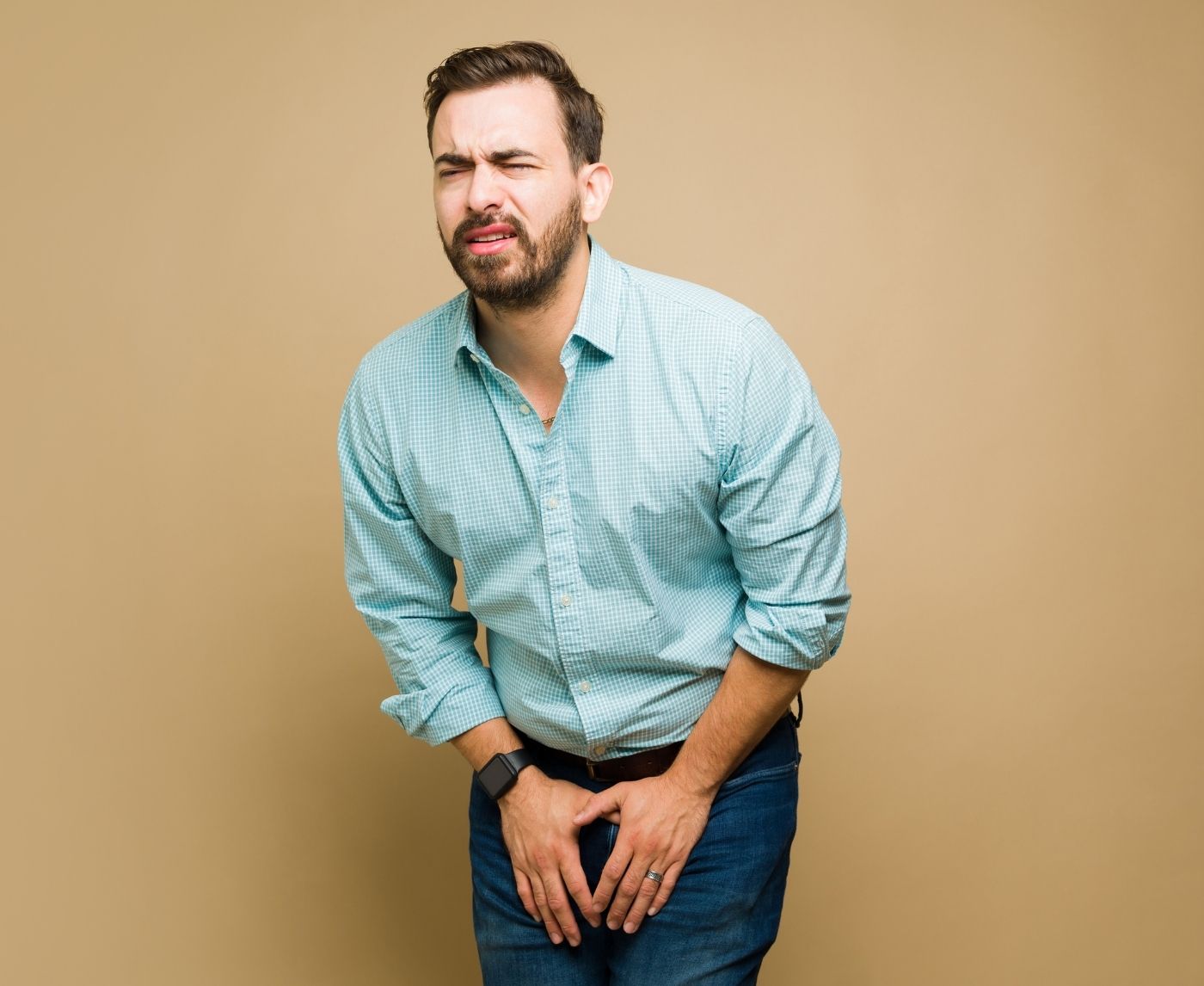
Testicle pain rarely shows up at a convenient time. One side aches after a workout. You wake up at 2 a.m. with a stab so sharp it makes you nauseous. There is just a low, lingering heaviness that won't quit. The hard part isn't usually the pain itself, it is not knowing whether to call an ambulance, drive to the ER, see your doctor next week, or wait it out.
This guide walks you through the same questions a urologist or ER physician would ask: How did the pain start? Is there swelling, redness, or fever? Are there urinary symptoms? Have you had recent sexual exposure? Each answer points toward one of four buckets: emergency surgery, infection that is treatable with antibiotics, structural causes that can wait, or referred pain from somewhere else entirely. We also cover what chlamydia and gonorrhea actually do to the epididymis, and when an at-home test makes sense before you book a clinic visit.
What does sudden, severe testicle pain usually mean, and what should I do?
Sudden, severe pain on one side, especially with nausea, vomiting, or a testicle that sits higher than the other, points toward testicular torsion. Most testicles can be saved if the twisted cord is fixed within about 6 hours, per the <a href="https://www.urologyhealth.org/urologic-conditions/testicular-torsion" target="_blank" rel="noopener">Urology Care Foundation</a>. Get to the ER now. If pain built gradually over a day or two, with burning urination, discharge, or warmth and tenderness behind the testicle, infection is more likely. Chlamydia and gonorrhea are common bacterial causes of epididymitis in sexually active men, per the <a href="https://www.cdc.gov/std/treatment-guidelines/epididymitis.htm" target="_blank" rel="noopener">CDC STI Treatment Guidelines</a>. Antibiotics work, and the sooner you start, the better.
Key Takeaways
- Sudden, one-sided testicle pain plus nausea is testicular torsion until proven otherwise. The window for saving the testicle is measured in hours.
- Gradual ache plus burning urination, discharge, or recent unprotected sex points to STI-related epididymitis. Test for chlamydia and gonorrhea, then start antibiotics.
How the pain started tells you a lot
Onset is the single most useful clue. Clinicians literally lead with it during triage, because the timing of pain narrows the diagnosis faster than any imaging study.
Pain that hits like a switch flipping, going from nothing to severe in minutes, is the pattern of testicular torsion. The spermatic cord twists, blood flow drops off, and tissue starts to die. The pain is usually one-sided, often wakes you from sleep, and frequently comes with nausea or vomiting. One testicle may sit higher than the other or feel rotated. The Urology Care Foundation notes that most testicles can be saved if the twist is corrected within about 6 hours, with salvage rates dropping sharply after that. This is not a wait-and-see situation.
Pain that builds slowly over hours or days reads differently. You might first notice it as a dull soreness, then realize a day later that one side is tender, warm, or swollen. That is the pattern of epididymitis, an inflammation of the small coiled tube behind the testicle. In sexually active men, the cause is often chlamydia or gonorrhea (CDC STI Treatment Guidelines). In older men, urinary tract bacteria are more often involved. Either way, the right next step is testing and antibiotics, not rest.
| Feature | Testicular torsion | Infection (epididymitis) |
|---|---|---|
| Onset | Sudden, severe, often during rest or sleep | Gradual, builds over 1 to 3 days |
| Pain location | Whole testicle, intense, one side | Often behind the testicle, tender to touch |
| Nausea or vomiting | Common | Uncommon |
| Position of testicle | May ride high or sit at an odd angle | Usually normal position, may be swollen |
| Urinary symptoms | Rare | Common (burning, frequency, discharge) |
| Pain when scrotum is gently lifted | No relief | Often eases (Prehn sign, suggestive only) |
| Typical age | Most often teens and 20s | Late teens to 40s |
| What to do | ER now, ultrasound and possible surgery | STI test, urinalysis, start antibiotics |
Is there swelling, redness, or heat?
The next question is about visible signs. A self-check works best in a warm shower, when the scrotum is relaxed. Gently roll each testicle between your thumb and fingers. Compare sides. Is one larger? Does it feel hot? Is the skin red or pink in a way the other side isn't? Is there focal tenderness behind the testicle on the cord side?
Localized warmth, redness, and tenderness behind the testicle are the classic signs of epididymitis, especially when paired with painful urination or discharge. Mayo Clinic lists swelling, warmth, and tenderness as the most common epididymitis symptoms, often on one side and worsening over time (Mayo Clinic). Antibiotics are first-line treatment.
Not all swelling is infectious. Two common, non-urgent causes show up as swelling without much pain. A hydrocele is a fluid collection around the testicle, usually painless and slowly enlarging. A varicocele is a cluster of enlarged veins, often described as feeling like a small bag of worms above the testicle, and it tends to ache more after standing or exercise. Neither is an emergency, but both warrant a urology visit, especially if fertility is on your radar.
If swelling is paired with fever, chills, or feeling broadly unwell, the infection has likely moved beyond the epididymis or is more aggressive (orchitis, which is inflammation of the testicle itself, or an abscess). Don't wait for a self-test to come back. Get clinical care today, ideally at urgent care or the ER. Untreated bacterial infections in this area can damage fertility and, rarely, become life-threatening.
When the testicle isn't actually the source
Sometimes the testicle is the messenger, not the message. Nerves from the lower back, kidneys, ureters, prostate, and groin share pathways with the scrotum, so pain from those areas often refers downward. The Mayo Clinic lists kidney stones, hernias, and lower back nerve compression among the common sources of referred testicular pain, each with a distinguishing tell that points the workup somewhere other than the scrotum.
If the pain shifts when you move, comes with back pain or urinary changes, or just doesn't track with anything you can find on the testicle itself, the source is probably elsewhere. That isn't reassuring on its own, kidney stones and incarcerated hernias both need treatment, but it does redirect the workup. A clinician can sort it out with an exam plus targeted imaging.
Three common referred-pain sources
- Kidney stone passing through the ureter: sharp, wave-like pain that starts in the flank and shoots into the groin or scrotum, sometimes with blood-tinged urine.
- Inguinal hernia: a groin bulge plus a dragging ache felt in the testicle, often after heavy lifting or chronic straining.
- Pinched nerve in the lower spine, around the L1 to L2 level: one-sided scrotal pain with no testicular swelling, often improving when you change position.
Symptom checklist: matching what you feel to what to do
This table compresses the triage logic into one place. It does not replace a clinical exam, but it can keep you out of the worst decision-making spirals while you figure out where to go.
| What you have | Most likely cause | What to do |
|---|---|---|
| Sudden, intense, one-sided pain plus nausea | Testicular torsion | ER now (risk of permanent testicle loss) |
| Gradual pain plus swelling plus discharge or burning urination | Epididymitis, often STI-related | Test for chlamydia and gonorrhea, start antibiotics within 24 to 48 hours |
| Dull ache, worse standing, visible cord-like veins | Varicocele | Non-urgent urology visit; consider if fertility is a concern |
| Painless scrotal swelling that has grown slowly | Hydrocele | Non-urgent evaluation; ultrasound if size or symptoms change |
| Pain after heavy lifting plus a groin bulge | Inguinal hernia | Clinic visit soon; surgical consult if a hernia is confirmed |
| Pain after ejaculation plus pelvic pressure | Prostatitis or pelvic floor pain | Clinic visit; STI panel if recent exposure |
| Fever plus unilateral warm, tender testicle | Bacterial or post-mumps orchitis | Urgent care or ER, plus STI testing |
| Painless lump or firmness inside the testicle | Possible testicular cancer | Scrotal ultrasound soon; most cases are highly curable when caught early (American Cancer Society) |
When STDs are causing the pain
STI-related testicle pain often hides in plain sight. Many cases of chlamydia and gonorrhea cause no symptoms at all in the urethra, then announce themselves only when the bacteria climb upward and inflame the epididymis. Per the CDC, chlamydia often causes no symptoms, which is why one-sided testicle pain is sometimes the first clue.
The presentation is usually subtler than people expect: tenderness behind the testicle, mild swelling, and a soreness that gets worse over a couple of days. Burning urination or a thin discharge may show up, but they are not required for the diagnosis. Pain after sex, after a long arousal session without ejaculation, or pain that started a week or two after a new partner all raise the index of suspicion.
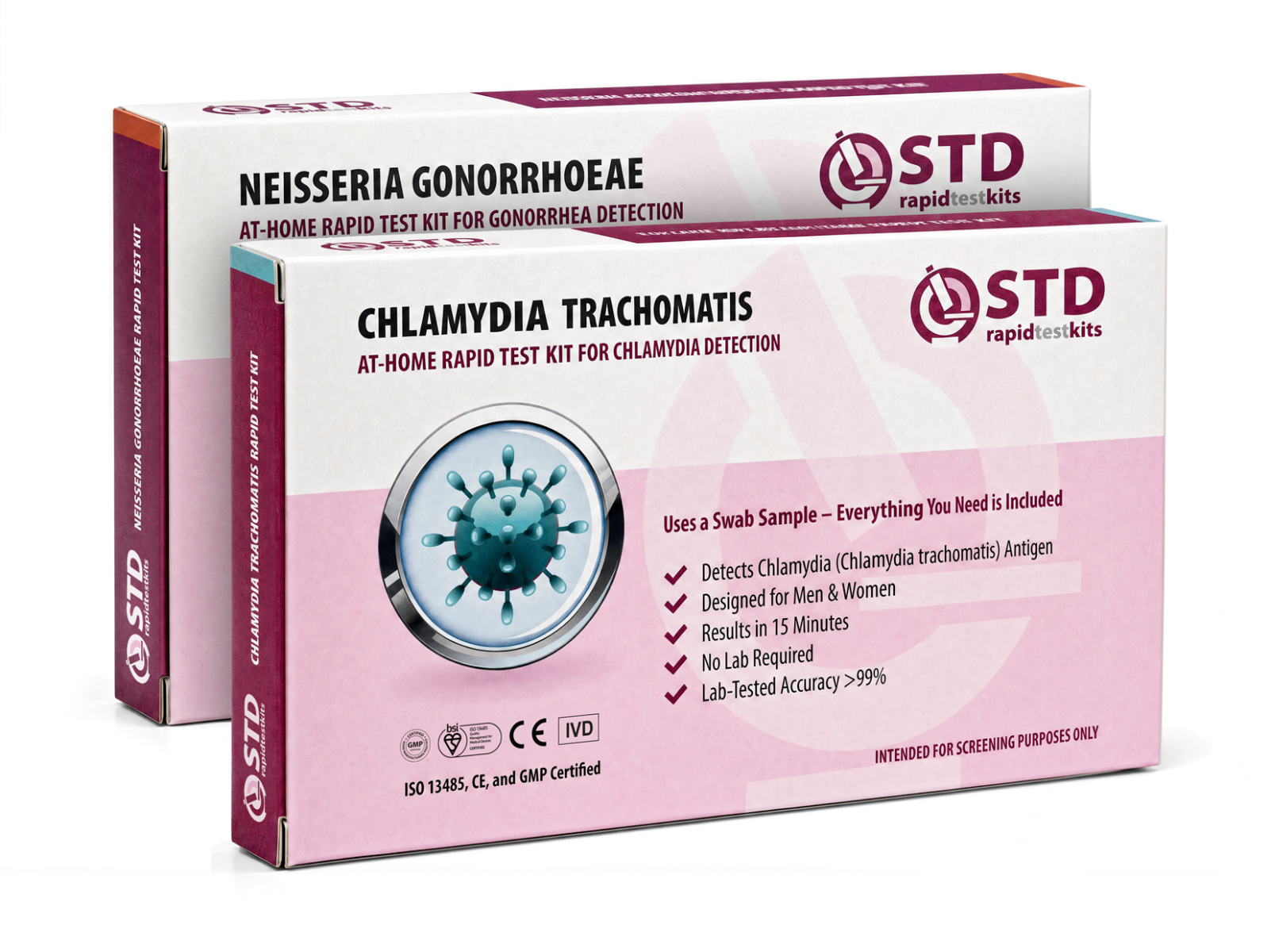
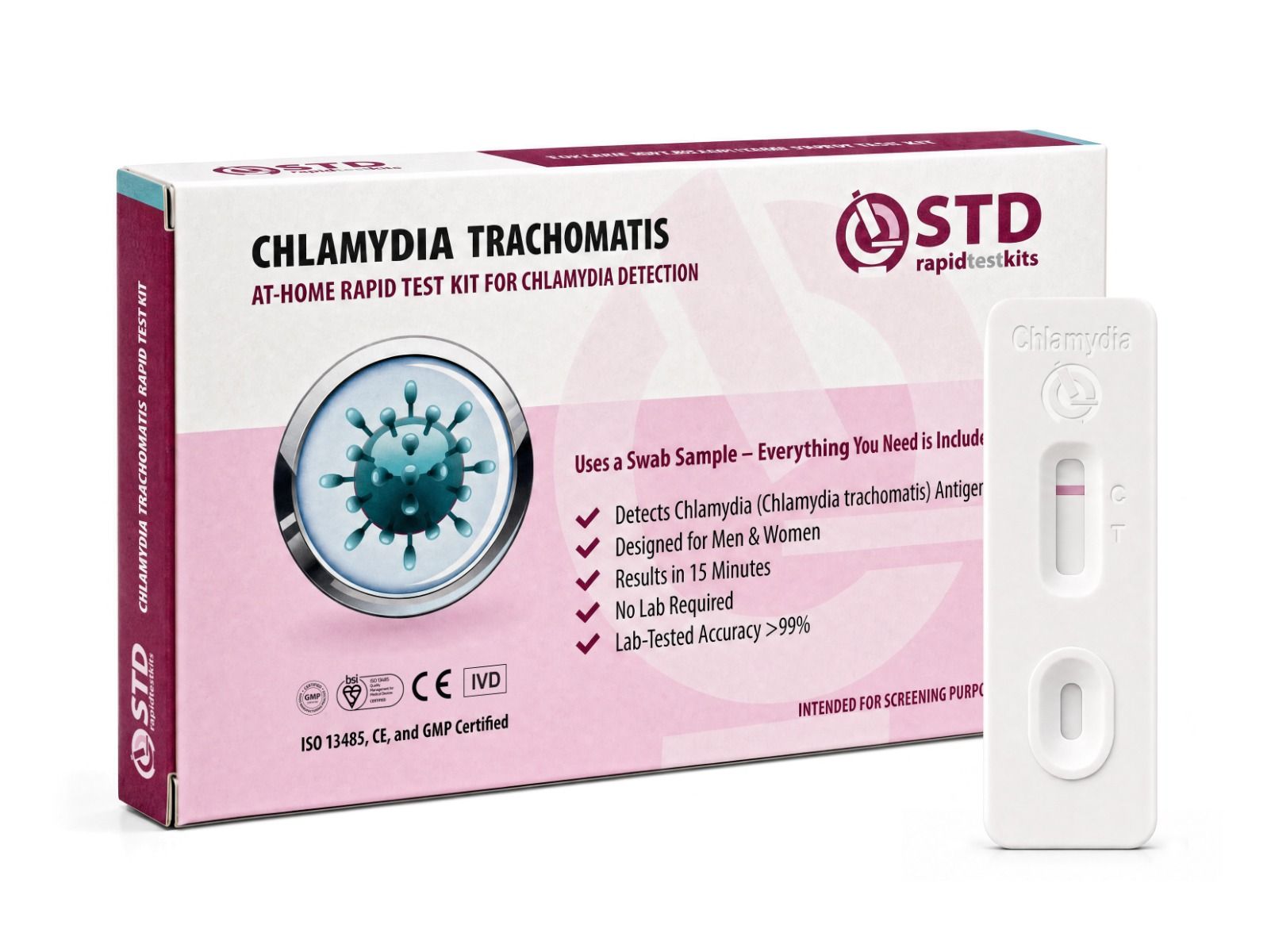
You do not need a textbook STI presentation to justify testing. Isolated testicle pain after any recent unprotected exposure is reason enough to run a chlamydia and gonorrhea panel, and treating without identifying the pathogen carries its own risk: the wrong antibiotic class can fail, resistance builds, and the partner-notification step gets skipped. An at-home rapid panel is a reasonable starting point if a same-day clinic visit isn't available, with the understanding that any positive should be confirmed by a clinic NAAT before completing antibiotics.
Sudden severe pain with nausea: head to the ER for torsion rule-out. Gradual ache with burning urination, discharge, or recent unprotected exposure: run an STI panel and start antibiotics through a clinic. Mild and steady pain with no other symptoms: give it 24 to 48 hours, with a low threshold for evaluation if anything changes.
ER, urgent care, or wait? Making the call
Where you go matters as much as whether you go. The right venue depends on which buckets your symptoms fall into.
ER right now, no delay, if any of the following apply:
- Pain came on suddenly and is severe, especially during rest or sleep
- One testicle sits higher, sits at an odd angle, or feels rotated
- Pain is paired with vomiting, fainting, or you cannot stand still
- You are under 25 and the pain is one-sided and intense (the highest-risk torsion demographic)
- The scrotum is rapidly swelling or turning red or purple after a recent injury
The only way to rule torsion in or out is with a Doppler ultrasound, and the only fix is surgery (untwist plus suture both testicles to prevent recurrence). Even if you turn out to be wrong, the cost of an unneeded ER visit is far smaller than the cost of losing a testicle.
Urgent care or same-day clinic is the right move when pain is gradual, moderate, or paired with infection clues:
- Burning urination, frequency, or discharge
- Mild to moderate swelling without fever, or low-grade fever only
- Recent unprotected sex, new partner, or known STI exposure
- Pain that has been building for one to three days but isn't dropping you to your knees
The clinic can do a urinalysis, a swab for chlamydia and gonorrhea, an exam, and start antibiotics that day. The CDC's STI Treatment Guidelines recommend empiric coverage for chlamydia and gonorrhea while NAAT results are pending in sexually active men with suspected STI-related epididymitis.
Watch and wait is reasonable for short windows (24 to 48 hours), only when pain is mild, clearly tied to recent strain or activity, has no associated urinary or systemic symptoms, and is steady or improving. If anything changes, swelling, fever, urinary symptoms, escalation in pain, the wait window closes.
What different pain qualities tell you
The shape of the pain itself is informative once you know what to listen for.
- Twisting, sickening, can't-find-comfort pain. Classic torsion. Often described as deeper than a kick to the groin, with associated nausea. Does not improve with rest or position. ER.
- Hot, throbbing, tender ache that builds. Epididymitis or orchitis. Often eases slightly when the scrotum is gently lifted. Antibiotics work well, especially started early.
- Sharp pain during or shortly after ejaculation. Often pelvic floor or prostatitis-related, occasionally seminal vesicle inflammation. Worth a clinic visit if it repeats, plus an STI panel if recent exposure is in play.
- Dragging, heavy ache that worsens with standing. Suggestive of varicocele. Not dangerous, but worth a urology evaluation, especially if fertility matters to you.
- Painless lump or unusual firmness. Do not assume it is benign because it doesn't hurt. Per the American Cancer Society, most testicular cancers present as a painless lump or change in firmness, and the disease is highly curable when caught early. Get an ultrasound.
- Sharp pain that radiates from flank to groin, with bloody urine. Likely a passing kidney stone, not a testicular problem. Hydration plus medical evaluation is the path.
Epididymitis is most often caused by a bacterial infection, including from sexually transmitted infections, such as gonorrhea or chlamydia.
Reducing the risk of testicle infections
Torsion is largely a matter of anatomy and bad luck, but the infection-driven causes of testicle pain are highly preventable. A few habits make the biggest difference.
- Use barrier protection. Condoms substantially reduce transmission of chlamydia, gonorrhea, and trichomoniasis, the bacterial trio behind most STI-related epididymitis. Oral exposure can transmit too, so dental dams or condoms during oral sex matter for partners with new or multiple contacts.
- Screen on a schedule. The CDC recommends annual screening for chlamydia and gonorrhea for sexually active men who have sex with men, and case-by-case screening for other men based on risk. Routine annual screening is a sensible default for anyone with new or multiple partners in the past year.
- Test after exposure, not just after symptoms. Asymptomatic infections are the rule, not the exception. Waiting for symptoms means partners are exposed in the meantime, and the infection has more time to climb to the epididymis.
- Empty the bladder fully and urinate after sex. This reduces UTI-related epididymitis risk, which becomes more relevant in older men.
- Self-exam monthly. A 30-second check in the shower, gently rolling each testicle between thumb and fingers, helps you notice new lumps, asymmetry, or swelling early. Cancer Research UK and the American Cancer Society both recommend this for adolescents and young adults.
- Wear a cup for contact sports. Trauma is a preventable cause of acute pain and, occasionally, fertility issues from hematoma or rupture.
Bottom line
Most testicle pain falls into one of three buckets: emergency surgery (torsion), treatable infection (often epididymitis from chlamydia or gonorrhea), or a slow-building structural cause that is uncomfortable but not dangerous. The work of triage is matching your symptoms to the right bucket without panic and without dismissal.
If pain is sudden, severe, and one-sided, and especially if you feel sick to your stomach or one testicle sits high, treat it as torsion and head to the ER. If pain is gradual, paired with urinary symptoms or recent exposure, run an STI panel and start antibiotics through a clinic. If pain is mild and steady, give it 24 to 48 hours and reassess, with a low threshold for getting evaluated if anything changes. The worst position is the one in the middle: knowing something is off, not acting, and watching uncertainty stretch into weeks.
Testicle pain FAQs
- Can chlamydia or gonorrhea really cause pain in just one testicle?
- Yes, often with no urethral symptoms at all. STI-related epididymitis is almost always one-sided, and the CDC and Mayo Clinic both list chlamydia and gonorrhea among the common causes in sexually active men. Any recent unprotected exposure plus one-sided testicle pain is enough reason to test, even without burning urination or discharge.
- How do I tell if it's torsion or epididymitis?
- Onset and time course are the giveaways. Torsion arrives suddenly, escalates fast, often comes with nausea, and frequently wakes you from sleep. Epididymitis builds gradually over hours to days, often involves urinary burning or discharge, and is sometimes eased by gently lifting the scrotum. When in doubt, default to torsion-rule-out at the ER. Imaging is the only way to be certain, and the cost of being wrong on a torsion call is high.
- The pain is mild and there's no swelling. Could it still be serious?
- Sometimes, yes. Internal inflammation can hurt before any visible swelling appears. Referred pain from kidney stones, lower back nerves, or a hernia can be felt in the testicle without any local change. And testicular cancer typically presents as a painless lump rather than pain. If you can feel something different, a new firmness, a small lump, asymmetry, even without pain or swelling, get a scrotal ultrasound.
- Will testicle pain from epididymitis go away on its own?
- Bacterial epididymitis usually does not resolve without antibiotics, and waiting risks chronic pain, abscess, and fertility complications. A short course of the right antibiotic class typically improves symptoms within 48 to 72 hours, with full resolution over a few weeks. The longer untreated bacteria sit in the epididymis, the more likely scarring becomes.
- What does epididymitis actually feel like?
- Most people describe a hot, tender ache that builds over one to three days, focused behind the testicle on one side. Walking and sitting can make it worse. Burning urination or a thin discharge may show up, but not always. The pain is usually moderate, not the doubled-over kind, and is partially relieved by supporting or gently lifting the scrotum (the Prehn sign, suggestive but not diagnostic).
- Is testicle pain after sex or masturbation a problem?
- Occasional, brief soreness after a long session or prolonged arousal without release is not unusual. The classic name for it is epididymal hypertension. It resolves on its own within hours. Pain that is sharp, repeats every time, lingers for days, or comes with urinary symptoms or discharge is not in that category. That pattern points toward infection, prostatitis, or pelvic floor dysfunction, all of which warrant a clinical evaluation.
- How long after STI exposure can testicle pain show up?
- It varies. Chlamydia symptoms, when they appear at all, typically show up 1 to 3 weeks after exposure. Gonorrhea is often faster, days to a week. Epididymitis as a complication usually develops a few days to a couple of weeks after the initial urethral infection. Many infections never produce symptoms, which is why testing after a known exposure beats waiting for pain.
- Can I treat suspected epididymitis with leftover antibiotics at home?
- No, and the reason matters. The CDC's empiric regimens for epididymitis pair specific antibiotics that cover chlamydia and gonorrhea. The wrong class (or the wrong dose) can fail to clear the infection, drive resistance, and delay real treatment. Test first, get a prescription matched to current resistance patterns, and complete the full course.
This site sells rapid at-home STI tests, including the kits linked below. Recommendations are based on which tests fit the clinical question, not on commercial benefit.

- Urology Care Foundation. Testicular torsion overview, including the time-to-surgery window for testicle salvage.
- Mayo Clinic. Testicle pain causes overview, including referred pain sources.
- Mayo Clinic. Epididymitis symptoms and causes, including bacterial and STI-related causation, typical presentation, and risk factors.
- U.S. Centers for Disease Control and Prevention. STI Treatment Guidelines section on epididymitis, including empiric antibiotic regimens for sexually active men with suspected STI-related epididymitis.
- U.S. Centers for Disease Control and Prevention. Chlamydia overview, including the asymptomatic profile of many infections.
- American Cancer Society. Testicular cancer, including the typical painless-lump presentation and prognosis when caught early.
- U.K. National Health Service. Testicle pain, including red-flag symptom guidance for emergency evaluation.
