
Published: November 2025 | Last updated: May 2026 | Editorial review and quality control: Martina N.
Is my testicle swelling orchitis, and what should I do?
Orchitis is inflammation of one or both testicles, most often from an STI like chlamydia or gonorrhea in men under 35, or mumps in others. If your testicle is swollen and aching after a possible exposure, test about two weeks out. Sudden severe pain with a high-riding testicle is a possible torsion: go to the ER immediately.
A swollen, aching testicle has a way of derailing the day. You start running through possibilities. Did I strain something at the gym? Is it from sex? Should I be in an emergency room right now? For many men, especially those under 35, the answer is orchitis: inflammation of one or both testicles, most often triggered by an untreated sexually transmitted infection or, less often, a virus like mumps.
Orchitis is treatable, and most cases clear up with the right care. Ignoring it, or assuming it is just a strain, can lead to abscesses, fertility problems, and weeks of avoidable pain. This guide covers what orchitis feels like, what causes it, when to test, what to do if symptoms keep going, and which other conditions can look just like it. The goal is to help you act on solid information instead of guessing.
Key Takeaways
- Orchitis is inflammation of one or both testicles. In sexually active men under 35, the leading cause is untreated chlamydia or gonorrhea spreading from the urethra. In older men or those recovering from a viral illness, mumps and urinary-tract bacteria are more common triggers.
- Most home rapid STI tests recommend waiting until about the second week after a possible exposure for a reliable result (manufacturer-specified windows vary; check the test's instructions for use). If swelling comes with sudden severe one-sided pain or a high-riding testicle, treat it as possible testicular torsion and go to the ER immediately.
What Orchitis Is and Why It Matters
Orchitis is the medical term for inflammation of the testicle. It can affect one side or both, and it can develop quickly over hours or build gradually across several days. According to the Cleveland Clinic, orchitis develops from a viral or bacterial infection. When the cause is a sexually transmitted infection, the bacteria usually climb from the urethra through the epididymis (a coiled tube at the back of the testicle) and into the testicle itself. The CDC STI Treatment Guidelines address this combined picture as epididymo-orchitis, noting that a testicle is sometimes involved alongside the epididymis. Isolated orchitis, including viral mumps orchitis, more often reaches the testicle through the bloodstream, per the StatPearls clinical reference on orchitis.
The condition matters because it can quietly progress. Untreated bacterial orchitis can lead to a testicular abscess, a scrotal skin infection, or shrinking of the affected testicle (called atrophy), which in turn can affect sperm production on that side. Mumps remains a recognized non-sexual cause: per the same StatPearls reference, viral orchitis from mumps is well described in post-pubertal males, with atrophy on the affected side a recognized outcome, even though permanent sterility is uncommon.
Age shifts the odds. The NHS notes that men under 35 are more likely to develop this inflammation from an STI, while men over 35 more often develop it from a urinary infection. So for someone in their twenties or thirties, orchitis frequently shows up after a recent unprotected encounter or an untreated chlamydia or gonorrhea infection. For men over 40, it more often follows urinary tract infections, prostate problems, or recent catheter use.
Bacterial orchitis follows a predictable risk chain when ignored: localized inflammation, then abscess formation, then scrotal skin infection, then testicular atrophy. Each stage is harder to reverse than the last. Same-day evaluation when symptoms first appear keeps you at the easy end of that chain.
Symptoms to Watch For
The symptoms of orchitis can sneak up gradually or hit hard within a single day. The most consistent signs are testicular swelling and pain, but they show up in more ways than people expect. Some men feel a dull, heavy ache that worsens with standing or walking. Others describe sharp, shooting pain that radiates into the groin or lower abdomen. The scrotal skin may look red, feel warm to the touch, or appear visibly stretched.
Beyond the testicle itself, systemic symptoms often accompany the inflammation, especially when bacteria are involved. Fever, chills, fatigue, and nausea can all show up alongside the swelling. If the cause is a sexually transmitted infection, you may also notice burning during urination, urinary urgency, or unusual discharge from the penis, although the CDC STI treatment guidelines note that the urethritis accompanying chlamydia or gonorrhea is frequently silent. The checklist below groups the signs by how often they appear.
Orchitis Symptoms, From Most to Least Common
Having one or more of these does not confirm orchitis. Only testing and a clinical exam can do that.
- Swelling of one testicle, sometimes both, with gradual or sudden onset Common
- Aching, pulling, or sharp pain that often eases when lying down Common
- Scrotal skin that looks red or feels warm and tight Common
- Tenderness that worsens with standing, walking, or sitting Common
- Burning urination, urgency, or penile discharge when an STI is the cause Less common
- Fever and chills, more typical of bacterial infection Less common
- Nausea, fatigue, or body aches, common with mumps and systemic illness Less common
- Pain or sharpness during sex or ejaculation Rare
The Subtle Phase Most Men Miss
One of the trickier parts of orchitis is how easily the early phase gets dismissed. STI-driven orchitis often arrives without the urethral burning, discharge, or sharp fever men associate with infection. Swelling builds gradually instead, and many describe a vague sense of being off rather than any single dramatic trigger. Sex may hurt. Ejaculation can feel sharp rather than pleasurable. The scrotum may look subtly redder or fuller on one side. Any one of these in isolation can be benign. Two or more, with no clear injury, is the cue to test rather than wait.
The reason these infections stay hidden is that they usually carry no symptoms at the source. The World Health Organization estimated 129 million new chlamydia infections and 82 million new gonorrhea infections worldwide in 2020, the majority of them without symptoms (WHO sexually transmitted infections fact sheet). For many men, testicle swelling is the first and only sign that an infection was ever there.
This pattern lines up with what the StatPearls clinical reference on orchitis describes for the ascending bacterial form: tenderness that builds across hours to days rather than the sudden, knife-edge pain of torsion. That slow build is why the early phase gets confused with a pulled muscle or ordinary end-of-day soreness.
Many men ignore the early phase because the signals are easy to chalk up to something else. Watch for these:
- A heaviness or pressure in one side of the scrotum when sitting.
- The scrotal skin on one side looking redder, fuller, or warmer than the other.
- Tenderness that worsens over a day or two rather than appearing all at once.
- A mild ache in the lower abdomen or groin that does not track with any exercise or injury.
- Sex or ejaculation feeling sharp or uncomfortable instead of normal.
Any one of these in isolation can be benign. Two or more, with no clear injury, is the cue to test.
What Causes Orchitis: STI, Virus, or Something Else?
The cause of orchitis usually splits along two main paths: bacterial (most often a sexually transmitted infection) or viral (most often mumps). In younger sexually active men, the leading bacterial culprits are Chlamydia trachomatis and Neisseria gonorrhoeae, which the CDC identifies as the most common causes of epididymitis and epididymo-orchitis in this age group. These bacteria typically infect the urethra first, then travel up through the vas deferens to the epididymis and into the testicle. The StatPearls clinical reference lists sexually transmitted infection among the recognized bacterial causes in sexually active males.
Viral orchitis is dominated by mumps, particularly in adults whose childhood immunity has waned or who never received the MMR vaccine. Mumps orchitis usually develops around the time the parotid (cheek) glands swell. Other viral causes are uncommon and include coxsackievirus, varicella, and echovirus.
In men over 35, the picture changes. Urinary-tract organisms such as Escherichia coli become more common, often linked to benign prostatic enlargement, bladder outlet obstruction, recent catheterization, or insertive anal intercourse. Not every case is an infection at all: trauma from intense exercise or a direct blow, certain autoimmune conditions, and a few medications can each inflame the testicle without any bug to treat. The table below lays out the most common cause categories.
| Cause | Most Common In | STI-Related? |
|---|---|---|
| Chlamydia or gonorrhea | Sexually active men under 35 | Yes (most common) |
| Mumps (viral) | Teens and adults with waned or absent MMR immunity | No |
| E. coli or other gut bacteria | Men over 35, after a UTI, or with insertive anal sex | Sometimes |
| Urinary reflux or catheter use | Men over 40 with prostate or urinary issues | No |
| Trauma, autoimmune, or drug-induced | Any age, after injury or with autoimmune disease | No |
| Other viruses (coxsackie, echo, varicella) | After a viral illness or in immunocompromised men | No |
When to Test, and What to Test For
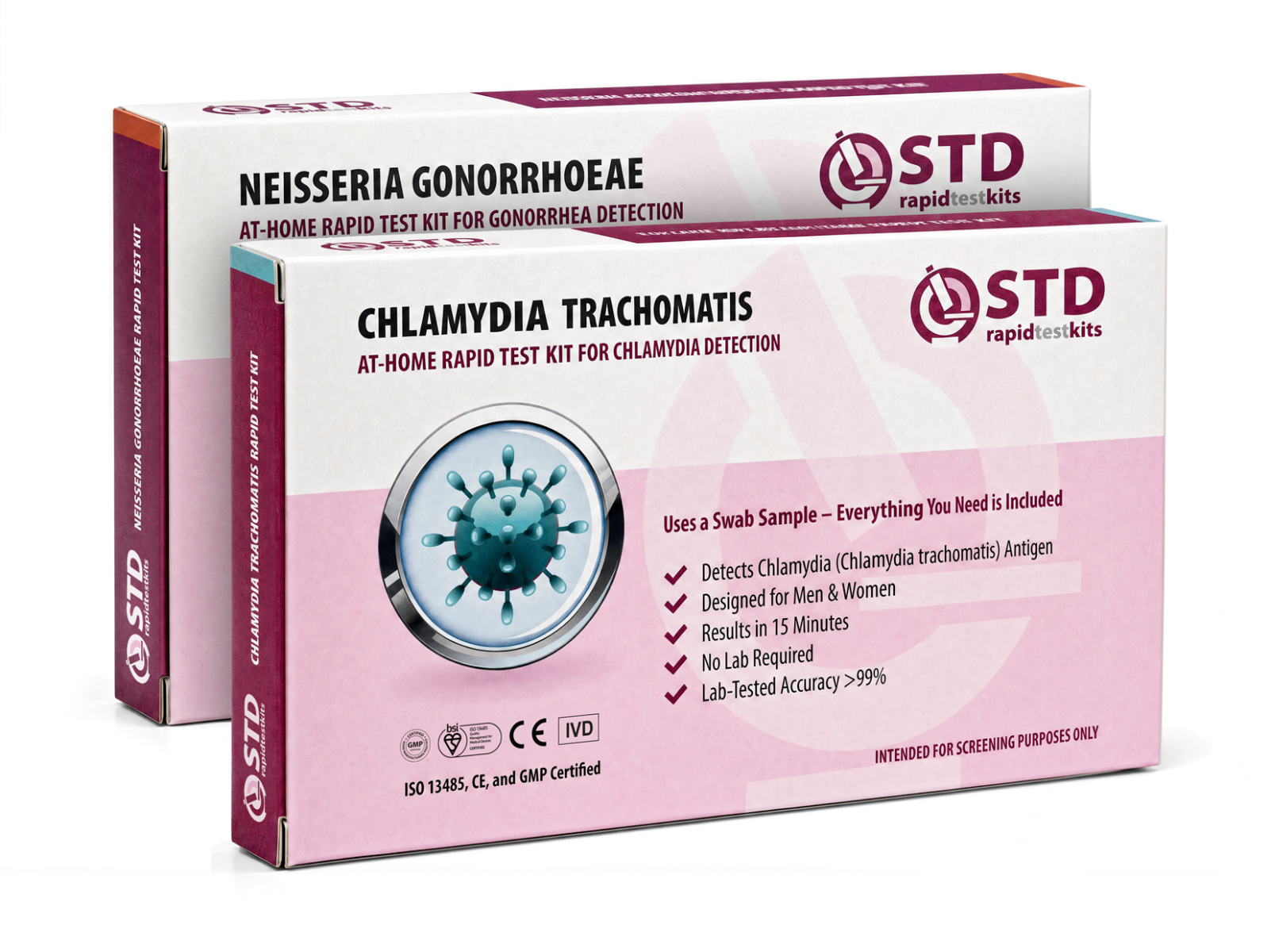
If you have had unprotected sex (or a condom break) within the last few weeks and your testicle is now swollen, the highest-yield first move is testing for chlamydia and gonorrhea. These two infections are responsible for most bacterial orchitis cases in younger men, and both are straightforward to treat when caught early. If you would rather start at home, at-home STI test kits can screen for the most common causes before you decide on a clinic visit.
Timing matters. Bacteria need time to multiply before any test can reliably detect them. Most home rapid lateral-flow STI tests recommend waiting until about the second week after a possible exposure for the most reliable result, although manufacturer-specified windows vary, so check the specific test's instructions for use. Laboratory NAAT (nucleic acid amplification testing) can sometimes detect infection earlier, because lateral-flow chemistry is less analytically sensitive than a lab NAAT; the two are complementary rather than equivalent. The practical takeaway: a day-5 negative is too early to trust on its own, especially with active swelling. Retest at the two-week mark, and if symptoms keep going despite a negative result, follow up at urgent care.
If you also want to screen for syphilis, HIV, hepatitis B and C, or herpes from the same exposure event, a multi-infection home panel is a more complete starting point. One disclosure: this article is published by stdrapidtestkits.com, which sells at-home STI testing kits. We recommend products based on what fits the reader's symptom and exposure pattern, not commercial benefit. On the downstream risk of leaving an infection untreated, the CDC puts it plainly:
The infection can cause a fever and pain in the tubes attached to the testicles. This can, in rare cases, lead to infertility.
How Orchitis Is Diagnosed
A diagnosis usually starts with a physical exam and a candid conversation about recent sexual activity, urinary symptoms, and any preceding viral illness. Clinicians palpate the testicle to assess swelling and tenderness, check for fever, and look for signs of urinary infection. They also test the cremasteric reflex (a normal upward pull of the testicle when the inner thigh is stroked; its absence is one signal that raises concern for torsion). Depending on what is suspected, additional tests follow.
For suspected bacterial orchitis, a urine sample is the standard first-line test. NAAT testing on a first-catch urine specimen detects both chlamydia and gonorrhea with high sensitivity, per the CDC STI treatment guidelines, so a urethral swab is rarely needed today. If a viral cause like mumps is suspected, a blood test for mumps IgM antibodies or a saliva PCR may be ordered.
Scrotal ultrasound is often the deciding image. It shows blood-flow patterns, helps separate orchitis from epididymitis or a hydrocele, and is essential for ruling out testicular torsion, which shows the opposite finding: reduced blood flow to the affected testicle. According to the StatPearls clinical reference on orchitis, color Doppler ultrasound of the scrotum is the first-choice investigation for acute testicular or scrotal pain.
Be honest at the exam. Embarrassment about naming a recent partner or describing a possible exposure delays correct diagnosis. A direct sentence like "I had unprotected sex about two weeks ago, my testicle is swollen, and there is no discharge" tells a clinician exactly what to check first.

Treatment and Recovery Timeline
Bacterial orchitis is curable with antibiotics. The CDC STI Treatment Guidelines for epididymitis, which cover most cases of STI-related epididymo-orchitis, recommend ceftriaxone 500 mg as a single intramuscular dose plus doxycycline 100 mg orally twice daily for 10 days in sexually active younger men. For older men or men who report insertive anal intercourse, the regimen is adjusted to cover enteric organisms, often by adding a fluoroquinolone. The CDC is explicit that treatment should not wait on lab confirmation: presumptive therapy is started at the visit, before all results are back, because delay risks testicular damage. Pain relief comes from NSAIDs, scrotal elevation, ice, and rest.
Most men feel meaningfully better within three to five days of starting antibiotics, though residual tenderness and swelling can linger. The NHS notes recovery from the swelling can take anywhere from a few days to a few months. Wearing supportive underwear, a snug brief or an athletic supporter, shortens that tail.
Viral orchitis has no targeted antiviral cure. Per Cleveland Clinic guidance, symptoms typically begin to ease within a few days, although the swelling can take weeks or even months to fully resolve. Most men recover completely, though a small share develop atrophy on the affected side after mumps orchitis. Bed rest, fluids, scrotal support, ice packs, and anti-inflammatories are the mainstays.
If symptoms are not clearly improving within three to five days of starting antibiotics, return to the clinic. Worsening pain, persistent fever, or visible scrotal swelling beyond the first few days can signal an abscess, antibiotic resistance, or a missed alternative diagnosis, and a repeat ultrasound may be needed.
Sex partners need testing and treatment too, because reinfection is common when only one person is treated. The CDC recommends that partners from the prior 60 days be evaluated, tested, and treated presumptively when STI-related epididymitis or orchitis is confirmed.
- Finish the full antibiotic course, even if symptoms ease by day two.
- Abstain from sex until you and any recent partners have completed treatment and are symptom-free (typically 7 to 10 days after the last dose).
- Notify any partner from the prior 60 days so they can be evaluated, and use anonymous partner-notification services if direct contact feels unsafe.
- Retest in about three months if your exposure carried higher risk, since reinfection is common.
Conditions That Look Like Orchitis (and Why the Difference Matters)
Several other scrotal conditions share symptoms with orchitis. Some are minor; one is a true emergency. Knowing the difference can save a testicle.
The most urgent mimic is testicular torsion, which happens when the spermatic cord twists and cuts off blood supply to the testicle. Torsion typically presents as sudden, severe pain, often waking someone from sleep, with the affected testicle riding higher than usual and sometimes nausea or vomiting. Per the StatPearls clinical reference on testicular torsion, testicular viability drops significantly after about six hours, salvage is still possible under eight hours, and it becomes rare once more than 24 hours have passed. That is why torsion is a strict surgical emergency. Orchitis builds more slowly and usually comes with fever or urinary symptoms; torsion is fast and shocking.
Epididymitis without testicle involvement is another common possibility. The infection sits in the epididymis, the coiled tube behind the testicle, rather than the testicle itself. Pain is felt at the back of the testicle, often with burning urination, and the treatment overlaps heavily with bacterial orchitis. Other conditions to consider include hydroceles (a painless fluid collection around the testicle), inguinal hernias (a groin bulge that worsens with straining), varicoceles (enlarged scrotal veins often described as a "bag of worms"), and, rarely, testicular cancer (usually a painless lump or sense of heaviness).
| Condition | Key Symptoms | Urgency Level |
|---|---|---|
| Orchitis | Swelling and tenderness, fever, gradual onset, often an STI or viral link | Same-day evaluation |
| Testicular torsion | Sudden severe one-sided pain, high-riding testicle, nausea | Surgical emergency |
| Epididymitis (alone) | Pain at the back of the testicle, burning urination, often an STI | Same-day evaluation |
| Hydrocele | Painless soft swelling, fluid-filled sac around the testicle | Routine clinic visit |
| Inguinal hernia | Groin or scrotal bulge that worsens with straining or coughing | Non-urgent clinic visit |
| Testicular cancer | Painless lump or heaviness, slow growth, no fever | Prompt evaluation |
Retesting and Lowering Future Risk
A day-5 negative is too early to trust. A test taken within the first few days of exposure can miss an infection before the bacterial load is detectable, so retesting around two weeks after the exposure date reduces the chance of a false negative. When symptoms continue or worsen despite a negative test, the next step is broader evaluation, not a third lateral-flow strip: an ultrasound rules out torsion or abscess, a mumps titer covers a recent viral illness, and a urinalysis catches non-STI urinary infections.
Reinfection from an untreated partner is the second reason retesting matters. When chlamydia or gonorrhea causes orchitis and only the symptomatic person is treated, the same infection can return within weeks. CDC chlamydia treatment guidance recommends a repeat screen about three months after treatment to catch the reinfection patterns common in the months after a confirmed STI.
Lowering your risk going forward is mostly about a few durable habits. Condoms cut the transmission of chlamydia, gonorrhea, and most other bacterial STIs, though they do not erase the risk entirely. Vaccines exist for hepatitis B and HPV and are worth catching up on if you missed them. If you have new or multiple partners, periodic screening, commonly every three to six months, keeps a quiet infection from becoming a swollen testicle in the first place. If you want broader coverage from one exposure event, a multi-infection panel is the more complete option, which is where the kit below fits.

Talking About Testicle Symptoms Without Shame
Orchitis hurts physically, but the embarrassment around it, the anxiety about what the symptom signals, and the reluctance to name a possible STI to a stranger at a clinic, is its own obstacle to care. Many men delay seeking help because they are embarrassed to describe the symptom or worried that asking for an STI test says something about their character. Both reactions are common, and both slow down the right treatment. Men also consistently wait longer than women to seek care for reproductive symptoms, and the gap shows up across primary care and urology: more missed infections, more advanced complications, more avoidable damage to fertility.
One simple reframe helps: scrotal swelling is a medical symptom that deserves the same matter-of-fact attention as a swollen knee. Clinicians and lab staff take these histories without judgment all day long. The faster you describe what is actually happening, recent unprotected sex, a recent illness, when the swelling started, whether there is fever or burning urination, the faster the right test gets ordered.
For partners, the conversation is no easier and no less important. If your orchitis came from chlamydia or gonorrhea, recent partners likely need testing and treatment too, and their infection may be completely silent. The message usually lands better than expected when it is framed as "I tested positive, you should test too" rather than as an accusation. Anonymous partner-notification services exist in most U.S. states if a direct conversation is not feasible.
Direct, no-blame, no over-explanation: "I tested positive for an infection that needs treatment. You should get tested too." That is enough. The CDC recommends notifying partners from the prior 60 days when STI-related orchitis is confirmed. Most U.S. state and county health departments offer anonymous notification services if you would rather not have the conversation in person.
What To Do Right Now
If you are reading this with a swollen or aching testicle in front of you, the right next move depends on how the pain started and what you have already done. Use the quick check below to decide whether this is an emergency, a test-at-home situation, or a follow-up you need to escalate today.
Swollen Testicle: What Should You Do?
Did the pain come on suddenly and severely, often with a high-riding testicle, nausea, or vomiting?
Yes: Treat it as possible testicular torsion and go to an emergency department now. Saving the testicle depends on restoring blood flow within hours, so say the word "torsion" at triage.
Did swelling or aching build up over a day or two after a possible STI exposure in the last few weeks?
Yes: Test for chlamydia and gonorrhea about two weeks after the exposure, and book a clinician exam. Note when symptoms started and any recent unprotected sex to speed up the visit.
Have you already tested negative, but the swelling is staying the same or getting worse?
Yes: Ask for a scrotal ultrasound to rule out torsion or an abscess, plus a urinalysis and a mumps check. Do not rely on a third home strip.
No: Keep watching it. If swelling worsens, fever develops, or nothing improves within 24 to 48 hours, get same-day in-person care. Notify partners from the prior 60 days if an STI is confirmed.
Guidance only. A healthcare provider can advise based on your specific situation.
FAQs
- Can chlamydia or gonorrhea really cause my testicles to swell?
- These two STIs account for most bacterial orchitis cases in men under 35, and the swelling can show up even when there is no discharge or burning urination. Asymptomatic chlamydia is especially common, which is why testicle swelling after a possible exposure should trigger a chlamydia and gonorrhea test rather than a wait-and-see approach.
- What's the difference between orchitis and epididymitis?
- Epididymitis is inflammation of the epididymis, the coiled tube behind the testicle that stores sperm. Orchitis is inflammation of the testicle itself. In sexually transmitted cases both structures are usually involved, which is why clinicians often write epididymo-orchitis on the chart. The testing and antibiotic approach is the same either way.
- What if just one testicle is swollen?
- One-sided swelling is more common than both-sided swelling in orchitis. Bacterial orchitis from STIs typically affects the side closer to the original urethral infection, and mumps orchitis is also commonly unilateral. One-sided swelling still warrants same-day evaluation, particularly to rule out testicular torsion.
- How can I tell orchitis apart from testicular torsion?
- Torsion pain typically goes from zero to severe in seconds to minutes; orchitis builds over hours or days. If you are uncertain, treat it as a possible torsion and go to an emergency department immediately. Saving the testicle depends on restoring blood flow quickly, so get evaluated rather than waiting at home.
- How long does orchitis last once treatment starts?
- Fever and the worst swelling usually ease within the first few days on antibiotics. Full resolution of the swelling can take anywhere from a few days to a few months, per NHS guidance. Finishing the full course and wearing supportive underwear shortens that tail and lowers the risk of lingering pain.
- Is orchitis itself contagious?
- The inflammation itself is not, but the infection causing it might be. If your orchitis is from chlamydia, gonorrhea, or mumps, you can still transmit the underlying pathogen until treatment is complete or the viral illness resolves. Abstaining during treatment and notifying recent partners directly addresses this transmission window, which is why both steps appear in the standard management guidance.
- Can oral sex cause orchitis?
- Rarely, but it can. Oral chlamydia or gonorrhea can be transmitted to a partner's urethra during oral sex, and from there the infection can travel to the testicle just as a vaginal or anal-acquired infection would. The practical risk is much lower than from vaginal or anal intercourse, but it is not zero.
- What if my STI test is negative but the swelling is still there?
- Two main possibilities. First, you tested too early. Most home rapid tests recommend waiting until about the second week after exposure for the most reliable result, so a day-5 negative may simply be a false negative; retest at the two-week mark. Second, the cause is non-STI. Mumps, urinary-tract bacteria, trauma, or torsion can all produce similar symptoms. Persistent or worsening swelling needs an ultrasound to rule out emergencies.
- Will orchitis make me infertile?
- Most men who get prompt treatment recover fully without fertility effects. Risk rises with delayed treatment, abscess formation, or bilateral involvement (both testicles). Mumps orchitis carries a small risk of testicular atrophy on the affected side, and bilateral mumps orchitis can rarely affect overall sperm production. Catching it early and treating it is the strongest protection.
- Did masturbation or "blue balls" cause this?
- No. Masturbation does not cause orchitis, and the discomfort of unrelieved arousal (sometimes called epididymal hypertension or "blue balls") resolves on its own without infection. If a testicle is visibly swollen, warm, or painful for more than a day, the cause is something else, and it is worth checking with a clinician or a rapid at-home STI test.
How We Sourced This Article: We summarized current guidance from the CDC, NHS, WHO, Cleveland Clinic, and StatPearls (NIH), with an inline link at each specific claim. All clinical figures, medication regimens, and time windows here come from those sources. This article is editorial; it is not personal medical advice. For symptoms that concern you, see a licensed clinician.
- U.S. Centers for Disease Control and Prevention. STI Treatment Guidelines, Epididymitis section: epididymo-orchitis, empiric antibiotic regimens, presumptive therapy before lab results, and partner management within 60 days.
- U.S. Centers for Disease Control and Prevention. STI Treatment Guidelines, Chlamydial Infections section: treatment regimen and retesting approximately three months after treatment.
- U.S. Centers for Disease Control and Prevention. About Chlamydia: consumer overview noting fever and pain in the tubes attached to the testicles, and rare infertility in men.
- UK National Health Service. Epididymitis: STI causes (chlamydia, gonorrhoea), under-35 versus over-35 split, symptoms, antibiotic treatment, and recovery timeline.
- World Health Organization. Sexually transmitted infections fact sheet: 2020 global incidence estimates for chlamydia (129 million) and gonorrhoea (82 million), and frequently asymptomatic presentation.
- Cleveland Clinic. Orchitis: viral and bacterial causes, symptoms, treatment, and recovery expectations.
- StatPearls (NIH/NCBI Bookshelf). Orchitis clinical reference: blood-borne versus ascending spread, mumps and bacterial etiologies, color Doppler ultrasound as first-choice imaging for acute scrotal pain, and management.
- StatPearls (NIH/NCBI Bookshelf). Testicular Torsion clinical reference: viability decline after about six hours, salvage under eight hours, and rarity of salvage beyond 24 hours.
