
Published: July 2025 | Last updated: April 2026 | Editorial review and quality control: Martina N.
Orchitis is the medical word for inflammation inside the testicle. It does not creep in over weeks. It usually arrives over a day or two, and once it does, the side it is on hurts to walk on, sit on, and sometimes to even think about.
For sexually active men, the cause is rarely mysterious. Bacterial sexually transmitted infections (STIs) move up the urethra from the tip of the penis, settle into the epididymis (the coiled tube that stores sperm), and from there inflame the testicle itself. The combined picture is called epididymo-orchitis. Untreated mumps is the other classic cause, especially in men who never had the MMR vaccine. The treatment depends on which one it is.
This article walks through what orchitis is, why catching it in the first 48 hours matters for fertility, how to tell it apart from a true surgical emergency, and what an at-home rapid swab can and cannot tell you about the underlying cause.
What is orchitis and how serious is it?
Orchitis is inflammation of one or both testicles. In men under 35, the most common trigger is a bacterial STI (chlamydia or gonorrhea) that climbed up the urethra. In older men, urinary bacteria are more common. Mumps is the classic viral cause. With prompt antibiotics for bacterial cases, or supportive care for viral cases, most men recover in 1 to 2 weeks. Sudden severe one-sided pain that arrives in minutes (not hours) without urinary symptoms looks more like testicular torsion: that is a six-hour surgical emergency, so go to the ER.
Key takeaways
- Most cases of orchitis in sexually active men under 35 trace back to a bacterial STI, usually chlamydia or gonorrhea, that climbed up from the urethra into the epididymis and testicle.
- Sudden one-sided testicle pain that arrives in minutes (not hours) is more likely testicular torsion than orchitis. Torsion is a six-hour surgical emergency. When in doubt, go to the ER, not the clinic.
What orchitis actually is
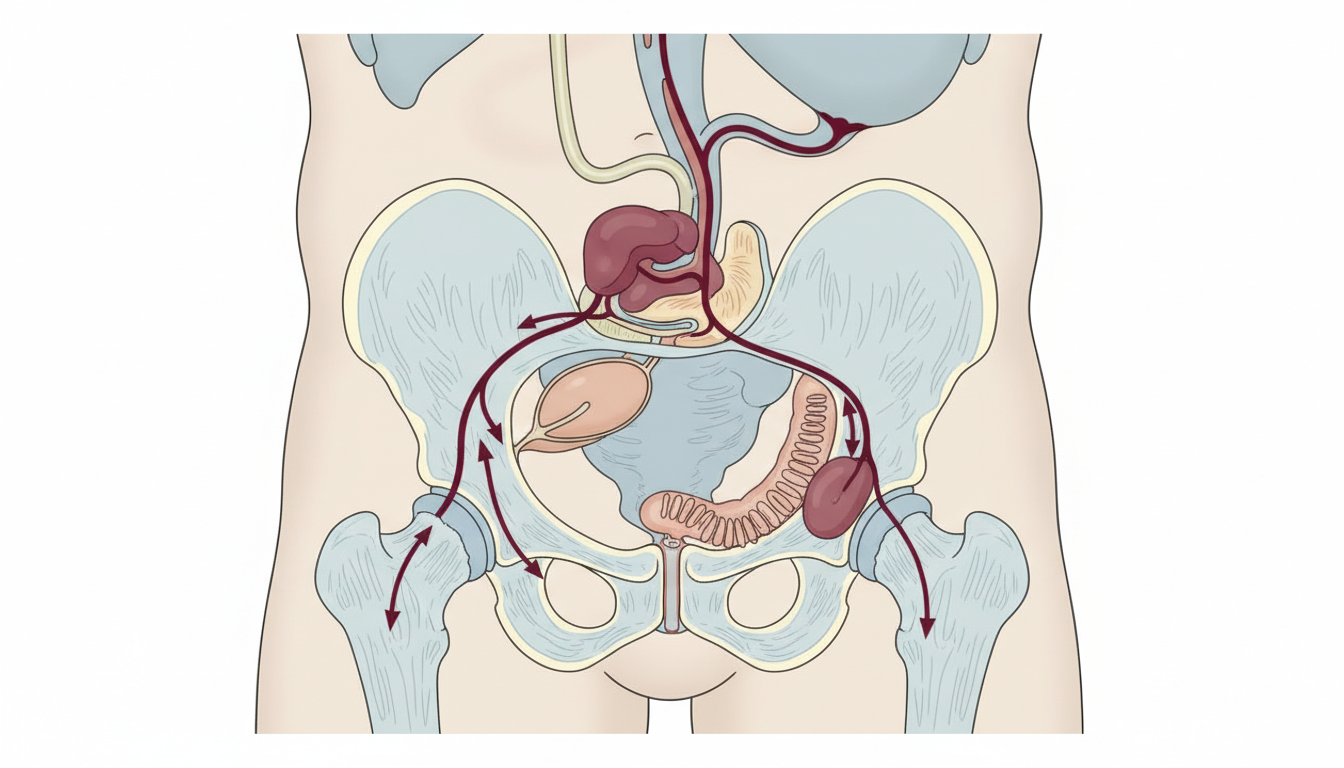
The testicles sit inside the scrotum, each one wrapped in a tough fibrous coat called the tunica albuginea. Pressed up against the back of every testicle is the epididymis, a tightly coiled storage tube about 6 meters long if you stretched it out. The spermatic cord runs from the top of the testicle up into the abdomen, carrying blood vessels, nerves, and the sperm-carrying vas deferens.
Orchitis means inflammation of the testicle itself. When the inflammation also involves the epididymis, which is by far the most common scenario in adults, clinicians call the combined picture epididymo-orchitis. The two structures are in such close contact that infection rarely stays neatly inside one or the other.
Inflammation here looks like inflammation anywhere else. Blood vessels dilate, fluid leaks into surrounding tissue, immune cells flood in. The scrotum on the affected side becomes red, warm, swollen, and exquisitely tender. The pain often radiates up the cord into the lower abdomen or down into the inner thigh. Some men describe a deep, dull ache that sharpens with movement. Others describe it as a sudden bruise without an injury.
The testicle is built to run a few degrees cooler than core body temperature, which is why it hangs outside the body, and sustained inflammation raises that local temperature. The tunica albuginea does not stretch easily, so swelling pressurizes the testicle from the inside and can choke off its own blood supply. The same anatomy that lets bacteria climb the urethra into the testicle also lets infection cross over to the partner testicle through the lymphatics, doubling the long-term fertility risk.
Why bacterial STIs are the leading cause in men under 35
For sexually active men under 35, the single most common path to orchitis is a bacterial STI that started as urethritis (inflammation of the urethra) and quietly migrated up into the reproductive tract. The two organisms that do this most often are Chlamydia trachomatis and Neisseria gonorrhoeae. The CDC's STI treatment guidelines for epididymitis address these two pathogens as the primary infectious drivers in sexually active younger men, with a distinct first-line regimen for STI-suspected presentations.
Chlamydia is often the more dangerous of the two precisely because it is so quiet. Most men with urethral chlamydia have either no symptoms at all or only a mild, intermittent discharge they may dismiss as nothing. Gonorrhea is louder: thick yellow or green discharge, painful urination, urethral burning. Both follow the same anatomical route. Bacteria climb the urethra, reach the prostate, and from there work down the vas deferens into the epididymis. The first warning a man may get is a sudden tender swelling on one side of the scrotum.
A third organism, Mycoplasma genitalium, is listed in the 2021 CDC guidelines as a cause of epididymitis. It responds poorly to doxycycline alone, so persistent symptoms after a standard course are worth raising with a clinician.
The classic STI-driven orchitis picture in a younger man looks like this: pain or burning during urination over the previous one to three weeks, a thin or thick urethral discharge, and then within 24 to 48 hours a one-sided scrotal swelling that gets worse over the next day. Fever may or may not be present. The other testicle usually stays normal. Movement and pressure make the affected side worse.
In men who have insertive anal sex, enteric (gut) bacteria like E. coli can also climb up the urethra and cause epididymo-orchitis, sometimes alongside chlamydia or gonorrhea. The treatment regimen is slightly different in that case, which is one reason an actual lab swab and culture matters.
Other STIs play smaller supporting roles. Untreated syphilis can produce generalized testicular discomfort during its secondary stage. Herpes simplex virus rarely causes orchitis directly, but a primary genital herpes outbreak can produce aching that radiates into the scrotum. Trichomoniasis can cause urethritis in men, which in turn occasionally seeds an epididymo-orchitis. None of these are common, though a comprehensive STI panel after a confirmed orchitis episode is reasonable.
Non-STI causes worth knowing
STIs dominate the under-35 picture, but a meaningful share of orchitis cases come from elsewhere.
- Mumps virus. Mumps orchitis is the classic viral cause and the reason orchitis exists as its own diagnostic category. Per CDC mumps guidance, orchitis is a documented complication of mumps in post-pubertal males that can lead to testicular atrophy. Two doses of MMR make mumps far less likely in the first place.
- Urinary tract infections that climb downward. In men over 35, the dominant cause shifts away from STIs. Bacteria that normally live in the bladder, especially E. coli, can travel down through the prostate into the epididymis. Risk factors include an enlarged prostate, indwelling urinary catheters, and recent urinary procedures.
- Other viral causes. Coxsackievirus, varicella (chickenpox), and Epstein-Barr virus have been documented to cause orchitis in case reports, though this is uncommon.
- Trauma and structural mimics. A direct blow to the scrotum can cause non-infectious inflammation that looks identical from the outside. Hydrocele (fluid around the testicle) and varicocele (enlarged veins, like varicose veins of the scrotum) can also present with painful swelling and need to be ruled out.
- Idiopathic orchitis. In a small share of cases, no specific cause is ever identified. Inflammation is real, treatment is supportive, and most cases resolve on their own.
In a sexually active man under 35 with a recent unprotected encounter, bacterial STI is the working assumption until proven otherwise. In an older man with a history of urinary symptoms, bladder bacteria are the working assumption. In an unvaccinated man with current parotid (cheek) swelling, mumps is on the table.
Working diagnosis by patient profile
- Sexually active man under 35, recent unprotected sex: bacterial STI (chlamydia or gonorrhea) until proven otherwise.
- Man over 35 with a history of urinary symptoms or an enlarged prostate: enteric bacteria from the bladder.
- Unvaccinated man with current parotid (cheek) swelling, fever, and malaise: mumps orchitis.
How fast it shows up
Orchitis from a bacterial STI almost always escalates over 24 to 48 hours, not minutes. The typical timeline:
- Hours 0 to 12. A vague heaviness or dull ache on one side of the scrotum. Easy to dismiss.
- Hours 12 to 24. The ache sharpens. Walking starts to hurt. The skin on that side may look slightly redder than the other.
- Hours 24 to 48. Visible swelling. The affected side can be twice the volume of the other. Tenderness is severe to touch. Fever may appear, often low-grade (37.5 to 38.5 C, or 99 to 101 F).
- Beyond 48 hours. Without treatment, the swelling and pain plateau, but the underlying tissue damage continues. This is the window where waiting starts to cost fertility.
Sudden onset over minutes (not hours), with no preceding urinary symptoms, in severe pain that makes a man want to vomit, looks much more like testicular torsion than like orchitis. That distinction is covered later in this article and is the single most important triage question.
Getting diagnosed without dread
Many men delay help out of dread for what the exam will involve. The reality is calm and quick. A typical visit looks like this:
- Sexual and medical history. Recent unprotected sex, urinary symptoms, vaccination status, fever, and any prior episodes.
- Brief physical exam. The clinician palpates each testicle, the epididymis, and the spermatic cord through the scrotum, checking the side, the location of the tenderness, and any obvious mass. Lifting the scrotum often relieves epididymo-orchitis pain (the Prehn sign), while it does nothing for torsion.
- Urine sample. A first-catch urine specimen is sent for nucleic acid amplification testing (NAAT) for chlamydia and gonorrhea, plus standard urinalysis and culture for bladder bacteria.
- Urethral swab. Less common than urine NAAT now, but sometimes added for Gram stain.
- Scrotal ultrasound with Doppler. A key imaging step. Cleveland Clinic's orchitis overview lists ultrasound as a core diagnostic tool because it measures blood flow to the testicle and helps rule out torsion. It also reveals the size and appearance of the epididymis and any abscess or mass.
- Blood work. A complete blood count if fever is significant. Mumps serology if exposure or vaccine status is uncertain.
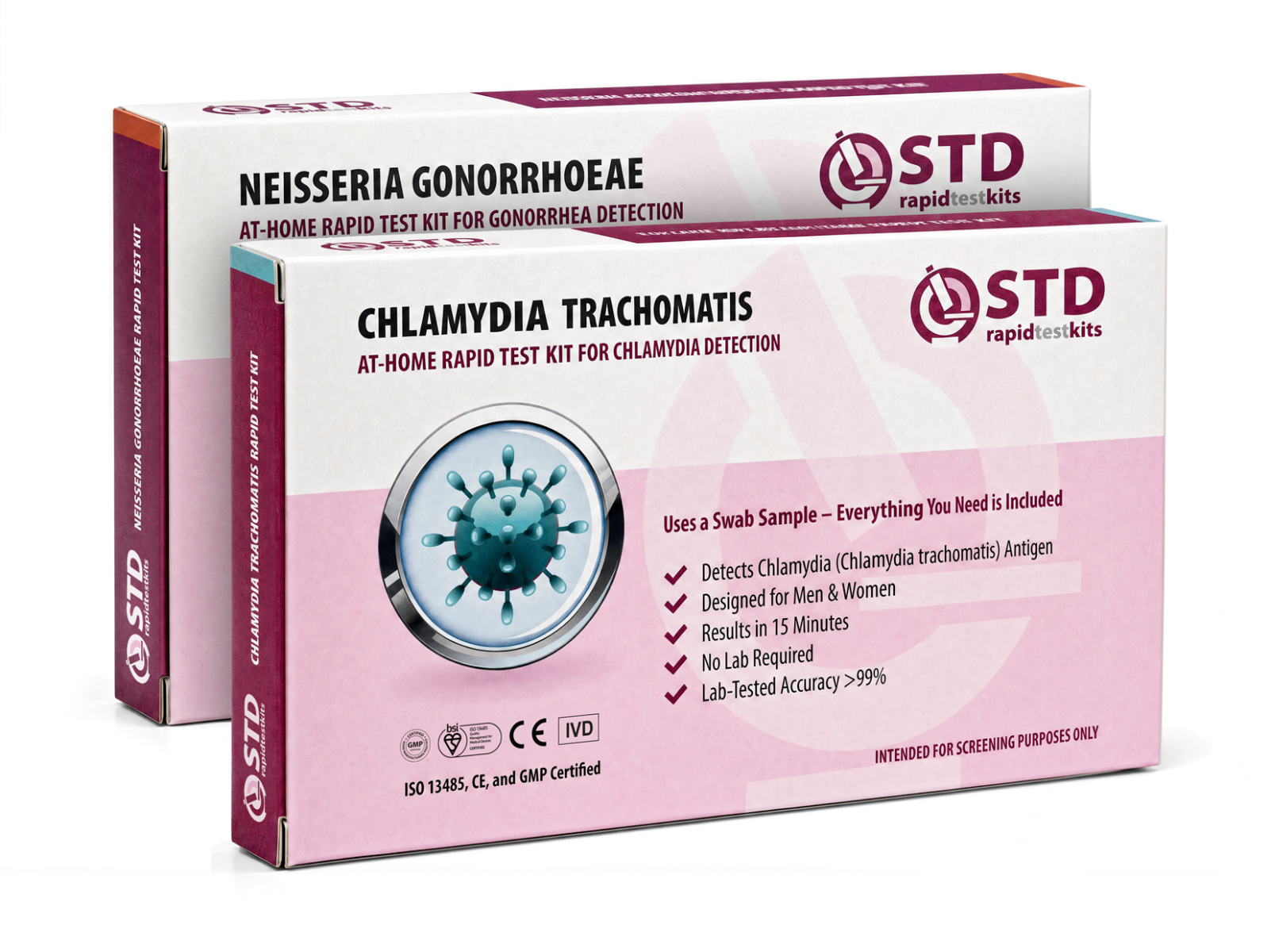
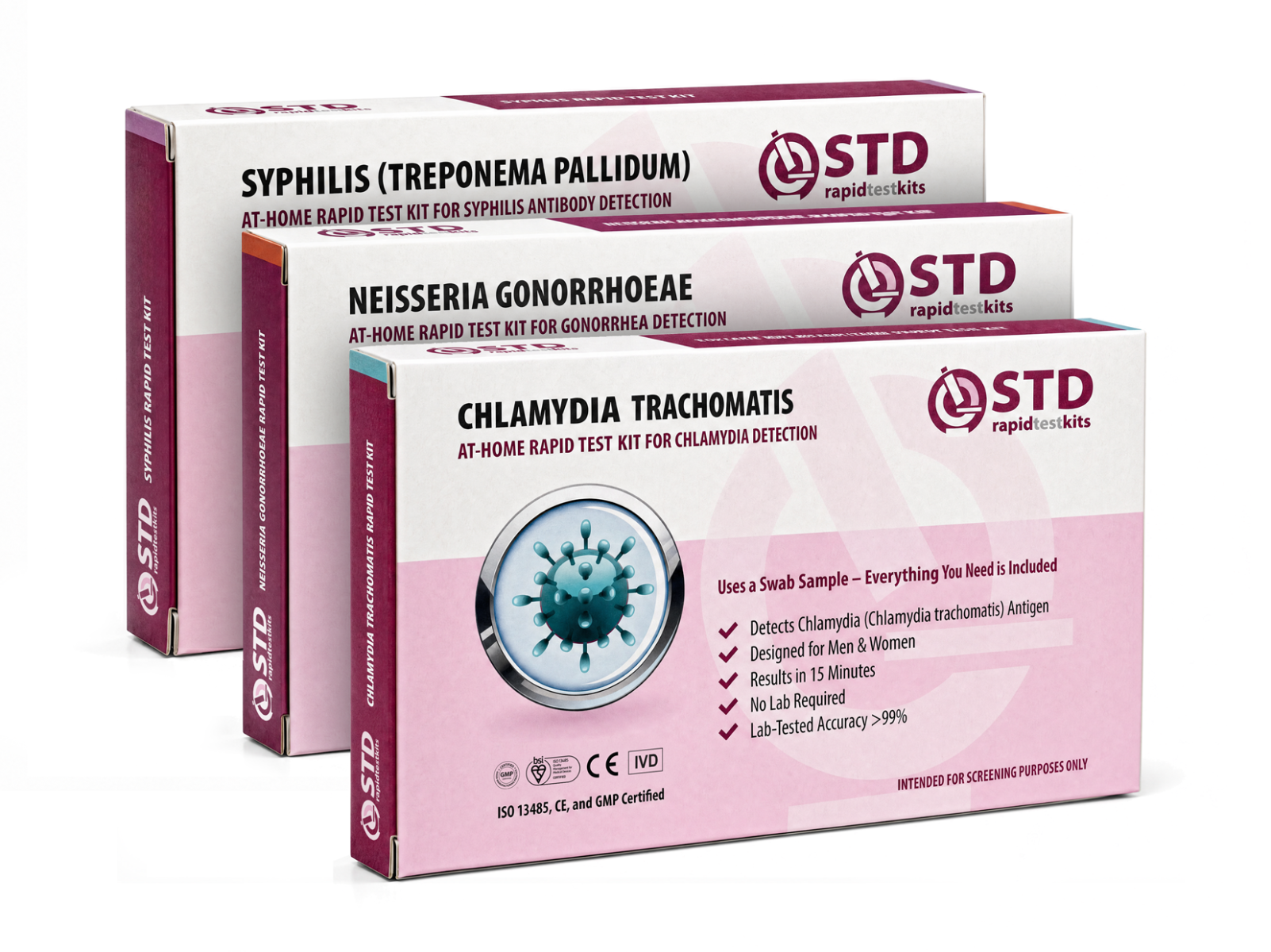
Home rapid testing has a real role here, alongside its limits. An at-home rapid swab can confirm chlamydia or gonorrhea infection from a self-collected penile or urethral swab in about 15 minutes. That answer is fast, private, and useful for the partner-notification conversation that needs to happen anyway. What the home swab cannot do is rule out testicular torsion, look at blood flow, or detect non-STI causes. If the testicle is acutely painful, the rapid swab supplements rather than replaces the clinical visit.
Self-exams have a separate, complementary role. Once a month, gently roll each testicle between your thumb and fingers, paying attention to size, lumps, soreness, or asymmetry. Self-exams are how most cases of testicular abnormality get caught early. They are not how you diagnose orchitis (the swelling and pain are obvious enough), though they build the baseline familiarity that makes a sudden change easy to recognize.
Testicular torsion (the spermatic cord twisting on itself, cutting off blood supply) presents with one-sided pain that arrives over minutes, often during sleep or after activity, frequently with nausea and vomiting. The testicle is dead within roughly six hours if not surgically untwisted. If the pain came on that fast, do not wait for a clinic appointment, do not try a home test first, and do not wait until morning. Doppler ultrasound at the emergency department resolves the question in minutes.
Treatment depends on the cause
Treatment splits hard along bacterial-versus-viral lines. The first thing the clinic does is the urine NAAT and exam, because the right antibiotic depends on what is growing.
Bacterial epididymo-orchitis (chlamydia, gonorrhea, or enteric bacteria). Empirical antibiotics start the same day, before lab confirmation comes back, because waiting costs tissue. Per the CDC STI treatment guidelines, the current first-line regimen for younger men with suspected chlamydia or gonorrhea is a single intramuscular dose of ceftriaxone (500 mg) plus oral doxycycline 100 mg twice daily for 10 days. Men whose epididymitis is more likely from enteric bacteria get the ceftriaxone plus a fluoroquinolone like levofloxacin instead. Adjuncts include ibuprofen or naproxen for inflammation, scrotal elevation (a snug pair of briefs or a jockstrap), and ice packs for 15 to 20 minutes at a time.
Viral orchitis (mumps and other viruses). Antibiotics do nothing for viral causes. Treatment is supportive: rest, hydration, scrotal support, ice, and ibuprofen or acetaminophen for pain. Most cases resolve on their own in one to two weeks. The shrinkage that can follow mumps orchitis is usually clear within three to six months.
Behavioral rules during treatment. No sex or ejaculation until the course of antibiotics is complete and pain has fully resolved. This protects the inflamed tissue, prevents transmission of any STI that may not have cleared yet, and gives the epididymis time to drain rather than re-engorge with each ejaculation. Partners need to be tested and treated regardless of their symptoms; reinfection is the most common reason orchitis comes back.
Surgery is rarely needed. The exceptions are an abscess that does not respond to antibiotics, severe structural damage, or a presentation that cannot be distinguished from torsion on imaging.
| Aspect of care | Bacterial (STI or UTI) | Viral (mumps and other) |
|---|---|---|
| Antibiotics | Yes, started empirically same-day | No, antibiotics do not help |
| First-line meds | Ceftriaxone 500 mg IM + doxycycline 100 mg twice daily for 10 days (or fluoroquinolone for enteric source) | Ibuprofen or acetaminophen for pain and fever |
| Scrotal support and ice | Yes, throughout treatment | Yes, throughout symptoms |
| Sexual abstinence | Until antibiotic course complete and pain fully gone (10 days minimum) | Until pain has fully resolved (typically 7 to 14 days) |
| Partner testing and treatment | Mandatory for STI cases, even if partner is asymptomatic | Not applicable |
| Typical recovery | Marked improvement in 3 to 5 days, full recovery 1 to 2 weeks, residual swelling 4 to 6 weeks | Symptomatic recovery 1 to 2 weeks, possible long-term shrinkage on affected side |
| Three-month retest | Recommended for chlamydia and gonorrhea, regardless of partner status | Not applicable |
What untreated orchitis can actually do
Calling untreated orchitis dangerous is accurate, not anxiety bait. The structural damage is real and largely irreversible once it sets in.
- Testicular atrophy. Persistent inflammation kills sperm-producing tissue. The testicle shrinks. The CDC notes that orchitis from mumps can lead to testicular atrophy on the affected side.
- Reduced sperm production. Even when both testicles look normal afterwards, persistent inflammation can lower sperm count and motility for months. Bilateral orchitis (both sides) raises the risk of clinically meaningful subfertility, though absolute infertility from a single episode is uncommon.
- Abscess formation. A walled-off pocket of pus inside the scrotum, sometimes requiring surgical drainage. Suspected when fever stays high and swelling continues to grow despite antibiotics.
- Chronic scrotal pain. A subset of men develop a low-grade ache that lingers for months after the infection clears, sometimes called post-infectious chronic orchialgia. It often improves slowly, though it can be stubborn.
- Reactive hydrocele. Fluid buildup around the testicle as a residue of inflammation. Usually resolves on its own; occasionally needs drainage.
- Onward STI transmission. The unaddressed underlying infection gets passed to other partners. This is the social cost of waiting and the reason partner notification is built into the treatment protocol from the start.
Orchitis vs testicular torsion: how to tell them apart
Both conditions cause one-sided testicle pain and swelling. Both feel awful. They demand opposite responses, and confusing them is the single most expensive mistake in this category.
Testicular torsion happens when the spermatic cord twists on itself, cutting off the blood supply to the testicle. Without surgical untwisting in roughly six hours, the testicle dies. It is most common in adolescents and young men, often during sleep or after vigorous activity, and it can happen with no warning at all.
The key clinical differences:
- Speed of onset. Torsion comes on in minutes. Orchitis builds over hours to days.
- Preceding urinary symptoms. Orchitis often follows a week or two of mild urethral burning or discharge. Torsion does not.
- Fever. Fever commonly accompanies orchitis. Torsion typically presents without fever.
- Pain on lifting the scrotum. Lifting the affected side often relieves orchitis (Prehn sign positive). Lifting does nothing for torsion.
- Position of the testicle. A torsed testicle often rides high in the scrotum and lies horizontally rather than vertically.
- Nausea and vomiting. Far more common with torsion than with orchitis.
If the pain came on in minutes, the testicle looks lifted, and there is nausea, the right move is the emergency department. Doppler ultrasound resolves the question in minutes and the surgical clock matters.
Empiric therapy is indicated before laboratory test results are available. Goals of therapy include microbiologic cure, improvement of signs and symptoms, prevention of transmission to others, and a decrease in potential complications such as infertility or chronic pain.
What it means for your sex life, libido, and fertility
Can I still have sex during treatment? No. Two reasons. Ejaculation worsens local inflammation, and if the cause is an STI, intercourse before the antibiotic course finishes risks transmitting it to a partner. Most clinicians ask men to abstain until at least seven days after the last antibiotic dose and until pain has fully resolved.
Will my libido come back? For most men, yes, completely, once the pain and swelling are gone. Some find that the memory of the pain triggers anxiety the first few times they try to be sexual again. That is normal and usually fades within a few weeks. If it persists, talk to a urologist or a therapist who works with sexual health. This is a recognized pattern with manageable solutions.
Will I still be fertile? Most likely yes. A single episode of unilateral (one-sided) bacterial orchitis caught and treated within 48 hours rarely causes lasting infertility. The risk goes up sharply with delayed treatment, with bilateral involvement, and with repeat episodes from untreated reinfection. Mumps orchitis carries more weight on fertility than bacterial orchitis, particularly when both sides are affected. If you are concerned, a semen analysis around three months after recovery (sperm production turns over on a 70-to-90 day cycle) gives a real answer.
What about a single shrunken testicle? Even with one functional testicle, fertility is usually preserved. The remaining testicle compensates by producing more testosterone and more sperm. Most men with one working testicle have normal libido, normal erections, and normal fertility.
How to prevent orchitis
Most cases of orchitis are preventable. The high-yield habits:
- Use condoms consistently. Condoms during vaginal, anal, and oral sex are the single most effective behavioral protection against the bacterial STIs that cause most under-35 orchitis. Consistent condom use substantially reduces STI transmission risk, even accounting for the skin-contact routes condoms leave uncovered.
- Test regularly. The CDC recommends annual chlamydia and gonorrhea testing for sexually active men with new or multiple partners, men who have sex with men, and anyone with a partner who has tested positive. Catching a chlamydia or gonorrhea infection before it reaches the epididymis is exactly what routine testing is for.
- Get vaccinated against mumps. Two doses of MMR prevent the vast majority of mumps cases. Most men born after 1990 in countries with a routine MMR program already have it. Adults who are unsure of their status can ask for serology testing or simply get a booster; the vaccine is safe in adulthood.
- Do not ignore early urinary symptoms. Burning with urination, mild urethral discharge, urgency, or low-grade pelvic discomfort are the warning signs. Most men who present with orchitis describe one of these symptoms in the days or weeks before the swelling started.
- Talk to partners about testing and vaccination. Reinfection from an untreated partner is the most common reason orchitis recurs. If a partner is untested when you are treated, the cycle restarts.
The CDC recommends at least annual chlamydia and gonorrhea testing for sexually active men with new or multiple partners, men who have sex with men, and anyone whose partner has tested positive. Higher-risk profiles benefit from testing every 3 to 6 months. The whole point is catching a urethral infection at the routine stage, before it has the chance to climb into the epididymis and become orchitis.
Why men delay care, and what to do instead
Survey data from urology clinics is consistent: many men with acute scrotal pain wait days before seeking care, often citing embarrassment, fear of being judged, or fear of an invasive exam. The cost of that delay is measurable. The longer the inflammation runs, the higher the risk of atrophy, abscess, and chronic pain.
A few practical shifts make it easier to seek care sooner:
- Clinicians who handle scrotal complaints see them daily. Acute scrotum is one of the most common presentations in urology and emergency departments. The exam is brief, clothed where possible, and routine to the people doing it.
- Partner notification is medical care. Most clinics offer assisted partner notification (where the clinic informs the partner without naming the source) or expedited partner therapy (where antibiotics are dispensed for the partner without a separate visit). It is built into the system because it makes treatment work.
- An at-home swab is a reasonable first step if and only if the testicle is not actively painful. Confirming chlamydia or gonorrhea at home before the clinical visit speeds up the conversation. Once acute scrotal pain is on the table, the home result still matters, while the clinic visit remains essential. Schedule it the same day.
Will it come back?
Recurrence is common and usually traces to a predictable trigger:
- The original infection was not fully cleared. Stopping antibiotics early, taking them inconsistently, or missing the second dose of doxycycline are the usual culprits. Complete the full prescribed course even if the pain is gone after day three.
- A partner was not treated. Reinfection from an untreated partner is the dominant cause of recurrence. The CDC recommends retesting for chlamydia and gonorrhea at three months after treatment regardless of partner status, because reinfection is so common.
- An underlying urological issue. An enlarged prostate, a urethral stricture, or a structural abnormality can predispose to repeat episodes. After a second episode, a referral to a urologist for a full evaluation is reasonable.
Some men develop low-grade post-infectious inflammation that lingers for weeks even after the bacteria have been cleared. This usually resolves with a longer course of anti-inflammatories and patience. Persistent pain beyond three months should be evaluated for chronic orchialgia, which has its own treatment pathway.
Frequently asked questions about orchitis
- Can I get orchitis without an STI?
- Yes. Mumps virus, urinary tract infections that climb downward, blood-borne infections in rare cases, and direct trauma can all cause orchitis. In men over 35, bladder bacteria are a more common cause than STIs. The picture in any single case usually narrows quickly based on age, sexual history, vaccination status, and recent urinary symptoms.
- How do I know if it is orchitis or testicular torsion?
- Torsion arrives in minutes; orchitis builds over 24 to 48 hours. That timeline gap is the clearest separator before imaging. Torsion is also far more likely to come with severe nausea or vomiting and a high-riding testicle. Lifting the affected side often relieves orchitis pain (the Prehn sign) but does nothing for torsion. When in doubt, an emergency-department Doppler ultrasound resolves it in minutes, and the six-hour surgical clock for torsion makes the ER the safer default.
- Will mild orchitis go away on its own without antibiotics?
- Mild viral orchitis (mumps and similar) often does, with rest, ice, and supportive care. Bacterial orchitis from chlamydia or gonorrhea will not. Without antibiotics, the visible inflammation may settle, while the underlying infection persists and can scar the testicle. Either way, see a clinician to find out which type you have.
- Can I still have kids after a single episode of orchitis?
- Fertility impact from a single treated episode is low. Unilateral orchitis caught within 48 hours rarely causes lasting damage. If you want a concrete data point, run a semen analysis at the three-month mark, since sperm production turns over on roughly a 70-to-90 day cycle and that timing gives an accurate read.
- Can oral sex cause orchitis?
- Indirectly yes. If a partner has untreated pharyngeal gonorrhea or chlamydia, oral contact with the urethra can transmit the infection, which can then climb up to the testicle. The route into the scrotum is the same as any other STI exposure, just initiated through oral contact.
- Is orchitis itself contagious?
- The orchitis (the inflammation of the testicle) is not. The cause behind it can be. Mumps spreads through saliva. Chlamydia and gonorrhea spread through sexual contact. Treating the underlying cause stops the spread.
- How long does orchitis last with treatment?
- Most men feel substantially better in 3 to 5 days with the right antibiotics and become symptom-free in 1 to 2 weeks. Mild residual tenderness or swelling can persist for 4 to 6 weeks while the tissue fully remodels. Viral cases tend to follow the same general timeline.
- Should I stop masturbating during recovery?
- Yes, until pain and swelling have fully resolved and any antibiotic course is finished. Ejaculation reactivates the muscular contractions in the epididymis and vas deferens, which slows healing and can trigger pain flares. The same logic applies to partnered sex.
- U.S. Centers for Disease Control and Prevention. Sexually Transmitted Infections Treatment Guidelines: Epididymitis. First-line antibiotic regimens, microbiology including C. trachomatis, N. gonorrhoeae, and M. genitalium, and rationale for empirical therapy.
- U.S. Centers for Disease Control and Prevention. Mumps signs and symptoms, including orchitis as a documented complication in post-pubertal males and its association with testicular atrophy.
- Harvard Health Publishing. Epididymitis and orchitis: causes, diagnosis, and treatment, including the role of antibiotics and ultrasound for ruling out torsion.
- Cleveland Clinic. Orchitis: causes, symptoms, treatment, and the role of pelvic ultrasound in measuring blood flow and ruling out testicular torsion.
- U.K. National Health Service. Epididymitis: symptoms, causes (STIs in younger men, urinary infection in older men), when to seek care, and treatment principles.
