Published: July 2025 | Last updated: May 2026 | Editorial review and quality control: Martina N.
Can an STD really cause testicular pain?
Yes. Chlamydia and gonorrhea are the most common sexually transmitted causes of testicular pain in men under 35. Both bacteria travel up the urethra and inflame the epididymis, the coiled tube behind each testicle, causing epididymitis. The pain builds gradually on one side, often with mild swelling or burning during urination.
Testicular pain rattles people in a way few symptoms do. The testicles are sensitive, central to fertility, and the slightest ache can send someone down a 2 a.m. search spiral wondering whether it's nothing, an STD, cancer, or something worse. Most of the time it's not an emergency. But for sexually active men, especially under 35, one cause shows up often enough that it's worth understanding clearly: a sexually transmitted infection that has reached the epididymis. The condition has a name (epididymitis), a typical pattern (gradual ache, often one side), and a fix (antibiotics) that works best when caught early.
This article unpacks how STDs cause testicular pain, which infections do it and which don't, how to tell infection apart from a torsion emergency, the non-STD causes worth ruling out, the two-minute monthly self-exam that catches the serious problems early, and when an at-home chlamydia and gonorrhea test is the right next step. If you came here looking for the reassurance that most testicular pain is not from an STD, you'll find that here too. Both things are true at once.
Key takeaways
- STD-related testicular pain almost always builds gradually over hours or days. Sudden, severe pain in one testicle is a torsion emergency until proven otherwise and needs an ER visit within 4 to 6 hours, not a test kit.
- Chlamydia and gonorrhea are the two STDs that account for most infection-driven testicular pain. Gonorrhea is often detectable within five to seven days of exposure; chlamydia typically takes one to two weeks. Both are treatable with a short course of antibiotics.
When testicular pain points to an infection
The link between sexually transmitted infections and testicular pain runs through one structure: the epididymis. It's a tightly coiled tube that sits along the back of each testicle and stores sperm as it matures. When bacteria reach this tube, the body responds with inflammation. The result is swelling, tenderness, and the dull ache people describe as something feeling "off" deep in the scrotum.
Two STDs do this most often. Chlamydia and gonorrhea both colonize the urethra first. From there, bacteria can travel upward through the reproductive tract and reach the epididymis, where the inflammation produces what clinicians call epididymitis. The CDC's STI Treatment Guidelines name C. trachomatis, N. gonorrhoeae, and M. genitalium as the bacterial organisms behind sexually-transmitted acute epididymitis. Older men and those who practice insertive anal sex may also see infections from enteric (gut-origin) bacteria such as E. coli, but the sexually transmitted route is the dominant pattern in the under-35 group.
STD-driven testicular pain rarely shows up suddenly and full-strength. The ache builds. It might start as a faint heaviness, then a noticeable soreness, then a swelling that makes one side of the scrotum feel warm and tender. That gradual buildup is the single most useful clue for telling infection apart from the emergencies covered later in this article.
- Bacteria enter the urethra during vaginal, anal, or oral sex.
- From the urethra, bacteria travel upward through the vas deferens.
- Inflammation settles in the epididymis, the coiled tube behind the testicle.
- Swelling, tenderness, and a dull ache follow as the body reacts.
Which STDs cause testicular pain (and which don't)
Not every sexually transmitted infection affects the testicles the same way. Some target the reproductive tract. Some stay on the skin. The table below sorts out which STDs are realistic suspects when a man notices testicular pain and which are unlikely to be the cause.
| STD | Can it cause testicular pain? | Why or why not |
|---|---|---|
| Chlamydia | Yes, common cause | Spreads up the reproductive tract from the urethra and triggers epididymitis. Often produces minimal urinary symptoms before the testicle aches. |
| Gonorrhea | Yes, common cause | Same pathway as chlamydia, but inflammation tends to be more aggressive. May come with visible discharge and burning. |
| Mycoplasma genitalium | Sometimes | An increasingly recognized bacterial cause of urethritis that can occasionally lead to epididymitis. Worth asking about if chlamydia and gonorrhea both come back negative. |
| Trichomoniasis | Rare | Mostly causes urethral irritation in men. Testicular involvement is uncommon but possible if untreated. |
| Genital herpes | Rare for deep pain | Causes painful blisters or ulcers on the skin. Pain is usually external rather than deep inside the testicle. |
| Syphilis | Uncommon | Primary syphilis causes a painless ulcer (chancre); systemic effects come later. Direct testicular pain is not typical. |
| HPV | No | Causes genital warts on skin or mucosa. No mechanism for inflaming the epididymis or testicle. |
How the pain actually feels
The clinical picture of STD-driven testicular pain is consistent enough that it's worth describing in detail. Most people first notice a feeling of heaviness or a low-grade ache on one side. The other testicle usually feels normal. Within a day or two, the affected side may start to swell, feel warm, or hurt when touched. Walking or sitting can make it worse. Some men describe a tugging sensation deep inside the scrotum.
Many early chlamydia infections in men are nearly silent. The CDC's chlamydia overview states that chlamydia often has no symptoms in men, and lists pain and swelling in one or both testicles among the recognized but less common signs. A dull testicular ache may be the first symptom someone notices, with no preceding discharge or burning to warn them.
Gonorrhea-related pain tends to be louder. According to the CDC's gonorrhea overview, men with symptomatic gonorrhea often see a white, yellow, or green discharge from the penis along with burning during urination, and these urethral signs usually arrive before any testicular discomfort. When the infection reaches the epididymis, the swelling and pain can ramp up faster than with chlamydia.
The asymmetry surprises some people. Why one side and not both? Each testicle has its own pathway of vessels and tubes, so when bacteria travel upward, the inflammation usually starts on one side. The other side may stay completely clear, which can make the affected side feel weirdly out of place by comparison.
Each testicle has its own independent set of vessels and tubes, so when bacteria climb the urethra they typically settle on one side first. The opposite side may stay completely clear, which is why STD-driven epididymitis almost always shows up as a one-sided ache, with the unaffected testicle feeling normal by comparison.
STD pain vs testicular torsion: know the difference
Testicular torsion is when the spermatic cord twists on itself and cuts off blood flow to the testicle. It's a surgical emergency. Within the first 4 to 6 hours of pain onset, surgical detorsion usually saves the testicle. After 12 hours, salvage rates drop sharply. After 24 hours, the testicle is almost always lost. Torsion is most common in boys and young men roughly between the ages of 12 and 18, though it can happen at any age, including in newborns. The NHS guidance on testicle pain is unambiguous on the timing: sudden severe testicular pain, or pain that persists at rest, needs immediate emergency care.
The pattern is what separates the two. Torsion comes on suddenly, usually one side, often described as the worst pain someone has ever felt, and is frequently accompanied by nausea or vomiting. The pain doesn't drift in over a day; it slams in over minutes. Epididymitis from an STD does the opposite. The discomfort builds gradually. There's often a sexual history that fits, sometimes a urinary symptom or two before the testicle hurts, and the swelling rises over hours and days rather than minutes.
You cannot reliably tell torsion apart from severe epididymitis at home. A scrotal ultrasound at the hospital settles the question in minutes. When in doubt, treat it as torsion and go.
- Possible torsion: severe one-sided testicular pain that came on within minutes, often with swelling, nausea, or vomiting. The 4 to 6 hour clock starts at pain onset.
- Possible strangulated hernia: a groin or scrotal bulge that has become hard, very painful, and is starting to discolor.
- Severe trauma: major scrotal swelling after a hit, dark bruising that spreads, or blood in the urine. Possible testicular rupture.
- Severe infection signal: fever and chills paired with severe one-sided scrotal pain, which can mean an abscess or a deep infection that needs intravenous antibiotics.
Call 911 or go directly to the nearest emergency room. Don't wait until morning, don't drive yourself if it's bad, and don't try to rule out an STD first.
Non-STD causes worth knowing about
Most testicular pain is not from an STD. The reproductive system shares the lower abdomen with muscles, nerves, vessels, and a hernia-prone wall, so a lot of things can refer pain to the scrotum. Knowing the common non-STD causes helps calibrate how worried to be, and tells you what to ask a clinician about when an STI test comes back negative.
Trauma
A direct hit during sports, an awkward bike-seat landing, a kick during play, or a fall onto a hard edge can leave the testicle sore for days. Most blunt trauma heals on its own with rest, ice for the first 24 hours, supportive underwear, and over-the-counter pain medication. The red flags that change the picture: significant swelling that doesn't improve in 24 hours, large dark bruising of the scrotum, pain that worsens instead of fading, or any blood in the urine. Those mean an ultrasound to rule out testicular rupture or a hematocele (a pool of blood collecting around the testicle).
Orchitis
Orchitis is inflammation of the testicle itself rather than the epididymis. The classic cause is mumps virus after puberty, which is why staying current on the MMR vaccine series matters even into adulthood. Orchitis also follows bacterial epididymitis in some men or arises from other viral infections. The swelling is more centered on the testicle than in pure epididymitis. Bacterial orchitis is treated with antibiotics; viral orchitis with rest, ice, anti-inflammatories, and time.
Varicocele
A varicocele is an enlarged tangle of veins inside the scrotum, similar to a varicose vein in the leg. It typically causes a dull, dragging ache on the left side that worsens with standing or exertion and eases when you lie down. Many varicoceles are asymptomatic and only get noticed during an infertility workup. Treatment, when needed, is a relatively minor outpatient procedure to tie off or embolize the offending veins.
Hydrocele and spermatocele
A hydrocele is fluid collecting inside the sheath that surrounds the testicle, and it feels like a soft, water-balloon swelling. It's usually painless until it grows large enough to feel heavy. A spermatocele is a small fluid-filled cyst on the epididymis. Both are common, almost always benign, and only treated when they become uncomfortable.
Inguinal hernia
An inguinal hernia is a weak spot in the abdominal wall through which abdominal contents bulge into the groin or scrotum. The classic feel is a dragging discomfort that worsens with lifting or straining and eases when lying down. Most hernias are repaired electively. A strangulated hernia is the emergency version covered in the callout above.
Referred pain
The nerves that supply the testicle share a common path with several abdominal and lower-back structures. Kidney stones, lumbar disc problems, an inflamed appendix, or a hip joint issue can all radiate into the scrotum and feel like the testicle is the problem. When a thorough scrotal exam looks normal but the pain persists, the workup needs to expand outward.
Post-vasectomy pain syndrome
A small percentage of men develop persistent or recurrent testicular ache months or years after a vasectomy. Causes include nerve entrapment, pressure changes in the epididymis, or a sperm granuloma at the cut site. Treatment ranges from anti-inflammatories and pelvic-floor physical therapy to nerve block injections, and rarely, a surgical revision.
Testicular cancer
Pain is not the typical first sign of testicular cancer. Most testicular cancers show up as a painless lump or a feeling of heaviness in the scrotum. About one in ten cases does present with discomfort, however, which is why any new lump, hardness, swelling, or persistent ache deserves an evaluation. The reassuring part: testicular cancer is one of the most curable solid cancers when caught early. According to the American Cancer Society, the five-year relative survival rate for testicular cancer found while still localized is 99 percent.
| Non-STD cause | What it is | Typical pain pattern |
|---|---|---|
| Muscle or groin strain | Pulled muscle from heavy lifting, exercise, or cycling | Dull ache, improves with rest and time, no swelling |
| Orchitis | Inflammation of the testicle itself, often viral (mumps) | Whole-testicle swelling and ache, sometimes with fever |
| Varicocele | Enlarged veins in the scrotum, like a varicose vein | Heaviness or aching, often worse after standing or exercise |
| Inguinal hernia | Tissue protrudes through a weak spot in the abdominal wall | Bulge in groin, pain with lifting, coughing, or straining |
| Spermatocele or hydrocele | Cyst or fluid collection near the testicle | Painless or mildly uncomfortable swelling, slow growth |
| Trauma | Direct hit, sports injury, accident | Immediate sharp pain, sometimes bruising, usually settles unless severe |
| Kidney stone (referred pain) | A stone passing through the ureter | Severe flank or lower-abdominal pain that can radiate to the testicle |
| Post-vasectomy pain syndrome | Persistent ache months or years after vasectomy | Variable dull ache, often with intercourse or exertion |
| Testicular torsion | Twisting of the spermatic cord (emergency) | Sudden severe pain, swelling, often nausea, treat as ER |
| Testicular cancer | A solid lump or mass on the testicle | Often painless, sometimes with heaviness or dull ache; any lump warrants evaluation |
Other symptoms that often show up with infection-related pain
An infection rarely arrives alone. When chlamydia or gonorrhea is the cause of testicular pain, there's usually at least one other clue, even if it's subtle. The list below raises the probability that an infection is involved when these signs appear alongside testicular pain. None of them prove it, and the absence of all of them doesn't rule it out either, since chlamydia in particular can be quiet.
Clues that point toward infection
Having one or more of these alongside testicular pain raises the probability of chlamydia or gonorrhea, but only a test confirms it.
- Burning or stinging during urination Common
- Unusual discharge from the penis (clear, white, yellow, or green) Common
- Tenderness or warmth on one side of the scrotum Common
- Visible swelling on the affected side Common
- Discomfort during ejaculation Less common
- Low-grade fever or generally feeling unwell Less common
- A sense that the affected testicle hangs lower or feels heavier than usual Less common
Testing windows: when will a test pick it up?
Timing matters more than most people realize. After exposure, bacteria need a little while to multiply enough to be detectable on a test. Test too early and you can get a false negative even if the infection is brewing.
For chlamydia, most tests reliably detect infection roughly one to two weeks after exposure. Gonorrhea is detectable in a similar window, often slightly faster (around 5 to 7 days). The CDC's chlamydia overview describes the basics of screening and how symptoms can prompt testing in men. If the test is negative but symptoms persist, retesting at the two-week mark is a reasonable precaution.
If you're testing because of testicular pain rather than as a routine screen, the timing is usually less of a worry. By the time the epididymis is inflamed enough to hurt, the infection has been present long enough to show up on a standard test. The window matters more in the opposite scenario: a recent encounter, a faint ache that might just be muscle, and a desire to test pre-emptively. In that case, testing at day three or four can miss the infection. Wait until at least day seven, and if the test is negative but the ache continues or worsens, test again at day fourteen.
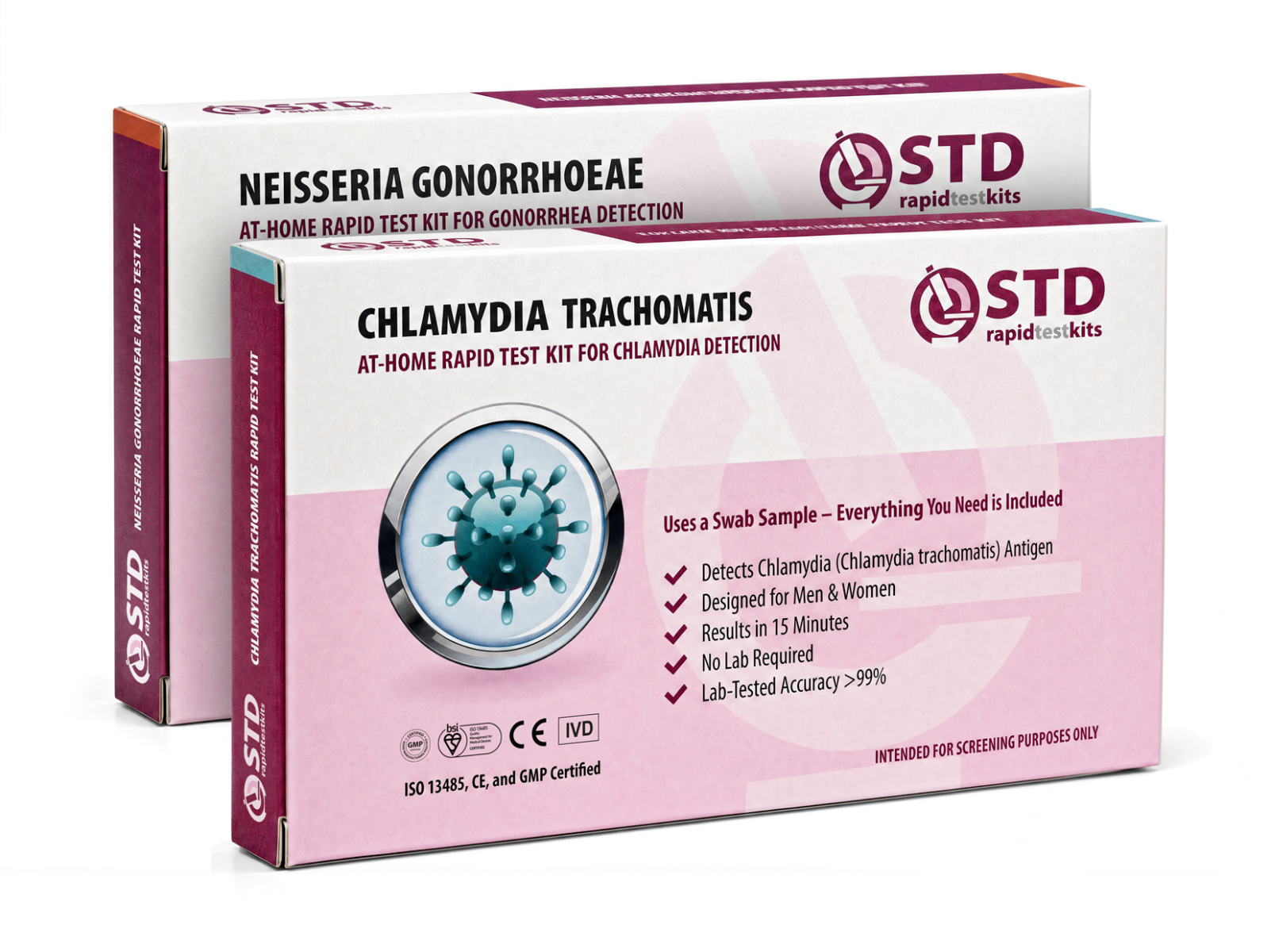
A note on test technology. At-home rapid STI tests use lateral-flow chemistry and the same self-collected swab sample type as in-clinic testing, with results in about 15 minutes. Lab-based NAAT (nucleic-acid amplification) testing is the gold standard for analytical sensitivity. The two are complementary, not equivalent: a positive home result is a clear next step (see a clinician for the prescription), and a negative home result close to the exposure should be repeated after the window period. Check the specific product page for the manufacturer's reported sensitivity and specificity figures.
STD Rapid Test Kits publishes this article and sells the at-home tests linked below. We recommend products based on fit-for-purpose for the reader's concern, not commercial benefit.
What treatment looks like
If a test comes back positive, the good news is that bacterial STDs respond well to antibiotics. The CDC's STI Treatment Guidelines for epididymitis are the source clinicians follow, and they update periodically as antibiotic resistance patterns change.
For sexually-transmitted epididymitis in men under 35, the current first-line regimen is dual antibiotic therapy: a single intramuscular injection of ceftriaxone (500 mg) plus doxycycline 100 mg taken orally twice daily for ten days. The dual coverage handles chlamydia and gonorrhea simultaneously, since clinicians treat empirically while awaiting test results to prevent complications and onward transmission.
A few rules apply during treatment regardless of which infection is involved:
- No sex (vaginal, anal, or oral) for at least seven days after starting antibiotics, and until any symptoms have fully resolved.
- Tell recent partners so they can get tested and treated. Reinfection from an untreated partner is a frequent cause of "chronic" cases that aren't actually chronic. Many states allow expedited partner therapy, where your prescriber writes a script for your partner without seeing them in person.
- Retest in about three months to make sure the treatment cleared the infection and to catch any reinfection early, per CDC guidance.
- Use condoms going forward, especially with new partners, and consider routine screening every three to six months if you have multiple or new sexual contacts.
Pain relief usually arrives within the first few days of starting antibiotics. Scrotal swelling takes longer to fully settle, often one to two weeks, because inflammation persists after the bacteria are cleared. Over-the-counter anti-inflammatories and supportive underwear can help while the antibiotics do their work. The Mayo Clinic's overview of epididymitis notes that most cases resolve fully with appropriate treatment, with rare cases of chronic pain, abscess, or fertility complications when treatment is significantly delayed.
The two-minute self-exam, and why so many men wait too long
Testicular pain is one of the most quietly endured symptoms in men's health. Many men either assume it's a pulled muscle, hope it'll go away, or feel embarrassed enough to put off a clinician visit until the pain forces their hand. The result is delayed diagnosis, longer recovery, and a higher chance of complications that early treatment would have prevented.
None of this is a moral failing. The shame and stigma around male sexual-health symptoms are well-documented, and they cost time. The shift that helps is treating an aching testicle the same way you'd treat any other persistent unexplained pain. Chest pain that lingers gets investigated. A swelling lump anywhere else gets investigated. The testicles deserve the same baseline of attention.
The monthly self-exam takes two minutes
A monthly testicular self-exam is the single most effective at-home screening tool for testicular cancer. The best time is after a warm shower, when the scrotal skin is relaxed and the testicles hang lower.
- Hold each testicle between your thumb and fingers and roll it gently to feel the entire surface.
- The testicle itself should feel firm but smooth, like a peeled hard-boiled egg.
- You'll feel a softer tube along the back of each testicle. That's the epididymis. It's normal and shouldn't be confused with a tumor.
- What you're looking for: a hard lump, a new bump on the surface of the testicle, asymmetry that wasn't there before, or a change in size, weight, or texture.
If you find something that worries you, see a urologist or your primary care provider within a week. Most lumps turn out to be cysts, varicoceles, or other benign findings, but the workup is fast (usually a scrotal ultrasound) and the consequences of waiting on a real cancer are serious.
Reducing your risk of preventable testicular pain
You cannot prevent every cause. Torsion, hernias, and many cancers are essentially random. But several common causes are reachable through everyday habits.
- Use condoms and test regularly. Condoms sharply reduce the transmission of chlamydia and gonorrhea, the single biggest preventable driver of epididymitis-related testicular pain in younger men. The CDC recommends annual chlamydia and gonorrhea screening for sexually active men who have sex with men, and risk-based screening for other sexually active men. A short at-home test once or twice a year, or after a new partner, catches most asymptomatic infections before they cause symptoms.
- Stay current on MMR. The MMR vaccine series prevents mumps, a leading viral cause of orchitis in unvaccinated post-pubertal men. If you missed the second dose growing up, ask your provider about catch-up immunization.
- Wear protective gear in contact sports. A properly fitted athletic cup prevents most direct-trauma testicular injuries. For cycling, a well-cushioned saddle, frequent position changes, and avoiding extremely long uninterrupted rides reduce the chronic pressure issues that some riders develop, including pudendal nerve irritation that can refer pain to the scrotum.
- Watch your lifting form and treat constipation. Chronic straining and improper form on heavy lifts both contribute to inguinal hernia risk. Hernias themselves are repaired surgically, but slowing the progression of a small one is worth the small daily effort.
Two practical reframes
- Testing isn't a verdict on your behavior. Sexually transmitted infections happen to people who use condoms imperfectly, to people in long-term relationships, to people with one partner, and to people with many. The infection doesn't reflect anything about your character. Most cases are easy to treat once identified.
- Knowing is cheaper than wondering. An at-home rapid test or a clinic visit takes a fraction of the time you'd spend reading symptom forums at midnight. The certainty alone is worth it, even when the result is negative.
To prevent complications and transmission of STIs, presumptive therapy for all sexually active men is indicated at the time of the visit before all laboratory test results are available.
When to test from home, when to see a clinician
An at-home rapid test is a reasonable first move when the pain is mild to moderate, has been building gradually, and you have a recent sexual exposure that fits the timeline. It rules in or out the two most common bacterial causes within a private, fast turnaround. If the test is positive, you can take the result to a clinician for the antibiotic prescription. If it's negative and the pain continues, that's useful information too: it pushes the workup toward non-STD causes.
Skip the home test and go straight to a clinician (or the ER) in any of these situations:
- Pain came on suddenly or feels severe.
- The testicle is markedly swollen, hard, or visibly elevated.
- You have a fever, chills, or feel systemically unwell.
- There's a lump or mass that wasn't there before, even if it's painless.
- The pain has continued or worsened past two weeks despite a negative home test.
- You're outside the under-35 demographic where STD-driven epididymitis is most common, and there are other explanations worth considering.
For men who want broader peace of mind, a multi-test panel covers more ground in a single sample collection. Co-infections are common enough after higher-risk exposures that a wider panel can catch what a single-target test would miss; the CDC's epididymitis guideline reflects this by treating chlamydia and gonorrhea empirically together when sexual transmission is suspected.

If the test is negative but the pain continues
Negative tests after the proper window mean the two most common bacterial STDs are not driving the pain. That's genuinely useful information, even though it can feel anticlimactic when you're still hurting. The next step is a clinician visit so they can examine the area, consider the non-STD causes covered earlier, and order imaging or follow-up tests if needed.
An ultrasound can clarify swelling, fluid collection, varicoceles, and rule out the rarer causes that physical examination can't always pick up. If the workup keeps coming back clean and the pain is chronic, pelvic-floor physical therapy is worth asking about; pelvic-floor muscle tension can amplify or even produce testicular ache, and it's a frequently missed cause.
- Tenderness pattern: which structure is tender when palpated.
- Whether lifting the testicle eases the pain (a classic clue for epididymitis).
- Hernia: does a bulge appear when you cough or strain.
- Lump assessment: any solid mass on the testicle itself, separate from the epididymis.
- Movement reproducibility: does the pain repeat with specific motions.
What to do now
Is the pain sudden, severe, or paired with nausea, vomiting, or rapidly worsening swelling?
Yes: Go to the ER immediately. The 4 to 6 hour torsion clock starts at pain onset, and waiting risks losing the testicle.
Is the ache mild to moderate, gradual, and you've had a sexual exposure in the past 1 to 4 weeks?
Yes: Use an at-home chlamydia and gonorrhea swab test at least 7 days after the exposure. If positive, take the result to a clinician for the antibiotic prescription. If negative but the ache continues, retest at day fourteen.
Has the pain continued or worsened past two weeks despite a negative home test, or have you found a new lump on the testicle?
Yes: Book a clinician visit. A scrotal ultrasound plus a physical exam can rule out the non-STD causes covered above.
No: Keep the monthly two-minute testicular self-exam habit. Most structural changes are caught early when you know what your baseline feels like.
Pick the path that matches your situation. None of this replaces a clinician's judgment when something feels off.
Frequently asked questions
- Is testicle pain ever normal?
- Brief soreness after a minor knock or a hard workout can be normal and usually resolves within a day. Anything that lasts more than a day or two, or any sudden severe pain, is not normal and deserves a check.
- I have testicle pain but no other symptoms. Could it still be an STD?
- Yes. Chlamydia in particular is often quiet in its early stages, with no discharge or burning. A persistent one-sided ache after a recent sexual encounter is a reasonable trigger to test, even without urinary symptoms.
- How soon after sex can testicular pain from an STD show up?
- Most men notice the first signs within one to two weeks of exposure, sometimes a little sooner with gonorrhea. Urethral signs like burning urination or discharge can show up a few days before the testicle starts to ache, though chlamydia often skips those early warnings entirely.
- Why does only one testicle hurt if it's an infection?
- Each testicle has its own drainage and tube system. When bacteria travel upward, the inflammation usually starts on one side and may not spread to the other. One-sided pain with normal feeling on the opposite side is a typical pattern for epididymitis.
- How do I tell STD pain from a torsion emergency?
- Onset and intensity. Torsion pain is sudden and severe, often with nausea or vomiting, and gets worse fast. STD-driven pain builds gradually over hours to days. The 4 to 6 hour mark from pain onset is the threshold that decides whether the testicle can be saved with surgery, so if you're unsure, treat it as torsion and go to the ER.
- How long does treatment take to work?
- Pain typically eases within 2 to 3 days of the first antibiotic dose. Scrotal swelling takes longer (often 1 to 2 weeks) because the inflammation outlasts the bacteria. No sex for at least 7 days after starting treatment, and not until symptoms are fully gone.
- Can untreated testicular STD pain affect fertility?
- Rarely, but it's possible. Long-untreated epididymitis can scar the duct system and contribute to infertility, and in unusual cases cause chronic pain. Early treatment makes that risk very low. The takeaway is to treat persistent pain promptly rather than waiting it out.
- What is a varicocele and how is it treated?
- An enlarged tangle of scrotal veins, often described as feeling like a bag of worms on the left side. The characteristic sign is an ache that builds during the day and eases when you lie down. Most varicoceles are left alone. If fertility is a concern or daily discomfort is affecting life, a urologist can close off the veins in an outpatient procedure.
- U.S. Centers for Disease Control and Prevention. STI Treatment Guidelines, Epididymitis section. Source for the bacterial organisms behind sexually-transmitted acute epididymitis (C. trachomatis, N. gonorrhoeae, M. genitalium), the dual presumptive-therapy regimen (ceftriaxone plus doxycycline for 10 days), and the rationale for treating before lab results return.
- U.S. Centers for Disease Control and Prevention. About Chlamydia (overview page). Source for the asymptomatic-in-men finding and the recognition of testicular pain and swelling as chlamydia symptoms.
- U.S. Centers for Disease Control and Prevention. About Gonorrhea (overview page). Source for typical urethral symptoms in men (burning urination, white/yellow/green discharge) and the recognition of painful or swollen testicles as a complication.
- NHS. Testicle pain and lumps overview. Source for emergency-pattern guidance on sudden severe testicular pain and torsion.
- Mayo Clinic. Epididymitis: symptoms and causes. Source for clinical course, treatment outcomes, and rare complication patterns including chronic pain, abscess, and fertility consequences when treatment is delayed.
- American Cancer Society. Survival rates for testicular cancer. Source for the 99 percent five-year relative survival figure for localized-stage testicular cancer.
