
Published: October 2025 | Last updated: May 2026 | Editorial review and quality control: Martina N.
Most people who carry HPV never feel a single symptom. There are no bumps, no burning, no unusual discharge to flag the infection as different. The virus settles into skin and mucosal cells, often clears on its own within one or two years, and frequently disappears before anyone thinks to test for it. That is what makes human papillomavirus one of the trickiest sexually transmitted infections to time correctly. Waiting for warts will not help, because most strains do not cause warts. Waiting for symptoms will not help either, because the strains that matter most for cancer risk almost never produce any.
This guide walks through what asymptomatic HPV actually looks like, when testing is most useful, what at-home options exist, what changes once you have been vaccinated, and the specific testing gaps that affect men, transmasc people, and anyone without a cervix.
Key Takeaways
- HPV is one of the most common sexually transmitted infections; most sexually active adults will encounter it at some point, and the body clears about 9 in 10 infections naturally within two years (per CDC).
- HPV testing is timing-driven, not symptom-driven. A well-timed cervical sample can detect high-risk strains months or years before any cell-level changes appear.
Why Silence Makes HPV Hard To Catch
Many sexually transmitted infections announce themselves. Chlamydia and gonorrhea can cause burning when you urinate. Syphilis often produces a chancre at the site of infection. Herpes can produce vesicles. HPV does almost none of that. The virus lives inside skin and mucosal cells, mainly in the cervix, anal canal, vulva, penis, scrotum, and oropharynx. It does not enter the bloodstream the way HIV or hepatitis viruses do, so most people get no fever, no inflammation, no swollen lymph nodes. The immune system either clears the infection quietly or contains it for months or years.
There are over 200 known HPV genotypes, and roughly a dozen are classified as high-risk for cancer. HPV 16 and HPV 18 alone are responsible for about 76% of cervical cancers (WHO cervical cancer fact sheet) and a substantial share of HPV-driven oropharyngeal and anal cancers. Low-risk types like HPV 6 and HPV 11 cause most genital warts but rarely cause cancer. The high-risk strains are also the strains most likely to be silent. They sit inside cervical or anal cells, slowly nudging cell-cycle behavior over years. Without screening, the first sign of trouble is often a precancerous lesion or a tumor, not a symptom you can feel.
This silence has consequences for transmission. You can pass HPV to a partner without knowing you have it, and your partner can pass it back without knowing they have it. Skin-to-skin contact is enough; ejaculation, penetrative sex, and visible lesions are not required. The infection can also lie dormant for years, which is why a positive test inside a long-term monogamous relationship does not automatically mean recent exposure or infidelity.
What HPV Looks Like When It Does Show Up
When HPV does produce a visible sign, it usually falls into one of two patterns. The first is genital warts, caused mostly by low-risk types 6 and 11. They appear as small, soft, skin-colored or pink growths on the vulva, penis, scrotum, perineum, around the anus, or occasionally on the lips, tongue, or throat. They can be flat, raised, single, or clustered into a cauliflower-like shape. Warts are usually painless, though they can itch or feel tender during sex. They are visually distressing for many people, but they are not dangerous and they do not turn into cancer.
The second pattern is cellular change found through screening. A Pap smear collects cells from the cervix and looks for abnormal nuclei or shape changes. The precancerous spectrum runs from ASCUS (atypical squamous cells of undetermined significance) through CIN1, CIN2, and CIN3 in increasing severity. A primary HPV test goes one step further and looks for viral DNA itself, often with separate genotyping for HPV 16 and 18. Neither test feels like anything; results come back from the lab and a clinician explains what they mean. People with cellular changes almost never have symptoms at the time they are diagnosed (National Cancer Institute on HPV and cancer).
The third and most common category is no presentation at all. No warts, no abnormal cells yet, and no symptoms. This is especially true in the first months after infection, in people with strong immune systems who clear the virus quickly, and in anyone outside the routine cervical-screening pathway. Men, transmasc people, and nonbinary people without a cervix tend to fall into this last group by default.
| Presentation | What It Looks or Feels Like | How It Usually Comes To Light |
|---|---|---|
| Genital warts | Small, soft, skin-colored or pink growths; flat, raised, or cauliflower-shaped; usually painless | Self-noticed or spotted by a partner |
| Abnormal cervical cells | No symptoms; flagged on a Pap smear or primary HPV DNA test | Routine cervical screening |
| No presentation at all | No warts, no abnormal cells yet, no symptoms | Often only found if specifically tested for |
How HPV Testing Works Without Symptoms
HPV tests are timing-driven, not symptom-driven. The question is not whether you feel sick. The question is whether enough viral material is present in your cervical, anal, or oropharyngeal cells to be detected. For people with a cervix, the most evidence-based path is a cervical sample collected during a routine pelvic exam, then tested either for cellular changes (Pap), for high-risk HPV DNA (primary HPV testing), or both at once (cotest).
Current US Preventive Services Task Force guidance recommends cervical cancer screening every 3 years with cytology alone for ages 21 to 29, and either every 3 years with cytology, every 5 years with primary high-risk HPV testing, or every 5 years with cotesting for ages 30 to 65. Self-collected cervical samples are increasingly accepted as an alternative to clinician-collected swabs. The FDA has cleared at-home and in-clinic self-collection devices for high-risk HPV testing using the same molecular assays that labs run on speculum-collected samples. Sensitivity for high-risk types is comparable when the sample is collected correctly, which matters most for people who avoid pelvic exams because of trauma, dysphoria, cost, distance, or simple discomfort.
Outside the cervical pathway, HPV testing is more situational. Anal Pap smears and anal HPV DNA testing are routinely offered in some HIV clinics and sexual-health clinics that serve men who have sex with men, especially for people with a history of receptive anal sex. Oropharyngeal HPV testing is mostly a research and head-and-neck-cancer surveillance tool, not a screening test. Penile HPV testing is not part of any routine screening guideline, and there is no FDA-approved consumer test for it.
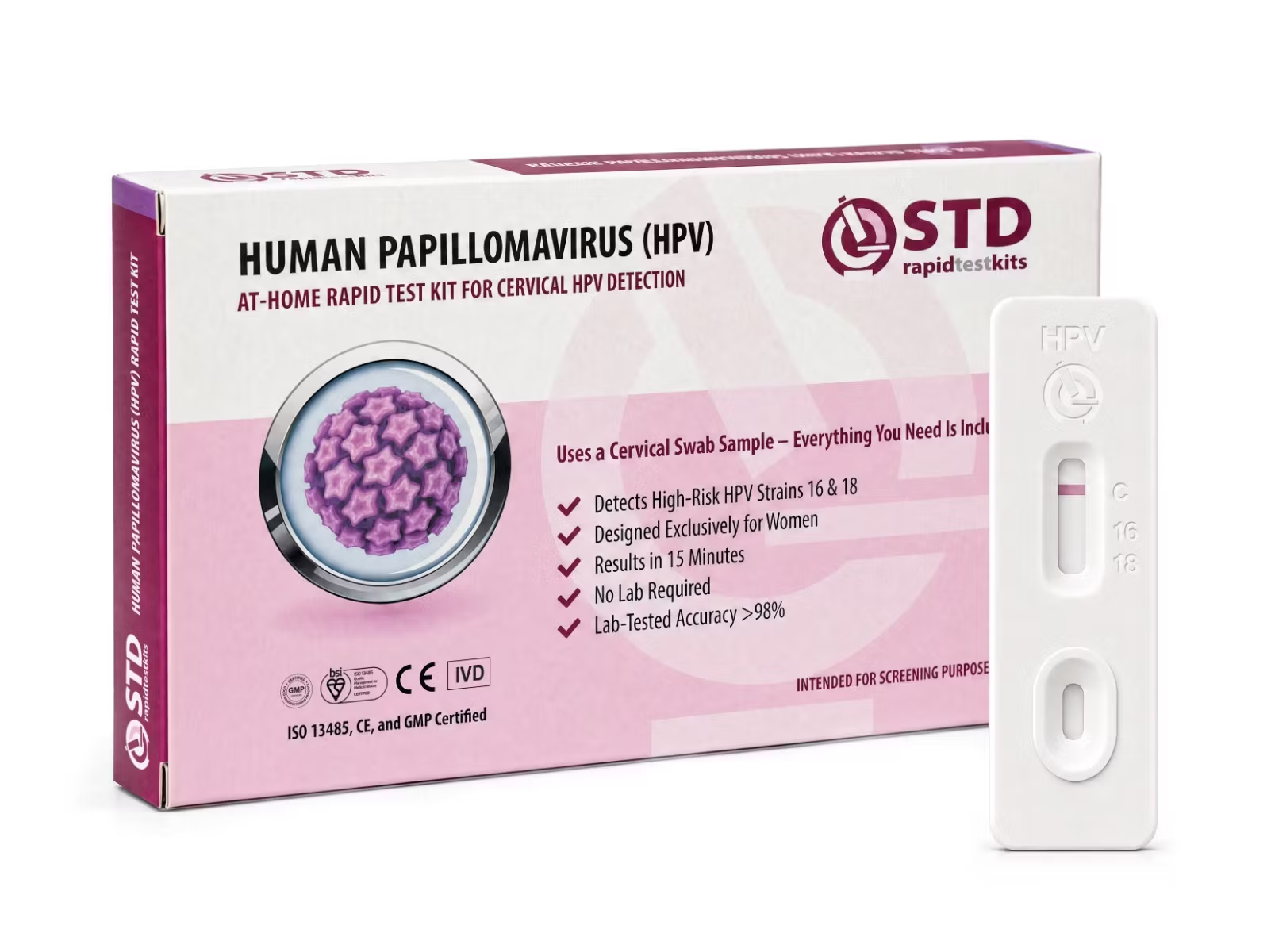
Disclosure: stdrapidtestkits.com sells at-home HPV rapid tests; the option below reflects a product we stock, not an exhaustive comparison of the market.
When To Test After A Possible Exposure
Unlike HIV or syphilis, where the window period is well defined and tied to a clear seroconversion timeline, HPV does not produce a measurable antibody response that doctors use for diagnosis. There is no widely available HPV antibody test for routine screening. What clinicians look for instead is viral DNA in the cells of the area where infection would have started: the cervix, the anal canal, or, in research settings, the throat or penis. The implication is that timing-based reasoning has to focus on when the virus is replicating in those cells in detectable amounts.
For most exposures, that means waiting at least a few weeks before testing. Viral replication starts within days of infection, but the amount of viral DNA in a sample is usually low until cells are actively shedding virus. A reasonable practical floor is around 3 weeks post-exposure for cervical or anal HPV testing, with a strong preference for waiting closer to 4 to 8 weeks if you can. If a high-risk exposure happened recently and you also want to rule out chlamydia, gonorrhea, syphilis, or HIV, your testing schedule for those infections has its own per-infection windows and usually drives the timing of an STI workup overall.
Routine cervical screening is a separate question. Once you are inside the screening guideline, the schedule is built to catch persistent infections before they cause cellular changes. You do not have to time it around individual exposures; you just have to keep the interval.
| Time Since Possible Exposure | What Is Happening At The Cellular Level | Testing Outlook |
|---|---|---|
| 0 to 7 days | Virus may be present but not yet replicating in detectable amounts | Too early to test usefully; wait |
| 3 to 4 weeks | Viral replication is established and cells begin shedding virus | Earliest reasonable window for cervical or anal HPV DNA testing |
| 4 to 8 weeks | Viral DNA load is typically high enough for reliable detection | Best practical window for a single targeted test after exposure |
| 3 to 24 months | Body either clears the virus or maintains a persistent infection | Routine screening still detects persistent high-risk strains |
What If You Have Been Vaccinated?
HPV vaccines change the math, but they do not eliminate it. Gardasil 9, the version currently used in the United States, protects against nine HPV types: 6, 11, 16, 18, 31, 33, 45, 52, and 58. Together those types cause the majority of cervical cancers and most genital warts (per CDC information on HPV). The Advisory Committee on Immunization Practices recommends routine vaccination at ages 11 to 12, with catch-up vaccination through age 26, and shared clinical decision-making for adults aged 27 through 45 who were not adequately vaccinated earlier.
The vaccine works best when given before any HPV exposure, which is why it is recommended for preteens. Catch-up doses still help adults, but the benefit shrinks if some of the covered types have already been encountered. There are also high-risk types not covered by Gardasil 9 (types like HPV 35, 39, 51, 56, 59, and 68 are oncogenic but not in the vaccine), and earlier vaccine versions covered fewer strains. Some people received only one or two doses of a multi-dose schedule and never finished the series.
The takeaway is straightforward. Vaccination dramatically reduces your risk, but it does not replace screening. People with a cervix should still follow cervical screening guidelines on the same timeline whether they were vaccinated or not. If you are vaccinated and worried about a specific exposure, the same testing logic applies: wait the appropriate interval, test the relevant site, and follow up if something is detected.
HPV In Men And Non-Cervix Bodies: Testing Gaps And Real Risks
If you have asked a primary care doctor whether you can be tested for HPV and walked away frustrated, the frustration is structural. There is no FDA-approved HPV screening test for cis men, and no recommended routine screening interval for cis male anatomy. Most cis men who learn they have HPV find out one of two ways: visible warts appear, or a partner with a cervix is diagnosed and asks them to think about their own status.
This gap is not because HPV is rare in men. The CDC estimates that more than 40% of cis men have a detectable genital HPV infection at any given time. High-risk types are linked to penile cancer, anal cancer, and oropharyngeal (throat and tonsil) cancer. The last category is rising and now affects more men than women in the US. The reason there is no routine screening for cis male anatomy is that the available tests perform less reliably on penile samples than on cervical samples, and there is no validated path from a positive penile HPV result to a treatment that improves outcomes.
What does exist: anal Pap and anal HPV DNA testing, offered by many HIV clinics and some sexual-health clinics for people at higher risk (men who have sex with men, people living with HIV, people with a history of receptive anal sex, and people with previously diagnosed anal dysplasia). Oropharyngeal HPV testing exists in research and head-and-neck-cancer surveillance settings. The practical move for non-cervix bodies is to ask specifically about anal Pap testing if your risk profile fits, and to have a candid conversation with a clinician about your individual exposure history.
The at-home HPV test we sell is validated for cervical sampling collected via vaginal self-swab. We do not currently offer a male-compatible HPV kit. Cis male, transmasc, and nonbinary readers without a cervix who want HPV testing should ask a clinic about anal Pap or anal HPV DNA testing based on individual risk profile, since those are the screening pathways most clinicians can actually deliver outside the cervical-screening world.
At-Home HPV Tests: How They Actually Work
At-home HPV testing comes in two formats. The first is lab-processed self-collection: you collect a vaginal sample with a soft swab, seal it in a transport tube, and mail it to a partner laboratory that runs a molecular HPV DNA assay. Results come back through a secure portal in days to weeks. This is the format used for most FDA-cleared cervical self-sampling pathways and is supported by guideline-aligned screening data.
The second format is a rapid lateral-flow cassette test that can be read at home in about fifteen minutes, similar in mechanics to an at-home pregnancy test. The rapid format is faster and more private, but lateral-flow chemistry generally has lower analytical sensitivity than the PCR or hybrid-capture assays that laboratories use. A negative rapid result is best treated as a useful screening signal that benefits from confirmation with a lab molecular test if your risk profile is elevated, and a positive rapid result is a clear flag to follow up with a clinician for cellular evaluation. For most readers, an at-home HPV test is a meaningful addition to the screening toolkit, especially if you have been avoiding speculum exams.
Currently there are no FDA-approved at-home HPV tests for penile, anal, or oropharyngeal sampling. Some research programs are experimenting with self-collected anal swabs, but those are not yet available as direct-to-consumer products.
An at-home rapid HPV test is a screening tool. A positive rapid result is a useful flag that something needs a closer look, but the diagnosis sits with a clinician who can run a confirmatory lab molecular test, examine cervical cells (cytology), and decide whether colposcopy or further follow-up is needed. Do not skip that step on the strength of a rapid line alone.
How To Talk To A Partner About It
The hardest part of an HPV diagnosis is often the conversation that follows, especially when someone in a long-term relationship gets a positive result. The instinctive question (who gave it to whom?) almost never has a clean answer with HPV. The virus can lie dormant for years before showing up on a screen. A diagnosis in 2026 might trace back to an exposure in 2012 that neither partner ever felt. Treating the conversation as a fact-finding exercise about fidelity usually fails on the science alone.
What works better is leading with the medical reality. HPV is the most common sexually transmitted infection in the world. Most sexually active adults will get it at some point. The body clears it most of the time. The cases that matter most for cancer risk are the high-risk strains that persist for years, and screening is what catches them before cellular changes turn into something worse. None of those facts depend on assigning blame.
For partners who do not currently have a cervix, the most useful conversation is usually about their own risk profile and whether they fit any criteria for anal Pap or oropharyngeal surveillance. For partners who do have a cervix, the question is whether their own screening is up to date. Either way, the diagnosis is information that goes into a longer plan, not a verdict.

Why “I Feel Fine” Is Not Enough
The distance between “I feel fine” and “I have a high-risk HPV infection” is shorter than most people assume. Cellular changes that lead to cervical cancer take years to develop, and they cause no symptoms during the years that matter most for prevention. By the time abnormal bleeding, pelvic pain, or discharge appears, the disease is usually further along than anyone wants. The same is true for anal and oropharyngeal cancers driven by HPV: symptoms tend to arrive late.
This is why cervical screening exists at all. Pap smears were introduced in the mid-20th century specifically because cervical cancer was killing people who felt fine until they suddenly did not, and the precancerous stages turned out to be detectable and treatable. Cervical cancer mortality dropped sharply afterwards. The same logic now applies to primary HPV testing, which catches high-risk infections even earlier in the cellular timeline.
“I feel fine” is reasonable evidence about today. It is not evidence about what is happening at the cellular level over a five-year horizon. The point of testing without symptoms is not to chase anxiety; it is to use the screening windows that exist precisely because cell-level changes happen long before any symptom would appear.
In about 9 out of 10 cases, the body's immune system clears the HPV infection naturally within 2 years. Some HPV infections persist and cause health problems, including genital warts and certain types of cancer.
Frequently Asked Questions
- Can I really have HPV and feel completely normal?
- Yes. Most HPV infections produce no symptoms, especially in the first weeks and months after exposure. The CDC reports that around 90% of HPV infections clear naturally within two years, often without the person ever knowing they had one. Visible warts and abnormal Pap results are the exceptions, not the rule, and they almost never coexist. The strains most relevant to cancer risk are also the strains most likely to be silent.
- How long can HPV stay in my system?
- For most people, one to two years. The body's immune system clears around 9 in 10 HPV infections within that window. A smaller fraction develops persistent infections that last longer, and these are the ones that drive cervical, anal, and oropharyngeal cancer risk over time. Persistence is what screening is designed to catch, which is why testing matters even when you feel fine.
- Does the HPV vaccine still help if I'm sexually active?
- It can. Gardasil 9 protects against nine HPV types that together cause most cervical cancers and most genital warts. ACIP recommends catch-up vaccination through age 26, and shared clinical decision-making for adults aged 27 through 45. The vaccine works best before any HPV exposure, so the benefit shrinks if some of the covered types have already been encountered, but it does not become useless.
- Is an at-home HPV test as accurate as a Pap smear?
- They are not the same kind of test. A Pap smear is cytology: a clinician (or lab) looks at cervical cells under a microscope for shape and structure changes. An HPV DNA test, which is what most lab-processed home kits run, looks directly for high-risk viral DNA without needing visible cell changes. Modern guidelines treat primary HPV DNA testing as a first-line cervical screening tool every 5 years for most people aged 30 to 65 with a cervix, and self-collected samples are accepted alongside clinician-collected swabs. Rapid at-home cassette tests are a third option: they trade some analytical sensitivity for speed and privacy and should be treated as a screening flag rather than a final answer.
- Do condoms protect against HPV?
- Partly. Condoms reduce HPV transmission risk substantially, but because HPV spreads through skin-to-skin contact, the virus can still pass through skin areas a condom does not cover. Combining condoms with vaccination and routine screening offers the strongest protection.
- Can cis men get tested for HPV?
- There is no FDA-approved screening HPV test for cis men, and no recommended routine screening interval. Anal Pap and anal HPV DNA testing are offered at some HIV clinics and sexual-health clinics for higher-risk patients, including men who have sex with men, people living with HIV, and people with a history of receptive anal sex. Oropharyngeal HPV testing is mostly research-only. Most cis men learn they have HPV through visible genital warts or a partner's diagnosis.
- Can HPV come back after the body clears it?
- Researchers debate whether persistent low-level virus reactivates or whether new exposures cause apparent recurrences. Either way, a previous clearance does not make you immune to a different HPV type, and a positive result years after a previous negative does not necessarily mean recent infidelity. People with a cervix should keep up with screening on the standard interval regardless of past results.
- Should I get tested after every new partner?
- Routine cervical screening every 3 to 5 years catches persistent high-risk HPV well before cell changes develop, so testing on a per-partner basis is rarely needed for surveillance. A specific high-risk exposure, an immunocompromising condition, or a partner with a confirmed HPV diagnosis is a reasonable trigger for an interval test, ideally a few weeks after the exposure window.
How we sourced this article: We synthesized current guidance from leading public-health and medical organizations (CDC, WHO, the National Cancer Institute, the U.S. Preventive Services Task Force, and Mayo Clinic) and translated it into plain language so readers can act on it. Around fifteen references informed the writing; the most relevant root-domain sources are listed below. We do not provide clinical diagnosis. For symptoms or results that concern you, see a licensed clinician.
- U.S. Centers for Disease Control and Prevention. About Genital HPV Infection: overview of transmission, prevalence, and the typically symptom-free course of infection.
- U.S. Centers for Disease Control and Prevention. STI Treatment Guidelines for Human Papillomavirus: clinical management and recommended testing pathways.
- World Health Organization. Cervical cancer fact sheet: high-risk HPV genotypes 16 and 18 and their share of cervical-cancer burden globally.
- National Cancer Institute. HPV and Cancer: high-risk strain biology, the cellular timeline, and the screening rationale for asymptomatic infections.
- U.S. Preventive Services Task Force. Cervical Cancer: Screening recommendations and intervals for cytology, primary HPV testing, and cotesting.
- Mayo Clinic. HPV infection: symptoms, causes, and patient-facing overview of the condition.
