Published: November 2025 | Last updated: May 2026 | Editorial review and quality control: Martina N.
Is a weird smell after sex normal or a warning sign?
Most often it is a short-lived pH shift: semen is alkaline, the vagina is acidic, and odor can change for a day or two while your microbiome rebalances. A fishy smell that lasts past 48 hours, sharpens, or comes with itching or unusual discharge points toward bacterial vaginosis or trichomoniasis and is worth a test.
A new smell after sex is one of those quiet worries almost nobody says out loud. You stand up, notice something different, and your mind jumps to the worst case. Take a breath. The list of likely causes is shorter than the internet suggests, and most of them clear in days, not weeks.
Here is the reassuring part. In most cases the cause is a temporary change in vaginal chemistry, not an infection. Vaginal fluid is naturally acidic, semen is alkaline, and when the two meet your pH rises for a few hours. Your microbiome usually settles back to baseline within a day or two, and odor can shift while it does. The rest of this guide separates that normal recalibration from the patterns that genuinely call for a test, whether you noticed the change yourself or you are reading this for a partner.
Key Takeaways
- Bacterial vaginosis is the single most common cause of a fishy smell after sex. It is a bacterial imbalance, not always sexually transmitted, and it clears with a short course of prescription antibiotics.
- A smell that persists past 48 hours, sharpens instead of fading, or arrives with frothy greenish-yellow discharge, itching, or burning is the cue to test rather than wait, since trichomoniasis and early BV both show up this way.
What is actually happening down there after sex
Sex changes vaginal chemistry almost immediately. A healthy vagina sits at roughly 3.5 to 4.5 on the pH scale, mildly acidic and protective, with lactobacilli as the dominant bacteria (see this NIH-hosted review of the vaginal microbiome). Semen sits higher, around 7.2 to 8.0, on the alkaline side. When the two mix, the protective acidic environment shifts upward for several hours, which can briefly give any odor-producing bacteria already present a small window to make themselves noticed.
Friction, sweat, lubricants, latex, saliva, and small amounts of menstrual blood all add to the post-sex scent profile too. None of that is a hygiene failure. It is biology doing what it is built to do.
What matters is what happens over the next 48 hours. A simple pH shift resolves on its own as protective lactobacilli reclaim the space. An infection does not fade on that schedule.
A normal pH shift fades within about 48 hours, and you feel otherwise fine. If the smell is still there at 48 hours and not clearly easing, treat it as a possible infection signal, especially when it arrives with itching, burning, or a change in discharge, or returns after every encounter. Duration and any accompanying symptoms are what tell the two apart.
How different kinds of sex shift vaginal pH
Not every kind of contact moves the dial the same amount. Protected vaginal sex barely changes pH. Unprotected internal ejaculation moves it the most, while oral and anal contact each shift the picture in their own way. The table below maps what happened to what you might be smelling now.
| Activity | Typical pH impact | Duration of shift | Common odor pattern |
|---|---|---|---|
| Protected vaginal sex | Minimal disruption | A few hours | Light, musky |
| Unprotected internal ejaculation | Temporary alkaline shift | Up to 24 to 48 hours | Stronger, slightly sour or metallic |
| Oral sex | Variable, depends on saliva bacteria | Several hours | Subtle, usually mild |
| Anal-to-vaginal contact without washing | Higher bacterial transfer risk | Can disrupt balance longer | May raise the chance of a fishy odor |
Bacterial vaginosis: the most common culprit
Bacterial vaginosis is, by a wide margin, the most common reason a person with a vagina notices a strong fishy smell, especially right after sex. It develops when protective Lactobacillus bacteria drop in number and other bacteria, most often Gardnerella vaginalis, overgrow. The CDC calls BV the most common vaginal condition in women ages 15 to 44 (CDC, Bacterial Vaginosis), and both the CDC and the NHS note that it is not classified as a sexually transmitted infection, even though sex can set off a flare (NHS, Bacterial Vaginosis).
Here is the chemistry behind the timing. Semen pushes vaginal pH higher, and that more alkaline environment makes BV-associated bacteria release volatile amines, the compounds responsible for the fishy odor. So if you only notice the smell after a partner finishes inside you, that pattern fits BV rather than coincidence. Treatment is a short course of oral or topical antibiotics, usually metronidazole or clindamycin, prescribed after a clinical evaluation, and it typically clears within days.
Signs that point to bacterial vaginosis
Having one or two of these does not confirm BV; only a test can. This combination, though, is the classic pattern.
- A strong fishy odor that gets noticeably worse after sex Common
- Thin, gray or off-white discharge Common
- Little or no itching (heavy itching points more toward a yeast infection) Less common
- Symptoms that flare after a new partner or unprotected sex Common
Why BV happens, and why it is not a hygiene failure
BV is influenced by sex, new partners, douching, recent antibiotics, and even stress, yet it can also show up with none of those. It is an ecosystem shift, not a personal failing or a sign that you are unclean. New-partner sex is worth singling out. Your vaginal microbiome is adapted to you, and introducing new semen, new skin bacteria, and new saliva asks it to recalibrate. Sometimes that happens smoothly, and sometimes it overcorrects into a BV-style imbalance you did not have a month earlier. The CDC lists new or multiple partners among the most consistent risk factors for BV.
This matters beyond the smell. Untreated BV can raise the risk of acquiring other STIs and can complicate pregnancy (CDC, Bacterial Vaginosis), so a persistent case deserves attention even though BV itself is not sexually transmitted.
- A new sex partner, or several partners in a short span
- Douching, scented intravaginal products, or strongly perfumed soaps
- A recent course of antibiotics that disturbed your normal bacteria
- An intrauterine device (IUD), for some people
When the smell points to trichomoniasis
Trichomoniasis comes from a single-celled parasite called Trichomonas vaginalis. Unlike BV, it is sexually transmitted, and unlike many STIs, it carries a recognizable odor. The CDC describes trich as the most common curable STI and notes that about 70% of infected people have no symptoms at all, which is exactly why it spreads so quietly between partners (CDC, Trichomoniasis). The WHO classes Trichomonas vaginalis as the most common non-viral STI, with roughly 156 million new infections worldwide in 2020 among people aged 15 to 49 (WHO trichomoniasis fact sheet).
When trich does cause symptoms in people with vaginas, the pattern usually includes:
- A fishy or musty odor that does not resolve on its own
- Frothy, greenish-yellow discharge
- Vaginal itching, irritation, or rawness
- Burning during urination or sex
In men, trich often causes no symptoms, or only mild urethral irritation, and that asymmetry is why couples can pass it back and forth for months. It will not clear on its own. Standard treatment is a single oral dose or short course of metronidazole or tinidazole, and both partners need treatment at the same time to prevent reinfection.
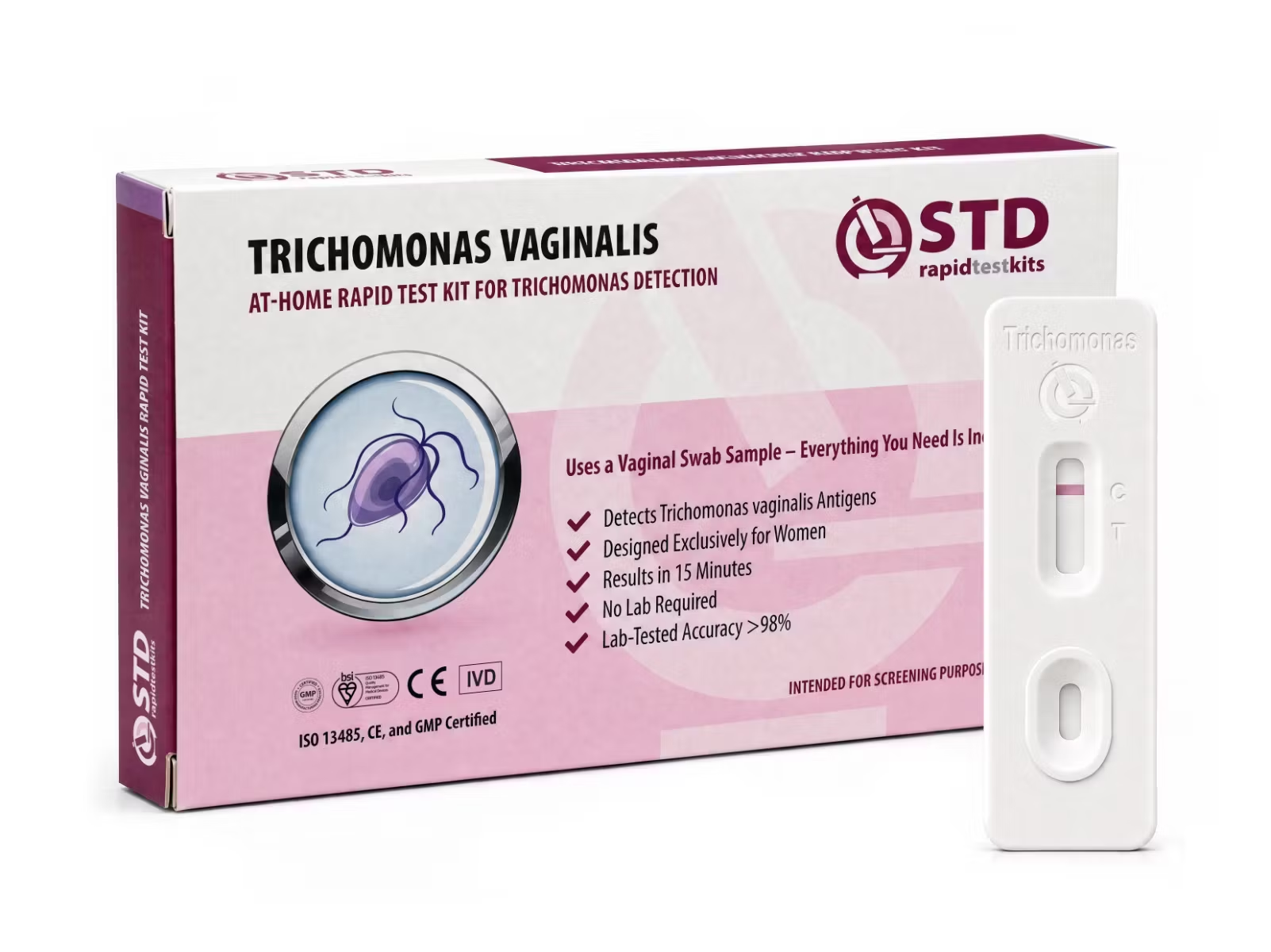
This article is published by stdrapidtestkits.com, which sells at-home rapid screening kits, including the trichomoniasis self-swab below; we recommend products by fit for your concern, not commercial benefit. That kit is validated for a vaginal self-swab only. A man or anyone without a vagina who needs a trich test should use a clinic swab or urine NAAT, since we do not sell a male-compatible trich kit.
Pattern recognition: BV vs trich vs a normal pH shift
Smell alone rarely settles the question. The combination of how long it lasts, the color of any discharge, whether there is irritation, and when it shows up is what separates these three. Here is the side-by-side that current CDC, WHO, and NHS guidance converges on.
BV vs Trichomoniasis vs a Normal pH Shift
| Feature | Bacterial vaginosis | Trichomoniasis | Normal pH shift |
|---|---|---|---|
| Smell | Strong fishy odor, worse after sex | Fishy or musty, persistent | Mild, fades in 1 to 2 days |
| Discharge | Thin, gray or off-white | Frothy, greenish-yellow | Clear or slightly milky, unchanged |
| Itching or burning | Usually minimal | Common | None |
| Cause | Bacterial imbalance, not always an STI | Sexually transmitted parasite | Semen briefly raises vaginal pH |
| Resolves on its own? | Usually not; antibiotics needed | No; prescription treatment required | Yes, within about 48 hours |
| Partner treatment? | Not routine | Yes, both partners together | Not applicable |
Duration, discharge color, and irritation, taken together, separate the three more reliably than smell alone.
Smell, but no discharge: what does that mean?
This is the question that keeps people stuck in a watch-and-wait loop for too long. Many of us wait for discharge before worrying, yet some infections announce themselves with odor well before any discharge change. You do not need a full checklist of symptoms before taking a concern seriously.
If something smells different and your instinct says it is more than sweat or chemistry, that alone is reason enough to test.
- Early BV can present as smell with little or no discharge change, especially right after the post-sex pH shift.
- Trichomoniasis can be present for weeks before noticeable discharge appears, particularly in mild cases.
- Early chlamydia or gonorrhea are usually odorless but can subtly alter vaginal scent through inflammation, and both are frequently silent in their first weeks (<a href="https://www.cdc.gov/chlamydia/about/" target="_blank" rel="noopener noreferrer">CDC, About Chlamydia</a>).
What about oral sex? Can saliva change pH?
Yes, but usually not dramatically. Saliva has its own bacterial mix and a near-neutral pH, and in most cases the vagina recalibrates quickly. The more interesting picture is repeated exposure, where oral bacteria meet your microbiome again and again, especially with a new partner. Two microbial ecosystems are getting acquainted, and your body adapts on its own timeline. That adaptation period has nothing to do with hygiene.
If a new odor lingers more than 48 hours after oral sex with a new partner, apply the same rule as for any other post-sex smell. The likeliest cause is early BV, not poor hygiene, and the same at-home test is a reasonable starting point.
Does semen cause BV?
Semen does not infect you with BV the way an STI is passed along. What it does is raise vaginal pH enough to give certain anaerobic bacteria an opening, more like briefly lowering the gate than bringing in an intruder. If you tend to get recurrent BV after internal ejaculation, condoms reduce episodes for some people by limiting that repeated pH swing. Bodies differ, so the only way to know whether condoms help you is to track the pattern over a cycle or two.
If BV flares again and again after internal ejaculation, try condoms for two or three cycles and see whether limiting the repeated pH swing reduces episodes. The pattern over that window is your signal.
When to test, and what to test for
Testing too early is one of the most common reasons people get a false-negative and then lose trust in home testing. Most STI tests have a window period between exposure and reliable detection.
If your last possible exposure was under a week ago, you can still test, but plan a retest two to three weeks later for confidence. A single negative inside the window period is not a clean all-clear, which mirrors standard CDC retest guidance for window-period infections like chlamydia and trichomoniasis.
For a fishy-smell complaint specifically, the highest-yield home test is one that covers trichomoniasis. If you also have several risk factors or new partners in the past few months, a broader panel that adds chlamydia, gonorrhea, and bloodborne STIs is the more thorough move; our at-home STI test kits bundle several into one self-collected session. The table below shows typical windows for the common odor-related causes. Always confirm the exact window for any specific kit against its own instructions for use.
| Condition | Earliest reliable test | Best accuracy window | Retest recommended? |
|---|---|---|---|
| Bacterial vaginosis | When symptoms appear | Any time symptomatic | If symptoms return after treatment |
| Trichomoniasis | 5 to 7 days post-exposure | 7 to 14 days | Yes, around 3 months after treatment |
| Chlamydia | 7 days post-exposure | 14 days | Yes, if ongoing risk |
| Gonorrhea | 7 days post-exposure | 14 days | Yes, if ongoing risk |
| Syphilis | 21 days post-exposure | 6 weeks | Yes, if early-stage exposure |
If your concern is bigger than just trich
A multi-infection panel covers one exposure event without making you buy separate kits. It earns its place when the odor followed sex with a new partner, an unprotected encounter, or symptoms beyond smell alone. Time the test to the longest window in the panel so every infection in it gets a reliable read at once.
Recurrence, reinfection, and partner testing
BV has a frustrating habit of returning. Recurrence within three months of treatment is well documented, and it does not mean treatment failed. The vaginal microbiome is sensitive and dynamic, and using condoms during recurrent flares can cut the repeated pH disruption that sets off a relapse for some people.
Trichomoniasis recurrence almost always comes down to one of two things: the partner was not treated, or treatment was not finished. The CDC's standard guidance is that all current sexual partners be treated at the same time and that everyone abstain from sex until treatment is complete and symptoms have cleared. Most providers suggest retesting around three months after treatment to confirm the parasite has not been reintroduced.
If a test came back negative but the smell keeps returning, that is your signal to ask a provider about longer-term suppressive therapy for BV, partner testing for trich, or screening for less common inflammatory conditions.
Both partners must be treated at the same time. Treating one and not the other is the single most common cause of trich reinfection. The CDC advises that current sexual partners be treated simultaneously and abstain from sex until treatment is finished and symptoms have cleared.
Caring for your microbiome, and what to skip
You cannot scrub or douche your way to permanent freshness, and trying usually backfires. The vagina is self-cleaning. The vulva, the external area, needs only gentle washing with mild soap and water. The NHS explicitly advises against douching and against scented washes, deodorants, and perfumed soaps, because they strip the protective bacteria that keep BV and some STIs at bay (NHS, Bacterial Vaginosis).
Not every post-sex odor change is bacterial or sexually transmitted, either. Hormones shift across your cycle and change vaginal secretions and scent. Ovulation can bring a stronger natural smell, and periods alter pH for a few days. Tight synthetic underwear, sitting in damp workout clothes, and harsh scented products amplify odor too, sometimes most noticeably after sex. None of that means you did something wrong.
Protective steps that actually help
- Skip douches, scented washes, and feminine sprays; each is linked to higher BV recurrence.
- Switch to unscented, glycerin-free lubricants if scented ones seem to trigger smell changes.
- Use condoms during BV flares to limit semen-driven pH swings.
- Change out of damp swimwear or workout gear promptly.
- Choose breathable cotton underwear, especially overnight.
When the smell is not the only problem: signs to seek care today
Most odor changes are not emergencies. A small set of symptoms is different and means same-day care rather than at-home testing. Untreated lower-tract infections can sometimes ascend over weeks to months, and the CDC notes that trichomoniasis is one infection that can lead to complications when it is left untreated (CDC, Trichomoniasis). If something feels wrong beyond the smell, trust that and get seen.
Severe pelvic or lower-abdominal pain, a fever above 38 C (100.4 F), foul discharge with abdominal tenderness, bleeding outside your normal cycle, or pain bad enough to interfere with walking or urinating. These can signal pelvic inflammatory disease (PID), an ascending infection that needs prompt antibiotics to protect future fertility.
About 70% of people with the infection do not have any signs or symptoms.
Talking with a partner without making it a fight
If you have noticed a smell change and you are in a relationship, the partner conversation can feel like a minefield. BV is not proof of cheating. Trichomoniasis can sit quietly for months, so a new symptom does not automatically point to a recent betrayal. Conversations grounded in a test result land better than conversations grounded in suspicion.
Keep the opening focused on care rather than blame. If a test comes back positive for trich, both partners need treatment at the same time, because treating one and not the other is the most common reason it keeps coming back.
"I noticed something is off, and I'd like us both to test so we know what we're dealing with." That keeps the focus on shared care, frames the test as the next step rather than a verdict, and sidesteps accusation.
What to do about a smell after sex
Did the smell fade within about 48 hours, with no itching, burning, or change in discharge?
Yes: That fits a normal pH shift. No test is needed. Just note whether it returns after every encounter.
Is the smell still present past 48 hours, sharpening, or paired with itching, burning, or a discharge change?
Yes: Test for trichomoniasis and have BV evaluated. The trich self-swab is the highest-yield home test for a fishy-smell complaint.
Was there a new partner, an unprotected encounter, or symptoms beyond smell alone?
Yes: Use a 6-in-1 panel to rule out several infections in one session, timed to the longest window in the panel.
No: If none of these apply and the odor has settled, routine periodic screening is enough.
Guidance only. A clinician can advise based on your specific situation.
Frequently asked questions
- Is a fishy smell after sex always an STI?
- No. The single most common cause is bacterial vaginosis, a bacterial imbalance that is not technically an STI. Trichomoniasis is the STI most likely to cause a fishy smell, and it usually arrives with other symptoms like frothy greenish discharge. A mild odor that fades within a day or two is most often just a temporary pH shift.
- Why does the smell only happen when my partner finishes inside me?
- Because semen is alkaline and your vagina is acidic, internal ejaculation creates a brief pH shift. If a mild imbalance like early BV is already brewing, that shift can spotlight it by making existing odor compounds more volatile. The semen does not create the imbalance from scratch; it amplifies what is already there. If the smell shows up only after internal ejaculation and fades within 48 hours, it is usually chemistry. If it lingers or returns every time, test.
- I have a smell but no discharge. Could it still be an infection?
- Yes. Early BV, mild trichomoniasis, and even early chlamydia can show up with odor before any noticeable discharge, or sometimes without discharge at all. If a new smell sticks around more than 48 hours or returns after every encounter, do not wait for more symptoms before testing.
- Can I have an STI with no smell at all?
- Yes, and this is the part many people miss. Chlamydia and gonorrhea are often silent, with no odor and nothing obvious to see. Smell should not be your only screening tool, especially after a new or unprotected partner. Periodic testing matters even when nothing feels wrong.
- Is BV basically an STI?
- Not in the technical sense. Bacterial vaginosis is not classified as a sexually transmitted infection, though sex, especially with a new partner, can trigger or worsen it because new bacterial exposure shifts the microbiome. BV is treatable with a short course of prescription antibiotics.
- How long should I wait after sex before testing?
- For trichomoniasis, wait about 5 to 7 days after exposure for a reliable result. For chlamydia and gonorrhea, wait at least 7 days, with 14 days giving better accuracy. If you test earlier and it comes back negative, plan a retest at the 14-day mark to be sure. BV is not a window-period infection and can be tested any time symptoms are present.
- Will douching get rid of the smell?
- No, and the NHS advises against it for any reason. Douching strips the protective bacteria that prevent BV, which often makes the smell worse within a day or two. Gentle external washing with mild soap and water is enough.
- What if the smell keeps coming back after sex?
- Recurrent post-sex odor can point to chronic or recurring BV, or to repeated pH disruption with one particular partner. Tracking when it happens, trying condoms during recurrent flares, and getting properly treated when BV is confirmed are the usual steps to break the cycle. If episodes keep recurring after treatment, a clinician can check whether something else is driving it.
- U.S. Centers for Disease Control and Prevention. Bacterial vaginosis: described as the most common vaginal condition in women ages 15-44, its non-STI classification, and the link between BV and higher STI susceptibility.
- U.S. Centers for Disease Control and Prevention. Trichomoniasis: the roughly 70% asymptomatic rate, trich as the most common curable STI, the symptom profile, and simultaneous partner-treatment guidance.
- U.S. Centers for Disease Control and Prevention. About chlamydia: the frequently asymptomatic early presentation and screening guidance.
- World Health Organization. Trichomoniasis fact sheet: Trichomonas vaginalis as the most common non-viral STI, with about 156 million new infections worldwide in 2020 among people aged 15-49.
- NHS. Bacterial vaginosis overview, including vaginal discharge and pH context, the non-STI classification, and the standing advice against douching and scented products.
- National Institutes of Health (PMC). Review of the vaginal microbiome and health, including the 3.5 to 4.5 healthy vaginal pH range and the lactobacilli-dominant baseline.
