Published: September 2025 | Last updated: May 2026 | Editorial review and quality control: Martina N.
The condom didn't break. You're sure of that. So when burning, itching, or an unfamiliar bump shows up afterward, the first reaction is usually some version of, "Wait, how is this happening?" That confusion is the part nobody warns you about, and it's exactly where most people get stuck between assuming the worst and pretending nothing's there.
Condoms work. They're one of the most effective barriers against sexually transmitted infections, and used correctly they substantially reduce transmission risk for fluid-borne STIs (CDC condom effectiveness). But they protect what they cover. Friction, latex chemistry, lube ingredients, and skin-to-skin contact in areas the condom doesn't reach all live in the gap between "used protection" and "zero possible reaction." This article walks through every reasonable cause, when each one matters, and how to decide whether to wait or test.
Key Takeaways
- Condoms cover the penis or vaginal canal, not the surrounding skin, so infections that spread through skin contact (herpes, HPV, syphilis) can still pass even when the condom didn't break.
- The timing of your symptoms is the single best clue: within hours points to friction or a latex reaction; days to weeks points to a possible infection that may or may not have come from the most recent encounter.
How Much Coverage a Condom Actually Provides
A condom protects the surface it covers. For infections that transmit through semen, vaginal fluid, or rectal secretions (HIV, chlamydia, gonorrhea, hepatitis B), a correctly worn condom blocks the route those pathogens need. The U.S. Centers for Disease Control and Prevention notes that condoms used consistently and correctly are highly effective at reducing the transmission of those fluid-borne infections (CDC condom effectiveness summary).
But the shaft of the penis isn't the only place STIs live. Herpes lesions can sit on the scrotum, the perineum, the upper thighs, or anywhere skin makes contact during sex. Genital warts caused by HPV appear in similar spots. The chancre of primary syphilis can form anywhere infected fluid touched skin. None of those need fluid exchange to spread, and none of them care whether you used a condom. They care where the contact happened.
Condoms, when used consistently and correctly, are highly effective in preventing the sexual transmission of HIV and other sexually transmitted infections. However, condoms cannot eliminate the risk of STIs that are transmitted by skin-to-skin contact in areas not covered by the condom.
| Cause | What It Feels Like | When It Shows Up | Likelihood After Protected Sex |
|---|---|---|---|
| Friction or chafing | Burning, soreness, mild redness, stinging when peeing | Same day or next day | Very common |
| Latex or lubricant reaction | Itching, swelling, localized rash where the condom touched | Within hours to one day | Common, especially with new products |
| Pre-existing bacterial STI (silent until now) | Discharge, urinary burning, pelvic ache | Often noticeable days to weeks later | Possible if a prior partner went untreated |
| Skin-contact STI (HSV, HPV, syphilis) | Sores, blisters, bumps, painless ulcer | 2 days to 12 weeks depending on infection | Reduced but not eliminated by a condom |
| Yeast or bacterial vaginosis flare | Itching, unusual discharge, mild odor | Within days | Common, often triggered by friction or lube |
Friction, Latex, and Lube Reactions: The Boring Explanations First
The most likely explanation for burning, redness, or mild itching within a day of sex is one of three completely non-infectious causes.
Friction. Sex creates physical wear, especially if it was longer than usual, if lubrication was thin, or if positioning concentrated pressure on one spot. The result is irritated skin that can feel like burning when you urinate or sensitivity when underwear rubs against it. This usually settles in 24 to 48 hours with rest, hydration, and avoiding repeat irritation.
Latex sensitivity. A small but real fraction of the population reacts to natural rubber latex with symptoms that range from a mild local rash to significant swelling. If symptoms start within minutes to a few hours of contact with a latex condom, line up neatly along the area the condom touched, and resolve after a day or two, latex is a strong suspect. Polyisoprene and polyurethane condoms exist for exactly this reason and are widely available.
Lubricant chemistry. Flavored, warming, tingling, or scented lubes contain compounds (menthol, capsaicin derivatives, sweeteners, fragrances) that can irritate mucosal tissue even when they're labeled as gentle. Spermicidal products containing nonoxynol-9 are especially prone to inflaming vaginal or rectal tissue with repeated exposure. If you tried a new lube and noticed irritation right after, that's worth knowing before assuming anything else.
If symptoms appeared within four hours of sex, line up exactly with the area the condom touched, and ease off within a day or two, the suspect is almost certainly latex or a lube ingredient. Switch to a polyisoprene or polyurethane condom and a fragrance-free water-based or silicone lubricant for the next encounter. If symptoms don't return, you have your answer without needing a test.
Skin Contact Is Still Skin Contact
The infections that get past condoms most reliably are the ones that spread through direct skin contact, not fluid exchange.
Herpes simplex virus is the headline example. HSV transmits when infected skin touches uninfected skin, and viral shedding can happen without any visible sore. According to the CDC, condoms reduce HSV transmission risk but do not eliminate it, because the lesions and shedding sites often sit outside the covered area (CDC genital herpes overview).
Human papillomavirus behaves similarly. HPV lives in epithelial cells across the genital region, and warts or subclinical infection can occur on the labia, the base of the penis, the scrotum, the perineum, or around the anus. The CDC recommends routine HPV vaccination through age 26 and shared clinical decision-making through age 45 (CDC HPV information).
Syphilis is the third commonly underestimated one. The painless ulcer of primary syphilis can develop wherever the infected person's lesion touched skin, including the thighs or pubic mound. Condoms help, but only for the area they cover (CDC syphilis fact sheet).
This isn't a reason to stop using condoms. They remain one of the most valuable tools available, and they prevent a huge share of transmission. It's a reason to understand that "I used a condom" and "I had zero chance of any STI" are two different statements.
| Skin-Contact STI | How a Condom Falls Short | Typical Symptom Onset |
|---|---|---|
| Herpes (HSV-1, HSV-2) | Lesions and asymptomatic shedding occur on scrotum, thighs, perineum, vulva | First outbreak 2 to 12 days after exposure |
| HPV (genital warts) | Virus lives across the whole genital epithelium, including pubic mound and base of penis | Warts often appear weeks to months later, sometimes never |
| Syphilis (primary chancre) | Painless ulcer forms wherever the partner's lesion contacted skin | Sore appears about three weeks after exposure on average |
The Timing Trap: Why Symptoms Lie About Their Origin
Here's where most people misread their body. Symptoms after sex feel like they came from that sex. Sometimes that's accurate. Often it isn't, because incubation periods vary wildly across infections.
| Time Since Sex | Most Likely Cause | Less Likely But Possible |
|---|---|---|
| Within 24 hours | Friction, latex reaction, lube irritation | Allergic reaction to spermicide |
| 2 to 5 days | Continued irritation; early bacterial symptoms | Yeast or BV flare; UTI |
| 5 to 14 days | Chlamydia or gonorrhea becoming symptomatic | First herpes outbreak (typically 2 to 12 days) |
| 2 to 6 weeks | Bacterial STI persistence; primary syphilis chancre | Acute HIV symptoms (flu-like illness) |
| 6 to 12+ weeks | Late herpes seroconversion; secondary syphilis rash | Delayed HPV warts |
Pre-existing Infections Are the Quiet Variable
Chlamydia and gonorrhea can sit asymptomatic for weeks. If you happened to have a low-grade infection before that condom-protected encounter, symptom onset can fall in the days after, making the sex feel like the cause when it wasn't. The CDC notes that most chlamydia infections produce no symptoms at all and can persist undetected for long periods (CDC chlamydia information).
Herpes outbreaks have their own clock. A first outbreak usually appears 2 to 12 days after exposure, but recurrent outbreaks in someone already infected can be triggered by stress, friction, illness, or hormonal shifts. A recurrence after sex doesn't prove sex was the source; it sometimes just proves that sex was the trigger for a virus that was already there.
Syphilis takes longer still. The primary chancre typically appears within three to four weeks after exposure, though the range can stretch from about ten days to three months. A sore that shows up a month after an encounter doesn't rule out an exposure that happened weeks earlier with a different person.
Why can I still have symptoms after using a condom?
Two main reasons. First, condoms cover the penis or vaginal canal but not the surrounding skin, so infections that transmit through skin contact (herpes, HPV, syphilis) can still pass. Second, what feels like a new infection is often friction, a latex reaction, or a pre-existing infection that simply became noticeable after the encounter, with its incubation period already underway. The pattern of your symptoms (timing, location, whether they worsen or fade) usually points to which.
Symptoms Worth Paying Attention To
Some symptoms are more likely to reflect a real infection than simple irritation. None of them are diagnostic on their own, only testing can do that, but they're worth taking seriously rather than waiting out.
| Symptom | Why It Matters | Reasonable Next Step |
|---|---|---|
| Unusual discharge (yellow, green, frothy, or strongly odorous) | Common with chlamydia, gonorrhea, trichomoniasis | Test at the appropriate window or see a clinician |
| Sharp pain when urinating that lasts more than 48 hours | Often linked to bacterial STIs or UTIs | Test for chlamydia and gonorrhea; consider a urine culture |
| Sores, blisters, or painless ulcers | Can indicate herpes or syphilis | See a clinician for a swab of the lesion (faster than blood testing) |
| Persistent itching beyond 72 hours | Less likely to be simple friction | Consider yeast, BV, scabies, or rule out HPV |
| Pelvic, testicular, or lower-abdominal pain | Possible upper-tract infection (PID or epididymitis) | Seek in-person care; do not wait |
| Rash spreading across palms, soles, or trunk | Classic secondary syphilis pattern | Seek care urgently; this is treatable but progresses |
Severe pelvic or testicular pain, fever above 101°F (38.3°C), a rash spreading across your trunk or palms, painful swelling with fatigue, or any genital sore with rapid spread or significant pain should be assessed in person, not waited out with a rapid test. At-home tests are useful for screening and for confirming low-symptom infections, but they're not a substitute for a clinical exam when something acute is happening. The NHS has a similar threshold in its STI guidance (<a href="https://www.nhs.uk/conditions/sexually-transmitted-infections-stis/" rel="noopener">NHS STI overview</a>).
Window Periods: Why Testing Too Early Misleads You
Every test for every infection has a window period: the time between exposure and when the test can reliably detect the infection. Testing inside that window gives you a result that doesn't yet mean anything, and many false reassurances come from this single mistake.
For HIV specifically, correctly and consistently used condoms are highly effective. The CDC lists them as one of the most reliable tools for preventing sexual HIV transmission (CDC condom effectiveness). If the condom was used correctly throughout the encounter, the residual HIV risk is very low; testing at the right window gives a definitive answer rather than an estimate.
For the infections covered by most at-home rapid panels, the general windows look like this. Chlamydia and gonorrhea screening becomes reliable around two weeks post-exposure for most people. HIV antibody tests typically require three weeks to about three months depending on the assay generation, with fourth-generation antigen-antibody tests detecting earlier than older formats (CDC HIV testing overview). Syphilis screening is most reliable three to six weeks after exposure. Herpes antibody blood tests take 6 to 12 weeks to seroconvert for most people, with some assays recommending up to 16 weeks for full confidence (CDC herpes overview).
If you test right after an encounter, a negative result doesn't rule anything out. It just means you tested before your body would have produced detectable signs. The fix is straightforward: either retest at the right window, or wait until the window passes the first time and test once.
Window periods at a glance
- Chlamydia and gonorrhea: reliable from about 2 weeks post-exposure.
- HIV: 18 to 45 days for lab fourth-generation tests, up to 90 days for some rapid antibody tests.
- Syphilis: 3 to 6 weeks for most assays.
- Herpes antibodies: 6 to 12 weeks typical, up to 16 weeks for full confidence.
Choosing a Test That Matches the Situation
If your concern is a single encounter with a specific worry (a partner who disclosed chlamydia, lesions you noticed during sex, condom slippage), a targeted single-infection test is often enough. If the concern is broader (a new partner whose status you don't know, multiple recent partners, general peace of mind after a series of encounters), a multi-infection panel covers more ground in one go.
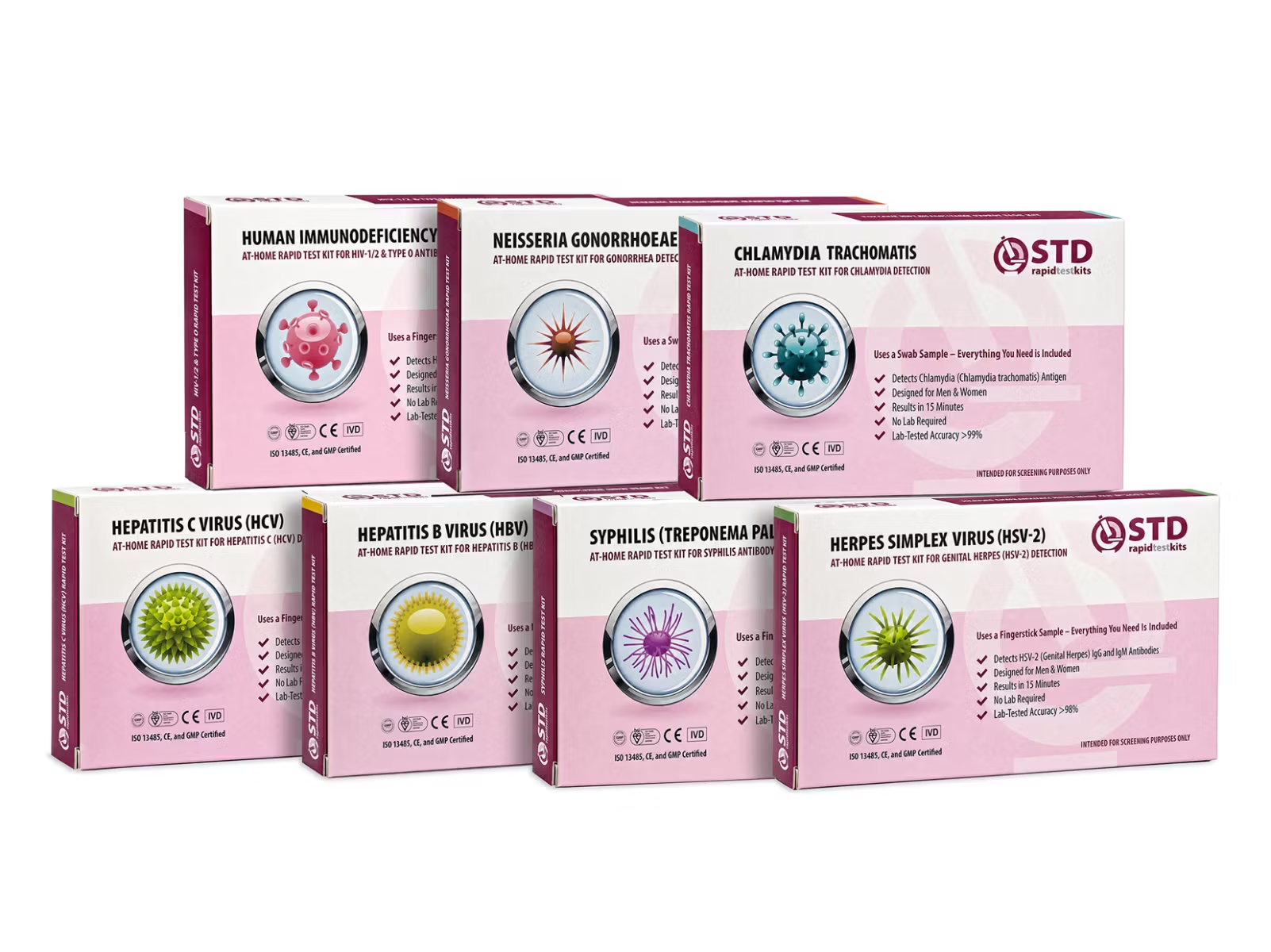
The at-home rapid tests sold on this site are lateral-flow immunoassays. They detect antigens or antibodies on a test strip in about 15 minutes. Laboratory NAAT (nucleic acid amplification) testing is generally more sensitive for asymptomatic infections, particularly chlamydia, so a negative rapid result in someone with persistent symptoms is worth following up with a lab test or clinic visit. The two tools are complementary, not interchangeable.
Pick a single-infection kit when you have one specific worry: a partner disclosed an infection, a sore appeared on a specific area, or you're following up after treatment for a particular STI.
Pick a multi-infection panel when partner status is unknown, you've had multiple recent partners, or you want one screening pass for general peace of mind. A panel costs less than buying several singles separately and tells you more in one sitting.
When the Mental Spiral Hits Harder Than the Symptom
There's a part of this that almost nobody addresses out loud: the mental cycle that starts the moment you notice anything off. Within hours, you've replayed every detail, searched symptom photos at 2 a.m., and diagnosed yourself with three different infections. By morning the symptom itself is the smallest part of how you feel.
This is normal. It's also where decisions get worst. Anxiety pushes people toward two extremes: testing immediately, often inside the window period where the result means nothing, or avoiding testing entirely because the wait is too uncomfortable to face.
The middle path is to write down what you're noticing, when it started, and how it's changed. Then check it against the timing windows above. If you're outside the window for the infection you're worried about, test. If you're inside the window, set a calendar reminder for when testing makes sense and try to leave the question alone until then.
How to Read Your Body Without Catastrophizing
Mild and improving probably means irritation. Persistent and unchanging is worth checking. Worsening, spreading, or adding new symptoms (discharge, sores, urinary pain, fever) means test or see someone in person.
Patterns matter more than isolated sensations. One bumpy moment doesn't mean much. The same sensation getting worse over three days does. Track what you're noticing for a few days before drawing any conclusions.
If you have an exposure you genuinely don't have certainty about (a partner whose status you can't confirm, a condom that did break, an encounter where things didn't go to plan) that's a different question from a routine post-sex check. A broader panel makes more sense in that case, because you're screening for a wider set of possible infections rather than chasing a specific symptom.
Mild and improving → wait it out, watch the trajectory for 48 to 72 hours.
Persistent and unchanged after 3 days → consider testing at the appropriate window for the infection you're worried about.
Worsening, spreading, or adding new symptoms (discharge, sores, fever, urinary pain) → test now or see a clinician in person.
A Reasonable Plan for the Next Two Weeks
If you're reading this within 48 hours of the encounter and your symptoms are mild, the right move is usually to wait. Most irritation resolves on its own within two days. Hydrate, skip repeat irritation (no new sex, no harsh soap), and watch the trajectory.
If you're at the 5-to-7 day mark and something is still bothering you, that's the moment to think about a chlamydia and gonorrhea swab. The bacterial windows are closing in by then, and a result has real meaning.
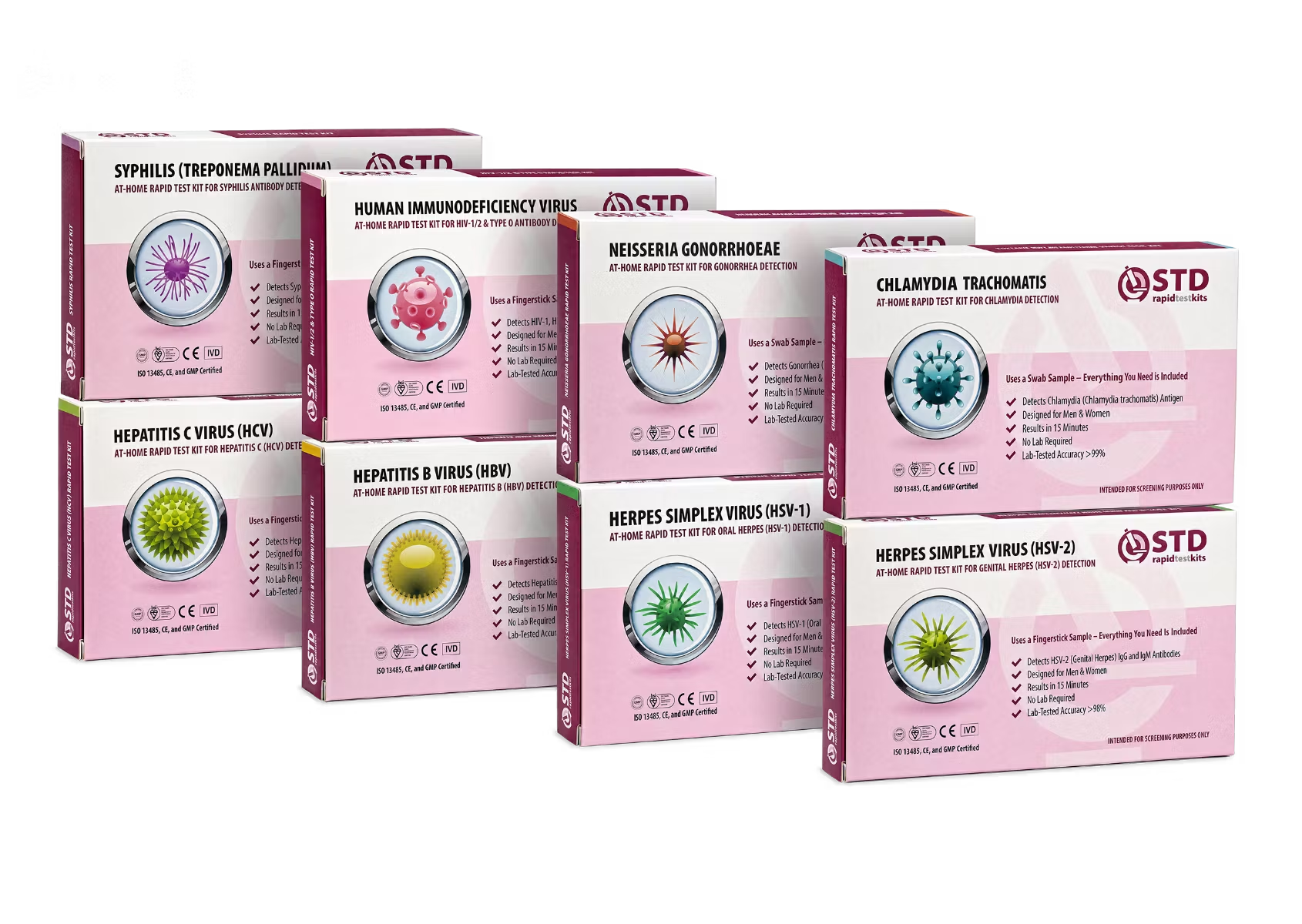
If you're at the three-week mark and you want broad screening, a fourth-generation HIV test, a syphilis test, and bacterial swabs all line up well at that point. The 7-in-1 or 8-in-1 panels cover that combination in a single kit.
If you're worried about herpes specifically and you don't have an active lesion to swab, wait closer to the 12-week mark for an antibody test. Testing earlier risks a false negative that you'd want to repeat anyway.
A negative result in the right window is a real answer. Test once, at the right time, and move on.
FAQs
- Can I really get an STI if I used a condom correctly?
- Yes, for some infections. Condoms are highly effective against HIV, chlamydia, gonorrhea, and hepatitis B because those spread through fluid contact that a condom blocks. They're less protective against herpes, HPV, and syphilis because those spread through skin contact in areas the condom doesn't cover. Used correctly, condoms still reduce skin-contact STI risk, but they don't eliminate it.
- How long after sex should symptoms appear if it's an actual infection?
- Anything within 24 hours is almost certainly irritation, not infection. Bacterial infections like chlamydia and gonorrhea usually become noticeable by day 5 to 14. Herpes first outbreaks typically appear within 2 to 12 days. Syphilis chancres usually appear about three weeks after exposure, with a wider possible range from roughly ten days to three months.
- I'm itching after sex with a condom. Is it an STI or a latex allergy?
- Itching alone, especially within hours, is more often a latex or lubricant reaction than an STI. Latex sensitivity tends to cause redness or itching right where the condom touched, settles in a day or two, and recurs every time you use the same product. Try a non-latex condom (polyisoprene or polyurethane) for one encounter; if symptoms don't return, you have your answer.
- My partner and I both used protection but I have a sore. What should I do?
- A sore that develops days to weeks after protected sex is worth assessing in person, especially if it's painless. Herpes and syphilis sores can develop on skin that wasn't covered by the condom. See a clinician for a swab of the lesion, which gives a faster and more definitive answer in early disease than a blood test, and avoid trying to swab the sore yourself with a home kit.
- How accurate are at-home STI tests after protected sex?
- Sensitivity varies by infection and kit. Check the specific product insert for the figure that applies to your concern. The two most common causes of a false negative are testing before the window period closes and incorrect sample collection. A positive result should be confirmed by a lab; a negative result inside the window should be retested later.
- Why does it burn when I pee after using a condom?
- Burning during urination after protected sex is most often friction or sensitivity, especially after longer or drier sex. It usually resolves in 24 to 48 hours. If it persists past 72 hours, gets worse, or comes with discharge, it could be a urinary tract infection or a bacterial STI like chlamydia or gonorrhea, both of which warrant testing.
- I had unprotected oral sex but the rest was with a condom. Do I still need to test?
- Yes, oral exposure carries STI risk independent of what happened during penetrative sex. Throat-based chlamydia, gonorrhea, herpes (including HSV-1), and syphilis can all transmit through oral contact. Our at-home rapid panels cover the genital and blood-borne presentations of these infections; a clinic-administered throat swab is the appropriate test for pharyngeal-specific concerns, and we don't sell that test.
- Should I avoid sex while waiting for test results?
- Yes. While you're inside a window period and have symptoms you can't explain, the conservative call is to pause penetrative sex with new partners. If you're with a regular partner, talk with them about it; most people would rather know than be kept in the dark. Resume after you have a result and a plan.
How We Sourced This Article: We built this guide from current public-health guidance (CDC, WHO, NHS) on condom effectiveness, STI transmission routes, and testing window periods, combined with clinical literature on common irritation and allergy patterns reported after sexual contact. Specific numeric claims (window periods, transmission categories) link inline to the authoritative source that supports them. We're a consumer health publisher, not a clinical practice; this article is summary information, not medical advice. For symptoms that concern you, see a licensed provider.
- U.S. Centers for Disease Control and Prevention. Condom effectiveness summary, covering the reduction of HIV and STI transmission with consistent and correct condom use.
- U.S. Centers for Disease Control and Prevention. Genital herpes overview, including transmission, condom limitations against skin-to-skin contact, and outbreak timing.
- U.S. Centers for Disease Control and Prevention. Chlamydia information, including the high rate of asymptomatic infection and screening recommendations.
- U.S. Centers for Disease Control and Prevention. Syphilis fact sheet, covering primary chancre presentation and disease progression.
- U.S. Centers for Disease Control and Prevention. HIV testing overview, including fourth-generation antigen-antibody window periods.
- U.S. Centers for Disease Control and Prevention. HPV information, including vaccination recommendations and transmission via skin contact across the genital region.
- World Health Organization. Sexually transmitted infections fact sheet, global guidance on transmission, prevention, and testing.
- U.K. National Health Service. STI overview, including when symptoms require in-person assessment.
