Published: October 2025 | Last updated: April 2026 | Editorial review and quality control: Martina N.
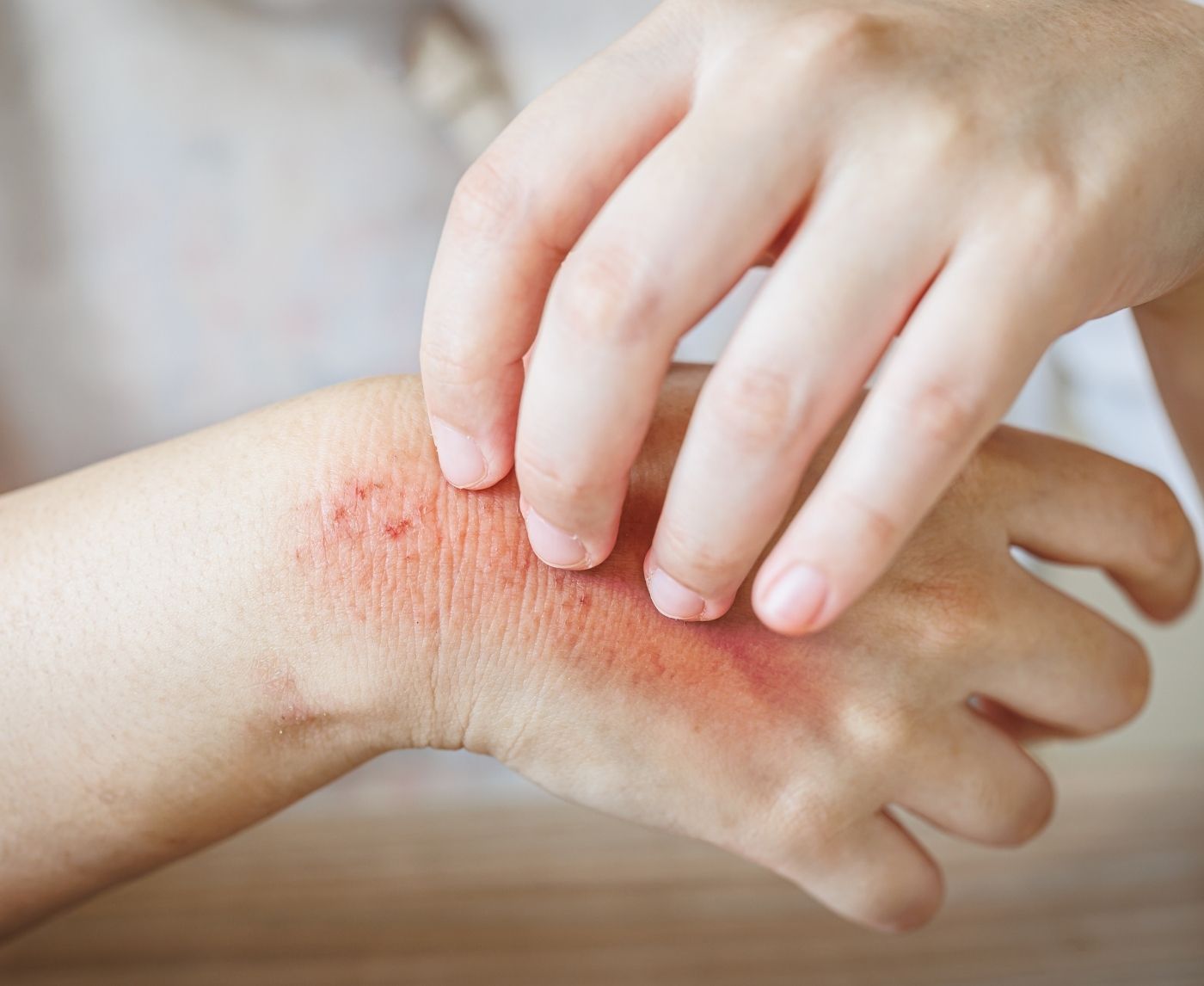
Skin reacts faster than most infections do. That single fact resolves a lot of what people search at 2 a.m. after sex when something looks off. A condom rubbed somewhere it should not have. A new lube did something the old one did not. Or the rash showed up two days later in a small cluster, and now you are wondering if your body is trying to tell you something more serious.
All of those are different problems with different timelines, different appearances, and different answers. The trick is reading the pattern instead of the panic.
Is a rash after sex an STD?
Most rashes that appear within minutes to a few hours of sex are caused by friction or contact dermatitis (latex, lube ingredients, scented products), not infection. Bacterial and viral STIs need an incubation window. Herpes lesions usually appear within the first two weeks after exposure, primary syphilis sores typically appear three weeks or more later, and acute HIV rash appears 2 to 4 weeks after exposure. If a rash develops days after sex, forms blisters or ulcers, spreads beyond the contact area, or comes with fever or swollen glands, get tested.
Key Takeaways
- Onset timing is the single most useful signal: hours after sex usually means friction or allergy, while several days to weeks later raises infection risk.
- A rash that blisters, ulcerates, recurs in the same spot, or comes with fever or swollen lymph nodes warrants testing rather than home care.
Why your skin reacts so fast after sex
Genital and inner-thigh skin is thinner, warmer, and damper than skin on most of your body. It also has a denser supply of nerve endings and blood vessels, which is why everything from a new soap to a slightly drier-than-usual condom can leave a visible mark. During sex it is exposed to heat, friction, pressure, latex, lubricant, saliva, semen, and a partner's skin flora. None of those are inherently dangerous, but any of them can trigger a histamine response or a barrier breakdown in someone whose skin is sensitive that day.
Infections work on a different clock. A virus or bacterium has to enter the body, replicate, and reach a high enough concentration to cause visible damage or a recognizable immune reaction. That process is measured in days to weeks, not minutes. Herpes simplex symptoms typically appear within the first two weeks after exposure, and primary syphilis can take several weeks before its first sore is visible.
Friction or contact dermatitis: minutes to hours, never days.
Herpes (HSV): usually within two weeks of exposure.
Primary syphilis chancre: three weeks or more after exposure (range can extend to roughly three months).
Acute HIV symptoms: two to four weeks after exposure.
Yeast or bacterial flare: one to three days after sex.
The four causes that explain almost every post-sex rash
Almost every rash that follows sex falls into one of four categories: an STI, an allergic or contact reaction, mechanical irritation, or a fungal or bacterial overgrowth. The four behave differently enough that a clean comparison narrows the list quickly.
STIs that affect the skin (herpes, syphilis, occasionally HIV in its acute phase, and rarely disseminated gonorrhea) follow a clear time arc. Symptoms appear days after exposure, evolve over several days, and may come with systemic signs such as fever, fatigue, or swollen glands. Allergic and irritant reactions are the opposite: fast onset, restricted to the contact area, and resolving within a few days once the trigger is removed. Friction-based rashes look raw and diffuse, not blistered. Yeast and bacterial vaginosis flares often follow sex but tend to come with itching and discharge rather than a clearly defined skin lesion.
| Cause | Appearance | Onset | Other symptoms |
|---|---|---|---|
| STI (herpes, syphilis, acute HIV) | Blisters, ulcers, or flat pink to copper rash | Several days to a few weeks post-exposure (longer for primary syphilis) | Fever, fatigue, swollen lymph nodes, pain |
| Allergic or contact reaction | Red, itchy, sometimes hives or raised patches | Minutes to hours after contact | Limited to contact area; no systemic symptoms |
| Friction or mechanical irritation | Raw, diffuse redness or chafing | Immediately or next morning | Improves with rest; worsens with continued friction |
| Yeast or bacterial overgrowth | Red, scaly, or shiny patches in folds | 1 to 3 days post-sex | Itching, possible odor or thick discharge |
What an STD rash actually looks like
Not every STI causes a visible rash, but the ones that do tend to look quite different from each other. Knowing the textbook pattern helps separate genuine concern from anxiety.
Herpes (HSV-1 or HSV-2)
Genital herpes is the most common cause of a sexually transmitted rash. The first outbreak usually starts with a tingling, burning, or itching sensation in one specific area, often before anything is visible. Within a day or two, small fluid-filled blisters appear in a cluster on the genitals, anus, buttocks, inner thighs, or mouth. The blisters break, leave shallow ulcers, and then crust over. The first outbreak tends to be longer and more uncomfortable than recurrences. The CDC notes that sores may take a week or more to heal, and systemic symptoms (fever, body aches, swollen groin lymph nodes) can extend that window further. Recurrences are usually shorter, milder, and tend to come back in the same spot. HSV is contagious through skin-to-skin contact even without visible sores.
Syphilis
Primary syphilis usually presents as a single, firm, painless ulcer (a chancre) at the site of exposure, though multiple sores are possible. Because it is painless, it is often missed entirely, especially when it is internal or hidden in skin folds. The NHS notes that the first sore typically appears three weeks or more after infection and heals on its own within a few weeks. If untreated, secondary syphilis follows weeks later with a non-itchy rash that classically involves the palms and soles. The rash can look reddish-brown on lighter skin and grayish or violet on darker skin, which is one reason it is frequently misdiagnosed. Other secondary signs include patchy hair loss, sore throat, and swollen lymph nodes.
HIV (acute retroviral syndrome)
HIV itself does not produce a localized genital rash. About 2 to 4 weeks after infection, however, some people develop acute retroviral syndrome: a flat, sometimes mildly itchy rash on the chest, back, or arms, accompanied by flu-like symptoms (fever, sore throat, fatigue, swollen glands, night sweats). The CDC describes this as the body mounting its initial immune response. Not everyone gets it, and when it happens it is easy to dismiss as a virus.
HPV (genital warts)
HPV does not cause a rash in the typical sense. When it is visible, it appears as small, soft, flesh-colored or grayish growths that can be flat, raised, or cauliflower-shaped. They are usually painless. The window from infection to visible warts can range from a few weeks to more than a year, which often makes tracing the source partner difficult.
Chlamydia and gonorrhea
Neither typically causes a rash. Both can produce surrounding inflammation if discharge irritates the skin, and rare strains of chlamydia (lymphogranuloma venereum) can cause painful ulcers and swollen nodes. Disseminated gonorrhea, also rare, can produce small pustular lesions on the limbs.
| Condition | Visual pattern | Onset after exposure | Distinguishing feature |
|---|---|---|---|
| Herpes (HSV) | Cluster of fluid-filled blisters that break into shallow ulcers | Within ~2 weeks | Recurs in the same spot; tingles before lesions appear |
| Primary syphilis | Single firm painless ulcer (chancre); multiple sores possible | 3 weeks or more | Painless; often missed when internal |
| Secondary syphilis | Flat reddish-brown to violet rash on palms and soles | 6 to 12 weeks | Body-wide and non-itchy; classically on palms and soles |
| Acute HIV | Flat red rash on chest, back, or arms with flu-like illness | 2 to 4 weeks | Systemic symptoms accompany the rash |
| HPV (warts) | Flesh-colored bumps, sometimes cauliflower-shaped | Weeks to over a year | Slow appearance; not a true rash |
When the rash is allergic, not infectious
Contact dermatitis is the single most common cause of a rash that appears within hours of sex. The trigger is usually obvious in retrospect: a new condom brand (latex itself, or the lubricant or spermicide coating it), a flavored or warming lubricant, scented intimate wipes, a new laundry detergent, or, less commonly, proteins in semen (a real but rare condition called seminal plasma hypersensitivity).
The pattern is fast, itchy, and local. Mayo Clinic lists contact dermatitis symptoms as redness, itching, mild swelling, or small raised bumps that appear shortly after exposure to an irritant or allergen. Once the trigger is removed, it usually starts improving within a few days. There is no fever, no swollen lymph nodes, and the rash does not spread beyond areas the product touched.
If your rash appears in exactly the area a condom covered, and you have noticed similar (milder) reactions to latex gloves, balloons, or rubber bands in the past, latex sensitivity is a strong candidate. Try a polyisoprene or polyurethane condom for the next exposure. If the reaction does not return, you have your answer without needing a single test.
Latex allergies also tend to worsen with repeated exposure: someone who had a mild itch with one brand of condom for months can progress to swelling, cracking, or systemic reactions. Pairing the non-latex condom with a fragrance-free, paraben-free lubricant resolves most contact dermatitis after sex.
The 24-hour vs 3-to-10-day timing rule
If a rash starts within roughly 24 hours of sex and improves over the next two to three days, the cause is almost always mechanical (friction) or chemical (latex, lube, soap). If a rash starts somewhere between three and fourteen days after sex, especially with new or evolving features, infection moves up the list.
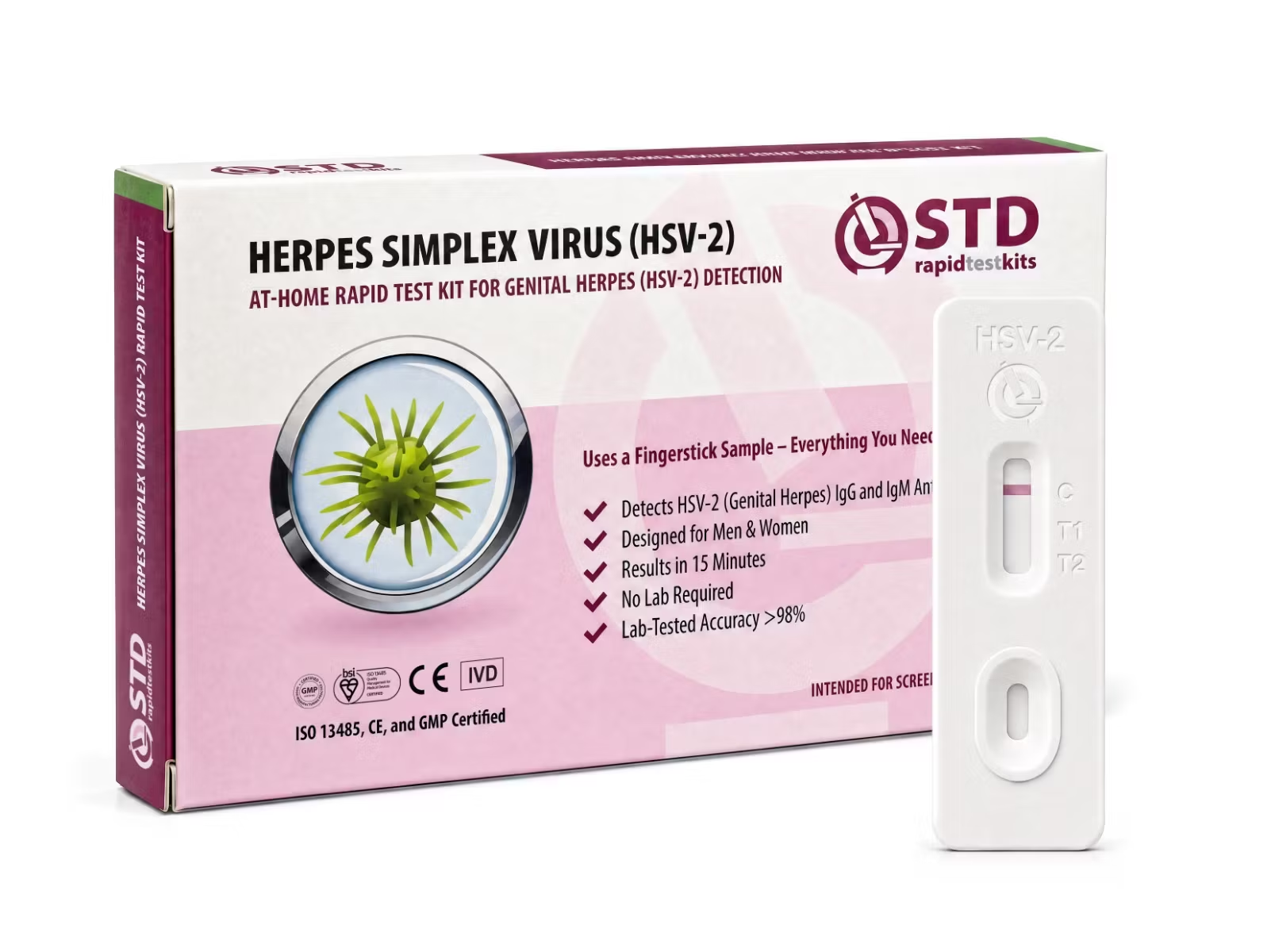
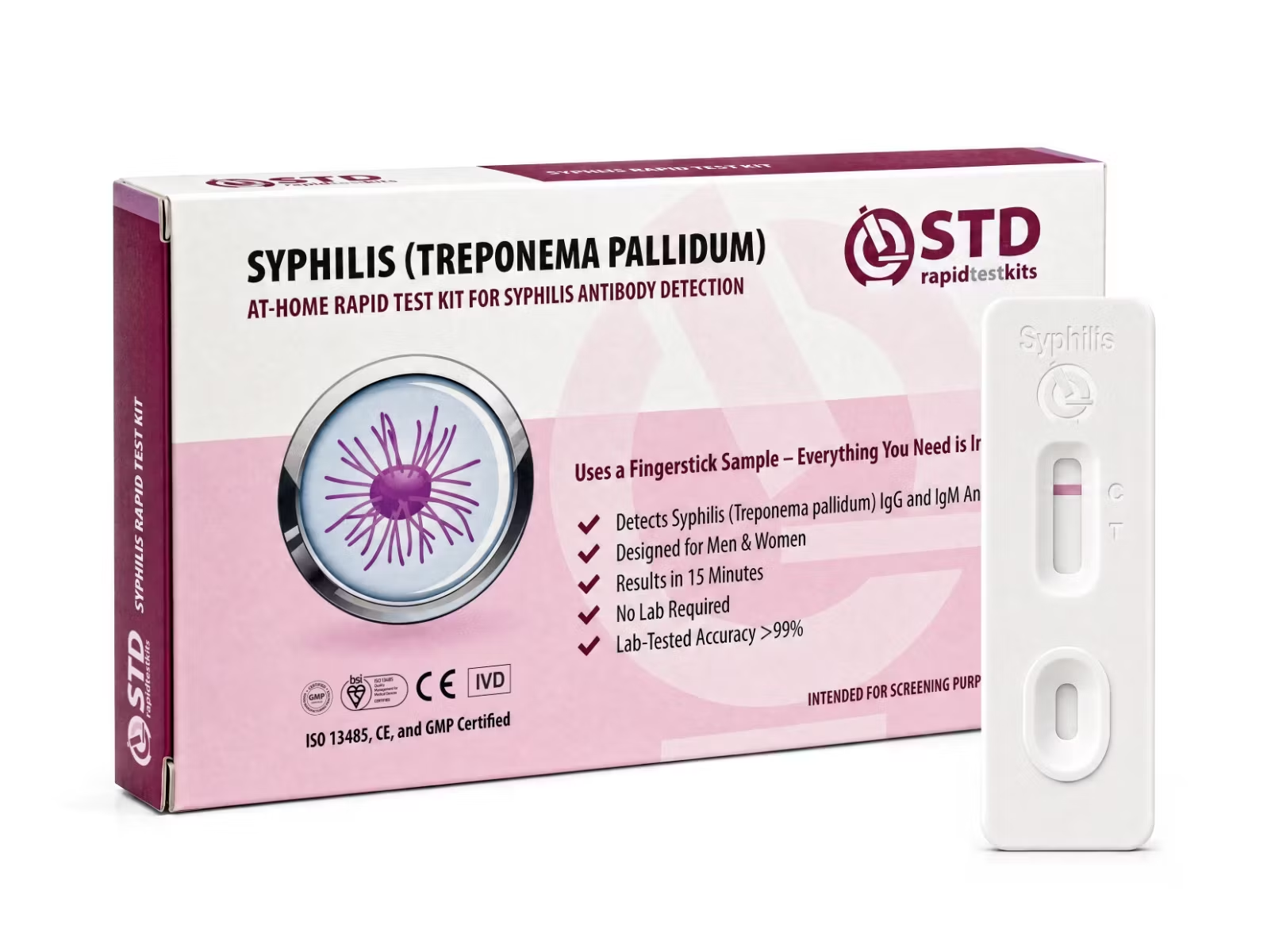
Testing windows matter here too. A test done too early can produce false reassurance. For active herpes lesions, a swab taken within the first 48 hours of a fresh blister is the highest-yield test. For syphilis, blood-based serology becomes reliable around three weeks post-exposure. Fourth-generation HIV antigen-antibody tests are reliable from about 18 to 45 days after exposure, depending on the assay. Chlamydia and gonorrhea NAATs (laboratory-grade molecular tests) are typically accurate 7 to 14 days post-exposure. Our at-home rapid kits use lateral-flow chemistry rather than NAAT, so they are best for screening and for confirming an active outbreak; a positive result is worth confirming with a lab when possible.
| When the rash appeared | Most likely cause | Suggested action |
|---|---|---|
| Within hours of sex | Friction, latex, or contact dermatitis | Stop the trigger, monitor 48 to 72 hours |
| 1 to 2 days later | Friction with delayed inflammation, or yeast flare | Cool care, breathable underwear, monitor |
| 3 to 14 days later | Possible STI (herpes, early syphilis chancre, or other) | Consider testing; swab any active blister within 48 hours |
| 2 to 4 weeks later, with body-wide rash and fever | Possible acute HIV or secondary syphilis | Seek medical evaluation and broad STI testing |
When to wait and when to test now
You do not need to test the morning after every condom mishap. You also do not need to wait a month while a blister cluster spreads. The NHS notes that the risk of passing herpes to a partner is higher during the first six months of infection, so an early conversation and an early test help both you and any recent partner.
| Wait and watch (24 to 48 hours) | Test sooner |
|---|---|
| Itchy or red but not blistered | Blisters or ulcers form (swab a fresh sore for the highest-yield herpes test) |
| Fades when you avoid further friction | Rash spreads beyond the original contact area |
| Limited to areas of direct skin or product contact | Rash recurs in the same spot |
| Use cool compresses, loose cotton, fragrance-free skin care | Fever, fatigue, sore throat, or swollen lymph nodes |
| A small dab of low-strength hydrocortisone is fine on intact skin only | Rash reaches the palms, soles, or trunk |
When to skip the home test and head to a clinic
Some symptoms move faster than an at-home kit can keep up with. The criteria below mean an in-person evaluation rather than a swab through the mail.
Severe pain, trouble urinating, ulcers that spread quickly, a high fever, or a body-wide rash with systemic symptoms warrants in-person evaluation rather than at-home testing. The same applies if you are pregnant, immunocompromised, managing another chronic condition, or if a partner has just disclosed an STI diagnosis. At-home rapid kits are excellent for screening; they are not a substitute for clinical care when the situation is moving fast.
Talking to a partner without making it a confession
If you had sex recently and a rash appears, telling the partner you were with is the right move. It is not a confession, and it does not require disclosing your sexual history. Calm, specific, and considerate goes a long way. Most people respond well to that kind of message; the ones who do not have given you useful information about who they are.
If you eventually test positive for something, you owe recent partners the diagnosis and a path to testing, but not a story. Health departments and many at-home testing services offer anonymous partner notification if direct conversation is not safe or possible.
"Hey, I noticed a rash after we hooked up. I am getting it checked, and I wanted to give you a heads-up in case anything shows up for you."
How to prevent a repeat
A few small adjustments resolve most repeat rashes. Switch to non-latex condoms (polyisoprene or polyurethane) if latex is on your suspect list. Choose a water- or silicone-based lubricant that is fragrance-free, paraben-free, and glycerin-free. Avoid shaving immediately before sex, since fresh microcuts are an open door for friction injury and infection. Wear breathable cotton underwear afterward, pat the area dry rather than rubbing, and rinse with warm water (no scented washes). If you are prone to flares, a brief cool compress after sex calms inflammation before it builds.
Routine STI screening matters more than reactive testing. Many infections, including chlamydia, gonorrhea, and HIV, are commonly asymptomatic in their early stages. Annual screening if you have a single partner, and every 3 to 6 months if you have multiple partners or new partners, is what the CDC and most public-health bodies recommend.
You can get genital herpes from a sex partner who does not have a visible sore or who may not know they are infected. It is also possible to get genital herpes if you receive oral sex from a partner who has oral herpes.
Frequently asked questions
- Can an STD rash really show up the same day as sex?
- No, almost never. The skin can react to friction or a product within minutes, but an infection has to enter the body, replicate, and reach the level where the immune system or local tissue actually starts responding. That process takes days to weeks for every common STI, not hours. Something visible the same evening is far more likely to be a latex reaction, a lube ingredient, or simple chafing than a newly acquired infection.
- How do I tell herpes from razor burn?
- Razor burn appears within hours of shaving, looks red and bumpy, and stays at the surface. Herpes usually starts with a tingling or burning sensation, then forms small fluid-filled blisters in a cluster that break and crust over a few days later. Razor burn improves with rest and a gentle moisturizer; herpes lesions evolve over a week and tend to recur in the same spot.
- Can a latex allergy really cause a rash on my genitals?
- Yes, and it is more common than people expect. The reaction usually appears within hours of using a latex condom and is restricted to the area the condom covered. Switching to a polyisoprene or polyurethane condom for one exposure is a low-risk way to test the theory. If the rash does not come back, latex is the likely culprit.
- Can I have an STD with only a rash and no other symptoms?
- Yes. Herpes and syphilis can both present with skin findings as the only obvious sign. The original sores can be small, painless, or hidden in folds, and people often miss the first one. If the same rash recurs in the same spot or appears days after sex with a new partner, get tested even if you feel completely fine otherwise.
- What does a syphilis rash actually look like?
- Secondary syphilis classically produces a non-itchy rash on the palms and soles. On lighter skin tones, it usually looks reddish-brown or copper. On darker skin tones, it can look grayish, violet, or muted. The rash often spreads to the trunk and arms and is sometimes mistaken for eczema. Primary syphilis is different: a single firm, painless ulcer at the site of exposure, weeks earlier.
- If I used a condom, why do I still have a rash?
- Condoms reduce risk dramatically but do not cover everything. Skin-to-skin viruses such as herpes and HPV can spread from areas the condom does not cover. Latex itself can also cause contact dermatitis. And friction can break the skin even with a condom on, especially during longer sessions or with insufficient lubrication. Adding more lube and switching to a non-latex condom solves a surprising number of these cases.
- Should I tell my partner about the rash before I get tested?
- Yes. A short, factual message is better than waiting for results. "I noticed a rash after we were together; I am getting it checked, just wanted you to know in case anything shows up for you" is honest without being alarming. If a test later confirms an STI, you have already opened the door to a follow-up conversation.
- Can I test while the rash is still active?
- For herpes, yes, and you should. A swab taken from a fresh blister within the first 48 hours is the highest-yield herpes test. For syphilis and HIV, blood tests have window periods (around three weeks for syphilis serology, 18 to 45 days for fourth-generation HIV tests), so a too-early test can miss an early infection. If your symptoms started within those windows, retest at the right time even if the first test is negative.
- U.S. Centers for Disease Control and Prevention. Genital herpes basic fact sheet, including transmission patterns and healing of first outbreak sores.
- U.S. Centers for Disease Control and Prevention. Syphilis basic fact sheet, including stages and rash presentation.
- U.S. Centers for Disease Control and Prevention. About HIV, including signs of acute infection and the body's initial immune response.
- National Health Service (UK). Genital herpes overview, including the higher transmission risk during the first six months of infection.
- National Health Service (UK). Syphilis overview, including chancre timing of three weeks or more after infection.
- Mayo Clinic. Diseases and conditions library, including the contact dermatitis entry referenced for symptom description and resolution timing after the trigger is removed.
