
Published: August 2025 | Last updated: May 2026 | Editorial review and quality control: Martina N.
Trichomoniasis is one of the most common curable sexually transmitted infections in the world, and most people who have heard of it picture it as a vaginal infection. That picture is correct most of the time. It is also incomplete. Case reports and small studies show the parasite Trichomonas vaginalis can occasionally be cultured from the throat after unprotected oral sex with an infected partner.
This article walks through what the evidence does and does not show about pharyngeal trichomoniasis: how it can happen, why standard testing rarely looks for it, what symptoms can suggest it, and what your testing options actually are. The short version is that throat trichomoniasis is uncommon, often silent, and not the first thing a clinician will check.
Key Takeaways
- Pharyngeal trichomoniasis is documented in the medical literature but is not part of routine STI screening; most standard panels look only at genital sites.
- Confirming a throat infection requires a clinician-collected pharyngeal swab. At-home rapid tests are best used to screen the adjacent genital and bloodwork risks from the same exposure.
How throat trichomoniasis happens
Trichomonas vaginalis is a single-celled parasite that lives in moist mucous membranes. Its preferred home is the urogenital tract, the vagina and the urethra, where it has reliable conditions to multiply. Mouth and throat tissue is also a moist mucous membrane, which is why the parasite can occasionally survive there if it arrives through direct contact with infected genital fluids during oral sex.
The route of transmission matters. Casual contact, sharing drinks, and kissing have not been shown to spread trichomoniasis. The infection requires fluid-to-mucosa contact, typically penis-to-mouth or mouth-to-vulva exposure where enough genital secretion is involved. Microtears in the mouth from brushing, recent dental work, or gum irritation can give the parasite an opening that fully intact mucosa might resist.
Even with all those conditions in place, pharyngeal trichomoniasis is uncommon. The literature describes it in both symptomatic and asymptomatic individuals after unprotected oral exposure, but population-level prevalence in the throat has not been well characterized. What is clear is that the parasite can survive in throat tissue for at least some period, and during that time the person carrying it can act as a reservoir for transmission back to genital sites in future partners.
Not everyone who has oral sex needs a throat swab. The point is that throat trichomoniasis is biologically possible, easy to miss in routine care, and worth knowing about when a partner has tested positive or persistent symptoms are not adding up.
- Direct contact with infected genital fluids is required, typically penis-to-mouth or mouth-to-vulva exposure.
- Kissing, sharing drinks, and other casual contact do not spread the parasite.
- Microtears in the mouth from brushing or recent dental work can lower the threshold for infection.
- Pharyngeal cases are documented in the medical literature but remain uncommon.
Why it is overlooked in routine care
Most clinical guidelines, including the ones that drive what gets tested in your primary care office or sexual health clinic, are built around genital and urogenital screening. Standard trichomoniasis testing collects vaginal swabs from women and, in some settings, urine samples from men. The throat is treated as an extra-genital site that gets tested only when symptoms or specific risk factors prompt it.
There are reasonable reasons for that. Trichomoniasis in the throat appears to be uncommon. Routine screening at every anatomical site would be expensive and would yield mostly negative results. Public health resources tend to go where the disease burden is concentrated, which for trichomoniasis is the genital tract.
The downside is that the people who do have a throat infection are unlikely to find out unless they specifically ask. Many clinicians have not been trained to think of the pharynx as a possible site for trichomoniasis at all. Asking for a throat swab can feel like advocating against the grain, and some providers will push back. That is not a sign the patient is wrong; it is a sign that standard of care is built around the most common scenarios and may miss the uncommon ones. Naming the specific exposure ("unprotected oral contact with a partner who later tested positive") usually moves the conversation forward.
Symptoms that can suggest throat trichomoniasis
Most people with trichomoniasis at any site have no symptoms at all. The CDC estimates about 70 percent of infected individuals are asymptomatic. When the throat is the site of infection, the picture is even harder to read because the symptoms overlap with common viral and bacterial throat illnesses.
If pharyngeal symptoms do appear, they tend to look like:
- Sore throat that lingers beyond the usual week of a viral cold
- Difficulty swallowing or persistent throat irritation
- Redness or inflammation at the back of the throat or on the tonsils
- Occasional white patches or unusual discharge in the throat (rare)
- Swollen lymph nodes in the neck
None of these signs are specific to trichomoniasis. They overlap with strep throat, viral pharyngitis, oral thrush, post-nasal drip, and seasonal allergies. If symptoms appear within a week or two of unprotected oral sex and do not clear within ten days, that timing is reason enough to ask a clinician about pharyngeal STI screening rather than assuming it is a slow-clearing cold.

Why most STI tests do not catch it
If you have ever taken a standard STI screen and assumed it covered everywhere, you are not alone. Most screening visits, in person or by mail, sample one or two sites at most. For trichomoniasis specifically, the test the laboratory runs is usually a nucleic acid amplification test (NAAT) on a vaginal swab or a urine specimen. NAATs are highly sensitive and are the laboratory gold standard for genital trichomoniasis. They are not routinely performed on pharyngeal samples in most clinics.
Two things follow from that. A clean genital test does not, by itself, rule out a throat infection. And detecting a throat infection requires a clinician-collected pharyngeal swab and a laboratory willing to process it for T. vaginalis. Some sexual health clinics and infectious disease specialists will do this on request. Many general practices will not.
The other limitation is technology. Home rapid tests use lateral-flow chemistry, not NAAT. Lateral-flow tests are excellent screening tools for the sites and infections they are validated for. They are not equivalent to a laboratory NAAT, especially at sites the test was not designed to assess. Reading a negative result from a vaginal-swab lateral-flow test as proof that no part of the body carries the parasite would overinterpret what the test is built to do. The two approaches are complementary: rapid at-home screening for fast, private answers about the sites the kit covers; laboratory NAAT for confirmation and for sites the kit does not cover.
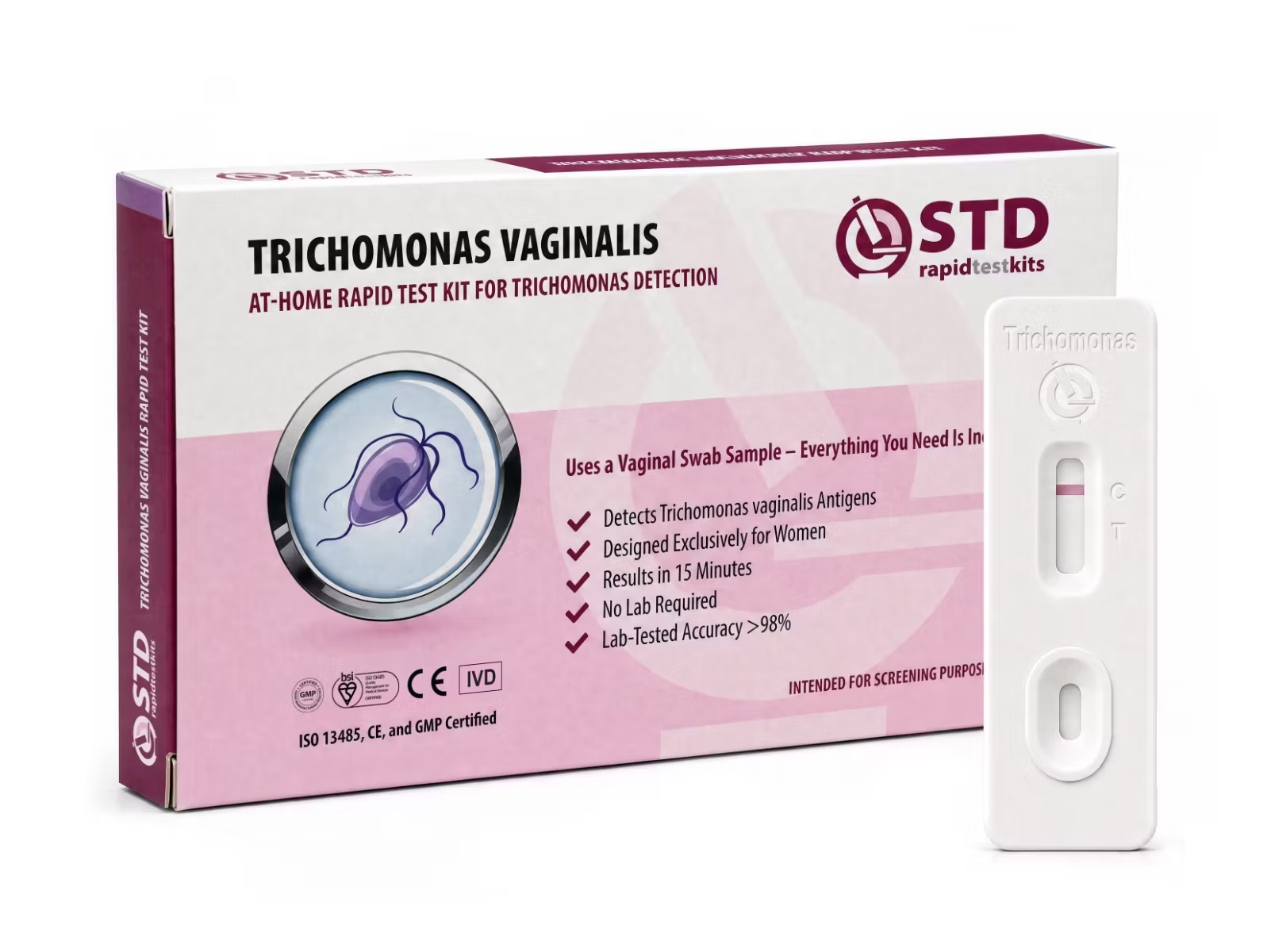
Our rapid at-home trichomoniasis test uses a self-collected vaginal swab and is validated for female anatomy only. It does not test the throat, and we do not currently sell a male-compatible trichomoniasis kit or a pharyngeal swab kit. For a throat-specific test, the right resource is a sexual health clinic that can collect a pharyngeal swab and send it for laboratory analysis. Our kit and combination panels remain useful for screening the genital and bloodwork questions from the same exposure event.
If your partner has tested positive
A common scenario: a partner gets a positive trichomoniasis result and you only had oral contact with them. You feel fine. The reasonable next move is still to get tested, and to talk with a clinician about whether a pharyngeal swab makes sense given what happened.
The parasite can survive in throat tissue at least transiently. If it is there, you can pass it back to the same partner after they finish treatment, or forward to a future partner during oral or genital contact. The CDC reports that roughly one in five people are reinfected within three months of treatment, mostly because of inadequate partner therapy.
Practical steps after a partner tests positive:
- Test the genital site you typically use barriers for, even with no symptoms.
- Ask explicitly about a pharyngeal swab if you had unprotected oral contact and the clinic you usually use does not offer one routinely.
- Pause new sexual contact until both of you have completed treatment and any retest the clinician recommends.
- Treat the diagnosis as a partnership issue, not a fault question. Trichomoniasis is often asymptomatic in the person carrying it; the silent reservoir is a feature of the infection, not a sign of dishonesty.
Treatment when it is caught
The good news about trichomoniasis is that treatment is short, effective, and oral. The standard regimen, per NHS and CDC guidance, is metronidazole, either as a single dose or as a longer course taken twice daily for seven days. Tinidazole is an alternative when metronidazole is not tolerated. The same antibiotics clear the parasite regardless of where in the body it is found, because they act systemically.
What matters is knowing about the infection in the first place. A throat infection that is never tested for cannot be deliberately treated. Antibiotics taken for an unrelated reason might happen to clear it, but the more common pattern is for an untreated throat infection to linger and serve as a reservoir for transmission. That is the public health argument for asking about pharyngeal swabs after a known exposure, even when no symptoms are present.
- Take the full course exactly as prescribed; a missed dose can blunt the response.
- Avoid alcohol during treatment and for 24 to 72 hours after the last dose, since the combination can cause severe nausea and flushing.
- Avoid sexual contact for at least one week after both partners finish treatment, per NHS guidance.
- Consider a retest a few months later, especially if symptoms persist or partner therapy was incomplete.
Reinfection and how to prevent it
Completing your own course of antibiotics does not protect you from a partner who has not been treated. This is one of the most under-appreciated facts about trichomoniasis, and it explains why reinfection rates are as high as they are. The CDC figure of roughly one in five reinfected within three months largely reflects partner therapy that did not happen, was incomplete, or did not include all relevant partners.
The protective version of the plan is straightforward. Both partners take the prescribed course. Both pause sexual activity until both have finished. If either partner has additional sexual contact in the relevant window, that contact is also addressed. A retest a few months later confirms the infection has actually cleared rather than just gone quiet again.
Barriers help after treatment as well. External condoms reduce but do not eliminate transmission risk; the parasite is small and can survive on tissue that a condom does not cover. Internal condoms and dental dams provide additional barrier for oral-on-vulva and oral-on-anal contact. None of these are perfect, but they meaningfully lower the load of any infection that did slip through and improve the odds of a clean retest.
Preventing reinfection
- Both partners take the prescribed antibiotic course, even when one is asymptomatic.
- Pause sexual contact until both have completed treatment and the abstinence window has passed.
- Address any new sexual contacts that fall within the relevant treatment window.
- Plan a retest a few months later to confirm clearance rather than just symptom resolution.
Risk for LGBTQ+ readers
Most STI risk models are built around penis-in-vagina sex between cisgender heterosexual partners. That history shows up in clinical practice: screening prompts, testing defaults, and patient-education materials often skip the routes of exposure that queer sex actually involves. Oral-on-vulva contact, oral-on-penis contact with multiple partners, and shared sex toys are all viable routes for trichomoniasis transmission, regardless of the genders involved.
The consequence is that queer patients, especially trans, nonbinary, and people assigned female at birth, are more likely to be offered the wrong testing or to have their symptoms attributed to something else. Asking about a pharyngeal swab after oral exposure is medically appropriate even when a clinician seems surprised by it.
The clearest framing to bring into the room is route of exposure rather than gender. A mouth that has touched a partner's genitals has been exposed to whatever was on those genitals. That is true regardless of who is involved. If a clinician hesitates, naming the specific contact ("unprotected oral-on-vulva contact ten days ago, now a persistent sore throat") usually shifts the conversation from category to evidence.

How to lower your risk during oral sex
Oral sex carries real STI risk, including for trichomoniasis, even though it is often treated culturally as the safer choice. The risk is lower than for unprotected vaginal or anal sex with the same partner, but it is not zero. Several barrier options exist, and they are not exotic equipment:
- External condoms on a penis during oral contact, available in unflavored and flavored versions.
- Internal condoms, less common but workable for receiving oral sex on a vulva or anus.
- Dental dams, thin latex or polyurethane sheets placed over a vulva or anus during oral contact. A cut-open condom or a piece of plastic wrap can serve in a pinch when no dental dam is available.
Two practical add-ons make these barriers more usable. Water-based lubricant reduces friction and the microtears that give pathogens a way in. Talking about recent test status before oral contact, not just before intercourse, makes that conversation more routine over time. Many partners are willing to discuss STI status; what often gets in the way is simply not being asked.

You are not alone, and this is not a moral failure
If you are reading this because you think you might have a throat infection, or because a partner told you they tested positive, the most common reaction is some combination of fear and shame. That reaction is human, and it is also not warranted by the underlying biology. Trichomoniasis is one of the most common curable STIs on the planet, with an estimated 156 million new infections worldwide in 2020 per WHO.
What you do next matters more than how you feel right now: test the sites that need testing, take the antibiotics if prescribed, and talk to the partners who need to know.
There were an estimated 156 million new cases of Trichomonas vaginalis infection among people aged 15 to 49 years old in 2020. Trichomoniasis is the most common non-viral sexually transmitted infection.
Where to go from here
For a recent oral exposure that has you worried, the typical sequence is:
- Rule out the common causes first: a strep test, evaluation for viral pharyngitis, and a check for post-nasal drip or seasonal allergies.
- If symptoms persist past a week or two, ask a sexual health clinic about pharyngeal STI screening. Name the specific exposure when you call, so the right swab gets ordered.
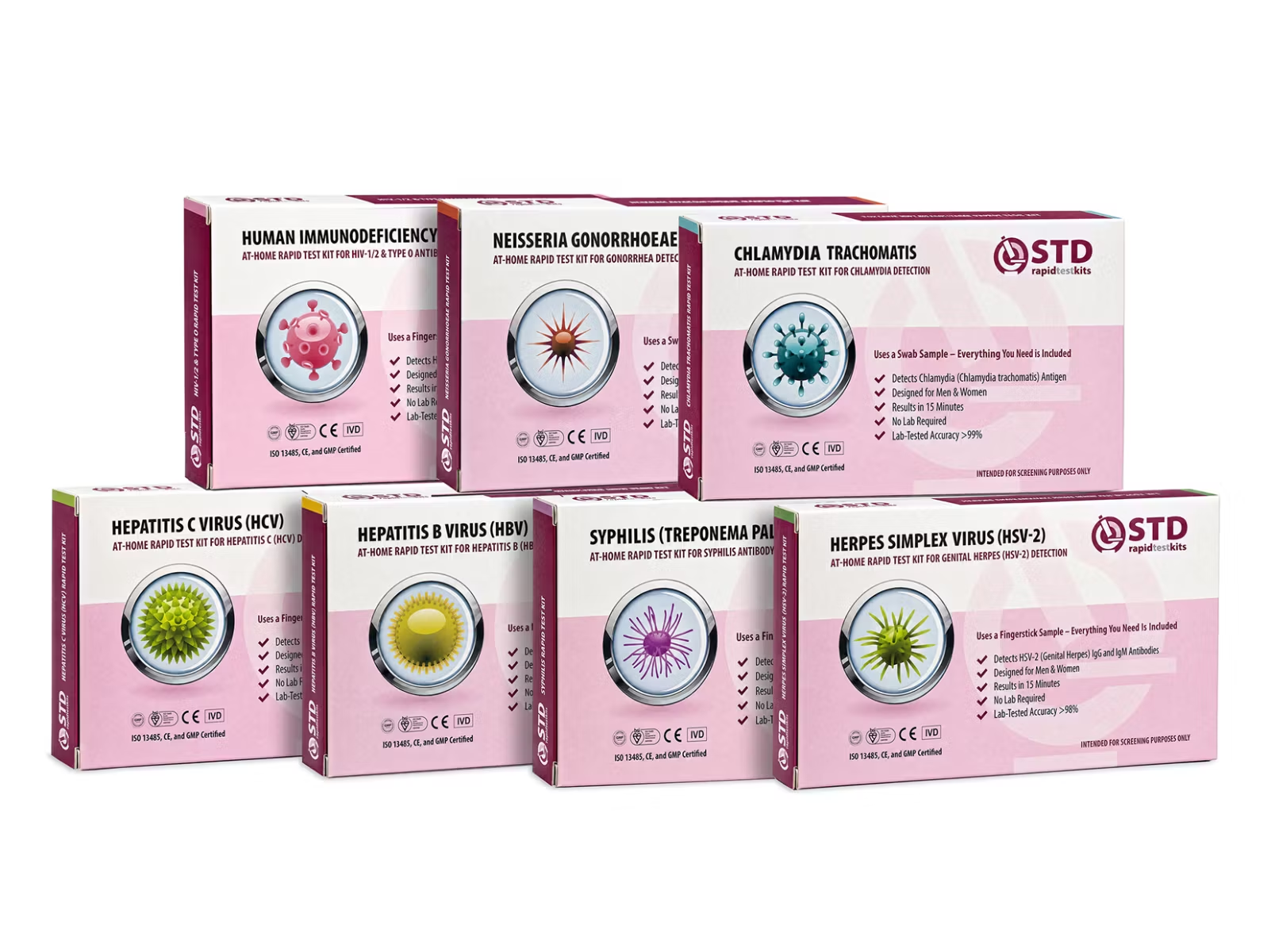
- In parallel, use an at-home rapid kit to answer the genital and bloodwork questions from the same exposure event, so those results are already in hand before the clinic visit.
If symptoms resolve within ten days, the most likely cause was viral pharyngitis or a similar non-STI throat illness. If they persist or worsen, the next step is clinic testing for the specific anatomical site you are worried about.
Frequently asked questions
- Can trichomoniasis actually live in the throat?
- Yes, although it is uncommon. If you had unprotected oral contact with a partner who tested positive, ask a clinician for a pharyngeal swab even if you feel fine. Routine STI panels do not include the throat unless you specifically request it.
- What symptoms should make me think about throat trichomoniasis?
- Timing is the clearest signal. A sore throat that begins within a week or two of unprotected oral sex and persists past ten days is worth asking about. Possible signs include difficulty swallowing, throat redness, swollen neck lymph nodes, and rarely unusual discharge. None are specific to trichomoniasis, which is why the timing matters more than the symptoms themselves.
- Can I test for throat trichomoniasis with an at-home kit?
- No. Home rapid kits, including ours, use vaginal swabs and are not validated for throat samples. Confirming pharyngeal trichomoniasis needs a clinician-collected throat swab sent to a laboratory that runs nucleic acid amplification testing on it.
- Can kissing pass trichomoniasis from one person to another?
- No documented evidence shows transmission through kissing or other casual contact. The parasite requires direct contact with infected genital fluids, typically during oral sex involving the genitals.
- How is trichomoniasis treated when it is in the throat?
- With the same oral antibiotics used at any other site: metronidazole or tinidazole, taken as a single dose or a short course depending on the prescriber's preference. The medication works systemically, so it reaches the throat as well as the genital tract.
- Do both partners need treatment even when only one has symptoms?
- Yes. Trichomoniasis is often asymptomatic, and partner therapy is the single most important step for preventing reinfection. The CDC reports that about one in five people are reinfected within three months, most often when partner treatment was skipped.
- How does at-home rapid testing compare to a clinic NAAT?
- A positive at-home result should be confirmed with a clinic NAAT, which uses more sensitive molecular chemistry. A negative at-home result rules out the genital site the kit sampled but does not rule out a throat infection from the same exposure.
- When should I see a clinician instead of testing at home?
- Any time you need a sample type a home kit cannot collect, including throat, anal, or male urethral swabs. Also any time you are pregnant, have ongoing pelvic or testicular pain, see blood in urine or unusual discharge, or had a high-risk exposure where you want a same-visit treatment plan.
- U.S. Centers for Disease Control and Prevention. Trichomoniasis About page covering symptoms, transmission, testing, treatment, and reinfection rates.
- U.K. National Health Service. Trichomoniasis topic page covering symptoms, transmission window, testing, and metronidazole treatment regimen.
- World Health Organization. Trichomoniasis fact sheet (2025 update) with global epidemiology and the 156 million new-cases figure for 2020.
- U.S. National Library of Medicine, MedlinePlus. Trichomoniasis consumer health page covering symptoms, transmission, and treatment.
- World Health Organization. Sexually transmitted infections fact sheet (overview of curable STIs and oral-sex transmission context).
- U.S. Centers for Disease Control and Prevention. About sexually transmitted infections hub page listing trichomoniasis among the nine main STIs.
