
Published: August 2025 | Last updated: May 2026 | Editorial review and quality control: Martina N.
Does trichomoniasis really raise your HIV risk?
Yes. The CDC and WHO both put it at roughly a 1.5-fold increase in HIV acquisition risk during active trichomoniasis. The parasite inflames genital tissue, creates microscopic breaks, and pulls in the CD4 immune cells HIV targets. Most standard STD panels need a specific request to include the test, and about 70 percent of cases cause no symptoms.
Trichomoniasis is the most commonly curable sexually transmitted infection on the planet. The World Health Organization counted around 156 million new cases globally in 2020, and the CDC says about 70 percent of people who carry it have no signs or symptoms whatsoever. That silent majority is the entire reason trich keeps moving between partners. It is also the reason the trich and HIV connection blindsides people who thought they were doing everything right.
This piece covers what trichomoniasis feels like when it does show up, how the parasite raises HIV risk for both partners, which other STIs ride in behind it, why standard STD panels routinely miss it, and how to test for it without making a whole afternoon of clinic visits. If you have been brushed off by a provider, told it is probably just BV or a yeast infection, or gotten a clean STD panel that did not include trich, this is the read.
Key Takeaways
- About 70% of people with trichomoniasis have no symptoms at all, so the parasite spreads between partners without either of them knowing (CDC).
- Untreated trichomoniasis is associated with a 1.5-fold increase in HIV acquisition because it inflames genital tissue and recruits the immune cells HIV targets (CDC, WHO).
What trichomoniasis actually looks like (when it shows up)
Trich usually hides. Per the CDC, around 70 percent of people who carry the parasite have no symptoms. The other 30 percent get a presentation that is easy to mistake for something else.
For people with vaginas, symptoms typically include a frothy yellow-green or grayish vaginal discharge, sometimes with a fishy smell that gets stronger after sex. There may be itching or burning at the vulva, soreness during penetrative sex, and a stinging feeling during urination that mimics a UTI. Many women describe it as feeling like a yeast infection that does not respond to over-the-counter antifungals, or like recurrent bacterial vaginosis (BV) that keeps coming back after a course of metronidazole gel.
For people with penises, the presentation is usually quieter. Possible signs include itching or irritation inside the penis, a thin clear or whitish discharge from the urethra (most often noticed first thing in the morning), and a burning sensation after urinating or ejaculating. The CDC's trichomoniasis fact sheet describes these signs as easy to dismiss, and that is exactly what tends to happen. Most cis men with trich never notice anything at all.
Symptoms can appear anywhere from 5 to 28 days after exposure, or they can stay absent for months. The infection itself does not clear on its own. Even when the symptoms fade, the parasite is still there, still passing during sex, and still inflaming the tissue around it.
That asymptomatic profile is why trich looks so different from STIs that announce themselves. There is no chancre, no painful blister, no emergency-room moment. The infection sits quietly, making the genital tract more permeable to other infections, including HIV. People who do notice symptoms often try a yeast cream first, then BV treatment, then assume the issue is hormonal or stress-related. By the time anyone runs a proper trichomoniasis test, the infection has often been active for months.
Trichomoniasis symptoms to watch for (when they appear)
Around 70 percent of people with trichomoniasis have none of these. When symptoms do show up, they overlap heavily with yeast infections and BV, so they cannot confirm or rule out trich on their own. Only a test can.
- Frothy yellow-green or grayish vaginal discharge, sometimes with a fishy odor that strengthens after sex Common
- Itching, burning, or soreness around the vulva Common
- Yeast-like or BV-like symptoms that keep returning after standard treatment Common
- Stinging or burning during urination that feels like a UTI Less common
- Discomfort or soreness during penetrative sex Less common
- In people with penises: urethral itching, a thin clear discharge noticed in the morning, or burning after urinating or ejaculating Less common
How trichomoniasis raises HIV risk
Healthy vaginal tissue depends on three layers of defense: a thin layer of epithelial cells, a population of Lactobacillus bacteria that keeps the local pH acidic, and an immune environment tuned to respond to small viral doses before they establish. Trichomoniasis erodes all three layers at once, and HIV is the infection that exploits that combined failure most efficiently.
Start with the epithelial barrier. T. vaginalis produces enzymes that damage the surface cells of the vaginal and urethral mucosa, producing visible inflammation that can include the strawberry cervix appearance seen during a speculum exam. Inflamed tissue is more fragile. It tears more easily during sex, creating tiny breaks where HIV in genital fluids can reach the bloodstream. These are not wounds you can see or feel; they are openings at the cellular scale.
Next, the immune environment shifts. Once the body senses an active infection, it sends immune cells (especially CD4 T cells, macrophages, and dendritic cells) to the site to fight back. Those CD4 T cells are the exact target HIV uses to establish infection. So trich does something paradoxical: it recruits the very cells HIV needs to replicate and concentrates them in the mucosal lining where sexual exposure happens.
Finally, the local microbiome changes. Trich frequently coexists with bacterial vaginosis, where the protective lactobacilli that keep vaginal pH low are crowded out by anaerobic bacteria. Studies of the vaginal microbiome show that women with trichomoniasis tend to have lower lactobacillus counts and higher pH, the same shift seen in BV. That further weakens the local immune environment and is independently associated with higher HIV acquisition risk.
Add the three changes together and you get a measurable change in HIV vulnerability. The CDC's 2021 STI treatment guidelines state that T. vaginalis infection is associated with a 1.5-fold increased risk for HIV acquisition, and the WHO trichomoniasis fact sheet uses the same figure. It is consistent across global populations and across different study designs.
A 1.5-fold increase means a person with active trich is roughly 1.5 times as likely to acquire HIV per exposure event, holding other factors like condom use, a partner's viral load, and the type of sex constant. The increase does not depend on visible symptoms, so asymptomatic carriers face the same biological setup. Treating the infection brings that vulnerability back toward baseline, which is why trichomoniasis treatment has been studied as a population-level HIV prevention measure in high-prevalence regions.
The risk runs both directions. People living with HIV who also have trichomoniasis shed more HIV in genital secretions, and the CDC notes that treating trich reduces HIV vaginal shedding among women without viral suppression.
Having trichomoniasis can increase the risk of getting or spreading other sexually transmitted infections, including HIV, by inflaming the genital area.
The other STIs that ride in behind trichomoniasis
The HIV story gets the most attention because the multiplier is well-quantified, but the same three-layer breakdown that opens the door for HIV opens the door for several other infections too. Trich is rarely the only thing you catch from an exposure that transmitted it.
Human papillomavirus (HPV). HPV is a virus that infects the basal layer of skin and mucous membranes, where new cells are produced. A healthy intact epithelium makes it harder for HPV to reach those basal cells. When trichomoniasis damages the surface, HPV reaches the basal layer more easily. There is also evidence that the inflammation associated with trichomoniasis can support persistence of high-risk HPV types, which is the step that matters for cervical cancer risk over time.
Gonorrhea and chlamydia. Both bacteria infect the cervical and urethral mucosa. The same tissue damage and barrier disruption that makes a vagina vulnerable to HIV makes it vulnerable to these bacteria. Co-infection of trichomoniasis with gonorrhea or chlamydia is documented at higher rates than chance would predict, which suggests shared transmission patterns, shared susceptibility, or both.
Syphilis. Primary syphilis enters through a break in the skin or mucous membrane. Genital inflammation and erosions from trichomoniasis create more places where that entry can succeed. The bacterium that causes syphilis does not need a large defect; a microscopic break is enough.
Bacterial vaginosis (BV). BV is not always counted as a sexually transmitted infection in the strict sense, but its co-occurrence with trichomoniasis is high. The disrupted Lactobacillus population that trichomoniasis causes is the same setup that allows BV to develop. Once BV is established, the vagina becomes more vulnerable to other STIs as well. The two conditions reinforce each other in a feedback loop, which is part of why women treated for recurrent BV that does not clear should be tested specifically for trich.
The practical implication: if you test positive for trich, the CDC recommends offering a broader STI panel including HIV at the same diagnosis, because the elevated co-infection rates and elevated susceptibility both argue for checking the rest of the picture in one go.
| Co-infection | How trich raises susceptibility | Co-test option |
|---|---|---|
| HPV (high-risk types) | Damaged epithelium lets HPV reach the basal cell layer where infection starts; inflammation supports persistence | HPV self-swab (women) |
| Gonorrhea / Chlamydia | Same cervical and urethral mucosa disruption that aids HIV aids these bacteria; co-infection rates are higher than chance | Combined chlamydia + gonorrhea swab |
| Syphilis | Microscopic breaks from genital inflammation give primary syphilis bacteria more entry points | Syphilis fingerstick blood test |
| Bacterial vaginosis | Depleted Lactobacillus and raised pH create the conditions BV thrives in; the two reinforce each other | Clinician evaluation; treat together |
What untreated trichomoniasis does over time
Trich does not run a course and disappear. The CDC and NHS both note that it can persist for months or even years if untreated, and the inflammation it causes does not pause while the parasite is hanging around. The longer it sits, the more chances it has to do downstream damage.
For people with vaginas: Long-term trich is associated with cervicitis (visible inflammation of the cervix), pelvic inflammatory disease (PID) when the infection ascends, and a measurably higher risk of preterm birth and low birth weight in pregnant patients. MedlinePlus clinical guidance lists premature delivery among the documented complications of untreated infection. Repeated or chronic infection is also associated with cervical inflammation that can complicate Pap smear interpretation.
For people with penises: The picture is quieter but real. Untreated trich has been associated with non-gonococcal urethritis, prostatitis, and inflammation of the epididymis. Some research has linked long-standing infection to reduced sperm motility, though the evidence base for male infertility outcomes is smaller than for female outcomes. The clinical consensus is that untreated trich in men is mostly a transmission concern: men move it between partners far more often than they show symptoms.
For both: Each month an untreated infection persists is another month of partner exposure, another month of inflammation, and another month of elevated HIV vulnerability. Reinfection between partners is common when only one person gets treated, which is why CDC guidance is explicit that all current sexual partners should be treated at the same time.
Trich is curable with a short course of antibiotics, and untreated trich quietly compounds risk. Anyone with persistent unexplained genital symptoms, a recently diagnosed partner, or a history of recurrent BV that does not respond to standard treatment should test specifically for trichomoniasis.
Trichomoniasis in pregnancy is associated with preterm birth and low birth weight, per MedlinePlus clinical guidance. If you are pregnant or planning to be, ask for a trichomoniasis test as part of early prenatal screening rather than waiting for symptoms. Metronidazole is considered compatible with pregnancy.
Why standard STD panels routinely skip trichomoniasis
One of the most frustrating moments in sexual health is finding out that a full STD panel did not include the most common curable STI. It happens often, and there are concrete reasons for it.
Methodology is part of it. The clinic standard for detecting Trichomonas vaginalis is a nucleic acid amplification test (NAAT) on a vaginal swab or urine sample. NAATs are sensitive and specific, but they are also a separate add-on order in many lab systems. A clinician running a default chlamydia and gonorrhea NAAT plus an HIV antibody and syphilis serology will not automatically catch trich unless they specifically request the T. vaginalis assay or run a multiplex panel that includes it.
Gendered standards of care play a role too. Trich testing for cis women has been routine in many sexual health clinics for years, especially when there are symptoms, while trich testing for cis men is far less standardized. Most male-focused STD panels do not include it. Even on PrEP screening, which catches a lot of asymptomatic STIs in higher-risk patients, trich is sometimes left out unless the patient or provider asks for it specifically.
The public conversation has its own blind spot. The widely shared 5 STDs to test for lists you find online (chlamydia, gonorrhea, syphilis, HIV, hepatitis) often skip trich because it is protozoan rather than bacterial or viral, it is not federally reportable in the United States like the others, and surveillance data is patchier. That gap in the public conversation translates directly into a gap in what gets ordered at the lab bench.
The result is a population-level blind spot. The WHO estimates 156 million new cases per year, and the CDC notes that trich is the most common curable STI, yet it gets the least talk-show airtime of any major STI. People walk out of clinics with a you are clean reassurance that, technically, did not test for the parasite this article is about. A negative panel that never included trich tells you nothing about your trich status.
Ask by name. Request a T. vaginalis NAAT, or confirm that your provider is running a multiplex panel that includes it. Most labs will add the test without issue when you ask. If you are using an at-home option, choose one that explicitly lists trichomoniasis on the kit description rather than a generic STD panel that does not name the infections it covers.
Myths about trichomoniasis that keep it spreading
A few stubborn misconceptions help trich move quietly between people. Clearing them up changes how readers think about testing and prevention, and it cuts down on the false reassurance that lets the parasite persist.
Trichomoniasis: myth versus fact
Myth: You can catch trichomoniasis from a toilet seat, a swimming pool, or a shared towel.
Fact: Trich is spread through sexual contact, almost always genital to genital. The parasite does not survive long outside the human body, so casual surfaces, pools, and towels are not a transmission route.
Myth: If I had trichomoniasis, I would have symptoms.
Fact: About 70 percent of people with trich have no symptoms at all, per the CDC. Feeling fine is not evidence that you are clear; a test is the only way to know.
Myth: A clean STD panel means I do not have trich.
Fact: Most standard panels test for chlamydia, gonorrhea, HIV, and syphilis, and skip trichomoniasis unless it is requested. A negative panel that never included trich tells you nothing about your trich status.
Myth: Douching helps prevent or clear trichomoniasis.
Fact: Douching does not prevent or treat trich, and it disrupts the protective Lactobacillus balance further, which can make the genital tract more vulnerable rather than less. Trich needs antibiotics to clear.
How to get tested for trichomoniasis
1. Sexual health clinic with NAAT. The most accurate option. Lab NAATs for T. vaginalis have sensitivity above 95 percent on either a vaginal swab or a urine sample, per the CDC 2021 STI treatment guidelines. Public-health and family-planning clinics typically offer this at low or no cost. The downside is the wait: results often take several days to a week, and many people skip the visit because of scheduling, cost, or anxiety about being seen at the clinic.
2. Primary-care provider. Your regular doctor can usually order a trich NAAT if you ask. The catch is that you have to ask explicitly, since most general STD panels do not include trichomoniasis by default. If your provider seems unfamiliar with the test, the CDC treatment guidelines linked above are a clean reference to point them toward.
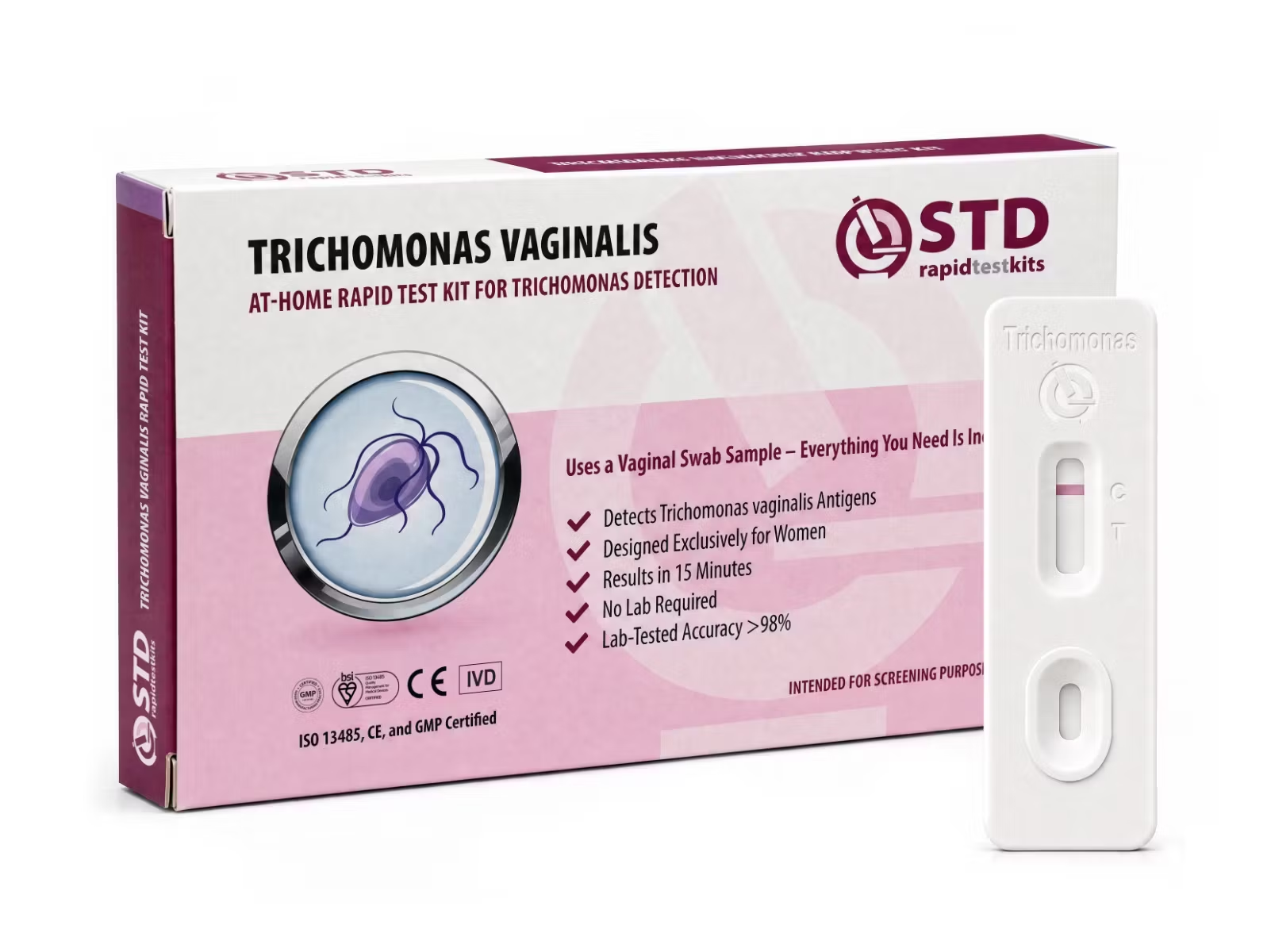
3. At-home rapid test. This site sells rapid at-home lateral-flow tests, including a trichomoniasis swab kit; what follows describes how the technology works and where our kit does and does not fit. Lateral-flow rapid tests use the same vaginal swab sample type as a clinic visit and produce a visual result in around 15 minutes. They use a different chemistry than lab NAATs (lateral-flow immunoassay rather than amplified nucleic-acid detection), so a positive at-home result is worth confirming at a clinic with NAAT when possible. The strengths are speed, privacy, the flat upfront price with no clinic copay, and the ability to test as soon as symptoms turn up. You can reach for an at-home trichomoniasis test for routine screening, or a broader at-home STI test kit when one exposure could have passed along more than one infection.
Our at-home trichomoniasis kit is validated for vaginal self-swab only. Male readers needing a trich test should plan a clinic visit, since we do not currently sell a male-compatible trich rapid test. A urine NAAT at the clinic will catch trich in men if you ask for it specifically.
Window timing matters a little. Symptoms, when they appear, usually show up between day 5 and day 28 after exposure. Test sensitivity is generally fine after about a week from exposure, since the parasite begins replicating quickly once established. If you are testing because of a known exposure rather than ongoing symptoms, waiting roughly a week before testing improves accuracy without making you wait long.
If you test positive, take the antibiotic, tell your partners so they can be treated at the same time, and retest at three months per CDC guidance.
Treatment: a single course, both partners, and a recheck
Trichomoniasis is one of the more satisfying STIs to discuss because the cure is short and effective. The CDC's 2021 STI treatment guidelines lay out clear regimens by patient group, and the medication itself is well-tolerated for most people. Reinfection from an untreated partner, not drug resistance, is the main reason it comes back, because antibiotic resistance in T. vaginalis is uncommon.
The most common side effects are a metallic taste, mild nausea, and an interaction with alcohol that produces flushing and headache, so it is standard to avoid alcohol during treatment and for 24 to 72 hours after the last dose, depending on which drug is prescribed.
Partner treatment is non-negotiable. Both (or all) current sex partners need to be treated at the same time, even if they have no symptoms. Reinfection rates are high when only one partner is treated and others are not. The CDC's retesting recommendation is to retest sexually active women approximately three months after initial treatment regardless of whether their partners were treated, because reinfection is common.
Abstain from sex (including oral and toy use) for at least seven days after treatment is started, and until any partners have also been treated and completed their course.
CDC-recommended trichomoniasis regimens
- Women without HIV: metronidazole 500 mg orally, twice a day, for 7 days. The older single 2 g dose was less effective for women in trials and is no longer first-line.
- Men without HIV: metronidazole 2 g orally, single dose.
- Women with HIV: metronidazole 500 mg twice a day for 7 days (same as the standard regimen).
- Tinidazole 2 g orally as a single dose is an alternative across groups for patients who tolerate it better.
Prevention going forward
Condoms reduce the risk of trichomoniasis transmission, but they do not eliminate it. The parasite can sit on skin in the genital area not covered by a condom, and skin-to-skin contact during sex can still transfer it. Used consistently and correctly, condoms substantially lower transmission risk. They are not a guarantee, especially during long-term, unprotected sex with a partner whose status is unknown.
Routine STI testing is the second protective layer. If you are sexually active with new or multiple partners, the CDC suggests at least annual STI screening, and more frequent if any risk factors apply. For people on PrEP, ask whether your screening labs include trichomoniasis. Many PrEP protocols default to chlamydia and gonorrhea NAATs and skip trich unless requested.
Conversations with partners are the third layer, and they are the one most people skip. Asking a new partner whether their last STD panel included trich, and being able to answer the same question yourself, is one of the lowest-effort risk-reducing things you can do. The conversation does not need to be a confrontation. A simple question about when their last full panel was, and whether it included trich, lands fine in almost any context where you are already trusting someone enough to have sex.
For women who want one decisive screen across the major curable and chronic STIs that share exposure routes with trich, a combined panel often makes more sense than running several single-target tests. Annual screening at this breadth, plus simultaneous partner treatment whenever trich is found, addresses the main reinfection pattern and brings HIV vulnerability back toward baseline.
Should I test for trichomoniasis?
Do you have unexplained genital symptoms (frothy discharge, itching, burning, soreness) that have not cleared with yeast or BV treatment?
Yes: Test for trichomoniasis specifically. Symptoms that mimic yeast or BV but keep returning are a classic trich pattern that standard treatments will not fix.
Has a current or recent partner told you they tested positive for trichomoniasis?
Yes: Test, and arrange treatment at the same time as your partner. Reinfection is common when only one person in a couple is treated.
Are you sexually active with a new or multiple partners, or has it been over a year since your last full screen?
Yes: Add a trichomoniasis test to your next routine screen, and ask for it by name, since most default panels skip it.
No: Your trich risk is lower right now. Re-test when something changes: a new partner, a known exposure, or new symptoms.
Guidance only. A healthcare provider can advise based on your specific situation.
FAQs
- Does trichomoniasis really raise HIV risk by 50 percent?
- The 1.5x figure comes from studies comparing HIV acquisition rates in matched populations with and without active trich, and it is what the CDC and WHO both publish. On a per-exposure basis, that risk shift is real and consistent whether or not the person has symptoms. Treating trich is the only intervention that brings the multiplier back down.
- How would I know if I have trich if 70 percent of cases have no symptoms?
- You probably will not, which is exactly why testing matters. If you have a recent exposure, persistent unexplained genital symptoms, recurring yeast infections or BV that do not clear with standard treatment, a partner who has tested positive, or you are due for a routine STD screen, ask for a trichomoniasis test specifically. It is rarely included on default panels.
- My recent STD panel came back negative. Am I in the clear for trich?
- Probably not, unless the panel explicitly included trichomoniasis testing. Many comprehensive panels cover chlamydia, gonorrhea, HIV, and syphilis but skip trich. Check the lab report or ask the clinic directly which infections were tested. If trich is not on the list, you have no information about your trich status from that panel.
- Why does trichomoniasis specifically raise HIV risk more than other STIs?
- Trichomoniasis affects HIV risk through three mechanisms at once. It damages the genital epithelium so HIV crosses tissue more easily. It recruits CD4-positive immune cells, which are HIV's preferred targets, to the genital area. And it disrupts the protective vaginal microbiome that helps neutralize small viral doses early. Few other infections hit all three pathways together.
- Can men get trichomoniasis? Can men use your at-home kit?
- Yes, men can absolutely get trich. Most have no symptoms, but they can still transmit the parasite. Our at-home trichomoniasis rapid test, however, is validated for vaginal self-swab only, so male readers need to see a clinic for trich testing. A urine NAAT is the standard option for men, and most sexual-health clinics will run it on request.
- What does trichomoniasis discharge look like?
- Most people with trich see no discharge at all. When it does appear, vaginal discharge tends to be frothy and yellow-green or gray, often with a stronger odor after sex, and the vulva may look irritated. Penile discharge, when it shows up, is thin and clear and usually noticed in the morning.
- Is trichomoniasis curable, and how long does treatment take?
- Fully curable. A short antibiotic course clears it for most people. Women typically take a 7-day metronidazole course; men usually take a single larger dose on one day. Both partners need treatment at the same time. If only one partner is treated, reinfection is common. Most people feel normal within a few days. Avoid alcohol throughout the course and for at least 24 hours after the last dose.
- Does PrEP protect against trichomoniasis?
- PrEP does not protect against trich. It is highly effective at preventing HIV acquisition, but it does not protect against any other STI, including trichomoniasis. If you are on PrEP, your STI screening should include trich and not just default to chlamydia and gonorrhea. Ask your provider directly what is on the panel.
- U.S. Centers for Disease Control and Prevention. About Trichomoniasis fact sheet, including the 70 percent asymptomatic figure and direct language on trich-related genital inflammation increasing HIV transmission.
- U.S. Centers for Disease Control and Prevention. STI Treatment Guidelines (2021), Trichomoniasis section. Source for the 1.5-fold HIV acquisition risk figure, current metronidazole and tinidazole regimens, NAAT sensitivity, and the three-month retesting recommendation.
- World Health Organization. Trichomoniasis fact sheet. Source for the global incidence figure of approximately 156 million new cases in 2020 and the 1.5x HIV acquisition risk multiplier.
- UK National Health Service. Trichomoniasis condition overview. Source for clinical presentation, symptom variability, asymptomatic transmission, and standard antibiotic treatment.
- MedlinePlus (U.S. National Library of Medicine). Trichomoniasis clinical reference covering symptoms, complications in pregnancy including premature delivery, and diagnostic approaches.
- World Health Organization. Sexually transmitted infections (STIs) fact sheet, for general epidemiological context on co-infection patterns and screening recommendations.
