
Published: August 2025 | Last updated: May 2026 | Editorial review and quality control: Martina N.
Many people pause at a clinic door for reasons that have nothing to do with the test itself. The doorway becomes the test. If shame, fear of being recognized, dysphoria, past medical trauma, or generalized anxiety has stopped you from getting checked, you are not alone, and you are not without options. Private at-home STD testing exists precisely so the act of testing can happen entirely on your terms, without a waiting room, an intake form, or a single in-person conversation.
Key Takeaways
- At-home STD kits let you collect a sample, mail it to a lab or read a rapid result at the counter, all in plain packaging with no in-person conversation.
- Test timing matters more than test channel. Every infection has a window period, and testing too soon after exposure can produce a false-negative for any kit, home or lab.
When Shame Is the Symptom That Shows Up First
Shame often shows up before any infection does. For a lot of people, the first symptom is the voice that says you should have known better, that your past partners define you, that the act of asking for a test is some kind of admission. That voice is not a clinical finding. It is a cultural one, shaped by decades of silence around sexual health.
The cost of that voice is real. The CDC reports that millions of new STI infections occur every year in the United States, and many cause no symptoms at all. The longer testing waits, the longer an untreated infection has to cause silent damage, spread to partners, or progress into something that does require a clinic.
Knowing that the voice is cultural rather than medical can take some of its weight off. Routine STI testing is just that, routine. The CDC and Planned Parenthood both recommend it for anyone sexually active, not because they assume bad behavior but because untreated infections cause harm regardless of how you got them. Getting tested is closer to a dental cleaning than a confession.
Practical translation: if walking into a community health center is what is keeping you stuck, you can skip the walk in. The choice is not 'test in a clinic' or 'do nothing.' At-home options are equally legitimate, and for many people they are the only viable path.
This article is published by stdrapidtestkits.com, which sells at-home STI testing kits. We recommend products based on fit-for-purpose for the reader's concern, not commercial benefit. The clinic-versus-home choice is a real medical decision and either path is legitimate.
Why Clinics Feel So Hard (And What You Can Do Instead)
Clinics are not the same experience for everyone. For LGBTQ+ patients, trauma survivors, undocumented patients, people who have been gaslit by providers, or anyone whose body has historically been treated as a problem to manage, the waiting room is not neutral. It carries weight. Add visible signage, long waits, fluorescent lighting, intake forms that out you by accident, and a clinician with poor bedside manner, and the barrier stops being purely emotional. It becomes structural.
The same is true if you live somewhere small. In a rural county or a tight-knit neighborhood, walking into the only local sexual-health service can mean being recognized by a coworker, a neighbor, or a relative who works the front desk. The risk to your privacy is not paranoid. It is geographic.
At-home STD testing was built for exactly this gap. Plain packaging arrives at whatever address you choose. You collect the sample yourself, in your own bathroom, on your own timeline. For lab-processed kits, you mail the sample back in a pre-paid envelope and receive a digital result. For true rapid kits, you read the cassette at home in 15 to 20 minutes, the same way a pregnancy test works. No clinical handoff is required for either.
| Barrier | How At-Home STI Tests Help |
|---|---|
| Fear of judgment or recognition | Test alone in your own bathroom, no provider conversation |
| No local clinic or no transportation | Kit ships to any address; no travel required |
| Gender dysphoria or trauma around clinical exams | You collect your own sample, no chaperoned exam |
| Worried someone in the household will find out | Plain packaging, no medical labeling, ship to a third address if needed |
| No insurance or anxious about insurance trail | Most kits are out-of-pocket, no explanation-of-benefits gets mailed |
What an At-Home STD Test Actually Looks Like
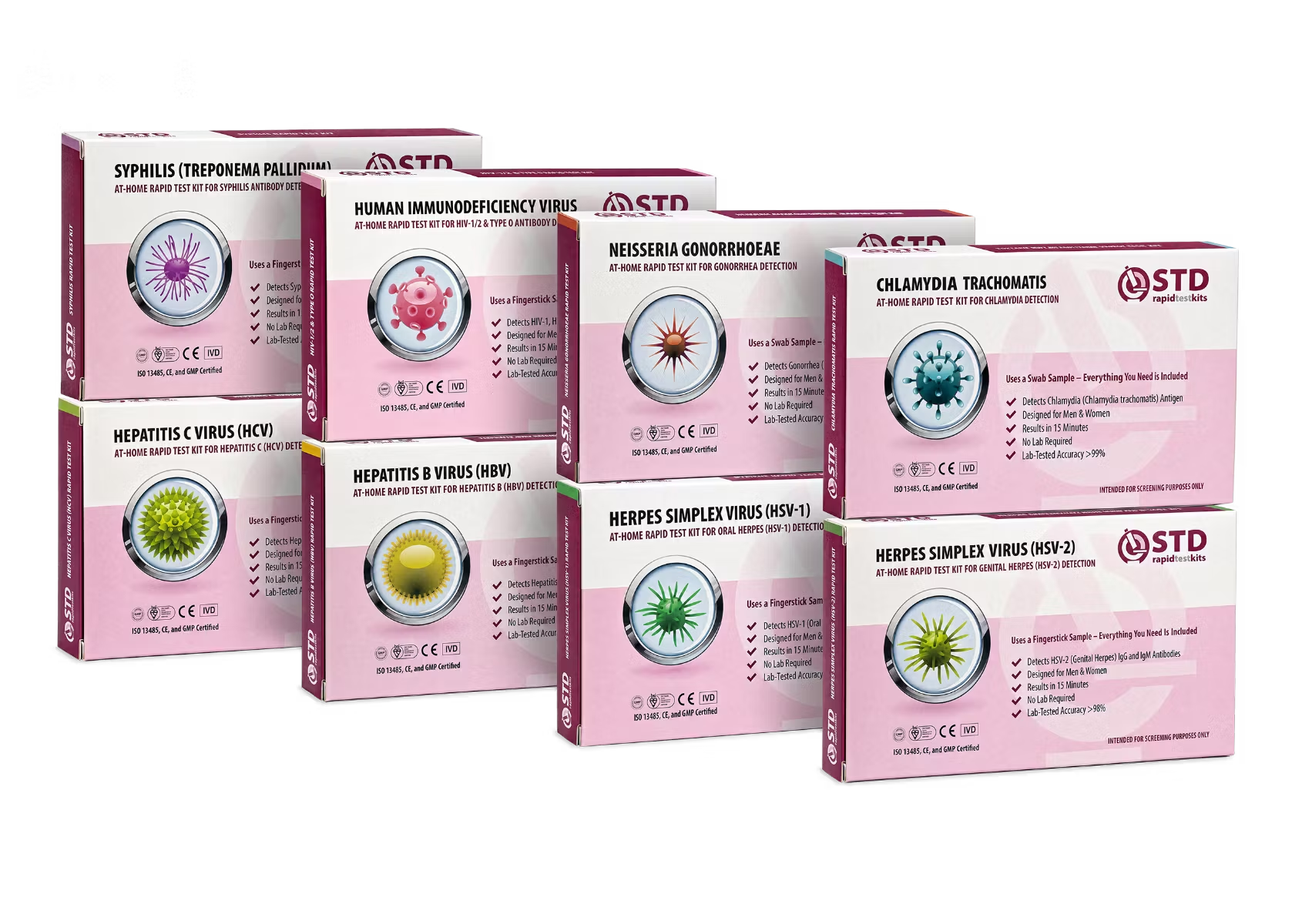
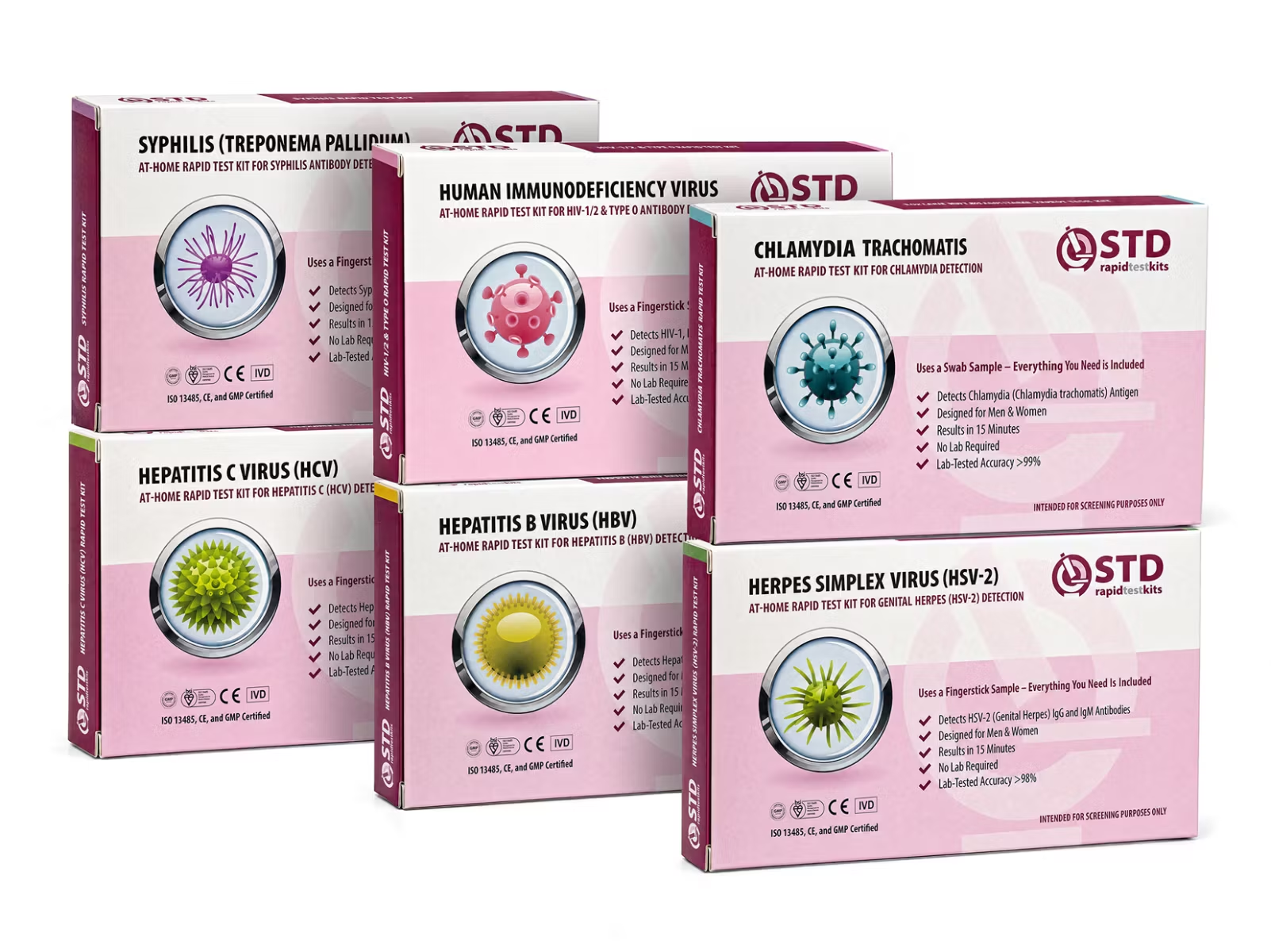
From the outside, an at-home kit is one of three sample types: a self-collected swab for genital infections like chlamydia and gonorrhea; a fingerstick blood drop for bloodborne infections like HIV, syphilis, hepatitis B, hepatitis C, and herpes antibodies; or a combination kit that bundles both. The rapid lateral-flow tests we sell are read at home in about 15 minutes, the same chemistry as a pharmacy pregnancy test. They are screening tools, not lab-grade NAATs, and a positive result is worth confirming with a lab when possible.
Ordering looks like any other online purchase. You pick a kit, ship it to a discreet address, and the package arrives unbranded. Inside is a labeled collection device, step-by-step instructions, a control card or buffer solution, and a single-use lancet or swab depending on the kit. There is no health questionnaire to sign, no insurance to call, no one to explain symptoms to.
For people who have been putting off testing for months or years, the experience is often described as anticlimactic. The act of testing turns out to be much smaller than the dread surrounding it. You wash your hands, follow the steps, set a timer, and wait. The hardest part is usually clicking 'order.'
Timing Matters: When to Test After a Risky Encounter
Every STI has a window period, the gap between exposure and the moment a test can reliably detect the infection. Testing inside the window can produce a false-negative even if you are infected. That is true for both rapid home tests and lab tests; biology does not care which counter you read the result on.
Knowing the right window is half the battle, especially if anxiety is pushing you to test the day after exposure. A negative test taken on day three means very little. A negative test taken at day fourteen or beyond starts to mean something, and a negative test taken at the full window mark for that specific infection is what gives you real reassurance.
The ranges below are approximate, drawn from CDC HIV testing guidance and standard reference-lab labeling for the other infections. They apply to typical lateral-flow rapid tests and lab-based antibody and NAAT screening. Specific products may publish slightly different validation data on their data sheets, so always check the kit you order.
If you are inside the window for a specific infection, the right move is usually to test once now as a baseline, then again after the full window has passed. Symptoms that develop in the meantime are their own reason to seek care, regardless of test timing.
| Infection | Earliest detection window | Best time to test for confidence |
|---|---|---|
| Chlamydia | 1 to 2 weeks | 2+ weeks after exposure |
| Gonorrhea | 1 to 2 weeks | 2+ weeks after exposure |
| Trichomoniasis | 1 to 2 weeks | 3 to 4 weeks |
| Syphilis (antibody) | 3 to 6 weeks | 6 to 12 weeks |
| HIV (antibody, fingerstick) | 3 to 12 weeks | 12 weeks for full reassurance |
| HSV-2 (blood antibody) | 2 to 6 weeks | 12 to 16 weeks |
| Hepatitis B / Hepatitis C | 3 to 12 weeks | 12 weeks |
How can I get tested for an STD without going to a clinic?
Order a discreet at-home STD test kit, swab or fingerstick yourself in your own bathroom, and either read a rapid result in about 15 minutes or mail the sample to a certified lab. Most kits arrive in plain packaging, do not require insurance, and return results privately. Test timing still matters: every infection has a window period after exposure during which any test, home or lab, can return a false-negative.
When the Result Is Positive: What Happens Next
Most people picture a positive result as the end of something. It is the start of treatment. Chlamydia, gonorrhea, syphilis, and trichomoniasis are all curable, usually with a single course of oral antibiotics or one or two intramuscular doses in the case of syphilis. HIV, hepatitis B, hepatitis C, and herpes are manageable with modern treatment plans that allow ordinary, healthy, and sexually active lives. What matters after a positive result is what you do next, starting with confirmation and treatment.
The first step after any positive rapid result is confirmation, especially if the line in the test window is faint or you were testing inside the window. Rapid lateral-flow tests are designed to be sensitive enough to catch infections early, but they trade some specificity for that sensitivity. A confirmation by a clinic or lab NAAT keeps you from being treated for something you do not have, or from missing a co-infection that needs different medication.
Treatment itself is usually shorter than the dread that preceded it. For chlamydia or gonorrhea, a single dose or short course of antibiotics is standard. For syphilis, intramuscular benzathine penicillin remains the recommended treatment per CDC guidelines. For HIV, antiretroviral therapy started early can bring viral load to undetectable within months, which also means a partner cannot acquire HIV from you sexually. None of this requires you to absorb it alone. Telehealth providers can prescribe based on a confirmed result and walk you through what comes next.
Partner notification is the other piece. For anyone who cannot face a direct conversation, anonymous notification services (listed via the CDC's GetTested portal and most state health departments) can send the message for you. Many state programs also offer free partner-services counselors who can handle outreach on your behalf.
Many sexually transmitted infections do not cause any signs or symptoms. The only way to know your status is to get tested.
Your Privacy Is Yours to Keep
The most persistent myth about STD testing is that someone, somewhere, will find out. With at-home kits, the chain of information is short and you control most of the links.
Packages ship in plain envelopes or boxes. There is no company name suggesting STI testing, no medical labeling on the outside. If you are concerned about a household member intercepting mail, you can ship to a friend's address, a workplace, a PO box, or a parcel locker. Many carriers offer signature-free delivery options.
Samples for lab-processed kits are processed under anonymized codes rather than your name on the cassette or vial. Results are returned to the email and portal you specify at sign-up. For pure home rapid tests, no third party sees the result at all unless you choose to share it.
Insurance is optional. Most at-home kits are paid for out-of-pocket, which means no explanation-of-benefits arrives in the mail and no shared family plan administrator sees a charge tied to STI testing. The downside is that you pay full price; the upside is that the testing event leaves no insurance paper trail. Confirmatory testing at a clinic or telehealth provider is a separate decision, and many readers split the path: test discreetly at home for the initial answer, then confirm through a low-disclosure telehealth provider, keeping the in-person clinic out of the loop entirely.
How an At-Home Kit Protects Your Privacy
- Plain unbranded packaging with no medical labeling on the outside.
- Samples processed under anonymized codes, not your name.
- No insurance billing, so no explanation-of-benefits gets mailed to your household.
- Optional telehealth confirmation if you choose to formalize a positive result without an in-person clinic visit.
Do You Need to Retest? When and Why
Testing once is rarely the whole story. Three common situations call for a follow-up test.
First, if your initial test landed inside the window period for that infection, the negative result is not yet conclusive. The standard move is to retest after the full window has passed. For HIV antibody tests this can mean retesting at twelve weeks; for chlamydia and gonorrhea, retesting at two weeks past exposure is usually enough.
Second, if you tested negative but a current or past partner has since tested positive, that is new information. Retest at the right window mark for what they were diagnosed with, even if your symptoms are absent.
Third, post-treatment retesting is its own category. After treatment for chlamydia or gonorrhea, the CDC recommends a follow-up test about three months later. The reason is not that treatment fails often, it is that reinfection from an untreated partner is common, and a three-month retest catches it. Some NAATs can still detect non-viable bacterial DNA for weeks after treatment, so the timing of post-treatment testing also matters; lateral-flow rapid tests behave differently, but a confirmatory NAAT remains the gold standard for clearance.
Symptoms that develop or persist after a negative test are also a retesting trigger. A rapid test is a screen, not an exam, and it cannot rule out conditions that present similarly but are not on the kit's panel. If something feels off, retest and consider a clinical evaluation.
Choosing to Know
Ordering a home test is not a small act for many people. It often feels like an admission, even though the only thing it admits is that you take your own body seriously. The reality is closer to the opposite of what shame says: testing is a regular care act, the same category as a flu shot or a dental cleaning, just for an organ system that culture has trained us to hide.
If reading this article has been the longest you have sat with the question, that is fine. There is no clock running. You can pick a kit that matches the exposure you are worried about, choose a delivery address that feels safe, set the package down somewhere private, and open it when you are ready. The kit will wait.
What it gives you in return is something the dread cannot: an actual answer. Whether the result is positive or negative, the open question stops eating context in your head. You can plan, treat, retest, or simply move on. The waiting room you do not have to enter is not the only one that matters. The mental one is bigger, and at-home testing is the door out of it.
- Pick the kit that matches the exposure you are worried about (single-infection kit for a specific concern, multi-STI kit for a broader screen).
- Test at the right window mark for that infection, using the window-period table above as a reference.
- If the result is positive, confirm with a lab NAAT or a telehealth provider before starting treatment.
Frequently Asked Questions
- Can I really skip the clinic and still get tested?
- Yes. At-home STI kits use the same sample types a clinic uses (self-collected swab or fingerstick blood), and you can pick between rapid lateral-flow kits that read in about 15 minutes at home and mail-in kits that return a lab result by email. Neither requires you to walk into an office or speak with a provider.
- Are at-home STD tests as accurate as clinic tests?
- Rapid lateral-flow home tests are screening tools, generally in the mid-to-high 90s percent sensitivity range when used inside the recommended window and after the sample collection steps are followed correctly. Lab NAATs (the test most clinics send out) are more sensitive in absolute terms. The practical workflow is: screen at home, and if you screen positive, confirm with a lab. The two are complementary.
- How soon after a possible exposure can I test?
- The honest answer is it depends on the infection. For most genital bacterial infections like chlamydia and gonorrhea, two weeks past exposure is the practical floor. For HIV and syphilis antibody tests you need to wait longer, with twelve weeks being the mark where an HIV antibody result is fully reliable. When in doubt, test at the shortest window for a baseline, then retest at the full window if the first result is negative.
- Will my insurance company or family find out if I test at home?
- Most at-home kits are paid out-of-pocket, which means no explanation-of-benefits is sent to your insurer and no charge appears on a shared plan. Packages ship in plain unbranded boxes or envelopes. If you confirm a positive result through formal medical care, that visit may enter your medical record, which is one reason some readers use telehealth providers for the confirmation step.
- What happens if my home test comes back positive?
- Take a breath, then confirm. A positive rapid result should be followed up with a lab NAAT or telehealth provider before starting treatment, especially if the line in the test window was faint or you were testing inside the window. Most positive results lead to short treatment courses (oral antibiotics for chlamydia, gonorrhea, syphilis, trichomoniasis) or to manageable long-term plans (HIV, herpes, hepatitis B, hepatitis C).
- Do I need to test if I have no symptoms?
- Yes. The CDC recommends at least annual testing for sexually active adults under 25 and for anyone with new or multiple partners, regardless of symptoms. Most people who test positive never felt anything different, so routine testing is the only way to catch silent infections before they cause long-term harm or get passed along.
- How do I tell a partner that I tested positive?
- There is no perfect script. Direct works for some people: 'I tested positive for X, you should test too.' Anonymous partner notification services (often listed via state health departments and the CDC GetTested portal) can send the message for you without naming you. Telehealth providers can also help with expedited partner therapy in some U.S. states for certain infections.
- Can I order an STD kit without using my real name?
- Most at-home kit providers only need an email and a shipping address to register the kit. You can use a first name only, ship to an address that is not your primary residence, and create a separate email for the results portal. Insurance is not required, which means there is no need to attach the test to your identity in a clinical-records sense.
How we sourced this article: We summarized current guidance from the CDC, the World Health Organization, the NHS, Planned Parenthood, and Mayo Clinic on at-home and clinic STI testing, window periods, post-treatment retesting, and partner notification. Composite framing is used in place of named reader anecdotes. This article is a public-health summary, not clinical advice; speak with a licensed provider about your specific situation.
- U.S. Centers for Disease Control and Prevention. STI testing guidance and routine screening recommendations for sexually active adults.
- U.S. Centers for Disease Control and Prevention. HIV testing options, window periods, and at-home test types.
- U.S. Centers for Disease Control and Prevention. STI treatment guidelines including chlamydia, gonorrhea, syphilis, and follow-up retesting timing.
- U.S. Centers for Disease Control and Prevention. GetTested portal for locating local and at-home testing options and partner-notification services.
- Planned Parenthood. Patient-facing overview of sexually transmitted infections, HIV, and safer sex.
- World Health Organization. Sexually transmitted infections fact sheet covering global burden, asymptomatic infections, and testing access.
- Mayo Clinic. Sexually transmitted diseases symptoms and causes overview.
