Published: August 2025 | Last updated: May 2026 | Editorial review and quality control: Martina N.
What is Donovanosis and how is it treated?
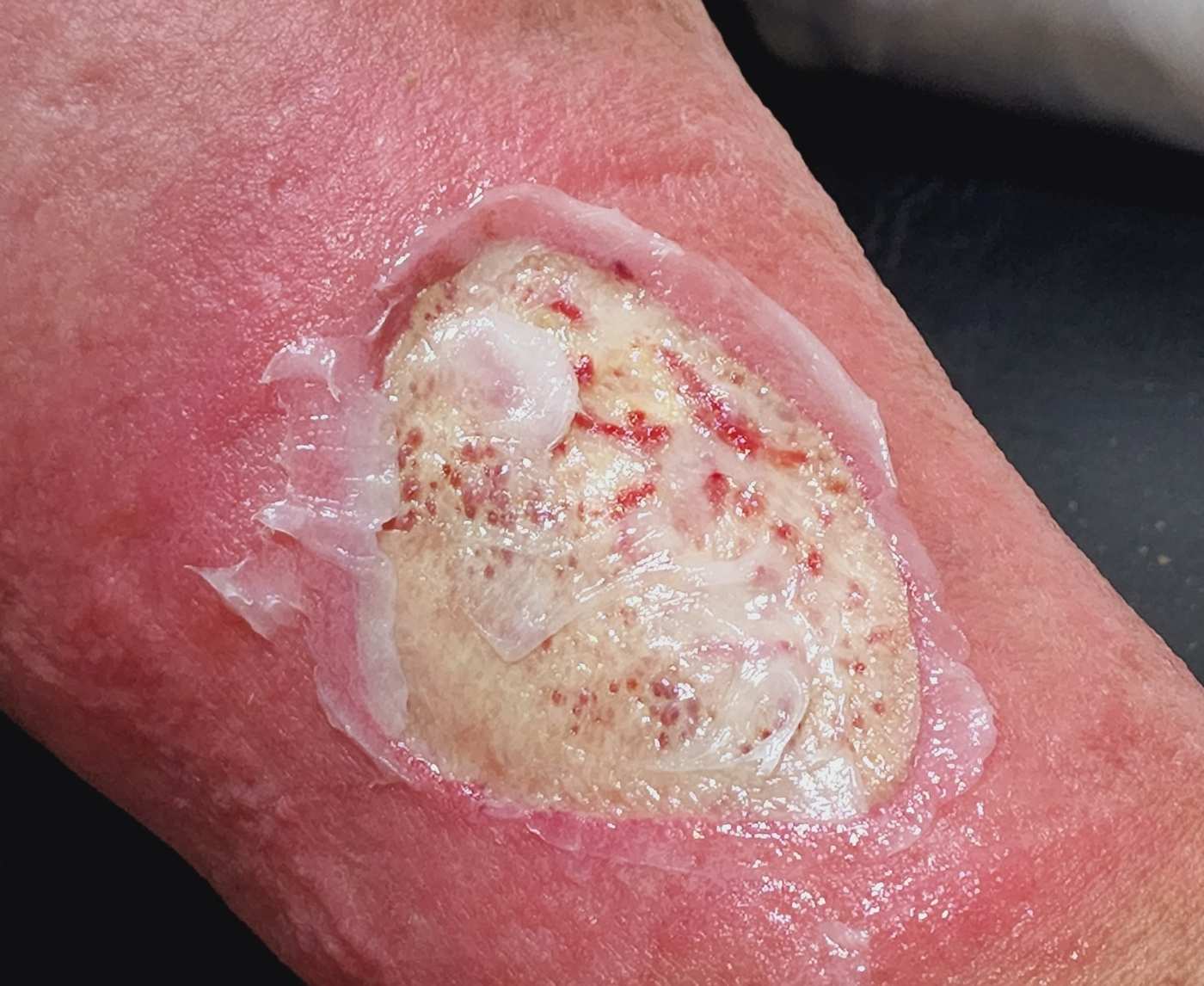
Donovanosis (granuloma inguinale) is a rare bacterial sexually transmitted infection caused by Klebsiella granulomatis. It produces painless, beefy-red genital ulcers that bleed easily and grow slowly. Treatment is at least three weeks of oral antibiotics, with azithromycin as first-line. Diagnosis requires a clinical tissue biopsy or PCR; no at-home rapid test exists.
The first sign of Donovanosis is usually a painless bump near the genitals or inner thigh. That single fact, the absence of pain, is also why so many people wait months before they see a clinician. By the time the small bump has grown into an open, beefy-red ulcer with rolled edges that bleeds at the lightest touch, the infection has had weeks to spread under the skin.
Donovanosis is rare in the United States and the United Kingdom (roughly 100 cases per year in the US per StatPearls). It remains endemic in parts of southern India, Papua New Guinea, the Caribbean, central Australia, and southern Africa. For most readers in non-endemic countries, a painless genital bump is far more likely to be an ingrown hair, a benign cyst, or a common viral skin condition. Knowing what this rare infection looks like still matters if you have any reason to suspect exposure, particularly after travel to an endemic region or sex with a partner from one.
Key Takeaways
- Donovanosis ulcers are usually painless, which is why people delay care; the average incubation is around 50 days but can range from one to twelve weeks, occasionally up to a year.
- It is curable with at least three weeks of antibiotics, but only a clinical biopsy or PCR confirms the diagnosis. No at-home rapid test exists for Donovanosis.
What Donovanosis is
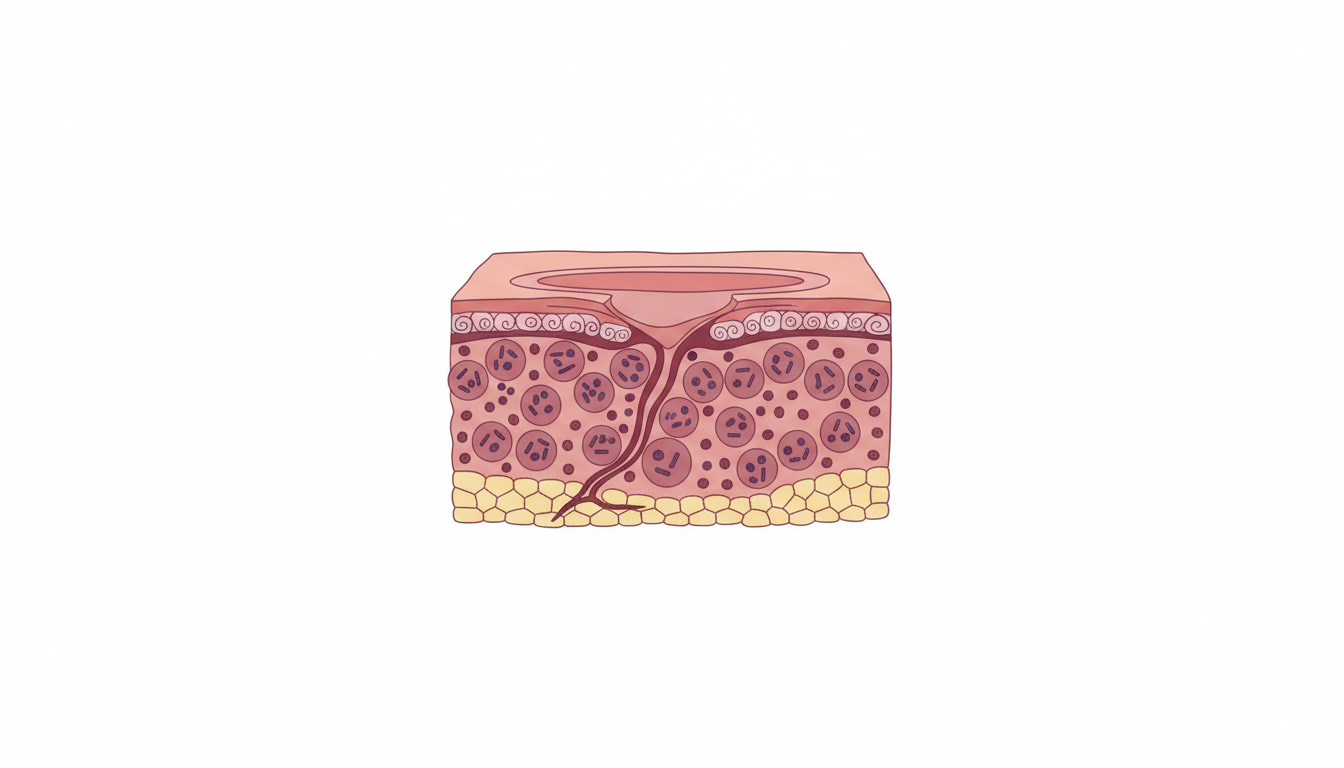
Donovanosis is a chronic bacterial infection caused by Klebsiella granulomatis, a gram-negative coccobacillus that lives intracellularly inside the histiocytes of human skin and mucosa. Clinicians and laboratories also call the disease granuloma inguinale, named for the inguinal (groin) region where the lesions most often appear. The disease takes its other name from Charles Donovan, the Irish physician who first described the characteristic intracellular inclusions inside infected cells in 1905. Those inclusions, now called Donovan bodies, remain the diagnostic hallmark of confirmed infection.
The popular nickname "flesh-eating STD" overstates what is happening. The bacteria do not produce a fast-acting toxin like the streptococcal organisms that cause necrotizing fasciitis. Instead, they trigger a slow, ongoing inflammatory response that gradually breaks down skin and the soft tissue beneath it. Untreated, that slow erosion can be devastating, but the timeline is measured in weeks and months rather than hours and days.
The infection is most common in tropical and subtropical climates. StatPearls lists endemic regions as Papua New Guinea, southern India, Southeast Asia, Brazil, Indonesia, Argentina, and the Caribbean, with declining case counts in Australia and South Africa following targeted public health campaigns.
How Donovanosis spreads
The dominant route of transmission is unprotected vaginal or anal sex with someone who has active lesions. The bacteria enter through small breaks in the skin or mucous membrane, often too small to see, and then take up residence inside the histiocytes of the dermis. Lesions most often appear at the inoculation site: the labia, penis, scrotum, perineum, or groin. Oral transmission is documented but uncommon, and oral lesions tend to be even more easily missed than genital ones.
Non-sexual transmission through close skin-to-skin contact has been described in case reports, particularly between mothers and infants in endemic regions, but it is rare enough that almost every documented case in adults has a sexual exposure as the most plausible source. Cleveland Clinic notes that the typical interval between exposure and the first visible lesion is one to twelve weeks, although symptoms can occasionally appear up to a year after exposure.
Condoms reduce transmission risk substantially because they cover the most common lesion sites, but they are not absolute. The WHO STI fact sheet notes that condoms do not offer protection for STIs that cause extra-genital ulcers, and the same logic applies to Donovanosis ulcers that develop on the inner thigh, perianal area, or pubic region outside the area a condom covers.
- Vaginal or anal sex with someone who has active lesions: the dominant route; almost every documented adult case fits this pattern.
- Oral sex: documented but uncommon; oral lesions are easier to miss than genital ones.
- Non-sexual skin-to-skin contact: rare; described mainly in case reports between mothers and infants in endemic regions.
How to recognize the early signs
Donovanosis does not arrive dramatically. The first lesion is usually a single firm papule or small nodule that you can feel under the skin before you can really see it. There is no itching, no burning, no swelling that draws attention. Over the following weeks, that papule slowly breaks down into a shallow ulcer with sharply defined edges. The edges look rolled, almost polished, and the base of the ulcer is a uniform deep red or pink, often described in clinical references as "beefy red" with a soft, almost velvety surface texture.
The diagnostic clue most clinicians look for is the bleeding pattern. A Donovanosis ulcer bleeds easily when touched or rubbed by clothing, even though it does not hurt. Many people first notice the infection because of a small smear of blood on a towel or in their underwear rather than from feeling the lesion itself. DermNet describes five clinical morphologies: ulcerovegetative (the most common, soft painless ulcers that bleed easily), nodular (raised red papules), hypertrophic or verrucous (large warty masses with a walnut-like appearance), necrotic (deep, foul-smelling ulcers), and cicatricial (extensive scar tissue plaques after long-standing infection). The same patient can shift between patterns as the infection ages.
If the infection is not treated, new lesions tend to appear close to the original one, sometimes seeded along scratch lines or skin folds. In advanced cases, neighboring ulcers can merge into one large area of tissue loss. Spread to the inguinal folds or perianal skin makes walking and sitting uncomfortable, and friction from clothing slows healing further. Lesions on the lower abdomen, thighs, and rarely the face have all been reported. There is rarely lymph node swelling, which separates Donovanosis from chancroid and lymphogranuloma venereum, both of which cause painful inguinal nodes.
Signs that suggest Donovanosis rather than a common skin lesion
Having one or more of these features does not confirm Donovanosis. Only a clinical biopsy or PCR can. But a painless ulcer with two or more of these features warrants seeing a clinician within a week.
- Single firm red papule or small nodule that you can feel before you can clearly see it Common
- Painless on contact: the ulcer does not hurt when touched, wiped, or rubbed by clothing Common
- Bleeds easily on contact, even at the lightest touch (often noticed first as a smear of blood on a towel or in underwear) Common
- Uniformly deep-red or pink base with a soft, velvety surface texture, often described as "beefy red" Common
- Sharply defined edges that look rolled or polished, rather than firm and indurated Common
- Slow enlargement over weeks rather than days; the ulcer does not heal on its own Common
- New satellite lesions appearing nearby along scratch lines or skin folds Less common
- Inguinal lymph node swelling (rare in Donovanosis, common in chancroid or LGV; its absence supports the diagnosis) Rare
How to tell it apart from other painless ulcers
Painless genital ulcers are not common, but Donovanosis is not the only cause. Primary syphilis is by far the most likely diagnosis in non-tropical regions, and chancroid, herpes, and lymphogranuloma venereum (LGV) all need to be ruled out depending on geography and history. Outside the STI world, a chronic painless genital ulcer in someone over 50 should also raise concern for squamous cell carcinoma of the skin, penis, or vulva. Biopsy is one of the few diagnostic tools that confirms Donovanosis AND rules out malignancy at the same time, which is part of why clinicians often go straight to tissue sampling for any persistent painless ulcer.
The table below compares the features clinicians use to narrow down the diagnosis between the ulcerative STIs.
| Condition | Causative agent | Typical onset | Pain | Ulcer edge | Bleeds easily? |
|---|---|---|---|---|---|
| Donovanosis | Klebsiella granulomatis | 1 to 12 weeks | Painless | Rolled, sharply defined | Yes, characteristic |
| Primary syphilis | Treponema pallidum | About 3 weeks | Painless | Indurated and firm | No |
| Genital herpes | HSV-1 or HSV-2 | 2 to 12 days | Painful | Vesicle then shallow ulcer | No |
| Chancroid | Haemophilus ducreyi | 4 to 10 days | Painful | Soft and ragged | Sometimes |
| LGV | Chlamydia trachomatis L1-L3 | 3 to 30 days | Often painless and brief | Small, transient | No |
Why Donovanosis gets misdiagnosed
The painless quality of the ulcer is what most often delays the right diagnosis. Patients assume an ingrown hair, a friction sore, or a healing pimple, and clinicians who have never seen a case in person are likely to start with the more common possibilities first. Primary syphilis is usually at the top of that list, which is the right starting point in most non-endemic settings.
The trouble is that a syphilis blood test can take three weeks or more after exposure to turn positive, and a Donovanosis ulcer can sit there for those same three weeks looking like a stalled syphilis lesion. Clinicians who do not have donovanosis on their differential may treat empirically for syphilis, watch for resolution that does not come, and only then start asking why. By that point the ulcer has typically grown larger and the pattern of easy bleeding has become more obvious.
A specific clue that nudges clinicians toward Donovanosis: the ulcer base looks uniformly red and granular rather than the firm, indurated, button-like base of a syphilitic chancre, and the patient describes contact bleeding (the ulcer bleeds when wiped or after intercourse) without pain. Another differentiator is the natural history. A syphilis chancre will heal on its own in three to six weeks even without treatment; a Donovanosis ulcer keeps growing.
- Donovanosis ulcer: uniformly red, soft and granular base; bleeds easily on contact; painless; rolled edges; does NOT heal on its own.
- Syphilitic chancre: firm, indurated, button-like base that does not bleed when touched; painless; sharply demarcated; heals spontaneously in 3 to 6 weeks even without treatment.
If a painless ulcer also bleeds when wiped or after intercourse, Donovanosis moves up the differential and tissue sampling should be considered earlier rather than waiting for syphilis treatment to fail.
How clinicians confirm the diagnosis
You cannot diagnose Donovanosis on appearance alone, no matter how classic the lesion looks. The bacterium is difficult to grow in standard laboratory cultures, so confirmation rests on either microscopy of a tissue sample or PCR if a reference laboratory is available.
The traditional confirmatory test is a tissue smear or biopsy from the active edge of the ulcer, stained with Wright, Giemsa, or Leishman stain. Under the microscope, the pathologist looks for Donovan bodies: small dark-staining inclusions inside the cytoplasm of large mononuclear cells (histiocytes) in the dermis, with a distinctive bipolar "safety pin" appearance. The presence of Donovan bodies is essentially diagnostic. PCR testing of a swab or biopsy is more sensitive and is increasingly the test of choice in well-resourced settings, but it is not yet routinely available in most general clinics outside endemic regions. MedlinePlus lists tissue scraping with stain or biopsy among the available diagnostic options, and notes that some lab tests for donovanosis are available only on a research basis. The tissue-smear approach remains the most widely accessible path.
If you are seeing a provider who has never managed a case, do not be discouraged. Most pathology labs can stain and read the slide; the presence of Donovan bodies in a smear from the ulcer edge confirms the diagnosis. A dermatology or infectious-disease consultation is a reasonable next step if the primary-care visit feels uncertain.
This matters for the home-testing reader: there is no rapid antigen or antibody test for Donovanosis. The same fingerstick blood tests that screen for syphilis, HIV, hepatitis B, and hepatitis C cannot detect Klebsiella granulomatis. Anyone with a persistent painless genital ulcer needs an in-person clinical evaluation and a tissue sample.
Donovanosis cannot be diagnosed at home. Confirming it requires a tissue biopsy or PCR test, both performed in a clinical setting. None of our rapid lateral-flow kits screens for Klebsiella granulomatis. What our kits CAN do is help you rule out the more common causes of a similar-looking lesion, such as syphilis, herpes, or HIV co-infection. If a painless genital ulcer is the reason you are reading this, the right next step is an in-person clinic visit, not an at-home test.
Why ruling out syphilis first matters
In non-tropical regions, the overwhelming majority of painless genital ulcers turn out to be primary syphilis. Syphilis is far more common, has a well-validated rapid test, and is treatable in a single dose of penicillin if caught early. Even when Donovanosis is the eventual answer, syphilis serology is one of the first tests a clinician will order, both to rule it out and because the two infections can occasionally coexist.
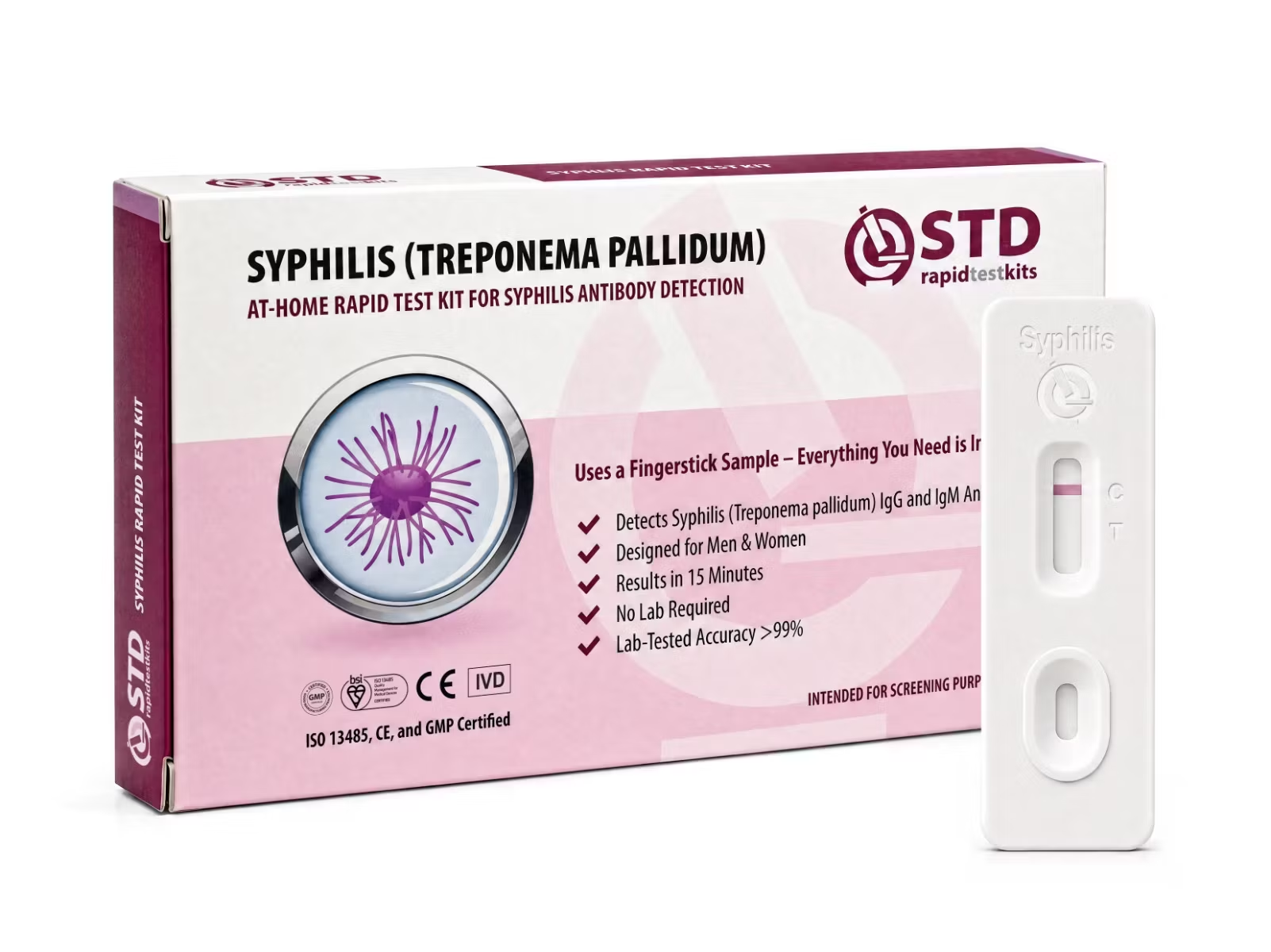
For readers concerned about a painless ulcer who want to begin a workup at home before seeing a clinician, a rapid syphilis blood test is the single most useful screening tool. A negative result still leaves Donovanosis (and other rarer causes) on the differential, so a persistent ulcer always needs an in-person evaluation regardless of the home test result. Starting the conversation with a clinician already armed with a syphilis result tends to speed things up.
Note: this site sells rapid at-home STI tests, and the kit below is recommended because it genuinely fits this diagnostic step, not as a generic upsell.
Treatment: antibiotics, patience, and full healing
Donovanosis responds well to several antibiotic regimens, but all of them require a longer course than people are used to. The CDC's STI Treatment Guidelines list azithromycin as the primary recommended regimen: either 1 gram orally once weekly, or 500 milligrams orally once daily, continued for at least three weeks and until all lesions have healed completely. Alternative regimens of equivalent length include doxycycline 100 mg twice daily, erythromycin base 500 mg four times daily, and trimethoprim-sulfamethoxazole one double-strength tablet twice daily.
Treatment choice in pregnancy generally favors erythromycin or azithromycin; doxycycline carries pregnancy-related cautions. Pregnant patients should make sure the prescribing clinician knows about the pregnancy at the first visit.
Two details often surprise patients. First, the "at least three weeks" wording is a floor, not a target. If the ulcers have not healed by week three, treatment continues. Extensive infections can require six to eight weeks of antibiotics or longer. Second, the CDC notes that adding another antibiotic to the regimen can be considered if improvement is not evident within the first few days. In clinical practice, an aminoglycoside such as gentamicin is the most commonly used add-on, and this combination approach is reserved for clinician-supervised cases.
Stopping antibiotics early is the single most common reason a Donovanosis infection comes back. The bacteria can survive inside histiocytes for weeks after the surface skin appears to have healed, and a partial course gives them the chance to reactivate.
CDC-recommended antibiotic regimens
- Azithromycin 1 g orally once weekly OR 500 mg orally daily (primary recommended regimen).
- Doxycycline 100 mg orally twice daily (alternative).
- Erythromycin base 500 mg orally four times daily (alternative; preferred during pregnancy).
- Trimethoprim-sulfamethoxazole one double-strength tablet orally twice daily (alternative).
- All regimens: minimum 3 weeks AND continued until lesions have healed completely; extensive cases often need 6 to 8 weeks or longer.
How healing progresses during treatment
Treatment response is usually visible within the first week. Ulcer edges flatten, the easy contact bleeding starts to stop, and granulation tissue begins to replace the active lesion. Over the following ten to fourteen days, the deep beefy-red color lightens and new skin (called epithelium) grows inward from the rolled edges, gradually closing the surface. This new skin is thin and fragile for several weeks; friction from clothing or sexual contact can reopen partially healed areas, which is one reason clinicians ask patients to wait until full healing before resuming sexual activity.
For small ulcers, healing can leave little or no visible scar. Larger or deeper lesions typically leave a depigmented scar that fades over months, or in some cases a patch of skin that becomes lighter (hypopigmented) or darker (hyperpigmented) than the surrounding area. A flat scar plaque can remain in advanced cases. Reconstructive surgery is rarely needed and is reserved for the small number of patients with extensive tissue loss after long-delayed treatment.
- Week 1: ulcer edges flatten, contact bleeding slows or stops, granulation tissue begins to replace the active lesion base.
- Weeks 2 to 3: the deep beefy-red color lightens, and new (epithelial) skin grows inward from the rolled edges to gradually close the surface.
- Beyond 3 weeks: treatment continues until a clinician confirms full closure of all lesions. Even when surface skin looks normal, the new epithelium is fragile for several more weeks.
Why quick action matters: the HIV connection
Untreated Donovanosis ulcers do more than damage local tissue. Open ulcers anywhere in the genital tract significantly raise the risk of acquiring or transmitting HIV during sexual contact, because the broken skin barrier gives the virus a direct route into the bloodstream. The inflamed tissue underneath the ulcer is also densely populated with the exact CD4 cells that HIV uses as host cells, and bleeding lesions create direct blood-to-mucosa contact during intercourse. DermNet specifically notes that the easy bleeding of Donovanosis lesions increases the risk of HIV transmission during sex.
This is the practical reason to take painless ulcers seriously even when they do not hurt. The longer the ulcer stays open, the longer the window for HIV co-acquisition, and case reports from endemic regions show that Donovanosis and HIV are commonly diagnosed together. Anyone diagnosed with Donovanosis should be offered HIV testing at the same visit, and partners with possible exposure should be tested as well. The WHO STI fact sheet notes the same pattern for every ulcerative STI: an open lesion raises HIV transmission risk in both directions. If you are already concerned about a painless genital ulcer and you have not had a recent HIV screening, that test belongs at the top of the workup list right alongside syphilis serology.

Living through several weeks of treatment
Three to eight weeks is a long time to be on antibiotics, and patients consistently describe the period as emotionally harder than the medication itself. Sexual contact should pause until the clinician confirms full healing of all lesions. Even a condom-protected encounter can pass the bacteria from a lesion outside the protected area, and reinfection between partners is one of the most common reasons treatment fails to clear. Open conversations with sexual partners during this period make a real difference; partners should also be evaluated and offered testing for the more common STIs that share an exposure window.
- Same time every day: take doses on a fixed schedule to maintain steady blood levels and to build a routine you will not forget.
- Take doxycycline with food: it commonly causes nausea on an empty stomach.
- Avoid sun exposure on bare skin while on doxycycline: the drug causes photosensitivity reactions; cover up or use sunscreen.
- Keep the ulcer area clean, dry, and in loose cotton underwear: friction slows healing and can reopen partially healed skin.
- No sexual contact until your clinician confirms full healing, including with a condom; lesions outside the protected area can still transmit.
When to see a clinician and what to ask for
If you have a painless red bump or open sore on or near the genitals that has not changed for a week, or that bleeds when you touch it, see a clinician. You do not need to know what the lesion is to make the appointment; you need a provider with the swab kit and lab access to find out. Sexual health clinics, urgent-care centers, and primary-care providers are all reasonable starting points. In the United States, Planned Parenthood and city public-health STI clinics tend to have the highest familiarity with unusual ulcerative STIs.
While you wait for the appointment or for results, avoid unprotected sex; the ulcer is contagious and raises HIV risk in both directions. Running at-home tests for HIV and syphilis in parallel means you arrive at the visit with results already in hand, which often speeds up the next steps.
Mention:
- How long the lesion has been there, and whether it has grown.
- Whether it bleeds easily on contact.
- Travel to, or sex with a partner from, an endemic region in the past 12 weeks.
- Any other STI testing in the past 6 months and the results.
Ask for:
- A clinical examination of the lesion.
- A swab or smear from the active edge of the ulcer if indicated.
- Concurrent screening for HIV, syphilis, gonorrhea, chlamydia, and herpes.
- A referral to dermatology or infectious disease if the diagnosis remains uncertain.
Telling partners and the 60-day window
Partner notification is a public-health step for any diagnosed STI, and Donovanosis is no exception. The CDC recommends that sexual partners within the previous sixty days be examined and offered preventive treatment, even if they have no visible lesion. The conversation does not have to be dramatic. A short factual message works better than an apology.
If a direct conversation feels unsafe or impossible, most U.S. states offer free anonymous partner-notification services through the local public-health department. These services contact partners on your behalf without revealing your name. State health departments support this option because it raises notification rates and protects everyone involved. Searching "anonymous partner notification" plus your state's name will usually find the local service.
"I was diagnosed with a bacterial STI. It is rare, fully curable, and the clinic recommends you get checked too. I am telling you because I would want you to do the same."
Short, factual, no apology. Most partners respond to a calm message better than to a long emotional one.
Where in the world Donovanosis still shows up
The geography of Donovanosis matters when you are estimating how likely the diagnosis is for a given patient. Endemic areas in 2026 still include parts of Papua New Guinea, southern and central India, parts of Brazil, the Caribbean (especially Guyana and Suriname), Indonesia, and pockets of southern Africa. Australia ran a successful elimination program in the early 2000s, particularly among Aboriginal communities where the disease was historically more common, and case counts dropped sharply, with only sporadic cases reported in recent years.
In the United States, the Donovanosis case count is small. StatPearls estimates roughly 100 cases reported annually, and many of those cases involve patients with travel history to endemic regions. The United Kingdom and the rest of western Europe see comparable rates. The trend that worries public health teams is that occasional non-endemic cases now appear without any documented travel history, which suggests low-level domestic transmission within sexual networks. By the late 2010s, surveillance reports increasingly described Donovanosis as a neglected STI: case counts fell enough that diagnostic training and supply budgets were redirected elsewhere, yet the bacterium never disappeared from endemic regions.
If you live in a non-endemic country and have no relevant travel history, syphilis remains overwhelmingly the more likely cause of a painless genital ulcer. If you have traveled to or have a partner from an endemic region, Donovanosis moves higher on the differential and clinicians should consider tissue sampling sooner.
Granuloma inguinale (donovanosis) is a genital ulcerative disease caused by the intracellular gram-negative bacterium Klebsiella granulomatis. The disease occurs rarely in the United States, although it is endemic in some tropical and developing areas.
Prevention: what reduces your risk
The prevention measures that work for Donovanosis are the same ones that work for the other ulcerative bacterial STIs, with one geographic caveat. Consistent and correct condom use during vaginal and anal sex reduces transmission substantially because it covers the highest-risk lesion sites. The WHO STI fact sheet flags the limit clearly: condoms cannot protect against transmission from lesions outside the area they cover, which includes pubic, perianal, and inner-thigh lesions in the case of Donovanosis.
Routine screening for the more common STIs reduces background risk by catching infections early. Knowing your own and your partners' status before sexual contact does not directly prevent Donovanosis, but it dramatically lowers the chance of being co-infected with HIV or syphilis at the time a painless ulcer first appears. Travelers to endemic regions should be aware of the symptom pattern and have a low threshold to seek care for any painless skin or genital lesion that develops in the weeks after returning.
- Consistent condom use during vaginal and anal sex covers the most common lesion sites and substantially lowers transmission. It is not absolute: lesions outside the covered area (pubic skin, perianal, inner thigh) can still transmit.
- Routine STI screening catches the more common look-alike infections early and lowers the chance of being co-infected with HIV or syphilis at the time a painless ulcer first appears.
- Low threshold for clinic care after endemic-region travel: any painless skin or genital lesion appearing in the weeks after travel deserves a clinical exam.
Any painless genital, perianal, or inner-thigh lesion that does not resolve within two weeks, especially one that bleeds when touched, is worth a clinic visit. The appointment is shorter and cheaper than the antibiotic course required once the diagnosis is delayed.
Next steps if you suspect Donovanosis
Has a painless red bump or open sore on or near your genitals been there for more than a week, or does it bleed when touched?
Yes: See a clinician this week. Ask for a clinical exam plus a swab or smear from the active edge of the ulcer, and concurrent screening for HIV, syphilis, gonorrhea, chlamydia, and herpes.
Did you travel to an endemic region (parts of southern India, Papua New Guinea, the Caribbean, central Australia, southern Africa), or have sex with a partner from one, in the past 12 weeks?
Yes: Mention the travel or partner history at the visit. Donovanosis moves higher on the differential and tissue sampling should be considered earlier rather than later.
While waiting for the clinic appointment, can you run rapid at-home tests for syphilis and HIV in parallel?
Yes: Run them. Arriving at the visit with those results in hand narrows the differential and speeds up the next steps. Also notify sexual partners from the previous 60 days so they can be examined.
No: Still see the clinician this week, avoid unprotected sex until the ulcer is evaluated, and notify sexual partners from the previous 60 days. If a diagnosis is confirmed, complete the full antibiotic course even after the lesion looks healed.
Guidance only; a clinician can advise based on your specific situation.
Frequently asked questions about Donovanosis
- Does Donovanosis really 'eat' flesh?
- Not in the way the nickname suggests. Donovanosis does not cause the rapid tissue death seen in necrotizing fasciitis (the streptococcal disease usually meant by 'flesh-eating'). What happens is a slow, ongoing inflammatory breakdown of skin and soft tissue measured in weeks and months, not hours. The result can still be devastating if untreated, but the timeline gives you time to act if you recognize the early signs.
- Is Donovanosis painful?
- Usually no. The painless quality of the early ulcer is the single most important clinical clue, and also the most common reason for diagnostic delay. Patients often dismiss the lesion as an ingrown hair or a healing pimple precisely because it does not hurt. Pain may develop later if the ulcer becomes secondarily infected with other bacteria, but classic uncomplicated Donovanosis is asymptomatic apart from the visible lesion and easy bleeding.
- Can I get Donovanosis from oral sex?
- It is documented but uncommon. The vast majority of cases are linked to vaginal or anal sex. Oral lesions tend to be even more easily missed because people do not associate a painless mouth or throat sore with a sexually transmitted infection. If you have a partner with confirmed Donovanosis and develop an oral ulcer, mention the exposure to your clinician.
- How long after exposure do symptoms appear?
- Cleveland Clinic gives a typical incubation window of one to twelve weeks after exposure, with a wider possible range up to one year. StatPearls puts the average closer to fifty days based on experimental human infection studies. The wide range is partly because the very early lesion is so subtle that people do not notice the exact starting point.
- Will the ulcers leave permanent scars?
- Small ulcers caught early often heal with little or no visible scar. Larger or longer-standing ulcers commonly leave a depigmented patch that fades over months, or a patch of skin that becomes lighter (hypopigmented) or darker (hyperpigmented) than the surrounding tissue. Extensive lesions can leave a flat scar plaque. Reconstructive surgery is rarely needed and is reserved for the small number of cases with major tissue loss.
- Can Donovanosis come back after treatment?
- Recurrence after a fully completed antibiotic course is uncommon. Cleveland Clinic notes that lesions can return six to eighteen months after treatment, particularly if the original course was stopped early or if reinfection occurs from an untreated partner. Most apparent recurrences are actually undertreated original infections that flared once antibiotics stopped.
- Do condoms fully protect against Donovanosis?
- No, they reduce risk substantially but not completely. Condoms cover the most common lesion sites and substantially lower transmission, which is why consistent use is still strongly recommended. The WHO STI fact sheet explicitly notes that condoms cannot protect against STIs that cause lesions outside the covered area, and Donovanosis lesions on the pubic skin, perianal area, or inner thigh fall into that category.
- How is Donovanosis confirmed in a clinic?
- By taking a small tissue sample from the edge of the ulcer and either staining it for microscopy (looking for the characteristic Donovan bodies with their bipolar safety-pin appearance inside histiocytes) or sending it for PCR testing. The bacterium does not grow well in standard laboratory cultures, so the diagnosis is made on microscopy or molecular testing rather than culture. There is no validated at-home rapid test for Donovanosis.
- U.S. Centers for Disease Control and Prevention. STI Treatment Guidelines: Donovanosis (Granuloma Inguinale). Source for primary and alternative antibiotic regimens (azithromycin, doxycycline, erythromycin, trimethoprim-sulfamethoxazole), the requirement for at least three weeks of treatment continued until lesions heal completely, the 60-day partner-management window, and the absence of an FDA-cleared molecular test for K. granulomatis.
- O'Farrell N, Hoosen A. Granuloma Inguinale. StatPearls (National Library of Medicine bookshelf). Source for the causative organism (Klebsiella granulomatis), endemic geographic distribution, US case count of approximately 100 per year, and average incubation period of around 50 days.
- DermNet. Granuloma inguinale (Donovanosis). Source for the five clinical morphologies (ulcerovegetative, nodular, hypertrophic, necrotic, cicatricial), the easy-bleeding characteristic, and the elevated HIV transmission risk associated with bleeding lesions.
- Cleveland Clinic. Granuloma Inguinale (Donovanosis): Symptoms and Treatment. Source for the typical incubation window of one to twelve weeks, the at-least-three-week antibiotic course requirement, and the documented recurrence window of six to eighteen months after completed treatment.
- U.S. National Library of Medicine, MedlinePlus. Granuloma Inguinale (Donovanosis) consumer reference. Source for the diagnostic pathway of tissue scraping with stain or biopsy and the note that some lab tests are available only on a research basis.
- World Health Organization. Sexually Transmitted Infections (STIs) Fact Sheet. Source for general STI prevention guidance, condom efficacy statements, the explicit limitation that condoms do not protect against STIs causing extra-genital ulcers, and the documented role of ulcerative STIs in elevating HIV acquisition risk.
