Tingling Lips But No Cold Sore: What It Means and What to Do
That tingling, prickling, or buzzing on your lip is one of the most googled symptoms in sexual health. Here is what the prodrome stage of oral herpes actually feels like, what else can mimic it, when at-home testing genuinely helps, and what to do in the first few hours of a tingle, written in plain English, no scare tactics.



- Lip tingling is often the prodrome stage of HSV-1 reactivation, an early warning that comes about 24 hours before a cold sore forms (and sometimes never progresses past the tingling).
- An at-home antibody blood test can confirm whether you carry HSV-1, but only after a window period of about 12 weeks since possible first exposure.
Published: November 2025 | Last updated: April 2026 | Editorial review and quality control: Martina N.
That tingling, prickling, or buzzing sensation on your lip, the one that feels electric and weirdly familiar, is one of the most common reasons people end up searching for oral herpes information at midnight. Paying attention to your body is the right instinct. The complicated part: a lip tingle can mean several different things, and the answer matters for both your peace of mind and how you handle the next two days.
This guide walks through what is actually happening when your lip tingles, what else besides HSV-1 can cause that sensation, when testing is worth doing, and what to do in the moment. By the end you will know whether your tingle warrants a test, what to do in the next 24 hours, and what it means if the sore never appears.
Tingling lips with no visible sore: is it herpes?
Often, yes. The tingle is called the prodrome phase of oral herpes (HSV-1) and it typically appears about 24 hours before a cold sore forms, sometimes shorter, occasionally longer. But not every prodrome turns into a visible sore, and not every lip tingle is herpes. Stress, sunburn, food allergies, dental work, dryness, and B12 deficiency can all produce similar sensations. The strongest clue is pattern: HSV-1 tends to recur in the same spot, while other causes are usually more diffuse or one-off.
Key Takeaways
- Lip tingling is often the prodrome stage of HSV-1 reactivation, an early warning that comes about 24 hours before a cold sore forms (and sometimes never progresses past the tingling).
- An at-home antibody blood test can confirm whether you carry HSV-1, but only after a window period of about 12 weeks since possible first exposure.
What is actually happening when your lip tingles
The tingle is called a prodrome in clinical terms, and it represents early viral reactivation. After a first HSV-1 infection (often in childhood, often without obvious symptoms), the virus retreats into the trigeminal ganglion, a cluster of sensory nerve cells near the base of the skull, and stays dormant there. Sometimes it stays quiet for years.
When something disturbs the equilibrium, stress, sun exposure, illness, hormonal shifts, or local irritation, the virus can travel back down sensory nerve fibers toward the skin surface. As it moves, it irritates the nerve, producing the tingling, itching, or buzzing you feel. According to the StatPearls clinical reference on Herpes Simplex Type 1, recurrent orolabial herpes typically shows about a 24-hour prodrome of tingling, burning, and itch before any lesion appears.
Sometimes the virus completes the journey and a vesicle forms. Sometimes the immune system intercepts it before it breaks the skin, and the prodrome fades without progressing. Both outcomes are normal. The first scenario produces a classic cold sore. The second is sometimes called a subclinical reactivation, and research summarized by the World Health Organization fact sheet on herpes simplex virus suggests it happens often, even in people who only rarely get visible sores.
HSV-1 is not on your lip between outbreaks. It sits dormant inside the trigeminal ganglion, a cluster of nerve-cell bodies near the base of the skull that supplies sensation to the face. Each reactivation is the virus traveling back down the nerve toward the skin. That route is why the tingling almost always shows up in the same spot for any given person, and why it precedes anything visible by hours.
Can you have oral herpes without ever getting a cold sore?
Yes, and most carriers do. The WHO estimates that roughly 3.8 billion people under age 50, about 64% of the global population, are infected with HSV-1, and the majority will never know they have it. Many people are exposed in early childhood through a relative kissing their cheek or sharing a utensil and never develop a visible sore.
Even among people who do get cold sores, not every reactivation produces a lesion. You might feel tired, slightly run-down, notice a brief tingle, and then nothing visible happens for weeks. The trade-off: subclinical reactivation can still involve viral shedding from the skin, which means transmission is possible even when no sore is visible.
This is the key reason oral herpes is so common. Most transmission happens between people who do not know they are infected, during periods when no sore is present.
Why HSV-1 spreads so widely
- Roughly 64% of people under 50 globally carry HSV-1 (WHO).
- Most carriers never develop a visible cold sore and do not know they are infected.
- Asymptomatic shedding from the skin can still transmit the virus, including during the tingling-only phase.
What else can cause lip tingling besides herpes?
Not every tingle is HSV-1. The lip is densely packed with nerve endings and is exposed to dozens of potential irritants every day: food, lip balm, weather, dental work, even toothpaste. The table below covers the most common non-herpes causes and how they tend to differ from a true prodrome.
| Cause | Typical sensation | Comes with | Progresses to a blister? |
|---|---|---|---|
| HSV-1 prodrome | Tingling, itching, mild burning in same spot each time | Mild fatigue or feeling run-down | Often (about 24 h later), but not always |
| Dry or chapped lips | Tightness, flaky feeling across whole lip | Cold weather, wind, dehydration | No |
| Allergic contact reaction | Tingling or numbness, often with swelling | New lip balm, food, dental product | Rarely (more often diffuse swelling) |
| Anxiety or hyperventilation | Buzzing, electric, sometimes spreads to fingers | Lightheadedness, racing heart | No |
| Vitamin B12 deficiency | Persistent tingling, often in tongue too | Fatigue, numbness in hands or feet | No |
| Nerve irritation after dental work | One-sided tingling, sometimes with mild pain | Recent procedure, jaw stiffness | No, but can trigger a real HSV-1 prodrome separately |
What triggers a herpes reactivation?
HSV-1 is not random. It responds to changes in your body's internal and external environment. The most reliably reported triggers are summarized in the StatPearls Herpes Simplex Type 1 reference, with stress and intercurrent illness specifically named by the Cleveland Clinic patient guide to oral herpes as the most commonly reported precipitants.
| Trigger | Why it reactivates HSV-1 | Real-world scenario |
|---|---|---|
| Stress (emotional or physical) | Cortisol blunts the cellular immune response that normally keeps HSV-1 latent | Final exams, breakup week, family illness |
| Sun exposure | UV light damages lip tissue and can directly trigger viral migration along the nerve | Beach trip without SPF lip balm, ski weekend, tanning beds |
| Illness or fever | Immune system is busy fighting something else, leaving room for HSV-1 to flare | Cold, flu, COVID-19 recovery |
| Hormonal shifts | Changes in estrogen and progesterone can alter immune balance | Menstrual cycle, pregnancy, hormone therapy |
| Local injury or friction | Skin disruption near viral nerve zones can spark reactivation | Dental work, chapped lips, aggressive kissing |
| Sleep deprivation | Reduces effectiveness of T-cell responses that suppress HSV-1 | Long-haul flights, newborn weeks, all-nighters |
What does a cold sore actually look like (and what looks similar)?
One of the hardest parts of an early reactivation is that nothing distinctive is visible yet. Once a lesion forms, the comparison gets clearer. The figures below show the most common patterns side by side, including two common lookalikes that are not herpes at all.
Are you contagious during the tingling phase?
Probably yes, even though no sore is visible. The CDC overview of genital herpes and HSV-1 and the American Sexual Health Association herpes resource both note that herpes can spread from skin or mucosa even when no sores are visible. Shedding is most concentrated when an active sore is present, but it is not zero during the prodrome.
Practically, this means: if you feel the familiar tingle and you have had cold sores before, treat it as a contagious window. Skip kissing, sharing drinks or utensils, and oral-genital contact for 3 to 5 days, or until the sensation passes and no lesion has formed. The same logic applies to anyone unsure of their HSV-1 status who develops a recurring same-spot tingle.
HSV can transmit from skin that looks completely normal. The CDC notes that herpes can be passed even when no symptoms are present. The prodrome (tingling, itching) is your most predictable shedding window, but it is not the only one. Consistent honesty with partners about your cold sore history matters more than trying to time intimacy around visible signs alone.
When does testing for HSV-1 actually help?
Testing for oral herpes is a more nuanced decision than testing for, say, chlamydia. Here is a clean breakdown of who benefits and who probably does not.
Testing usually helps when:
- You have never had a visible sore but suspect possible exposure (a partner has cold sores, recent oral contact)
- You want to confirm HSV-1 status before starting a serious relationship or trying to conceive
- You are immunocompromised and need to know your status to plan around possible reactivations
- You have had recurring lip tingling without a clear cause and want to rule HSV-1 in or out
Testing usually does not change much when:
- You have already had a clinically obvious cold sore; the diagnosis is established
- You are testing within 6 weeks of a possible exposure event (antibodies have not yet developed)
- You feel one ambiguous tingle and have no other risk context
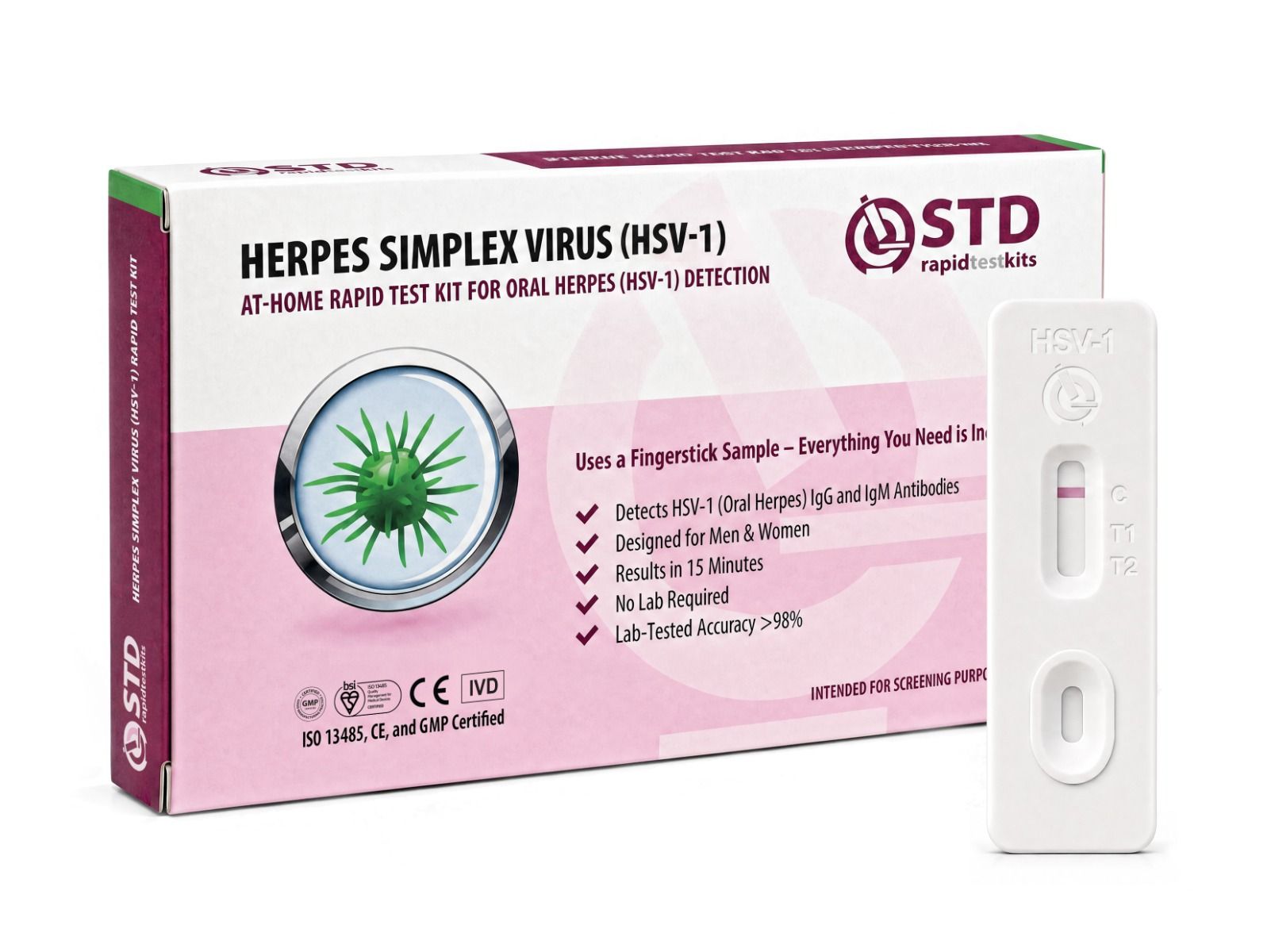
The standard at-home test for HSV-1 is a rapid lateral-flow blood antibody test using a fingerstick sample. It detects IgG antibodies your immune system makes after exposure. The window period (the time between exposure and a reliably detectable antibody response) is typically 12 weeks, sometimes extending to 16 weeks in slower seroconverters. Testing earlier than that risks a false negative.
One important distinction: an antibody test confirms whether you have been exposed and developed antibodies, not whether you have an active outbreak right now. To diagnose an active lesion specifically, a clinician swabs the lesion for PCR or viral culture testing, which has to be done in person while a sore is present. Our at-home rapid kit is a screening tool for exposure history; clinic-administered NAAT or PCR remains the laboratory gold standard for confirming an active infection.
Even if you do not have any symptoms, you can still infect your sex partners.
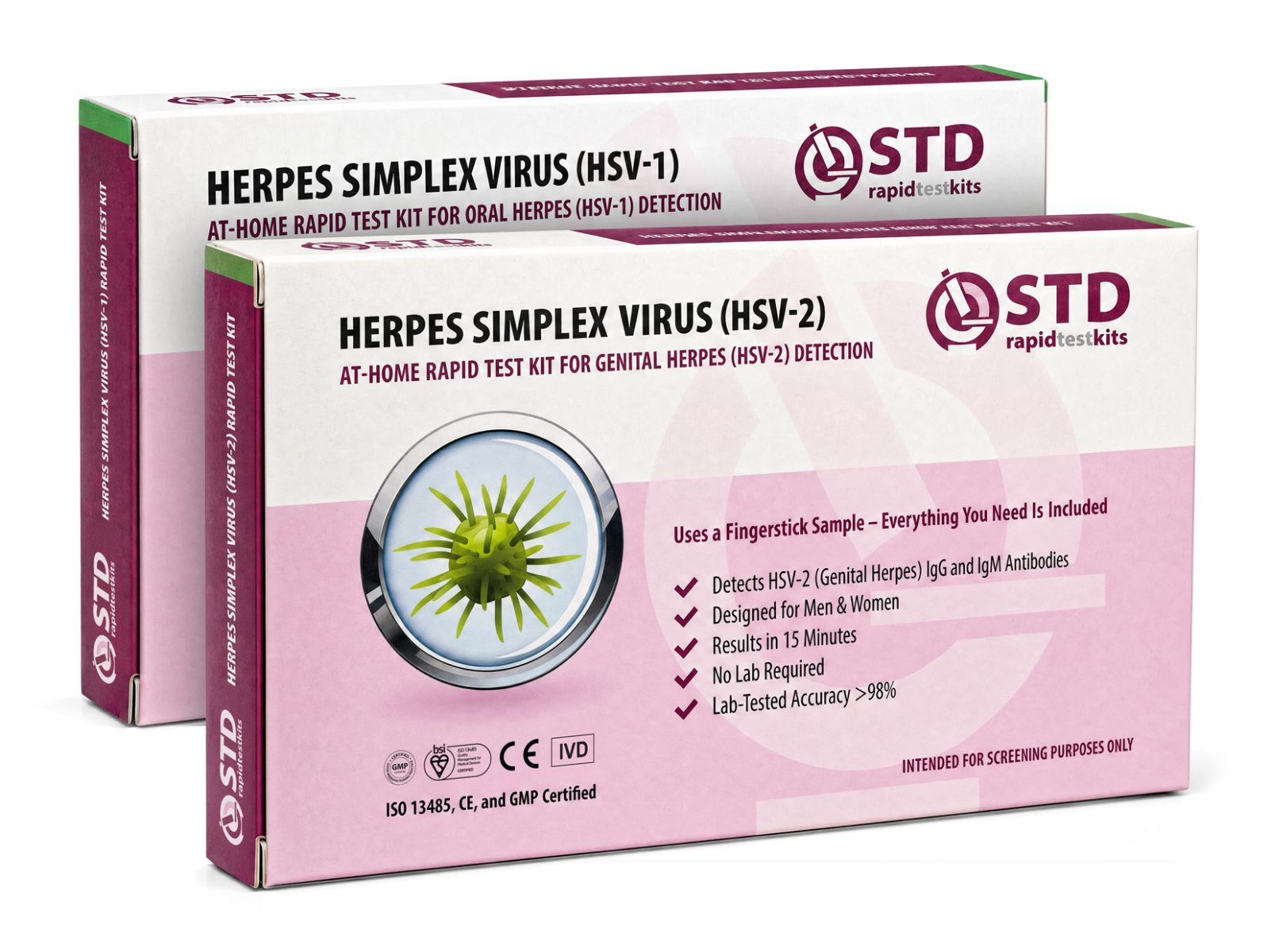
STD Rapid Test Kits sells the at-home tests linked below. We recommend products based on fit for the reader's concern, not on commercial benefit; for an active visible lesion, an in-person clinic swab remains the right test, not the home antibody panel.
What to do in the first hours of a tingle
Treat the prodrome as a triage window. The earlier you act, the more likely you will either prevent the sore from forming or shorten its course. The standard playbook, summarized by the NHS cold sores guide and the Cleveland Clinic oral herpes reference cited above:
- Antiviral medication (if prescribed): Oral acyclovir or valacyclovir taken at the first sign of prodrome can shorten the outbreak or prevent a sore from forming. People who get frequent outbreaks often keep a supply on hand and dose at the first tingle.
- Cold compress: Applying ice or a cold pack to the area for 10 to 15 minutes a few times a day can reduce inflammation and may slow viral progression.
- Do not pick or touch: Skin disruption can spread the virus to other areas (eyes, fingers) or worsen the outbreak.
- Avoid kissing and oral-genital contact for 3 to 5 days, or until the sensation has fully resolved with no lesion.
- Hydrate, rest, manage stress: The immune system clears reactivations more efficiently when not overloaded.
Over-the-counter docosanol (sold as Abreva) cream applied at the first tingle can shorten healing time once a sore appears. L-lysine supplements have anecdotal support but limited rigorous evidence. Neither replaces prescription antivirals if you tend to get severe or frequent outbreaks.
Prescription antivirals (acyclovir, valacyclovir, famciclovir) work best when taken within the first few hours of prodrome, ideally before any blister forms. If you tend to get frequent cold sores, ask your clinician about keeping a single-dose or short-course supply on hand so you can self-start at the first tingle. Waiting until a vesicle is visible reduces the medicine's effect on whether the sore appears at all.
What if you keep testing negative but still feel the tingle?
This pattern is more common than people expect. Three explanations cover almost all cases.
You are testing inside the window period. Antibody tests look for your immune system response, not the virus itself. If the exposure was recent (less than 12 weeks ago), your body may not have generated enough IgG to register on a rapid test. Retest after the full window has passed, ideally at the 12 to 16 week mark.
The sensation may not be HSV-1. Tingling can come from allergies, nerve irritation after dental work, anxiety-driven hyperventilation, B12 deficiency, or chronic dryness. If your tests stay negative across two separated samples taken 12 or more weeks apart, HSV-1 becomes a less likely explanation and other causes deserve attention.
False negatives happen on any rapid test. Lateral-flow blood antibody tests perform well overall, but specific assay sensitivity varies, and antibody levels can fluctuate. If your symptoms are clinically classic (recurring same-spot tingling that progresses to a vesicle and crusts over a week) but tests stay negative, a clinician can swab an active lesion for PCR confirmation, which is more analytically sensitive than antibody testing for current outbreaks.
- Window period. Tested less than 12 weeks after a possible exposure: antibodies may not have developed yet.
- Wrong cause. The tingle may not be HSV-1 at all (allergy, dryness, nerve irritation, anxiety, B12).
- Test sensitivity. Any rapid test can miss a true positive; lesion-swab PCR at a clinic is more sensitive when a sore is actually present.
How to bring up cold sores with a partner without making it weird
Most people overestimate how big a deal this conversation needs to be. Given that the WHO estimates roughly two-thirds of adults under 50 carry HSV-1, the statistical likelihood that your partner is also a carrier (knowingly or not) is high.
A workable script: "I sometimes get cold sores, and I am feeling the early tingle right now, so I would rather skip kissing for the next few days." It is specific, brief, and frames the pause as care rather than confession. You do not need to deliver a clinical lecture; you just need to give your partner enough information to make an informed choice.
If you are entering a longer-term relationship, a fuller conversation about herpes status (yours and theirs, including HSV-2) and possible suppressive antiviral therapy makes sense. Many couples take this in stride once they understand the actual transmission risk and management options. Daily low-dose suppressive antivirals can both reduce outbreak frequency and lower transmission risk; that is a worthwhile clinic conversation if cold sores are disrupting your life.
When the tingling warrants a clinic visit
Most cold sore reactivations are self-limiting and do not need professional care. Book a visit when one of these applies:
- Outbreaks are happening more than 6 times a year, or are getting worse over time
- A sore lasts more than 2 weeks or will not crust over and heal
- The lesion has spread to your eye area, fingers, or genitals (HSV can autoinoculate)
- You have a weakened immune system (chemotherapy, HIV, organ transplant medication)
- You are pregnant and have an active outbreak near delivery; neonatal HSV is rare but serious
- The lesion looks atypical (very large, deeply ulcerated, or with surrounding cellulitis)
For chronic recurrences, a clinician may prescribe daily suppressive antiviral therapy (low-dose valacyclovir is common) which both reduces outbreak frequency and lowers transmission risk to partners. None of this requires you to feel ashamed or in crisis; it is straightforward management of a common viral infection.
Frequently asked questions
- Can lip tingling be the only sign of oral herpes?
- Yes. Some people only ever experience the prodrome stage and never develop a visible sore; the immune system can clear a reactivation before it produces a lesion. This is called subclinical reactivation. Even without a sore, you may shed virus during the tingling window, so treating it as a contagious phase is still the safer call.
- How long does the tingling last before a cold sore appears?
- Typically about 24 hours according to the StatPearls clinical reference for recurrent orolabial herpes. Some people feel only a few hours of tingling; others get the better part of a day. If antiviral medication is started early in this window, the sore may not develop at all.
- Is tingling always herpes?
- No. Allergic reactions, dryness, sun or wind exposure, dental work, B12 deficiency, and anxiety can all cause similar sensations. The strongest tell for HSV-1 is the same anatomical spot recurring repeatedly, often at moments of stress or low immunity. New, widespread, or symmetrical tingling across both lips is more typical of allergies or dryness than herpes.
- Can I pass HSV-1 to a partner if I only feel the tingle?
- Yes; the prodrome is one of the most contagious phases. Asymptomatic shedding occurs both during prodrome and at random other times, but the tingle is your most predictable warning window. Pause kissing and oral-genital contact for 3 to 5 days, or until the sensation resolves and no lesion forms.
- If I get tingling but never a sore, should I still test for HSV-1?
- Testing makes sense if you have never had a confirmed cold sore and want clarity about whether you carry the virus, or if you are entering a relationship and want to share status honestly. Use a fingerstick antibody test 12 or more weeks after the suspected exposure to avoid window-period false negatives.
- Why do I keep testing negative even though I feel the tingle?
- Two main reasons. First, antibody tests have a window period of about 12 weeks (sometimes longer); testing too early misses the response. Second, the tingling may not be HSV-1 at all and could be allergies, dryness, or nerve irritation. If symptoms are classic but tests stay negative across two separated samples, a clinician can swab an active lesion for PCR, which directly detects the virus.
- What is the fastest way to stop a cold sore once tingling starts?
- Start any prescribed oral antiviral (acyclovir or valacyclovir) at the first sign. Apply a cold compress for 10 to 15 minutes a few times a day. Avoid touching, picking, or sharing items that contact your mouth. Hydrate and rest. Over-the-counter docosanol cream can shorten healing once a sore appears, but it does not replace prescription antivirals for frequent outbreakers.
- Is HSV-1 only a problem if you have visible symptoms?
- No. HSV-1 can transmit from skin that looks normal, including during prodrome and during random asymptomatic shedding episodes. About 64% of adults under 50 globally carry the virus and most do not know it; this is precisely why it spreads so widely. Knowing your own status, and a partner's status, is more useful than trying to time intimacy around visible signs alone.
- World Health Organization. Herpes simplex virus fact sheet, including global HSV-1 prevalence (about 3.8 billion people under 50, roughly 64% of the global population) and transmission overview.
- U.S. Centers for Disease Control and Prevention. About Genital Herpes and HSV-1, covering transmission, symptoms, asymptomatic shedding, and testing guidance.
- StatPearls (NCBI Bookshelf). Herpes Simplex Type 1: clinical reference on viral biology, latency in the trigeminal ganglion, the approximately 24-hour prodrome of recurrent orolabial herpes, and treatment.
- NHS. Cold sores: patient guide on prodromal symptoms, antiviral and over-the-counter treatment, and when to see a clinician.
- Cleveland Clinic. Oral herpes: comprehensive patient guide on diagnosis, common triggers (notably stress and intercurrent illness), and home management.
- American Sexual Health Association. Herpes resource page on transmission, prevention, partner conversations, and reducing stigma around HSV-1 and HSV-2.