






Quick Answer: HPV in men is usually silent, but still transmissible. If your partner tested positive, there's a strong chance you've been exposed, whether or not you show symptoms. Protect yourself and others by testing, getting vaccinated, and staying informed.
Why HPV Hides So Easily in Men
HPV doesn’t itch. It doesn’t burn. Most of the time, it doesn’t even show up. That’s what makes it so dangerous, and so often missed in men.
Unlike other STDs, there’s no routine HPV screening for men. No swab. No urine test. Unless you have visible warts, or you’re getting an anal pap as part of a high-risk screen, you probably won’t know you’ve been carrying it. The virus lives on skin, spreads through friction, and doesn’t care whether you finish or not.
The CDC reports that most sexually active men will get HPV at some point, but nearly all of them won’t know it. Why? Because male bodies don’t react the same way. We don’t have a cervix, so we don’t get pap smears. We don’t get the call from the doctor unless something’s visibly wrong, or a partner sounds the alarm first.
And that’s the real issue: HPV is an STD that thrives in silence. Especially for men. It hides in the folds of the skin. It lingers in oral and anal tissue. It doesn’t always cause warts. And even when it does, those warts can look like razor burn, pimples, or dry patches. Most guys don’t notice. Or worse, they ignore it because they’re too embarrassed to ask.
One Reddit user put it bluntly:
“My girlfriend told me she has HPV. I googled for five hours and ended up spiraling. Now I’m scared to even kiss her.”
That’s not awareness. That’s fear. And it’s killing our ability to take control of our own health.

People are also looking for: Can You Really Catch an STD from a Towel?
No Symptoms Doesn’t Mean No Virus
Let’s kill the biggest myth first: If you don’t see anything, you’re not safe, you’re just blind to it.
HPV doesn’t play by the same rules as other STDs. No burning pee. No green discharge. No flare-up that forces you into urgent care. In men, it’s practically invisible. That’s why so many guys walk around thinking they’re fine, until their partner’s pap smear says otherwise.
The CDC estimates over 80% of people will get HPV at some point. But here's the kicker: you don’t need warts to spread it. You don’t need symptoms. You don’t even need full-on penetration. Just skin-on-skin, mouth-on-genitals, or ass-to-thigh contact is enough.
Still think “I feel fine” means anything? Think again.
Jacob, 29, was blunt about it: “I’ve hooked up a lot. Always assumed if I had something, I’d know. Then my partner tested positive, and suddenly I’m questioning every past encounter, every time I skipped a condom, every ‘harmless’ night.”
This is how HPV wins. By making you assume it’s someone else’s problem.
Men Can’t Even Get a Standard HPV Test, Let That Sink In
This next part should make you mad: there is no routine HPV test for men. None. Not during your physical. Not at urgent care. Not even as part of a standard STD panel. Unless you have visible genital warts or request an anal pap (typically for men who have sex with men), there’s no screening option.
The system just… ignores you. As if your risk doesn’t count. As if your exposure isn’t real. As if your partners don’t matter.
Meanwhile, women get annual pap smears, vaccines marketed to them, and the lion’s share of anxiety. Men? We get awkward Google searches and a shrug from the clinic.
And when you do feel something, maybe a rough patch or a bump, you’re more likely to brush it off as razor burn or an ingrown hair. That’s not neglect. That’s how we were taught to think: “If it’s not obvious, it’s not serious.”
But HPV is serious. And it thrives in this exact environment, where men don’t even know they’re supposed to care.
Check Your STD Status in Minutes
Test at Home with RemediumPapillomavirus (HPV) Test
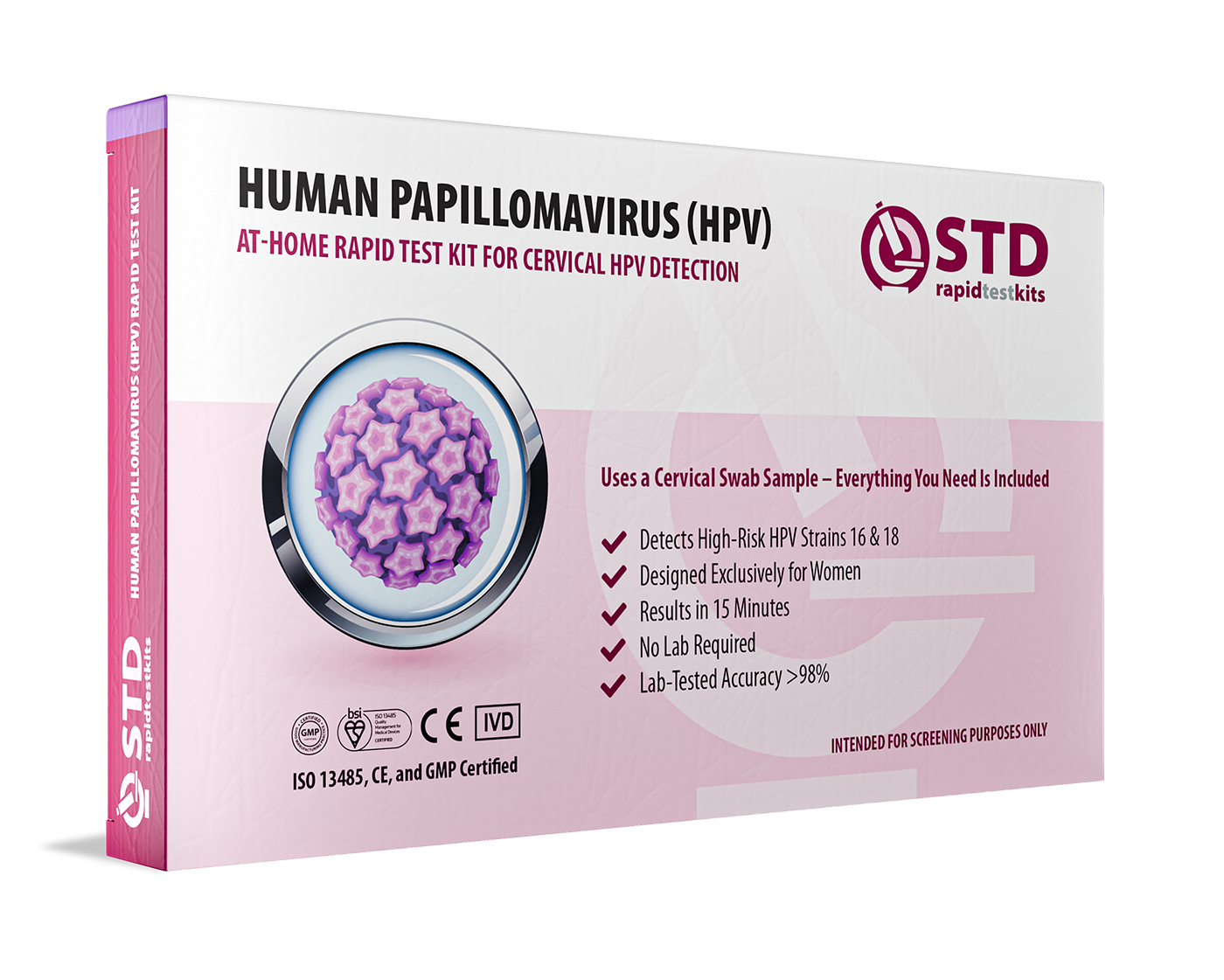
 For Women
 Results in Minutes
 No Lab Needed
 Private & Discreet
Order Now $33.99 $49.00
What If I’m the One Who Gave It to Her?
Let’s be real, this thought haunts you. And nobody talks about it. Not in locker rooms. Not in health class. Not even in most doctor’s offices.
You slept with someone. You didn’t see symptoms. You moved on. Now your partner has HPV, and you feel like a walking biohazard.
But here’s the kicker: you’ll probably never know who had it first. Peer-reviewed data shows HPV can lay dormant in the body for months, sometimes years. No signs. No symptoms. Just a silent handoff from skin to skin. That’s how HPV operates. It plays the long game.
You didn’t do anything “wrong.” You did what billions of people do, you had sex. Now you’ve got information. What you do with it next is what actually matters.
Ryan, 32, said it best: “Once I got past the panic, I just wanted to stop the chain. I didn’t want to be another guy who shrugs it off and keeps passing it around.”
Damn right.
Yes, HPV Can Lead to Cancer in Men
This part isn’t talked about enough: men can get cancer from HPV too. Not just warts. Not just bumps. Real, life-altering disease.
The American Cancer Society links HPV to penile, anal, and especially throat cancers in men. In fact, more men now get HPV-related oropharyngeal cancer than women get cervical cancer in the U.S.
And you know what’s wild? Most of it comes from oral sex. Think about that. You go down on someone, and ten years later you’ve got a tumor behind your tonsils. No condom would’ve prevented it. No warning. Just bad luck and an invisible virus no one thought to warn you about.
And if you’re queer, bi, or trans-masc? You’re even more at risk, especially for anal HPV, which is wildly under-screened in male populations.
This is the reality. No sugarcoating. No shame. Just the facts your doctor probably never told you.
People are also reading: STD 101: The Most Common Sexually Transmitted Diseases You Shouldn’t Ignore
It’s Not Too Late to Get the HPV Vaccine
You’ve heard of Gardasil, right? It’s not just for teenage girls. It’s not just for people “before sex.” It’s for anyone under 45 who hasn’t had all nine strains, and that includes most men walking around today.
Even if you’ve already been sexually active, the CDC recommends the HPV vaccine for men who still want protection from other strains. Especially if you have multiple partners, are in an open relationship, or just want to stop being part of the problem.
It’s three quick shots. Covered by most insurance. No stigma, no excuses.
And if you’re not sure where you stand, get tested.
FAQs
1. Wait, can I really have HPV and not know it?
Yeah, unfortunately. Most men don’t get symptoms at all. You could have HPV for months, maybe years, and never see a bump, wart, or itch. That’s why it spreads so easily. It hides in plain sight.
2. So how do I even get tested for it?
That’s the messed-up part: there’s no regular HPV test for men. Unless you have visible warts or you’re getting an anal pap as part of high-risk screening, you probably won’t be tested. And no, your standard STD panel doesn’t include it.
3. Okay… but if I don’t have warts, I’m probably fine, right?
Not necessarily. Some strains don’t cause warts at all, they’re the “high-risk” ones linked to cancers. So yeah, you might look totally clear and still carry something important.
4. Could I have given HPV to my partner without knowing?
Absolutely. And vice versa. That’s the thing about HPV, it’s not always about who gave what to whom. Sometimes it’s just... timing, biology, and bad luck. Blame doesn’t help. Awareness does.
5. Can guys really get cancer from HPV?
100%. Penile cancer, anal cancer, and especially throat cancer (from oral sex). In fact, HPV-related throat cancers are rising fast in men, and most guys never see it coming.
6. I thought the vaccine was for teenagers. Am I too old?
Not necessarily. If you’re under 45, the HPV vaccine (Gardasil 9) might still be a good move, especially if you’ve had new partners or never got the full series. It’s not retroactive, but it protects against the strains you haven’t picked up yet.
7. Does oral sex really count for HPV risk?
Oh yeah. Big time. HPV doesn’t care if it’s mouth-to-genitals or skin-to-skin, it still spreads. A lot of men pick it up from giving oral and never realize it until way later.
8. If my partner has HPV, should we stop having sex?
That’s up to you both, but you don’t necessarily have to. Condoms can lower risk, but they don’t block everything. The real move is talking openly, getting vaccinated if you can, and deciding together what feels safe and respectful.
9. Can I “clear” HPV on my own?
A lot of people do. Your immune system can fight it off over time, months, sometimes years. But there’s no guaranteed timeline. You won’t feel it leaving. And there’s no test to prove it’s gone unless symptoms vanish and stay gone.
10. How do I talk about this without sounding gross or clueless?
Start with honesty: “Hey, I’ve been reading up on this since you told me. I want to understand and make sure we’re both safe.” That alone puts you ahead of 90% of people. It’s not about having all the answers, it’s about showing up with curiosity and care.
Before You Panic, Here’s What to Do Next
HPV isn’t a life sentence. It’s a wake-up call. A chance to learn something your sex ed teacher skipped, your doctor never mentioned, and your bros never warned you about.
If your partner has HPV, it’s not just her problem. It’s your moment to step up. Get tested. Ask about the vaccine. Learn how to protect the people you sleep with. That’s not weakness, that’s integrity.
End the guessing game, know your status now. This STD home test kit checks for the most common infections and gives you answers without judgment.
Sources
1. American Cancer Society – HPV and Cancer


