
Published: November 2025 | Editorial review and quality control: Martina N.
Most routine STI panels skip the throat entirely. If your last screen used a urine sample or a genital swab and nothing else, it almost certainly did not check for gonorrhea or chlamydia living at the back of your throat. That gap matters, because oral infections frequently cause no symptoms and can still transmit to a partner during oral sex.
This guide walks through how clinicians actually swab the throat, why home rapid tests do not cover this anatomic site, when to schedule a clinic pharyngeal screen after oral exposure, and what the at-home kits we sell can still tell you about the same encounter. For pharyngeal testing specifically, the right path is a clinic appointment, and this guide explains exactly what to ask for when you book.
Key Takeaways
- A pharyngeal swab is the only reliable way to detect oral gonorrhea or chlamydia. Most standard STI panels do not include it unless you specifically ask, so request "extragenital screening" when you book.
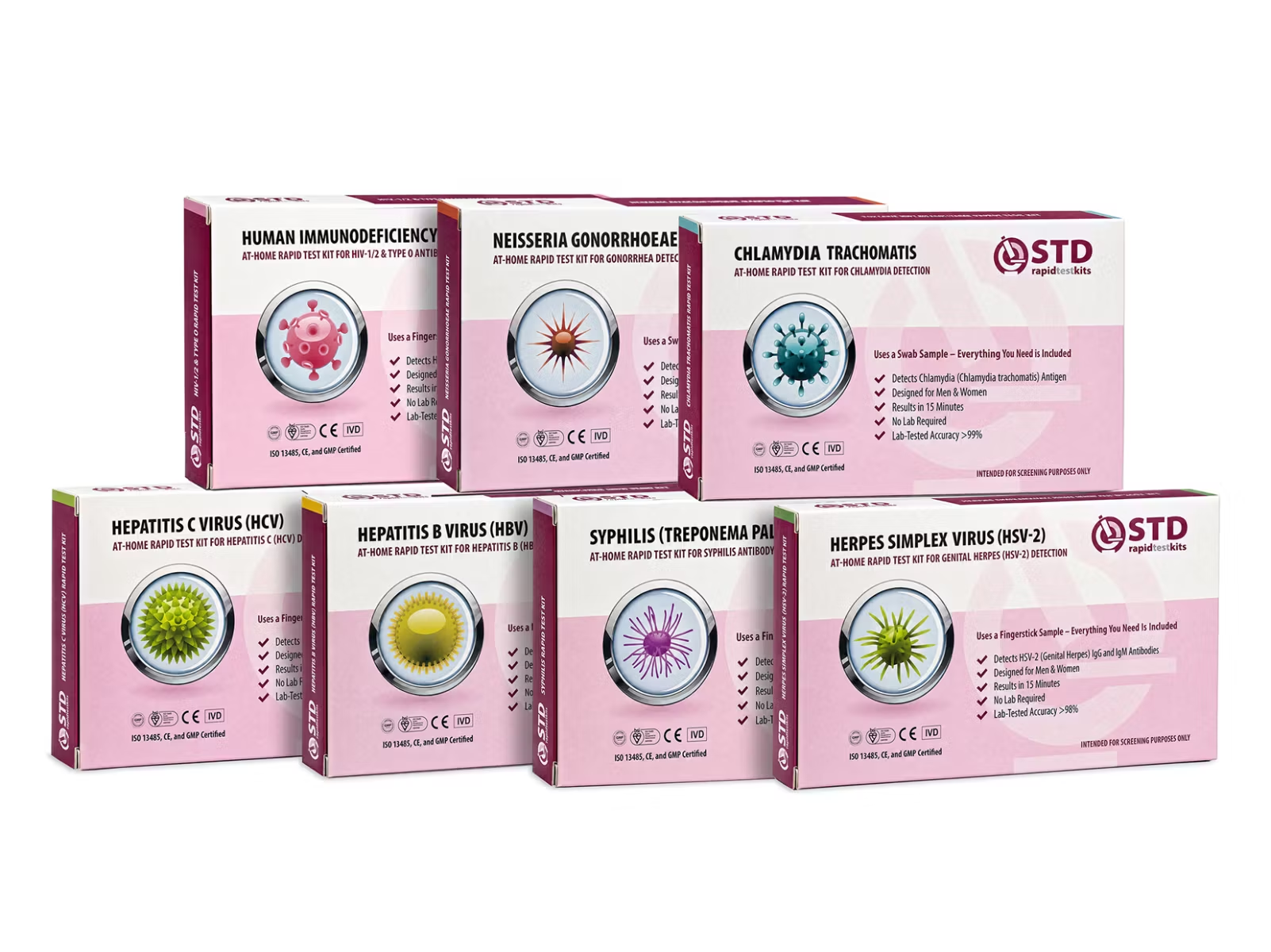
- Our at-home rapid kits are genital swabs and fingerstick blood tests, not throat swabs. They do not screen the pharynx. For throat-specific testing, see a clinic. The kits below cover the genital and bloodwork side of the same exposure event.
How a clinic actually tests the throat for STDs
Most people picture STI testing as a urine cup or a blood draw. Both work well for some infections, but neither finds bacteria sitting in the tissue at the back of the throat. For that, clinicians use a pharyngeal swab, the clinical term for a throat swab targeted at the tonsillar pillars and posterior pharyngeal wall.
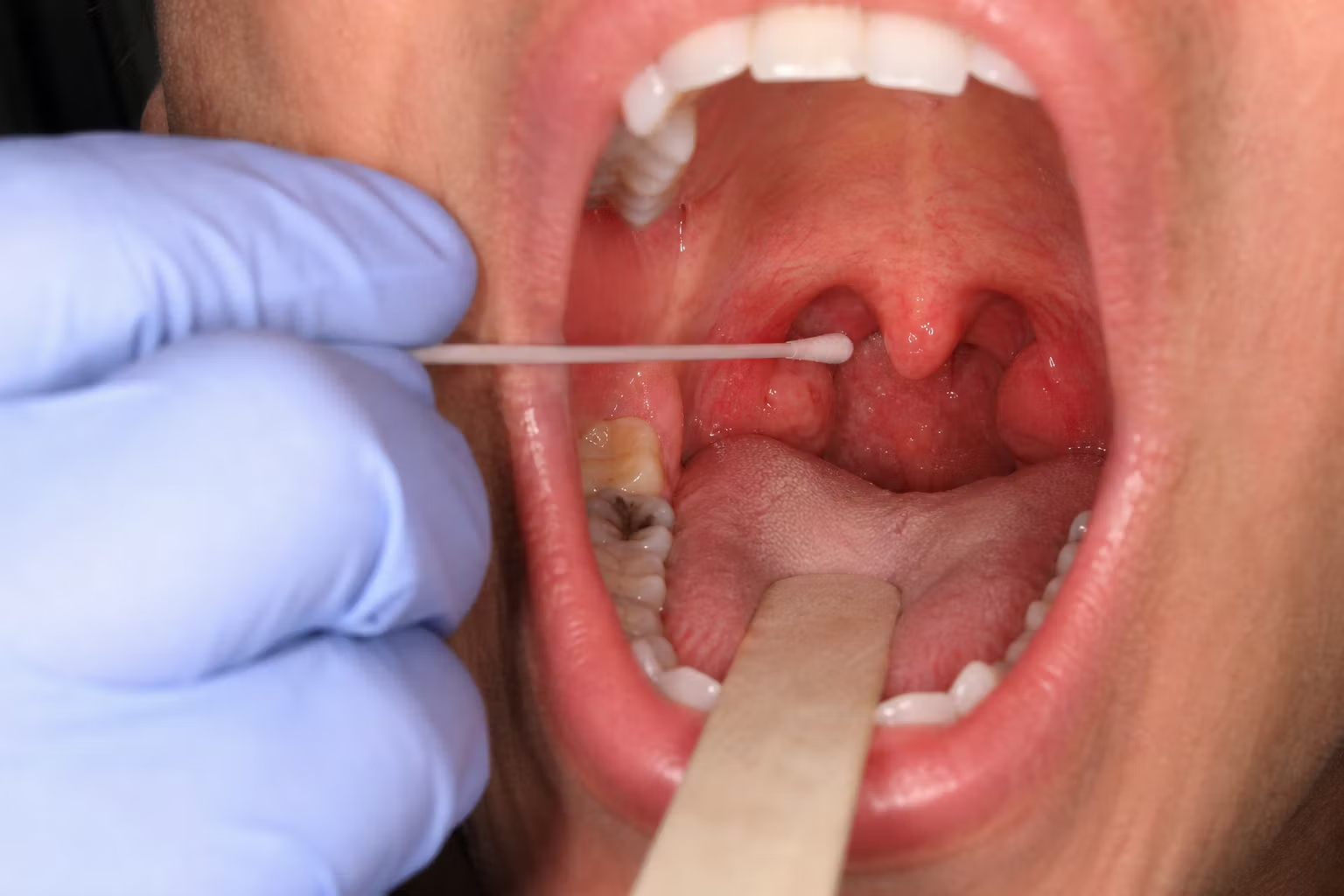
The procedure is brief. A clinician asks you to open wide, briefly depresses the tongue, and runs a sterile dacron or rayon swab firmly across both tonsils and the back wall of the throat. The swab is sealed in a transport tube and shipped to a lab. The whole collection takes about ten seconds. Most people compare it to a strep test, including the short gag reflex.
In the lab, the sample is run on a nucleic acid amplification test (NAAT), the testing technology the U.S. CDC recommends as the standard for both chlamydia and gonorrhea screening. NAAT amplifies tiny fragments of bacterial DNA, which is why it can detect infections that a culture would miss.
Because chlamydia and gonorrhea live where they were deposited, the CDC recommends screening at every anatomic site of exposure: genital, rectal, and pharyngeal. A clinician who knows you had oral sex with a new partner will typically offer to collect samples from all relevant sites in one visit.
| Test type | Sample collected | What it detects in the throat |
|---|---|---|
| Pharyngeal NAAT swab | Swab of tonsils and posterior pharyngeal wall | Chlamydia trachomatis, Neisseria gonorrhoeae |
| Bacterial culture | Throat swab plated on selective media | Gonorrhea confirmation; sometimes used for antibiotic resistance testing |
| Blood test (serology) | Venous blood draw | Syphilis antibodies, HIV antibodies/antigen (these are not throat-site specific, but they screen the same exposure event) |
| Lesion swab | Direct swab of a visible oral sore or ulcer | Herpes simplex (HSV-1, HSV-2), syphilis primary lesion (dark-field or PCR) |
Why our at-home kits do not include throat swabs
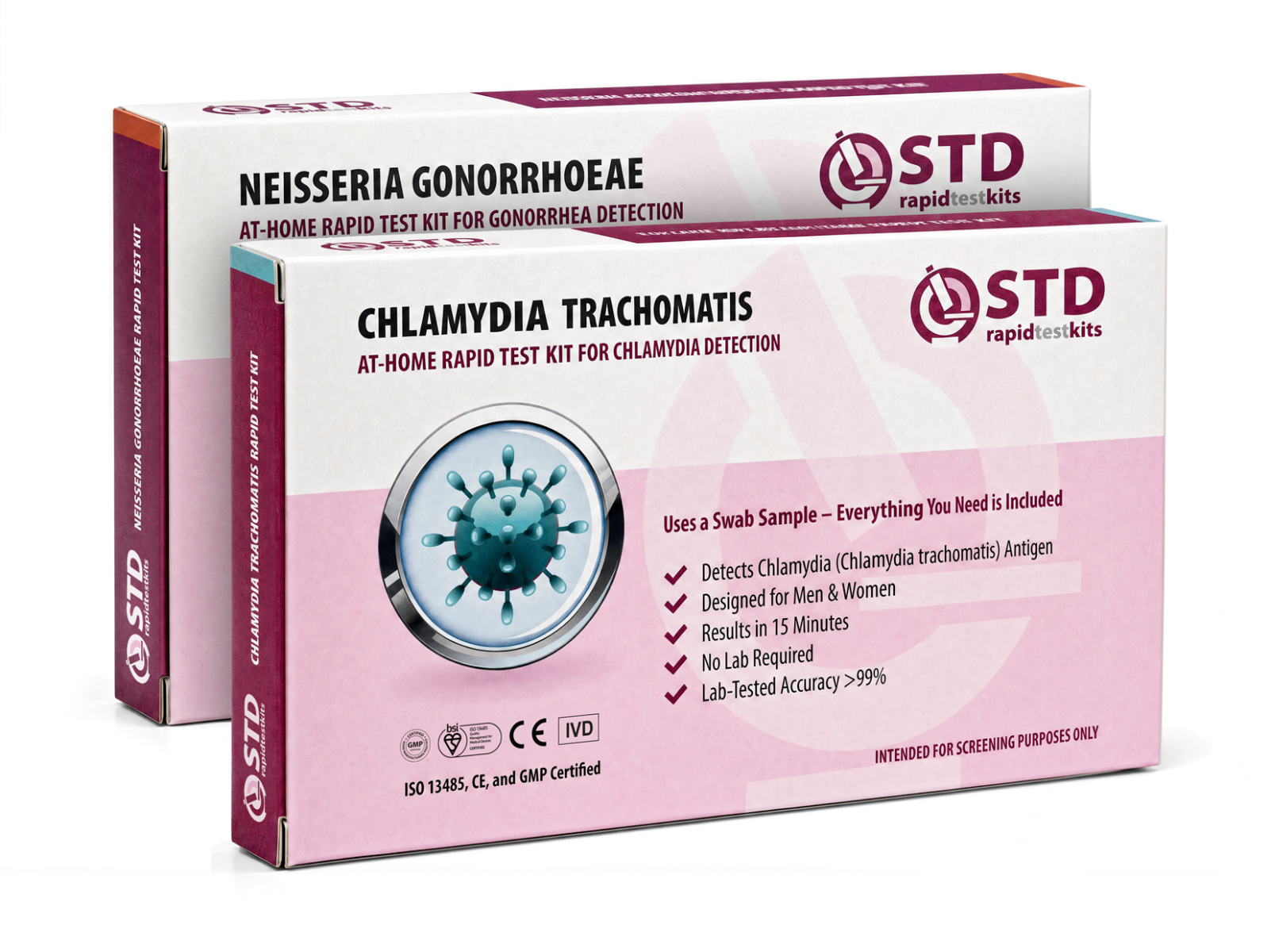
Every product we sell falls into one of two categories: a self-collected genital swab (chlamydia, gonorrhea, trichomoniasis, HPV) or a fingerstick blood test (HIV, syphilis, hepatitis B, hepatitis C, herpes). We do not sell a pharyngeal swab, and we do not sell a home test that screens the throat. The combination kits combine those same genital and blood components into one purchase.
The reason is regulatory rather than technical. Pharyngeal NAAT collection and processing requires a clinical-laboratory workflow that home rapid lateral-flow chemistry cannot replicate. If you specifically need to know whether you have oral gonorrhea or oral chlamydia today, the right call is a clinic visit and a pharyngeal swab. A sexual health clinic, your primary care provider, or a Planned Parenthood center can collect one, often the same day you ask.
What our home kits do answer is the rest of the picture from the same exposure event. The partner who passed something to your throat may also have passed something to a genital site, and any partner exchange creates a small bloodwork risk window for HIV, syphilis, and hepatitis. A combination home kit lets you screen those sites and the bloodwork in private while you wait for or arrange a clinic appointment for the throat swab.
If a website sells you a rapid test and calls it a "throat STD kit," read the package insert carefully. A genuine pharyngeal NAAT requires lab processing and is not a 15-minute home cassette. If throat-specific results are what you need, book a clinic appointment for an extragenital swab.
When to test after oral sex
Testing too early can miss an infection because the bacterial load is still below what a NAAT can detect. Clinicians call this lag the window period. For the bacteria that live in the throat, the window is short. The U.S. CDC's screening guidance and most sexual-health-clinic protocols treat about one to two weeks as the dependable testing range for asymptomatic oral chlamydia and gonorrhea.
If symptoms appear sooner, including persistent throat pain, swollen lymph nodes under the jaw, or visible ulcers in the mouth, the right call is to test immediately rather than wait out a window. Symptoms after recent oral exposure are a reason to ask a clinician to swab and prescribe empirically if needed.
For peace-of-mind screening after a new partner, waiting roughly one week before testing produces the most useful result for bacterial infections. For blood-based screens like HIV and syphilis, the window is longer and depends on the assay generation. A lab 4th-generation HIV antigen/antibody test, for example, can typically detect HIV 18 to 45 days after exposure, with full confidence at the 3-month follow-up per CDC testing guidance.
| Infection | Earliest reliable test | Recommended testing window |
|---|---|---|
| Gonorrhea (throat) | About 1 week | 1 to 2 weeks after exposure |
| Chlamydia (throat) | About 1 to 2 weeks | 1 to 2 weeks after exposure |
| Syphilis (oral lesion) | About 3 weeks (serology) | 3 to 6 weeks; lesion swab if a sore appears earlier |
| HIV (4th-gen lab blood test) | About 18 to 45 days | 45 days minimum; repeat at 3 months for full confidence |
Which STDs actually settle in the throat
The cast is smaller than most people assume. Two bacteria account for the overwhelming majority of throat infections in sexual health clinics: Neisseria gonorrhoeae (gonorrhea) and Chlamydia trachomatis (chlamydia). Both can colonize the mucosal tissue at the back of the throat after receptive oral sex with an infected partner, and both usually cause no symptoms at the throat site.
Syphilis and herpes can also involve the mouth and throat, but they tend to announce themselves with a visible sign. Primary syphilis produces a single painless ulcer (a chancre) at the point of contact, which on the mouth often appears on the lip, tongue, or inside the cheek. Oral herpes (typically HSV-1, sometimes HSV-2) produces grouped vesicles or ulcers, usually painful, on or around the mouth. Because these are visible, they prompt testing on sight rather than during routine screening.
HIV warrants its own note here because it is the infection people worry about most after oral sex. The per-act transmission risk from giving or receiving unprotected oral sex with an HIV-positive partner who is not on treatment is low compared with vaginal or anal sex. Public-health risk reviews place the average below 1 in 10,000 acts in the absence of cofactors, with most reviewed reports being lower still. That risk rises when oral sores, bleeding gums, recent dental work, or a partner with detectable viral load are part of the picture. A 4th-generation antigen/antibody blood test covers this window and is included in the 7-in-1 combination home kit linked above, with reliable detection from about 45 days after exposure per CDC testing guidance.
Why throat STDs are so easy to miss
Oral gonorrhea and chlamydia infections are usually quiet. The mucosal tissue at the back of the throat lives in constant contact with food, bacteria, and environmental irritants, so the local immune response is tolerant by design. Researchers describe the pharynx as a site that often hosts these infections asymptomatically.
That biological tolerance combined with the routine omission of pharyngeal swabs from standard panels is why public-health epidemiologists treat the pharynx as a reservoir for ongoing community transmission, particularly for gonorrhea. The pharynx is also one of the body sites where antibiotic-resistant gonorrhea strains emerge, which is partly why the CDC's 2021 STI Treatment Guidelines updated first-line gonorrhea therapy to a higher single-dose ceftriaxone regimen.
If oral sex was part of a recent encounter and you got a clean STI screen but never had a throat swab, you may not have the full picture. Asking for an extragenital swab when scheduling, rather than after the fact, is the simplest way to close that gap. The table below summarizes which infections can affect the throat or follow an oral-sex exposure event and which test catches each one.
| Infection | How it reaches the throat | Typical signs at the throat site | Testing method |
|---|---|---|---|
| Gonorrhea | Oral sex with an infected partner | Usually none; sometimes mild sore throat or visible redness | Pharyngeal NAAT swab |
| Chlamydia | Oral sex with an infected partner | Usually none | Pharyngeal NAAT swab |
| Syphilis (primary) | Direct oral contact with an infectious lesion | Single painless ulcer (chancre) on lip, tongue, or inside cheek | Lesion swab plus blood serology |
| HSV-1 / HSV-2 oral | Kissing or oral contact with active lesion or asymptomatic shedding | Cold sores, grouped vesicles, or ulcers around or inside the mouth | Lesion swab (preferred when sores present); type-specific blood test |
| HIV | Possible with receptive oral sex; risk elevated if open sores or bleeding gums present, but overall low per-act risk | Acute HIV may cause a flu-like illness with sore throat; not throat-localized | Blood test (antigen/antibody or RNA) |
What happens if a throat STD test comes back positive
Throat infections from gonorrhea and chlamydia are treatable. They are also worth taking seriously, because oral gonorrhea in particular is the focus of antibiotic-stewardship efforts.
The current CDC-recommended first-line treatment for pharyngeal gonorrhea in adults is a single 500 mg intramuscular dose of ceftriaxone (1 g for patients weighing 150 kg or more). Pharyngeal infections clear less reliably than genital infections, so the CDC also recommends a test-of-cure pharyngeal swab 7 to 14 days after treatment. For pharyngeal chlamydia, doxycycline 100 mg twice daily for 7 days is the standard regimen per the same guidelines.
Most clinicians also recommend abstaining from sex for 7 days after treatment is complete and waiting until any symptoms have resolved. Partner notification is part of the protocol. Clinics will help with this conversation if you need it, and many U.S. jurisdictions allow Expedited Partner Therapy so a partner can be treated without a separate visit.
The CDC's STI Treatment Guidelines direct clinicians to screen for chlamydial and gonococcal infections at every anatomic site of exposure, including pharyngeal and rectal sites when sexual history makes them relevant. In practice, that means asking for a pharyngeal swab when oral sex was part of the encounter, and following up with a test of cure 7 to 14 days after treatment for pharyngeal gonorrhea.
Common testing mistakes that lead to missed throat infections
Most missed throat infections are missed because nobody swabbed the throat in the first place. "I got tested for everything" usually means a urine NAAT plus a blood draw; unless you specifically asked for extragenital screening, the throat was probably not part of the order. When you call to book, the wording to use is "please add a pharyngeal swab" or "I need extragenital chlamydia and gonorrhea screening."
Timing is the other big trap. Same-day testing after a new encounter feels reassuring, but if the bacterial load is still below the NAAT detection threshold, a negative result is not informative. The CDC's window guidance for chlamydia and gonorrhea translates to roughly one to two weeks for confident results in asymptomatic people.
Self-collection technique matters too when home kits include throat sampling. The pharyngeal swab must reach the back of the throat and pass across the tonsillar pillars; a quick swipe along the tongue does not collect the right cells, which is part of why pharyngeal sampling sits more naturally inside a clinic visit than a home kit.
Many people also skip testing because they assume symptoms would warn them. Oral gonorrhea and chlamydia do not work that way. Plenty of people who carry these infections feel completely normal and only learn they were positive because a partner notified them. If you had oral sex with a new partner, that is the trigger to book a test, not waiting for a sore throat.
When you call the clinic, say: "Please add a pharyngeal swab for chlamydia and gonorrhea." A standard "full panel" usually does not include the throat unless you name it. Two extra seconds on the phone closes the most common blind spot in extragenital screening.
Your next step
If you are wondering whether a sore throat or a recent oral encounter justifies a pharyngeal swab, the practical answer is short: ask the clinic to add the swab when you book. It is a ten-second collection, it does not cost much, and it closes a diagnostic blind spot that many standard panels leave open.
For the rest of the exposure picture, a combination home kit screens the genital and bloodwork sides privately while you wait for the clinic swab result. That is the honest pairing for an oral-sex exposure event: a clinic visit for the throat, a discreet home kit for everything else.
Action items
- Book a clinic visit and explicitly ask for a pharyngeal swab for chlamydia and gonorrhea (the wording matters).
- Order a combination home kit to cover the genital and bloodwork sides of the same exposure privately while you wait for the clinic result.
- If a result comes back positive, follow your clinician's treatment plan, return for the recommended test-of-cure, and notify recent partners so they can test too.
Frequently asked questions
- Can you get chlamydia or gonorrhea in your throat from oral sex?
- Yes. Both Chlamydia trachomatis and Neisseria gonorrhoeae can colonize the back of the throat after receptive oral sex with an infected partner. Most pharyngeal infections cause no symptoms, which is why testing matters more than waiting for signs.
- Did my standard STI panel check my throat?
- Almost certainly not, unless you specifically asked. Standard panels typically rely on urine or genital swabs and a blood draw. If oral sex was part of the encounter, request a pharyngeal swab (also called extragenital screening) when you book.
- What does a throat STD test feel like?
- It feels like a strep test. The clinician runs a sterile swab across both tonsils and the back wall of the throat for a few seconds. The most common reaction is a brief gag reflex. The collection itself does not hurt.
- I have a sore throat after oral sex. Should I worry?
- Most sore throats are viral, allergic, or environmental. Throat STIs more often cause no symptoms than dramatic ones. That said, if the timing lines up with a new partner, the simplest path to certainty is a pharyngeal NAAT swab at a clinic. If the sore throat is severe or you see ulcers, test sooner rather than later.
- How long should I wait before getting a throat swab after oral sex?
- Wait at least one week, ideally two, before booking a pharyngeal swab. The bacteria need time to reach detectable levels in a NAAT; same-day testing after an exposure routinely produces uninformative negatives. If symptoms appear sooner, test immediately and follow your clinician's guidance.
- Can I spread a throat STD to someone else?
- Yes. Pharyngeal gonorrhea and chlamydia can pass to a partner's genitals during oral sex. The CDC also identifies the pharynx as a reservoir for antibiotic-resistant gonorrhea strains, which is one reason public-health groups emphasize extragenital screening.
- Can I check my throat for an STD with an at-home kit?
- Not with the rapid at-home kits we sell, and not with most rapid lateral-flow products on the market. Our kits are genital swabs and fingerstick blood tests. Pharyngeal NAAT requires a lab workflow, so the throat swab itself belongs in a clinic. A few mail-in lab services include a self-collected throat swab; for everything else, a clinic visit is the right move.
- What treatment will I need if a throat STD test is positive?
- For pharyngeal gonorrhea, the CDC first-line regimen is a single 500 mg intramuscular dose of ceftriaxone, with a follow-up test of cure 7 to 14 days later. For pharyngeal chlamydia, doxycycline 100 mg twice daily for 7 days. Both regimens are highly effective, and abstaining from sex for 7 days after treatment is standard guidance.
How we sourced this article: This article summarizes current guidance from the U.S. Centers for Disease Control and Prevention's 2021 STI Treatment Guidelines (including the screening-by-anatomic-site recommendations and the updated first-line gonorrhea regimen), the World Health Organization's fact sheet on sexually transmitted infections, and the UK NHS guidance on gonorrhoea. We cross-checked clinical descriptions of pharyngeal NAAT collection, HIV testing windows, and treatment efficacy against CDC clinical-care pages and Planned Parenthood patient education. We do not provide clinical diagnosis. If symptoms concern you, see a licensed provider.
- U.S. Centers for Disease Control and Prevention. STI Treatment Guidelines: Screening recommendations, including extragenital (pharyngeal and rectal) chlamydia and gonorrhea testing.
- U.S. Centers for Disease Control and Prevention. STI Treatment Guidelines: Gonococcal infections among adults and adolescents, including first-line ceftriaxone regimen and pharyngeal test-of-cure guidance.
- U.S. Centers for Disease Control and Prevention. STI Treatment Guidelines: Chlamydial infections, including NAAT as the recommended testing technology and notes on oropharyngeal C. trachomatis.
- U.S. Centers for Disease Control and Prevention. HIV testing, including window periods for 4th-generation antigen/antibody tests (lab and rapid).
- Planned Parenthood. Gonorrhea: symptoms, testing, and treatment overview.
- World Health Organization. Sexually transmitted infections (STIs) fact sheet.
- UK National Health Service. Gonorrhoea overview, including symptoms and testing approach.
