Published: November 2025 | Last updated: May 2026 | Editorial review and quality control: Martina N.
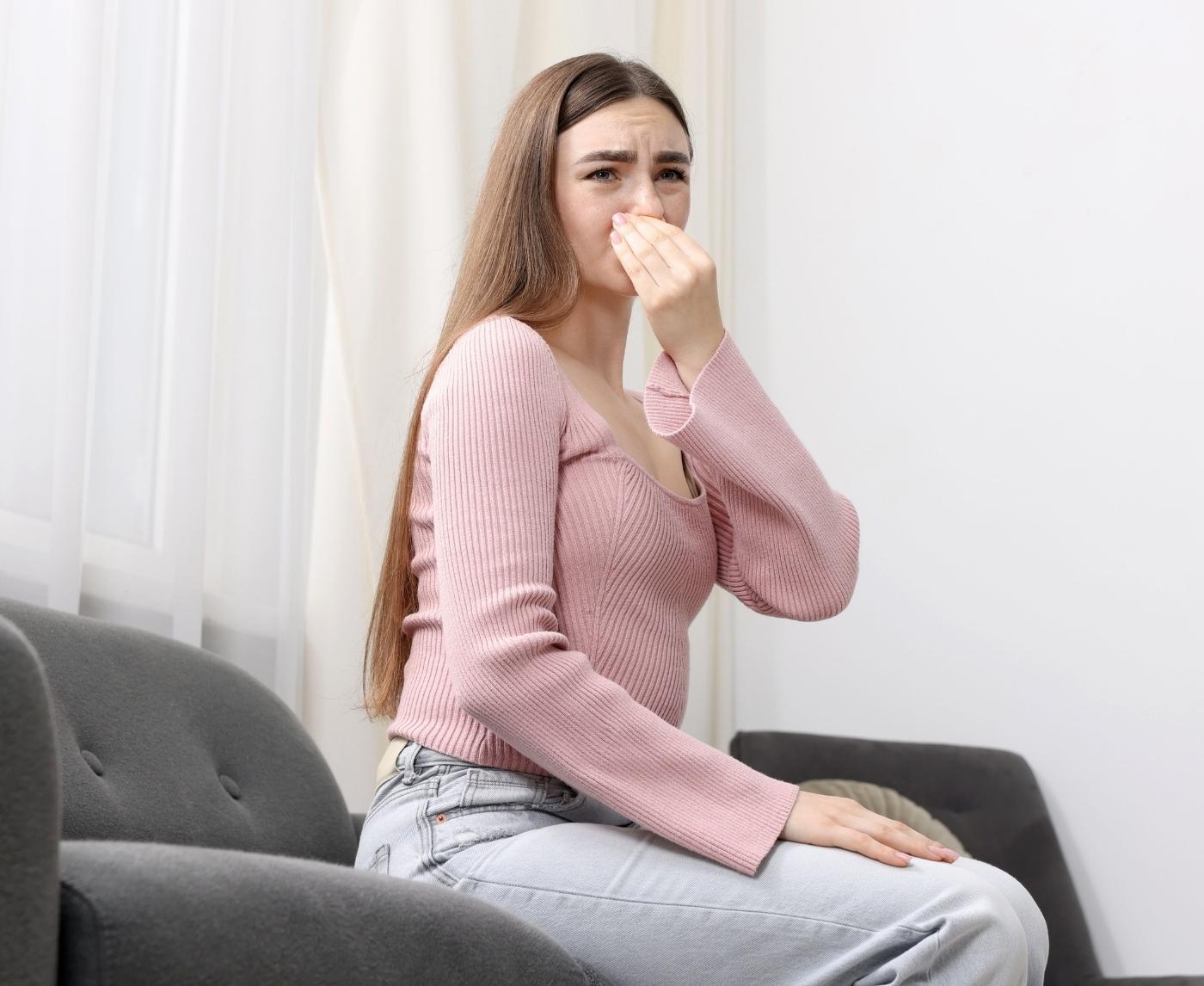
The smell shows up first. It comes on slowly, more noticeable in the morning or after sex, and showers stop helping for very long. Scented body wash makes it worse. There is no pain, no itching, no obvious discharge change. Just a stubborn, slightly off scent that will not leave.
If that pattern sounds familiar, you are not imagining things. Bacterial vaginosis (BV) is the usual suspect for vaginal odor, and yes, BV does cause it. Trichomoniasis, often called trich, is the most common curable parasitic sexually transmitted infection in the United States, and it can produce nearly identical symptoms. According to the CDC, about 70% of people with trichomoniasis have no symptoms at all. When it does cause symptoms in women, a smell change is often the first or only one a person notices.
This article walks through what makes trichomoniasis hide so well, why standard STI panels routinely miss it, when the testing window opens, and how to handle partner conversations when nobody else seems concerned. Most readers landing here will not have trich. The most likely cause of a new vaginal smell is BV, a hormonal shift, or a recent change in soap or detergent. If you have already been treated for BV or yeast and the smell came back, or if you have been quietly cycling through products for weeks, trichomoniasis deserves a place on your list.
Key Takeaways
- About 70% of trichomoniasis infections cause no symptoms at all (CDC). When trich does cause symptoms in women, a new vaginal smell can be the only one for weeks before anything else changes.
- Standard STI panels do not always include trichomoniasis. If you have been treated for BV or yeast and the smell keeps returning, ask specifically for a trich test or use a home kit that lists trichomoniasis by name.
Why Your Body Smells Off and Nothing You Try Is Helping
A healthy vagina has a slightly acidic pH (around 3.8 to 4.5) that lactobacilli, the dominant beneficial bacteria, work hard to maintain. That acidity discourages outsiders. When something disrupts the balance, whether a parasite, a bacterial overgrowth, or an antibiotic course you took for an unrelated reason, the pH climbs, the lactobacilli lose ground, and odor-producing bacteria move in.
Trichomonas vaginalis, the parasite behind trich, is one of those disruptors. It alters the local environment in ways that resemble what happens during BV, which is why the smells can be hard to tell apart. Research on trich consistently shows the odor comes from secondary shifts in vaginal flora, not the parasite itself producing the smell directly.
This is the part that gets confusing. You take BV antibiotics. The smell improves for a few days, then comes back. You try probiotic suppositories. The smell shifts but does not leave. You skip sex, change soaps, swap detergents. None of it works because none of it addresses the parasite. Trich does not respond to topical BV treatments like metronidazole vaginal gel, although it does respond reliably to the oral form. Treating BV alone leaves the trich in place, and the secondary BV-like flora imbalance comes right back after the antibiotic clears.
The misattribution problem is the most common reason readers report having a smell for months before anyone tested for trich. Their providers reasonably tried the most common diagnoses first. The patient reasonably trusted the diagnosis. The parasite kept hosting until somebody specifically asked for it.
Trichomoniasis is a parasitic infection, not a bacterial overgrowth. Topical metronidazole vaginal gel reaches the bacterial flora but does not reliably reach the parasite. The CDC-recommended treatment is oral metronidazole or tinidazole. If a smell improved on BV gel and then returned, the underlying parasite may still be there.
Trichomoniasis vs. BV vs. Yeast: Which Smell Is Which
Vaginal scent varies day to day, and a small amount of variation is normal. Stress, sex, ovulation, hot weather, and menstrual products all shift it slightly. The shifts that warrant attention are the ones that feel different from your baseline and that do not resolve within a cycle or two.
The three most common reasons for a new persistent vaginal smell are bacterial vaginosis, trichomoniasis, and (less often) a yeast infection. Yeast usually does not cause a smell change at all; when it does, the description is more sweet or yeast-like than fishy. The table below lays out how the three patterns tend to differ. Treat it as a starting point for asking the right test, not a diagnosis you can make alone. Smell pattern alone is never enough to confirm which infection is present, because the categories overlap heavily, and many people have more than one going at the same time.
| Condition | Typical Odor Pattern | Other Common Signs | How to Confirm |
|---|---|---|---|
| Trichomoniasis | Fishy or metallic, sometimes chemical-like; often stronger after sex | Thin frothy discharge in some cases, mild irritation; many people have no other symptoms | NAAT or rapid antigen test (vaginal self-swab) |
| Bacterial vaginosis | Fishy or musty; worse after sex or during menses | Thin gray or white discharge; often no irritation or itching | Vaginal pH plus clue cells on microscopy, or molecular swab |
| Yeast infection | Usually no odor; when present, slightly sweet or yeast-like | Thick white cottage-cheese discharge, intense itching, redness | Microscopy or molecular swab |
What Trichomoniasis Discharge Actually Smells Like
Descriptions vary. The most common phrasings readers use are fishy, sour, metallic, or chemical, sometimes compared to bleach or ammonia. In milder cases people describe an off or wrong smell that is hard to pin down. The scent often gets stronger after sex and in the morning, because semen and overnight stagnation both raise vaginal pH temporarily, which amplifies whatever odor-producing bacteria are present.
Some people also notice a slightly yellow or green tint to discharge, sometimes with a frothy texture. This frothy or yellow-green discharge is a relatively classic trich finding described in standard clinical references such as the Cleveland Clinic trichomoniasis overview, but it appears in only a fraction of cases. The majority of people who do develop symptoms have a more vague picture: smell with very little else. That is what makes trich frustrating to identify on symptoms alone.
Pattern recognition can still help. If your smell is worst right after sex, gets better with a shower for a few hours, then drifts back, and has resisted BV antibiotics or routine probiotic care, the picture starts to favor trich enough to test for it specifically. Many readers also notice the smell is most obvious on underwear at the end of the day, less so first thing in the morning after a shower, which fits the post-sex-and-overnight pattern described above.
Most people who have trichomoniasis (about 70%) do not have any signs or symptoms.
Why Standard STI Panels Routinely Miss Trichomoniasis
This is the gap that traps the most readers. When you ask a clinic to test you for everything, what you typically receive is HIV, syphilis, chlamydia, gonorrhea, and sometimes hepatitis B and C. Trichomoniasis is not on most default STI panels for women, and it is rarely tested in men at all unless they are the partner of a positive woman.
The reasons are partly historic and partly practical. The traditional clinic test for trich in symptomatic women was wet-mount microscopy, which misses a meaningful portion of infections in real-world use. Modern nucleic acid amplification tests (NAATs) are substantially more sensitive than wet mount and are now considered the preferred lab method, but they are still not part of the standard reflex panel at most clinics. The MedlinePlus lab-test overview describes both methods and notes that NAATs are the more accurate option, while wet prep is faster and cheaper but less reliable.
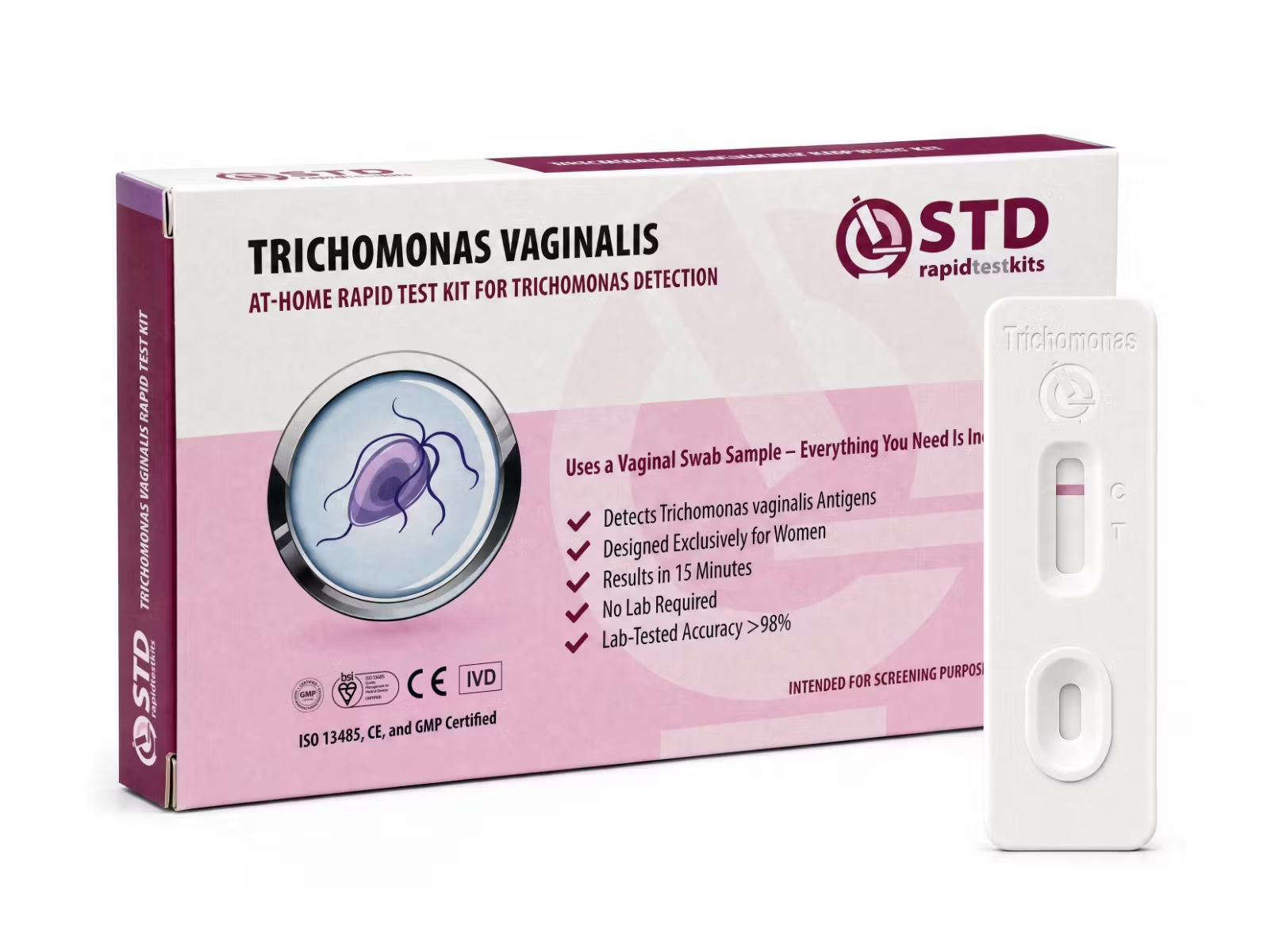
What this means in practice: you have to ask specifically. Use the word trichomoniasis or trich by name. Do not assume an STD panel or annual check includes it. If you are buying an at-home test, read the box carefully. Many home STI kits cover the headline four (HIV, syphilis, chlamydia, gonorrhea) without trich. The trich-specific kits and the broader 8-in-1 or 10-in-1 panels are the ones that include it.
This is doubly important for men. Trichomoniasis in men is usually asymptomatic. They can carry the parasite for weeks or longer, transmit it in every sexual encounter, and never show symptoms. The CDC recommends testing partners of women diagnosed with trich, even when those partners feel fine, because untreated partners are the single biggest reason women get reinfected within weeks of treatment.
Which STD causes a bad smell without pain or itching?
Trichomoniasis is the most common cause. It is a parasitic STI that often produces a noticeable vaginal odor as the only symptom in women, while being entirely asymptomatic in roughly 70% of infections overall and in most men. The smell pattern overlaps heavily with bacterial vaginosis, which is why standard BV treatment frequently does not resolve it. A specific trichomoniasis test (NAAT in a lab, or a rapid antigen test on a vaginal self-swab at home) is the only reliable way to confirm or rule it out.

When to Test for Trichomoniasis
Like most STIs, trichomoniasis has a window period: the gap between exposure and when a test can reliably detect it. For trich the window is fairly short. Symptoms, when they appear, typically show up between 5 and 28 days after exposure, according to the MedlinePlus lab-test overview. Testing accuracy is generally reliable once symptoms appear, since the parasite has had time to establish colonization. That follows from the symptom-onset data above rather than from a specific lab-validated detection window, so providers may still recommend a confirmatory retest if a first test was very early.
If you tested before day 5 and got a negative result, that result may be unreliable. Repeat the test at the 1 to 2 week mark, especially if symptoms are continuing or if a known exposure has not yet had time to be detected.
If you are not sure when exposure happened, or if it was more than a month ago and you still have symptoms, the window has long since opened. Test now. Trichomoniasis can persist for months without treatment, so a long delay between exposure and testing rarely produces a false-negative result; if anything, it gives the parasite more time to be detectable. The bigger risk of waiting is reinfecting partners and prolonging your own discomfort.
STD Rapid Test Kits sells the at-home tests referenced in this article. We recommend products based on fit-for-purpose for the reader's concern, not commercial benefit.
| Time Since Exposure | Common Scenario | Recommended Approach |
|---|---|---|
| 0 to 4 days | Recent unprotected encounter, no symptoms yet | Wait until day 5 to 7 unless symptoms appear sooner |
| 5 to 14 days | Smell or other change has appeared | Test now; consider a confirm at 3 weeks if first result is negative |
| 3 to 4 weeks | Persistent odor that has not responded to BV treatment | Ideal window for accurate detection; test now |
| 1 month or longer | Lingering symptoms with unclear timing | Test now; trich can live in the body for months without treatment |
When the Smell Comes Back After Treatment
Standard treatment for trichomoniasis is oral metronidazole or tinidazole. The NHS trichomoniasis page describes two regimen options for metronidazole: a tablet taken twice a day for 7 days, or a single one-off dose. Both partners need to be treated at the same time and abstain from sex during the treatment window; reinfection from an untreated partner is the most common reason a course appears to fail.
If the smell comes back within a few weeks of finishing treatment, the most likely explanations cluster into four buckets, summarized below. The right next step depends on which one is happening. Retest first. If the trich test is positive again, talk to your provider about a different regimen and confirm the partner was actually treated. If the trich test is negative, the cause is likely BV or another form of dysbiosis, and the treatment shifts in that direction.
- Reinfection from an untreated partner. By far the most common reason in clinical practice. If a partner did not also take metronidazole, you can pick the parasite back up the next time you have sex.
- Sex resumed too soon. Both partners need to finish the course and wait until at least 7 days after the last dose, with all symptoms resolved, before resuming sex.
- The original diagnosis was something else. If the initial smell was actually BV that resembled trich, metronidazole may have temporarily helped while the underlying microbiome imbalance was BV all along; once the antibiotic clears, BV can return.
- Disrupted vaginal flora. Even when trich is cleared, the antibiotic course can leave the vaginal microbiome unbalanced, allowing BV to take hold afterward. Many providers recommend a probiotic strategy after the course finishes, plus avoiding douching and harsh soaps for a few weeks.
When You Have Been Treated for BV or Yeast on Repeat
This is the misdiagnosis pattern that catches the most people. A reader sees a provider for vaginal odor, gets a BV diagnosis based on a clinical exam and pH check, takes the antibiotics, feels better for a week, and the smell comes back. Then a yeast diagnosis. Then another round of BV antibiotics. Months pass. The smell keeps returning.
This loop happens for two reasons. First, BV and trichomoniasis genuinely look similar on physical exam, and a clinician without a positive trich test in front of them will often start with the more common diagnosis. Second, women in the loop sometimes get told the smell is hygiene-related or stress-related, which delays the suggestion of a specific trich test even further.
If you find yourself in this loop, advocate clearly. Ask: has anyone tested me specifically for trichomoniasis with a NAAT or rapid antigen test? If the answer is no, that is the next step. If your clinic does not run trich tests routinely, an at-home rapid trich test or a multi-STI panel that explicitly includes trich are reasonable alternatives, and a positive home result gives you something concrete to bring back to the clinic for confirmatory testing and a prescription.
Some readers also find it useful to keep a brief log: when did the smell start, what treatments have I tried, what has helped, what has not. This is concrete data a provider can act on, and it short-circuits the assumption that this is a first-time presentation when in fact it is a fourth.

When Your Partner Says They Feel Fine and Will Not Test
Trichomoniasis in men and people with penises is usually asymptomatic. The parasite can persist in men without symptoms and in some cases clears on its own within weeks, but untreated men can still transmit it back to a partner who is being treated. From a partner's perspective, I feel fine can be entirely true and still mean they are carrying the infection.
The practical version of this conversation is short: I tested positive. The infection passes between partners easily. We both need to be treated at the same time, or this is going to keep coming back. There is no way to know if you have it without a specific test, because most men with trich have no symptoms.
- Lead with the test result, not the blame. "I tested positive for trichomoniasis. It is curable with one course of pills, and I am being treated."
- Name what is needed and why. "For this not to come back, you need to be treated at the same time. About 70% of people with trich have no symptoms, so feeling fine does not rule it out."
- Offer the easiest path. "You can see your provider for the prescription, or use an at-home test kit, or in some states a clinician can prescribe for you through expedited partner therapy."
If a partner refuses to test, the options are limited but real. Some clinicians will prescribe expedited partner therapy (EPT), where the patient is given a script for their partner to take at home, depending on local laws. Some at-home test kit retailers offer a partner-pack option so both people can screen on the same day. Some patients ultimately decide that an unwillingness to take a one-time course of antibiotics for a treatable infection is information about the relationship itself.
Whatever you decide, the medical part is straightforward. Untreated trichomoniasis raises the risk of acquiring HIV if exposed and contributes to pelvic inflammatory disease, preterm birth, and low birth weight when carried into pregnancy. Treatment is one course of pills. A partner course is the same.

Trust What Your Body Is Telling You
Most readers who land on this page do not have trichomoniasis. The most common reasons for a new vaginal smell are BV, hormonal shifts (pregnancy, perimenopause, hormonal contraception changes), and the occasional run-in with a new soap or laundry detergent. If a smell change came on after a clear lifestyle factor and resolved within a cycle, you can probably move on without testing.
The picture that warrants testing is different: a new smell that has not resolved with hygiene changes, that has come back after BV or yeast treatment, that is paired with a recent unprotected sexual encounter, or that has lingered long enough to start affecting your peace of mind. Those are signals worth confirming, even if the result turns out to be reassuring. A negative trich test plus a calm conversation with your provider about what else might be going on is a useful outcome.
Trichomoniasis is curable. The treatment is short. The hardest part is identifying it, because the symptom pattern is quiet and the standard panels skip it. If you have read this far because something does not feel right, that pattern recognition is doing what it is supposed to. Test, get clarity, and move on.
- Wait it out if the smell change came on alongside a clear lifestyle trigger (new soap, new detergent, hormonal contraception change) and is resolving within a cycle.
- Test for trich specifically if the smell has lingered past one cycle, has come back after BV or yeast treatment, or is paired with a recent unprotected sexual encounter.
- Test broader if you have had a new partner in the last 1 to 3 months. A multi-STI panel that explicitly includes trich is a reasonable single screen.
FAQs
- Can trichomoniasis really be the only cause of a strong vaginal smell when nothing else is wrong?
- Yes. About 70% of trichomoniasis infections produce no symptoms at all (CDC), and in many women who do develop symptoms a smell change is the only one for weeks. Other infections like BV are more common, but trich should be on the list when the smell does not respond to BV treatment or keeps coming back after antibiotics.
- Can I have trichomoniasis with no discharge or itching?
- Yes, frequently. Discharge changes (frothy, greenish-yellow) are a classic finding but appear in less than half of symptomatic cases. Itching is even less common. Smell with little else is a real and common presentation, especially in the first weeks after exposure.
- Why didn't my STD test catch trichomoniasis?
- Trichomoniasis is not part of most default STI panels in the United States. Standard panels usually cover HIV, syphilis, chlamydia, and gonorrhea, with hepatitis sometimes included. Trich requires a specific test (NAAT or rapid antigen) that is often not run unless a provider suspects it or the patient asks by name.
- What does trichomoniasis discharge smell like?
- Most descriptions fall into one of three patterns: fishy, sour or metallic, or chemical-like (sometimes compared to bleach or ammonia). The smell often gets stronger after sex and in the morning, because semen and overnight stagnation both temporarily raise vaginal pH. The pattern overlaps heavily with BV, which is why scent alone cannot distinguish them.
- Can men have trichomoniasis without knowing?
- Yes. Most men with trichomoniasis have no symptoms. The infection can clear on its own in some men, or persist long enough to be passed back to a partner who has been treated. This is the biggest reason trich becomes recurrent in women whose partners were not treated alongside them.
- How fast does the smell go away after treatment?
- For most people, 2 to 4 days after starting metronidazole or tinidazole. If the smell is still present after a week, the cause may be reinfection from an untreated partner, BV that surfaced after the antibiotics cleared the protective flora, or a different underlying issue. Retesting at that point is reasonable.
- Can I get trichomoniasis again after treatment?
- Yes. Cure does not produce immunity. The most common reason for reinfection is a sexual partner who was not treated at the same time. Both partners need to complete the course and abstain from sex until at least 7 days after finishing treatment, with all symptoms resolved.
- Are at-home tests reliable for trichomoniasis?
- At-home rapid tests for trichomoniasis use lateral-flow chemistry on the same self-collected vaginal swab specimen used in many lab settings. They are useful as a screening step at home; sensitivity is generally lower than gold-standard lab NAAT, so a positive home result is worth confirming with a clinician, and a negative home result with continuing symptoms warrants a follow-up clinic test.
How we sourced this article: We built this guide from current public-health and medical-organization guidance, peer-reviewed clinical literature, and reader-perspective context drawn from common search behavior and support communities. We prioritize CDC, WHO, NHS, Cleveland Clinic, and MedlinePlus guidance for clinical claims, and we link or reference each underlying source where a specific number, window period, or treatment recommendation is cited. We do not include unverified claims, and we do not recommend treatments outside of established clinical guidelines.
- U.S. Centers for Disease Control and Prevention. About Trichomoniasis, used here for the about-70%-asymptomatic figure and the partner-treatment recommendation cited in this article.
- Cleveland Clinic. Trichomoniasis disease overview, used here as the source for the frothy yellow-green discharge finding and as a general reference for symptom presentation and treatment options.
- MedlinePlus (National Library of Medicine). Trichomoniasis lab test information, used here for the symptom-onset window (5 to 28 days) and the comparison between wet-mount microscopy and NAAT methods.
- NHS. Trichomoniasis condition overview, used here as the source for the metronidazole regimen options (twice a day for 7 days, or a single one-off dose) and for the partner-treatment recommendation.
- U.S. Centers for Disease Control and Prevention. STI Treatment Guidelines landing page, used here as supporting reference for current STI treatment standards.
- Planned Parenthood. Trichomoniasis overview, used here as supporting reference on symptom presentation and patient-facing care guidance.
