
Published: October 2025 | Last updated: May 2026 | Editorial review and quality control: Martina N.
Burning when you pee. Discharge that suddenly smells different. A small sore that wasn't there last week. The body's signals are easy to read. The path to answers is the part that breaks the will to act. Booking the appointment, sitting in a waiting room, repeating the words "vaginal discharge" to a stranger at a desk: for a lot of women, that's where the plan stalls.
This guide is for the gap between noticing a symptom and getting a real answer. At-home rapid STI tests are not a full replacement for a clinic visit, especially when symptoms are complex or persistent. For the most common symptom patterns women encounter, they offer a private route from worry to data within about fifteen minutes. The sections below cover what to test for, when each test type is appropriate, where the limits are, and what comes after a positive result.
Key takeaways
- Match the test to the symptom: visible sores point toward a herpes or syphilis blood test; burning or unusual discharge points toward chlamydia, gonorrhea, or trichomoniasis swabs.
- A negative rapid test taken too soon can be falsely reassuring. The CDC recommends retesting at the appropriate window for each infection if the first attempt was within days of exposure.
When Symptoms Push You Toward a Clinic, but Privacy Pulls You Back
The decision-paralysis pattern is consistent across sexual-health services: women describe waiting three to seven days, and sometimes longer, between noticing a symptom and seeking care. Embarrassment, work scheduling, and a fear of being judged at intake all sit on top of that timeline. The longer the wait, the louder the worry, and the harder the appointment becomes to book.
The cost of delay is uneven. A mild yeast infection or bacterial vaginosis episode usually waits comfortably for an in-person visit. An untreated bacterial STI like chlamydia or gonorrhea can begin moving from the cervix toward the upper reproductive tract within days, raising the risk of pelvic inflammatory disease, ectopic pregnancy, and tubal infertility, per the CDC's chlamydia overview.
That cost mismatch is the practical case for at-home testing. It removes the receptionist conversation and the waiting room as gatekeepers between someone with a symptom and a real data point, which lets action happen on day one or two instead of day seven or fourteen.
This article is published by stdrapidtestkits.com, which sells at-home STI testing kits. Recommendations below are based on which test fits the reader's symptom and circumstance, not on commercial benefit. When the better answer is a clinic visit, the article says so directly. The trichomoniasis and HPV swabs available on this site are validated for vaginal self-collection only; male readers needing those screens should see a clinic for a clinician-collected sample.
What At-Home Rapid STI Tests Can and Can't Detect
At-home rapid kits sold through stdrapidtestkits.com are lateral-flow immunoassays. The chemistry is the same family used in pregnancy tests and at-home COVID tests: a sample (a vaginal or penile swab, or a fingerstick blood drop) is placed on a strip, and a colored line appears within ten to twenty minutes if the target antigen or antibody is present.
These kits are designed for at-home screening, not for confirmatory diagnosis in the clinical sense. A laboratory NAAT (nucleic acid amplification test) reads at higher analytical sensitivity, which is why the CDC continues to call NAAT the gold standard for chlamydia and gonorrhea screening per its 2021 STI Treatment Guidelines. The two technologies are complementary. A positive home test is worth confirming through a clinic NAAT or a telehealth-ordered lab draw. A negative home test taken outside the appropriate window period should be repeated.
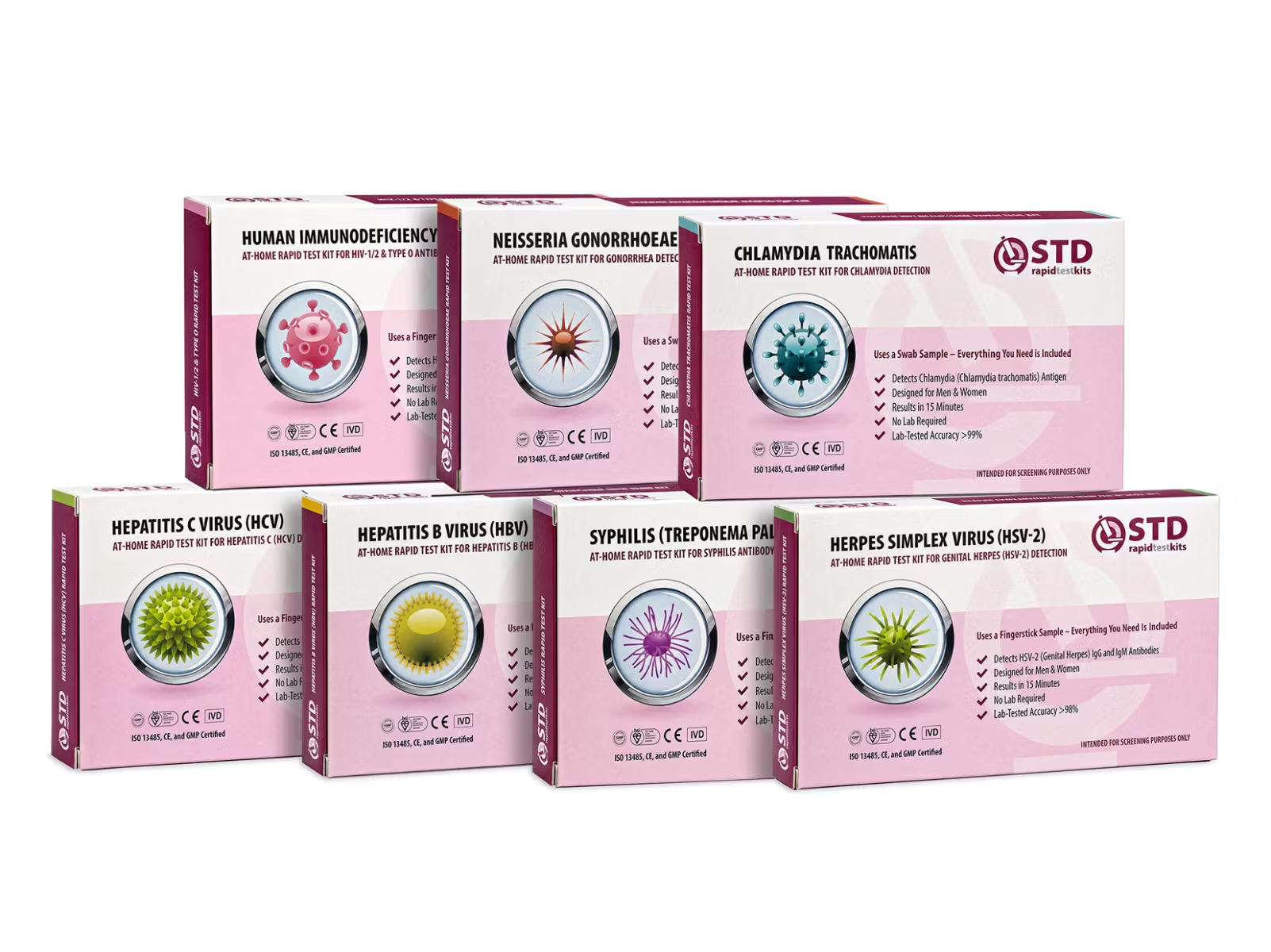
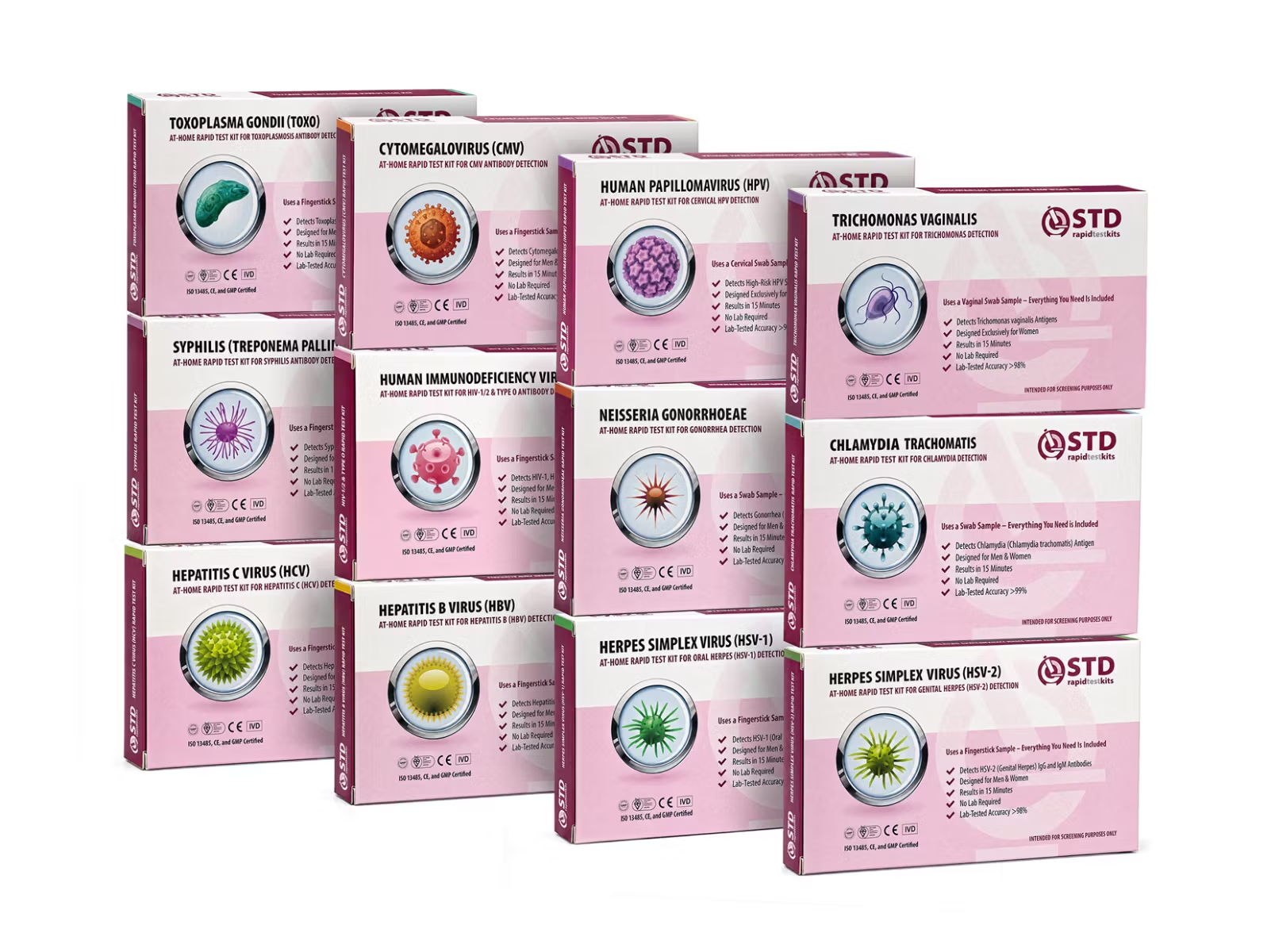
What we sell: chlamydia, gonorrhea, herpes (HSV-1 and HSV-2 separately or as a combined panel), HIV, syphilis, hepatitis B, hepatitis C, trichomoniasis (vaginal swab, validated for women only), and HPV (vaginal swab, validated for women only).
What we do not sell: urine-sample tests, throat or rectal swab kits, or mail-in laboratory NAAT panels. If a clinician has flagged a likely throat or rectal infection (for example after oral or anal exposure), the in-person clinic remains the right route for those samples.
Matching Your Symptoms to the Right Test
Symptom mapping is imprecise. Even so, a few patterns recur consistently enough to guide a first test choice. The table below summarizes the most frequent symptom-to-infection associations for women, paired with the at-home test that fits each pattern.
| Symptom pattern | Most likely STI causes | Recommended at-home test |
|---|---|---|
| Burning or stinging when urinating | Chlamydia, gonorrhea, sometimes trichomoniasis | Combined chlamydia and gonorrhea swab, or a 7-in-1 combo if multiple exposures are in play |
| Itching with frothy or foul-smelling discharge | Trichomoniasis, bacterial vaginosis (not an STI), yeast | Trichomoniasis vaginal swab; if negative, see a clinician for BV or yeast workup |
| Visible sore, ulcer, or blister | Herpes (HSV-1 or HSV-2), syphilis | HSV-1, HSV-2, or combined herpes blood test; syphilis blood test |
| Pain during sex or unexpected spotting | Chlamydia, gonorrhea, sometimes early pelvic inflammatory disease | Combined chlamydia and gonorrhea swab; clinic visit if pain is severe or spreading |
Why Multi-Infection Kits Make Sense When Symptoms Overlap
Many of the most common STI symptoms are non-specific. Discharge, burning, and itching can each be caused by several different infections, plus by non-STI causes like yeast or bacterial vaginosis. That overlap is the practical case for multi-infection combo kits.
Trichomoniasis is a representative example. The CDC's trichomoniasis page states that about 70% of people with the infection have no signs or symptoms, and only about 30% develop noticeable symptoms. When trich does cause symptoms, they often mimic yeast or bacterial vaginosis: a thin, frothy, sometimes greenish-yellow discharge, mild irritation, occasionally pain on urination. A woman testing herself only when symptoms are obvious will miss the silent cases entirely. A combo kit that screens trich alongside chlamydia and gonorrhea catches more of the realistic possibilities at once.
The trade-off is cost. Combo kits cost more than single-infection swabs. The decision usually comes down to symptom complexity. If only one symptom pattern is in play (a single new visible sore, for instance), a targeted single-infection test is enough. If symptoms are vague or stacked, a combo kit reduces the chance of testing for the wrong thing first and missing the actual cause.
Comparing At-Home and Clinic Testing Routes
For women weighing whether to test at home or in a clinic, the practical differences come down to four axes: speed, privacy, accuracy ceiling, and ease of follow-through. The table below compares the routes available without (or with) a clinic visit. There is no single right answer; the right route depends on what the symptom looks like, how recent the exposure was, and what level of certainty the reader needs.
| Testing route | Time to result | Privacy | Best used for |
|---|---|---|---|
| At-home rapid lateral-flow kit | 10 to 20 minutes | Highest | First-line screening, visible symptoms, fast peace of mind |
| Telehealth visit plus lab order | 1 to 5 days | Moderate to high | Symptom-driven workup without an in-person clinic visit; confirmatory testing after a positive home result |
| In-person clinic with NAAT or culture | Same day to 5 days | Lower | Complex symptoms, persistent symptoms after a negative home test, throat or rectal sampling, suspected PID |
What the Testing Process Actually Looks Like
Most at-home rapid kits ship in plain packaging with no exterior branding that would identify the contents on a doorstep or in a shared hallway. Inside, kits typically include the test cassette, a sample-collection device (swab or fingerstick lancet), buffer solution, and a printed instruction card. Following the instructions exactly matters: rushing a swab or under-filling the buffer well are the two most common reasons for an invalid or false-negative result.
For blood-based tests (HIV, syphilis, hepatitis B, hepatitis C, herpes), the procedure uses a small fingerstick lancet to collect a drop of blood, which is mixed with the buffer and applied to the cassette. The sting is brief, and the analytical wait is fifteen minutes for most kits. The cassette will display a control line first to confirm the test ran correctly, then a separate test line if the target antibody or antigen is present.
For swab-based tests (chlamydia, gonorrhea, trichomoniasis, HPV), the swab is a soft-tipped sterile applicator inserted a few centimeters into the vagina (or, for chlamydia and gonorrhea, into the urethral opening for men). Self-collected vaginal swabs have been validated in peer-reviewed studies as comparable to clinician-collected swabs for the same screening targets, which is why the FDA has cleared self-collection for several lab and at-home test types.
If the Result Is Positive, What Comes Next
A positive home test is a screening signal, not the end of the diagnostic process. The recommended next steps follow the same path a clinic would take.
First, confirm the result. For bacterial infections (chlamydia, gonorrhea, trichomoniasis), confirmation is usually a clinic-grade NAAT. For HIV or syphilis, it is a confirmatory blood draw. Most telehealth services accept a self-reported positive home result as enough cause to order confirmatory testing without requiring an in-person visit.
Second, get treatment. Bacterial STIs are typically cured with a short course of antibiotics; herpes is managed with antiviral medication; HIV is treated with daily antiretroviral therapy that suppresses the virus and prevents transmission. The CDC's STI Treatment Guidelines set out the current first-line regimens for each infection. Telehealth providers can prescribe most of these directly to a local pharmacy.
Third, notify partners. Most public-health departments offer anonymous partner-notification services for people who would prefer not to make those conversations directly. Partner treatment matters: untreated partners reinfect treated patients in a measurable share of follow-up cases, which is one of the main reasons CDC recommends a test of cure or a retest at three months for treated chlamydia and gonorrhea infections.
STIs often have no symptoms, so you may not know you have one. But even without symptoms, infections can cause serious health problems.
When to Retest, and When to Stop
Window periods (the time between exposure and when a test can detect the infection) are the most-misunderstood concept in home testing. A negative rapid test taken three days after a possible exposure does not mean uninfected; it means the test could not detect anything yet.
Typical recommended retest windows: chlamydia and gonorrhea, around two weeks after exposure for screening sensitivity; syphilis, three weeks for early disease and up to twelve weeks for full sensitivity; HIV antibody-only rapid tests, 23 to 90 days for full sensitivity per CDC HIV testing guidance, with fourth-generation lab tests capable of detecting earlier infection. Trichomoniasis can usually be detected within one to four weeks. For someone whose first home test was taken too early, the right move is to retest at the appropriate window, not to assume the first negative is final.
After successful treatment, retesting too early can produce false positives because residual antigen or DNA fragments may persist on antibody-based tests. Most clinicians recommend waiting at least three to four weeks after a course of antibiotics before a test of cure for chlamydia or gonorrhea, and CDC guidance suggests a follow-up screen at three months to catch reinfection from an untreated partner. Retesting is not paranoia. It is how the test design actually works.
When Symptoms Show Up Inside Stable Relationships
Sexual-health writing tends to assume STI testing is an issue for new or casual partners. The clinical reality is broader. Long incubation periods, asymptomatic carriage, and prior untested exposures all mean that a stable monogamous relationship is not by itself a guarantee of no infection on either side.
Chlamydia is the clearest example. The CDC notes that chlamydia often has no symptoms, even when the infection is causing reproductive-tract damage. Many people carrying the infection do not know it until they are tested for an unrelated reason or develop a complication. A partner who has never been tested cannot honestly answer the "are you clean" question, and the absence of symptoms does not change that. The same pattern applies to HPV, herpes, and (less often) trichomoniasis.
Routine screening, including for women in long-term relationships, is part of standard care for sexually active women under 25 per CDC testing recommendations, and is reasonable on a more flexible cadence beyond that age. Symptom-driven testing is a separate trigger; it is one of several worth taking seriously.
All sexually active women younger than 25 years should be tested for gonorrhea and chlamydia every year. Women 25 years and older with risk factors such as new or multiple sex partners or a sex partner who has an STI should also be tested.
Picking a Kit When You're Still Not Sure
For readers torn between a single-infection test and a combo, a quick comparison of the most common at-home options helps narrow the choice.
| Kit option | What it tests | Best for |
|---|---|---|
| Combined chlamydia and gonorrhea swab | Two bacterial STIs (swab sample) | Burning, painful sex, or unusual discharge after a recent exposure |
| Trichomoniasis vaginal swab (women) | Trichomonas vaginalis (swab sample) | Itching, frothy or off-smelling discharge, suspected pH disturbance |
| Combined herpes blood test | HSV-1 and HSV-2 antibodies (blood sample) | Recent or past exposure with concern. Not for typing an active lesion; clinic swab is more accurate for that |
| 7-in-1 combo | Seven common STIs across swab and blood samples | Multiple exposures or vague, overlapping symptoms |
| Women's 10-in-1 combo | Ten common STIs (women, swab and blood) | Comprehensive screening when symptom pattern is unclear |
Choosing Between a Targeted Test and a Combo
The trichomoniasis and HPV kits available on this site are validated for vaginal self-swab only. Male readers needing a trich or HPV evaluation should see a clinic for a clinician-collected sample. For most other infections (chlamydia, gonorrhea, HIV, syphilis, hepatitis, herpes), the at-home kits are validated for both genders.
If symptom evolution is what is driving testing, a combo kit is usually the higher-value first read. If a recent specific exposure is the trigger and the symptom pattern points clearly at one infection, a targeted single-infection test costs less and answers a narrower question. Either route gives a real data point in fifteen minutes, which is the part the at-home format makes possible.
FAQs
- Is at-home rapid STI testing as accurate as a clinic test?
- Lateral-flow rapid tests and laboratory NAAT tests are different technologies. NAAT, the lab method clinics use for chlamydia and gonorrhea, has higher analytical sensitivity, especially in early or asymptomatic infection. Rapid tests perform well as a first-line screen, particularly when used after the appropriate window period and when symptoms are present. A reasonable plan is to use a rapid kit at home and confirm any positive result through a clinic NAAT or telehealth-ordered lab draw.
- Can I take a vaginal swab test during my period?
- Blood-based tests (HIV, syphilis, herpes, hepatitis) are unaffected by menstruation. Vaginal swab tests are best taken on a light day or after a period ends; heavy bleeding can cloud the cassette result. Avoid using tampons in the few hours before sample collection so the swab can pick up cells from the vaginal wall.
- How soon after a possible exposure should I test?
- Wait at least two weeks before testing for chlamydia or gonorrhea after a possible exposure. Trichomoniasis is detectable from one to four weeks. Syphilis tests reach full sensitivity by twelve weeks. HIV antibody-only rapid tests reach full sensitivity between 23 and 90 days, per CDC. If symptoms are already present, you are likely past the screening-relevant window for most infections. A negative test taken within three or four days of exposure should be repeated.
- What does a faint test line mean?
- A faint line typically still counts as a positive result on a lateral-flow assay. The cassette is reading antigen or antibody concentration; lower concentrations produce fainter lines but still indicate that the target was detected. If the line is faint and visible within the manufacturer's read window (usually 10 to 20 minutes), treat it as positive and pursue confirmatory testing rather than dismissing it.
- If I test negative but symptoms continue, what's the next step?
- Two possibilities. The first is that the test was taken inside the window period and the infection has not yet reached detectable levels; retest at the appropriate window for the suspected infection. The second is that the symptoms are caused by something the kit does not test for, such as bacterial vaginosis, a yeast infection, a urinary tract infection, or an irritant reaction. If symptoms persist longer than a week or worsen, see a clinician.
- Will the package or charge identify what I bought?
- Reputable at-home kit suppliers ship in plain outer packaging with no clinical or product branding visible. Card statements typically list a generic merchant name rather than "STI test kit." If you share a household, ordering for delivery to a workplace or to a parcel locker is a common way to add an extra layer of privacy.
- Can I get treatment without an in-person clinic visit if a home test is positive?
- For most bacterial STIs, yes. Telehealth services accept a self-reported positive result as cause to order confirmatory testing and to prescribe first-line antibiotics, which can be picked up at a local pharmacy. HIV and syphilis treatment usually involves at least one in-person visit for blood work and to start medication, though the initial confirmation can often be ordered remotely.
- When is a clinic visit better than testing at home first?
- If the symptom is severe (high fever, severe pelvic pain, fast-spreading rash, lower-abdominal pain that suggests pelvic inflammatory disease), go to a clinic or urgent care first. If the suspected infection is in the throat or rectum (after oral or anal exposure), this site does not sell those swab types; a clinic is the right route. If a prior home test was negative and symptoms have continued for more than a week, escalate to in-person care.
How we sourced this article: Recommendations and statistics in this article are drawn from current public-health guidance issued by the U.S. Centers for Disease Control and Prevention, supplemented by MedlinePlus reference material. Test-method descriptions follow the FDA-cleared lateral-flow chemistry used in the kits available on this site. The article is reviewed for clinical accuracy by Aikaterini Maragkou, MD, before publication.
- U.S. Centers for Disease Control and Prevention. Getting Tested for STIs: testing recommendations by population, asymptomatic infection guidance, and routine-screening cadence.
- U.S. Centers for Disease Control and Prevention. About Chlamydia: symptoms in women, asymptomatic carriage, and complications including pelvic inflammatory disease, ectopic pregnancy, and infertility.
- U.S. Centers for Disease Control and Prevention. About Trichomoniasis: prevalence, symptom rate (about 30% develop symptoms), and overlap with bacterial vaginosis and yeast presentations.
- U.S. Centers for Disease Control and Prevention. STI Treatment Guidelines, 2021: first-line regimens, retest-of-cure recommendations, and confirmatory testing pathways.
- U.S. Centers for Disease Control and Prevention. HIV Testing: window periods for antibody, antigen-antibody, and NAT tests.
- MedlinePlus, U.S. National Library of Medicine. Sexually Transmitted Infection (STI) Tests: overview of sample types and laboratory testing options.
