
Published: August 2025 | Last updated: May 2026 | Editorial review and quality control: Martina N.
For a lot of people, the hardest part of getting tested isn't the test. It's the walk into the clinic. The waiting room. The fear that someone you know works the front desk. If that's familiar, you are not stuck. Telehealth has quietly become a full pathway for sexual health care: a video visit with a clinician, a kit shipped to your door, results returned through a private portal, and a prescription sent to a pharmacy when one is needed.
This guide walks through how telehealth STI care works, what it does well, and where it still has limits. The short version: when you follow the collection instructions, home-collected vaginal swabs and urine samples processed by a certified lab perform comparably to clinician-collected samples for chlamydia and gonorrhea, per the CDC's MMWR laboratory recommendations, and the door-to-results timeline is often faster than booking and attending an appointment.
This article is published by stdrapidtestkits.com, which sells at-home STI testing kits. Recommendations below are based on what fits the reader's concern, not commercial benefit.
Key Takeaways
- Self-collected vaginal swabs processed by a certified lab perform on par with clinician-collected swabs for chlamydia and gonorrhea NAAT testing, per CDC laboratory guidance.
- The biggest barrier to STI testing is rarely cost or access. It is the fear of being seen, and that is the part telehealth removes.
Why so many people freeze at the thought of an STI clinic
The barrier is rarely logistical. It is psychological. People who have never had trouble booking a dentist will sit on a suspicious bump for weeks because the act of saying it out loud, in a public waiting room, feels like a confession. The Kaiser Family Foundation's issue brief on telemedicine in sexual and reproductive health notes plainly that telemedicine care may be appealing to people who do not feel comfortable seeking in-person STI care because of stigma or privacy concerns.
Layer onto that the practical stuff: clinics with hours that conflict with shift work, transportation gaps, the cost of a sick day, the dread of explaining yourself to a partner about why you booked that appointment. The result is what public health researchers call a care delay, the gap between when symptoms or risk events happen and when someone gets tested. That gap is where transmission accelerates.
Telehealth shrinks the gap because it removes the most stigmatized step. From your bedroom or your parked car, you can describe symptoms to a clinician, get an order placed for the appropriate panel, and arrange testing without ever sitting under fluorescent lights waiting for your name to be called. The CDC's National Center for Health Statistics data brief documents that telemedicine use among office-based U.S. physicians rose from 15.4% in 2019 to 86.5% in 2021, with medical specialists leading adoption rates.
Public health researchers describe the window between a possible exposure and an actual test as care delay. It is the period where transmission can accelerate fastest because nobody knows what is happening yet. A telehealth visit's main value is shrinking that window by removing the most stigmatized step (the in-person clinic check-in) so people get the test sooner.
When the first clue is a symptom you can't ignore
It often starts small: an itch that feels different, a single red bump, or a burning sensation that doesn't match a UTI's usual pattern. At 2 a.m. you start typing into the search bar, and the autocomplete shows that thousands of other people have typed the exact same thing. Search results swing between reassuring (irritation, friction, a yeast issue) and frightening (early syphilis, primary genital herpes, an early HIV seroconversion rash). The brain swings with them.
Telehealth fits this exact moment. Most online sexual health platforms now offer same-day video consultations. After the visit, the clinician can do one of three things: order an at-home collection kit shipped overnight, send a lab requisition you can use at a partner draw site, or, if it is appropriate, prescribe directly. Many platforms can have results back inside 48 to 72 hours of receiving your samples, and prescriptions can be routed to your local pharmacy or, in some states, delivered to your door.
The clinical core of this is well-established. Self-collected vaginal swabs and urine samples for chlamydia and gonorrhea, processed by laboratories using nucleic acid amplification testing (NAAT), perform comparably to clinician-collected samples; the CDC's MMWR lab recommendations state plainly that self-collected vaginal swabs are equivalent in sensitivity and specificity to those collected by a clinician.
How telehealth STI care became mainstream
Before 2020, telemedicine was useful for two specific groups: people in rural areas with no nearby specialist, and people whose schedules made in-person visits hard. The pandemic dragged it into the mainstream for everyone. Sexual health services in particular adapted fast because the clinical workflow translated cleanly: a video conversation, a self-collected sample, a lab, a result, a prescription.
What stuck around after the pandemic was not just the convenience. It was a quieter finding that providers kept reporting: patients tend to disclose more in a virtual setting than in a clinic exam room. Behavior that carries stigma in a clinic exam room (non-monogamy, sex work, kink, same-sex encounters someone hasn't disclosed elsewhere) surfaces more readily when the patient is in their own space and the clinician is on a screen. More disclosure means more accurate screening recommendations and more useful counseling.
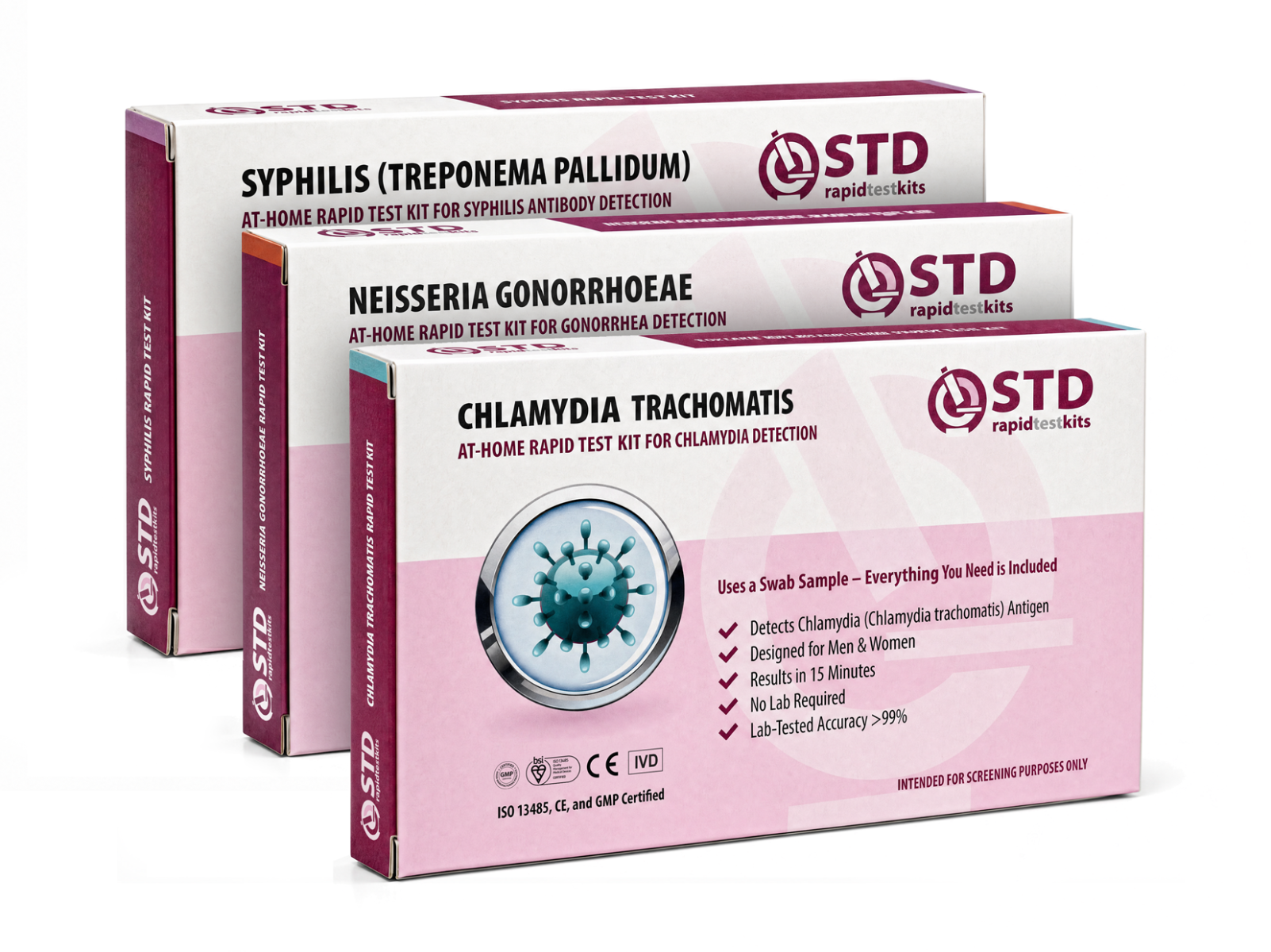
For the at-home rapid testing this site sells, the model is slightly different. Our kits are lateral-flow rapid tests, similar in chemistry to a pregnancy test or a COVID-19 home test. They give a screening result at home in about 15 minutes for the panel you bought, with no shipping, no lab, and no waiting. They are the right tool for an immediate read-out and the start of a conversation. A positive rapid result is worth confirming with a lab NAAT test (often via the same telehealth platform) before you start treatment, and that is exactly what a virtual clinician can help arrange.
What a virtual sexual health visit looks like
The first time someone uses telehealth for an STI concern, the unknown can be more anxiety-inducing than the appointment itself. A typical visit follows a predictable arc.
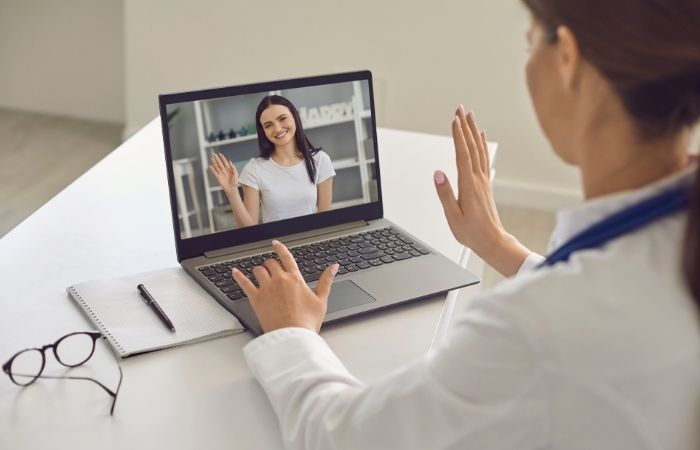
You log in to the platform, usually through a browser or app, and complete a short intake about symptoms, exposures, and recent partners. A clinician reviews the form before the call, so the video portion is conversational rather than interrogative. The call itself runs 10 to 20 minutes for most concerns. The clinician asks clarifying questions, sometimes asks to see a photo of a visible lesion or rash through the secure portal, and discusses what testing makes sense for your specific exposure history.
Sample collection at home takes a few minutes per assay, and the platform's instructions are typically more thorough than what you would get in a busy clinic, because they know nobody is standing next to you. Results arrive in your portal, not by surprise phone call. Positive results trigger a follow-up consultation, usually within a day, where treatment is prescribed and partner notification is discussed. Many platforms now also offer secure messaging for the small questions that come up later: side effects, how long to abstain, when to retest.
Three ways your telehealth visit may route the test
- A collection kit mailed to your address with prepaid return shipping. You collect at home and post it back.
- An electronic lab requisition you walk into a partner lab to use, with no appointment.
- An empiric prescription with confirmatory testing to follow, used in screen-and-treat protocols.
Telehealth, queer-friendly care, and inclusive screening
One of the most underrated benefits of telehealth is that it expanded the directory of clinicians available to people whose local options were limited or unwelcoming. LGBTQ+ patients in rural counties, trans patients trying to find a provider who will not misgender them or center the visit on their hormones, and people with disabilities who find clinic transit hard, can now select a clinician with the right specialty and language without a road trip. Several telehealth platforms maintain explicit directories of LGBTQ+ affirming, harm-reduction-aware, and sex-positive providers.
This matters clinically, not just emotionally. The right screening panel depends on the right exposure history, and patients only share an accurate exposure history when they are not bracing for judgment. Both WHO and CDC guidelines emphasize risk-appropriate screening (rather than uniform screening) because targeting the right tests to the right people catches more infections per dollar spent.

From worry to plan: how the workflow turns fear into action
Many people describe a familiar arc when they finally use telehealth for the first time. Worry about a symptom or an exposure event sits unaddressed for days because booking a clinic appointment feels too exposed. Once they discover that a same-day video consult exists, the entire emotional weight of the situation shifts within hours. The shift is not because the diagnosis got better. It is because the path forward got concrete: video call at 4 p.m., kit arriving tomorrow, samples collected over the weekend, results by mid-week, prescription if needed, follow-up scheduled.
That concreteness is the core therapeutic value of the telehealth model for sexual health. Anxiety thrives on ambiguity. A clear next step, even when the underlying clinical question is unresolved, breaks the spiral. Patients who complete STI care through telehealth commonly cite privacy, comfort, and not having to explain themselves in a waiting room as reasons they would use the service again.
One specific note about herpes care, since it comes up often: rapid home tests for HSV are fingerstick blood antibody tests, not swabs. They are useful 12 or more weeks after a possible exposure to confirm seroconversion, and they cannot diagnose an active lesion of unknown origin. If you have an actively visible sore right now, a clinic-administered swab with PCR confirmation is the diagnostic gold standard. Telehealth can route you to that swab quickly, and the at-home blood test then becomes the follow-up to establish whether you carry the virus systemically.
Three bacterial (chlamydia, gonorrhoea and syphilis) and one parasitic STIs (trichomoniasis) are generally curable with existing single-dose regimens of antibiotics.
Prevention is still the best medicine
Telehealth is not just for symptomatic situations. The bigger long-term value, especially for people with multiple partners or new partners, is regular asymptomatic screening. Several platforms now offer subscription-based testing at three- or six-month intervals, with kits arriving without you having to schedule each one. The CDC's screening guidance covers annual chlamydia and gonorrhea screening for sexually active women under 25 and people with multiple partners regardless of age, and quarterly screening for men who have sex with men in higher-risk situations. Subscription models match those cadences without requiring willpower at each interval.
Telehealth has also been a key access point for PrEP, the daily or on-demand pill regimen that prevents HIV. Initial baseline labs, prescription, and the required follow-up labs every three months are all manageable through a virtual platform. An injectable PrEP option administered every two months is also available through some platforms, useful for people who prefer not to take a daily pill. PEP, the post-exposure prophylaxis used after a single high-risk event, can be initiated within hours through a telehealth consult, well within the 72-hour clinical window where it is most effective.
Where telehealth still has real limits
Several situations still need an in-person visit, and a competent telehealth clinician will tell you so without making you feel stupid for asking.
An undiagnosed visible lesion that you have not seen before usually needs a swab with PCR confirmation, not a blood antibody test. A pelvic exam (for unexplained pelvic pain, suspected pelvic inflammatory disease, or pregnancy concerns alongside STI symptoms) requires hands. Anal or pharyngeal swabs for receptive-anal or oral exposures are not part of the at-home product line on this site, and most home-collection telehealth kits do not include them either; you will be referred to a clinic. Severe pain, fever, fainting, or signs of a systemic infection are emergency-room or urgent-care territory, not video-call territory.
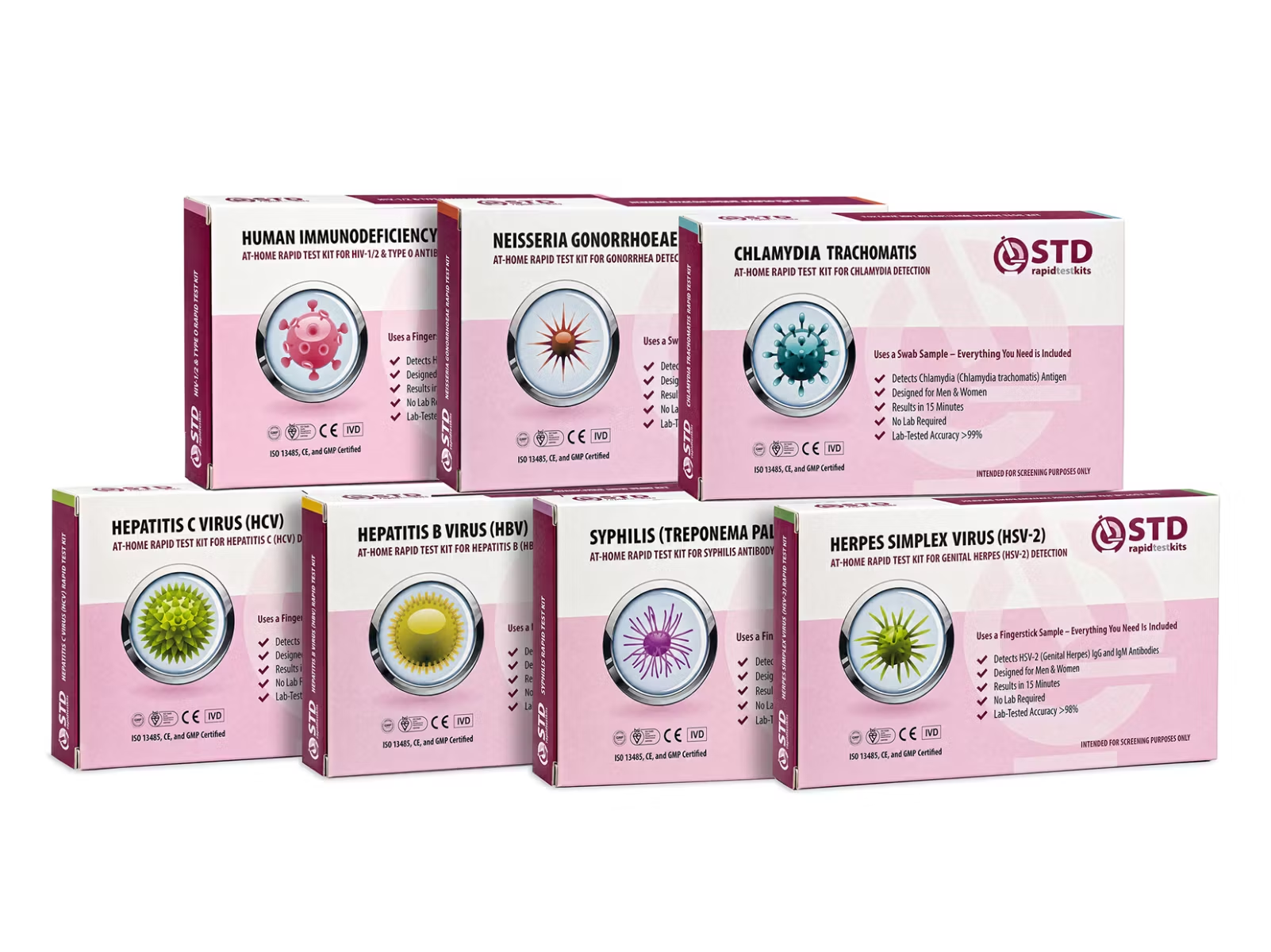
The kits sold here are at-home rapid lateral-flow tests for genital and bloodborne infections. We do not sell pharyngeal-swab or rectal-swab kits. If your exposure was oral or anal and you need a swab from those sites, see a clinic for the appropriate swab; our panels can still cover the systemic and genital screening from the same exposure event.
FAQs
- Can telehealth diagnose an STI?
- Yes. A telehealth clinician can take a history, review symptoms, order the appropriate tests (mailed kit or partner-lab requisition), interpret results, and prescribe treatment. The diagnostic chain is the same as in-clinic care, just delivered remotely.
- Are at-home tests as accurate as clinic tests?
- Home lab-kit accuracy is comparable to clinic for chlamydia and gonorrhea NAAT when you follow the collection steps, per CDC laboratory guidance. At-home rapid lateral-flow kits screen quickly, but a positive result is worth confirming with a lab NAAT before starting treatment, which a telehealth clinician can arrange.
- How fast do results come back?
- Rapid lateral-flow at-home kits give a screening result in about 15 minutes. Lab-processed home-collection kits typically return results within two to five business days of the lab receiving the sample.
- Can I get treatment without ever seeing a doctor in person?
- For most uncomplicated bacterial STIs (chlamydia, gonorrhea, early syphilis), yes. The clinician sends the prescription to your pharmacy or, in some states, has it delivered. Complicated cases get referred to in-person care.
- Is HIV testing and PrEP available through telehealth?
- Yes. Initial PrEP labs, the prescription, and the every-three-months follow-up labs are all manageable through a virtual platform. Post-exposure prophylaxis (PEP) can be initiated within the 72-hour window through a same-day telehealth consult.
- Is telehealth STI care private?
- Reputable platforms use HIPAA-compliant video and messaging. Test kits ship in unbranded packaging. Results sit behind your portal login, not in your inbox or your texts. The privacy is intentional and is part of the design.
- Does insurance cover telehealth for sexual health?
- Most U.S. insurance plans now cover telehealth visits at parity with in-person visits. Coverage of the at-home test kit itself varies; check the platform's billing summary or your plan's specific terms before ordering.
- When should I skip telehealth and go to a clinic instead?
- When you have a visible lesion you have not been previously diagnosed with, severe pelvic pain, fever, signs of systemic infection, or you need a pharyngeal or rectal swab. A good virtual clinician will tell you when to switch to in-person care.
- Kaiser Family Foundation. Telemedicine in Sexual and Reproductive Health: issue brief on stigma, privacy, and telemedicine uptake.
- Centers for Disease Control and Prevention, National Center for Health Statistics. Telemedicine Use Among U.S. Office-Based Physicians (2019 to 2021), data brief 493.
- Centers for Disease Control and Prevention. Recommendations for the Laboratory-Based Detection of Chlamydia trachomatis and Neisseria gonorrhoeae (MMWR rr6302a1) covering self-collected vs clinician-collected vaginal swab equivalence.
- World Health Organization. Sexually transmitted infections fact sheet covering global epidemiology, screening, and treatment principles.
- Centers for Disease Control and Prevention. PrEP for HIV prevention: clinician and patient overview.
- Centers for Disease Control and Prevention. About Syphilis: stages, transmission, and current treatment guidance.
