






Quick Answer: Chlamydia in bisexual men often causes no symptoms, especially in the throat or rectum. The most accurate time to test is 14 days after potential exposure, with retesting recommended after treatment or new partners.
Why This Article Matters If You're Bi, Curious, or Somewhere in Between
This guide is for bisexual men, men who have sex with men and women, and anyone whose sexual health journey doesn’t fit a box. Maybe you're open, poly, questioning, or navigating new territory with your partners. Maybe you’ve had oral with a woman and anal with a guy in the same week and now you're Googling weird symptoms at 2AM, wondering if you’re being paranoid or responsible.
It matters because chlamydia doesn’t show up the same way in every body, and medical systems often don’t account for bisexual-specific risk routes. If you've ever felt overlooked in a clinic, hesitated to disclose partner genders, or skipped a test because you "didn't think it applied," this article is for you. We’re breaking down the realities of chlamydia exposure, what symptoms bisexual men might actually feel (or not), and exactly when to test to catch it.
What Does Chlamydia Look Like in Bi Guys? The Symptoms You Might Miss
The truth? You might feel completely fine. That’s not just common, it’s expected. According to the CDC, the majority of men with chlamydia show no symptoms at all, especially when the infection is located in the throat or rectum. But when symptoms do appear, they vary depending on how and where the exposure happened.
Let’s go back to Josh. That faint burn when peeing? Could’ve been a urethral infection, common after insertive sex with a woman or man. But if he’d only received oral or bottomed during anal sex, he may not have felt anything at all. Rectal chlamydia often presents with no pain, no blood, no discharge, just silence. And throat chlamydia? That’s a whole other level of invisible. You can have it for weeks without a single sore throat or cough.
Still, when symptoms do appear, they might include:
| Exposure Type | Potential Symptoms | Often Misdiagnosed As |
|---|---|---|
| Insertive Vaginal or Anal | Burning while urinating, penile discharge | UTI, friction irritation |
| Receptive Anal (Bottoming) | Rectal pain, bleeding, discharge (rare) | Hemorrhoids, IBS, fissures |
| Oral (Giving or Receiving) | Sore throat, mild congestion (rare) | Cold, strep, allergies |
Table 1: Common chlamydia symptoms in bisexual men by exposure type and common misdiagnoses.
Now here’s the kicker: even if you test positive, your last partner might test negative. Or vice versa. That’s because chlamydia can linger for weeks, and timing matters, a lot. So let’s talk about that next.
People are also reading: Can You Get an STD from a Toilet Seat? Here’s What the Science Says
When Should Bisexual Men Test for Chlamydia?
If you're here wondering when the right time to test is, you're not alone. Most people either test too soon (out of panic) or too late (because they felt fine). The sweet spot for accuracy? Usually around two weeks after potential exposure.
Imagine this: Dan hooks up with a couple at a house party, he tops one partner and bottoms with the other. Five days later, he’s worried, but tests immediately using an at-home kit. It comes back negative. He relaxes. But 10 days later, he gets unexpected discharge. This time, he tests at a clinic and it comes back positive. What happened? The first test was too early. His body hadn’t produced enough bacterial DNA to be picked up by the NAAT test (the gold standard for chlamydia).
| Days Since Exposure | What to Expect | Testing Recommendation |
|---|---|---|
| 0–5 Days | Too early for most accurate results | Wait to test unless severe symptoms appear |
| 6–13 Days | Some infections may be detectable | Test now, but plan to retest at day 14+ |
| 14+ Days | Optimal detection for chlamydia | Test with confidence; high accuracy |
Table 2: Testing windows for chlamydia in bisexual men based on exposure timing.
This doesn’t mean you should never test early. If you’re experiencing discomfort, had unprotected sex, or were exposed in a higher-risk setting, it’s okay to test now and again later. Think of it like double-checking, not overreacting.
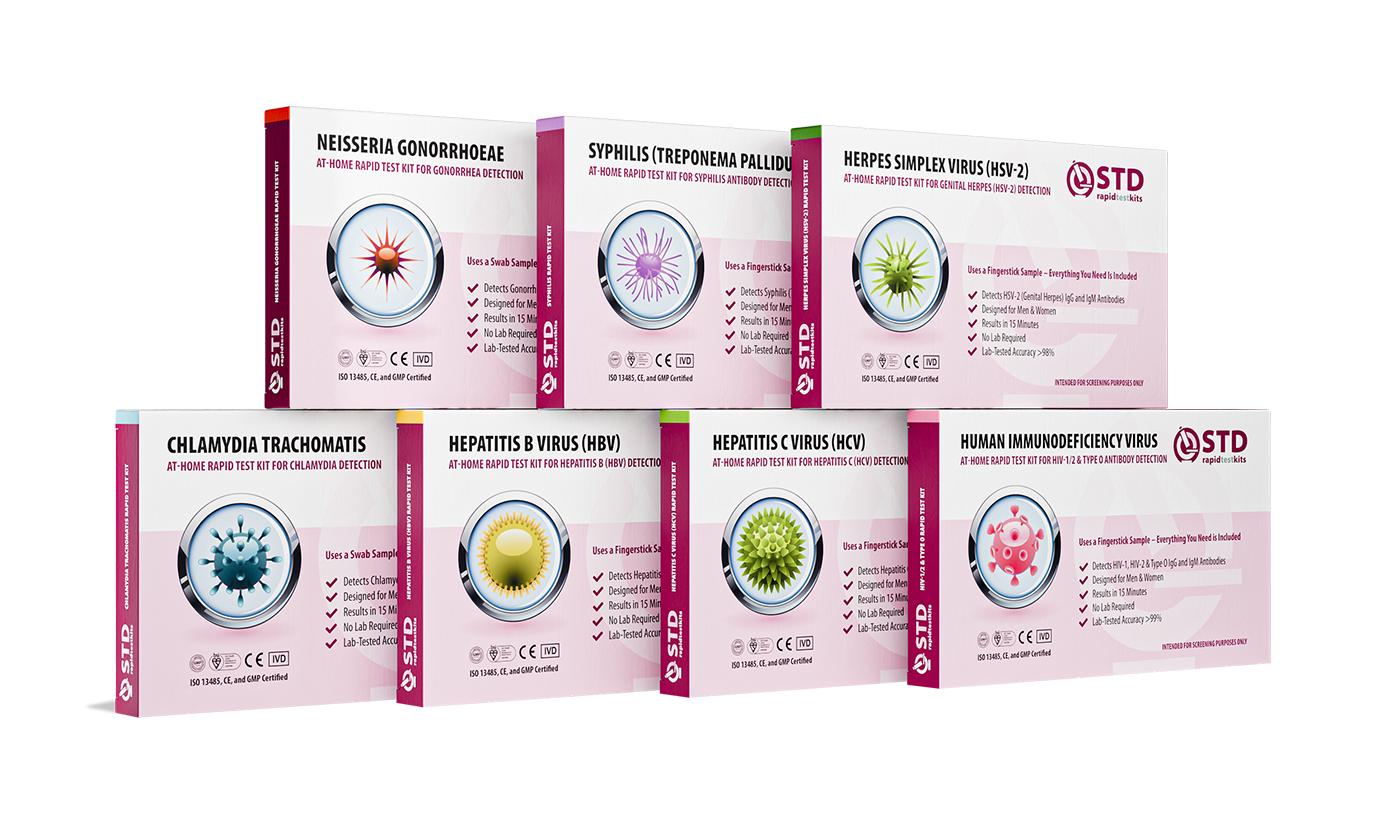
If your head keeps spinning, peace of mind is one test away. You can order a discreet kit using the Chlamydia Rapid Test Kit and test from home on your own terms.
Check Your STD Status in Minutes
Test at Home with Remedium7-in-1 STD Test Kit
 For Men & Women
 Results in Minutes
 No Lab Needed
 Private & Discreet
Order Now $129.00 $343.00
For all 7 tests
Should You Retest? Here's When It Matters
Let’s say you tested positive, got treated, and your symptoms disappeared, are you good to go? Not always. Chlamydia is a repeat offender, especially for bisexual men with overlapping partner networks. If you’re still seeing the same partners (or reconnecting with new ones shortly after treatment), you might be at risk again within weeks. And here's the harder part: you can be reinfected by someone who never knew they had it in the first place.
One guy we spoke to, let’s call him Amir, was in an open relationship with his girlfriend and occasionally met up with male partners through an app. He got treated for chlamydia after a routine test, but didn’t want to bring it up with one of his newer hookups. A month later, it was back. “I figured since I didn’t have symptoms, I was fine,” he said. “Turns out, I wasn’t the only one not saying anything.”
So when should you retest? If you were treated for chlamydia, most guidelines (like those from the CDC) recommend a retest around three months later, even if you feel fine. If you were never positive but tested soon after exposure, a second test after 2–3 weeks can catch late-rising infections. And if your partner tests positive after you tested negative? Test again, no matter what.
What If You Tested Negative But Still Don’t Feel Right?
It’s a strange limbo: you tested negative, but you’re still feeling off. Maybe it’s a weird sensation during sex, mild irritation, or just that gut feeling something’s not right. Don’t dismiss that. Chlamydia testing is highly accurate, especially the NAAT (nucleic acid amplification test), but no test is perfect. Early testing, improper sample collection, or infection at a site you didn’t test (like the throat or rectum) can produce a false sense of security.
This is especially true for bisexual men whose exposures span different anatomical sites. If you only pee in a cup but your exposure was mostly oral or receptive anal, the test might miss it entirely. Many providers still don’t offer rectal or throat swabs unless specifically requested, and that gap matters.
That’s why some guys choose to retest even after a negative, or use multiple sample types when testing at home. It's not paranoia, it’s self-protection. If you're not sure which test to get, this at-home combo test kit covers multiple STDs and makes it easier to cover all your bases.
Why Chlamydia Is So Often Missed in Bi Men
Part of it is biology. Part of it is stigma. Chlamydia is sneaky. It rarely causes symptoms in men, especially when it’s hiding in the throat or rectum. But the other reason it slips through the cracks? Many bisexual men are never asked the right questions by healthcare providers, and sometimes they don’t volunteer them either.
Marcus, 28, had a monogamous girlfriend but occasionally had anonymous oral sex with men. He never told his doctor. Why? “Because every time I did, I got that look. That pause,” he said. “So I stopped mentioning it.” When he finally tested for STDs after a persistent sore throat, his chlamydia result came back positive, oral only. The doctor admitted they wouldn’t have tested that site if he hadn’t pushed for it.
This happens more than you think. In a 2023 study published in Sexually Transmitted Diseases, bisexual men were significantly less likely to receive comprehensive STD testing compared to gay men, even when reporting similar behaviors. The gap isn’t about risk. It’s about visibility and bias.
You shouldn’t have to argue to get tested where you’ve actually had sex. You shouldn’t have to guess if a clinic is queer-friendly. That’s one reason many bisexual men are turning to at-home testing, quietly, privately, on their own terms.
How At-Home Testing Works for Bi Men
You don’t have to explain your relationship dynamics. You don’t have to guess what to swab. Many home test kits are designed to cover multiple sites or provide clear instructions on what to collect based on exposure. If you had oral, rectal, and genital contact, all of that can be accounted for if you choose the right kit.
The process usually takes about 10 minutes. You collect a urine sample, a throat swab, or a rectal swab (or all three), then either process the test at home for a rapid result or mail it back to a lab for confirmation. Some kits, like the ones from STD Rapid Test Kits, give results in under 15 minutes using lateral flow cassettes, no mailing required.
And yes, the packaging is discreet. No logos. No labels. Just a plain envelope that looks like any other delivery. Your partner doesn’t have to know. Your roommate doesn’t have to know. You control the information. You control the pace.
Whether you're doing it out of caution, curiosity, or care for your partners, testing from home makes space for honesty, without the performance.
Talking to Partners, Without Shame or Panic
Nothing about this is easy. But it’s doable. If you’ve tested positive, your partners deserve to know, especially those from the last 60 days. That might include a long-term partner, a one-time hookup, or someone you’re not even sure how to label. Start with honesty and keep it simple.
You don’t have to disclose your whole history. You don’t have to explain why you were tested. You can say something like: “Hey, I just found out I tested positive for chlamydia. You might want to get tested too, just to be safe.” That’s it. Clear, kind, direct.
For people in complex relationship dynamics, open, poly, anonymous apps, this can feel like a minefield. But every message you send is a line of protection, not just for them but for you. Most people appreciate the heads-up. Some might ghost. Some might be angry. But the ones who matter will get tested, get treated, and move forward with you.
And if you don’t want to message them directly? Some health departments offer anonymous notification tools. You plug in their number or email, they get the alert. No name. No blame. Just information.
People are also reading: My At-Home Gonorrhea Test Was Negative, But I Still Had It
What Happens If You Test Positive?
Let’s walk through the moment. You see the result, positive. Your heart drops. Maybe you panic. Maybe you freeze. Maybe you try to rationalize it away. It doesn’t mean you’re dirty. It doesn’t mean you were reckless. It doesn’t mean you deserve it. What it means is that your body is hosting a bacterial infection, and it can be treated. Full stop.
For many bisexual men, testing positive hits harder because of everything else layered around it: shame, secrecy, fear of being judged by both partners and providers. Especially if you're dating across genders, the mental gymnastics can feel brutal. Who do you tell first? Who will assume what? Will this change how they see you?
Here’s what matters: chlamydia is curable. One round of antibiotics, usually azithromycin or doxycycline, is all it takes. You may need a confirmatory test or follow-up depending on where the infection was and whether it was caught early. But the treatment is straightforward. The hardest part is often the emotional weight, not the medical reality.
We heard from Leo, who got diagnosed during a routine test. “It wasn’t the test result that broke me,” he said. “It was telling my girlfriend and seeing her face. But then she got tested, and it turned out she had it too. And we just… handled it. It sucked, but it didn’t ruin us.”
If you're testing through a clinic, they’ll usually offer treatment or refer you. If you're using an at-home test and get a positive result, many companies provide telehealth options to get a prescription quickly. The key is to act, don’t wait for symptoms to get worse or partners to find out another way.
Check Your STD Status in Minutes
Test at Home with Remedium6-in-1 STD Rapid Test Kit
 For Men & WomenResults in MinutesNo Lab NeededPrivate & Discreet
Order Now $119.00 $294.00
For all 6 tests
Taking Back Control (Even If You're Still Anxious)
Testing positive can be a wake-up call. It can also be a turning point. Not because you’ve done something wrong, but because you now have more clarity than most people walking around with undiagnosed STDs. That knowledge is power. It’s a blueprint for protection, honesty, and better sex moving forward.
But let’s not sugarcoat it. The shame lingers. Especially for bisexual men who already feel like they have to code-switch between worlds, being “too straight” in queer spaces, “too queer” in straight ones. STDs can stir up every insecurity about your body, your identity, your desirability. Don’t let it. You’re still worthy of intimacy, trust, and pleasure.
Sometimes the most powerful thing you can do is get tested before symptoms show up. Sometimes it’s sending the awkward text. Sometimes it’s simply deciding to try again, with someone new, without dragging the past with you.
Don’t wait and wonder, get the clarity you deserve. This at-home combo test kit checks for the most common STDs discreetly and quickly.
FAQs
1. Can I really have chlamydia and feel totally normal?
Yes, and that’s the messed-up part. Most bisexual men with chlamydia don’t feel a thing, especially if it’s in the throat or rectum. You could be carrying it for weeks, even months, and never know. That’s why routine testing matters way more than waiting for symptoms to show up.
2. I hooked up with a guy and a girl last weekend, do I need to test twice?
Nope, you just need to test once, correctly. If you had oral, anal, and vaginal contact, make sure you’re testing all the relevant sites. A pee test won’t catch a throat or rectal infection. At-home combo kits or clinic swabs can do the trick.
3. Is it even possible to get chlamydia from oral sex?
Absolutely. It’s not super common, but it happens, especially if you're receiving oral from someone who's infected. You could end up with chlamydia in your throat and never know unless you test for it directly.
4. How soon after sex can I test without wasting my time?
Timing is everything. You’ll get the most reliable result if you test around 14 days after a potential exposure. Earlier than that, the bacteria might not have multiplied enough to be detected. If you're testing before then, plan to retest in a couple of weeks just to be safe.
5. I tested negative, but I’ve got discharge now, what’s up?
Sounds like your first test may have been too early, or maybe it didn’t cover the right area (like rectal vs. urine). A new test, one that’s site-specific, is a smart move. Trust your body. If something feels off, it probably is.
6. Do I have to tell every single person I’ve slept with?
Only partners from the past 60 days. And no, you don’t have to call them up one by one like it’s a shame parade. You can text. You can use anonymous online tools. You can even say, “Hey, I got a positive result. Might be worth checking yourself.” Short. Honest. Effective.
7. Will one round of antibiotics cure it for good?
Yes, assuming you finish the treatment and don’t get reinfected. Chlamydia responds well to standard antibiotics like doxycycline. But if your partner didn’t get treated too? It could ping-pong right back to you. Coordinated testing is your friend.
8. What if I’m in a monogamous relationship but still tested positive?
First, breathe. There are lots of reasons this could happen. It could be a delayed detection from an old exposure. It could be that someone wasn’t as monogamous as you thought. Either way, the goal is health, not blame. Get treated. Talk it out. Move forward with facts, not assumptions.
9. Do I need to test for other STDs too?
If you’re already testing for chlamydia, yes, do the whole panel if you can. Gonorrhea, syphilis, HIV, herpes… all of it. Especially if you’ve had unprotected sex, multiple partners, or symptoms that don’t line up with just one infection.
10. This all feels overwhelming. Where should I even start?
Start by testing. That one step cuts through the mental chaos. You don’t have to figure everything out today. Just test, get the results, and go from there. And if you want privacy, speed, and no awkward clinic waiting room vibes? You’ve got options right here.
You Deserve Answers, Not Assumptions
Here’s the truth: you don’t owe anyone shame. You don’t have to fit anyone’s idea of what risk “looks like.” Being bisexual doesn’t mean you’re reckless. Testing doesn’t mean you did something wrong. It means you care, about your body, your partners, your peace of mind.
Chlamydia can be silent, but your health shouldn’t be. You deserve answers that match your real life, not outdated stereotypes or one-size-fits-all advice. Whether your last partner was a guy, a girl, or someone who defies both boxes, you still deserve clarity without judgment.
Don’t wait and wonder, get the clarity you deserve. This at-home combo test kit checks for the most common STDs discreetly and quickly.
How We Sourced This Article: We used the most up-to-date advice from top medical groups, peer-reviewed research, and reports from people who have lived through it to make this guide useful, kind, and correct.
Sources
2. Mayo Clinic – Chlamydia Symptoms and Causes
3. Planned Parenthood – Chlamydia Overview
4. Getting Tested for STIs | CDC
5. Chlamydial Infections - STI Treatment Guidelines | CDC
6. Men Who Have Sex with Men (MSM) - CDC Screening Guidelines
9. Chlamydia: Causes, Symptoms, Treatment & Prevention | Cleveland Clinic
10. Chlamydia – StatPearls | NCBI Bookshelf
11. Chlamydia: Signs & Symptoms | JAMA
About the Author
Dr. F. David, MD is a board-certified infectious disease specialist focused on STI prevention, diagnosis, and treatment. He blends clinical precision with a no-nonsense, sex-positive approach and is committed to expanding access for readers in both urban and off-grid settings.
Reviewed by: L. Chen, FNP | Last medically reviewed: January 2026
This article is only meant to give you information and should not be taken as medical advice.


