Think Oral Sex Is Safe? Here’s What You Might Be Missing
“It was just oral. No penetration. No big deal, right?”
Ty, 26, never thought twice about it. A blowjob during a blackout hookup didn’t even register as risky. “We didn’t even kiss after. I thought HIV came from, like, actual sex. Not that.” A few months later, Ty found himself sick, really sick. Fever, night sweats, swollen glands, a rash across his chest. The urgent care nurse asked if he’d ever been exposed. “I laughed. I said, ‘No, I’ve only had oral. Nothing serious.’”
Ty’s HIV test came back positive.
“I couldn’t believe it. I was like... this isn’t supposed to happen from just a BJ. But it did.”
03 September 2025
16 min read
746
Quick Answer: Yes, you can get HIV from oral sex, but the risk is very low. Factors like viral load, mouth sores, and other STIs can increase that risk, especially if protection isn’t used. Testing remains essential, even for oral-only encounters.
When the Mouth Becomes a Gate: How HIV Enters the Body
Let’s get one thing clear: HIV doesn’t magically pass through skin. It needs an entry point, an open sore, inflamed gums, an abrasion you didn’t even know was there. Oral sex, despite being lower risk, can still provide those points of access.
According to a 2018 systematic review published in PubMed, the per-act risk of HIV transmission through oral sex ranges from 0% to 0.04%. That might seem negligible, until you consider repetition. Do it once? Very low odds. Do it dozens of times with different partners and no barriers? Your risk adds up.
“We see people come in all the time who think oral doesn’t count,” says Dr. Elaine Ramos, an infectious disease specialist. “They’re shocked to learn that symptoms like sore throat, ulcers, or flu-like illness after unprotected oral sex could be early signs of acute HIV.”
That’s the kicker, many early HIV symptoms mimic something you’d brush off. A bad cold. A seasonal bug. Some fatigue. But if it shows up a few weeks after an unprotected oral encounter, your body may be telling you more than you think.
This Isn’t Just a Sore Throat: Recognizing Symptoms After Oral Sex
If you’ve Googled something like “HIV symptoms mouth” or “early signs of HIV in throat,” you’re not alone. Many people hit search engines in the middle of the night, spiraling after what felt like a low-risk hookup. And the medical internet? Not always gentle. Let's slow it down.
In the early (acute) stage of HIV infection, usually two to four weeks after exposure, you might experience:
A sudden fever that lasts more than a day or two. Swollen lymph nodes in your neck. A sore throat that doesn’t feel like your usual strep. Fatigue so heavy you cancel plans without even making excuses. Mouth ulcers or a strange rash on your chest or back. Night sweats that soak your sheets.
None of these are “HIV proof.” But together, they warrant a test. Especially if they follow an unprotected oral encounter with someone whose status you don’t know, or who might not know it themselves.
“I didn’t even realize he’d bled,” said Lena, 31, after giving oral sex to a new partner. “He had a cut on his penis. I had a canker sore. Neither of us thought anything of it until I got super sick a few weeks later.”
“I kept telling the doctor, ‘But we didn’t have sex. It was only oral.’ I said it like a prayer. Like that would make it not count.”
Lena tested positive. Her partner didn’t know he had HIV, he wasn’t on meds. But his viral load was high enough to pass it on through a single, overlooked wound.
The numbers are easy to misunderstand. Yes, oral sex carries much lower risk than vaginal or anal sex. The CDC even calls the risk of HIV from oral sex “extremely low.” But here’s the nuance: “low” doesn’t mean “zero.” And data gaps exist because oral sex is harder to track. Most HIV studies focus on penetrative sex, leaving oral encounters under-researched and under-reported.
One peer-reviewed study published in PubMed found oral transmission cases are rare but real. Especially when either partner has another STI, like syphilis or gonorrhea, which increase viral shedding and tissue vulnerability. Another study in The Lancet highlighted how suppressing viral load with treatment (aka U=U: undetectable = untransmittable) nearly eliminates risk, even during oral sex. But “nearly” still doesn’t mean “never,” particularly if the HIV-positive person is unaware of their viral status or not on consistent medication.
There’s also a difference between giving and receiving. Studies suggest that the person performing oral sex, especially on a penis, is at slightly higher risk than the person receiving it. Saliva has enzymes that can neutralize HIV, but if there’s blood, semen, or open wounds? Saliva doesn’t stand a chance.
So yes, the data says oral sex is less dangerous. But it also says we shouldn’t ignore it entirely. Especially if we care about nuance, honesty, and harm reduction, not just sensationalism or scare tactics.
“I Didn’t Know I Needed to Get Tested” , When Misinformation Leaves Gaps
So many people delay testing after oral sex because they’ve been told, explicitly or implicitly, that it doesn’t count. They don’t want to seem paranoid. They don’t want to sit in a clinic explaining what they “didn’t really do.” So they wait. And sometimes they get sick without ever connecting the dots.
Andre, 24, said it took him six months to get tested. “I kept thinking, no way, it was just a hookup. We didn’t even go all the way. But I had swollen lymph nodes, I lost weight, and I started Googling all this stuff like ‘can you get HIV without penetration’ and ‘HIV symptoms mouth ulcers.’ That’s when it hit me. I wasn’t being ridiculous. I was being misinformed.”
Andre’s diagnosis wasn’t just a medical moment, it was emotional whiplash. He felt betrayed by the sex ed that taught him penetration equals danger, while everything else is a shrug. And he’s not alone. A study published in JAMA emphasized the need for comprehensive, shame-free education around HIV risk, including oral sex. Yet mainstream messaging still lags behind.
“We’ve created this binary where ‘real sex’ is risky and everything else is play,” says Dr. Ramos. “That binary leaves people vulnerable. Especially those trying to be cautious, who then find out too late that no one told them the full truth.”
Let’s Bust the Biggest Myths Right Now
Myth #1: HIV can’t be transmitted through oral sex. Fact: The risk is low, but not zero. Semen, blood, or vaginal fluids entering tiny cuts or inflamed areas in the mouth can transmit the virus, especially if the HIV-positive partner has a detectable viral load.
Myth #2: If you don’t finish in their mouth, you’re safe. Fact: Ejaculation increases risk, yes, but pre-cum can carry viral particles, and any fluid exchange (especially with wounds present) can still transmit HIV. Even without “finishing,” it’s not risk-free.
Myth #3: You don’t need to get tested if you only had oral sex. Fact: False. Testing guidelines vary, but many health organizations recommend regular HIV testing for anyone who has had oral, anal, or vaginal sex, especially with new or multiple partners. That includes oral-only scenarios.
Myth #4: You’ll know right away if you have HIV. Fact: Most people in the acute phase think they just have the flu. The virus may not show up on tests for 2–4 weeks post-exposure, but it’s already active in the body. Waiting too long to test risks delayed treatment, and potential transmission to others.
The bottom line? Oral sex is part of the sexual health conversation. Ignoring it doesn’t make it safer, it just makes people feel blindsided if something goes wrong.
Sex-Positive ≠ Risk-Ignorant: You Can Be Smart and Still Curious
This article isn’t about shaming people for oral sex. Oral can be beautiful. It can be safe. It can be a preferred choice for people navigating abstinence, trauma, or pleasure. But ignoring its risks doesn't protect us, it just perpetuates misinformation. You can enjoy oral and still take steps to protect your health. You can love your body and still test after a risky moment.
Jasmin, 29, put it like this: “I always felt like condoms were for real sex. So when I hooked up with a girl and we used a dental dam, I felt so dorky at first. But honestly? It was hot. We laughed. We talked about what felt good. It ended up being one of the best experiences I’ve had, and I didn’t have to spiral afterward.”
Jasmin isn’t alone. More people are reclaiming their sexual agency by blending pleasure with boundaries. That includes using protection for oral sex, not because you’re scared, but because you’re informed. Because you care about yourself and your partner. Because clean sheets and clean tests both feel good in the morning.
And if the act has already happened? Testing isn’t an admission of guilt. It’s a celebration of clarity.
If you’ve recently had unprotected oral sex, or protected sex with a partner whose HIV status is unknown, it’s okay to wonder. That wondering doesn’t have to turn into spiraling. There’s a timeline, and a way forward.
HIV antibodies typically appear in the blood within 2–4 weeks. That’s your window. If it’s been less than that, schedule a follow-up test after the window closes. But don’t wait too long, starting treatment early not only improves outcomes but can suppress the virus enough to make you untransmittable to others.
At-home tests like the ones offered by STD Rapid Test Kits are fast, discreet, and reliable for screening. And if you’ve had any symptoms, even mild ones like a sore throat or unexplained fatigue, you don’t need to wait for “proof.” Get tested. That’s your proof.
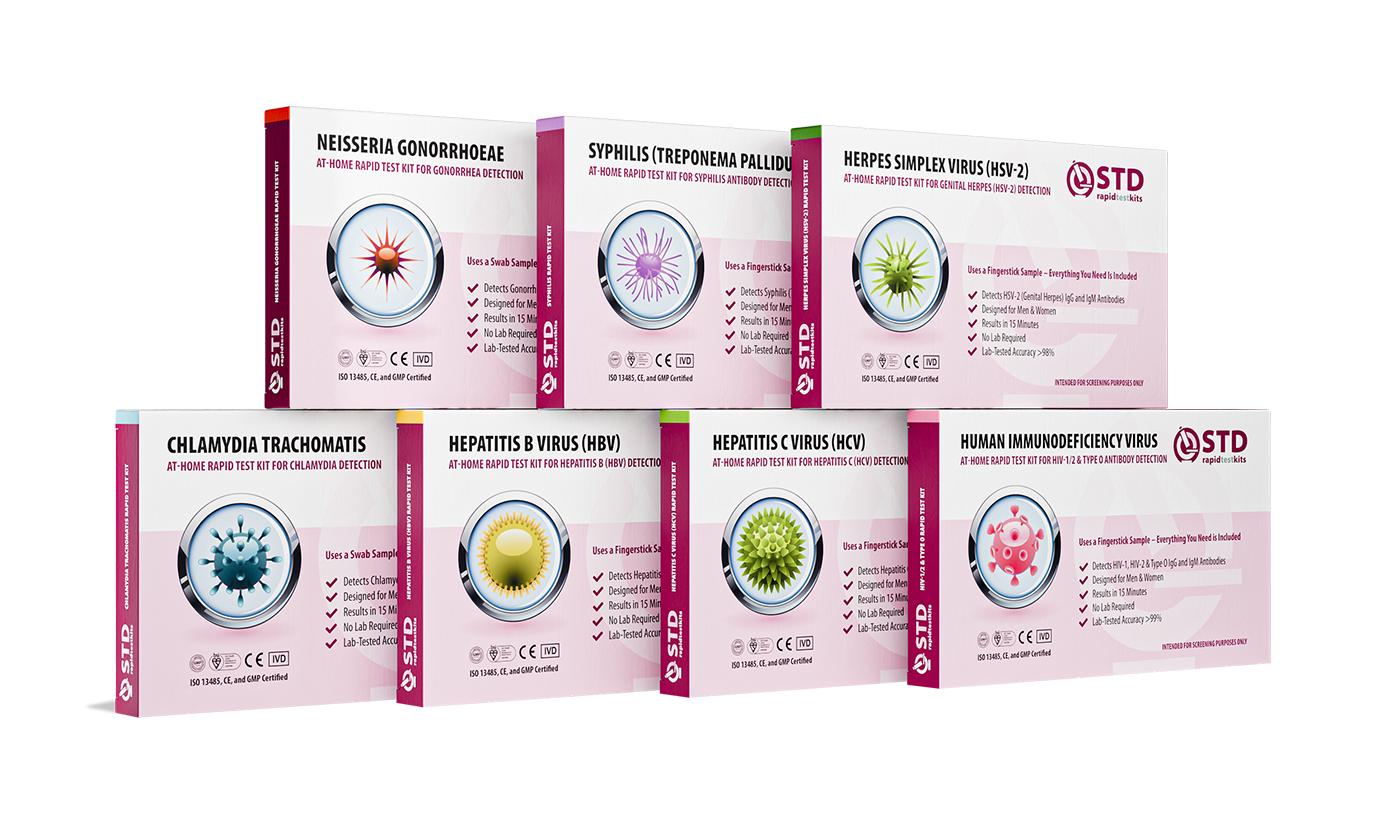
Still not sure what to get? A combo test kit checks for multiple STDs and gives you peace of mind in minutes. You can order it right here.
It’s not about paranoia. It’s about peace. And it’s about showing up for your health like you’d show up for someone you care about.
“Testing is how I forgive myself. How I make peace with curiosity. I’m not scared anymore, because now I know.” , Rico, 32
The Invisible Wounds: Why Some Communities Carry More Risk
We can’t talk about HIV and oral sex without talking about who’s most often left out of the safety conversation. The stats don’t lie: queer folks, trans people, Black and Latinx communities, and sex workers face disproportionate risks, not always because of behavior, but because of stigma, healthcare discrimination, and unequal access to information and testing.
Milo, 22, identifies as nonbinary and bisexual. “My first few partners were girls, and we just kind of assumed we didn’t need to worry about HIV,” they said. “But I started getting chronic sore throats after hookups and finally went in for testing. The nurse looked confused and asked, ‘Wait, you haven’t had penis-in-vagina sex?’ Like that was the only thing that counted.”
That’s the problem. When medical systems erase queer intimacy, or reduce risk to a heterosexual checklist, people stop asking questions. Or they stop trusting providers. And when folks don’t feel seen, they stop showing up, for appointments, for testing, for care.
But oral sex is intimacy. It's connection. And it deserves the same respect, protection, and clinical honesty as any other act. If we frame it as a loophole instead of a part of real sexual life, we keep people vulnerable. We keep them out of the loop.
What No One Tells You After the Hookup
The lights go out. The toothbrush stays dry. You replay the scene a hundred times in your head. No condom. No questions. No context. Just… impulse and silence. It happens. And if you’re reading this now, it probably already did.
This is where shame sneaks in, not just about what happened, but about what you think it means. Did I mess up? Did I “ruin” something? Am I overreacting? If I get tested, does that make me dirty? Desperate? Overdramatic?
Let’s pause here. Testing isn’t about judgment. It’s about knowledge. It’s about walking out of uncertainty and into something real. When you feel that pit in your stomach after a risky encounter, testing is your parachute. Your signal to yourself that you’re worth clarity. You’re worth care.
Even if the odds are low, your anxiety doesn’t have to be. A test can bring relief, quick, clean, and grounded in truth. Not knowing keeps you spinning. Knowing puts your feet back on the ground.
Deja, 27, described it best: “I didn’t want to test because I didn’t want to know. But once I did, I finally felt like I could breathe again. I wasn’t stuck anymore. I had answers.”
Let’s talk tools, without turning the bedroom into a clinic. Because protection doesn’t have to be awkward. It can be part of the foreplay, the flirting, the mutual care.
Dental dams. Flavored condoms. Conversations that start with “Do you want to feel even safer right now?” These aren’t mood killers. They’re mood elevators. When you make space for safety, you also make space for creativity, for play, for vulnerability without fear.
Want more peace of mind? PrEP (pre-exposure prophylaxis) is a game-changer. Taken daily, it drastically reduces your chances of acquiring HIV, even from higher-risk sex. It doesn’t make you reckless. It makes you realistic. It makes you prepared. And knowing your partner is on treatment and undetectable (U=U) also changes the game. That’s science, not myth: if they’re undetectable, they’re untransmittable.
And if you’re not sure? Ask. There’s power in that question. “When was your last test?” isn’t accusatory. It’s intimacy in disguise. It says, “I want this to be good for both of us.”
If they flinch or deflect? That’s your cue. If they respond with honesty? That’s your green light.
Whatever you choose, choose with awareness. Not fear. Not shame. Just love, for your body, your joy, and your future.
Your Results, Your Privacy, Your Power
Testing doesn’t have to be public. It doesn’t have to be invasive. It can be something you do at home, on your terms. The Combo STD Home Test Kit checks for HIV and other common infections with discreet packaging, fast results, and no waiting room anxiety.
If you're sitting on uncertainty right now, symptoms that won’t go away, guilt you can’t shake, fear you can’t name, you don’t have to stay there. Order the test. Get clarity. Reclaim your power. This isn’t punishment. It’s peace.
“I used to think testing was something you did after something went wrong. Now I do it just to feel good about what’s going right.” , Jayden, 34
One moment of honesty. One swab. One answer. That’s all it takes.
FAQs
1. Can you get HIV from giving oral sex?
Yes, although the risk is much lower than vaginal or anal sex. The virus can enter through small cuts or sores in the mouth, especially if the partner ejaculates and has a detectable viral load.
2.What are the chances of getting HIV from receiving oral sex?
Very low.The person receiving oral sex is generally at a lower risk than the giver, though it’s not zero, especially if the giver has cuts or sores in their mouth.
3.Is it safe to swallow while having oral sex?
If the semen has HIV and you have cuts, gum disease, or mouth ulcers, swallowing it makes the risk higher.Saliva by itself doesn't spread HIV, but blood or semen in the mouth can be dangerous.
4.How long after oral sex can I get tested for HIV?
HIV antibodies usually show up 2 to 4 weeks after being exposed.Most tests can find HIV correctly within 28 days.If you took the first test too soon, take it again.
5.How does HIV look in the mouth?
Some of the signs are ulcers, white patches, a sore throat, or swollen lymph nodes.These aren't only found in HIV, so testing is important for diagnosis.
6.Is it possible to get HIV from oral sex without ejaculating?
Yes, pre-ejaculate (pre-cum) can still carry HIV, and being around vaginal fluids or blood may also be risky.
7.Do dental dams really stop HIV?
Yes, when used correctly, dental dams can help keep HIV and other STIs from spreading during oral sex on the vulva or anus.
8.Is it possible for HIV to be spread through saliva?
No, HIV cannot be spread through saliva alone.But the risk goes up if there is blood in the mouth.
9.Do I need to get tested if all I did was oral sex?
Yes.Even though the risk is lower, it's still a good idea to test.This is especially true if you or your partner have symptoms or don't know what's going on with them.
10.What is the best test for HIV and STDs that you can do at home?
The Combo STD Home Test Kit is private, accurate, and checks for several infections at once, including HIV.
You Deserve Answers, Not Assumptions
If you’ve ever been told “oral sex doesn’t count,” this is your permission to ask again. To know better. To do better, for yourself, your partners, your future. HIV isn’t a punishment. It’s a virus. And testing isn’t shame. It’s care. It’s courage. It’s the moment you decide you’re worth protecting.
No more guessing games. No more spirals. If your body is talking, listen. If your mind is racing, slow it down, with facts, not fear.









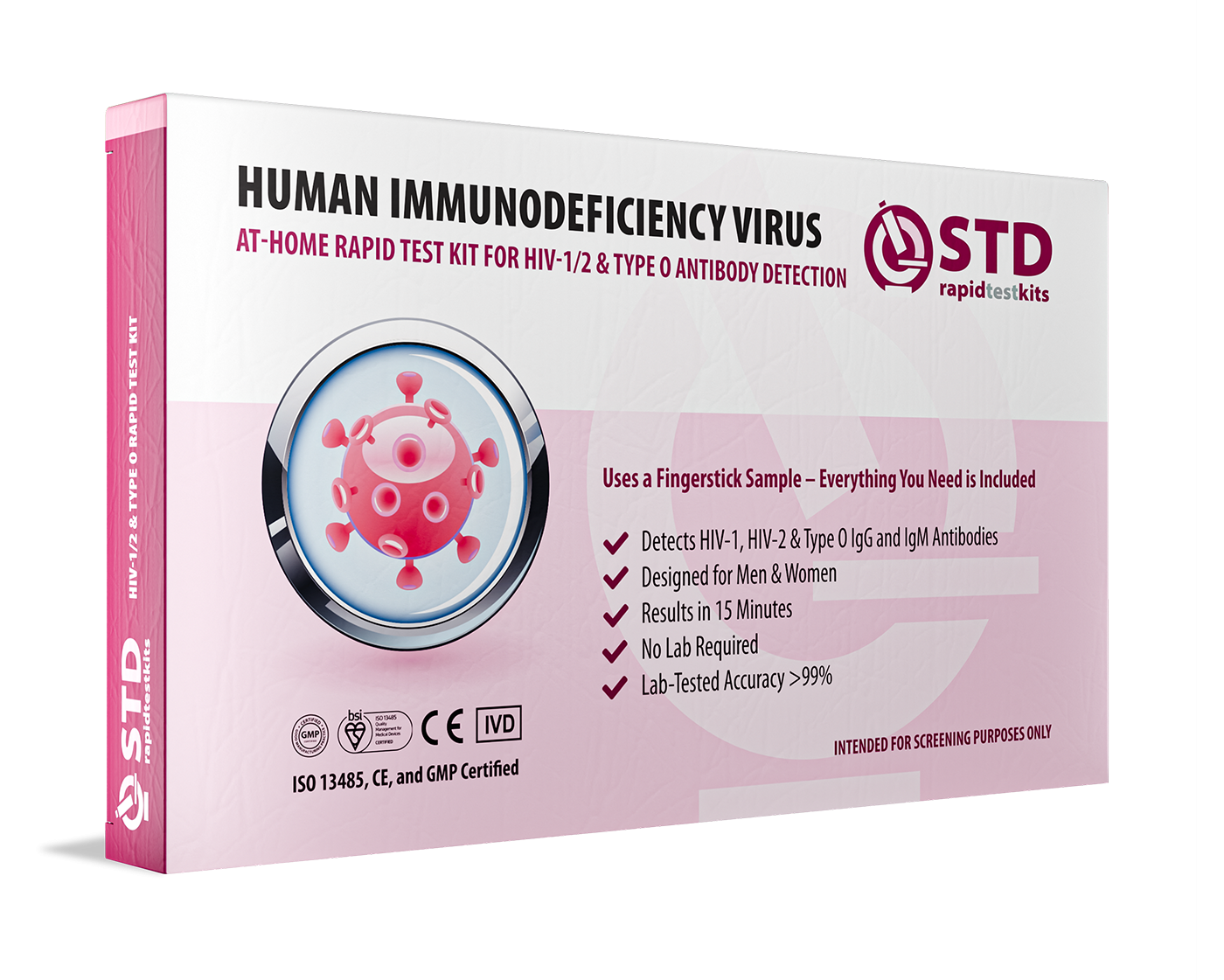
 For Men & Women
 Results in Minutes
 No Lab Needed
 Private & Discreet