

Published: June 2025 | Last updated: May 2026 | Editorial review and quality control: Martina N.
Forty years ago, an HIV diagnosis carried a different weight. People in their twenties and thirties faced a virus the medical system was barely beginning to understand, with treatments that worked unevenly and often caused serious harm of their own. Today the picture has changed almost beyond recognition. Adults who start antiretroviral therapy early and take it consistently can expect a lifespan substantially longer than at any earlier point in the HIV epidemic, with the gap from HIV-negative peers narrowed considerably on current ART. About half of all people living with HIV in the United States are now over 50 (CDC HIV).
That progress comes with a question the medical system is still learning to answer: what does aging look like when the body carries a controlled chronic infection for forty or fifty years? Most people do well, especially with regular screening and the right preventive care. The body does change, though, and a few risks rise earlier than they would otherwise. This guide walks through what shifts at each life stage, which screenings catch problems early, and where rapid at-home testing fits in for newly exposed adults at any age.
Will HIV shorten my life if I'm on treatment?
For adults who start antiretroviral therapy (ART) early and stay consistent, life expectancy is substantially longer than at any earlier point in the HIV epidemic, with the gap from HIV-negative peers narrowed considerably on current ART. The bigger question for long-term health is what aging looks like with decades of low-grade inflammation: heart disease, bone loss, kidney issues, and cognitive changes appear five to ten years earlier than usual. Regular screening, smart lifestyle choices, and modern ART together close most of that gap.
Key Takeaways
- Adults on consistent ART now live substantially longer than at any earlier point in the HIV epidemic, with the gap from HIV-negative peers narrowed considerably on current treatment.
- Heart disease, bone loss, and certain cancers tend to appear earlier in people with HIV. Regular screening starting in midlife catches them before they become serious.
Life expectancy on modern ART has changed dramatically
The biggest single change in HIV care over the past two decades is the shift in life-expectancy outlook. Adults who start antiretroviral therapy early and stay on it consistently can now expect a lifespan substantially longer than at any earlier point in the HIV epidemic, with the gap from HIV-negative peers narrowed considerably on current ART (HIV.gov, Aging with HIV). About half of all people living with HIV in the United States are now over 50 (CDC HIV surveillance).
Three things working together produced that shift. First, viral suppression keeps the immune system mostly intact, so the opportunistic infections that drove early HIV mortality have become rare in treated populations. Second, modern single-tablet regimens are taken once a day, generally well tolerated, and far less toxic than the early ART combinations from the late 1990s. Third, earlier diagnosis through routine testing means more people start treatment before significant immune damage has occurred.
The headline picture hides a more complicated story, though. People with HIV are living longer, and they are reaching middle and old age in numbers the healthcare system has never had to plan for. The questions are no longer about survival. They are about what the body looks like when it has carried a controlled chronic infection for thirty, forty, or fifty years.
About half of people living with HIV in the U.S. are now 50 or older (CDC surveillance). Adults on consistent modern ART live substantially longer than at any earlier point in the HIV epidemic, with the gap from HIV-negative peers narrowed considerably on current treatment. The clinical conversation has moved from survival to long-term healthy aging.

Why HIV accelerates aging at the cellular level
Even when antiretroviral therapy keeps the virus undetectable in blood tests, the immune system stays mildly activated. Researchers describe this state as inflammaging: a low-grade, persistent inflammation that resembles what happens to immune systems in much older people without HIV. HIV.gov notes that the higher rates of age-related comorbidities seen in treated populations are likely related to a number of interacting factors, including chronic inflammation caused by HIV (HIV.gov, Aging with HIV).
Three biological mechanisms do most of the work. Residual viral reservoirs in lymph nodes and gut tissue keep the immune system on alert even when blood viral loads are zero. The gut barrier weakens during early HIV infection, allowing bacterial fragments to leak into the bloodstream and feed immune activation indefinitely. And the immune system's clean-up cells (CD8 T cells) become exhausted and senescent earlier, mirroring what happens naturally over many decades of normal aging.
The downstream effect is that organs and tissues see decades of low-level inflammatory stress on top of normal aging. Blood vessel walls stiffen earlier. Bones lose density faster. Cognitive networks become more vulnerable. None of this is dramatic in any single year. Across decades it adds up to age-related conditions arriving five to ten years earlier than they would otherwise.

30s and 40s: where the first signs show up
For most people on ART, the thirties and forties are calm years before metabolic changes start. Annual labs may already flag early shifts, even when the person feels well.
Cholesterol and triglycerides often climb earlier than in HIV-negative peers. Insulin resistance can creep in, raising the long-term risk of type 2 diabetes. Some people develop osteopenia, a mild-to-moderate loss of bone density, partly from the virus's effect on bone remodeling and partly from certain older ART agents. Liver enzymes can drift upward, especially in anyone who also has hepatitis B or C co-infection.
This decade is also where regular screening pays the biggest dividend. A baseline lipid panel, fasting glucose or HbA1c, kidney function (eGFR, a blood-test measure of how well the kidneys filter waste), and a DEXA scan (a low-dose X-ray that measures bone density) in the early 40s establish what normal looks like for that person. Any later drift gets caught early, while it is still reversible with medication adjustments, exercise, or diet changes.
Hepatitis B and C testing is also worth doing here if it was not done at HIV diagnosis. Co-infection accelerates liver disease independently of HIV. The CDC notes that direct-acting antivirals make hepatitis C highly treatable and curable in most cases, which has reshaped care for HIV/HCV co-infection (CDC, Hepatitis C basics).
- Fasting lipid panel (cholesterol, triglycerides)
- Fasting glucose or HbA1c for diabetes risk
- eGFR for kidney function and liver enzyme panel
- DEXA scan for bone density, especially with risk factors like low BMI or older ART agents
- Hepatitis B and C status if not already on file
50s and 60s: heart, brain, and organ risks come into focus
This is the decade where the long-term consequences of inflammaging show up clinically. Public-health guidance from HIV.gov and the NIH consistently finds that people with HIV face higher rates of heart disease and stroke than HIV-negative peers of the same age, even after controlling for traditional risk factors like smoking and high blood pressure (HIV.gov, Aging with HIV).
Cardiovascular disease is the largest single contributor to mortality in HIV-positive adults over 50 in high-income countries. Aggressive management of blood pressure, cholesterol, and blood sugar in this decade reshapes the long-term risk curve more than almost any other intervention. Statin therapy may be considered earlier than the general guidelines suggest; that is an active conversation between patient and primary care.
HIV-associated neurocognitive disorder, or HAND, affects a meaningful minority of people in this age range. Symptoms vary from mild trouble with focus and word-finding to more substantial memory loss. The newer ART regimens are gentler on the brain than older ones, and treating cardiovascular risk factors aggressively also protects cognition because brain blood-vessel health and heart blood-vessel health are essentially the same problem in different organs.
Kidney and liver function deserve their own watchful eye. Some ART agents (notably older tenofovir formulations) put extra strain on the kidneys; switching to newer formulations like TAF often reverses early kidney decline. Liver issues track closely with viral hepatitis co-infection, alcohol use, and certain medications. Annual eGFR and liver enzyme checks remain core preventive care here.
| Risk area | What rises in 50s/60s with HIV | Primary screening action |
|---|---|---|
| Cardiovascular | Heart attack, stroke, and arterial stiffening earlier than peers | Annual blood pressure, lipid panel, fasting glucose; statin discussion in midlife |
| Cognitive (HAND) | Mild memory or focus changes in a meaningful minority | Cognitive screen if symptoms appear; aggressive cardiovascular control |
| Kidney | Reduced filtration, especially on older tenofovir formulations | Annual eGFR; consider switch to TAF if early decline shows |
| Liver | Elevated enzymes, especially with hepatitis co-infection or alcohol | Annual liver enzyme panel; treat HCV co-infection if present |
70s and beyond: polypharmacy, frailty, and what the data does not yet show
Adults aging into their 70s and 80s with HIV are the first generation to do so in significant numbers, and clinical research on this cohort is still catching up. Care guidelines that work well for younger adults often need adjustment to handle the realities of multiple chronic conditions and competing medication regimens.
The most common challenge is polypharmacy. By 75, many people with HIV are taking five or more daily medications: ART, statins, blood pressure medication, possibly diabetes medication, often something for bone density, sometimes antidepressants. Drug-drug interactions multiply with each addition. A pharmacist-led medication review, ideally annual, catches dangerous combinations and identifies prescriptions that have outlived their purpose.
Frailty (a clinical syndrome of slower walking speed, weakness, weight loss, and exhaustion) becomes more common. Resistance training and balance exercises, started before frailty appears, do more to preserve independence than almost any pharmaceutical intervention. NIH guidance for older adults with HIV explicitly highlights physical activity as a primary tool for healthy aging.
Social isolation is a less visible risk. Long-term survivors often lost partners and friends to HIV in earlier decades, and the community ties that sustained them through diagnosis and treatment may have thinned. Connecting with HIV-aging support groups, whether in person or online, addresses a real health risk; loneliness has measurable effects on cardiovascular outcomes and cognitive decline.
By 75, five or more daily medications is common for adults with HIV. Each addition multiplies the odds of a drug-drug interaction. Ask your primary care clinician or pharmacist for a yearly comprehensive review that flags interactions, identifies prescriptions that no longer serve a purpose, and looks at how each medication is interacting with current ART.

Common myths about HIV and aging
"If my viral load is undetectable, I do not need to worry about long-term health." Undetectable means HIV is not transmissible through sex (the U=U principle confirmed by the CDC), and it means the virus is not damaging your immune system the way it would untreated. It does not mean the body is fully back to baseline. Chronic immune activation continues at low levels, which is why screening for heart disease, bone loss, and cognitive changes still matters for someone with a flawless viral suppression history.
"Older adults do not get HIV." Roughly one in six new HIV diagnoses in the United States occurs in adults 50 and older, per CDC surveillance. Post-menopausal women are particularly vulnerable: vaginal tissue thins after menopause, increasing infection risk during unprotected sex, and condom use often drops because pregnancy is no longer a concern. Routine HIV testing belongs in every primary care visit, regardless of age.
"HIV medications are too toxic for older adults to tolerate." That was true of the original ART regimens from the late 1990s and early 2000s, which contained agents known to damage kidneys, mitochondria, and bone. Modern integrase-inhibitor-based regimens are dramatically gentler. Older adults often tolerate them as well as younger adults, with the main caveat being interactions with other medications they may already be taking.
"Aging with HIV is mostly about HIV." By the time someone is 65, their daily health is often shaped more by traditional aging factors (heart disease, bone health, mental health, social connection) than by the virus itself. HIV is the chronic condition in the background; the foreground is the same as for any older adult.
Myth versus reality at a glance
- Undetectable stops transmission and immune damage, but chronic low-level inflammation persists, so cardiometabolic and bone screening still matter.
- About one in six new U.S. HIV diagnoses each year occurs in someone 50 or older, with post-menopausal women at particular risk.
- Modern integrase-inhibitor regimens are far gentler than legacy ART; older adults usually tolerate them well, with attention to drug interactions.
- Past 65, day-to-day health is shaped more by ordinary aging factors (heart, bones, mental health) than by HIV itself.
Prevention strategies that actually move the needle
The interventions that protect long-term health for people with HIV are mostly the same ones that protect any aging adult. The difference is intensity and timing: things that matter at 60 for the general population matter at 50 for someone with HIV.
Cardiovascular health. Regular blood pressure monitoring (a home cuff is fine), an annual lipid panel, fasting glucose or HbA1c, and an honest conversation about statin therapy in midlife. Smoking cessation matters more than almost anything else; smoking nearly doubles cardiovascular risk on top of HIV's baseline elevation.
Bone health. A baseline DEXA scan in the early 40s for anyone with risk factors (low BMI, family history, certain ART agents), then every 2 to 3 years. Vitamin D and calcium intake reviewed annually. Resistance training builds bone better than any supplement.
Cognitive health. Aggressive cardiovascular risk management is the most effective brain-protection strategy. Treatment of depression and substance use, social engagement, and physical exercise all show measurable cognitive benefits in HIV-positive adults.
Cancer screening. Standard age-based screening (colonoscopy, mammogram, prostate, skin) plus anal cancer screening for anyone with a history of receptive anal intercourse, given the elevated rate of HPV-related anal cancer in HIV-positive populations. Regular Pap smears for women.
Hepatitis status. Hepatitis B and C tested at least once, with treatment for hepatitis C (which is now curable for most patients) when present.
Vaccinations. Annual flu, COVID per current CDC guidance, pneumococcal series, shingles after 50, hepatitis A and B if not already immune. The shingles vaccine is particularly important; herpes zoster is more common and more severe in HIV-positive adults.
People with HIV are living longer than ever before. As people with HIV age, they may have an increased risk of developing certain comorbidities, which is why regular medical care matters more than ever for healthy aging.
Why testing still matters at every age
The single biggest lever for healthy aging with HIV is early diagnosis. The longer the virus operates undetected, the more damage it does to the immune system and the more inflammaging the body accumulates. Late diagnosis (when CD4 counts are already below 200) shortens life expectancy more than almost any other factor.
The CDC recommends at least one HIV test for every adult between 13 and 64 as part of routine medical care, with annual or more frequent testing for anyone with ongoing risk factors: new partners, multiple partners, condomless sex outside a known-status monogamous relationship, or injection drug use (CDC HIV testing recommendations). For older adults, this guidance often gets dropped from primary care visits, contributing to the high rate of late diagnosis in people over 50.
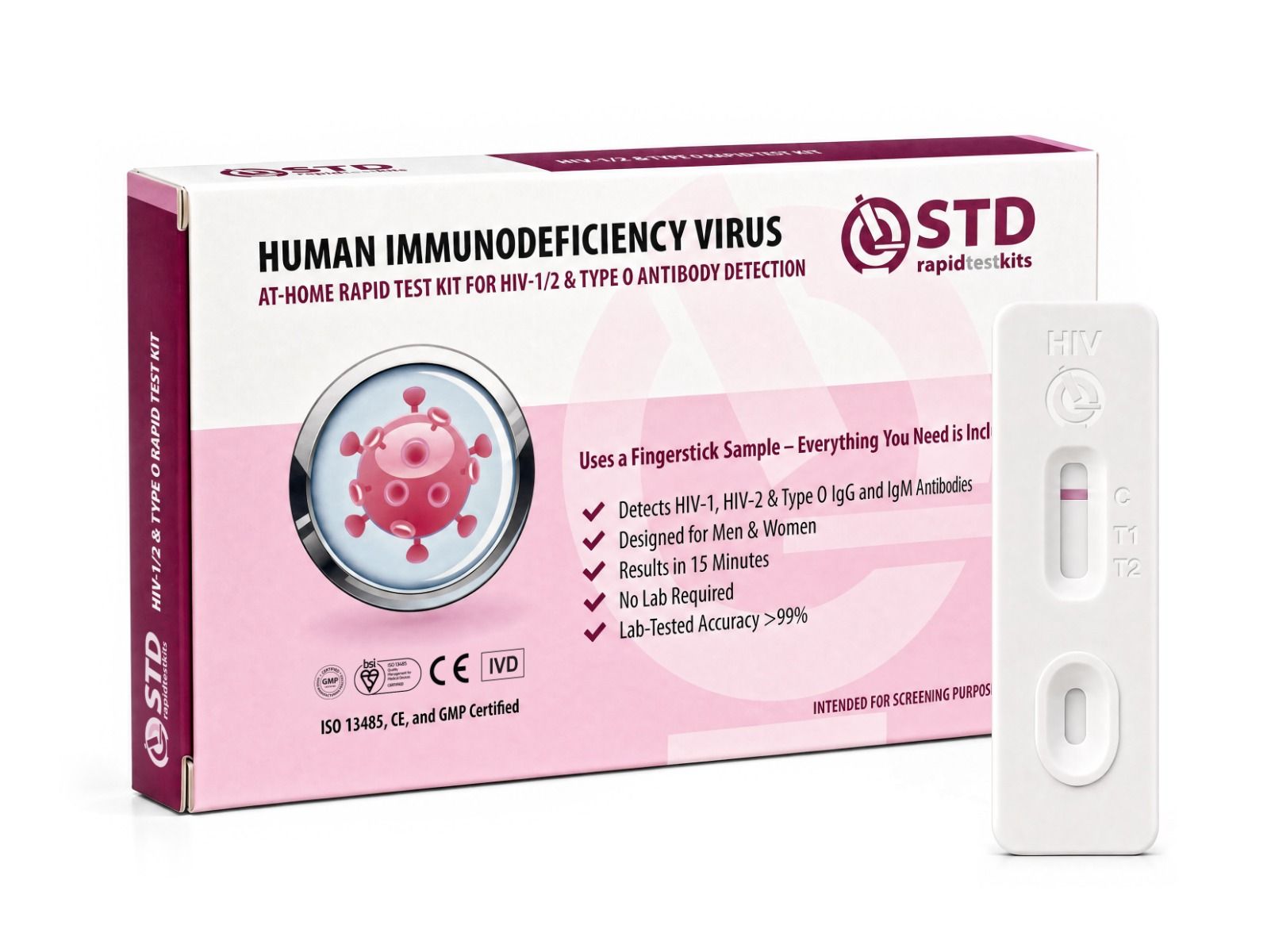
Home rapid HIV tests are an option for people who prefer privacy, who do not have a current primary care relationship, or who simply want a faster answer. They use a fingerstick blood sample and provide a result in about 15 minutes. A positive home result still needs lab confirmation, but a negative result outside the window period (about three months from the most recent exposure) is reliable for ruling out infection from earlier exposures.
Testing window: a rapid antibody/antigen test is reliable about three months after the most recent exposure. CDC routine recommendation: at least one HIV test for every adult aged 13 to 64, plus annual testing for anyone with ongoing risk regardless of age. Where the system falls short: primary care visits with older adults often skip HIV screening, which contributes to a high rate of late diagnosis in people over 50.
When a broader STI panel makes more sense than HIV alone
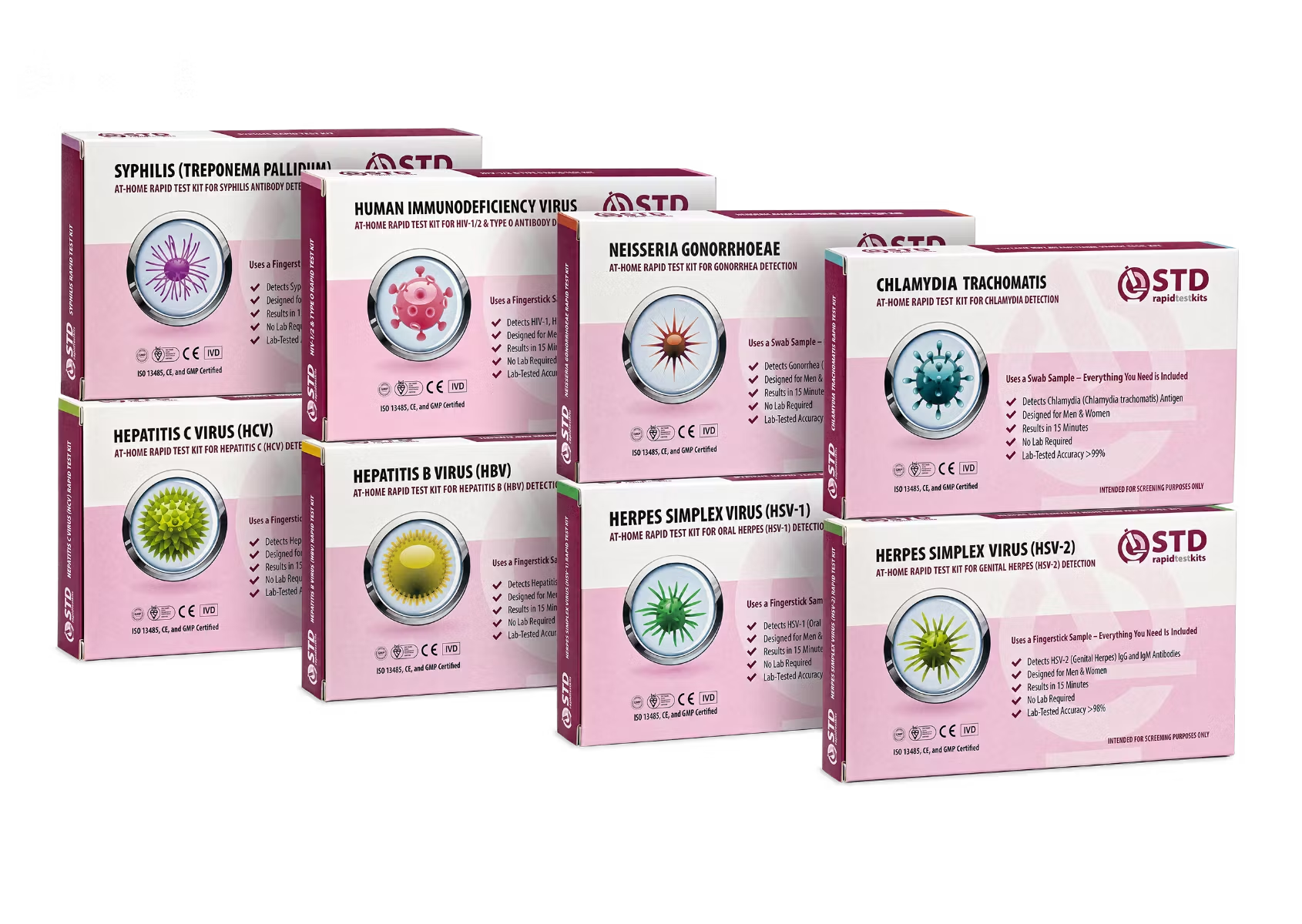
For anyone with a recent exposure or ongoing risk, a comprehensive STI panel that covers HIV alongside syphilis, hepatitis B, hepatitis C, and bacterial STIs makes more sense than testing for HIV alone. Many older adults discovering new partners after a long-term relationship ended benefit from a one-time full panel as a baseline; the same is true for anyone whose last full screen was years ago.
A broader panel catches infections that share exposure routes with HIV, addresses the elevated hepatitis co-infection risk that affects long-term health for HIV-positive adults, and gives a clean baseline that future tests can be compared against. For most adults outside an active relationship with confirmed mutual status, a periodic full panel is the practical complement to routine HIV testing.
- Adults re-entering dating after a long-term relationship has ended
- Anyone whose last full STI screen was more than a year ago
- People who want HIV plus hepatitis B and C status in a single sitting (relevant for long-term liver health)
- New partnerships where mutual status has not yet been confirmed
- Anyone managing HIV who wants a periodic baseline for syphilis and hepatitis co-infection risk
FAQs
- Will HIV shorten my life if I'm on treatment?
- Most people on consistent ART live substantially longer than at any earlier point in the HIV epidemic, but how close someone gets to HIV-negative peer life expectancy depends heavily on when treatment starts. Someone who begins ART before substantial immune damage fares far better than someone diagnosed with a CD4 count already below 200. The earlier viral suppression begins, the smaller the long-term health gap becomes.
- What does "accelerated aging" actually mean with HIV?
- It refers to age-related conditions appearing roughly five to ten years earlier than expected, driven by chronic low-grade inflammation that persists even when the virus is undetectable in blood tests. The body still functions; it is just under more inflammatory stress, which raises long-term risk for heart disease, bone loss, and certain cancers.
- Are HIV medications themselves causing the aging effects?
- Some older medications had toxic effects on kidneys, bones, and mitochondria. Modern integrase-inhibitor-based regimens are dramatically gentler. If you are on an older regimen and concerned about side effects, ask your provider about switching; most people on legacy ART can move to newer single-tablet options safely.
- How often should I screen for comorbidities?
- An annual lipid panel, blood pressure check, fasting glucose or HbA1c, and kidney function (eGFR) cover the basics. A DEXA scan for bone density is reasonable in the early 40s, then every 2 to 3 years. Cancer screening follows standard age-based guidelines, with anal cancer screening added for anyone with a history of receptive anal intercourse.
- Can older adults still get HIV?
- Yes. About one in six new U.S. HIV diagnoses occurs in someone 50 or older (CDC). Post-menopausal women are at particular risk: vaginal-tissue thinning raises transmission risk and condom use often drops once pregnancy is no longer a concern. The CDC recommends at least one test for every adult, plus annual testing for anyone with ongoing risk factors regardless of age.
- Does undetectable mean I'm safe long-term?
- Undetectable status (U=U) means the virus is not transmissible through sex and is no longer actively damaging your immune system. Low-grade immune activation continues in the background, though, which is why cardiometabolic and bone-density screening still matter at 40, 50, and beyond. Undetectable is necessary; it is not sufficient to skip long-term monitoring.
- I'm newly diagnosed in my 50s. What should I do first?
- Start ART as soon as possible (modern guidelines recommend same-day initiation when feasible) and find a clinician comfortable with HIV care in older adults. Within the first six months, get a baseline lipid panel, kidney and liver labs, DEXA scan if past 50, hepatitis B and C testing, and a cancer screening review. Connecting with an HIV-aging support group helps too; the social piece matters more than people expect.
- Where can I test at home if I'd rather not visit a clinic?
- A rapid fingerstick HIV antibody/antigen test gives a result in about 15 minutes from a home kit. A positive result needs lab confirmation; a negative result outside the window period (about three months from the most recent exposure) is reliable. For people with a recent exposure who want broader coverage, a multi-STI panel that includes HIV plus syphilis and hepatitis is a more complete one-time baseline.
- U.S. Centers for Disease Control and Prevention. HIV surveillance data, including age distribution of people living with HIV in the United States and screening recommendations.
- U.S. Department of Health and Human Services, HIV.gov. Guidance on aging with HIV, comorbidity risks, and the role of chronic inflammation in age-related conditions for treated populations.
- U.S. National Institutes of Health, HIVinfo. Fact sheet on HIV and older people, covering comorbidities, drug interactions, and treatment considerations.
- U.S. Centers for Disease Control and Prevention. HIV testing recommendations for adults 13 to 64, including guidance for ongoing risk factors and older adults.
- U.S. Centers for Disease Control and Prevention. Hepatitis C basics including general overview of direct-acting antiviral therapy, relevant to HIV co-infection management.
