





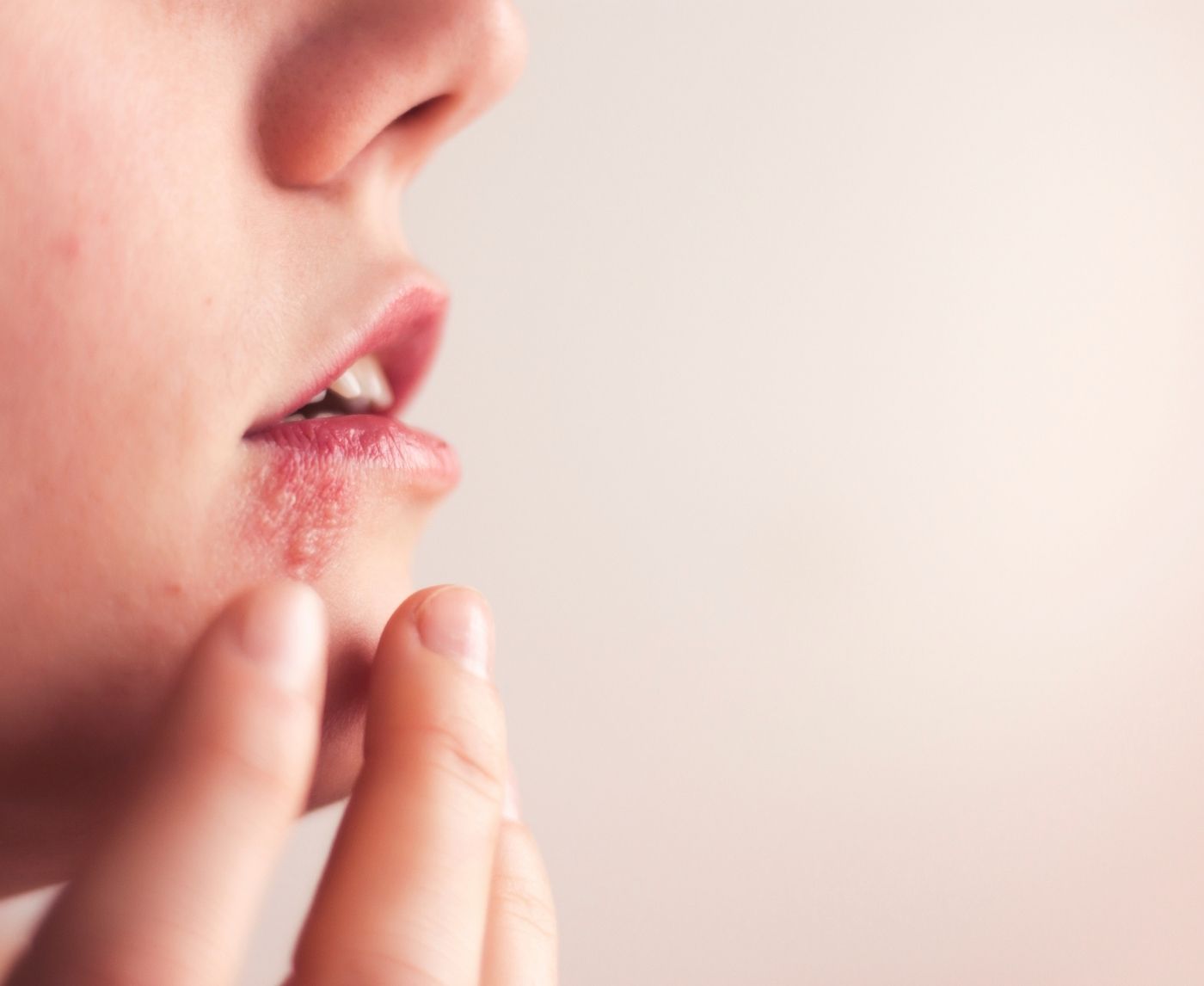

Quick Answer: HSV-1 usually causes oral herpes, and HSV-2 usually causes genital herpes, but either type can infect either area. Cold sores on the mouth can transmit herpes to the genitals during oral sex. The only way to know for sure is to test.
Why So Many People Confuse Cold Sores with Genital Herpes
Ask anyone what herpes looks like, and most will picture a cold sore on a lip or a painful cluster of blisters below the belt. That’s partly right, but not the whole story. Cold sores are usually linked to HSV-1, and genital outbreaks are often associated with HSV-2. But thanks to how we live, love, and hook up, those boundaries don’t hold anymore.
Oral sex is one of the most common ways HSV-1 gets passed to the genitals. In fact, recent studies show that nearly half of new genital herpes cases are now caused by HSV-1, not HSV-2. You could have oral herpes from childhood, barely notice it, and still unknowingly transmit it during a hookup.
Even more confusing? Most people don’t realize they’re contagious. Herpes can be transmitted even when no symptoms are present, a process called “asymptomatic viral shedding.” That means you can look and feel completely fine and still pass the virus to a partner.
Consider Leo, 27. He had a cold sore a few days before going down on a new partner but figured the scab meant he was in the clear. Three weeks later, she had her first genital outbreak. It was HSV-1. He didn’t cheat. He didn’t lie. He just didn’t know. That’s what makes herpes so maddening, it doesn’t always look like danger.
The myths around “clean” and “dirty” cloud real understanding. Cold sores don’t carry the same social shame, yet they’re caused by the same virus family. If we treated them with the same seriousness, and the same compassion, we’d be better at protecting each other.
HSV-1 vs HSV-2: Not Just About Where It Shows Up
HSV-1 and HSV-2 are both members of the herpesvirus family. They look almost identical under a microscope and cause similar lesions. What sets them apart isn’t so much the symptom, it’s the behavior. HSV-1 is traditionally oral. HSV-2 is traditionally genital. But here’s where it gets messy: either can cause outbreaks in either place.
When HSV-1 infects the genitals, it usually causes fewer outbreaks and is less likely to recur over time. HSV-2, on the other hand, tends to “settle in” more stubbornly, often causing multiple outbreaks a year, especially in the first few years after infection. But that doesn’t mean HSV-1 is “better” or “less serious.” It can still be painful, contagious, and emotionally overwhelming.
To help visualize the overlap and divergence, here’s how HSV-1 and HSV-2 typically show up:
| Herpes Type | Common Location | Transmission Route | Recurrence Frequency | Typical First Outbreak Severity |
|---|---|---|---|---|
| HSV-1 | Mouth, lips (increasingly: genitals) | Kissing, oral sex, shared items (less common) | Lower (especially genital HSV-1) | Can be severe but often milder than HSV-2 |
| HSV-2 | Genitals, anus (rarely oral) | Vaginal, anal sex; skin-to-skin contact | Higher, especially in first year | Often more painful and longer lasting |
Table 1: Comparing HSV-1 and HSV-2 by behavior, not just location. Both types can transmit silently and cause outbreaks in either region.
Understanding which type you have can help predict what to expect, but it doesn't change the need for care, communication, and testing. Some clinics won’t even tell you the type unless you ask, and most home test kits now include type-specific results because of rising demand for clarity.
Knowing your HSV type doesn’t just affect your medical plan. It also changes how you talk to partners, how you assess risk, and how you cope emotionally. Shame thrives in the unknown. Testing replaces that silence with something actionable.
People are also reading: The Condom Myth That Keeps People From Getting Tested
When Herpes Doesn’t Look Like Anything at All
Jasmine had no pain. No sores. No clues. She only got tested because a past partner reached out, shaken after their own unexpected diagnosis. When her positive result came back, she stared at the email for five minutes before she even opened it. “How could I have herpes if I’ve never had a single outbreak?”
What Jasmine didn’t know, and what most people still don’t, is that the majority of people with herpes have no idea they have it. The virus can lie dormant for years. Some never show visible symptoms at all. Others might mistake a mild first outbreak for something else entirely: a yeast infection, allergic reaction, or razor irritation.
This is why herpes spreads so quietly. You can carry the virus, feel completely normal, and still be contagious. During what’s called asymptomatic viral shedding, the virus exits the body through skin or mucous membranes, even when no sores are visible. That’s why partners are often blindsided. It’s not about dishonesty. It’s about invisibility.
Here’s where it gets even trickier: the first noticeable outbreak might show up months (or even years) after infection. And if you’re newly dating, the question of “who gave what to whom” can lead to shame, suspicion, and blame, all of which get in the way of real conversations and informed decisions.
But the silence of herpes isn’t a personal failure. It’s the virus’s design. And knowing that gives you the power to navigate it without shame, and without guessing.
Check Your STD Status in Minutes
Test at Home with Remedium7-in-1 STD Test Kit
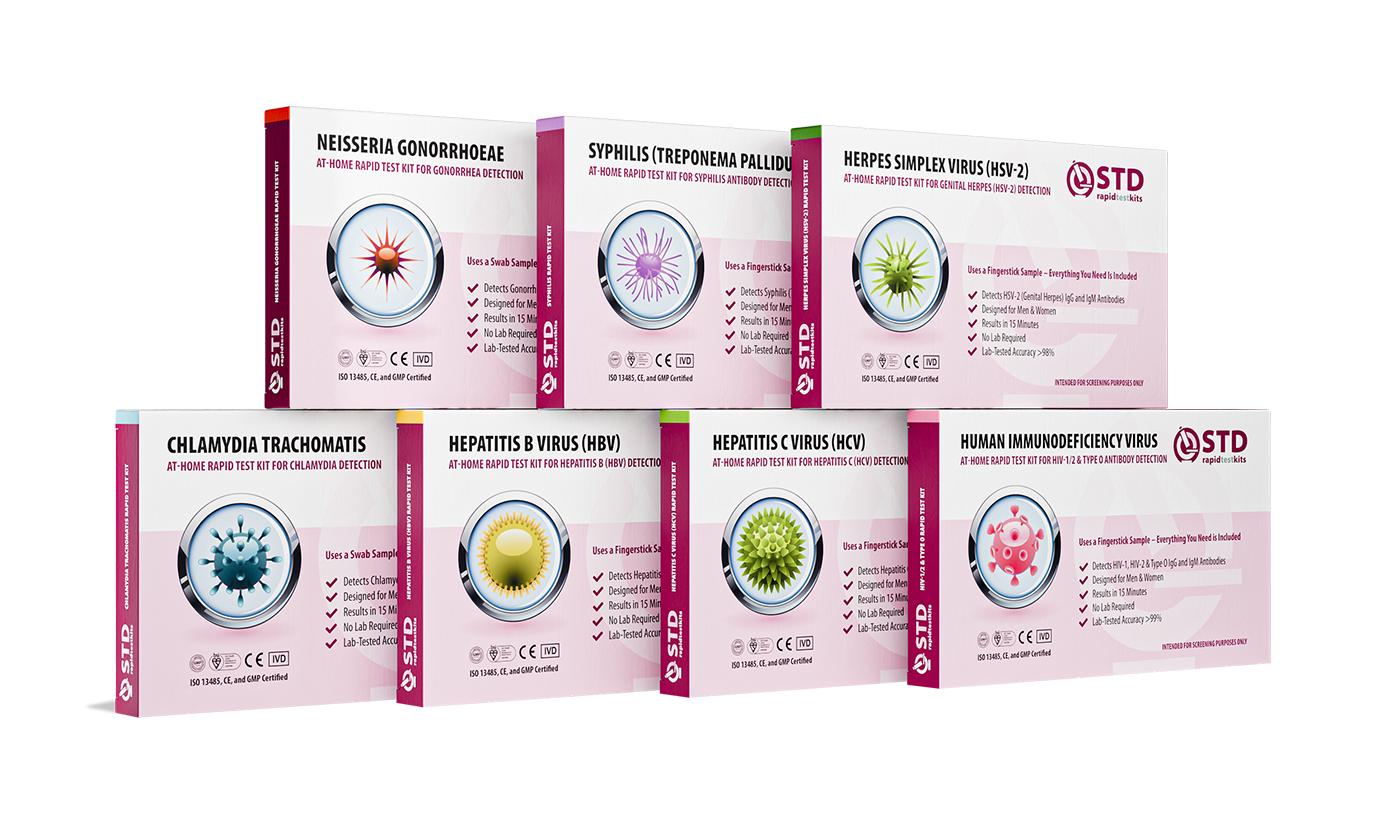
 For Men & Women
 Results in Minutes
 No Lab Needed
 Private & Discreet
Order Now $129.00 $343.00
For all 7 tests
How Long to Wait Before You Test for Herpes
Timing is everything when it comes to herpes testing. Too early, and the virus might not show up. Too late, and you might mistake a new infection for an old one. The herpes blood test (called a type-specific IgG test) looks for antibodies your body builds in response to infection, not the virus itself. That means your body needs time to react before the test can detect anything.
On average, it takes about 4 to 12 weeks after exposure for IgG antibodies to reach detectable levels. Testing earlier than three to four weeks often leads to false negatives. And if you’re using a home test kit, you’ll want to make sure it’s designed for type-specific results, otherwise, you may not know if you have HSV-1, HSV-2, or both.
Let’s break this down with a testing timeline to help guide decisions after possible exposure:
| Days Since Exposure | What’s Happening | Should You Test? |
|---|---|---|
| 0–7 Days | Virus may be present, but antibodies not detectable yet | Testing not reliable, wait unless severe symptoms occur |
| 8–20 Days | Body may begin building antibodies; early symptoms may show | Testing possible but may require retesting at 6–12 weeks |
| 21–42 Days | Most people develop detectable antibodies during this window | Recommended window for most accurate initial results |
| 43+ Days | Antibody levels stabilized; late seroconversion cases resolved | High accuracy, ideal time for confident diagnosis |
Table 2: Recommended herpes testing windows after potential exposure. Timing affects whether the virus will show up in blood-based tests.
If you're dealing with symptoms, like sores, itching, or tingling, within the first few days, a swab test of the lesion (if present) may be used instead. But that requires a clinic visit and quick timing, since swab accuracy drops if the sore begins to heal.
At-home test kits now allow you to test discreetly for both HSV-1 and HSV-2 using blood drops from a fingerstick. These are type-specific and give results in days, not weeks. If your head keeps spinning, peace of mind is just one test away. Order an at-home herpes test kit today and get clarity on your terms.
What If You Already Have HSV-1? Can You Still Get HSV-2?
This is one of the most misunderstood facts about herpes: having one type doesn’t protect you from the other. In fact, while existing HSV-1 antibodies might slightly reduce your chances of acquiring HSV-2, they don’t block it entirely. And the viruses behave differently depending on the body part they infect.
Let’s say you’ve had cold sores since childhood. That’s oral HSV-1. Years later, you might get genital HSV-2 from a partner. The result? You now carry both types. Similarly, someone with genital HSV-1 can still catch HSV-2 from vaginal or anal sex. There’s no "herpes immunity", just overlapping exposure histories.
This makes testing for both types essential, especially before entering a new relationship or navigating partner disclosure. Even if you’ve had cold sores your whole life, a full panel test helps you understand what you’re carrying, and what you could pass on.
Imagine Jake, 33, who thought he was safe because he’d never had symptoms. His partner tested positive for genital HSV-1 after their first weekend together. His own bloodwork later showed both HSV-1 and HSV-2 antibodies. He had never once noticed an outbreak. No burning, no blisters. Just quiet transmission between people who never meant to hurt each other. This is what silent herpes looks like.
And it's why knowledge isn’t just protection, it’s compassion.
What Herpes Really Looks Like (And Why It’s So Easy to Miss)
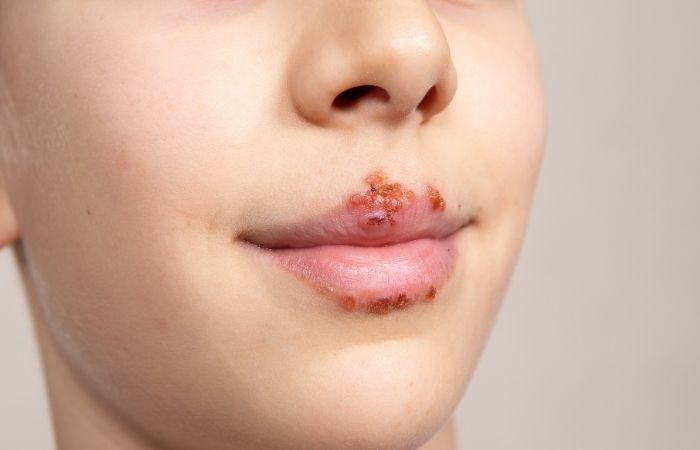
You’ve probably seen the dramatic textbook photos: angry red blisters, swollen skin, crusted lesions. But real life isn’t usually that obvious. Most first outbreaks don’t look like the images people fear, and many never look like “classic herpes” at all. Sometimes they appear as flat red spots that never blister. Sometimes they show up as tiny pinpoint bumps that could pass for hair follicles. Sometimes they hurt. Sometimes they don’t.
Take Ren, 24. They noticed a small patch of tenderness that felt like chafing after a long bike ride. When a single blister appeared, they panicked and Googled for hours, comparing pictures until their eyes blurred. But none of the images looked like what they had. That’s the trap. Herpes isn’t a single look, it’s a spectrum. And depending on your skin tone, location of the outbreak, and whether it’s HSV-1 or HSV-2, the appearance can shift dramatically.
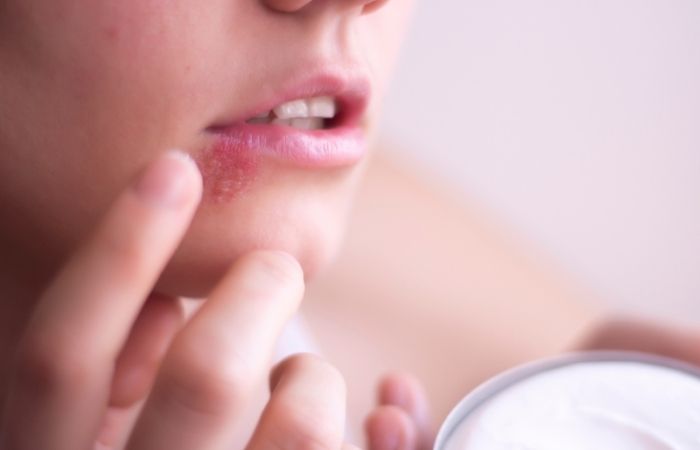
Symptoms can last anywhere from a few days to several weeks. For some, the pain is sharp and unmistakable. For others, it’s a faint itch or general discomfort. Many feel a tingling or burning sensation before lesions appear, what’s known as “prodrome.” That’s also the time when the virus is most likely to shed and spread, even before you see anything noticeable.
What makes herpes particularly confusing is how it mimics other common skin issues. Ingrown hairs, yeast infections, eczema, friction burns, or even a late reaction to a new body wash can create similar sensations. Without testing, you’re left trying to interpret subtle signs your body may not want to give clearly. Herpes doesn’t always announce itself. Sometimes it whispers. Sometimes it barely makes a sound at all.
Herpes or Something Else? Why Misdiagnosis Happens Constantly
Imagine waking up with a small bump near your underwear line. It’s painless, barely noticeable, but your mind immediately goes to the worst-case scenario. Two days later, it disappears entirely. Was it herpes? Maybe. But it might have been a clogged pore or mild skin irritation from sweating, shaving, or tight clothing. Because herpes symptoms come and go, and because early sores can be tiny, many people assume they’re seeing something else.
A healthcare provider once described herpes outbreaks as a “shape-shifter.” It rarely looks the same from one person to another, or even from one outbreak to the next. And since medical images online often highlight the most extreme cases, mild or atypical presentations get overlooked entirely. Someone might think, “My bump doesn’t look like that, so it can’t be herpes,” and miss the truth for months or years.
Another layer: location. Genital outbreaks don’t always stay on traditionally sexual areas. A sore might show up on the inner thigh, pubic mound, buttocks, groin folds, or around the anus, especially for HSV-2. Oral outbreaks can form inside the mouth, on the tongue, or near the nose. There is no single, guaranteed look or spot. And when symptoms show up in unexpected places, it becomes even easier to misidentify them.
One of the most common misdiagnoses happens with razor burn. Freshly shaved skin can develop red bumps that sting or itch, which can be confused with herpes, especially the first time someone experiences either. Similarly, an ingrown hair can produce a firm, tender bump that might feel alarming but is completely unrelated to an STI. Without testing, guessing becomes an emotional minefield.
To help make sense of the differences, here’s a comparison of how early herpes signs commonly differ from other skin issues people often mistake it for:
| Condition | Typical Sensation | Appearance | Duration |
|---|---|---|---|
| Herpes (HSV-1 or HSV-2) | Tingling, burning, or sensitivity | Tiny fluid-filled blisters or shallow ulcers | 7–21 days without treatment |
| Razor Burn | Itchy or mildly stinging | Red patches or tiny bumps along shaved areas | 1–5 days |
| Ingrown Hair | Tender or firm bump | Single, raised bump with visible hair | Days to weeks |
| Yeast Infection | Itching, burning with moisture | Redness; not typically blister-like | Several days to weeks |
Table 3: Comparing early herpes symptoms with similar skin issues. Only a test can confirm herpes.
These overlaps don’t mean herpes is impossible to recognize, just that it’s not always clear. And the goal isn’t to diagnose yourself in a mirror or through Google Images. The goal is to understand when uncertainty is a sign to test, rather than a reason to panic.
People are aslo reading: From Shame to Clarity: A Teen’s Guide to Private STD Testing
The Emotional Side of Herpes No One Talks About
Herpes is more than a virus, it’s a story most people don’t feel allowed to tell. When Mira got her diagnosis, she didn’t cry because of the physical pain. She cried because she thought it made her unlovable. She didn’t want anyone to see her as “dirty” or “careless.” But the truth is far simpler: herpes isn’t a moral judgment. It doesn’t track your character or your worth. It tracks your body’s encounters with an extremely common virus.
More than half of adults carry HSV-1. Millions carry HSV-2. Many have no symptoms and no idea. These numbers aren’t meant to minimize your feelings, they’re meant to help you breathe. You’re not alone, and you’re not broken. Herpes doesn’t end relationships. It doesn’t ruin intimacy. It doesn’t mean you did anything wrong. It means you’re human.
What makes herpes emotionally heavy isn’t the virus itself, it’s the silence wrapped around it. People are afraid to talk about it, afraid to ask questions, afraid to admit confusion or fear. Yet talking openly is exactly what prevents hurt, misunderstanding, and accidental transmission.
If you’re struggling with shame or fear, know that those feelings are normal. They’re also temporary. When you replace uncertainty with information, and secrecy with clarity, the virus stops feeling like a monster under the bed and starts feeling like what it truly is: a manageable, common health condition that doesn’t define you.
Check Your STD Status in Minutes
Test at Home with RemediumGenital Herpes Test Kit
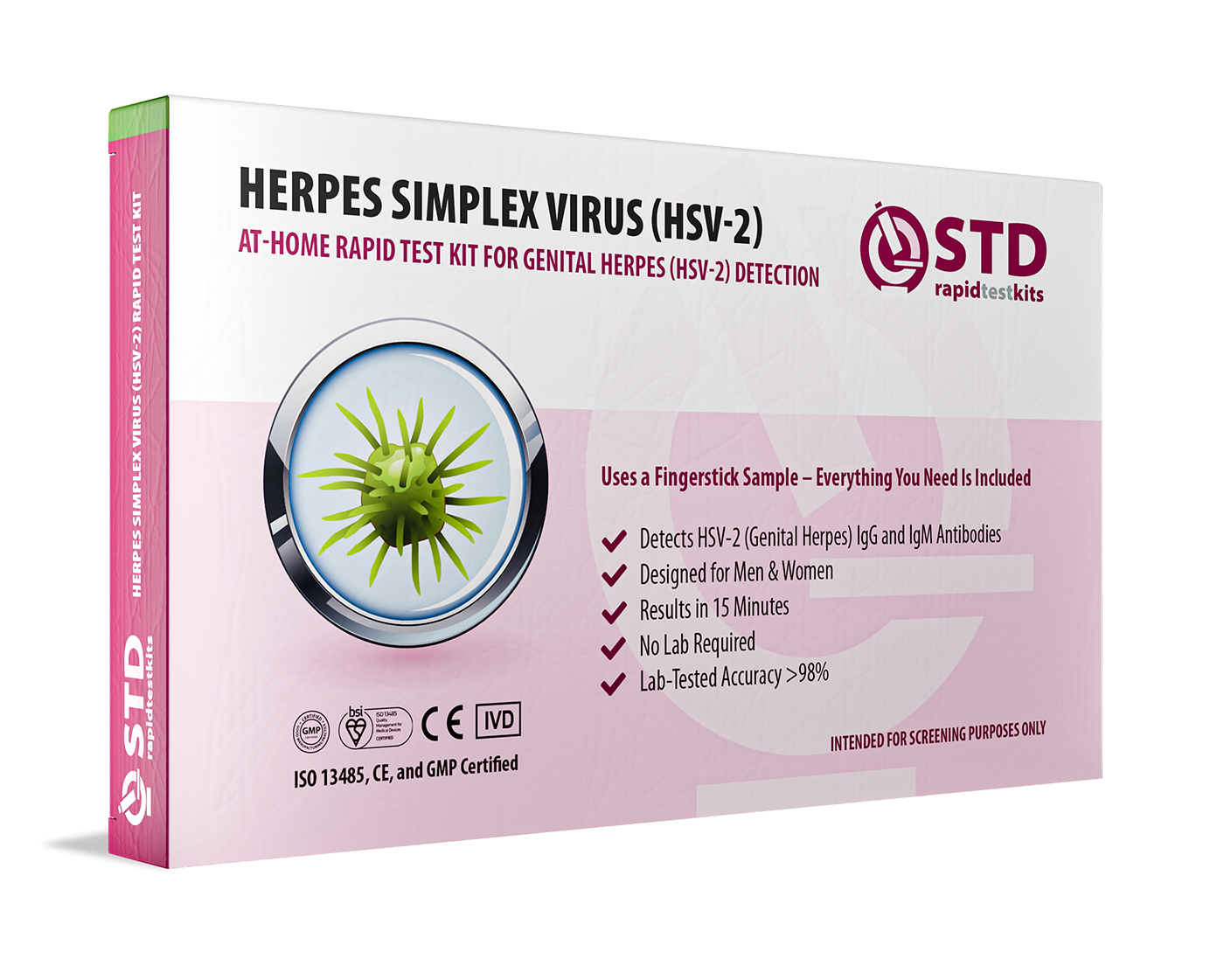 For Men & WomenResults in MinutesNo Lab NeededPrivate & Discreet
Order Now $45.99 $49.00
How to Talk to a Partner About Herpes Without Panic or Shame
Most people dread the idea of telling a partner about herpes. But for many couples, the conversation becomes a moment of intimacy rather than an obstacle. The key is understanding the virus well enough to speak confidently about what it means, and what it doesn’t.
The first step is grounding yourself in facts. Herpes is transmitted through skin-to-skin contact, often during outbreaks or prodrome, but also sometimes when no symptoms are visible. Suppressive therapy, condoms, dental dams, and avoiding sex during outbreaks dramatically reduce the chances of transmission. Being honest about your status isn’t a threat to your relationships, it’s a gesture of trust and care.
Picture someone sitting on the edge of their bed, phone in hand, rehearsing what to say. Their heart is pounding, but they’re choosing truth. That moment is powerful. It’s vulnerable. It’s human. And in most cases, partners respond with compassion rather than rejection.
If you’re nervous, you can remind yourself, and them, that testing is an act of care. It’s not about blame. It’s about clarity. And if you want a gentle way to start that conversation, sending a link like this, STD Rapid Test Kits, can open the door. It shifts the conversation from fear to solutions. From “What if?” to “Here’s what we do next.”
If you and your partner want to check your status together, an at-home testing option can make the process private and less intimidating. Testing from home removes the clinical pressure and lets you move forward as a team. A combo home test kit can screen for multiple infections at once, which is helpful if symptoms are uncertain or mixed.
FAQs
1. Can you really get genital herpes from oral sex?
Yep. It happens all the time, and usually with HSV-1. If someone has a cold sore (or even if they don’t, but the virus is shedding), oral sex can pass herpes to your genitals. No symptoms doesn’t mean no risk. That’s why herpes is sneaky.
2. I’ve had cold sores since I was a kid. Does that mean I have herpes?
Yes, but stay with me. Cold sores are herpes, specifically HSV-1. You’re not alone; over half the global population has it. It doesn’t mean you’re gross. It means you’re a human who kissed another human, probably years ago.
3. How the hell can I have herpes if I’ve never had symptoms?
Totally fair question. Herpes doesn’t always show up with blisters or pain. Some folks never have outbreaks, or their symptoms are so mild they confuse them with something else, like a pimple or razor burn. The virus can still live in your system and be passed on even when everything looks and feels normal.
4. What’s the difference between HSV-1 and HSV-2, do I need to know?
Yes, but not to panic. HSV-1 usually affects the mouth (cold sores), HSV-2 the genitals, but both can go either place. HSV-2 tends to cause more frequent genital outbreaks. Knowing your type can help you understand patterns, risks, and what to expect if symptoms come back.
5. Is it worth getting tested if I feel fine?
If you’ve had unprotected sex or oral sex with someone whose status you don’t know, yes, 100%. Herpes doesn’t need symptoms to spread. If you want peace of mind, clarity for your partners, or just to stop the endless Googling, a test gives you that.
6. Do I have to tell someone I have herpes?
Look, it’s your body and your life, but yeah, telling partners is the responsible thing to do. And it’s way less terrifying than you think. Most people respond with questions, not disgust. Honest conversations lead to safer sex and better trust. And if someone bails? That’s not someone you needed long-term anyway.
7. Can I still have sex if I have herpes?
Of course. You can have a healthy and great sex life if you have the right information, take the right steps, and talk to your partner. Use protection, consider suppressive meds, and avoid sex during outbreaks. Herpes doesn’t cancel pleasure, it just means playing smarter.
8. What’s the best time to test after a new hookup?
Ideally, wait about 4 to 12 weeks after exposure for accurate results. That’s how long your body takes to build detectable antibodies. If you test earlier, cool, but you may need to retest later to be sure.
9. Does herpes ever go away?
The virus stays in your body, but symptoms don’t last forever, and for a lot of people, outbreaks get rarer over time. Some take daily meds to prevent them altogether. It’s not a death sentence. It’s a speed bump.
10. Can I test for herpes at home without going to a clinic?
100% yes. You can order an at-home herpes test, prick your finger, and send in a small blood sample. The results come back in a few days. Private. No awkward waiting rooms. No judgment. Just answers.
You Deserve Answers, Not Assumptions
Whether it started as a cold sore or a silent transmission, herpes is not the end of intimacy or trust, it’s the beginning of understanding your body better. Knowing your status empowers you to take care of yourself and protect others without panic, without shame, and without silence.
Don’t stay in the guessing game. This at-home combo test kit checks for the most common STDs discreetly and quickly. Whether it’s a bump or a question mark, you deserve to know.
How We Sourced This Article: We combined current guidance from leading medical organizations with peer-reviewed research and lived-experience reporting to make this guide practical, compassionate, and accurate.
Sources
1. Planned Parenthood – Herpes Info and Testing
3. Genital herpes: Symptoms and causes (Mayo Clinic)
4. Sexually Transmitted Diseases Treatment Guidelines: Herpes (CDC)
5. Herpes Simplex Virus (HSV) – Overview (Cleveland Clinic)
6. Herpes simplex virus (HSV) – Fact Sheet (WHO)
7. Herpes (HSV-1 and HSV-2) – Johns Hopkins Medicine
8. Genital herpes – Overview (NCBI Bookshelf)
9. Genital Herpes – MedlinePlus
About the Author
Dr. F. David, MD is a board-certified infectious disease specialist focused on STI prevention, diagnosis, and treatment. He blends clinical precision with a no-nonsense, sex-positive approach and is committed to expanding access for readers in both urban and off-grid settings.
Reviewed by: Carmen Lewis, RN, MPH | Last medically reviewed: November 2025
This article is for informational purposes and does not replace medical advice.


