Published: September 2025 | Last updated: May 2026 | Editorial review and quality control: Martina N.
Syphilis is sometimes called the great imitator because its first sign, a small painless sore, looks like so many ordinary things. People mistake it for a mosquito bite, a razor nick, an ingrown hair, or a canker sore. Then it heals on its own and seems to vanish. The bacteria do not vanish with it.
Reassurance first: the vast majority of painless bumps people notice in or near the genitals are not chancres. Ingrown hairs, sebaceous cysts, Fordyce spots, and friction trauma are all far more common. This guide is about the small set of features that separate those everyday findings from the one bump that warrants a same-day test.
It walks through what a primary syphilis chancre actually looks like, where it tends to appear, how to tell it apart from herpes and other look-alikes, why U.S. cases are climbing again in the 2020s, and how the disease changes through its four stages if it goes untreated.
Key Takeaways
- A primary syphilis chancre is typically a single, round, firm, painless ulcer that heals on its own in 3 to 6 weeks. The infection does not heal with it.
- Standard STI panels do not always include syphilis. Ask explicitly for the test, especially after a new partner, an unusual sore, or a body rash that does not fit anything obvious.
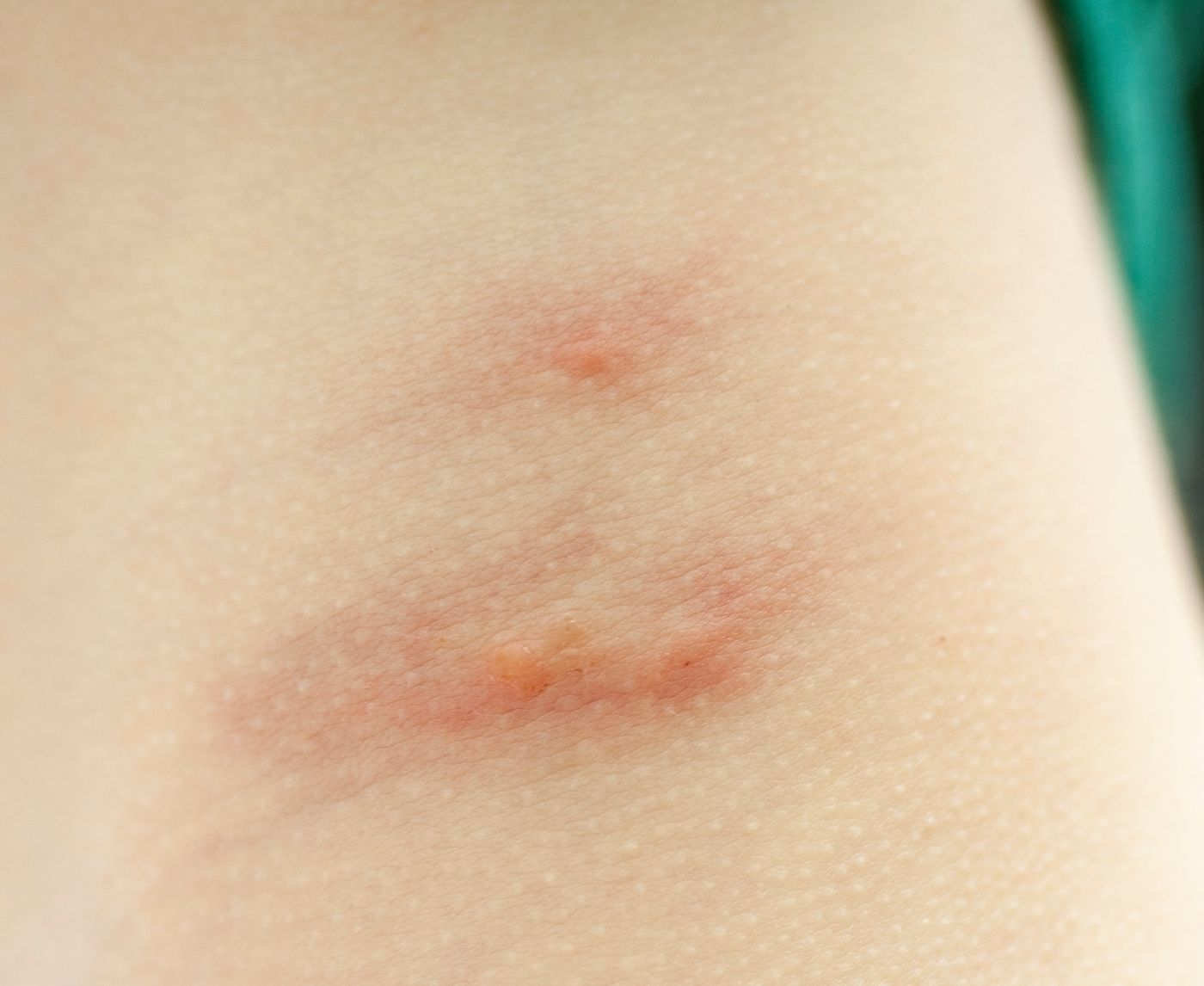
What a Primary Syphilis Chancre Actually Looks Like
The first stage is called primary syphilis, and the defining sign is a single sore called a chancre, pronounced "shanker." The chancre forms at the spot where the bacteria entered the body. Per the NHS syphilis page, "it can take 3 weeks or more for the first symptoms of syphilis to appear." Standard clinical references put the incubation window at roughly 10 to 90 days, with about 21 days as the typical midpoint. Per the CDC syphilis page, the sore "usually lasts 3 to 6 weeks and heals regardless of whether you receive treatment."
Most chancres share these features:
- Round or oval shape with a clean firm border that feels almost cartilaginous when palpated
- Small, often less than a centimeter wide and rarely larger than two
- Smooth, shallow ulcer base that may look pink, red, or slightly gray
- No pain when touched, no itching, no burning
- A single sore in most cases, though a small minority of people develop two or more
That last point, painless, is the diagnostic clue most people miss. Brains are wired to take pain seriously, so a bump that does not hurt feels safe to ignore. The absence of pain is exactly why a chancre is so often dismissed as a bug bite or razor nick and never investigated.
A primary chancre often comes with swollen but non-tender lymph nodes in the matching drainage area: groin nodes for genital chancres, neck nodes for oral chancres. The swelling is usually too subtle to notice without a clinical exam, but it is a clue clinicians look for during a physical workup.
Where Syphilis Sores Tend to Appear
A chancre forms wherever the bacteria entered the body, which means the location depends on the type of sexual contact involved. The most common spots, drawn from the NHS syphilis page:
In men and people with penises:
- Glans, shaft, or coronal sulcus of the penis
- Scrotum (less common)
- Around or inside the anus after receptive anal contact
- Inside the urethra (rare and very easily missed)
In women and people with vulvas:
- Outer or inner labia
- Inside the vagina or on the cervix, where a chancre is often hidden, painless, and never spotted
- Around or inside the anus
- Perineum
After oral contact, in any anatomy:
- Lips and inner mouth
- Tongue, tonsils, or back of the throat
- Soft palate
Syphilis transmits through direct skin contact with a chancre or with a secondary-stage rash, not just through bodily fluids. Chancres on the scrotum, labia, perineum, or anus can transmit even during protected vaginal or anal sex, because a condom does not cover those areas. Condoms still reduce risk meaningfully and remain a core prevention tool, just not a complete one for syphilis.
Telling Apart Syphilis, Herpes, and Razor Nicks
The reason syphilis goes undiagnosed so often is that its first sore looks like several harmless things. Here is how the three most common look-alikes actually differ. General herpes and razor-nick descriptions in the table below are drawn from the CDC herpes overview and standard dermatology consensus.
| Feature | Syphilis chancre | Herpes outbreak | Razor nick or ingrown hair |
|---|---|---|---|
| Pain | None | Tingling, burning, sore | Tender, sometimes itchy |
| Texture | Firm, cartilaginous border | Cluster of fluid-filled blisters that crust | Soft, may be pus-filled |
| Number of lesions | Usually one | Cluster of multiple lesions | Single, often with a visible hair |
| Onset after exposure | Around 3 weeks (range 10 to 90 days) | Days to about 2 weeks | Hours after shaving |
| Healing | 3 to 6 weeks; infection persists | 7 to 10 days, recurs in same area | A few days |
| Itch | None | Yes | Often |
A Visual Reference for Syphilis Sores and Their Look-Alikes
Photographs are the most reliable way to anchor what these conditions look like on skin and mucosa. The figures below cover the primary chancre, the secondary-stage rash on the palms, a herpes outbreak for visual contrast, and a canker-sore versus oral-chancre comparison. None of this replaces a clinical exam: visual ID alone cannot confirm an infection, and the only definitive answer comes from blood testing.
What does a syphilis sore look like, and when should I test?
A primary syphilis sore (chancre) is usually a single, round, firm, painless ulcer roughly half a centimeter to two centimeters wide. The <a href="https://www.nhs.uk/conditions/syphilis/" target="_blank" rel="noopener">NHS</a> notes it can take 3 weeks or more for the first symptoms to appear, with standard clinical references citing an incubation window of about 10 to 90 days. Per the <a href="https://www.cdc.gov/syphilis/about/index.html" target="_blank" rel="noopener">CDC syphilis page</a>, the sore heals on its own in 3 to 6 weeks even though the infection stays in the body. Test 3 to 6 weeks after a possible exposure, sooner if a sore is visible, and retest at 12 weeks if the first result is negative but concern remains.
How Syphilis Looks at Each of Its Four Stages
Syphilis progresses through four clinical stages if it goes untreated. Each stage has its own visual fingerprint, and an article that tells you only what the first sore looks like leaves the rest of the picture out.
Primary stage (around 3 weeks after exposure, range 10 to 90 days)
The single painless chancre described above. Per the CDC, it heals on its own in 3 to 6 weeks with or without treatment. The infection moves into the bloodstream regardless.
Secondary stage (after the chancre fades)
The bacteria spread through the bloodstream and a body-wide rash often appears. Per the CDC, "the rash can show up when your primary sore is healing or several weeks after the sore has healed," typically placing the secondary stage a few weeks to a few months after the original chancre. The hallmark is a rough, reddish-brown rash on the palms of the hands and soles of the feet, an unusual location that should always raise suspicion. Other features:
- Mucous patches: grayish-white plaques inside the mouth, vagina, or anus
- Condylomata lata: flat, moist, wart-like lesions in skin folds
- Patchy hair loss (sometimes called moth-eaten alopecia) on the scalp, eyebrows, or beard
- Flu-like symptoms: low fever, sore throat, swollen lymph nodes, fatigue, body aches
The secondary rash is rarely itchy, which helps distinguish it from drug reactions, eczema, or viral exanthems.
Latent stage (no visible signs, can last years)
After the secondary rash fades, syphilis enters latency. There are no skin findings. A blood test is the only way to detect it. The CDC divides latency into early latent (less than 1 year) and late latent (1 year or more), because treatment regimens differ.
Tertiary stage (10 to 30 years later, in untreated cases)
Modern antibiotics have made tertiary syphilis rare in countries with healthcare access. When it does occur, the visible signs include rubbery tumor-like nodules in skin or bone (gummas), aortic aneurysm or valve damage, and neurosyphilis with confusion, memory problems, or paralysis.
Two complications deserve special attention because they can happen at any stage, not only in late untreated disease. Neurosyphilis can produce severe headaches, coordination problems, personality changes, dementia, or stroke-like episodes, and some neurological damage is permanent if treatment is delayed. Ocular syphilis causes vision changes, eye pain, and occasionally blindness; reports have risen during the current U.S. surge and the eye problem is sometimes what brings someone to a doctor in the first place. Any unexplained vision change or new neurological symptom in someone with sexual risk history should trigger a syphilis test.
During the latent stage there are no skin findings and no symptoms, but the bacteria are still in the body and the disease is still progressing. A treponemal blood test is the only way to detect it. People who skip routine STI screening can carry latent syphilis for years and unknowingly pass it on.
Hidden Chancres: Oral, Cervical, and Rectal
Internal or near-internal chancres are the ones most often missed entirely. They include:
- Inside the mouth: looks like a canker sore, but firm-edged, painless, and lasts longer than a typical canker (which usually heals in 7 to 10 days)
- On the tonsils: presents as a yellowish ulcer with regional neck-lymph swelling and is often misdiagnosed as bacterial pharyngitis or even tonsil cancer
- On the cervix: usually invisible without a speculum exam, painless, often discovered only on routine STI screening
- Inside the rectum: may cause vague mucous discharge or be silent entirely
The pattern: any painless sore in or near the mouth, genitals, or anus that lasts more than two weeks deserves a syphilis test, regardless of location.
For people testing after potential oral exposure, a clinic visit is the right move. The at-home rapid syphilis test uses fingerstick blood, which works regardless of the chancre's location, but a clinician should examine any visible oral lesion directly because pharyngeal cancer and other conditions present similarly.
If the chancre disappears on its own, the bacteria have not. The sore vanishing means the disease is moving deeper into the body. Test even if the sore is gone.
Why Syphilis Cases Are Climbing in the 2020s
For decades, syphilis felt like a footnote in sexual health. That changed. CDC STI surveillance documents sharp increases in U.S. syphilis rates since 2018, with congenital syphilis rising even faster over the past decade. Public-health researchers point to a stack of overlapping reasons, not a single cause:
- Testing gaps that widened during COVID. Many sexual health clinics closed, cut hours, or redirected staff to pandemic response. Routine screening fell off for two or three years and infections quietly spread.
- Lower condom use among younger adults. Reliable birth control and (for those at high HIV risk) PrEP have shifted prevention conversations away from condoms, even though condoms remain a key tool against bacterial STIs.
- Standard panels that do not include syphilis. When someone asks for an STI test, they often get a panel covering chlamydia, gonorrhea, and HIV. Syphilis is a separate add-on that is not always included unless the patient or provider specifically requests it.
- Stigma that delays care. Fear of being judged blocks people from telling partners or asking for tests, which lets the bacterium move on to the next person.
- Healthcare access disparities. Rural counties without a nearby clinic, and communities historically underserved by the medical system, see disproportionately higher rates because the system reaches them later, if at all.
The infection is also unevenly concentrated by geography and population. Per the CDC's surveillance reporting, Mississippi, Louisiana, Georgia, Alabama, and Texas consistently lead state-level rankings, and rates in some rural Southern counties run several times the national average. Men who have sex with men account for a disproportionate share of new primary and secondary cases, partly because tightly-connected sexual networks let infections move quickly when testing lapses. Black, Indigenous, and Latino communities face higher rates driven by layered access barriers, and prenatal-care gaps for Black and Indigenous birthing parents are a major contributor to the congenital syphilis surge. Adults under 35 are the fastest-growing share of new infections. The WHO syphilis fact sheet tracks the broader global picture.
Many clinic and primary-care panels default to chlamydia, gonorrhea, and HIV. Syphilis is a separate add-on. When you book an STI screening, say the word "syphilis" out loud and confirm it is on the order. Same rule for at-home multi-test kits: check the test list before assuming it is included.
Syphilis in Women and During Pregnancy
Female anatomy makes primary chancres easier to miss because the cervix and inner vaginal walls are not visible without a clinical exam. A chancre on the cervix typically causes no pain, no discharge, and no bleeding, so it can come and go entirely unnoticed.
Pregnancy adds urgency. The CDC reports that syphilis can cross the placenta and cause:
- Premature birth or stillbirth
- Congenital syphilis: rash on the newborn's palms and soles, snuffles (infectious nasal discharge), bone changes, anemia, and neurological damage that may include vision loss, hearing loss, or developmental delays
Congenital syphilis cases in the U.S. have multiplied many times over since the early 2010s. Most happen because the parent was never tested, was tested early in pregnancy and exposed afterward, or did not have stable prenatal care at all. The standard recommendation is a syphilis screen at the first prenatal visit, with repeat screening in the third trimester and at delivery for anyone in a higher-risk group or living in a state with elevated rates. Many states are tightening this recommendation in response to the surge.
The at-home syphilis kit linked below is a fingerstick blood screening test and works regardless of anatomy. For pregnancy specifically, prenatal syphilis screening is part of standard obstetric care and should be done in a clinical setting; an at-home screen is a useful adjunct between visits but does not replace prenatal panels.
According to <a href="https://www.cdc.gov/sti-statistics/index.html" target="_blank" rel="noopener">CDC STI surveillance</a>, U.S. congenital syphilis cases have multiplied many times over the past decade, with thousands now reported each year. Outcomes include premature birth, stillbirth, and serious birth defects in surviving infants. Early prenatal screening and timely treatment with penicillin prevent these outcomes almost entirely.
When and How to Test for Syphilis
Test if any of the following apply:
- A new painless sore or persistent bump in the genital, anal, or oral area
- A reddish-brown rash on the palms or soles, especially without itch
- A new sex partner in the past 90 days, especially without a barrier
- A partner who tested positive for syphilis or any other STI
- Pregnancy or planning pregnancy
- An existing diagnosis of HIV or another STI
The standard timing for a meaningful blood result is around 3 weeks after exposure, with most people seroconverting by 6 weeks. A negative result before 3 weeks is not reassuring. If your initial test is negative but you have ongoing concerns, a repeat test at 12 weeks is the conservative approach. Per the CDC's STI Treatment Guidelines, clinical labs typically run a treponemal-plus-non-treponemal panel (often EIA followed by RPR, or vice versa) to distinguish active infection from past exposure. RPR titre, the laboratory measurement of antibody levels in blood, is the value clinicians track over time to confirm response to treatment.
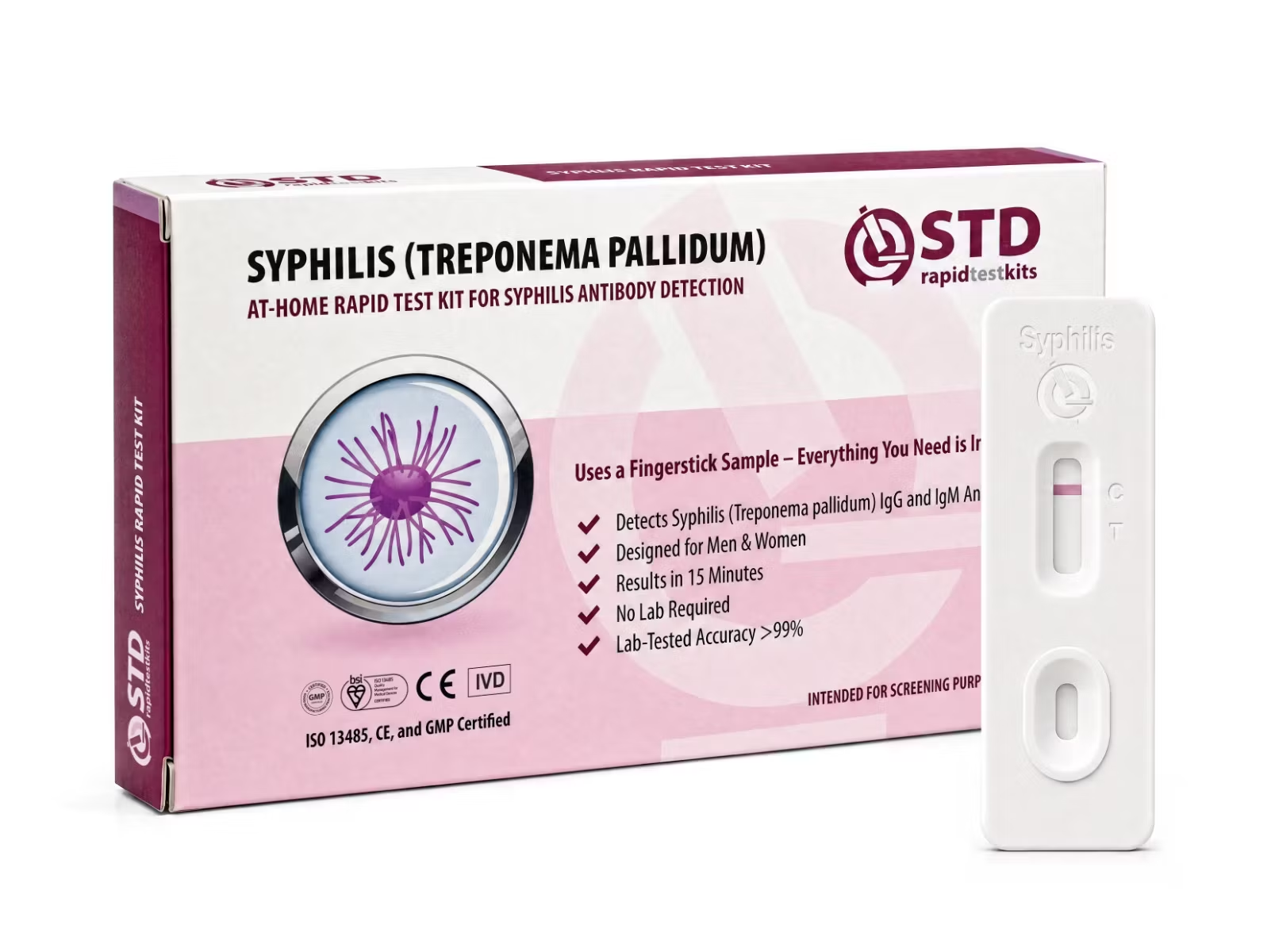
Symptoms override window-period math. If you have a sore now, test now; a positive can show up sooner once the chancre has formed. The at-home kit below is a rapid lateral-flow immunoassay using fingerstick blood. It is screening grade: a positive result is a strong signal to follow up at a clinic for confirmatory testing and treatment, not a replacement for the lab work needed to stage the infection or monitor response.
The CDC recommends testing for HIV at the same time as syphilis, and the reasoning is biological as well as epidemiological. Active syphilitic sores create breaks in mucosal tissue that meaningfully raise the risk of HIV transmission if a partner is HIV-positive. A positive test for either infection should trigger testing for the other.
This article is published by stdrapidtestkits.com, which sells at-home STI testing kits. The rapid test below is a lateral-flow screening tool, not a clinical diagnostic, and we recommend it based on fit-for-purpose for the reader's concern, not commercial benefit.
Worried About More Than Syphilis?
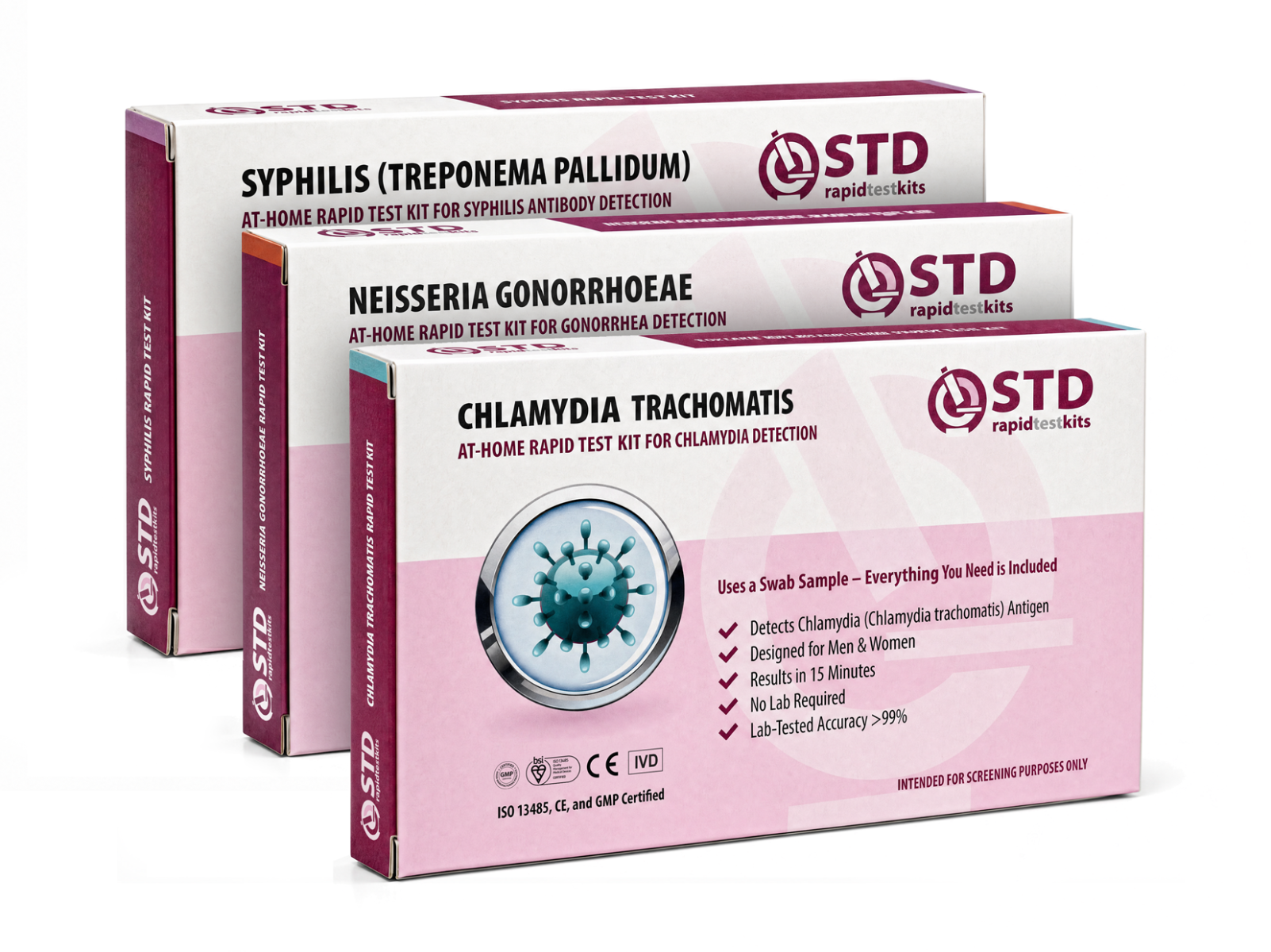
One exposure can carry risk for several bacterial STIs at once, and the symptom overlap between syphilis, chlamydia, and gonorrhea is wide enough that testing for one in isolation often misses the picture. Chlamydia and gonorrhea are the two most commonly diagnosed bacterial STIs in the U.S. each year, and both can co-occur with syphilis after the same encounter.
If you are not sure which test to start with, a combined kit covers all three from one sample collection. The combo below uses self-collected swabs for chlamydia and gonorrhea plus fingerstick blood for syphilis, all read at home.
Treatment: Syphilis Is Curable
The treatment of choice for early syphilis (primary, secondary, and early latent) is a single intramuscular dose of long-acting benzathine penicillin G, per the CDC's STI Treatment Guidelines. Late latent and unknown-duration syphilis takes a three-dose course at weekly intervals. Penicillin allergy can be managed with desensitization; alternative regimens such as doxycycline or ceftriaxone exist for non-pregnant patients, but penicillin remains the primary recommendation, especially in pregnancy where it is the only option proven safe and effective for preventing congenital syphilis.
After treatment:
- Avoid sexual contact for at least 7 days after the injection, longer if partners need their own treatment
- Notify recent partners so they can be tested and treated
- Plan a follow-up RPR titre at 6 and 12 months to confirm the response
- Re-infection is possible. Resolved syphilis does not provide immunity
A small percentage of patients develop a Jarisch-Herxheimer reaction within 24 hours of the penicillin injection: fever, chills, headache, muscle aches, and a brief flare of the rash. This is the bacteria dying off, not an allergic reaction, and it resolves on its own within a day. Stay hydrated, take acetaminophen for fever, and contact your provider if symptoms are severe or persist beyond 24 hours.
Telling a Partner
This is the part most people dread, and it is also the part that prevents the next infection. Keep it simple and direct: "I tested positive for syphilis. You should get tested too. It is curable with one shot of antibiotics in the early stages."
You can do it in person, by message, or anonymously through partner-notification services that many state and county health departments and clinics offer. Most people respond with appreciation rather than blame, especially when the message is matter-of-fact rather than apologetic.
Do not have sexual contact again until you have completed treatment and your clinician has cleared you, typically at least 7 days after the penicillin shot.
If direct contact with a former partner is not safe or not possible, most U.S. state and county health departments operate free partner-services programs that will notify named contacts on your behalf without revealing your identity. Ask your treating clinician for a local referral, or search your state health department site for "partner services" or "DIS" (Disease Intervention Specialist).
Common Myths About Syphilis
A lot of what people think they know about syphilis is wrong, and the wrong ideas keep the disease moving.
- "Syphilis went away decades ago." It declined sharply after penicillin became standard care, but it never disappeared. U.S. rates have been rising for more than two decades and accelerated after 2018.
- "I would notice if I had it." The early sore is painless, often hidden, and heals on its own. Most people in the secondary or latent stage have no idea they are infected.
- "You can catch it from a toilet seat." No. The bacterium is fragile outside the body and dies quickly on surfaces. Syphilis needs direct mucosal or broken-skin contact with a sore. Casual contact, shared utensils, hot tubs, and swimming pools do not transmit it.
- "You can only catch it through penetrative sex." Syphilis spreads through skin-to-skin contact with a sore. Oral sex, occasionally intimate kissing if a sore is in the mouth, and external genital contact can all transmit it.
- "If the sore healed, I am cured." The sore healing is the bacterium's signature move, not your immune system winning. Without antibiotics, the infection moves to the next stage.
- "Only people with lots of partners get syphilis." One exposure is enough. Plenty of people are diagnosed in monogamous relationships after a partner was infected, sometimes from years before the relationship started.
- "Condoms make me 100% safe from syphilis." Condoms reduce the risk substantially, but sores on areas a condom does not cover can still transmit the infection.
- "My yearly STI panel definitely included it." Not always. Many panels default to chlamydia, gonorrhea, and HIV. Ask explicitly for syphilis when you book.
This single mistaken belief is responsible for many of the cases that progress quietly into latent and tertiary syphilis. The chancre always heals on its own. Healing tells you nothing about whether the bacterium has been cleared. The only reliable answer is a blood test followed, if positive, by a single course of antibiotics.
What To Do If You See a Suspicious Sore
Practical steps if you find something that might be a chancre:
- Do not pop or scrape it. Manipulating the sore will not heal it and can transfer bacteria to your fingers, eyes, or another body site.
- Photograph it. Even lighting, a ruler or coin for scale, and a date stamp help any clinician you consult later, especially if the sore has healed by your appointment.
- Get tested. A clinic blood draw, a Planned Parenthood visit, or a fingerstick at-home rapid screen are all valid first moves. If the at-home screen is positive, treat it as confirmation that a clinic visit is now urgent.
- Avoid sexual contact until you have results.
- Test even if the sore disappears. Disappearance is the disease moving deeper, not resolving.
When a sore deserves a test
- Any painless sore on the genitals, anus, mouth, or throat that lasts more than two weeks.
- A new sore after a possible exposure in the past 90 days, even if it is small or has already started to heal.
- A sore that healed on its own within the past three months still warrants testing because the bacteria persist after the visible lesion clears.
FAQs
- Can a syphilis sore really look like a mosquito bite?
- Yes. A primary chancre is often a small round bump less than a centimeter wide, with a firm border and no pain. People routinely mistake it for a bug bite, an ingrown hair, or a small pimple. The painless quality is the main giveaway.
- Are syphilis sores ever painful?
- Almost never. The classic primary chancre is painless. If a sore is painful, herpes is the more likely culprit. Painful sores still warrant testing because some atypical chancres can ulcerate or become secondarily infected, and a herpes positive does not rule out a co-existing syphilis infection.
- How long does a syphilis sore last?
- Three to six weeks. It heals on its own without treatment. The infection persists and progresses regardless, so the sore disappearing is not a sign of recovery.
- How soon after exposure should I test?
- Three weeks is the earliest point a blood test gives a meaningful answer; most people have detectable antibodies by six weeks. A negative test at twelve weeks is close to definitive. If a sore is visible right now, do not wait: a positive can appear before the standard window once the chancre has formed.
- Does a standard STI panel include syphilis?
- Not always. Many clinic panels default to chlamydia, gonorrhea, and HIV. Ask explicitly whether syphilis is included, especially if you are being tested in primary care rather than a sexual-health clinic. The same applies to at-home multi-test kits: check the test list before assuming syphilis is on it.
- Can syphilis appear inside the mouth or throat?
- Yes. Oral syphilis chancres show up on the lips, tongue, tonsils, or back of the throat. They look like firm, painless ulcers with clean edges and are often mistaken for canker sores. A canker sore that lasts longer than two weeks deserves a syphilis test.
- Can you get syphilis from kissing?
- Yes, if a chancre is present in or around the mouth. Kissing is a recognized but uncommon transmission route. The risk is highest when an active oral lesion is involved.
- Is the rash on the palms and soles always syphilis?
- No, but it is uncommon enough that it should always trigger a test. Drug reactions, hand-foot-and-mouth disease, and a few rare conditions can cause palm-and-sole rashes. Of those, secondary syphilis is the one with the highest stakes if missed.
- Is syphilis curable?
- Yes. Early syphilis is cured with a single intramuscular injection of long-acting benzathine penicillin G. Late latent or unknown-duration cases need a three-dose course. Damage from late-stage syphilis (organ, vision, or neurological) may not fully reverse, which is why early testing is the central message.
- Can I get syphilis again after treatment?
- Yes. Penicillin clears the bacterium but does not create lasting immunity, so a new exposure can produce a fresh infection. Retest at 6 and 12 months after treatment, and screen again with each new partner.
- U.S. Centers for Disease Control and Prevention. About Syphilis (current CDC syphilis hub), used for the verified language on primary chancre presentation, the 3-to-6-week healing window, the description of the reddish-brown secondary palm-and-sole rash with the rash showing up when the primary sore is healing or several weeks after, and pregnancy outcomes including premature birth and stillbirth.
- U.S. Centers for Disease Control and Prevention. STI Treatment Guidelines: syphilis section, used for penicillin treatment regimens, treponemal/non-treponemal lab testing approach, and follow-up RPR schedule.
- U.S. Centers for Disease Control and Prevention. STI Statistics surveillance hub, used as the current navigation point for ongoing trends in U.S. syphilis case counts, congenital syphilis trends, demographic and geographic patterns, and the HIV-syphilis co-testing rationale referenced in this article.
- U.S. Centers for Disease Control and Prevention. About Genital Herpes, used as background for the herpes outbreak descriptors in the comparison table.
- World Health Organization. Syphilis fact sheet, used for global incidence context and clinical stage descriptions.
- NHS UK. Syphilis condition page, used for the plain-English source on the 3-weeks-or-more first-symptom timing, symptom locations, transmission routes, and treatment expectations.
