Could That Painless Sore Be a Syphilis Chancre?
A small painless sore on the genitals, lips, or anus is the textbook first sign of syphilis, and the easiest sign to dismiss. This guide explains what a chancre actually looks like, where it appears, how to tell it apart from herpes or a razor bump, when blood testing can confirm the infection, what to do in the first 48 hours, and what treatment involves.
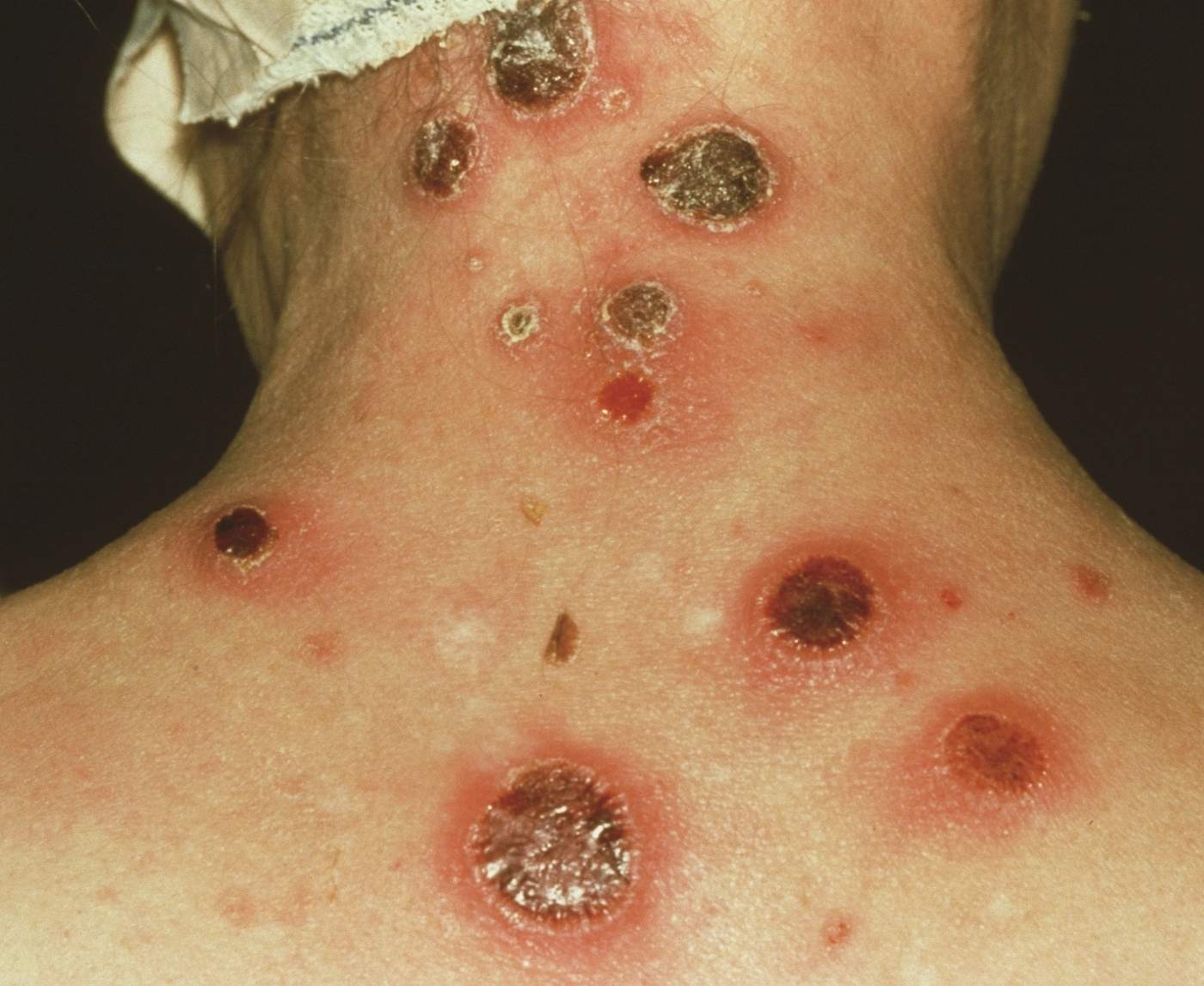



- A syphilis chancre is usually painless and solo, which is exactly why it gets dismissed as a razor bump or zit until the infection has already moved into the bloodstream.
- The sore heals without treatment in 3 to 6 weeks, but the bacteria stay in the body and progress to stage two unless treated with a single penicillin injection.
Published: November 2025 | Last updated: May 2026 | Editorial review and quality control: Martina N.
A primary syphilis chancre (pronounced shang-ker) is a small, firm, usually painless sore that appears at the site where the bacterium Treponema pallidum entered the body. Without itching or burning, it often shows up alone, looks ordinary enough to be mistaken for a razor nick or a stress blister, then quietly heals on its own in three to six weeks. The healing is the trap. By the time the sore is gone, the bacteria have already entered the bloodstream and started preparing for stage two of the infection.
This guide walks through what a syphilis chancre actually looks like, where on the body it tends to appear, how to tell it apart from herpes and other lookalike sores, when a blood test can detect the infection, what to do in the first 48 hours if you spot a suspect sore, and what treatment involves if your result comes back positive. The information here summarizes current guidance from the U.S. Centers for Disease Control and Prevention, the World Health Organization, and the U.K. National Health Service. None of it replaces an in-person evaluation when a sore worries you.
What a Syphilis Chancre Actually Looks Like
A primary syphilis chancre has a recognizable shape once you know what to look for. It begins as a small red, raised bump (a papule) at the site where the bacteria entered. Within a few days, the surface erodes into a clean, shallow ulcer. The mature sore is round or oval, with edges that feel slightly firm or rolled when pressed, a quality clinicians call induration. The center is typically clean and ulcerated, sometimes with a glistening or slightly moist surface, and rarely produces pus or crust unless the sore has been irritated by clothing or shaving. According to the CDC's About Syphilis page, most people develop a single sore, although multiple chancres are possible.
The single most useful clue when telling a chancre apart from herpes or a friction injury is the absence of pain. Herpes burns and stings. Friction abrasions are tender to touch. Ingrown hairs throb a little when pressed. A chancre usually does none of those things. People often discover one accidentally while showering, shaving, or being told by a partner that something looks off.
Size varies. The NHS overview of syphilis describes the sore as small but visible, usually a few millimeters to a couple of centimeters across (roughly the size of a small pea up to a U.S. dime). Regional lymph nodes (the ones nearest the sore, such as the groin nodes for a genital chancre) often swell and feel firm, but, like the chancre itself, are not painful. The figures below show a chancre alongside three of the most common conditions that get confused with it.
Where on the Body Chancres Appear
The sore appears wherever the bacteria entered, so location depends entirely on the kind of sexual contact that caused the exposure. The most common sites are the external genitals, but a chancre can appear anywhere skin or mucous membrane was the point of contact.
- Genital sites: the penis (usually the shaft, glans, or foreskin), the vulva, the labia, or the perineum.
- Internal genital and anal sites: inside the vagina, on the cervix, just inside the rectum, or under the foreskin. Sores in these locations are often invisible to the person who has them.
- Oral sites: the lips, tongue, gums, soft palate, or tonsils. Oral chancres come from oral sex with a partner who has a genital chancre, or from contact with an oral chancre.
- Less common sites: fingers (occupational or manual contact), the nipple, and the perianal skin.
The hidden locations are why so many primary infections go unnoticed. Per the NHS overview of syphilis, sores in the vagina or rectum can heal completely without the infected person ever seeing them. The infection still progresses on its usual timeline, and the person remains contagious to partners during the time the sore is present, whether or not anyone noticed it.
A chancre inside the vagina, on the cervix, or just inside the rectum can heal completely without the person ever seeing it. The infection still progresses, and the person remains contagious to partners throughout the time the sore is present.
Chancre or Razor Bump? How to Tell Them Apart
Genital and oral skin produce a lot of bumps for a lot of reasons. Most are harmless. Distinguishing a chancre from the usual suspects mostly comes down to four features: pain, count, fluid, and texture. The table below summarizes the most common confusables, including chancroid (caused by Haemophilus ducreyi), which is rare in the United States and the United Kingdom but worth knowing as a differential after travel to regions where it is endemic.
| Condition | Painful? | Number of sores | Fluid or crust? | Typical sites |
|---|---|---|---|---|
| Syphilis chancre | No, usually painless | Usually one | No fluid; raw clean center | Genitals, anus, mouth, lips |
| Herpes simplex outbreak | Yes, burning or stinging | Cluster of small vesicles | Clear fluid, then crusting | Genitals, anus, mouth, lips |
| Chancroid | Yes, very painful | Often multiple | Gray-yellow necrotic base | Genitals, perianal |
| Ingrown hair / folliculitis | Mildly tender | Usually one | Possible pus, central hair shaft | Anywhere shaved |
| Friction abrasion | Yes, tender to touch | One or several | None unless infected | Labia, penis shaft, inner thighs |
| Aphthous (canker) sore | Yes, painful | One or a few | No fluid, white-yellow center | Inside cheeks, gums, tongue |
The Syphilis Timeline: From Chancre to Tertiary Disease
If left untreated, syphilis follows a predictable progression through four stages. The good news is that any of the early stages can be cured with antibiotics. The bad news is that each stage comes with reduced symptoms, which is why so many infections go undiagnosed until late.
- Primary syphilis (10 to 90 days after exposure, most commonly around three weeks): the chancre appears at the site of entry, lasts 3 to 6 weeks, and heals on its own. The person is highly contagious through the sore.
- Secondary syphilis (a few weeks to a few months after the chancre heals): a non-itchy rash often appears on the trunk and characteristically on the palms and soles. Other symptoms can include fever, swollen glands, sore throat, patchy hair loss, and flat warty growths in skin folds called condylomata lata. The person is still contagious. Per the WHO syphilis fact sheet, these symptoms also resolve on their own without treatment.
- Latent syphilis (no symptoms, can last for years): the bacteria are still in the body and detectable by blood test, but the person has no outward signs. Early latent syphilis (within the first year) is still potentially contagious; late latent syphilis is generally not transmitted sexually.
- Tertiary syphilis (10 to 30 years later in untreated cases): the bacteria can damage the heart, blood vessels, brain, nerves, eyes, and bones. Per the CDC 2024 Laboratory Recommendations for Syphilis Testing, up to two-thirds of untreated patients remain latent for life and never progress to tertiary syphilis, meaning roughly one-third do. Tertiary complications include stroke, blindness, dementia, and cardiovascular disease.
Neurosyphilis (involvement of the brain, spinal cord, or nervous system) and ocular syphilis (eye involvement) can occur at any stage, not only in late disease. Both are reasons clinicians may order spinal-fluid testing alongside blood work.
Watching a chancre heal on its own and concluding the problem solved itself is the most common reason syphilis progresses unnoticed. The bacteria have simply moved deeper into the body. Only a blood test confirms whether the infection has cleared.
When Can a Test Actually Detect Syphilis?
Two diagnostic approaches exist, and both are used in clinical practice.
Direct detection of the bacteria. Dark-field microscopy or PCR of fluid taken from a chancre can identify Treponema pallidum directly. This requires a clinic visit and a fresh, weeping sore. Sensitivity is excellent in primary syphilis when a wet lesion is available, but it is rarely used outside specialty STI clinics.
Antibody (blood) testing. This is the standard approach for most people. The blood test looks for antibodies the immune system produces against Treponema pallidum. Antibodies take time to build up, so the test is most reliable a few weeks after exposure, not on the same day. Per the CDC 2024 Laboratory Recommendations, antibodies measured by both non-treponemal and treponemal tests can take up to 2 weeks to develop after primary infection. Combined with the typical 3-week incubation, a reactive result usually becomes detectable around 4 to 6 weeks after exposure for most people, with longer-incubation cases reliable closer to 12 weeks.
Practical timing guidance:
- Earliest reliable antibody window: roughly 4 to 6 weeks after the suspected exposure.
- Confirmatory retest: at 3 months if the initial test was negative and you remain concerned, particularly if a sore appeared and resolved during that time.
- If a chancre is currently visible: a clinic offering direct dark-field or PCR testing of the lesion can confirm the diagnosis before antibodies appear. Otherwise, test now with an antibody-based method and again at 3 months.
- Confirm any reactive at-home result through a clinic for paired RPR titer and treponemal testing before treatment is started, since the home test screens but does not replicate the full laboratory algorithm.
Two blood tests are typically used together. A non-treponemal test (RPR, short for rapid plasma reagin, or VDRL, short for venereal disease research laboratory) screens for general inflammation patterns produced during active infection. A treponemal test (such as TP-PA or FTA-ABS, both of which confirm exposure to the specific bacteria) is then used to verify the result. Rapid lateral-flow home tests use the same anti-treponemal antibody chemistry as the laboratory confirmation step, but they are not equivalent to a full laboratory workup.
What does a syphilis chancre look like, and how soon should I test?
A syphilis chancre is a firm, round or oval, usually painless ulcer between roughly a few millimeters (about the size of a small pea) and 2 cm (a U.S. dime) across, with a raised firm border and a smooth clean center. It typically appears 10 to 90 days after exposure, most commonly around three weeks, per the <a href="https://www.cdc.gov/mmwr/volumes/73/rr/rr7301a1.htm" target="_blank" rel="noopener">CDC 2024 Laboratory Recommendations for Syphilis Testing</a>, and heals on its own in 3 to 6 weeks. The sore disappearing does not mean the infection cleared. Reliable blood testing about 4 to 6 weeks after suspected exposure (with retesting at 3 months if the first test is negative) is the standard way to confirm or rule out syphilis.
This site sells the at-home rapid syphilis blood test linked in the banner below. We recommend products based on whether they fit the reader's specific concern, not on commercial benefit. A reactive at-home result should always be confirmed by a clinician with paired RPR titer and treponemal testing before treatment.
What to Do Right Now if You See a Suspect Sore
The actions below match what an STI clinic would have you take in the first 48 hours, organized so the highest-priority steps come first.
- Pause sexual contact until you have a result and, if positive, have completed treatment. Primary syphilis is highly contagious through the sore itself.
- Photograph the sore with good lighting and a coin or fingertip for scale. The sore may heal before you reach a clinician, and a photo helps with retroactive diagnosis.
- Decide how to test. If the sore is still visible and only a few weeks have passed since exposure, a clinic that offers direct dark-field microscopy or PCR of the lesion can confirm the diagnosis before antibodies appear. If the sore has healed or at least 4 to 6 weeks have passed, a blood antibody test (clinic or at-home rapid kit) is appropriate. Plan a follow-up test at 3 months if the first one falls inside the antibody window.
- Notify recent sexual partners. Anyone you have had sexual contact with in the past 3 months for primary syphilis (longer windows for later stages) should be tested. Many local health departments offer anonymous partner-notification services that deliver the message without revealing who sent it.
- Get treated through a clinician. A reactive at-home result should prompt a clinic visit for confirmatory paired RPR titer and treponemal testing, then the penicillin injection. Self-treating with leftover or borrowed antibiotics is inadequate and risks treatment failure.
- Repeat blood work at 6 and 12 months after treatment. The clinician uses the falling non-treponemal antibody titer (a fourfold drop within 6 to 12 months, per the 2021 CDC STI Treatment Guidelines (MMWR)) to confirm the infection cleared.
Partner notification is a public-health norm, not a personal interrogation. Most local health departments offer anonymous notification services that contact partners on your behalf without revealing your identity, which makes the conversation manageable even when the relationship is casual or already over. In some jurisdictions, clinical partner-notification support is built into the same visit that confirms your diagnosis.
If Your Test Comes Back Positive
The most important thing to know about a positive syphilis test is that the disease is curable, especially when caught in the primary or secondary stage. Per the 2021 CDC STI Treatment Guidelines (MMWR), the standard treatment for primary, secondary, and early latent syphilis is a single intramuscular injection of long-acting benzathine penicillin G, 2.4 million units. One shot. One visit. Late latent syphilis or unknown duration requires three weekly injections, and neurosyphilis is treated with intravenous penicillin for 10 to 14 days in a hospital setting.
Penicillin allergy is worth raising before treatment so the clinician can plan around it. For most non-pregnant adults with non-severe allergy, desensitization in a monitored setting is preferred over alternative antibiotics, because penicillin is the only treatment with strong evidence for preventing congenital syphilis in pregnancy. Per the same CDC 2021 STI Treatment Guidelines, doxycycline 100 mg orally twice daily for 14 days is an accepted alternative for non-pregnant adults with primary, secondary, or early latent syphilis. Pregnant patients with severe penicillin allergy must be desensitized to penicillin and treated, since alternatives are inadequate to prevent fetal infection.
A common, expected reaction in the first 24 hours after the penicillin injection is the Jarisch-Herxheimer reaction: fever, chills, muscle aches, and headache caused by rapid bacterial die-off. It typically resolves within a day. It is not an allergic reaction and not a treatment failure. Over-the-counter analgesics and rest are the usual management. If symptoms are severe or persist past 24 hours, contact the prescribing clinician.
Pause sexual contact until any sores have completely healed and your clinician confirms the infection has cleared.
CDC treatment guidelines suggest contacting partners exposed within these windows before diagnosis:
- Primary syphilis: partners from the past 3 months.
- Secondary syphilis: partners from the past 6 months.
- Early latent syphilis: partners from the past 12 months.
Anonymous notification services can deliver the message without revealing who sent it, which makes the conversation less daunting when relationships are casual or already over.
How Syphilis Spreads, and What Condoms Can and Cannot Do
Syphilis transmits through direct contact with a chancre or with the moist mucous patches that develop during the secondary stage. Vaginal, anal, and oral sex are all transmission routes. The bacteria pass through intact mucosa or microscopic skin abrasions, which is why condom-protected sex with someone who has a chancre still carries some risk if the sore is on uncovered skin. Mother-to-child transmission across the placenta during pregnancy causes congenital syphilis, a serious infection passed to the developing baby that the CDC's About Syphilis pages describe as a significant and growing U.S. public-health concern.
Condoms reduce per-act transmission risk substantially but do not eliminate it. A chancre on the scrotum, vulva, perineum, base of the penis, or perianal skin can transmit the infection through direct skin-to-skin contact outside the condom's coverage area. Used consistently, condoms still meaningfully lower the risk and remain the single most effective barrier method available. Combined with regular screening, they are the layered approach the CDC recommends for sexually active adults with new or multiple partners.
Syphilis is not transmitted through casual contact, shared toilets, swimming pools, doorknobs, towels, or shared utensils. Very rare documented non-sexual transmission through shared injection equipment, occupational needle-stick exposure, and wound-to-wound contact does occur, but these account for a small fraction of cases.
A chancre on uncovered skin (the scrotum, vulva, perineum, base of the penis, or perianal area) can transmit syphilis even when a condom is used correctly. Consistent condom use plus routine screening is the layered approach recommended for sexually active adults with new or multiple partners.
Pregnancy, HIV, and Reinfection: When to Test More Carefully
Pregnant readers face the highest stakes. Untreated syphilis can cross the placenta and cause stillbirth, miscarriage, or congenital syphilis (a serious infection passed to the baby). The CDC recommends syphilis testing at the first prenatal visit for everyone who is pregnant, with rescreening at 28 weeks and at delivery for people in higher-risk groups or in areas where rates are climbing. A single penicillin injection during pregnancy prevents the great majority of congenital cases when given early enough, which is why early testing matters.
Readers living with HIV or with reduced immunity may see syphilis present atypically, including chancres that are larger, deeper, more numerous, or persistent. Co-infection also accelerates the risk of neurosyphilis, so clinicians may screen more frequently and use a lower threshold for spinal-fluid testing. Active syphilis sores (the primary chancre and the secondary mucous patches) raise the risk of acquiring HIV and of transmitting it onward by an estimated two- to fivefold, because the open ulcer concentrates the immune cells HIV uses to enter or exit the body. Per the CDC's syphilis information, testing for both at the same time is the standard approach after a higher-risk exposure. Sexually active men who have sex with men should be screened for syphilis at least annually, and more often (every 3 to 6 months) for those with multiple or anonymous partners.
Anyone who has been treated for syphilis before should know that past treatment does not provide immunity. A new exposure can cause a new infection, and reinfection is common in higher-prevalence sexual networks. A new sore, a new partner, or unexplained symptoms after a previous diagnosis is a reason to retest, not a reason to assume the body remembers.
Why Syphilis Cases Are Rising Again
Syphilis was nearly eliminated in the United States in the early 2000s. It is not eliminated now. The CDC's national surveillance reports show a steep increase in primary, secondary, and congenital syphilis over the last decade, reaching the highest reported U.S. levels in more than 70 years, with the rise especially marked in men who have sex with men and in pregnancies in regions with limited prenatal care. The WHO syphilis fact sheet describes the same pattern globally, with approximately 8 million new adult infections estimated in 2022, the most recent year covered in the WHO estimate.
The reasons are mundane rather than mysterious. Routine STI screening dropped during the pandemic and has been slow to recover. Condom use among adults has declined for several years running. Stigma still keeps people from telling partners or asking clinicians for a test. None of those are reasons to panic; they are reasons to make testing a normal part of any new sexual relationship and any time something looks off.
Many people who have syphilis don't have symptoms or their symptoms are so mild they don't notice them. Even without symptoms, syphilis can cause serious health problems if it goes untreated.
Frequently asked questions
- Is a syphilis chancre always painless?
- In the great majority of cases, yes, but a small fraction are slightly tender, especially if the sore has been irritated by clothing. The key tell is the kind of pain: herpes burns and stings, friction abrasions hurt when pressed, and a canker sore is sharply painful when food touches it. A sore that feels merely firm or only slightly sore to press is still acting like a chancre, and a clinician should evaluate it.
- Where do syphilis chancres usually show up?
- At whatever site the bacteria entered the body. The most common sites are the external genitals, but a chancre can also appear inside the vagina, on the cervix, just inside the rectum, on the lips, tongue, or tonsils, depending on the kind of sexual contact involved. Hidden internal sores often go unnoticed.
- If the sore goes away on its own, am I cured?
- No. Spontaneous healing of the chancre does not clear the infection. The bacteria have already entered the bloodstream and continue to replicate silently through the latent period. The only way to confirm cure is laboratory documentation that the non-treponemal antibody titer has dropped fourfold after antibiotic treatment. If you noticed a painless sore weeks or months ago that resolved on its own, a single blood test now will detect antibodies that have built up since then.
- How soon after exposure can I test for syphilis?
- For most people, a blood antibody test becomes reliable around 4 to 6 weeks after exposure. Testing earlier risks a false negative because the immune response has not fully developed yet. If a visible sore is present, a clinic can run direct PCR or dark-field testing on fluid from the lesion before antibodies appear. Retest at 3 months if the first result is negative and concern remains.
- How is a chancre different from a herpes sore?
- Herpes outbreaks are typically a cluster of small fluid-filled blisters that burn or sting, then crust over as they heal. A chancre is usually a single, firm, painless ulcer with clean rolled edges and no fluid. The difference between painful + multiple + crusting and painless + single + clean is the most reliable visual distinction.
- Will a single penicillin injection really cure primary syphilis?
- Yes, for primary, secondary, and early latent syphilis. The 2021 CDC STI Treatment Guidelines recommend a single intramuscular dose of benzathine penicillin G, 2.4 million units. Late-latent syphilis requires three weekly injections, and neurosyphilis needs intravenous penicillin for 10 to 14 days. Follow-up bloodwork at 6 and 12 months confirms cure by showing the non-treponemal titer fall fourfold.
- Will condoms protect me from syphilis?
- Condoms reduce risk substantially but do not eliminate it. Because syphilis transmits through skin-to-skin contact with the sore, a chancre on the scrotum, labia, perineum, or pubic area can transmit the infection through skin not covered by the condom. Consistent condom use plus regular testing is the layered approach the CDC recommends.
- If I had syphilis once and was treated, can I get it again?
- Yes. Treatment cures the infection but provides no lasting immunity. Reinfection is common after a new exposure, particularly in higher-prevalence sexual networks. A new sore or a new high-risk exposure is a reason to test again, regardless of past treatment history.
- U.S. Centers for Disease Control and Prevention. About Syphilis: clinical overview including the firm, round, painless chancre, congenital syphilis risks, and transmission information.
- U.S. Centers for Disease Control and Prevention. CDC Laboratory Recommendations for Syphilis Testing, United States, 2024 (MMWR Recommendations and Reports): incubation period (10 to 90 days, about 3 weeks average), antibody seroconversion timing (up to 2 weeks after primary infection), and the proportion of untreated patients who progress to tertiary syphilis.
- U.S. Centers for Disease Control and Prevention. Sexually Transmitted Infections Treatment Guidelines, 2021 (MMWR Recommendations and Reports): syphilis chapter covering benzathine penicillin G dosing by stage (2.4 million units IM for primary, secondary, and early latent), doxycycline 100 mg alternative for non-pregnant penicillin-allergic adults, and the fourfold non-treponemal titer drop criterion for cure.
- U.S. Centers for Disease Control and Prevention. STI Treatment Guidelines: syphilis chapter landing page with overview of diagnostic algorithms and treatment summaries.
- World Health Organization. Syphilis fact sheet, including global incidence figures, typical onset timing, and overview of clinical stages.
- U.K. National Health Service. Syphilis: symptoms, sore size and appearance, testing, and treatment overview for the U.K. context.