
Published: September 2025 | Last updated: May 2026 | Editorial review and quality control: Martina N.
For decades, HPV has been framed almost entirely as a women's health concern. Pap smears, cervical dysplasia, cervical cancer. That framing captures only part of the story. The same virus that drives nearly all cervical cancers also drives most anal cancers and a growing share of oropharyngeal (throat) cancers. Men, trans folks, and anyone with an anus or oropharynx is potentially at risk, and many never know they are carrying a high-risk strain until cells have already started to change.
The gap between what HPV can do and what most people know about it is where this article lives. The pages below walk through how the virus turns into cancer, where it shows up that you might not expect, how long the process actually takes, what testing looks like for different anatomies, and what you can do today to lower your risk.
Key Takeaways
- Nearly all cervical cancers, about 90% of anal cancers, and around 70% of oropharyngeal cancers in the U.S. are linked to high-risk HPV strains (CDC, HPV-associated cancers).
- Most HPV infections clear on their own within two years. Cancer risk comes from the small fraction that persist quietly for 10 to 20 years before causing visible symptoms.
This Isn't Just About Cervical Cancer
HPV (human papillomavirus) is a family of more than 200 related viruses. About 14 of those strains are classified as high-risk because they can drive cancer in the tissues they infect. The big two are HPV-16 and HPV-18, which together account for around 76% of cervical cancers globally according to the World Health Organization.
But high-risk HPV doesn't only live in cervical tissue. It can colonize the anus, the penis, the vulva, the vagina, the back of the throat, and the base of the tongue. Anywhere mucous membranes meet skin-to-skin contact during sex, the virus can take hold. Once there, it does the same thing it does in the cervix: it slips into the basal cells of the lining and uses two viral proteins (called E6 and E7) to disable the cell's natural brakes on growth and DNA repair.
Cervical Pap testing became routine in the mid-20th century and cut cervical cancer deaths dramatically in countries with strong screening programs. Routine screening for anal or throat HPV-related cancers hasn't had that kind of systemic rollout. Anal Pap tests exist but are mostly offered in high-risk clinics. There is no FDA-approved standard screening test for HPV-related throat cancer at all. The result is a quiet asymmetry: cervical cancer incidence has fallen sharply where screening is available, while HPV-driven throat cancers in men have been rising for two decades.
More than 200 HPV types have been identified. Roughly 14 are classified as high-risk for cancer. HPV-16 and HPV-18 alone account for the majority of HPV-linked cancers worldwide, which is why those two are the central focus of vaccination and screening programs.
How HPV Turns a Cell Into a Tumor
The path from infection to cancer is neither fast nor guaranteed. Nearly everyone who is not vaccinated will get HPV at some point in their lives, per the CDC's HPV overview. Most clear the virus within one to two years through normal immune response. A smaller fraction, often the people whose immune systems are stressed, distracted, or aging, develop persistent infections that quietly damage the cells they live in.
The mechanism, in plain language: HPV's E6 protein binds to and degrades p53, a tumor-suppressor protein whose job is to detect damaged DNA and trigger repair or programmed cell death. The E7 protein binds to and inactivates the retinoblastoma protein (Rb), which normally keeps cells from dividing when they shouldn't. With both safety systems disabled, cells start accumulating mutations and dividing more than they should. Over years, those changes can progress through pre-cancerous stages (CIN in the cervix, AIN in the anus, dysplasia in the throat) to invasive cancer.
Crucially, this is silent. There is no fever, no rash, no discharge, no pain. The infection itself feels like nothing. The first symptoms typically don't appear until cellular changes are already advanced.
| Cancer Site | Share Linked to HPV | Typical Late-Stage Symptoms | Higher-Risk Groups |
|---|---|---|---|
| Cervix | Nearly all (about 99%) | Abnormal bleeding, pelvic pain, painful sex | People with cervixes, especially those without routine screening |
| Anus | About 90% | Bleeding, itching, pain, lumps, bowel-habit changes | Men who have sex with men, immunocompromised people, anyone with receptive anal sex history |
| Throat (oropharynx) | About 70% in the U.S. | Persistent sore throat, hoarseness, painless neck lump, trouble swallowing | Men, particularly with oral sex exposure |
| Penis | Around 60% | Sores, growths, or color changes on the penis | Uncircumcised men, those with multiple partners |
| Vulva and vagina | Around 50% | Itching, burning, abnormal bleeding or growths | People with vulvas, especially post-menopausal |
The Long Timeline From Infection to Cancer
The journey from initial HPV infection to invasive cancer typically takes 10 to 20 years, sometimes longer. That window is best established for cervical cancer. Throat and anal cancer timelines are similar in shape but harder to pin down precisely, because routine screening doesn't catch them at the pre-cancer stage the way Pap testing catches cervical changes.
This long latency is both the challenge and the opportunity. The challenge: by the time symptoms appear, people often can't trace them back to any particular exposure. Sexual activity from a decade ago doesn't feel relevant to a current sore throat. The opportunity: if pre-cancer is caught early, treatment is usually straightforward (a colposcopy and minor excision for cervical changes, for example) and prevents progression to cancer entirely. That is the entire premise behind Pap and HPV co-testing.
The other awkward truth: "first exposure" can be ancient history. HPV can lie dormant in basal cells for years and then reactivate when the immune system is stressed by age, illness, or medications. A new HPV-positive result in a long-monogamous person almost never means infidelity. It usually means a long-quiet infection has resurfaced. Many providers don't say this part out loud, and the silence breeds unnecessary partner blame.
How long does HPV take to cause cancer?
On average, 10 to 20 years between a persistent high-risk HPV infection and invasive cancer in the cervix, anus, or throat. Most infections clear within two years and never progress. The risk comes from a small fraction of persistent infections that quietly drive cellular changes over a decade or more, which is why scheduled screening (where it exists for your anatomy) matters more than current symptoms.
Symptoms That Get Missed Because They Look Like Something Else
HPV-related cancers are often mistaken for more mundane problems. Anal cancer gets dismissed as hemorrhoids for months. Throat cancer hides as a persistent cough, seasonal allergies, or acid reflux. Cervical changes get written off as cycle weirdness. None of these symptoms automatically means cancer, and most have benign causes. But "I had it for months and assumed it was nothing" is a story oncologists hear constantly. The pattern to watch for is duration, not severity.
For possible cervical changes: bleeding between periods, after sex, or after menopause; unusual discharge; pelvic pain that doesn't follow your cycle.
For possible anal cancer: bleeding that comes back after hemorrhoid treatment; a lump you can feel at the anal opening; persistent itching or pain; changes in bowel habits.
For possible throat (oropharyngeal) cancer: a sore throat that doesn't go away after three weeks; a painless lump in the neck (often a swollen lymph node); persistent hoarseness; difficulty swallowing; ear pain on one side without an ear infection. The American Cancer Society's signs-and-symptoms page emphasizes that any of these conditions lasting more than a few weeks deserve a doctor or dentist's eyes on them.
If a symptom persists past three to four weeks and doesn't have a clear explanation, ask the question. Press for an exam rather than a phone-call reassurance, especially for neck lumps and bleeding that recurs after a first round of treatment.

What Testing Actually Looks Like for HPV
Testing for HPV depends almost entirely on anatomy, and the available tools are uneven across body sites.
For people with a cervix, the Pap test combined with HPV DNA co-testing is the gold standard. The CDC's cervical cancer screening guidance recommends routine screening from age 21 (Pap alone every 3 years) or age 30 to 65 (HPV testing alone or co-testing every 5 years), depending on the protocol your provider follows. The schedule changes if results are abnormal or if you have HIV or another immune-compromising condition.
For people without a cervix, the picture is more fragmented. Anal Pap tests exist and are offered in some clinics, especially LGBTQ+ health centers and HIV-care settings, but they aren't yet part of standard primary care. There is no FDA-approved screening test for oropharyngeal HPV; clinical trials are exploring saliva-based screening, but nothing is routine. Penile HPV testing isn't a standard practice either, though visible warts can be examined and biopsied by a clinician.
What this means in practice: if you have a cervix, the playbook is clear. If you don't, the playbook is "vaccinate, ask your provider about anal Pap screening if you are in a higher-risk group, and watch for symptoms that persist beyond three to four weeks."
Disclosure: this article is published by stdrapidtestkits.com, which sells at-home STI testing kits including an HPV swab. We recommend products based on fit-for-purpose, not commercial benefit, and we flag where our kits don't cover what a reader actually needs.
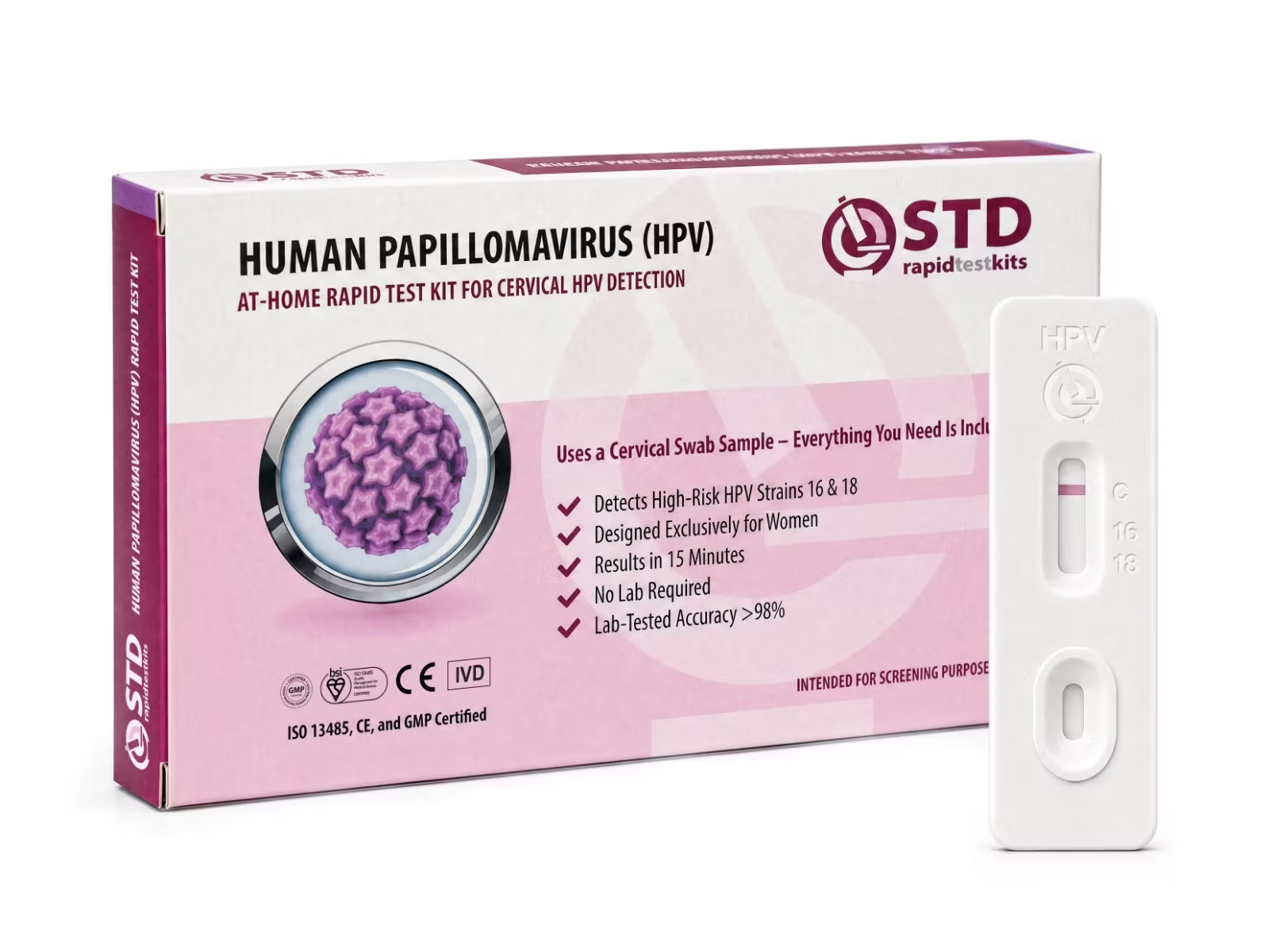
At-home rapid HPV tests are designed for vaginal self-collection. They are a private starting point if you have a cervix and want a preliminary screening result before talking to a provider. They use lateral-flow rapid-test chemistry, not lab NAAT, so a positive result is worth confirming with clinic-based HPV DNA testing and a Pap.
If you don't have a cervix and want anal-cancer screening (anal Pap or high-resolution anoscopy), you will need a clinic visit. There isn't an at-home option for that, and we don't currently offer one. For throat HPV, there is no validated home or clinic screening test yet for anyone.
The HPV Vaccine: Still Useful Beyond 26
Gardasil 9 protects against the seven high-risk strains responsible for most HPV-related cancers (16, 18, 31, 33, 45, 52, 58) plus two low-risk strains that cause genital warts (6, 11). The CDC's HPV vaccine page recommends routine vaccination starting at age 11 or 12, with catch-up vaccination through age 26.
For adults aged 27 through 45, the CDC recommends shared clinical decision-making rather than blanket vaccination. That isn't a soft "maybe." It is a real conversation with a provider about your specific risk profile: new or recent partner changes, partner count, immune status, smoking, and whether you have been exposed to particular strains already.
The vaccine doesn't treat existing HPV infections. It can't undo cellular damage that has already started. But because most adults haven't been exposed to all nine strains the vaccine covers, getting vaccinated at 32 or 40 can still prevent future infections and the cancers those infections might drive. For adults with HIV, on immunosuppressants, or with significant ongoing exposure risk, the vaccine often makes sense well into the 40s.
What Gardasil 9 covers
- Seven high-risk strains responsible for most HPV-linked cancers: HPV-16, HPV-18, HPV-31, HPV-33, HPV-45, HPV-52, HPV-58.
- Two low-risk strains that cause most genital warts: HPV-6 and HPV-11.
- Routine for ages 11–12, catch-up through 26, shared decision-making for adults 27–45.
Risk Factors That Tip the Balance
Why does HPV clear in some people and persist (sometimes turning cancerous) in others? Several factors stack the deck.
Immune status. People living with HIV, post-transplant patients on immunosuppressants, and those with chronic autoimmune conditions are far more likely to develop persistent infections and progress to cancer. The CDC's HPV-associated cancers page notes that when the immune system can't clear oncogenic HPV, the infection can linger and drive cellular change over time.
Smoking. Tobacco use roughly doubles cervical cancer risk in people with HPV. The mechanism isn't only immune suppression. Cigarette-derived chemicals concentrate in cervical mucus and directly damage cells that HPV has already destabilized.
Co-infection with multiple high-risk strains. Carrying two or more high-risk HPV types at once is associated with higher persistence rates and faster progression to cellular abnormality.
Age at first exposure and total exposure window. Earlier sexual debut and more lifetime partners increases the number of strains a person is statistically likely to encounter. But this isn't a moral calculation. A single high-risk strain in a monogamous person can drive cancer too. The math is about probability of strain exposure, not virtue.
Other factors layer on top. Long-term oral contraceptive use has a modest association with cervical cancer risk. Chronic genital inflammation from other STIs may make HPV persistence easier. Nutritional status (vitamin A, folate) may play a small role in immune clearance. None of these are deal-breakers individually.
- Immune status: HIV, post-transplant immunosuppression, autoimmune disease.
- Smoking: roughly doubles cervical cancer risk in HPV-positive people.
- Co-infection with multiple high-risk strains.
- Wider exposure window: earlier sexual debut, more lifetime partners.
- Modest contributors: long-term oral contraceptive use, chronic genital inflammation, low folate/vitamin A.
Can HPV Come Back After It Goes Away?
Yes, and it is one of the most under-discussed aspects of HPV biology. After what feels like clearance (negative tests, no findings on Pap), the virus can hide in basal cells in a dormant state. When the immune system later weakens (a new health condition, certain medications, age-related immune decline, prolonged stress), the virus can reactivate and start producing the proteins that drive cellular change.
This is why screening matters even for people in long-term, sexually inactive relationships and even for those whose previous tests have been clear. It is also part of why post-menopausal cervical cancer happens: dormant HPV reactivating in tissue that has lost some of its prior estrogen-driven defenses.
For people living with HIV, autoimmune conditions, or on immunosuppressive medications, the CDC recommends more frequent cervical screening, typically annual rather than every three to five years. The goal is to interrupt the long-latency timeline before it reaches invasive cancer.
Nearly all sexually active people will get HPV at some point in their lives. Most HPV infections will go away on their own. However, some infections, particularly with high-risk types, can lead to cancer.
Prevention Beyond the Vaccine
Even unvaccinated, you have meaningful options.
Screening matched to your anatomy. If you have a cervix, keep up with Pap and HPV co-testing on the schedule your provider recommends (typically every 3 to 5 years for average-risk people aged 21 to 65, with the specific test and interval depending on your age and protocol). If you are at higher risk for anal cancer (HIV-positive, men who have sex with men, history of receptive anal sex), ask specifically about anal Pap screening. Not every clinic offers it, and many won't volunteer it.
Smart barrier use. Condoms and dental dams reduce HPV transmission but don't eliminate it. The virus lives on skin that barriers don't always cover. They still meaningfully lower risk and are worth using consistently. Think of them as risk reducers, not shields.
Smoking cessation. Quitting tobacco lowers the persistence and progression risk in people who already carry high-risk HPV. The benefit accrues over years but starts within months.
General STI screening. Other STIs (especially chronic infections like chlamydia and HSV) create local inflammation that may make HPV persistence more likely. Knowing your overall STI status and treating what is treatable is part of HPV-cancer-risk reduction even though it doesn't address HPV itself. Many people doing a routine sexual-health check are surprised to find they had a quiet co-infection.
Knowing Is the First Move
HPV is the most common STI in the world and one of the easiest to underestimate. It is quiet, it is slow, and most of the time, the immune system handles it without you ever knowing. The exception, the small fraction of infections that persist for a decade or more, is the entire reason vaccines and screening programs exist.
If you have a cervix, the playbook is well-established: vaccination if you are eligible, Pap and HPV co-testing on schedule, and follow-up on abnormal results. If you don't, the playbook is less standardized, which means you have to be more proactive. Ask about anal Pap if you are in a higher-risk group. Get vaccinated if you haven't been and your provider agrees the case is reasonable. Watch for persistent throat or genital symptoms and don't let "probably just hemorrhoids" be the end of the conversation if bleeding doesn't resolve.
The goal here isn't hypervigilance. It is to make the invisible part of this virus a little more visible, so the next time you are deciding whether to act on a symptom, schedule a screening, or get the vaccine, you have the actual numbers and not just the silence.
- With a cervix: stay on schedule for Pap and HPV co-testing. Follow up promptly on abnormal results.
- Without a cervix: ask your provider about anal Pap screening if you're in a higher-risk group. Watch for persistent symptoms past three to four weeks.
- Anyone under 46 not yet vaccinated: ask a provider about Gardasil 9. Catch-up is routine through 26 and a shared decision through 45.
- Smokers with HPV: quitting roughly halves the cervical-cancer progression risk over time.
FAQs
- Can men get cancer from HPV?
- Yes. HPV drives most anal cancers and about 70% of oropharyngeal (throat) cancers in the U.S., both of which affect men. Penile cancer is rarer but also HPV-linked in roughly 60% of cases. Many men aren't aware because there is no general HPV screening test for them, which makes vaccination and symptom-awareness more important.
- How long does it take for HPV to turn into cancer?
- The cervical-cancer timeline is best established at roughly 10 to 20 years from a persistent infection to invasive disease. Throat and anal cancer timelines aren't as well-characterized because there's no routine pre-cancer screening to track the early stages. What is consistent across all three sites: the dangerous infections are the ones that linger past two years rather than clearing, and they cause no symptoms during those silent years of cellular change.
- If I don't have any symptoms, am I in the clear?
- Not necessarily. Most people with HPV have no symptoms at all. You can feel completely normal and still be carrying a high-risk strain that is slowly altering cells. That is why screening for people with a cervix isn't symptom-driven. It is scheduled, regardless of how you feel.
- I'm over 30. Is the HPV vaccine still worth it?
- Possibly, yes. The CDC recommends shared clinical decision-making for adults aged 27 to 45. The vaccine doesn't treat existing infections, but most adults haven't been exposed to all nine strains it covers, so it can still prevent future infections. The right answer depends on your partner history, immune status, and overall exposure risk. Talk to a provider rather than assuming you missed the window.
- Can I get HPV from oral sex?
- Yes. Oral sex is one of the main routes by which HPV enters the throat and is a major driver of the rising rate of oropharyngeal cancer, especially in men. Barriers (condoms, dental dams) reduce but don't eliminate the risk because HPV lives on skin they don't fully cover. Vaccination is the strongest protection.
- Does HPV ever go away on its own?
- Often, yes. The immune system clears most HPV infections within one to two years. The strains that linger past two years are the ones that warrant follow-up. Persistence, not infection, is the cancer risk factor.
- Is there a way for men to get tested for HPV?
- Not generally. There is no FDA-approved screening test for oral or penile HPV. Anal Pap tests exist and are offered in some clinics for higher-risk men (HIV-positive, men who have sex with men), but they aren't routine in primary care. This is why vaccination, awareness, and following up on persistent symptoms matter more for men than for people with a cervix who have access to scheduled screening.
- Can one partner give me HPV even if they have always tested negative for STIs?
- Yes. HPV can live in the body for years with no detectable signs, and standard STI panels don't test for HPV in men or for HPV in non-cervical sites. Someone can test negative for everything else they were screened for and still carry high-risk HPV from a past partner. A positive HPV result in a long-monogamous person almost never means infidelity. It usually means a long-quiet infection has surfaced.
Our article was constructed based on current advice from the most prominent public health and medical organizations (CDC, WHO, American Cancer Society), and then molded into simple language based on the situations that people actually experience. Statistics, screening intervals, and vaccine guidance are linked inline to the source page so you can verify each figure for yourself.
- U.S. Centers for Disease Control and Prevention. About HPV. General overview of human papillomavirus, transmission, and clearance rates.
- U.S. Centers for Disease Control and Prevention. HPV-associated cancers and precancers. Site-by-site share of HPV attribution for cervical, anal, oropharyngeal, and other cancers; immune-clearance and oncogenic-persistence dynamics.
- U.S. Centers for Disease Control and Prevention. Cervical cancer screening guidelines. Age-based screening protocols and intervals.
- U.S. Centers for Disease Control and Prevention. HPV vaccine recommendations. Age recommendations, catch-up vaccination, and adult shared decision-making guidance.
- World Health Organization. Cervical cancer fact sheet. Global burden of HPV and the role of high-risk strains HPV-16 and HPV-18.
- American Cancer Society. Oral cavity and oropharyngeal cancer signs and symptoms.
