
Published: September 2025 | Last updated: May 2026 | Editorial review and quality control: Martina N.
Lubricant gets folded into safer-sex advice almost as casually as condoms, but the assumption that any lube is a good lube skips over a piece of HIV-prevention science that took researchers nearly two decades to settle. Not every product on the pharmacy shelf is gentle on the tissues it touches, and a small but well-documented subset can actually raise the risk of HIV acquisition through two pathways: damaging the mucosal cells of the vagina or rectum, and degrading latex condoms.
This piece walks through what current public-health guidance says, which ingredients are flagged by the CDC and WHO, and how to read a lube label without a chemistry degree. The reassuring part first. Most reputable water-based and silicone-based lubricants are safe to use with condoms and gentle on tissue. The risk lives in a narrower category of products that are either oil-based (which destroys latex), very high in osmolality (which dehydrates and damages mucosal cells), or contain ingredients like Nonoxynol-9 that have been formally removed from HIV-prevention guidance.
Key Takeaways
- Oil-based lubricants break down latex condoms within minutes, and the resulting weak spots can let HIV through even when the condom still looks intact.
- Water-based lubes with osmolality above about 1200 mOsm/kg can dehydrate and damage the cells lining the rectum or vagina, weakening the body's first barrier against HIV.
How a lubricant becomes a risk factor
HIV needs two things to establish an infection through sexual contact: live virus in a partner's fluids, and a route into the bloodstream or immune cells of the receptive partner. Intact mucosal tissue (the moist lining of the vagina, rectum, or urethra) is a meaningful barrier on its own. Condoms add a mechanical barrier that, when used correctly and consistently, blocks fluid exchange entirely. Lubricant matters because it sits in physical contact with both of these defenses at the same time.
The wrong lubricant can compromise the mucosal barrier directly, by pulling water out of the cells lining the rectum or vagina and leaving the tissue dehydrated and prone to micro-tearing. It can also compromise the mechanical barrier by chemically degrading latex, which is the polymer most condoms are made from. Either failure is invisible during sex, and both happen on a timescale of seconds to minutes, not hours.
The right lubricant does the opposite. It reduces friction between two surfaces (typically the inserting body part and the receptive tissue), which means fewer micro-abrasions, longer-lasting condoms, and a more comfortable experience that is more likely to be repeated correctly. The CDC's guidance on preventing HIV with condoms explicitly recommends water-based or silicone-based lubricants and warns against oil-based products that can weaken latex.
Can lubricant actually increase HIV risk?
Yes, in specific situations. Oil-based lubricants such as petroleum jelly, coconut oil, baby oil, and mineral oil weaken latex condoms within minutes of contact, raising the chance of breakage. Water-based lubricants with very high osmolality (above about 1200 mOsm/kg) can dehydrate and damage the cells lining the rectum or vagina, making HIV entry more likely if a partner is infectious. Water-based or silicone-based lubricants that are isotonic or low-osmolality, free of Nonoxynol-9, and labeled condom-safe avoid both problems and are the safest option for most people.
The osmolality problem in plain English
Osmolality is a measurement of how concentrated dissolved particles are in a fluid. Body cells maintain their own internal osmolality at roughly 280 to 300 mOsm/kg, which is the same range as natural vaginal secretions and the reference point for what scientists call isotonic. When a fluid touching a cell has a much higher osmolality, water flows out of the cell into the surrounding fluid by osmosis. The cell shrinks, the tissue layer becomes thinner, and the mucosal surface becomes easier to damage during ordinary friction.
This is not a theoretical concern. The 2012 WHO/UNFPA advisory Use and Procurement of Additional Lubricants for Male and Female Condoms set procurement specifications stating that osmolality of personal lubricants should be less than 1200 mOsm/kg, with isotonic formulas (around 380 mOsm/kg or lower) preferred for tissue safety. When researchers tested popular over-the-counter lubricants against that benchmark, several products exceeded 3000 mOsm/kg, well above the WHO threshold.
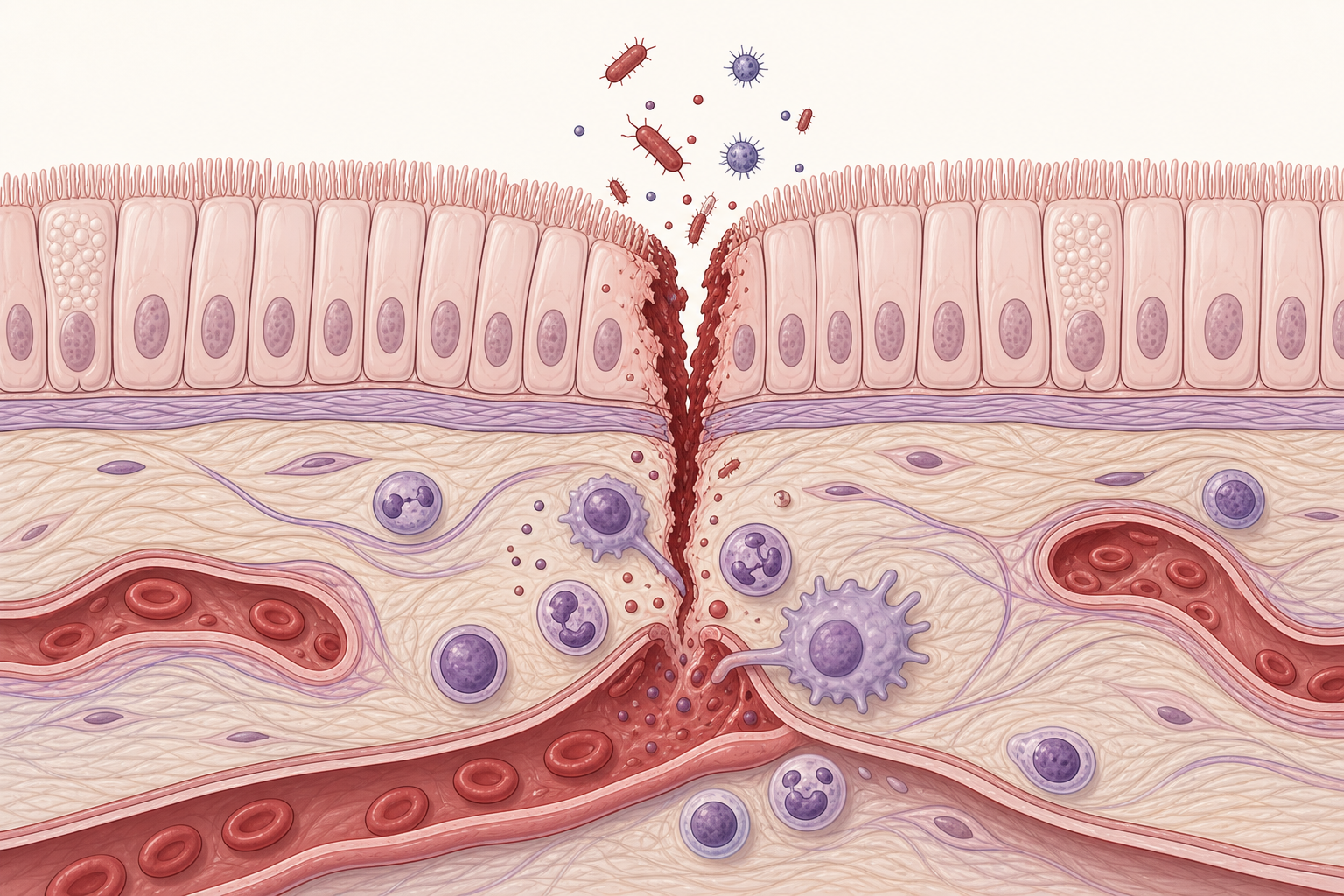
The rectal lining is especially vulnerable. Unlike the vagina, the rectum has only a single layer of columnar epithelial cells covering the lamina propria, where the CD4 T-cells that HIV preferentially infects sit close to the surface. Damage to that thin barrier puts viral particles within reach of the cells they infect most efficiently. The vagina has a thicker stratified epithelium, but during dry friction or prolonged sex, the same hyperosmolar effect plays out in slower motion.
| Lubricant type | Effect on tissue | Condom compatibility |
|---|---|---|
| Water-based, isotonic or low osmolality | Neutral; preserves mucosal hydration | Compatible with latex and polyisoprene |
| Water-based, hyperosmolar (above 1200 mOsm/kg) | Can dehydrate and damage epithelial cells | Compatible with latex |
| Silicone-based (dimethicone, cyclomethicone) | Inert on tissue; long-lasting | Compatible with latex and polyisoprene |
| Oil-based (petroleum jelly, mineral oil, baby oil) | Generally inert on tissue | Destroys latex within minutes |
| Oil-based (coconut oil, olive oil, other plant oils) | Generally inert on tissue | Weakens latex; not recommended |
What about Nonoxynol-9?
Nonoxynol-9 (often abbreviated N-9) was widely added to lubricants, condoms, and contraceptive foams in the 1990s as a spermicide that researchers initially hoped would also block HIV. It does the opposite. N-9 is a surfactant that disrupts epithelial cells, and the resulting irritation makes mucosal tissue more permeable, not less. WHO-supported trials in the early 2000s found that frequent N-9 use was associated with higher rates of HIV acquisition in high-exposure populations, which led to its removal from HIV-prevention guidance.
The product is still sold in a small number of older spermicidal lubricants and some lubricated condoms. Checking the ingredient list on the package is the only reliable way to avoid it. The label will list it as Nonoxynol-9 or N-9 near the active ingredients.
The <a href="https://www.cdc.gov/hiv/prevention/condoms.html" target="_blank" rel="noopener">CDC</a> and WHO no longer recommend Nonoxynol-9 for HIV prevention. It irritates rectal and vaginal tissue, which raises HIV susceptibility rather than reducing it. If the ingredient list includes Nonoxynol-9 or N-9, choose a different product.
Condoms and the wrong kind of slip
Latex is a long-chain polymer that holds together because the chains can slide past each other under stress without breaking. Oils dissolve those chains. The CDC's condom guidance and the underlying research dating back to a 1989 study by Voeller both establish that mineral oil significantly degrades latex within seconds of contact. Coconut oil, baby oil, hand creams, and most body lotions follow the same chemistry and weaken latex on a similar timescale.
The result is failure the user often cannot detect during sex. A condom can stretch, develop microtears, or rupture mid-use, and the change in tactile feel is usually subtle enough to go unnoticed. Polyurethane and polyisoprene condoms are more oil-resistant than latex, but they are less commonly stocked and slightly more prone to slippage. For the standard latex condom most people reach for, the rule is simple: water-based or silicone-based lubricant only.
Silicone lubricants come with one asterisk worth knowing. They are perfectly safe with latex condoms, but they should not be used with silicone sex toys (which can degrade), and some are harder to wash out of fabric. The trade-off is generally worth it because silicone lubricants last significantly longer than water-based ones during prolonged sex, which means less reapplication and less dry-friction risk.
| Lubricant ingredient | Effect on latex condoms | Recommended use |
|---|---|---|
| Petroleum jelly (Vaseline) | Degrades latex within seconds | Never with latex condoms |
| Coconut, olive, or mineral oil | Weakens latex within minutes | Avoid with latex condoms |
| Glycerin (in water-based lubes) | Latex-safe but can irritate tissue | Look for glycerin-free for sensitive use |
| Dimethicone (silicone) | Inert and safe with latex | Recommended; pairs well with latex condoms |
| Hydroxyethylcellulose (HEC, water-based) | Safe with latex | Common base ingredient in isotonic formulas |
Choosing a safer lubricant without a chemistry textbook
Three signals on a lubricant label cover most of the relevant safety information. First, the base type should be clearly stated as water-based or silicone-based. Second, the product should explicitly say condom-compatible or condom-safe somewhere on the front of the package, not buried in fine print. Third, the ingredient list should not contain Nonoxynol-9, petroleum jelly, mineral oil, or any plant or seed oil if the lubricant is intended for use with latex condoms.
For people having anal sex specifically, two additional checks help. The package should either mention rectal use as an intended application or at least not exclude it (some products say not for rectal use, and that warning is meaningful). And the osmolality value, if listed on the bottle or available on the brand's website, should be under 1200 mOsm/kg. Isotonic products (close to body-fluid osmolality, around 280 to 380 mOsm/kg) are gentler still. Glycerin and propylene glycol both raise osmolality, so glycerin-free water-based formulas tend to sit in the friendlier range.
Several brands have explicitly reformulated to meet the WHO 2012 safety profile, including Sliquid, Good Clean Love, and YES. Brand reputation alone is not a substitute for reading the ingredient list, but it narrows the field. For people who prefer silicone, products built around dimethicone and cyclomethicone are usually the simplest read on the shelf.
Use water-based or silicone-based lubricants during sex to help keep the condom from tearing. Don't use oil-based lubricants because they can weaken the condom and cause it to break.
Microtears and what they mean for HIV exposure
Microtears are abrasions in mucosal tissue too small to feel or see, but large enough to expose the immune cells underneath to fluid contact. They occur routinely during dry friction, vigorous sex, and prolonged sex even when condoms are used. The CDC's overview of how HIV is transmitted identifies mucosal damage and pre-existing STIs among the biological factors that raise the per-act probability of HIV acquisition.
This is the underlying reason adequate lubrication appears in mainstream HIV-prevention advice for receptive anal sex. The rectum produces no natural lubrication, so all of the slip during anal sex comes from whatever lubricant was applied. Skipping lube entirely produces dry friction, which produces microtears, which produces openings for any virus present in fluid that gets through a compromised condom or no condom at all.
The same logic applies to vaginal sex when natural lubrication is reduced. That can happen during postmenopausal sex, sex during certain points in the menstrual cycle, sex while taking some antihistamines or SSRIs, and any sex that lasts longer than the body's own lubrication can keep up with. In all those scenarios, supplemental lubricant is the simplest barrier-preservation tool available, and it costs nothing in terms of safety as long as the product itself is appropriate.
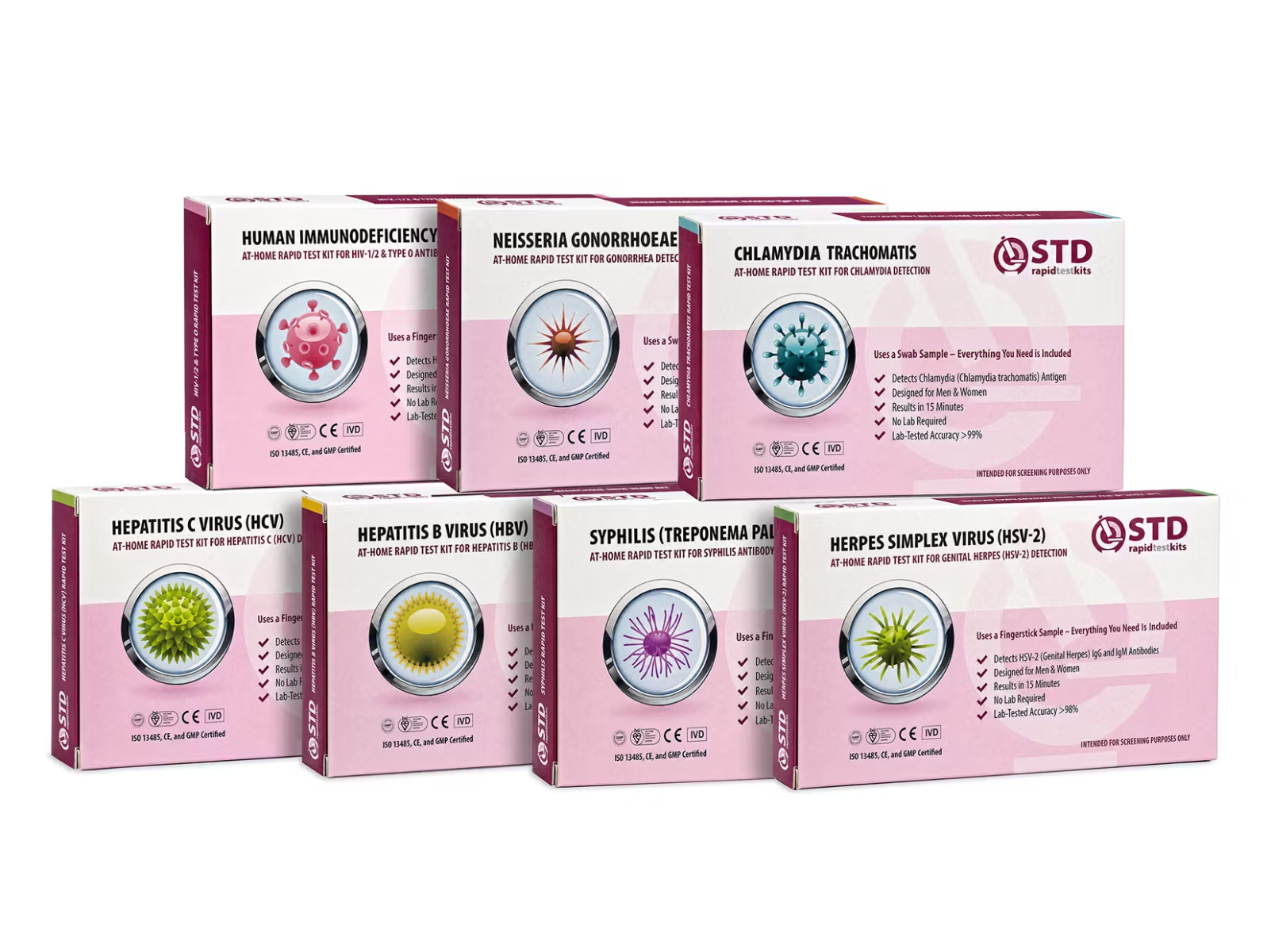
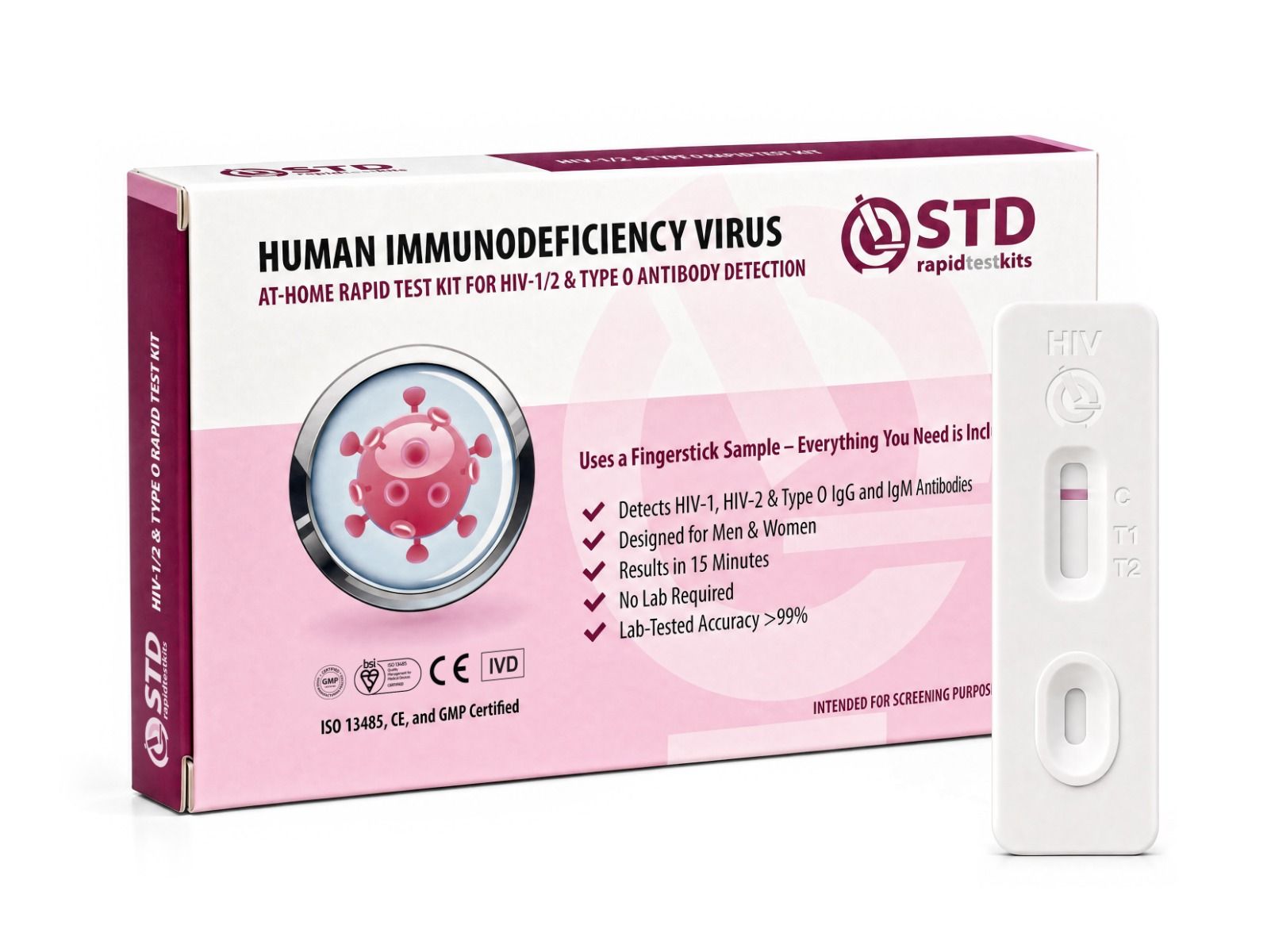
If you think a condom failed or you had unprotected sex with a partner of unknown status, the right test depends on timing. The CDC notes that fourth-generation antigen and antibody lab tests can detect HIV from about 18 to 45 days after exposure. Rapid antibody-based fingerstick tests, including at-home kits, are most reliable from about 23 to 90 days post-exposure, with the 90-day mark being the confident negative window. If the exposure was within the last 72 hours and you are worried, post-exposure prophylaxis (PEP) is available from clinics, urgent care, and many emergency rooms, and it has to start inside that 72-hour window to work.
Common myths about lube and HIV risk
Myth: every lubricant sold in pharmacies is safe to use with condoms. Pharmacies stock both compatible and incompatible products on the same shelf. Petroleum jelly, baby oil, hand lotion, and massage oils are common shelf items and all of them weaken latex condoms. The fact that a product sits in the personal-care aisle is not a safety endorsement for use during sex with a latex barrier.
Myth: natural or organic lubricants are automatically safer. Plant oils such as coconut, olive, and sweet almond are technically natural and may be gentle on the skin in other contexts, but they all weaken latex. A product labeled natural can still be incompatible with latex condoms, and natural ingredients can still be hyperosmolar.
Myth: flavored lubricants are the same risk profile as unflavored ones. Many flavored lubricants contain glycerin, sugar alcohols, or sweeteners that raise osmolality and can disrupt vaginal pH. Some flavored products are formulated for oral use only, where the risk profile differs from internal use. The package usually states which uses have been validated.
Myth: saliva is a fine alternative when no lubricant is available. Saliva dries quickly during sex, contains digestive enzymes that can irritate mucosal tissue, and is not formulated for sustained internal contact. It is also not a barrier against any STI.
Myth: lube is just for gay men or kinky sex. Lubricant is a basic safer-sex tool across orientations, genders, and types of sex. Heterosexual couples, postmenopausal partners, and people on medications that reduce natural lubrication all benefit from it. Reaching for lube is a sign of attention to safer sex, not weakness or kink.
Three quick checks at the pharmacy shelf cover most of the safety question. (1) Is the base water-based or silicone-based? (2) Does the front of the package say condom-compatible or condom-safe? (3) Is Nonoxynol-9 absent from the ingredient list? Three yeses means the product is safe to use with a latex condom. Bonus check for anal use: osmolality under 1200 mOsm/kg, listed on the bottle or the brand's website.
The bottom line on lube and HIV prevention
The risk profile of a lubricant comes down to two questions: what it does to the tissue it touches, and what it does to the condom it touches. Water-based and silicone-based products labeled condom-safe, with osmolality under 1200 mOsm/kg and no Nonoxynol-9, address both. Oil-based products, hyperosmolar water-based products, and anything containing N-9 fail one or both checks.
Choosing a safer lubricant is one decision among several that compound to lower HIV risk. The others are familiar: consistent and correct condom use, knowing a partner's status, taking PrEP if appropriate, and routine STI testing. Lubricant is the least-talked-about item on that list, which is why even careful people sometimes assume their pharmacy purchase is fine when it actually undermines their other precautions.
If a possible exposure has already happened, the next step is testing on the right timeline. At-home rapid HIV tests using fingerstick blood reach reliable accuracy at about 90 days post-exposure. Earlier testing through a lab (fourth-generation antigen and antibody) can give a meaningful result from about 18 to 45 days. The CDC's HIV testing page lists window periods by test type for anyone who wants the full breakdown.
Frequently asked questions
- Can the wrong lube actually increase HIV transmission risk?
- Yes, through two pathways. Oil-based lubricants break down latex condoms, opening up fluid exchange that the condom is supposed to block. And lubricants with very high osmolality (above about 1200 mOsm/kg) can dehydrate and damage the cells lining the rectum or vagina, weakening the body's natural barrier. Either route can raise the per-act probability of HIV acquisition if a partner is HIV-positive with detectable virus.
- Which lubricants are condom-safe?
- Water-based and silicone-based lubricants are compatible with latex, polyisoprene, and polyurethane condoms. Look for products that explicitly say condom-safe or condom-compatible on the front of the package. Avoid anything oil-based with latex condoms, including petroleum jelly, baby oil, coconut oil, mineral oil, and most hand lotions.
- Does silicone lubricant damage latex condoms?
- No. Silicone lubricants are chemically inert toward latex and are one of the recommended options alongside water-based products. The caveat with silicone is that it can damage silicone sex toys (not condoms). For latex condoms specifically, silicone lube is safe and tends to last longer than water-based options during prolonged sex.
- What is osmolality and why does it matter for HIV risk?
- Osmolality measures how concentrated dissolved particles are in a fluid. When a lube has much higher osmolality than your body's cells (about 280 to 300 mOsm/kg), water gets pulled out of those cells through osmosis, dehydrating the tissue and making it prone to tearing. WHO guidance recommends water-based lubricants used during anal sex stay under 1200 mOsm/kg, with isotonic formulas (around 380 mOsm/kg or lower) preferred.
- Is Nonoxynol-9 still in any lubricants and is it safe?
- Yes, Nonoxynol-9 (N-9) is still listed on some older spermicidal lubricants and condoms. No, the CDC and WHO no longer recommend it for HIV prevention. N-9 irritates rectal and vaginal tissue, which raises HIV susceptibility rather than reducing it. Check the ingredient list and avoid any product that contains N-9.
- Can I use coconut oil as a lubricant?
- Not with latex condoms. Coconut oil, like other plant and mineral oils, weakens latex within minutes and can cause condom failure that is not visible during use. If you are using a non-latex barrier (polyurethane condom or no condom) and tissue tolerance is the only consideration, coconut oil is generally well tolerated, but for any latex barrier, a water-based or silicone-based product is the safer choice.
- How does lubricant reduce HIV risk during anal sex specifically?
- Dry friction during anal sex causes microtears in the thin rectal lining, and those tears expose the immune cells that HIV infects most efficiently. Adequate lubrication prevents that abrasion in the first place and also reduces the heat and pressure that can cause a latex condom to slip or rupture. The product matters as much as the act of using it: a water-based or silicone-based lube under 1200 mOsm/kg gives you the friction reduction without the cell-dehydration trade-off.
- If I had unprotected sex with a partner of unknown status, when should I test?
- If the exposure was within 72 hours, the most time-critical step is post-exposure prophylaxis (PEP), available at clinics, urgent care, and emergency rooms; it stops working past that 72-hour cutoff, so do not wait. For testing, a fourth-generation lab panel (antigen plus antibody) becomes useful from roughly 18 days out. Rapid antibody fingerstick tests, including at-home kits, give their most reliable read between 23 and 90 days, with the 90-day point as the standard confident negative.
This article summarizes current public-health guidance from the CDC and WHO on lubricant safety, condom compatibility, and HIV prevention. It combines that guidance with the underlying research on osmolality, mucosal damage, and barrier integrity that those bodies cite. Editorial review and clinical accuracy check by our staff medical reviewer. This piece is a summary of public-health information, not clinical advice. If you have specific concerns about a possible exposure, see a clinician or contact a sexual-health clinic.
- U.S. Centers for Disease Control and Prevention. Preventing HIV with condoms, including the recommendation that water-based or silicone-based lubricants be used with latex condoms and that oil-based lubricants be avoided.
- U.S. Centers for Disease Control and Prevention. How HIV is transmitted, including the role of mucosal damage and co-occurring STIs in per-act probability of acquisition.
- U.S. Centers for Disease Control and Prevention. HIV testing types and window periods for fourth-generation lab tests and rapid antibody tests, including the 23-to-90-day window for antibody tests.
- World Health Organization and UNFPA, advisory note (2012). Use and Procurement of Additional Lubricants for Male and Female Condoms, including the procurement specification that lubricant osmolality should be less than 1200 mOsm/kg.
- World Health Organization. HIV fact sheet, including current prevention recommendations and epidemiology.
- U.S. National Library of Medicine, MedlinePlus. HIV and AIDS topic page, including overview of transmission routes and testing.
