





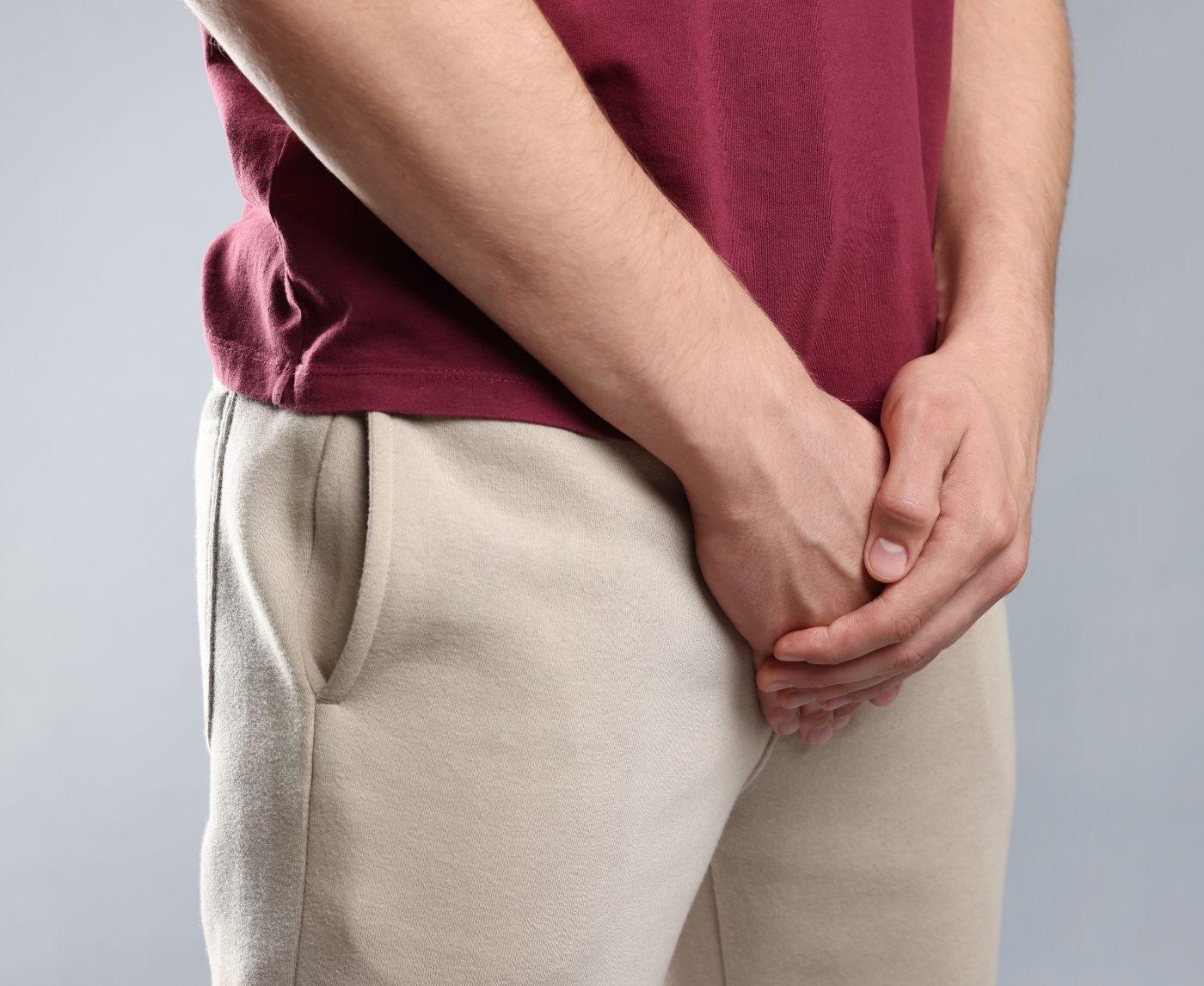

Quick Answer: Testicle pain with no other symptoms can be caused by chlamydia, especially if it’s due to epididymitis. Even without discharge, it’s worth testing, this STD often hides.
Who This Guide Is For (And Why It Matters)
This article is for every guy who felt a weird ache down there and didn’t know what to think. For men who’ve had sex recently, casual, protected, oral, or otherwise, and now feel an odd soreness in one testicle. For people who don’t have a clinic nearby, who feel embarrassed walking into a waiting room, or who just want to know if this is serious.
It’s also for anyone who’s been told chlamydia “always comes with discharge” (it doesn’t), or who thinks no symptoms means no problem. We get it. It’s confusing, scary, and sometimes shame-laced. But the truth? Testicle pain can be a red flag your body whispers, and you deserve real answers, without judgment, without fear.
In this guide, we’ll break down the causes of testicular pain, how chlamydia-related epididymitis feels compared to other conditions, what tests to use, and when it’s time to act. We'll also show you the discreet, at-home options available so you can skip the awkwardness and get peace of mind.
People are also reading: STD or Something Else? Waking Up with Discharge Explained
What’s Causing That Ache? Breaking Down the Possibilities
One-sided testicle pain can have several causes, and yes, STDs like chlamydia are on the list. But so are injuries, torsion, hernias, and infections unrelated to sex. The trick is knowing how to tell them apart, or at least when not to wait.
| Cause | Likely Symptoms | Related to Sex? | Urgency |
|---|---|---|---|
| Chlamydia-induced Epididymitis | Dull ache or heaviness, one swollen testicle, mild tenderness | Yes | Moderate – testing & treatment needed |
| Testicular Torsion | Sudden severe pain, high-riding testicle, nausea | No | Emergency – immediate care |
| Inguinal Hernia | Groin bulge, pressure, worsens with lifting | No | High – surgical eval needed |
| Varicocele | “Bag of worms” feel, dull ache, worsens when standing | No | Low – often benign, but checkup recommended |
| Trauma or Sports Injury | Localized pain, bruising, swelling | No (unless during sex) | Variable – depends on severity |
| Urinary Tract Infection (UTI) | Pain during urination, frequent urge to pee, discomfort | Sometimes | Moderate – test and treat |
Figure 1. Common causes of one-sided testicular pain, including chlamydia-related inflammation. This table helps readers compare likely sources and urgency levels.
This Isn’t Just Blue Balls, And Here’s Why
The phrase "blue balls" gets tossed around casually, but the condition itself, technically called vasocongestion, goes away quickly and doesn’t come with swelling, redness, or ongoing pain. If your ache sticks around for more than an hour or two, worsens with touch, or you feel tenderness near the top of the testicle (where the epididymis sits), it's time to rule out more serious causes.
Chlamydia doesn’t always announce itself with flashy symptoms. For many men, there's no burning, no discharge, and no fever, just a slowly developing soreness in one testicle. This isn’t rare: in younger men under 35, chlamydia is one of the most common causes of epididymitis, even in those who feel otherwise fine.
That’s why testicle pain should never be shrugged off as just “post-sex soreness” or “no big deal.” It could be your body’s only clue that an infection is quietly taking hold, and early testing is the best way to stop it in its tracks.
What Chlamydia Does to the Testicles (Even Without Symptoms)
When chlamydia enters the male reproductive system, it often climbs upward through the urethra and into the epididymis, the tiny, coiled tube behind each testicle that stores and matures sperm. Once there, the infection can cause swelling, irritation, and a dull ache that might be your first, and only, warning sign.
This condition is called epididymitis, and it doesn’t need a lot of symptoms to do damage. In fact, studies show that up to 50% of men with chlamydia-caused epididymitis report no fever, no discharge, and no pain during urination. Just that persistent ache in one testicle that won’t fully go away.
Untreated, this can eventually lead to complications like abscess formation, chronic pain, or even fertility issues. But caught early, it's usually easy to treat with antibiotics, making testing not just smart, but essential.
“I Thought It Was Just a Pulled Muscle”
Jamal, 27, was traveling for work when he noticed a slight ache in his left testicle. He assumed he’d slept funny or strained something lifting luggage. There was no discharge, no pain when he peed, nothing he thought was serious. But the soreness stuck around for four days, and he started to get anxious.
“I kept Googling stuff like ‘one testicle sore no STD symptoms’ and everything said torsion or blue balls,” Jamal recalls. “I didn’t want to go to urgent care in another city, but I also couldn’t ignore it.”
He ordered an at-home chlamydia test out of caution. When it came back positive, he was shocked, but relieved to have an answer. After a round of antibiotics, the pain faded. But he says he now tells his friends: “If something feels off, don’t wait for the ‘classic’ STD signs. It might not look like the movies.”
This kind of delayed reaction is common, especially when discomfort doesn’t come with the “expected” symptoms like discharge or a burning sensation. But chlamydia doesn’t follow a script, and neither should your decision to get tested.
Check Your STD Status in Minutes
Test at Home with RemediumChlamydia Test Kit
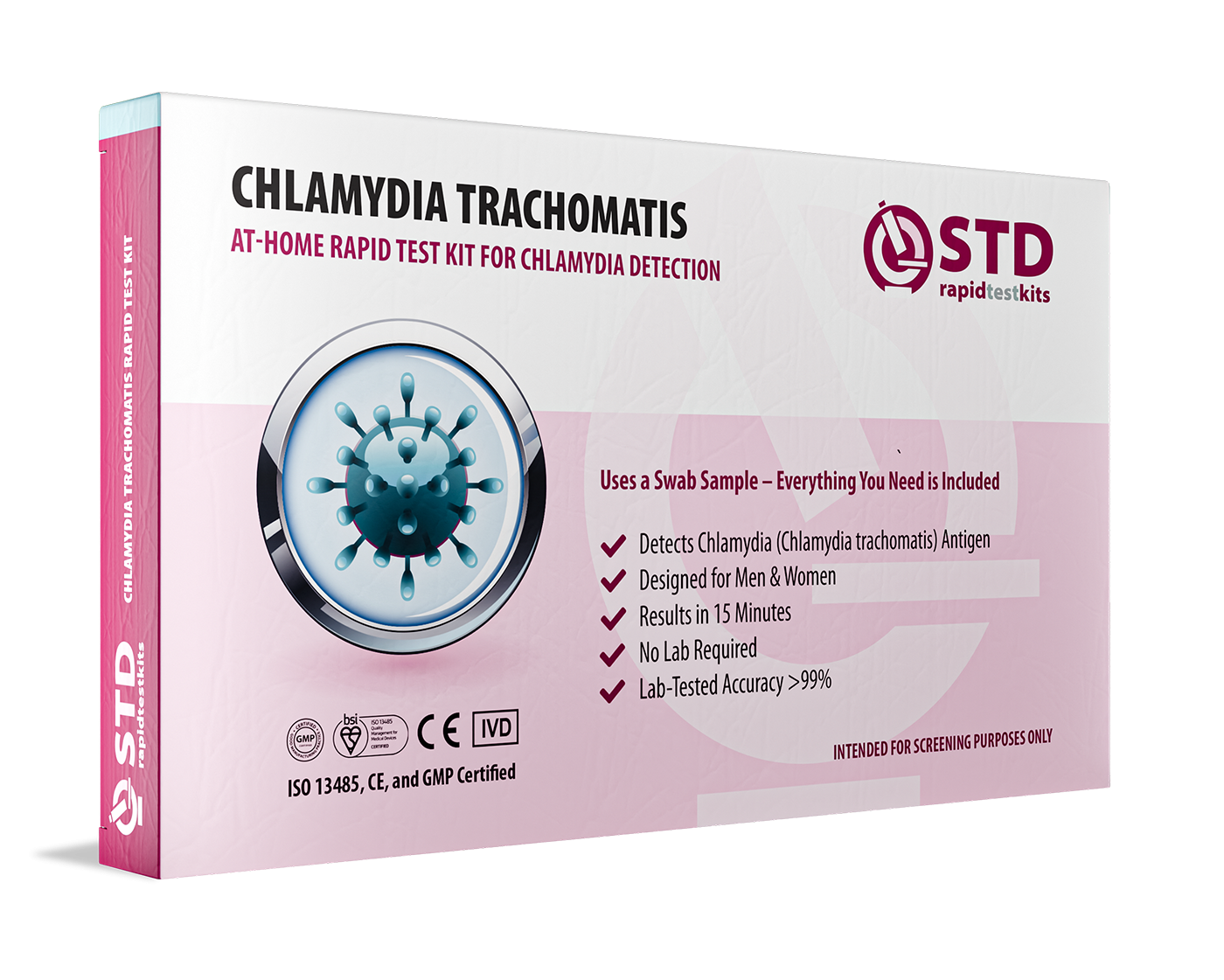
 For Men & Women
 Results in Minutes
 No Lab Needed
 Private & Discreet
Order Now $33.99 $49.00
Still Not Sure? Here’s How to Read the Signs
Testicle pain caused by chlamydia tends to develop gradually. It’s usually dull or throbbing, often isolated to one side, and might be accompanied by a feeling of heaviness or mild swelling. Unlike sharp or sudden pain (which may suggest torsion), chlamydia-related discomfort feels more like an annoying pressure that lingers.
Other potential indicators include:
| Possible Sign | Could Be Chlamydia? | Needs Immediate Care? |
|---|---|---|
| One testicle feels swollen or warm | Yes | Within a few days |
| No discharge but dull pain post-sex | Yes | Test promptly |
| Sharp, sudden pain with nausea | Unlikely | Emergency (possible torsion) |
| Testicle rides higher than normal | No | Emergency |
| Redness or skin irritation over scrotum | Maybe (or another infection) | Soon |
Figure 2. Interpreting testicle pain and when it may be linked to chlamydia. This table separates red flags from low-symptom infections.
Don’t Guess, Test: What to Use and When
While any test is better than none, not all STD tests work the same way. For chlamydia-related testicle pain, the most accurate option is a NAAT (nucleic acid amplification test), which detects the bacteria’s genetic material in urine or swab samples. These are the same tests used in clinics, and many at-home kits use the same technology.
If your symptoms are recent (within the past 2 to 14 days), you’re within the window period where testing becomes reliable. Testing too early (like within 24–48 hours of exposure) may miss the infection. That’s why many people test around day 7, and retest at day 14 if symptoms continue.
You don’t have to go to a clinic to get answers. STD Rapid Test Kits offers discreet, FDA-cleared options that ship to your door, no awkward conversations, no waiting rooms.
What Happens If You Ignore Testicle Pain Linked to Chlamydia?
Let’s be blunt: ignoring one-sided testicle pain, even if mild, can lead to complications you don’t want. When chlamydia travels unchecked into the reproductive tract, it can trigger more than just a dull ache. Over time, untreated epididymitis may cause scar tissue to form, block sperm flow, or lead to long-term pain. In rare cases, it can damage the testicle itself.
It’s not just your health at stake. Chlamydia is often transmitted unknowingly, especially when the person carrying it has no classic symptoms. If you're sexually active and experiencing testicle discomfort, even in the absence of discharge, it’s crucial to test not just for yourself, but for your partners.
Research from the Sexually Transmitted Diseases journal shows that chlamydia-related epididymitis is the leading cause of male infertility in certain age groups. The good news? Antibiotic treatment almost always works, if you catch it early.
Do You Need to Retest? Here’s When and Why
Even if your first test comes back negative, that doesn’t always mean you’re in the clear. Chlamydia has a window period of 7 to 14 days, meaning testing too early can miss an active infection. If you’ve had unprotected sex within the last two weeks, and especially if you’re having testicle pain, it’s smart to consider a retest after day 14.
Retesting is also crucial after treatment. According to CDC guidelines, men treated for chlamydia should retest about three months later, even if symptoms are gone. This isn’t because the treatment didn’t work, but because re-infection from untreated partners is common.
Here’s a simple guide:
| Situation | When to Retest | Why It Matters |
|---|---|---|
| Tested before day 7 post-exposure | Retest after day 14 | Early tests may miss infection |
| Still have symptoms after treatment | Retest in 2–3 weeks | To check for lingering infection |
| Partner wasn’t treated | Retest in 1–2 months | Reinfection risk is high |
| No symptoms but had new exposure | Test at day 14, then again at 3 months | Prevents silent spread |
Figure 3. Retesting recommendations based on exposure, symptoms, and treatment. When in doubt, repeat testing is safer than guessing.
What About Fertility and Long-Term Impact?
For most people, chlamydia that’s caught and treated won’t leave lasting damage. But untreated, it can affect sperm transport by causing scarring in the epididymis or vas deferens. This is especially true if pain has been present for more than two weeks or becomes chronic.
Men dealing with long-term discomfort after chlamydia may need an ultrasound or urology referral, but this is rare when infections are treated promptly. The key takeaway: early action prevents escalation. You don’t need to panic, but you do need to test.
If you’re planning to have children one day, this is an especially important reason not to “wait and see.” Testicle pain may feel minor now, but it can quietly interfere with fertility if left unchecked.
Talking to Your Partner Without Shame
Getting a positive result, or even just worrying about symptoms, can stir up guilt, fear, or awkwardness. But it doesn’t have to. Sharing your concerns with a partner isn’t an accusation; it’s part of taking care of each other’s health. Try this:
“Hey, I noticed some pain down there, and I read that it could be linked to chlamydia, even without symptoms. I’m getting tested just to be sure, I’d love if you did too, just so we both know.”
Many people carry STDs without knowing. Offering your partner the opportunity to test isn’t just kind, it’s crucial. And when it’s awkward to say face-to-face, you can share a link to an at-home test kit like this discreet combo kit.

People are also reading: HPV in Men: Why Testing Still Doesn’t Exist, And What You Can Do
You’re Not “Dirty”, You’re Human
Let’s be clear: getting chlamydia, or even just worrying about it, doesn’t make you irresponsible or dirty. It makes you normal. STDs are part of the reality of sexually active life, especially when symptoms are subtle or absent.
What matters is how you respond. Testing is care, not confession. Pain in one testicle might be from a pulled muscle, or it might be your body giving you a quiet but critical heads-up. Either way, listening to it is the smart, strong move.
FAQs
1. I have pain in one ball but no other symptoms. Could it still be chlamydia?
Yes, and it’s more common than people think. Chlamydia can inflame the epididymis (the tube behind your testicle), causing a dull ache or heaviness, usually on one side. You might not see discharge or feel a burn when you pee. That doesn’t mean nothing’s wrong. If your only clue is a weird soreness that won’t go away, testing is still smart.
2. What does chlamydia-related testicle pain actually feel like?
Most guys describe it as a nagging, low-key ache. Not sharp or scream-worthy, just enough to notice and then keep noticing. It might feel heavier on that side, or like pressure that gets worse when you're standing or moving around. If you’re thinking “maybe I just slept on it weird,” but it’s day three and it’s still bothering you? Time to test.
3. I thought STDs came with discharge or a burning feeling. No?
That’s the stereotype, and it’s outdated. Chlamydia is sneaky, it can live in your body without classic signs. In men, a lot of infections go unnoticed until something like testicle pain shows up. So don’t rely on obvious symptoms. They’re not always part of the story.
4. Couldn’t it just be from sex or a pulled groin?
Sure, it could be. We’re not here to make you panic over every ache. But if the pain is hanging around, or it showed up after a risky hookup, or there’s even a flicker of “what if”, just test. Best case, you rule it out. Worst case, you catch something early and fix it fast.
5. What if I tested too early, should I do it again?
If you tested within 3 to 5 days of exposure and it came back negative, that might be too soon. Chlamydia tests are most accurate after 7 days. Still worried? Retest around day 14, especially if symptoms like testicle pain stick around. Better safe than sorry, or scarred.
6. Can chlamydia affect fertility if I ignore it?
Unfortunately, yes. Long-term untreated infections can cause scarring in the tubes that carry sperm. That doesn’t happen overnight, but it’s why dragging your feet on testing isn’t worth the risk. One test now beats wondering later why things aren’t working.
7. My testicle pain got better after a few days. Should I still test?
Yes. Chlamydia doesn’t always stay noisy. The pain may go quiet, but the infection might still be there, and still be contagious. Think of the pain as a fire alarm. Even if it stops ringing, you still check the building, right?
8. Do I need to tell my partner if I’m just “worried” and haven’t tested yet?
You don’t owe anyone a dramatic reveal, but honesty is care. A simple “Hey, I’m feeling off down there and getting tested just to be sure” goes a long way. You’re not accusing anyone. You’re showing up for yourself and your partner. That’s real intimacy.
9. Can I use an at-home test for this?
Absolutely. You can get accurate, discreet kits that test for chlamydia using a simple urine sample, no doctor visit, no awkward questions. The Chlamydia Rapid Test works well if you want fast clarity without leaving home.
10. I’m still scared. What if I mess this up?
It’s okay to be scared. You’re not alone, and you’re not broken. Testing is a power move, not a punishment. Whatever the result, you’ll know where you stand, and that’s way better than spiraling in the unknown. You’ve got this.
You Deserve Answers, Not Assumptions
Your body speaks in subtle ways. A sore testicle, especially when it’s the only symptom, is easy to dismiss, but it can also be a warning worth listening to. Chlamydia doesn’t always come with fanfare, but it can still cause real harm if ignored.
Testing is simple, discreet, and fast. And the sooner you know, the sooner you can treat, heal, and move on with peace of mind. Don’t stay stuck in worry. This at-home combo STD test kit checks for the most common infections, including chlamydia, no clinic, no judgment, no waiting.
How We Sourced This Article: We combined current guidance from leading medical organizations with peer-reviewed research and lived-experience reporting to make this guide practical, compassionate, and accurate. In total, around fifteen references informed the writing; below, we’ve highlighted some of the most relevant and reader-friendly sources.
Sources
1. CDC Treatment Guidelines: Epididymitis and STIs
2. Mayo Clinic: Epididymitis Overview
3. NHS: Epididymitis Symptoms and Causes
4. Planned Parenthood: Chlamydia
5. CDC: STI Treatment Guidelines — Epididymitis
About the Author
Dr. F. David, MD is a board-certified infectious disease specialist who works to stop, diagnose, and treat STIs. He combines clinical accuracy with a straightforward, sex-positive approach and is dedicated to making it easier for readers to find what they need, whether they live in a city or off the grid.
Reviewed by: Emily Vargas, MPH | Last medically reviewed: December 2025
This article is for informational purposes and does not replace medical advice.


