Published: December 2025 | Last updated: May 2026 | Editorial review and quality control: Martina N.
There is no FDA-approved HPV test for men, men who have sex with men (MSM), trans men, or anyone else without a cervix. That single fact shapes most of what follows. If a clinic has ever told you "you're not at risk" or "we don't screen for that in your body," the gap is real, and it isn't your imagination. Routine HPV testing in the United States was built around cervical screening, and everyone else is largely invisible to it.
This guide walks through what HPV actually is, why screening still skews toward people with cervixes in 2026, what symptoms are worth tracking, and which at-home and clinic options exist if you don't have a cervix. The audience is the people HPV conversations usually skip: sexually active gay and bisexual men, trans men, nonbinary readers, and anyone whose anatomy doesn't fit the standard screening template. The goal is calm, accurate, plain-English information, not panic and not a sales pitch.
Key Takeaways
- The only FDA-approved HPV screening test samples cervical cells; no equivalent routine screen exists for men, MSM, or trans and nonbinary people without a cervix, although anal swabs and high-resolution anoscopy are available at some LGBTQ-affirming clinics.
- The HPV vaccine (Gardasil 9) is routinely recommended through age 26 and is approved through age 45 via shared decision-making with a provider, regardless of gender or sexual orientation (per CDC and ACIP).
HPV 101: The Most Common STI, and the Most Misunderstood
Human papillomavirus is a family of related viruses, with dozens of types that infect the genital area, anus, mouth, and throat (CDC genital HPV fact sheet). Most types cause no symptoms and clear on their own within 1 to 2 years. A handful cause genital warts. A smaller subset is classified as high-risk because the infections can lead, over years or decades, to cancers of the cervix, anus, penis, vulva, vagina, or oropharynx (the back of the throat).
HPV spreads through skin-to-skin contact, not only through penetrative sex. That includes vaginal, anal, and oral sex, but also genital rubbing, sharing sex toys, and any genital-to-genital contact. Condoms reduce transmission risk substantially but don't eliminate it, because HPV can live on skin that a condom doesn't cover. Most sexually active adults will encounter at least one HPV type at some point in their lives, and most will clear it without ever knowing.
Here is where the system breaks down: the only FDA-approved HPV screening test samples cells from the cervix during a Pap-style exam. There is no FDA-cleared throat swab, anal swab, penile swab, or urine test for routine HPV screening. The standard screening pipeline doesn't include a test for people without a cervix. The infections still happen there too.
Most HPV infections clear on their own within about two years, and most people who carry the virus never know it. The high-risk story matters, but it isn't the whole story.
Why There's No FDA-Approved HPV Test for Men
The reason is partly biological and partly historical. Cervical HPV tests work by collecting epithelial cells from a clearly defined surface during a routine speculum exam. The cervix has well-mapped sampling techniques, decades of validation data, and a clinical workflow attached to Pap smears. Penile, scrotal, anal, and oropharyngeal HPV doesn't have that same clean sampling pathway. The virus often lives on keratinized skin where DNA yields are lower and harder to standardize.
The historical piece is just as relevant. Cervical screening was prioritized because cervical cancer rates were once high and the cancer was clearly traceable to specific high-risk HPV types. HPV-driven anal, penile, and oropharyngeal cancers were recognized later, and screening tools for those sites are still catching up. Research-grade anal HPV swabs and oral HPV swabs exist, and some LGBTQ-affirming clinics offer them, especially for people living with HIV. They aren't FDA-approved for general screening, and insurance coverage varies.
Testing men for HPV is technically possible, but it isn't a routine public-health program. Even where research-grade swabs exist, getting one usually means traveling to a study site or to a specialty clinic that runs them off-label.
What HPV Can Look Like (and When It's Invisible)
HPV symptoms are often subtle or completely absent, and most new bumps in the genital area have benign explanations. Genital warts can be flesh-colored, flat or raised, smooth or cauliflower-shaped, and can appear on the penis, scrotum, groin, anus, or surrounding skin. Some warts appear around the anus in people who haven't had receptive anal sex, because HPV spreads on skin and doesn't require penetration. Oral HPV usually causes no symptoms at all, and the high-risk types most associated with throat cancer can stay silent for many years before any tissue change is visible.
Most new bumps in the genital area are not HPV. Common look-alikes include pearly penile papules, Fordyce spots, ingrown hairs, sebaceous cysts, and folliculitis. A clinician can usually distinguish these from warts on visual exam, and a biopsy can settle the question if appearance is ambiguous. The table below summarizes presentation patterns and what testing or examination is realistic for each site.
| Body area | What HPV can look like | What's available today |
|---|---|---|
| Penis or scrotum | Small bumps or warts, often painless and skin-colored; flat or raised | Visual exam by a clinician; biopsy if appearance is unclear; no FDA-approved screening swab |
| Anus or perianal skin | Warts, mild discomfort, or bleeding; often no symptoms at all | Anal swab or anal Pap (offered at some LGBTQ-affirming clinics, especially for MSM and HIV-positive patients); high-resolution anoscopy if abnormal |
| Throat or mouth | Usually invisible; rarely a persistent sore throat, hoarseness, or a lesion that doesn't heal | ENT specialist exam; throat swabs are mostly research-grade and not routinely available |
Do At-Home HPV Tests for Men Exist?
Short answer: not in any FDA-approved over-the-counter form. Most consumer HPV home kits are designed for cervical self-sampling. Some require a Pap-style insertion that doesn't apply to people without a cervix. A small number of mail-in laboratory services offer self-collected anal swabs aimed at MSM, but those are not FDA-cleared for general screening and access is uneven.
Here's how the current landscape looks, side by side.
| Test type | Available for men or MSM? | How it works | FDA approved for screening? |
|---|---|---|---|
| Cervical HPV swab | No (requires a cervix) | Self-inserted swab sampling cervical cells | Yes |
| Anal HPV swab (clinic or mail-in) | Sometimes | Self- or clinician-collected anal swab sent to a lab; not widely offered | No |
| Throat HPV swab | Rarely | Self- or clinician-collected oropharyngeal swab; mostly research-grade | No |
| Penile HPV swab | Rarely | Clinician-collected swab of the glans or shaft; research and specialty use only | No |
So what test should I get?
If you don't have a cervix, your best practical option today is a visual exam by a clinician for warts, and (for MSM, HIV-positive readers, or anyone with receptive anal sex) an anal Pap or high-resolution anoscopy at an LGBTQ-affirming clinic. There is no reliable at-home HPV test that can give you a yes-or-no answer for the high-risk strains. The HPV vaccine through age 45, plus annual STI screening for the other common infections, is the strongest evidence-based step you can take right now.
When the Doctor Says "You Don't Need to Worry"
A common pattern in primary-care visits: a patient asks about HPV testing, the provider runs the usual chlamydia, gonorrhea, and HIV panel, and the HPV question gets waved off with some version of "you don't have a cervix, so it's not really something we test for." That isn't usually cruelty. It's training. Many clinicians were taught HPV as a cervical-cancer-prevention topic, and the screening workflow they have stops there.
The data tells a different story. MSM, especially those living with HIV, face substantially elevated anal cancer risk compared with heterosexual men (National Cancer Institute, HPV and cancer). HPV may be linked to about 60% to 70% of oropharyngeal cancers in the United States (CDC, HPV and cancer). Routine screening hasn't caught up to that risk profile.
If you've been brushed off and want to push back, the callout below has a sentence that often opens the conversation. If it doesn't shift things in your visit, the next step is finding a provider who is up to date on MSM and gender-affirming sexual-health care.
"I understand there isn't a standard HPV test for people without a cervix, but I'm in a higher-risk group for anal or oropharyngeal HPV-related cancer. Can we talk about a visual exam, an anal Pap, or referral to a clinic that offers anoscopy?"
Oral HPV: The Throat Cancer Risk Most People Don't Hear About
Oral HPV spreads through oral sex (giving or receiving), deep kissing, and other oral contact. Most oral HPV infections clear on their own within 1 to 2 years and cause no symptoms. A small subset of infections with high-risk types, especially HPV-16, can persist for years and contribute to oropharyngeal cancer (cancer of the tonsils, base of tongue, and soft palate). According to the CDC's HPV cancer page, HPV may be linked to about 60% to 70% of oropharyngeal cancers in the United States.
That sounds scary at first read, so two important counterweights. First, the absolute numbers are still small relative to how many people are exposed to oral HPV across a lifetime. Most exposures clear without harm. Second, persistent oral HPV infection, when it does happen, usually progresses very slowly, often over many years, which means symptom changes that come and go in a week or two are extremely unlikely to be HPV-related cancer.
What is worth doing: if a sore throat, hoarseness, a lump in the neck, or trouble swallowing lasts more than a few weeks, get an ENT evaluation. There is no routine oral HPV swab in primary care, but a head-and-neck exam by an ENT specialist is straightforward and covered by most insurance plans.
Also, there is no approved HPV test to find HPV in the mouth or throat.
Anal Cancer Screening for MSM and Trans Patients
The one bright spot in this otherwise patchy landscape is anal cancer screening. Some LGBTQ-affirming clinics and HIV care centers now offer anal Pap smears (anal cytology), which sample cells from the anal canal the same way a cervical Pap samples the cervix. If the anal Pap shows abnormal cells, the next step is high-resolution anoscopy (HRA), a magnified visual exam of the anal canal that lets a specialist biopsy any suspicious areas. Catching pre-cancerous cell changes early is the entire point, exactly as it is for cervical screening.
These tests are not yet part of routine primary care, and many insurance plans require pre-authorization. A direct script that often works: "I have receptive anal sex and I'd like to discuss anal Pap screening or referral to a clinic that performs anoscopy for HPV-related precancer detection." It is, yes, awkward to say out loud, and it can give a clinician an opening to refer you to the right specialty service.
Who anal Pap or anoscopy is most often recommended for
- MSM, particularly those living with HIV, where anal cancer incidence is meaningfully elevated.
- HIV-positive patients of any gender with a history of receptive anal sex.
- Trans women with a history of receptive anal sex.
- Patients with a history of anogenital warts or abnormal cervical cytology.
- Solid-organ transplant recipients and other long-term immunocompromised patients.
HPV Vaccination: Not Just for Teens Anymore
Vaccination does more to prevent HPV-related cancer than any available screening tool. Gardasil 9 protects against nine HPV types, including the seven high-risk types that cause about 90% of HPV-associated cancers and the two low-risk types that cause about 90% of genital warts (CDC HPV vaccination). Per current ACIP guidance, the vaccine is recommended routinely through age 26 and is approved through age 45 via shared decision-making with a provider, for everyone regardless of gender or sexual orientation.
Groups for whom the case for catch-up vaccination is strongest, even into the late 20s, 30s, and early 40s, include MSM and gay or bisexual men of any age within the approved window, trans men and trans women, nonbinary readers with any pattern of sexual activity, anyone living with HIV or otherwise immunocompromised, and anyone with new or multiple sexual partners or expecting a change in partner status.
The vaccine doesn't treat infections you already have, and it can't clear an existing wart. What it can do is prevent infection with the other vaccine-covered types you haven't encountered yet. Even people who have had one or two HPV exposures typically benefit, because the vaccine covers nine separate types and most individuals haven't been exposed to all of them. "It's too late for me" is rarely accurate before age 45, and your provider can talk through the math for your specific situation.
ACIP HPV vaccine age guidance
- Routinely recommended for everyone through age 26.
- Approved through age 45 via shared clinical decision-making with a provider, regardless of gender or sexual orientation.
What You Can Do Right Now
If you're reading this with no clear symptoms but a buzzing mind, here is a grounded order of operations:
1. Self-check, gently, without spiraling. Periodically look at the skin of the genitals, anus, and mouth in good light, with a mirror if needed. Note any new bumps, color changes, persistent sores, or texture changes. Photograph anything you want to track. Many things in this area are benign (skin tags, pearly penile papules, Fordyce spots, ingrown hairs). Pattern over time is what's diagnostic, not a single inspection.
2. Ask a provider directly. Don't wait for the topic to come up. Request a visual genital exam, a throat check if you've had a long sore throat, and an anal Pap or anoscopy referral if you've had receptive anal sex.
3. Find a clinic that gets it. LGBTQ-affirming community health centers, university student health clinics, and HIV care centers are more likely to know what's currently offered for anal cancer screening and to handle the conversation without flinching. Many cities have an LGBTQ health directory you can search by ZIP code.
4. Get the HPV vaccine if you're eligible. Under 45 is the FDA-approved window. Some clinics offer it under sexual-health grants, and many pharmacies stock it.
5. Monitor and follow up. If you've had genital warts in the past or persistent skin changes, set a calendar reminder for a yearly visual exam. If you're living with HIV, follow the screening cadence your HIV provider recommends, usually every 6 to 12 months for anal cytology where it's available.
6. Stay current on other STIs. HPV is one virus on a longer list. Annual screening for HIV, syphilis, gonorrhea, chlamydia, and hepatitis B and C is the standard recommendation for sexually active adults, and that screen is meaningful even though it doesn't catch HPV.
Talking to Partners About HPV
HPV disclosure is unusual among STIs because the standard scripts don't fit. Most adults who acquire HPV never receive a positive test result, because the test simply isn't run on them. Many never develop a visible symptom. So the question of "telling a partner" often isn't about a recent diagnosis. It's about acknowledging that HPV is common, that you take it seriously, and that you've done what you can on your end (vaccination, regular screening for the STIs you can screen for, watching for visible changes).
A version of that conversation that lands well for many people: "HPV doesn't get tested in everyone, and most people who have it don't know. I'm vaccinated, I get screened for everything else regularly, and I'd love to know where you are with the vaccine too." That frames it as joint information rather than a confession.
If you've had a past episode of genital warts and you want to disclose, it doesn't have to be heavy: "I had warts that cleared a couple of years ago. The virus can sometimes linger, so I wanted to tell you." Most adults will respond to that calmly. If a partner reacts in a way that feels disproportionate, that reaction is usually about misinformation, not about you.
The Bottom Line
If you don't have a cervix, the U.S. medical system has not built a routine HPV test that includes you. That is a real gap, and it's a fair thing to be frustrated about. You still have options. Vaccination through age 45 covers most of the cancer-causing types. Anal Pap screening at LGBTQ-affirming clinics catches many precancerous changes early. A visual exam by a clinician handles the wart question reasonably well. ENT evaluation is the route for persistent throat symptoms.
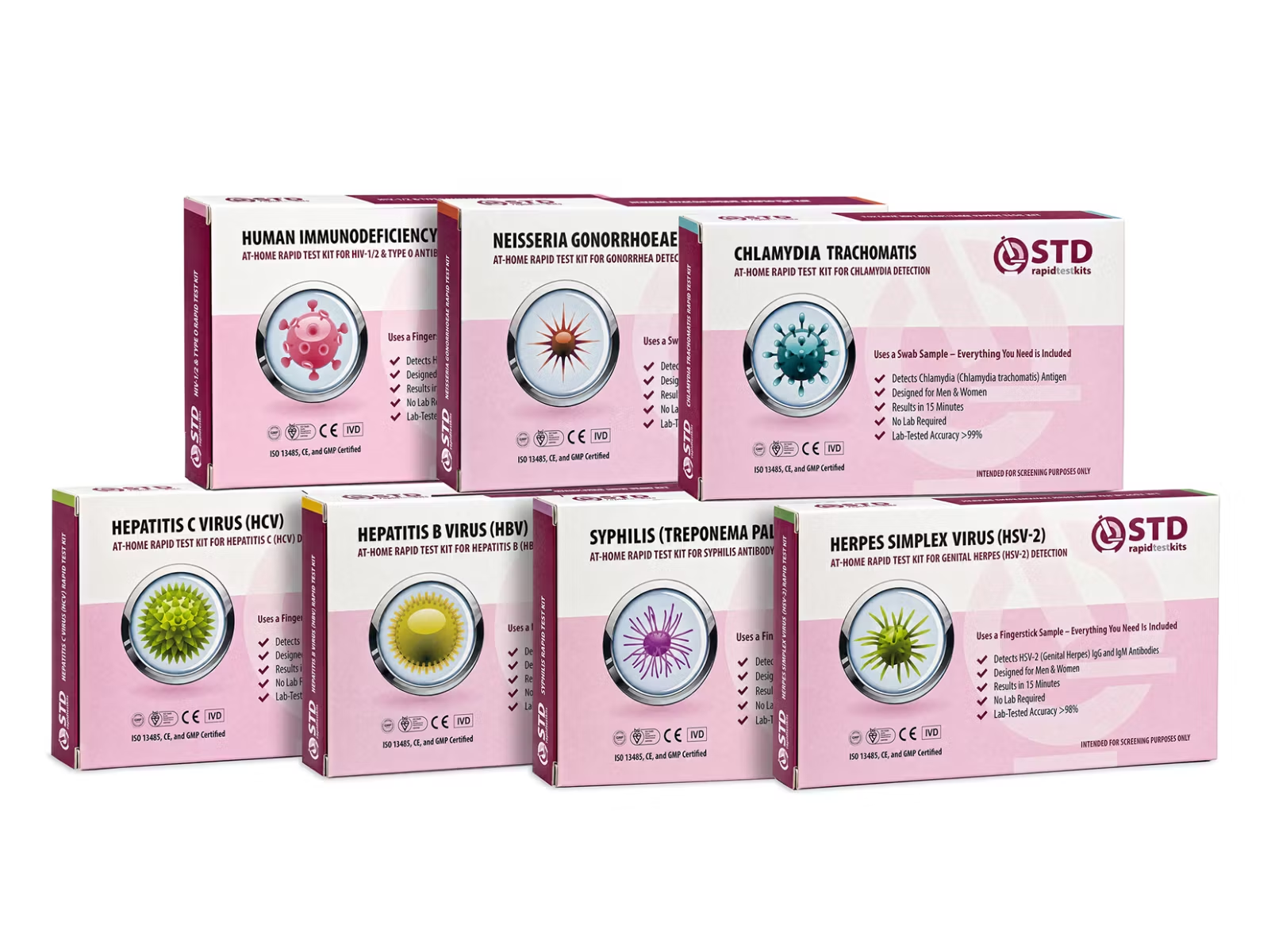
Routine annual screening for the other common STIs, which can be done either at a clinic or, increasingly, with at-home rapid kits, keeps the rest of your sexual-health picture in focus while the HPV-testing landscape continues to evolve. Your risks are real, your questions are valid, and you deserve a more useful answer to "is there a test for me?" than the brush-off you may have heard before.
Frequently Asked Questions
- Can I have HPV even if I've never had symptoms?
- Yes. Most people with HPV never develop visible symptoms. The virus can persist quietly for years, especially with high-risk types, with no outward sign. There is also no reliable at-home test for men or people without a cervix to confirm one way or the other.
- Is there an at-home HPV test if I don't have a cervix?
- Not an FDA-approved one. A handful of mail-in laboratory services offer self-collected anal swabs aimed at MSM, but those are not FDA-cleared for routine screening and access is uneven. Most consumer HPV kits on the market still require cervical self-sampling, which doesn't apply if you don't have a cervix.
- I'm already sexually active. Is the HPV vaccine still worth getting?
- In most cases, yes. Gardasil 9 covers nine HPV types, and most adults haven't been exposed to all nine. Vaccination is routinely recommended through age 26 and is approved through age 45 via shared decision-making with your provider. Even if you've had genital warts in the past, the vaccine can still protect against the high-risk types you haven't encountered.
- Why won't my doctor test me for HPV?
- Often because the testing infrastructure doesn't exist for primary-care providers. The only FDA-approved HPV test is the cervical one, and most clinicians weren't trained on anal or oropharyngeal HPV sampling. Asking specifically about a visual exam, an anal Pap, or referral to a clinic that performs anoscopy is the way to get a more substantive conversation going.
- What if I'm trans or nonbinary and don't feel safe at a standard clinic?
- Look for clinics that advertise gender-affirming or LGBTQ-affirming care. Some community health centers and Planned Parenthood locations offer telehealth consults you can do before deciding whether to come in person. You shouldn't have to explain your anatomy from scratch just to get basic screening, and the right clinic will not require that.
- Can I pass HPV to a partner if I've never had visible warts?
- Yes. HPV can transmit through skin-to-skin contact regardless of whether visible warts are present, including periods when the infection is asymptomatic. This is part of why vaccination and routine screening for the STIs that can be screened are more practical strategies than waiting for visible symptoms.
- How often should I get checked if I've had HPV before?
- There isn't a single universal cadence. If you've had genital warts or known high-risk HPV, follow-up every 6 to 12 months is a common pattern, especially if you're living with HIV or are immunocompromised. The cadence is set by your provider based on what was found and where, not by a generic timer.
- What do I say to a partner about HPV?
- Treat it as information, not a confession. A useful frame is: "HPV is common, most people who have it don't know, and a lot of us don't have access to a test that would tell us. I'm vaccinated and I screen for the other STIs regularly." Keep it calm, factual, and brief; that framing lands better than an apology.
How we sourced this article: Our article was constructed based on current advice from the most prominent public health and medical organizations, including the U.S. Centers for Disease Control and Prevention, the National Cancer Institute, the World Health Organization, and the UK National Health Service, and then molded into plain language based on the situations that readers actually experience. It is a summary of public-health guidance and is not a substitute for clinical diagnosis. For symptoms that concern you, see a licensed provider.
- U.S. Centers for Disease Control and Prevention. Genital HPV infection fact sheet, covering transmission, symptoms, and which screening tests exist for which populations.
- U.S. Centers for Disease Control and Prevention. HPV and cancer basic information, including the share of oropharyngeal and anal cancers linked to HPV.
- U.S. Centers for Disease Control and Prevention. HPV vaccination information, age recommendations, and ACIP shared-clinical-decision-making guidance through age 45.
- National Cancer Institute. HPV and cancer overview, including elevated anal cancer risk in MSM and MSM living with HIV.
- World Health Organization. Human papillomavirus and cancer fact sheet, covering global epidemiology, high-risk types, and vaccination strategy.
- UK National Health Service. Human papillomavirus (HPV) overview for patients, including transmission and prevention.
