Published: November 2025 | Last updated: May 2026 | Editorial review and quality control: Martina N.
Postmenopausal women rarely get screened for sexually transmitted infections, even when their symptoms suggest one. Vaginal dryness, burning, unusual discharge, or pain during sex can be signs of low estrogen. They can also be signs of chlamydia, herpes, trichomoniasis, or HPV. The two often look alike, and after age 50 both providers and patients reflexively assume hormones are the cause.
The biology of menopause makes infection both easier to acquire and harder to recognize. Thinning vaginal tissue, reduced lubrication, and a less acidic vaginal pH remove some of the body's natural barriers at the same time that condom use among adults over 50 stays low and reported STI rates in this population have been rising for over a decade in the United States. If your provider's first explanation was 'just hormones' and the symptoms haven't fully resolved, the next reasonable step is an STI panel.
Key Takeaways
- Vaginal dryness, burning, and unusual discharge can be menopause, an STI, or both. If symptoms persist after starting vaginal estrogen or change suddenly, ask for a full STI panel.
- STI rates among adults over 50 have been rising in the United States while condom use in this age group remains low. Testing is a normal part of returning to dating or starting a new relationship.
Why STDs Get Missed in Postmenopausal Women
Most STI screening guidelines focus on adolescents, young adults, and pregnant patients. Once a woman passes 50, routine screening drops sharply unless she explicitly asks for it. The CDC's surveillance data has shown reported chlamydia, gonorrhea, and syphilis cases climbing year over year in the 55-and-older age group (CDC STI Statistics), but providers often still treat sexual-health screening as something for younger patients.
So why do so many infections in postmenopausal women go undiagnosed? A few overlapping patterns explain the gap:
- Provider assumptions. Many clinicians do not bring up sexual history with older women, or they assume an older patient is in a long-term monogamous relationship and therefore not at risk. A woman who is dating, separated, widowed, or in an open relationship is rarely asked the questions that would prompt a test.
- Symptom misattribution. Burning, itching, unusual discharge, and pain during sex are textbook symptoms of vaginal atrophy. They are also textbook symptoms of trichomoniasis, herpes, gonorrhea, and chlamydia. When the first explanation fits the patient's age, the second one rarely gets considered.
- Patient embarrassment. Many older women feel a mix of disbelief and shame at the idea of being tested for an STI. They may worry about the message it sends to a partner, a doctor, or themselves. That hesitation delays testing past the point where early symptoms could have been caught.
Until routine STI screening for sexually active older women becomes more standard, women in this age group often need to ask for testing themselves. The ask is straightforward: a full STI panel, including chlamydia, gonorrhea, trichomoniasis, syphilis, HIV, and herpes if symptoms suggest it.
Three forces compound: providers do not always ask older women about sex; menopause symptoms and STI symptoms overlap closely enough that the hormonal explanation usually wins; and patients often hesitate to ask for testing themselves. Closing the gap usually means asking for a full STI panel directly.
When Menopause and STDs Look Alike
The overlap is the central problem. Many of the symptoms most associated with menopause are the same symptoms that flag an active or recent STI. Without testing, there is no reliable way to tell them apart from history and exam alone.
Some specific overlaps worth knowing:
- Vaginal dryness and burning. Estrogen loss thins the vaginal lining and reduces lubrication, producing dryness and irritation. Trichomoniasis, herpes, and bacterial vaginosis can produce nearly identical sensations, sometimes with added itching.
- Bleeding after sex. Fragile postmenopausal tissue can bleed from minor friction. Chlamydia, gonorrhea, and advanced HPV-related cervical changes can also cause post-coital bleeding, and they require very different treatment.
- Unusual discharge or odor. Vaginal pH naturally rises after menopause, and that shift can change normal discharge. Trichomoniasis, BV, and gonorrhea also alter discharge color, volume, and odor.
- Painful intercourse. Both atrophy and active infection make sex painful. The pattern of pain (entry, deep, persistent) sometimes hints at the cause, but only testing can confirm.
One useful framing: if a symptom persists after several weeks of vaginal estrogen therapy, changes character (dryness becoming itching plus discharge), or appears suddenly after a new sexual partner, it deserves an STI panel before being chalked up to hormones alone. Even women on hormone replacement therapy can have an active infection sitting underneath the hormonal picture. The table below summarizes the most commonly confused symptoms.
| Symptom | Common in menopause / GSM | Common in STIs | STIs to rule out |
|---|---|---|---|
| Vaginal dryness | Yes (low estrogen, thinning tissue) | Sometimes | Chlamydia, herpes, trichomoniasis |
| Burning or itching | Yes (from thinning tissue or UTI) | Yes | Chlamydia, gonorrhea, herpes, BV |
| Bleeding after sex | Yes (vaginal fragility) | Yes | Chlamydia, gonorrhea, advanced HPV, cervicitis |
| Odor or unusual discharge | Rare (occasional pH changes) | Yes | Trichomoniasis, BV, gonorrhea |
| Painful intercourse | Yes (common) | Yes | Herpes, trichomoniasis, syphilis |
| Itchy vulva or vaginal area | Yes | Yes | Herpes, yeast, trichomoniasis |
How Menopause Changes Your Vaginal Defense
The vaginal environment in younger women is its own ecosystem. Estrogen keeps the lining (the stratified squamous epithelium) thick and well-lubricated. A population of protective bacteria called lactobacilli ferments glycogen in vaginal cells into lactic acid, keeping pH in the acidic 3.5 to 4.5 range. That acidic environment is hostile to many bacteria and viruses, and the thick lining provides a physical barrier against invasion.
After menopause, overlapping biological shifts make the vaginal environment meaningfully more hospitable to infection. Clinicians group these changes under the term genitourinary syndrome of menopause (GSM):
- Thinner tissue. Estrogen loss causes the vaginal walls to thin and lose elasticity. Thin tissue tears more easily during sex, and even tiny abrasions can serve as entry points for pathogens.
- Lower lactobacillus levels. As estrogen drops, glycogen production in vaginal cells falls. With less glycogen, lactobacillus populations decline, and the pH rises into the 5 to 7 range. That neutral pH is friendlier to organisms that cause bacterial vaginosis, trichomoniasis, and other infections.
- Reduced local immune response. The immune cells that patrol the vaginal mucosa appear to become less responsive in older women, meaning early infection may produce milder, slower symptoms or no symptoms at all.
The combined effect: an exposure that a younger woman's body might have cleared on its own can take hold more easily after menopause. And the symptoms that would have flagged it (clear pain, obvious discharge) may be muted enough that they get missed or dismissed.
This is also why some viral infections appear to reactivate in midlife. Herpes simplex virus and high-risk human papillomavirus can sit dormant for years. As the immune system shifts during menopause, those viruses can emerge with new symptoms or, in the case of HPV, with cellular changes that show up on a Pap smear long after the original exposure. Reactivation can happen years after the original exposure. It says nothing about when you last encountered a new partner; it just means the body's containment has loosened.

The Misdiagnosis Loop in Primary Care
A common pattern in primary care, particularly for postmenopausal patients with vulvovaginal symptoms, looks like this:
- The patient reports itching, burning, or unusual discharge.
- The provider attributes symptoms to vaginal atrophy or yeast.
- The patient receives estrogen cream or an antifungal. Symptoms partially respond, or don't respond at all.
- Follow-up visits relabel the issue as 'chronic' or 'recurrent.'
- Months later, an unrelated event (a partner's positive test, a routine screening, a new symptom) prompts STI testing.
- The infection turns out to have been there from the start.
This pattern shows up in the clinical literature on geriatric and midlife sexual health. Postmenopausal patients with vulvovaginal symptoms are screened for STIs less often than younger patients with the same complaints, even when the same risk factors are present. The age bias is real, and it is not subtle.
For herpes specifically, the misdiagnosis is often physical rather than philosophical. Small herpes lesions in atrophied or thinned vaginal tissue can resemble chafing, an irritation reaction, or a fissure. A swab during an active outbreak (PCR or culture) gets the answer; a visual exam alone often does not. If you have had recurrent 'cracks' or 'tears' in the same anatomic spot, that is a finding worth swabbing rather than soothing.
If burning, fissures, or irritation come back after antifungal or estrogen treatment, ask specifically for a herpes PCR swab during an active flare. A visual exam alone will not rule it out, and a swab taken when a lesion is visible is more sensitive than antibody blood testing for first-episode infection.
The Hidden Risks of Dating After 50
The biological vulnerabilities of menopause are only half the picture. Behavior matters too, and adults over 50 face a specific behavioral profile that increases STI risk in ways younger groups do not.
Condom use drops sharply with age. CDC's National Survey of Family Growth and related sexual behavior surveys have consistently shown that adults over 50 are far less likely to use condoms during vaginal sex than younger adults (CDC sexually transmitted infections information). Several reasons drive this. Pregnancy is no longer a concern, so the most familiar reason for using condoms is gone. Many adults in this age group came of age before HIV and STI awareness reshaped how new relationships negotiate protection. And new partners after divorce or widowhood often skip the conversation about testing because it feels awkward to raise with someone the same age.
The result is that adults in their 50s, 60s, and beyond are entering new sexual relationships with less protection and, often, with more partners than they had earlier in life. Online dating, longer life expectancy, and changing patterns of late-life singlehood all contribute.
Even within long-term, monogamous relationships, risk can appear unexpectedly:
- A new partner has a recent exposure neither of you knows about.
- A long-dormant infection, particularly herpes or HPV, reactivates due to immune shifts and can transmit during shedding even in the absence of visible symptoms.
- Past partners' sexual histories were never fully discussed, leaving exposures from years earlier untracked.
None of this is about past behavior, and viruses can sit quietly for years before something shifts. When a sexual relationship is new, when symptoms appear, or when something has changed in your body or your partner's, a test answers questions that history and trust alone cannot. Asking a new partner when they were last tested is not an accusation. It is the same kind of mutual-care question you would ask before any other shared activity that affects both bodies.
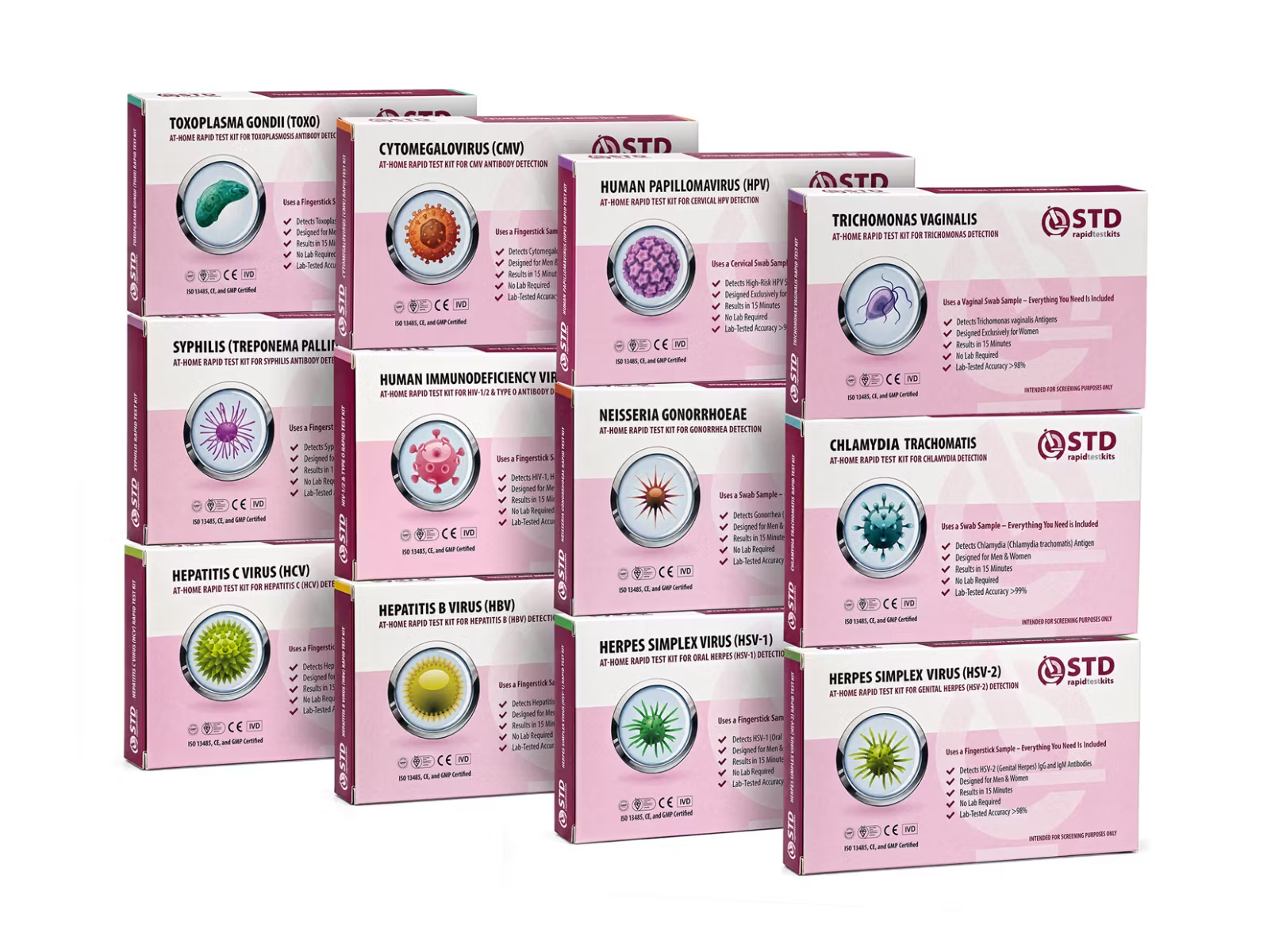
This article is published by stdrapidtestkits.com, which sells at-home STI testing kits. Product recommendations below are matched to the testing scenarios discussed for postmenopausal women.
Anyone who has sex is at risk of getting a sexually transmitted infection, regardless of age.
Perimenopause, BV, or Trichomoniasis? Sorting It Out
Different conditions can produce overlapping symptoms in midlife. The pattern below helps distinguish hormonal changes from bacterial vaginosis (BV) and trichomoniasis, a common but underdiagnosed STI. None of these are mutually exclusive: the same patient can have GSM and a separate infection at the same time, which is part of why a single 'just menopause' explanation can mask a real second issue. The table is most useful when standard GSM treatment has not resolved symptoms after 4 to 6 weeks, the point at which the hormonal explanation is weakest.
| Symptom or sign | Perimenopause / GSM | Bacterial vaginosis | Trichomoniasis |
|---|---|---|---|
| Fishy odor after sex | No | Yes | Sometimes |
| Thick, gray or yellow discharge | No | Yes (thin gray) | Yes (yellow-green) |
| Spotting or bleeding after sex | Yes | Rare | Yes |
| Burning or itching | Yes | Yes | Yes |
| Responds to vaginal estrogen | Yes | No | No |
| Treated by antibiotics | No | Yes | Yes |
What Testing Looks Like After Menopause
There are more options than there were a decade ago, and most do not require sitting in a clinic surrounded by people half your age. The right option depends on what you need a test to answer and how much privacy you want.
Most women navigating this question land on one of a few approaches:
- Clinic-based testing. Best when you also want a pelvic exam, a Pap smear, or treatment in the same visit. Lab-based NAAT (nucleic acid amplification testing) is the analytical gold standard for chlamydia and gonorrhea, especially in asymptomatic infections, and the CDC's vulvovaginal symptom treatment guidance reflects that. Result times vary from same-day for some rapid clinic tests to several days for lab work.
- Mail-in lab kits. You collect a sample at home (vaginal swab, fingerstick blood, or urine, depending on the test) and mail it back to a CLIA-certified lab. Results come by email or app within a few days. Privacy is high, accuracy is essentially the same as clinic-collected lab testing, and there is no waiting room.
- At-home rapid lateral-flow tests. Self-collected swab or fingerstick blood, with a result you read at home in 15 to 20 minutes. These use the same chemistry as the rapid tests used in many clinics. They are useful for screening, peace of mind between clinic visits, or quickly checking after a possible exposure once the appropriate window has passed.
A positive result on any rapid screen is worth confirming with a clinic-administered NAAT, which has higher analytical sensitivity for the same infections. The comparison table below summarizes how the three options differ.
| Testing method | What it detects | Privacy level | Turnaround time | Best for |
|---|---|---|---|---|
| Clinic visit | All STIs plus pelvic exam | Low | 1 to 7 days | When you also need a Pap, treatment, or exam |
| Mail-in lab kit | Chlamydia, gonorrhea, trich, HIV, more | High | 2 to 4 days after mailing | Lab-grade accuracy without a clinic visit |
| At-home rapid test | Varies by kit (chlamydia, HIV, syphilis, HPV, etc.) | Very high | 10 to 20 minutes | Fast screening and peace of mind at home |
Window Periods: When Testing Too Early Misleads
Every STI test has a window period: the time between exposure and when the infection becomes detectable. Testing inside the window can produce a false negative. The test is correct that nothing is detectable yet; the test is wrong as a measure of whether you currently have an infection.
If you tested too soon after exposure and had a negative result but still have symptoms, the practical step is to retest after the window has passed. If you tested at the right time and the result is clearly negative but symptoms persist, the issue is more likely either a different infection (yeast, BV, lichen sclerosus, irritant contact dermatitis) or GSM that has not responded to treatment. Either way, persistent symptoms after a clean negative test deserve a second look.
Approximate windows for the most common STIs are summarized in the table below. Exact figures vary by individual and by specific test platform, so check the kit or lab IFU before relying on a result.
| STI | Earliest reliable window | Notes |
|---|---|---|
| Chlamydia and gonorrhea | 1 to 2 weeks | Swab or urine NAAT; rapid lateral-flow uses the same sample type |
| Trichomoniasis | 1 to 4 weeks | Vaginal swab; symptoms may appear before the test turns positive |
| HIV (4th-gen antigen-antibody) | 18 to 45 days | Detects p24 antigen earlier than antibody-only tests |
| HIV (antibody-only) | 23 to 90 days | Older test format; longer window |
| Syphilis | 3 to 12 weeks | Antibody blood test; retest if exposure was recent |
| Herpes (HSV-2 antibody) | 12 to 16 weeks | Seroconversion takes time; a swab during an active outbreak is faster |
If Your Test Comes Back Positive
A positive STI result at any age can land hard. After 50, it often arrives with extra layers: surprise, a sense of being too old for this, fear about a partner, embarrassment about having to make calls. None of those reactions changes the medical reality, which is generally more manageable than the emotional shock suggests.
Most common STIs fall into one of two treatment categories:
- Curable bacterial or parasitic infections. Chlamydia, gonorrhea, syphilis, and trichomoniasis are all treatable with antibiotics. Treatment is short (sometimes a single dose), and most clear within a week. The CDC's STI Treatment Guidelines, 2021 specify the current first-line regimens, which clinicians follow whether you are 25 or 65.
- Manageable viral infections. Herpes (HSV-1 and HSV-2), HIV, hepatitis B, hepatitis C, and HPV cannot always be cured, but they can be managed. Antivirals reduce herpes outbreaks and transmission risk. Modern HIV treatment makes the virus undetectable in the blood and effectively untransmittable to sexual partners, a status sometimes summarized as U=U; a fourth-generation antigen-antibody HIV test typically detects infection within 18 to 45 days of exposure. PrEP is available for partners of someone living with HIV or for anyone with ongoing exposure risk. Direct-acting antivirals cure most hepatitis C infections. HPV usually clears on its own; when it does not, regular cervical screening catches the cellular changes that matter long before they become cancer.
Postmenopausal women face a couple of complications worth understanding before a positive result lands:
- Pelvic inflammatory disease (PID). Untreated chlamydia or gonorrhea can ascend into the uterus and fallopian tubes, causing PID. PID can occur after menopause and can produce chronic pelvic pain, scarring, and complications. Treatment within weeks of diagnosis prevents most of this.
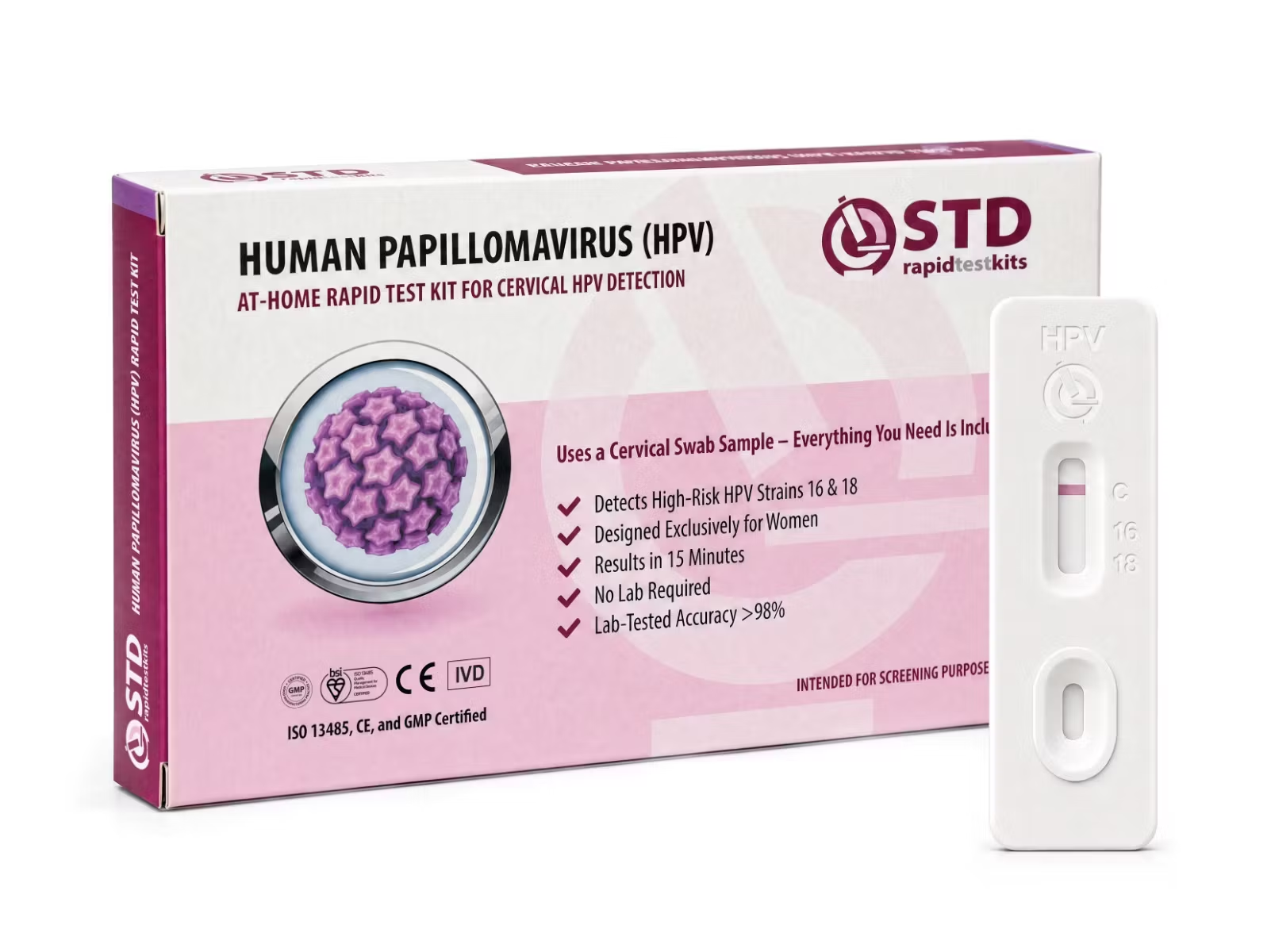
- Cervical cancer screening. High-risk HPV that persists for years can drive cervical cell changes. Postmenopausal women who have not had recent Pap or HPV screening should resume on the schedule their clinician recommends. Many at-home rapid kits include HPV swabs that can flag the need for clinic follow-up.
When Your Partner Tests Positive First
You are sometimes the second person to know. A partner tells you they have tested positive for chlamydia, gonorrhea, trichomoniasis, syphilis, or herpes, and the question becomes whether you have it too. Symptoms (or their absence) will not tell you; testing will.
A few specifics worth knowing in this situation:
- Most bacterial STIs (chlamydia, gonorrhea, trichomoniasis, syphilis) are treatable with antibiotics. Both partners need treatment; otherwise reinfection through unprotected sex is common.
- For herpes (HSV-1 or HSV-2), one partner may have had the infection for years before either of you knew, since asymptomatic carriers are the rule rather than the exception. A positive result on its own does not pin down when transmission happened.
- Public health departments in many U.S. states offer expedited partner therapy (EPT) for chlamydia and gonorrhea. EPT lets a partner be treated without a separate intake visit, which lowers the practical barrier to getting both people clear at once.
Notification to current and recent partners is part of standard care for any positive result. Most state and county health departments will help with anonymous partner notification if calling someone yourself is too much. The information lets a partner test and treat early, breaking transmission chains and preventing reinfection between you.
1. Both partners need treatment for bacterial STIs (chlamydia, gonorrhea, trichomoniasis, syphilis). Otherwise reinfection is common. 2. A positive herpes result is not a timeline. Years of asymptomatic carriage are normal, so a result does not pin down when transmission happened. 3. Ask your local health department about EPT (expedited partner therapy) for chlamydia and gonorrhea; it lets a partner be treated without a separate intake visit.
Retesting and Follow-Up Schedule
Treatment is not always the end of the story. Some infections require a follow-up test to confirm clearance. Others require ongoing monitoring as the immune system shifts. The right retest schedule depends on the specific infection, whether your partner was treated, and any underlying conditions that affect immunity.
The CDC's 2021 STI Treatment Guidelines lay out current retesting recommendations. The most common scenarios for postmenopausal women:
- Bacterial STIs (chlamydia, gonorrhea, trichomoniasis). Retest about three months after treatment if you remain sexually active, especially with a new or untreated partner. The goal is to catch reinfection, not test for treatment failure (which is uncommon with current first-line regimens). Retesting too soon (within a few weeks) can produce false positives from residual bacterial DNA.
- Syphilis. Follow-up blood tests at three, six, and twelve months after treatment confirm that the infection has cleared and that titers are falling appropriately.
- HPV. There is no test of cure. Follow your clinician's recommended Pap and HPV co-testing schedule, which is typically every three to five years for normal results, more frequent if previous results showed cellular changes.
- Herpes. Antibody tests do not change once you have been infected. Monitoring focuses on outbreak frequency and severity, particularly during periods of immune stress.
The table below summarizes the typical retesting pattern.
| STI | Initial treatment | Recommended retest | Notes for postmenopausal women |
|---|---|---|---|
| Chlamydia | Single-dose antibiotic | 3 months after treatment | Retest if re-exposed or with a new partner |
| Gonorrhea | Injection plus oral antibiotic | 3 months after treatment | Important given rising antibiotic resistance |
| Trichomoniasis | Oral antibiotic, 5 to 7 days | 3 months, sooner if symptoms persist | Higher recurrence risk if a partner is not treated |
| HPV | Monitoring only, not curable | Pap or HPV test on clinician's schedule | Virus may reactivate during hormonal shifts |
| Herpes (HSV) | Antiviral as needed | Monitor outbreak frequency | Outbreak patterns can shift during menopause |
Sexual Wellness Doesn't Expire
Sexual health is not a chapter that closes when periods stop. Bodies, relationships, and risk all keep shifting through midlife and beyond, and the logic of routine self-care applies just as it always has: pay attention to symptoms, ask the questions that matter, and use the testing tools available to you.
A couple of habits carry over cleanly from earlier decades of self-care:
- Treat new symptoms as worth investigating, not as expected. If something has changed (dryness with new burning, discharge with new odor, post-coital bleeding that is new, persistent pain), it deserves more than a topical estrogen prescription. Ask for an STI panel even if your provider has not suggested one.
- Treat new partners and new relationships as worth a baseline test. Mutual testing before unprotected sex is no different in your 60s than it was in your 20s. The conversation may feel less rehearsed at this stage of life, but it is the same conversation, and most adults respect being asked.
The biology of menopause makes infections both easier to acquire and easier to misread. The behavioral data shows that adults over 50 test less often, use protection less often, and miss diagnoses more often as a result. Those two patterns combine into a screening gap that women can close on their own when health systems do not.
1. Ask for a full STI panel at your next clinic visit, even if your provider has not suggested one. 2. Order a home rapid or mail-in kit when scheduling, privacy, or insurance is a barrier. 3. Have the mutual-testing conversation with a new partner before unprotected sex.
FAQs
- Do women really need to test for STIs after menopause?
- If you are sexually active with any new or not-recently-tested partner, periodic screening is worth scheduling. Reported STI rates among adults over 50 have been climbing for over a decade in the United States, and menopause biology makes infection both easier to acquire and harder to recognize, so the case for routine adult screening does not stop at 50.
- Can a doctor mistake an STI for menopause symptoms?
- Yes, more often than the medical literature suggests. Burning, dryness, irritation, painful sex, and unusual discharge can all be produced either by GSM (genitourinary syndrome of menopause) or by a treatable STI. Symptoms alone rarely distinguish the two. Adults over 40 with vulvovaginal symptoms are screened for STIs less often than younger patients with identical complaints, which extends the time-to-diagnosis when an infection is the actual cause.
- Which STI is most often confused with menopause?
- Trichomoniasis is among the most commonly missed in this age group. The classic frothy yellow-green discharge described in younger patients is often absent in postmenopausal patients, who may instead present with vague irritation, occasional spotting, or no obvious discharge at all. Trichomoniasis is treatable with a short course of oral metronidazole or tinidazole, which is part of why the missed-diagnosis cost is high: months of irritation could have been resolved by a single prescription.
- Isn't vaginal dryness just a normal part of menopause?
- Often yes, but not always. If dryness comes with burning, unusual discharge, post-coital bleeding, or itching, it is worth ruling out infection. Symptoms of trichomoniasis, herpes, chlamydia, and gonorrhea overlap heavily with vaginal atrophy, and topical estrogen will not treat any of them.
- I've been with the same partner for years. Could I still have an STI?
- It's possible. Some STIs (notably chlamydia, gonorrhea, herpes, and HPV) can persist asymptomatically for years before producing symptoms. A partner can carry an infection without knowing it, or one of you may have acquired the infection before the relationship started. A positive test in a long-term relationship does not automatically point to recent infidelity; the biology of asymptomatic carriage is messier than that.
- Can I actually do an STI test at home?
- Yes. At-home rapid lateral-flow tests give a result in 15 to 20 minutes from a self-collected swab or fingerstick, with no waiting room and no appointment. Mail-in lab kits are the alternative when you want lab-grade NAAT sensitivity with the same privacy. Either way, a positive home result is worth confirming with a clinic-administered NAAT before starting treatment.
- How long after exposure should I test?
- For chlamydia and gonorrhea, about 14 days after exposure is the typical earliest reliable window. For trichomoniasis, about 1 to 4 weeks. For HIV, the most reliable window is at least 18 to 45 days for combination antigen-antibody tests and up to 90 days for antibody-only tests. For syphilis, 3 to 12 weeks. For herpes antibody tests, most infections are detectable by about 12 weeks, with some tests or individuals requiring up to 16 weeks for a definitive result. If you test inside the window and get a negative result but still have symptoms, retest after the window passes.
- How do I bring up testing with a new partner without making it awkward?
- Direct, mutual, and casual works best. Something like 'before we go further, I'd like both of us to get tested' frames it as a shared step rather than an accusation. Most adults respect being asked, and a partner who reacts badly to the request is telling you something important about how they handle other adult conversations.
How we sourced this article: This guide was constructed from current advice from the most prominent public health and medical organizations, including the Centers for Disease Control and Prevention, the World Health Organization, the National Health Service, Mayo Clinic, and MedlinePlus, then translated into plain language based on the questions postmenopausal readers most often raise. Information here is educational and is not a substitute for individual clinical advice from a licensed provider.
- U.S. Centers for Disease Control and Prevention. Sexually transmitted infection statistics, including reported case rates by age group.
- U.S. Centers for Disease Control and Prevention. Sexually transmitted infections public information, including risk-based screening guidance for adults of any age.
- U.S. Centers for Disease Control and Prevention. Sexually Transmitted Infections Treatment Guidelines, 2021. Used for first-line treatment regimens and retesting recommendations.
- U.S. Centers for Disease Control and Prevention. STI treatment guidelines: diseases characterized by vulvovaginal symptoms, including trichomoniasis, BV, and yeast.
- Mayo Clinic. Vaginitis: overview of atrophic vaginitis (GSM), bacterial vaginosis, and trichomoniasis.
- National Health Service (UK). Menopause: symptoms, including vaginal dryness and urogenital changes.
- World Health Organization. Sexually transmitted infections: global health information and prevention guidance.
- MedlinePlus (U.S. National Library of Medicine). Menopause overview and symptom resources.
