







Quick Answer: STD testing for trans people is often overlooked in gender-affirming care. Many providers miss key symptom checks, and testing may require anatomy-specific swabs. Learn what to ask for, when to test, and how to get tested discreetly at home.
When Gender-Affirming Doesn’t Mean Sexual Health–Affirming
Micah, a 22-year-old trans man, had been on testosterone for a year before he noticed what felt like a UTI. He avoided the clinic at first, worried they'd brush him off, again. When he finally went, the nurse asked if he was sexually active. He said yes. She asked, “With men or women?” He froze.
That moment, that pause, it's where so much gets lost. Many trans patients are skipped over for sexual health screenings because their sexual history doesn’t fit binary scripts. Others are miscategorized entirely. One trans woman shared in a HuffPost essay that a clinic refused to swab her vagina because they “weren’t sure what to do with her anatomy.”
These gaps have consequences. The CDC reports that STDs are rising fastest among populations already facing care disparities, including trans and nonbinary individuals. Yet most screening guidelines are still built for cisgender bodies, and many providers lack training on how to adapt them.
Testing Isn’t One-Size-Fits-All: What Trans Bodies Need
STD testing isn't about gender identity, it's about exposure risk and anatomy. A person’s risk doesn’t depend on labels but on what parts are involved during sex. That’s why a trans man with a vagina who has receptive vaginal sex may need a chlamydia or gonorrhea swab, while a nonbinary person on testosterone who engages in oral sex with multiple partners might need throat swabs for gonorrhea or syphilis.
Unfortunately, few clinics walk trans patients through this breakdown. Some will default to “urine test only” or skip site-specific swabs, missing infections entirely. That’s especially true for rectal infections, which often have no symptoms but carry risk of complications or transmission to partners.
Self-swabbing is possible, empowering, and increasingly used in clinics, but it’s rarely offered unless asked for. At-home kits that include multiple swab types can offer a way around awkward provider interactions.
People are also reading: Syphilis With No Symptoms? Here's Why It Happens
Table 1. Common Testing Gaps in Trans STD Screening
| Population | Common Testing Gap | Missed Infection Risk |
|---|---|---|
| Trans men on testosterone | Urine test only, no vaginal or rectal swab offered | Chlamydia, Gonorrhea |
| Trans women post-vaginoplasty | No testing offered for neovaginal discharge or pain | Trichomoniasis, Herpes |
| Nonbinary people with varied anatomy | No discussion of anal/oral sex exposure | Gonorrhea, Syphilis, HIV |
| All trans patients | Provider avoids sexual history questions altogether | Multiple missed opportunities for diagnosis |
Table caption: Trans and nonbinary individuals are frequently under-tested or mis-tested due to provider discomfort or flawed intake processes. Understanding what’s needed requires anatomy- and behavior-based screening, not identity-based assumptions.
Order Now $129.00 $343.00 Check Your STD Status in Minutes
Test at Home with Remedium
7-in-1 STD Test Kit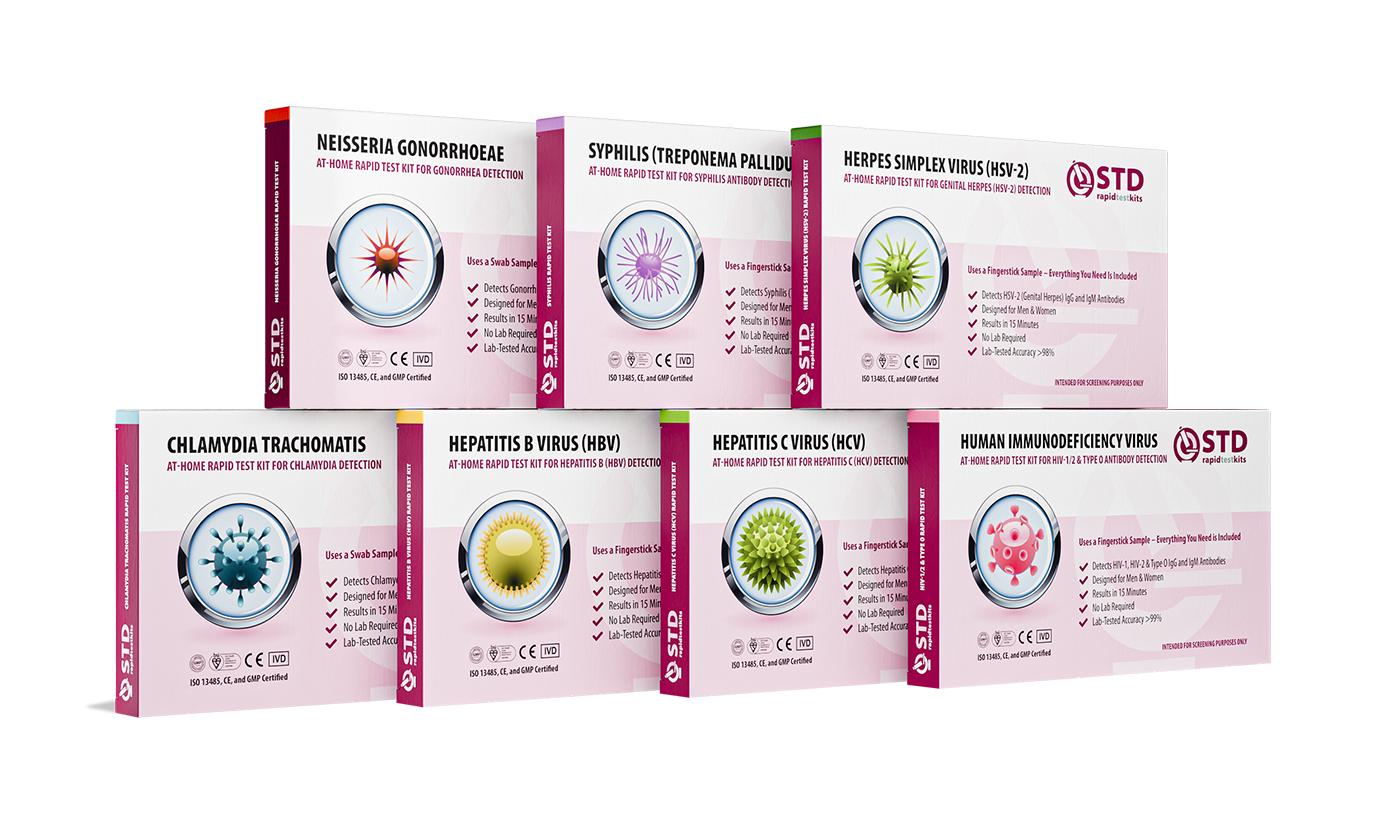
 For Men & Women
 Results in Minutes
 No Lab Needed
 Private & Discreet
For all 7 tests
Micro-Scenes From the Clinic (or Not Going at All)
Shiloh sat in their car outside a Planned Parenthood. They were 19, nonbinary, and terrified. They’d had condomless oral and anal sex with someone who later texted, “Hey, I tested positive for chlamydia.” Google searches said they needed multiple site tests. But the idea of explaining their identity and anatomy to a stranger made them want to drive away.
There are a lot of stories like Shiloh's. A study in Sexual Medicine in 2022 found that a lot of trans patients put off or don't get tested for STDs because they think they will be discriminated against or confused at the front desk. Some clinics still ask "Male or Female?" on their intake forms, but there is no option for intersex, nonbinary, or trans identities. In some cases, staff training hasn't kept up with forms that are open to everyone.
These delays mean missed infections, untreated partners, and spirals of anxiety. That’s why at-home STD test kits have become lifelines for many. No awkward questions, no gatekeeping, just answers, quickly and privately.
When to Test, Retest, or Just Start Somewhere
For many trans people, the question isn’t “should I test?” It’s “what should I test for?” and “how do I even ask for that?” Here’s what matters:
If you've had oral, anal, or genital contact, regardless of partner gender, you may need multi-site testing. If you’ve started hormones recently, know that testosterone may reduce natural lubrication and increase micro-tears, which can slightly increase STD transmission risk during vaginal or anal sex.
If you’ve had a new partner in the past 2 to 6 weeks, you’re in the window period where some STDs may not show up yet. A negative test now doesn’t always mean you're clear. Retesting after 2–4 weeks is common, especially for high-risk encounters.
And if you’re scared, uncertain, or just need privacy, start with a discreet combo STD test kit. One reader wrote, “It was the only way I felt safe checking for what was really going on with my body.”
What Tests Work, and What Doesn't
Not all STD tests are equally effective, especially when they’re misapplied. A urine test alone might not catch a throat or rectal infection. Swabs need to go where exposure happened. For trans folks, this means asking: “Did I have contact here?” and matching the test accordingly.
Here’s a breakdown of what tests exist, what samples they use, and where they work best:
| Infection | Sample Type | Test Used | Notes for Trans Bodies |
|---|---|---|---|
| Chlamydia | Urine, vaginal, rectal, throat swab | NAAT (lab) | Often missed if only urine is tested. Vaginal self-swab more accurate for trans men with front holes. |
| Gonorrhea | Same as above | NAAT (lab) | Throat infections common from oral sex; may be asymptomatic. Ask for throat swab. |
| Syphilis | Blood (fingerstick or venous) | RPR + Treponemal Antibody | No anatomy-specific prep needed. Blood test standard. |
| HIV | Blood or oral fluid | 4th-gen Ag/Ab or rapid oral test | Oral test may be less sensitive in early stages. Blood test preferred for early exposure. |
| Trichomoniasis | Vaginal or urethral swab | NAAT or rapid antigen | Often overlooked in trans women. Can affect neovaginas if mucosal tissue present. |
Figure 2. This table illustrates the most accurate test types for each common STD and why matching them to your anatomy and exposure is crucial for trans people.
What If You’re in a Rural Area or Don’t Trust the Clinic?
Charlie lived in a cabin outside Missoula. Closest clinic? 50 miles. Closest queer-friendly one? Probably never. When they noticed a lesion near their anus, they panicked. “I couldn’t go to a clinic and be misgendered again. I just couldn’t.”
This is where discreet testing saves lives. Mail-in kits with swabs for multiple sites allow for accurate, affirming testing from home. Kits like the ones at STD Rapid Test Kits come with instructions that let you choose your own pace and privacy. For many trans folks, that’s not just a convenience, it’s the only option that feels emotionally safe.
Still, even with at-home options, you need to know what to test and when. Which brings us to the next critical piece: window periods.
Window Periods: Timing Is Everything
The window period is how long it takes between exposure and when a test can detect the infection. If you test too soon, you may get a false negative, meaning the infection is there but undetectable. For example, a chlamydia NAAT might detect the infection after 5–7 days, but is more accurate at 10–14 days. HIV antigen/antibody tests often require 3–6 weeks for full reliability.
| STD | Window Period | Best Retest Time |
|---|---|---|
| Chlamydia / Gonorrhea | 5–14 days | 14–21 days post-exposure |
| Syphilis | 3–6 weeks | Retest at 12 weeks if high risk |
| HIV (4th-gen) | 2–6 weeks | Confirm at 12 weeks for certainty |
| Trichomoniasis | 5–28 days | 2–4 weeks post-exposure |
Figure 3. Knowing your testing window helps prevent false negatives. These ranges are drawn from CDC and WHO guidance and are relevant regardless of gender identity.
When Retesting Matters (Even If You Already Got Checked)
Dani tested negative for gonorrhea ten days after a new partner. “I thought I was clear,” they said. But two weeks later, they noticed a strange discharge. They retested, this time with a rectal swab, and it came back positive. The first test had only used urine.
This happens more often than people think. If your test didn’t include swabs for the exposure site, or if you tested before the window period ended, you may need to retest. Here’s when retesting is recommended:
- If you had symptoms but your initial test was negative - If your partner tested positive and you tested too soon after exposure - If you had unprotected sex within the last 2–4 weeks - If you were treated and want to confirm cure (e.g., for chlamydia or trichomoniasis)
Post-treatment retesting usually happens 3–4 weeks after antibiotics. Retesting too soon may detect leftover DNA and produce a false positive.
If you’re in this boat, know this: you're not being paranoid. You're being proactive. And if you're overwhelmed? Peace of mind is one test away.
How to Talk to Partners (And Why It’s Part of Care)
Coming out as trans or nonbinary is hard enough. Add STDs to the mix, and it’s no wonder many people freeze. But partner notification doesn’t have to be shame-filled. It can be protective, responsible, and yes, empowering.
You don’t need to explain your entire medical history. A simple message, "Hey, I tested positive for X, you might want to get tested too", is enough. If you’re not comfortable saying it directly, services like TellYourPartner.org let you do it anonymously.
And if you're the one receiving that message? Don't spiral. Get tested. Get treated. Move forward. STDs are incredibly common, especially among people who aren’t given the tools to prevent them. Trans communities deserve better than silence.

People are also reading: HIV, Syphilis, and Chlamydia in Pregnancy: Your Testing Checklist
Privacy, Discretion, and the Power of Staying Home
No one needs to know what’s in that plain brown envelope. Not your roommate, not your mail carrier. All STD Rapid Test Kits ship in discreet packaging, no markings, no product labels.
If you're living with parents or partners you haven’t disclosed to, plan your delivery timing. Some folks use Amazon lockers or PO boxes. Others choose expedited shipping so they can get the results and move on. When you’re scared or anxious, even 24 hours can feel like forever, but having control over the timeline helps.
Once your kit arrives, take your time. Read the instructions. Swab when you feel ready. You're allowed to pause, breathe, and come back. Your health is yours to reclaim, in your own space, on your own terms.
Check Your STD Status in Minutes
Test at Home with Remedium8-in-1 STD Test Kit
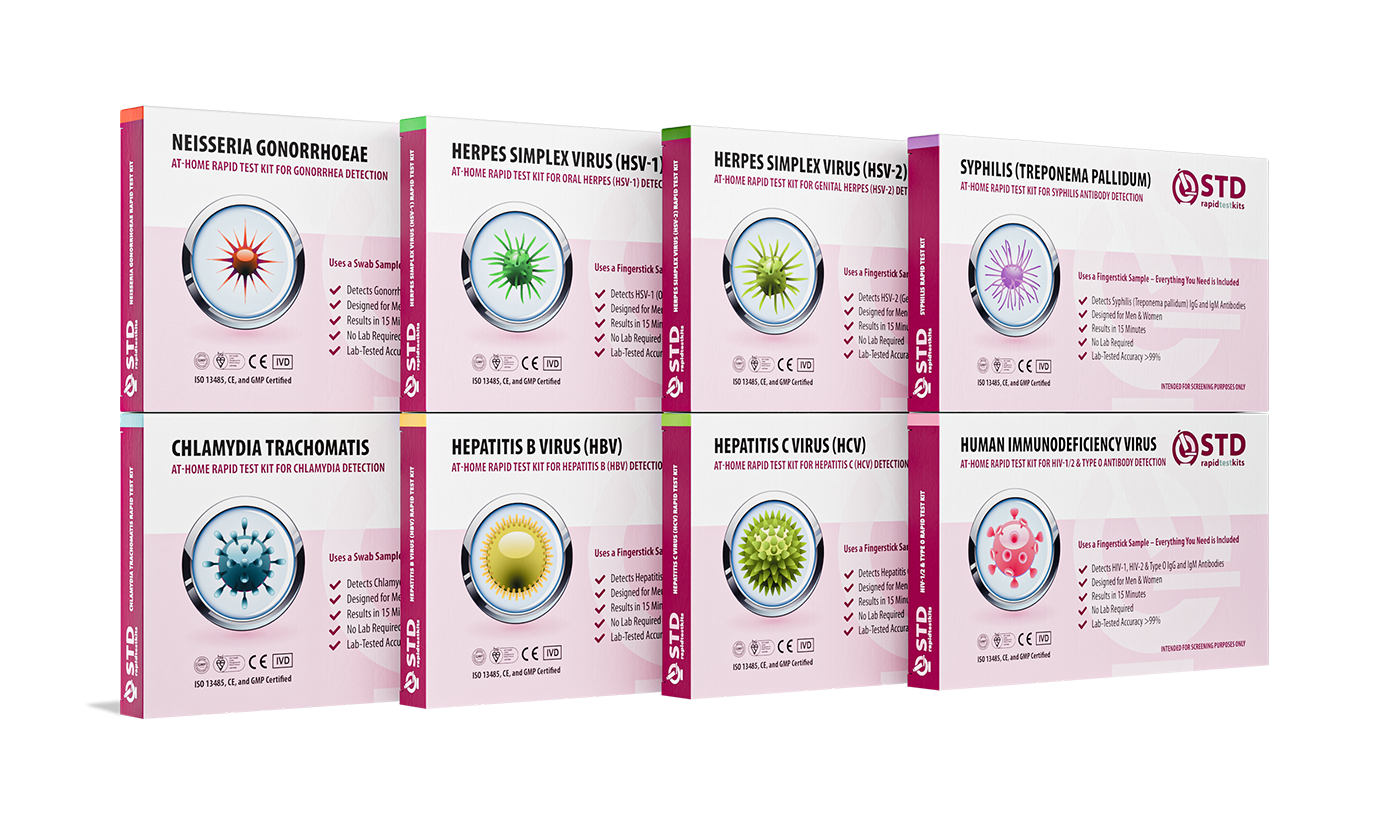 For Men & WomenResults in MinutesNo Lab NeededPrivate & Discreet
Order Now $149.00 $392.00
For all 8 tests
What to Do If You Test Positive
First: take a breath. A positive result is not a moral failure. It's not a reflection on your gender, your choices, or your worth. It’s simply a medical fact, and one that can usually be treated or managed.
If you test positive for a treatable infection like chlamydia, gonorrhea, or trichomoniasis, you’ll need antibiotics. If you're using an at-home test, follow up with a provider or telehealth clinic. Many now offer same-day prescriptions and virtual consults, especially for known results.
If your result was for HIV or syphilis, confirmatory testing is needed. These conditions require specific treatments and regular follow-up, but both are manageable with today’s medicine.
Partner notification is next. It's not easy, but it prevents re-infection and keeps others safe. You can do this via text, phone, or anonymously online.
And finally: get support. Trans health should never be lonely health. Online communities, local LGBTQ centers, and peer support groups can help you process what just happened and what comes next.
FAQs
1. If I don’t have symptoms, why would I even need to test?
Because no symptoms doesn’t mean no infection. STDs like chlamydia and gonorrhea are quiet in most people, especially in rectal and throat infections. Think of it like walking around with your shoelace untied. Just because you haven’t tripped yet doesn’t mean you won’t. Testing gives you the heads-up before something falls apart.
2. I’m on hormones, can they mess with test results or hide symptoms?
Not the results, no. But they can mess with how your body feels or reacts. Testosterone can thin vaginal tissue, which might make sex feel more raw or painful. Estrogen can change discharge patterns. The overlap between “normal side effects” and “infection symptoms” gets real muddy. That’s why testing cuts through the guesswork.
3. What kind of tests do I actually need?
It depends on what parts you have and what kind of sex you’ve had. Had receptive anal sex? You need a rectal swab. Oral? Throat swab. Vaginal or front hole? That’s a genital swab. Urine alone misses a lot. A good rule: test the places that were involved. Your anatomy matters, but your exposure matters more.
4. I had bottom surgery, do I still need STD tests?
Yep. If there’s mucosal tissue, meaning anything soft, wet, and touchable during sex, it can carry STDs. Some post-op vaginas are made from colon or penile tissue, which can absolutely get infected. Surgery doesn’t erase risk; it just shifts what’s possible. Stay curious about your own body. It’s not shameful, it’s smart.
5. Will an at-home test be accurate for me?
As long as the kit lets you swab the right areas, yes. Self-swabbing is just as reliable as clinic collection when done correctly. And let’s be real, doing it yourself in your bathroom beats trying to explain to a confused provider why you need a throat swab and not a pelvic exam. That privacy? Priceless.
6. My provider just gave me a urine test. Is that enough?
Probably not. Urine tests miss rectal and throat infections, and they’re not ideal for all anatomy. If you had any kind of sex beyond standard P-in-V, push back. Ask for the swabs you need, or grab a kit that actually covers them.
7. I’m scared to get tested. What if I panic?
That’s valid. Medical settings are triggering for a lot of us, especially if you’ve been misgendered, dismissed, or touched without consent. At-home testing gives you space to fall apart, breathe, and try again. One person said they lit a candle, played Beyoncé, and did it half-naked in front of their mirror. There’s no wrong way to reclaim your care.
8. Will anyone find out if I test positive?
If you’re using an at-home kit: no. Your results stay with you. If you go through a clinic, results are confidential but may be reported anonymously to public health departments for tracking (that’s how outbreaks get managed). They don’t go on your job record, your credit, or your Instagram. This is about health, not exposure.
9. What if I got tested too early?
That happens. Every STD has a window period, that’s the time between exposure and when a test can actually detect it. If you test too soon, you might get a false negative. That’s not your fault. Just retest in 2 to 4 weeks. It’s not wasted effort, it’s double checking your peace of mind.
10. Do I really have to tell partners if I test positive?
Yes, but that doesn’t mean you owe them your life story. You can keep it simple: “I just found out I tested positive for X. You might want to get checked too.” You can say it via text. Or use an anonymous service. It’s not about shame, it’s about safety. And frankly, it shows you give a damn.
You Deserve Testing That Sees All of You
If you’ve ever walked out of a clinic feeling half-seen, you’re not alone. Too many trans folks are getting affirming care that skips over their sexual health, or worse, makes it harder to access. That’s not oversight. That’s harm disguised as help.
STD testing shouldn't be a gendered guessing game. It should be clear, consent-driven, and matched to your real-life body and behaviors. That’s what at-home testing can give you: privacy, precision, and power. No awkward scripts. No dysphoria triggers. Just you, taking charge.
And if you’re reading this thinking, “Maybe I should test…” That’s your gut talking. Listen to it. Not because you should be scared, but because you deserve peace of mind. You deserve a body that’s not just affirmed, but protected. Fully. Fiercely. Without apology.
How We Sourced This: We built this article using guidance from leading sexual health organizations, trans-specific healthcare research, and lived experiences shared through first-person accounts and advocacy reports. Everything here is grounded in evidence and shaped by empathy, for bodies that don’t always get the right questions asked.
Sources
1. STI Screening Recommendations – CDC
2. Getting Tested for STIs – CDC
3. Anatomic Site–Specific STI Prevalence and Screening Among Trans and Non‑Binary People – PMC
4. Disparities in Sexually Transmitted Infection Testing and Utilization Among Trans Women – PMC
5. Expanding the Evidence‑Base for Improving Sexual Health – CDC PDF
6. STI Considerations for Trans and Gender Diverse Individuals – MWA ETC PDF
7. Sexually Transmitted Infection Testing Among Transgender Persons – Clinical Infectious Diseases
8. A Scoping Review of Approaches to Extragenital STI Screening in Trans Populations – ScienceDirect
About the Author
Dr. F. David, MD is a board-certified infectious disease physician and public health consultant specializing in inclusive STD prevention. His work focuses on dismantling stigma in clinical protocols and improving access for marginalized communities, including trans and nonbinary patients.
Reviewed by: Dr. Melina Tran, MPH | Last medically reviewed: November 2025
This article is meant to give you information, not to take the place of professional medical advice. Always get care from a qualified provider.


