STD Symptoms After Sex: Fast vs Slow Timeline
Some STD symptoms appear within days. Others take weeks or never appear at all. Knowing which infections move fast (chlamydia, gonorrhea, herpes), which move slowly (HIV, syphilis), and which can stay silent for years matters for both anxiety and testing strategy. Here is the realistic timeline after sex, grounded in CDC, WHO, NHS, and MedlinePlus guidance, plus when testing actually becomes accurate.




- Symptoms within 24 hours of sex are almost never an STD; friction, condom or lubricant reactions, urinary irritation, and dehydration after alcohol are far more likely causes.
- Testing too early can miss real infections; bacterial STDs are usually detectable from day 7 to 14, while HIV antibodies and herpes blood markers can take 4 to 12 weeks longer.
Published: October 2025 | Last updated: April 2026 | Editorial review and quality control: Martina N.
The morning after sex with a new partner can feel like an emotional gauntlet. You wake up, notice a slight tingle or a strange sensation, and your brain immediately jumps to the worst-case scenario. Could that mild burning be chlamydia? Is this rash herpes? Did something get past the condom?
Most sexually transmitted infections do not produce symptoms within 24 hours. Many take a week or more, some take months, and a surprising number never produce visible signs at all. This guide walks through the realistic timeline for the most common STDs, when symptoms are most likely to appear, when testing actually becomes accurate, and what to do in the meantime. The figures below come from CDC, WHO, and NHS guidance.
How fast do STD symptoms actually show up after sex?
It depends on the infection. Gonorrhea symptoms (when they appear) typically start within 2 to 7 days. Chlamydia symptoms can begin as early as a week after infection, though they often appear later or not at all. Herpes symptoms usually begin within 2 days to 2 weeks of exposure. Syphilis can take about 3 weeks for the first sore (chancre) to appear. HIV's acute-phase flu-like symptoms commonly start 2 to 4 weeks after exposure. Many people with these infections never develop symptoms at all, which is why testing matters more than waiting for signs to appear.
The First 72 Hours After Sex: Why Symptoms Rarely Appear Immediately
Picture someone scrolling through their phone at 6 a.m., googling "STD symptoms next day" or "burning after sex means STD?" That early window is when anxiety peaks. Medically speaking, it is usually too soon for most infections to produce real symptoms.
Infections need time. Before you feel anything, bacteria or viruses must enter cells, replicate, and trigger an immune response. That delay is called the incubation period, and it explains why most STD symptoms do not show up the next morning.
That does not mean symptoms within a day are impossible. It means they are far more often caused by something else: friction from sex, reactions to condoms or lubricants, urinary tract irritation, dehydration after alcohol, or yeast overgrowth. A common example is mild burning during urination the next day. Doctors frequently find the cause is irritation rather than infection. True bacterial STD symptoms typically need at least 2 to 7 days to develop, and viral symptoms often need longer.
The body does not announce infections instantly. It tends to show them slowly over the following days and weeks, which shifts the useful question from "what does this sensation mean today?" to "what should I do over the next two weeks?"
Mild discomfort within 24 hours of sex is most often something other than infection: friction or microabrasions during intercourse; reactions to latex, spermicide, or scented lubricants; urinary irritation from skipping post-sex urination; mild dehydration after alcohol; or yeast overgrowth from disrupted vaginal flora. None of these are STIs, and most settle within 1 to 2 days without treatment. Symptoms that persist beyond 48 hours, or that get worse rather than better, deserve testing.
Fast-Appearing STD Symptoms: Infections That Can Show Signs Within Days
When STD symptoms appear within the first week or two of exposure, they usually come from bacterial infections that reproduce quickly. Even then, symptoms typically take several days to develop. Someone might notice unusual discharge around day four or five, or burning during urination around day six. The pattern is gradual escalation, not overnight onset.
The infections most often associated with fast symptom timelines are chlamydia, gonorrhea, and trichomoniasis. Per the NHS chlamydia overview, chlamydia symptoms can start from one week after infection (or much later, if at all). The WHO STI fact sheet notes that the majority of STIs are asymptomatic or cause only mild symptoms that go unrecognized, which is why screening catches more cases than symptom-watching does.
One person might notice burning by day five while another feels completely normal for weeks with the same infection. That unpredictability is one reason public-health agencies emphasize routine testing rather than relying solely on symptoms.
| Infection | Earliest Symptom Onset (when symptoms occur) | Reliable Lab Testing Window | Typical Lab Sample |
|---|---|---|---|
| Chlamydia | From 1 week (often later or never) | 7–14 days | Urine or swab (lab NAAT) |
| Gonorrhea | 2–7 days | 7–14 days | Urine or swab (lab NAAT) |
| Trichomoniasis | 5–28 days | 1–4 weeks | Vaginal swab (lab NAAT) |
| Syphilis | Around 3 weeks (chancre) | 3–6 weeks | Blood (antibody) |
| Herpes (HSV-1/2) | 2 days to 2 weeks (first outbreak) | 12+ weeks for blood antibodies; sores can be swabbed when present | Blood (IgG) or lesion swab |
| HIV | 2–4 weeks (acute flu-like phase) | 18–45 days (4th-gen lab); 23–90 days (rapid antibody home test) | Blood or oral fluid |
| HPV | Months to years (warts or cell changes) | At or after symptom onset | Pap or visual exam |
The Slow Burn: STDs That Take Weeks or Months to Show Symptoms
Now picture a different scenario. Someone had a new partner a month ago and felt completely fine afterward. Life moved on. Then one morning a strange sore or rash appears.
This slower timeline is common with several sexually transmitted infections. Some viruses interact with cells in ways that take longer to produce surface symptoms. Two infections often associated with slow onset are syphilis and herpes. The first noticeable sign of syphilis is typically a painless ulcer (chancre) that appears around 3 weeks after infection, per the NHS syphilis page, though the chancre can take longer to show in some cases.
With herpes, MedlinePlus notes that the first outbreak most often happens within 2 days to 2 weeks of being infected, while many people remain asymptomatic for months or years. Someone might carry the virus without knowing until their first outbreak appears long after the original exposure, often triggered later by stress, illness, or another immune event.
HIV is another slow mover in symptom terms. Acute flu-like symptoms (fever, sore throat, fatigue, swollen lymph nodes) typically begin 2 to 4 weeks after exposure. Because those symptoms are so general, many people never connect them to an infection at all. After the acute phase, HIV can stay silent for years.
This pattern surprises people. They assume symptoms should appear quickly if something was transmitted, but bodies do not always work that way. The right question after a possible exposure is rarely "what do I feel today?" and almost always "what should I test for, and when?"
Slow-onset infections at a glance
- Syphilis: chancre typically appears around 3 weeks after exposure (NHS), then heals on its own even without treatment, which is part of why it gets missed.
- Herpes (HSV-1/2): first outbreak most often happens within 2 days to 2 weeks of infection (MedlinePlus), but the virus can stay dormant in nerve cells for months or years before any symptoms appear.
- HIV: acute flu-like phase typically starts 2 to 4 weeks after exposure, then fades into a years-long asymptomatic period that only routine testing will catch.
Why Different Infections Move at Different Speeds
The reason some infections cause symptoms in days and others in weeks comes down to how different microorganisms interact with human cells.
Bacterial infections like gonorrhea and chlamydia multiply rapidly in the tissues where they enter, often the urethra, cervix, or pharynx. As bacteria reproduce, they irritate surrounding cells and trigger inflammation. That inflammation is what produces symptoms: discharge, painful urination, pelvic discomfort, or sore throat.
Viruses behave differently. Many viruses do not multiply freely in tissue fluids; they enter individual cells and use the cell's machinery to replicate. This process can take longer and may not cause immediate visible irritation. Herpes, for example, can stay dormant in nerve cells until conditions trigger an outbreak. Someone might not have their first outbreak for weeks or months after exposure. The virus was there all along; it simply waited.
Syphilis has its own pattern. The bacterium Treponema pallidum spreads slowly through the bloodstream. The first visible sore appears only after enough replication has happened to trigger a localized immune response, typically around 3 weeks but sometimes longer.
Two people can also catch the same infection and experience completely different symptom timelines. Immune response varies. One person may produce strong inflammation early; another may suppress symptoms while still being infected and contagious.
The lifecycle difference shows up in symptom timing. Bacterial STIs cause local inflammation early because the pathogen is irritating surrounding tissue while it replicates. Viral STIs hide inside host cells, sometimes for months, before triggering visible symptoms. Herpes is the clearest example: HSV travels from the initial infection site up sensory nerves and lies dormant in the dorsal root ganglia, with first outbreaks sometimes triggered weeks or months after exposure by stress, illness, or another immune event. HIV behaves differently again, replicating in CD4 T-cells and producing a brief systemic viremia that drives the early flu-like phase before retreating into a long, silent period.
Stress, Cortisol, and That "Off" Feeling After Sex
Many people describe a vague "off" feeling in the days after a high-stakes sexual encounter, even when no specific symptoms develop. The feeling is real, and there is biology behind it.
After sex the brain experiences a surge of bonding hormones (oxytocin, dopamine) followed by a return of stress hormones, cortisol especially. For someone who felt anxious, regretful, or unsafe during the encounter, that swing can feel especially heavy. Cortisol also briefly modulates immune function. Sustained stress, alcohol, and disrupted sleep together can slightly mute first-line immune defenses for hours to days.
What that biological dip can do is amplify the perception of normal sensations, and for someone already exposed to a virus like herpes, contribute to triggering a first outbreak that might otherwise have appeared later or remained dormant. The post-encounter malaise has real biological roots underneath any emotional reaction.
The practical takeaway: feeling "off" for a few days after a stressful encounter, when no specific symptoms develop, is usually the cortisol swing resolving. If specific symptoms appear (discharge, sores, painful urination, persistent fever or fatigue), that warrants testing rather than waiting it out.
Vague fatigue, low-grade anxiety, or a general sense of being unwell after a new sexual encounter is most often the post-encounter cortisol swing combined with sleep loss and alcohol. It is not a reliable STD signal. Specific signals (unusual discharge, sores, painful urination, fever with swollen glands) are. If specific symptoms persist past 48 hours, plan to test rather than self-diagnose from sensation alone.
Symptoms vs Testing Windows: Why Timing Matters for Accuracy
Knowing when symptoms might appear is helpful. Knowing when a test will actually detect the infection is more important. Some tests need time to find evidence of an infection even when symptoms are already obvious. Testing too early can produce a falsely negative result and a false sense of security.
According to CDC HIV testing guidance, a fourth-generation antigen-antibody lab test typically detects HIV between 18 and 45 days after exposure. Rapid antibody-only home tests using fingerstick blood detect HIV reliably between 23 and 90 days, and at-home rapid tests should be repeated 3 months after exposure for definitive ruling-out. NAAT (lab molecular tests) can detect HIV earliest, often around 10 to 33 days.
For chlamydia and gonorrhea, lab NAATs become reliable about 7 days after exposure and improve through day 14. Syphilis blood antibody tests reliably turn positive around 3 to 6 weeks after exposure. Herpes blood antibody (IgG) testing typically requires at least 12 weeks for accurate seroconversion measurement.
This is why a single negative result very early after exposure is not a definitive answer. Many clinicians recommend a second test after the appropriate window has passed, especially when there were specific symptoms or known exposure to a partner with a confirmed STI.
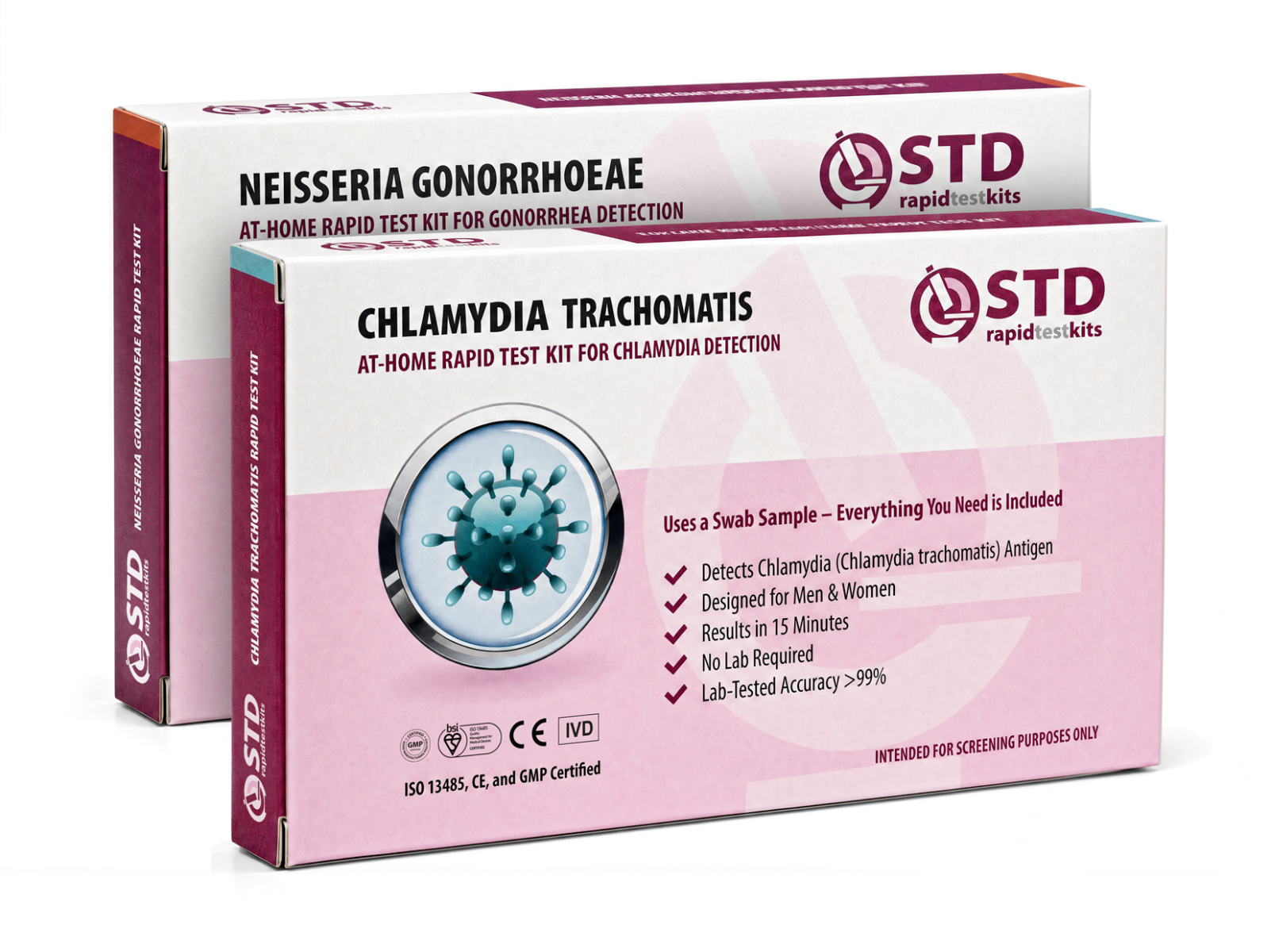
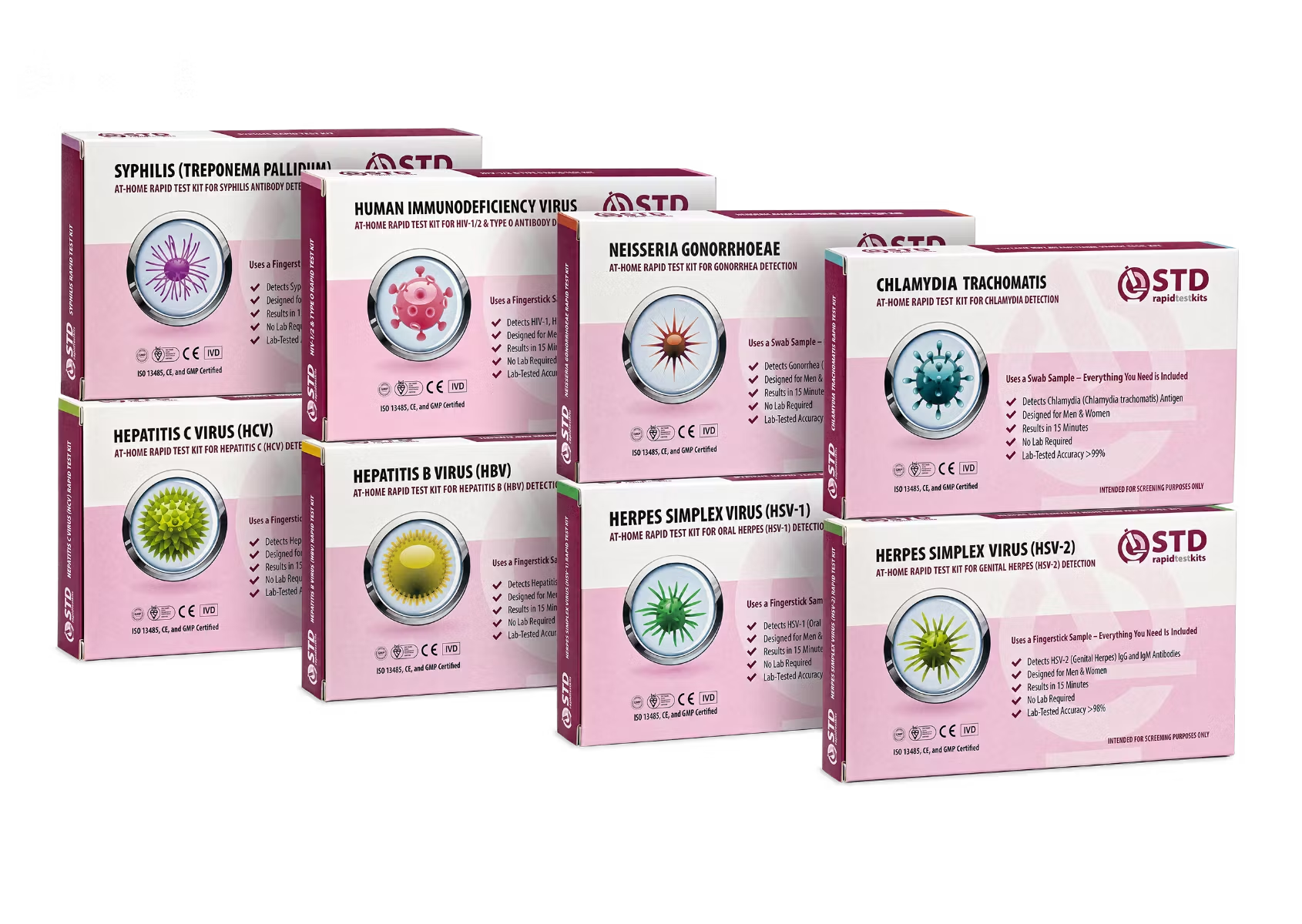
One note on at-home rapid tests: the kits available on this site are lateral-flow rapid tests; lab NAATs use a different molecular chemistry and are typically run by clinics. A positive home result is worth confirming with a clinic NAAT or a follow-up blood panel. A negative home result close to the exposure window should be repeated once the window has passed.
Chlamydia and gonorrhea swab tests: most accurate from day 7 to 14 after exposure. HIV rapid antibody home tests (fingerstick blood): reliable from 23 to 90 days, with a 3-month repeat recommended for definitive ruling-out. Herpes blood antibody (IgG) testing: at least 12 weeks for accurate seroconversion. Syphilis blood antibody: 3 to 6 weeks. Test inside the window if you have specific symptoms; retest after the window for clean confirmation.
What to Do If Symptoms Appear (or You Are Just Worried)
The moment you notice anything unusual, the most useful step is simple: arrange testing rather than guessing. Waiting and hoping symptoms disappear rarely answers the underlying question, and untreated bacterial STDs can cause complications (pelvic inflammatory disease, infertility, increased HIV risk) that early treatment prevents.
For chlamydia, gonorrhea, and trichomoniasis (the fast-onset bacterial group), testing 7 to 14 days after the suspected exposure is generally a reasonable first window. For syphilis, HIV, and herpes, the window is longer, and the most reliable answer often requires waiting 4 to 12 weeks before testing or repeating an early test.
If specific symptoms appear inside that window (discharge, sores, painful urination), test sooner; positive results from at-home rapid tests are still meaningful even if a negative result early on is not conclusive. CDC screening guidance recommends annual chlamydia and gonorrhea screening for sexually active women under 25, with separate annual-screening guidance for men who have sex with men, and HIV screening at least once for everyone aged 13 to 64, with more frequent testing for higher-risk groups.
Treatment for the bacterial infections is straightforward. A short antibiotic course typically clears chlamydia, gonorrhea, syphilis, and trichomoniasis. Viral infections (herpes, HIV, HPV) are managed long-term rather than cured, but modern treatment makes them controllable and, in the case of HIV, allows for a normal life expectancy when treated early.
Disclosure: stdrapidtestkits.com sells at-home rapid lateral-flow test kits. The product below is recommended on fit-for-purpose grounds for the testing window described above, not for commercial benefit.
When Silence Is the Symptom: Many STDs Do Not Show Signs at All
One of the most surprising realities of sexual health: many sexually transmitted infections cause no symptoms at all in the carrier. A person can feel completely normal while harboring chlamydia or HPV for weeks, months, or years. According to the WHO STI fact sheet, the majority of STIs are asymptomatic or cause only mild symptoms that go unrecognized.
That asymptomatic pattern is why public health agencies emphasize routine screening rather than symptom-based testing. Annual chlamydia screening for sexually active women under 25, hepatitis screening for adults at risk, and at least one HIV test for everyone 13 to 64 are all built around the assumption that most carriers will not have obvious signs.
The absence of symptoms can let infections spread quietly because nothing feels wrong, which is why partner notification and routine testing matter. Silent infection is simply how some pathogens behave. Routine testing answers what waiting for symptoms cannot.
More than 1 million curable sexually transmitted infections (STIs) are acquired every day worldwide in people 15 to 49 years old.
Frequently Asked Questions
- Can STD symptoms really show up the next day?
- Almost never. The morning-after sting or itch is far more often friction, dehydration, condom or lubricant irritation, or anxiety amplifying normal sensations. True bacterial symptoms (chlamydia, gonorrhea) need at least 2 to 7 days to build, and viral symptoms (herpes, HIV) typically need longer.
- Which STD shows symptoms the fastest?
- Gonorrhea is usually the fastest, with burning urination or discharge starting 2 to 7 days after exposure. Even fast onset is gradual; symptoms tend to escalate over a few days rather than appearing all at once.
- Why do some STDs take weeks to show symptoms?
- Different microbes follow different rules. Some bacteria multiply quickly and irritate tissues right away. Others, like the syphilis bacterium, replicate more slowly and produce a sore around 3 weeks after infection. Viruses like herpes can integrate into nerve cells and stay dormant for weeks to months before the first outbreak.
- If I feel totally fine, am I in the clear?
- Not necessarily. Many people carry STIs without symptoms; chlamydia is the most well-known example. Routine screening, not waiting for symptoms, is how most asymptomatic infections are caught. CDC recommends at least annual screening for sexually active women under 25, with separate annual-screening guidance for men who have sex with men.
- How soon after exposure should I test?
- For chlamydia, gonorrhea, and trichomoniasis, 7 to 14 days is generally a reasonable first window. For syphilis, blood antibody testing becomes reliable at 3 to 6 weeks. For HIV, lab fourth-generation tests detect infection from 18 to 45 days; rapid home antibody tests are most reliable from 23 to 90 days. For herpes blood antibody (IgG), wait at least 12 weeks for the most accurate result.
- I tested early and it was negative. Am I safe?
- Not definitively. An early negative is meaningful only if it falls within the test's reliable window for that infection. If you tested before the window, plan to repeat the test once the window has passed. This is why many clinicians recommend a second test 4 to 12 weeks after exposure for the most thorough confirmation.
- Can I get an STI if we used a condom?
- Yes, though the risk is much lower. Condoms reduce transmission risk substantially without eliminating it. Infections that spread by skin-to-skin contact (herpes, HPV, syphilis chancres) can transmit from areas the condom does not cover. Bloodborne and discharge-based infections (HIV, gonorrhea, chlamydia) are blocked much more reliably when condoms are used correctly throughout the encounter.
- What if my symptoms feel more like irritation or a yeast infection?
- Yeast, friction, urinary tract infections, new soaps, and shaving can all mimic early STD symptoms. The challenge is that those sensations feel similar to STI worries. The fastest path to peace of mind is testing rather than guessing; a quick at-home test or a clinic visit usually beats a week of refreshing search results.
- U.S. Centers for Disease Control and Prevention. Sexually transmitted infections overview, including general information on transmission and asymptomatic patterns.
- World Health Organization. Sexually transmitted infections fact sheet, including the figure of more than 1 million curable STIs acquired daily worldwide and the asymptomatic-majority pattern.
- U.S. Centers for Disease Control and Prevention. HIV testing guidance, including window periods for fourth-generation antigen-antibody, rapid antibody, and NAAT tests.
- U.S. Centers for Disease Control and Prevention. Annual STI screening recommendations, including chlamydia and gonorrhea screening for women under 25.
- U.K. National Health Service. Chlamydia overview, source for the symptom-onset window beginning around one week after infection.
- U.K. National Health Service. Syphilis overview, source for the chancre appearing around 3 weeks or more after infection.
- U.S. National Library of Medicine, MedlinePlus Medical Encyclopedia. Genital herpes article, source for the first-outbreak window of 2 days to 2 weeks after infection.