HPV in Men vs Women: Why One Partner Gets Symptoms and the Other Doesn't
Why one partner gets HPV symptoms and the other stays silent.




- Women are usually diagnosed first because Pap smears and HPV DNA tests catch cellular changes the body never feels. There is no equivalent routine HPV screening test for asymptomatic men.
- Most HPV infections clear within one to two years through immune response. A new positive result doesn't pinpoint when or from whom you got it, so blame is rarely useful.
Published: November 2025 | Last updated: May 2026 | Editorial review and quality control: Martina N.
If you're in a relationship where one person tested positive for HPV or noticed a symptom while the other hasn't, you're not alone. This split is one of the most common patterns in human papillomavirus, the most prevalent sexually transmitted infection in the world. According to the CDC's HPV fact sheet, HPV is so common that nearly every sexually active person will encounter it at some point if they aren't vaccinated. Yet who gets diagnosed, who shows symptoms, and who feels like the carrier varies enormously by anatomy, immune response, and access to screening.
That asymmetry is biology and medical infrastructure, not betrayal. This article walks through why women tend to be diagnosed first, why men can carry the virus silently for months or years, what each partner should actually do, and how to talk about it without blame. It's a synthesis of current public-health guidance, not a clinical diagnosis. If you came for reassurance, you'll find it. If you came to figure out whether to test, that's here too.
Key Takeaways
- Women are usually diagnosed first because Pap smears and HPV DNA tests catch cellular changes the body never feels. There is no equivalent routine HPV screening test for asymptomatic men.
- Most HPV infections clear within one to two years through immune response. A new positive result doesn't pinpoint when or from whom you got it, so blame is rarely useful.
The Visibility Gap: Why Women Get Diagnosed First
HPV is often invisible in men, which doesn't mean it's harmless, only that men are far less likely to know they're infected. For women, the virus tends to reveal itself two ways: through abnormal cells flagged on a Pap smear, or through visible genital warts. Men may have no symptoms at all, or warts that hide inside the urethra, under the foreskin, or in places they don't routinely check.
The reason for the imbalance is screening, not biology. Women in the United States are offered Pap and HPV co-testing starting in their 20s as part of cervical cancer prevention, per CDC screening guidance. Men have no equivalent screening program. The FDA has not approved an HPV test for general use in asymptomatic men, and most primary-care providers will not order one unless visible symptoms appear.
That gap is starting to close as rates of HPV-related oropharyngeal cancer in men rise, but the routine male screening test still does not exist outside specialized contexts like anal Pap testing for high-risk groups. Until it does, women carry a disproportionate share of HPV diagnoses simply because routine cervical screening exists for them and not for most men.
| Group | Common Detection Method | Visibility of Symptoms | Routine Screening Available? |
|---|---|---|---|
| Women | Pap smear, HPV DNA test, visual wart inspection | High: abnormal cells or visible warts | Yes: cervical screening is standard |
| Men | Visual inspection, biopsy (only if symptomatic) | Low: often asymptomatic or hidden | No: no FDA-approved screening for most men |
What HPV Looks Like in Women
HPV in women takes multiple forms, some obvious and others completely silent. The most visible sign is genital warts, soft flesh-colored bumps around the vulva, vagina, anus, or cervix. These can be raised or flat, single or clustered. They usually don't itch or hurt, which is why many people miss them until a gynecologist points them out.
Many high-risk HPV types never produce warts. Instead, they alter cervical cells in ways only detectable through a Pap smear or HPV DNA test. You can feel perfectly well and still have a strain linked to cervical cancer, which is why the WHO emphasizes routine cervical screening as the primary defense. Subtler signs are possible but non-specific: post-coital bleeding, changes in discharge, or pelvic discomfort. None of these alone diagnose HPV, but combined with an abnormal Pap result or known exposure, they're a reason to test rather than wait.
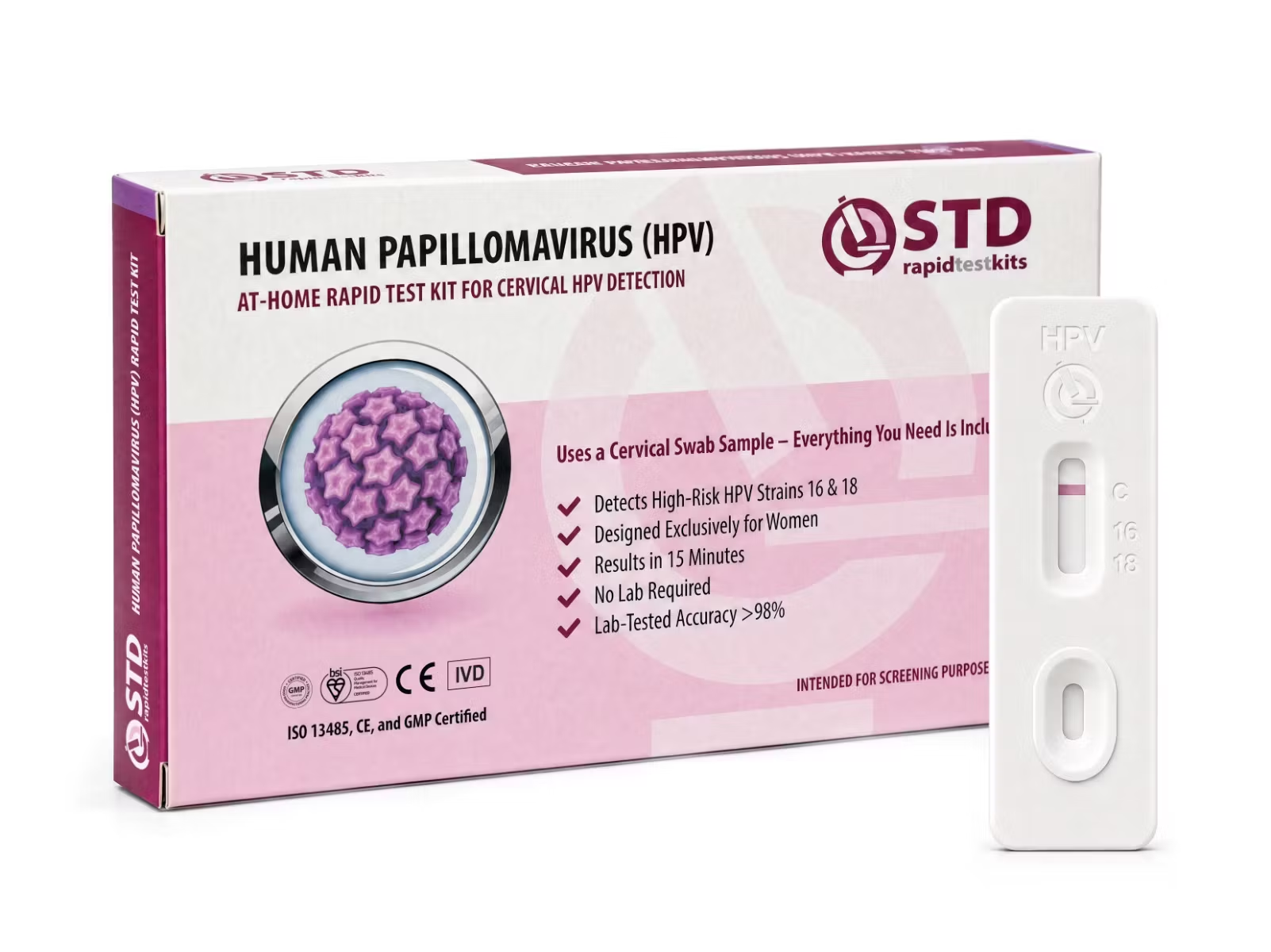
A note on at-home testing scope: our HPV rapid kit uses a self-collected vaginal swab and is validated for adult women only. Male readers needing HPV evaluation should see a clinician for visual exam, anal Pap if appropriate, or ENT screening for oral symptoms. There is no FDA-approved at-home HPV screen for male anatomy.
What HPV Looks Like in Men
In men, HPV often hides. Visible warts can appear on the penis, scrotum, perineum, anus, or upper thigh, sometimes flat, sometimes raised, sometimes only a few millimeters across. Many are easy to miss because of circumcision status, skin folds, or hair growth. Self-checks help, but they aren't a substitute for clinical inspection.
Most men with HPV never develop visible warts. Their immune systems clear the virus quietly over roughly 6 to 24 months, according to Mayo Clinic's HPV overview. That clearance doesn't mean they were never contagious. During the period before clearance, often called subclinical infection, they can pass HPV to partners through skin-to-skin contact, with or without penetration. Condoms reduce transmission but don't eliminate it, since the virus lives on skin outside what a condom covers.
Oral HPV adds another layer. According to CDC HPV surveillance, men are more likely than women to develop HPV-associated oropharyngeal cancer, often years or decades after exposure. Early symptoms are easy to dismiss: a persistent sore throat, hoarseness, a lump on the neck, or trouble swallowing. Most men don't connect these to a past sexual encounter, which delays diagnosis. For male readers concerned about HPV exposure, the path is clinical: an in-person exam by a primary care provider or urologist for visible lesions, and an ENT or dentist for unexplained throat symptoms.
| HPV Location in Men | Symptoms (if any) | Challenges in Detection |
|---|---|---|
| Genitals (penis, scrotum, perineum) | Visible or hidden warts, occasional itching or irritation | May sit under foreskin, in skin folds, or be too small to spot |
| Anal region | Warts, bleeding, mild discomfort | Often misattributed to hemorrhoids and ignored |
| Throat (oral HPV) | Persistent sore throat, hoarseness, neck lump, trouble swallowing | No routine screening; often diagnosed late by ENT or dentist |
Why One Partner Shows Symptoms and the Other Doesn't
When one partner has visible symptoms or a positive result and the other insists they're fine, it can lead to a quiet war of assumptions. HPV does not follow fairness. It can live undetected for years, remain dormant, or clear without treatment. A symptom-free partner isn't necessarily lying. They could simply be one of the many people whose immune system handles HPV invisibly.
Biologically, the cervical transformation zone where columnar and squamous cells meet is particularly susceptible to HPV-induced cellular changes. Those changes show up on a Pap. The keratinized external skin of the penis doesn't undergo equivalent dysplastic changes for most strains, so even when virus is present, there's no equivalent of an abnormal Pap to find. Researchers sometimes call this clinical mismatch. One partner gets a name for their condition, sees a doctor, processes the diagnosis. The other moves through life unaware. Yet both may have been infected for months or years.
Immune response varies enormously between individuals, too. Two people exposed to the same HPV strain at the same time can clear it on completely different timelines. One might be virus-free in six months. The other might carry it asymptomatically for years. Smoking, chronic stress, immunosuppressant medication, and underlying conditions like HIV all affect how the body handles HPV. None of those factors map cleanly to gender, but they explain why two people in the same relationship can have wildly different experiences of the same virus. The virus could have been dormant in either partner from a past encounter, and there is no test that timestamps an HPV infection. Testing, talking, and giving each other the benefit of the doubt is usually the right response.
Three factors stack to produce the asymmetry: (1) the cervical transformation zone undergoes detectable cellular changes that the keratinized external skin of the penis usually doesn't, so a Pap smear catches infection one partner's body would never have signaled; (2) immune response varies widely between individuals, with the same strain cleared in six months by one person and carried silently for years by another; (3) factors like smoking, chronic stress, and immunosuppressant medication shift those timelines further. Different bodies, same virus, very different experiences.
How Long HPV Can Stay Dormant
One of the most confusing facts about HPV is how long it can lie quiet. People can carry the virus with no symptoms, then develop warts or a positive test result years after their last new sexual partner. This latency is why HPV timelines rarely behave the way infections in TV plots do.
Per CDC data on genital HPV, around 9 out of 10 infections clear within two years through immune response alone, especially in younger people with healthy immune systems. In some cases the virus persists quietly, particularly among the high-risk strains. In women, that can mean no symptoms until a Pap smear flags an abnormality. In men, it might never show up unless a wart appears or oropharyngeal symptoms develop later.
| HPV Status | Typical Pattern in Women | Typical Pattern in Men |
|---|---|---|
| Low-risk HPV (wart-causing) | Often clears within 1 to 2 years | Often asymptomatic; clears within 6 to 24 months |
| High-risk HPV (cancer-linked) | Can persist for years; detected by Pap or HPV DNA test | Often unnoticed unless throat or anal symptoms develop |
| Dormant infection (no symptoms) | May be flagged by routine cervical screening | Rarely detected unless visible warts appear |
Can I tell who gave HPV to whom?
Usually no. HPV can stay dormant for months or years, so a new positive test doesn't pinpoint when or from whom you got it. Both partners may have been infected long before the relationship began. The most useful response is testing, vaccinating if you or your partner are under 45, and talking openly.
Why There's No Routine HPV Test for Men (Yet)
There is no FDA-approved screening test for HPV in asymptomatic men. Unless a male patient has visible warts, atypical lesions, or symptoms of anal or oropharyngeal complications, most providers won't test for HPV. The available HPV molecular tests are validated only on cervical samples, since they were developed for cervical cancer screening. Men get HPV just as readily, but the testing technology that exists today wasn't built for penile or oral swab samples in screening populations.
For women, Pap smears and HPV DNA tests are a routine part of reproductive care starting in the 20s. Men are usually outside this loop unless they're in a higher-risk population, such as men who have sex with men, or people living with HIV, in which case anal Pap screening may be available at specialized clinics or sexual health services.
This testing gap is the structural reason so many male partners can honestly say they've never tested positive. They've never been tested. That's not necessarily deception, it's a blind spot in the system. Closing it will require new test approvals and clinical guidelines, neither of which exist yet for general male screening.
When an asymptomatic male partner says they've never had a positive HPV result, the most common interpretation is that HPV testing has never been part of their medical care. Most primary-care providers do not order HPV testing for men without symptoms, because the FDA has not approved a screening test for that use. The absence of a positive result reflects the absence of testing, not the absence of the virus.
How HPV Actually Spreads
HPV doesn't require penetrative sex to transmit. The virus moves through skin-to-skin contact, including genital contact without penetration, oral sex, and shared sexual touch when virus is on the skin. Condoms reduce risk substantially but don't eliminate it, because the virus can live on areas not covered by a barrier.
This is why people who've had only one or two partners can still encounter HPV. It's also why monogamous couples sometimes see a diagnosis appear years into a relationship. The virus could have been dormant in either partner since well before they met. Couples who treat this as biology rather than infidelity tend to navigate the diagnosis better. The transmission patterns also explain why oral HPV exists in people who've never had penetrative sex with the partner who transmitted it, since shared oral contact is enough.
How HPV transmits
- Skin-to-skin genital contact, with or without penetration
- Oral sex in either direction
- Shared sexual touch when virus is present on the skin
- Contact with areas a condom does not cover, which is why condoms reduce but don't eliminate risk
- Not spread through casual contact, toilet seats, swimming pools, or shared utensils
Vaccination Still Helps in Adulthood
The HPV vaccine is most effective before sexual debut, which is why the CDC recommends it for preteens at age 11 or 12, with the series sometimes starting as early as age 9. Per Advisory Committee on Immunization Practices (ACIP) guidance, routine vaccination is recommended through age 26. For adults aged 27 to 45, vaccination is a shared clinical decision: not routinely recommended for everyone, but appropriate after a conversation about likely future exposure and individual risk.
Gardasil 9, the version available in the U.S. and most high-income countries, covers nine HPV types responsible for the majority of cervical, anal, throat, and penile cancers, along with most genital warts. Prior exposure to one or two of those nine types doesn't cancel the benefit of vaccination, since the remaining types the vaccine covers are still strains the body hasn't seen. The vaccine doesn't clear an existing infection, but it strengthens defense against strains not yet encountered.
For a couple navigating a diagnosis, getting vaccinated together (if both partners are under 45 and haven't completed the series) can feel like a shared act rather than an isolated problem.
HPV vaccination by age (ACIP guidance)
- Age 11 to 12: routine vaccination recommended; series can start as early as age 9
- Through age 26: routine catch-up vaccination for anyone not adequately vaccinated earlier
- Age 27 to 45: shared clinical decision; appropriate for some adults after discussing likely future exposure and individual risk with a provider
- Gardasil 9 covers nine HPV types responsible for most cervical, anal, throat, and penile cancers, plus most genital warts
Talking to Your Partner Without Blame
The hardest part of an HPV diagnosis is often the conversation, not the virus. Telling a partner you tested positive can feel vulnerable. The fear of being judged or accused is real. So is the impulse, on the receiving end, to ask where the virus came from.
A more useful framing is that HPV is a virus, not a verdict. The CDC describes it as nearly universal among unvaccinated sexually active adults. Sharing facts calmly, what you were diagnosed with, what the clinician said, what the plan looks like, makes space for problem-solving instead of suspicion. Practical moves: get tested together if appropriate, get vaccinated together if you're both under 45 and not fully vaccinated, and decide what your sex life looks like during any active treatment phase.
HPV is so common that almost every person who is sexually active will get HPV at some time in their life if they don't get the HPV vaccine.
When to Test, When to See a Clinician
If you're the partner with visible signs, genital warts, abnormal bleeding, or an unusual Pap result, the first step is medical evaluation, not panic. Treatments for warts include topical solutions, cryotherapy (freezing), or minor outpatient removal. An abnormal Pap usually leads to follow-up such as colposcopy (a close-up camera examination of the cervix performed in a clinic) or biopsy, which evaluates whether cervical changes need treatment. Most cervical changes related to HPV are mild and resolve with monitoring.
If you're a man with visible warts, throat discomfort, anal pain, or unexplained neck lumps, see a clinician. Don't wait for a partner to be diagnosed before going in. Early intervention is more comfortable and more effective than late.
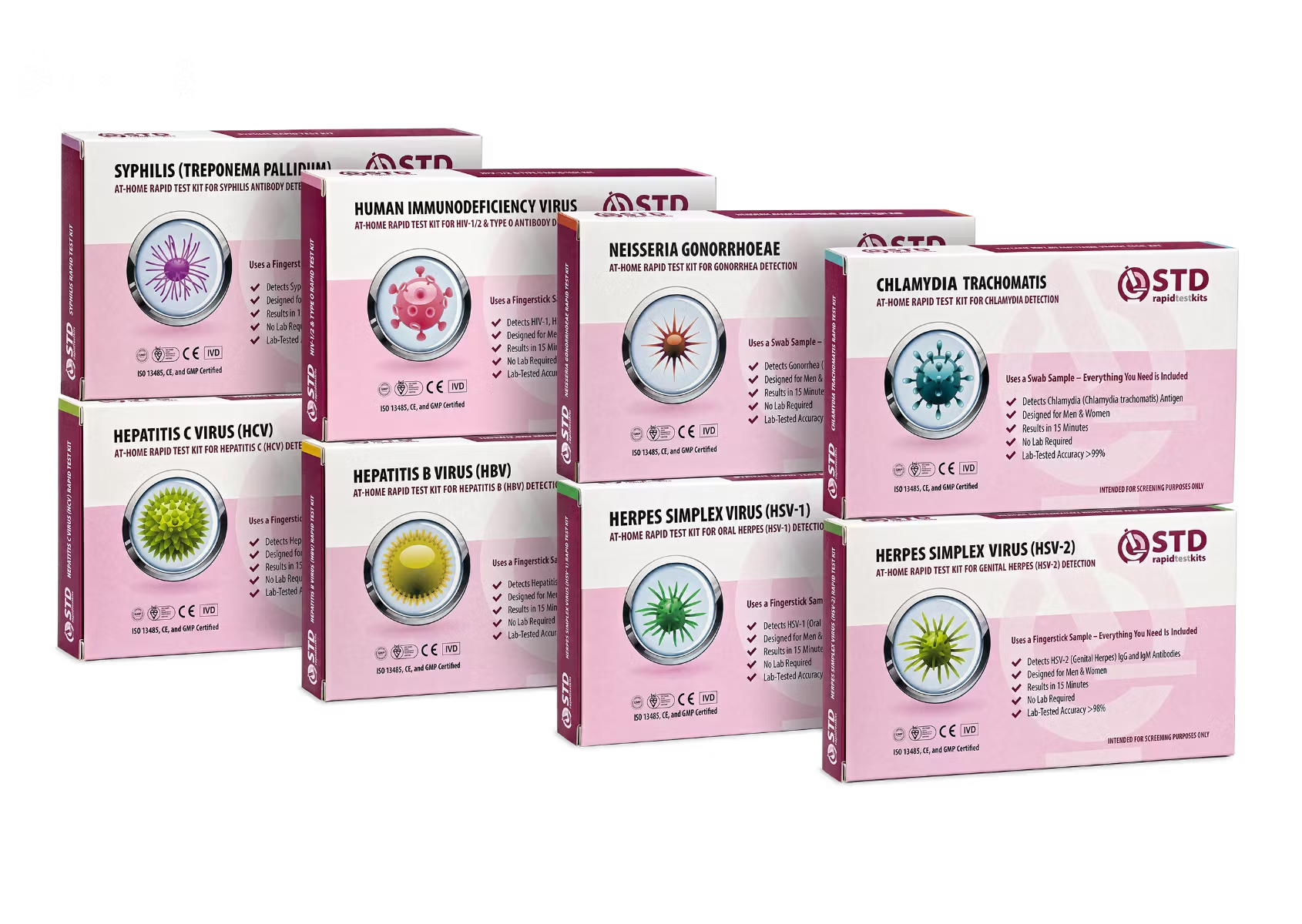
If you're asymptomatic and worried because a partner tested positive, options depend on anatomy. Women without recent screening can schedule a Pap and HPV co-test to establish a baseline. Men without symptoms generally won't be offered HPV testing in primary care, but can ask their provider about anal or oral screening if they're in a higher-risk group. For broad STI peace of mind, an at-home multi-infection panel can cover the infections you can test for at home. That doesn't include HPV for male anatomy, but it does include several others worth knowing about after a potential exposure event.
FAQs
- Can men really have HPV without knowing?
- Yes, often. Most men with HPV have no symptoms and no way to find out without a visible wart or a complication. The available HPV tests are validated for cervical samples, not penile or oral screening in healthy men. So an asymptomatic man can carry and transmit the virus without ever appearing on a test.
- What does HPV look like in women?
- Most commonly as soft, painless bumps around the vulva, vagina, or cervix, though many high-risk HPV types cause no visible signs at all. An abnormal Pap smear is often the first indication, which is why routine cervical screening matters even when nothing feels wrong.
- If I just tested positive, does that mean my partner cheated?
- Not necessarily. HPV can stay dormant for months or years, so a new positive doesn't time-stamp the infection. The virus could have been in either partner from years before the relationship started. There's no test that tells you who or when, so approach the situation with curiosity, not accusation.
- Can you get HPV from oral sex?
- Yes. Oral HPV transmits during oral sex and can persist silently for years. Per CDC data, persistent oral HPV is associated with oropharyngeal cancer, which appears more often in men and may show up decades after exposure. The HPV vaccine reduces this risk when given before exposure.
- Why don't doctors test men for HPV?
- Short answer: there is no approved test to give them. The HPV tests that exist were designed for cervical screening, and no validated equivalent exists yet for penile or oral samples in healthy men. So an asymptomatic male partner genuinely cannot be tested at most clinics. It's a gap in the system, not a reluctance to test.
- Does the HPV vaccine help adults who've already had sex?
- It can. Gardasil 9 protects against nine HPV types, and people who've been exposed to one or two of those types can still be protected from the others. Per ACIP guidance, routine vaccination is recommended through age 26, with shared clinical decision-making for vaccination between ages 27 and 45.
- Can we have sex if one of us has HPV?
- Usually yes, with some adjustments. When visible warts are present, it's reasonable to hold off on sexual contact in that area until they're treated. When neither partner has active symptoms, normal sexual activity with usual precautions is fine. There's a good chance the virus is already shared between you.
- Will I have HPV forever?
- Most people, no. Around 9 in 10 HPV infections clear within two years through immune response alone, per CDC data. The exceptions are usually high-risk strains in older adults or people with weakened immune systems. Persistent infection is what raises cancer risk, which is why follow-up after an abnormal Pap matters even when symptoms are gone.
Our article was constructed based on current advice from the most prominent public health and medical organizations (CDC, WHO, NHS, Mayo Clinic, American Cancer Society), and then molded into simple language based on the situations that people actually experience. We do not provide clinical diagnosis; for symptoms that concern you, see a licensed provider.
- U.S. Centers for Disease Control and Prevention. About Genital HPV Infection fact sheet, covering prevalence, transmission, the absence of routine male HPV screening, and the 9-in-10 two-year clearance rate.
- Mayo Clinic. HPV infection symptoms and causes, including clearance windows and clinical presentation by sex.
- World Health Organization. Human papillomavirus and cervical cancer fact sheet, including the role of cervical screening in detection.
- U.S. Centers for Disease Control and Prevention. HPV vaccines page, summarizing ACIP recommendations for routine and shared-decision vaccination through age 45 and the nine HPV types covered by Gardasil 9.
- American Cancer Society. HPV prevention guidance, including general background on vaccination and HPV-related cancer risk.