Why HPV Vaccination Is Just as Important for Men as for Women
What the HPV vaccine actually prevents in men



- HPV causes about 70% of oropharyngeal (throat) cancers in the United States per NCI surveillance, and HPV-linked throat cancer rates in men have overtaken cervical cancer rates in women.
- Gardasil 9 is routinely recommended through age 26, with shared clinical decision-making available through age 45 per ACIP guidance. It works best given before any HPV exposure, but adult catch-up is still worthwhile.
Published: December 2025 | Last updated: May 2026 | Editorial review and quality control: Martina N.
Most public messaging about HPV centers on cervical cancer screening and the vaccine for girls. That framing leaves a gap. HPV is a virus that spreads through skin-to-skin contact, and men carry it and pass it on at roughly the same rate as women. The World Health Organization's 2023 global meta-analysis puts prevalence of any genital HPV type at roughly one in three men over the age of 15. In the United States, the CDC's HPV resource center reports that around 45% of men aged 18 to 59 carry one or more types at any given time.
The infection itself usually clears within two years; the cancers it can leave behind do not. This article walks through what HPV actually does in men, who the CDC recommends vaccinating and when, what the Gardasil 9 shot prevents, and which infections an at-home STI panel can rule in or out alongside HPV. The same vaccine that has cut cervical pre-cancer rates sharply in young women is the same vaccine cutting throat, penile, and anal cancer risk in men.
Key Takeaways
- HPV causes about 70% of oropharyngeal (throat) cancers in the United States per NCI surveillance, and HPV-linked throat cancer rates in men have overtaken cervical cancer rates in women.
- Gardasil 9 is routinely recommended through age 26, with shared clinical decision-making available through age 45 per ACIP guidance. It works best given before any HPV exposure, but adult catch-up is still worthwhile.
Why HPV in Men Gets Treated Like a Side Note
The female-focused framing happened for understandable reasons. HPV was identified as the cause of cervical cancer in the early 1980s, and a screening tool was already in place: the Pap smear. Public health priorities followed the screening infrastructure. Educate women, vaccinate girls, watch cervical pre-cancer rates fall. That campaign worked. Cervical cancer incidence in heavily vaccinated cohorts is down sharply.
The downstream problem is that HPV does not stop at the cervix. Genital HPV types infect any squamous tissue they touch, which includes the penis, anus, throat, tonsils, and base of the tongue. Men have no equivalent routine screening tool. There is no FDA-approved primary care HPV test for men, and there is no Pap-equivalent for the throat or penis. Women get caught early when the virus starts causing cellular changes; men typically get caught only when the disease itself shows up, which often means a sore throat that turns out to be cancer or a lump that turns out to be a tumor.
The result is a public health blind spot. Men carry the virus in similar numbers to women, they pass it on, and they develop HPV-related cancers at rising rates. The vaccine is the only structural prevention available to them. Until 2009 the CDC did not even formally recommend it for boys; routine boys' vaccination was added in 2011.
Most sexually active women and men will be infected with HPV at some point in their lives, and some may be repeatedly infected.
How Often Men Actually Carry HPV
The prevalence numbers reshaped public health thinking around the 2010s. The HIM Study (HPV Infection in Men), funded by the U.S. National Cancer Institute, tracked HPV across roughly 4,000 men in three countries. It found that new HPV infections were common throughout adult life, and that lifetime cumulative exposure was effectively universal among sexually active adults.
The CDC's HPV statistics put current infection (point prevalence) at around 45% of U.S. men aged 18 to 59. The WHO's 2023 global meta-analysis puts the worldwide figure for any HPV type in men over 15 at 31%, with high-risk types in roughly 21%.
Most men never know they carry it. Most genital HPV infections produce no visible symptoms, no warts, no discomfort, and no abnormal sensation. The immune system clears around 90% of new infections within two years. The remaining 10% are where the cancer risk lives. Persistent infection with HPV-16 in particular drives the majority of HPV-linked cancers in both men and women.
This is the central reason "I have no symptoms" is not reassuring with HPV. You are statistically more likely to be carrying it asymptomatically than not, and asymptomatic carriage is exactly the state that transmits to partners.
Around 45% of U.S. men aged 18 to 59 carry at least one HPV type at any given time per CDC surveillance. Most never know it. Asymptomatic carriage is the default state, and it is exactly the state that transmits to partners.
The Cancers and Conditions HPV Causes in Men
The HPV types that cause problems split into two groups. Low-risk types (mainly HPV-6 and HPV-11) cause genital warts. High-risk types (most importantly HPV-16, and secondarily HPV-18, 31, 33, 45, 52, 58) cause cancers. The five HPV-driven outcomes that matter most in men:
- Oropharyngeal (throat) cancer. The fastest-growing HPV-linked cancer in the United States. About 70% of U.S. oropharyngeal cancers are caused by HPV per the National Cancer Institute's HPV and cancer page. The rate in men is now several times the rate in women. Symptoms tend to appear late: a persistent sore throat, a lump in the neck, painful swallowing, or hoarseness that does not resolve.
- Anal cancer. HPV causes more than 90% of anal cancers per the NCI. The risk is highest in men who have sex with men, with HIV co-infection raising it sharply. The American Cancer Society's anal cancer information describes a substantially elevated rate in HIV-positive MSM compared with the general male population.
- Penile cancer. Rare in absolute terms (about 2,260 new U.S. cases a year per ACS) but life-altering when it occurs. Roughly 60% of penile cancers carry HPV DNA. Advanced cases can require partial or total penectomy.
- Genital warts. Caused by low-risk HPV-6 and HPV-11 in over 90% of cases. Genital warts are non-cancerous, though they tend to recur and can be difficult to clear with standard treatments.
- Recurrent respiratory papillomatosis. A rare but serious condition where HPV warts grow on the vocal cords or in the airway. Most often acquired during birth from an infected mother, though adult-onset cases occur.
Across all five outcomes, the underlying biology is the same: persistent infection with a high-risk type produces cellular changes over years to decades, and those changes can eventually become cancer.

How the Gardasil 9 Vaccine Protects You
There is one HPV vaccine currently in use in the United States: Gardasil 9. It protects against nine HPV types, seven of which are high-risk cancer-causing types (HPV-16, 18, 31, 33, 45, 52, 58) and two of which are the low-risk wart-causing types (HPV-6, 11).
According to CDC vaccine effectiveness data, the types covered by Gardasil 9 are responsible for about 90% of HPV-related cancers in both men and women, and the wart-causing types account for about 90% of genital warts. The vaccine targets nearly every clinically significant HPV outcome.
Real-world surveillance backs up the trial data. Genital wart rates dropped 60% to 90% in vaccinated cohorts in the United States, Australia, and the United Kingdom. HPV-16 and HPV-18 infections in young women fell more than 80% within a decade of program rollout. Direct cancer-prevention data takes longer to mature because HPV-linked cancers develop decades after infection, but cervical pre-cancer rates have fallen sharply where coverage is high, and HPV-positive throat cancer rates in younger men are starting to level off in heavily vaccinated cohorts per surveillance summarized at the National Cancer Institute's HPV and cancer page.
The vaccine is preventive, not therapeutic. It cannot clear an existing HPV infection or treat a wart that is already there. What it can do is prevent infection with the types you have not yet encountered, and almost no one has been exposed to all nine of the types Gardasil 9 covers.
Genital wart rates fell 60% to 90% in vaccinated cohorts across the United States, Australia, and the United Kingdom within roughly a decade of program rollout. HPV-16 and HPV-18 infections in young women fell more than 80% over the same period.
Who the CDC Recommends Vaccinating, and When
The CDC's ACIP HPV vaccine recommendations for males in the United States break down by age band:
- Routine vaccination, ages 11 to 12. Two doses given 6 to 12 months apart. The series can start as early as age 9. The two-dose schedule is approved for anyone who starts before their 15th birthday.
- Catch-up vaccination, ages 13 through 26. Three doses on a 0, 1-to-2, 6-month schedule for anyone who started at 15 or older, or who is immunocompromised. CDC recommends catch-up for everyone in this band who did not complete the series earlier.
- Shared clinical decision-making, ages 27 through 45. Vaccination is not routinely recommended in this band, but it is approved and may benefit individual patients. CDC's guidance is to discuss it with a clinician based on personal HPV exposure history and ongoing risk.
The 11-to-12 target age is not arbitrary. The vaccine produces a stronger antibody response in younger adolescents, and the intent is to vaccinate before any HPV exposure. Pediatricians typically frame the conversation around cancer prevention rather than sexual behavior, which is part of why uptake is highest when the vaccine is folded into the routine adolescent schedule alongside Tdap and meningococcal shots.
National adolescent HPV vaccination coverage in the United States has risen steadily but remains behind the Healthy People target. Per the CDC's most recent NIS-Teen survey, fewer than two-thirds of adolescent boys are up to date on the series. Closing that gap is the single biggest lever public health has on future HPV-related cancer rates in men.
Per the CDC's most recent NIS-Teen survey, fewer than two-thirds of U.S. adolescent boys are up to date on the HPV vaccine series. Closing that gap is the single biggest lever public health has on future HPV-related cancer rates in men.
Is It Worth Getting Vaccinated as an Adult?
A common assumption among men in their 30s and 40s is that the vaccine no longer matters. The reasoning sounds intuitive: I have probably already been exposed to HPV, so what is the point. The data does not actually support that conclusion for most adults.
Three things to consider. First, exposure to one HPV type does not protect against the others. Cohort data including the HIM Study show that even men with prior HPV infection rarely test positive for all nine types covered by Gardasil 9 at any given time. The vaccine still has types left to protect against in most adult patients.
Second, natural infection does not produce reliable long-term immunity. Antibody responses after natural HPV infection are weaker and more variable than after vaccination, which is why reinfection with the same type is common. The vaccine produces consistently higher and longer-lasting antibody titers than natural infection.
Third, the cost-benefit calculus changes after age 26 but does not flip negative. Vaccination in the 27-to-45 band is approved precisely because trials showed continued efficacy against new infections. The CDC's position is that the absolute population-level benefit is smaller (more adults have already been exposed), but the individual benefit for someone with ongoing or future risk is real.
The practical translation: if you are unvaccinated and under 45, the conversation is worth having with your primary care doctor or a sexual health clinic. The clinic will ask about your relationship structure, your number of past and likely future partners, and your specific risk concerns. They will not require an HPV test before vaccinating, because routine HPV testing in men is not available.
Why adult catch-up still makes sense
- Prior exposure to one or a few HPV types does not protect against the others. Most adults have not encountered all nine types covered by Gardasil 9.
- Natural HPV infection produces weaker, more variable antibody responses than vaccination, which is why reinfection with the same type is common.
- Trial data supports continued vaccine efficacy against new infections through age 45. The benefit is individual rather than population-level, but it is real.
How HPV Spreads Between Partners
HPV transmits through direct skin-to-skin contact in the anogenital area or through oral-genital contact during sex. The virus does not require penetrative intercourse or fluid exchange to pass. It does not survive long outside the body, so transmission from toilet seats or shared towels is essentially nonexistent, though shared sex toys used without barrier protection or cleaning between partners can transfer it.
Condoms reduce transmission risk substantially per the CDC's HPV prevention guidance, but they do not eliminate it, because HPV can infect skin not covered by a condom: the base of the penis, the scrotum, the perianal area, the vulva. This is one reason vaccination remains important even for people who use condoms reliably.
A few practical implications follow from how the virus moves:
- You can transmit HPV without knowing you have it. Asymptomatic shedding is the default state of most genital HPV infections in men.
- You can transmit HPV between sites within your own body. Oral-genital contact can move a high-risk genital strain to the throat, or vice versa.
- A long-term monogamous partner can still acquire HPV from you years after the relationship started, if you are intermittently shedding a type they have never been exposed to.
HPV infects skin not covered by a condom, including the base of the penis, the scrotum, and the perianal area. CDC guidance treats condoms and vaccination as complementary rather than interchangeable.
Penile Cancer and What It Actually Means
Penile cancer is rare in countries with widespread access to circumcision (where chosen) and good hygiene access. About 2,260 new U.S. cases are diagnosed each year, with roughly 450 deaths, per American Cancer Society Key Statistics for Penile Cancer. ACS describes the annual diagnosis rate as fewer than 1 in 100,000 men.
Internationally, the picture varies widely. In parts of Asia, Africa, and South America the incidence is several times higher. The WHO's 2023 global HPV briefing attributes the geographic gap to a combination of HPV prevalence, screening access, and how late patients typically present.
HPV is found in roughly 60% of penile cancer cases on DNA testing, with HPV-16 the dominant type. Other risk factors include phimosis (a tight foreskin that cannot retract), chronic inflammation, smoking, lichen sclerosus, and prior balanitis. The presentation is usually a non-healing lesion, a thickening of the skin, or a persistent sore on the glans or foreskin.
Treatment depends on the stage at diagnosis. Early-stage disease can be managed with topical therapy, laser ablation, or small surgical excisions that preserve function. Advanced disease requires partial penectomy (removal of the affected portion) or, in severe cases, total penectomy with creation of a perineal urethrostomy (a new urinary opening created in the perineum when the urethra must be removed). Lymph node involvement at diagnosis is the strongest predictor of survival: localized disease carries a five-year survival above 80%, while disease that has spread to distant lymph nodes drops below 20%.
The reason this matters to the HPV vaccine conversation is straightforward. Roughly six in ten of those 2,260 yearly cases would be prevented by a vaccination program reaching boys before exposure.
What At-Home STI Testing Can and Cannot Detect
There is no FDA-approved at-home HPV test for men. Our own HPV rapid swab is validated for vaginal self-collection (female anatomy only). If your concern is HPV specifically, the clinical pathway for men involves a visual exam of any lesions and, when indicated, biopsy or anal Pap testing for high-risk individuals. There is no equivalent screening tool for the throat or tongue yet, though research is moving in that direction.
What at-home rapid tests can do for men, alongside HPV vaccination, is cover the other STIs that frequently co-occur with HPV exposure. Multiple STIs travel together because the routes of transmission overlap. CDC surveillance shows that anyone presenting with one STI has higher-than-baseline risk for the others, and clinical guidelines recommend testing for the common ones simultaneously rather than one at a time.
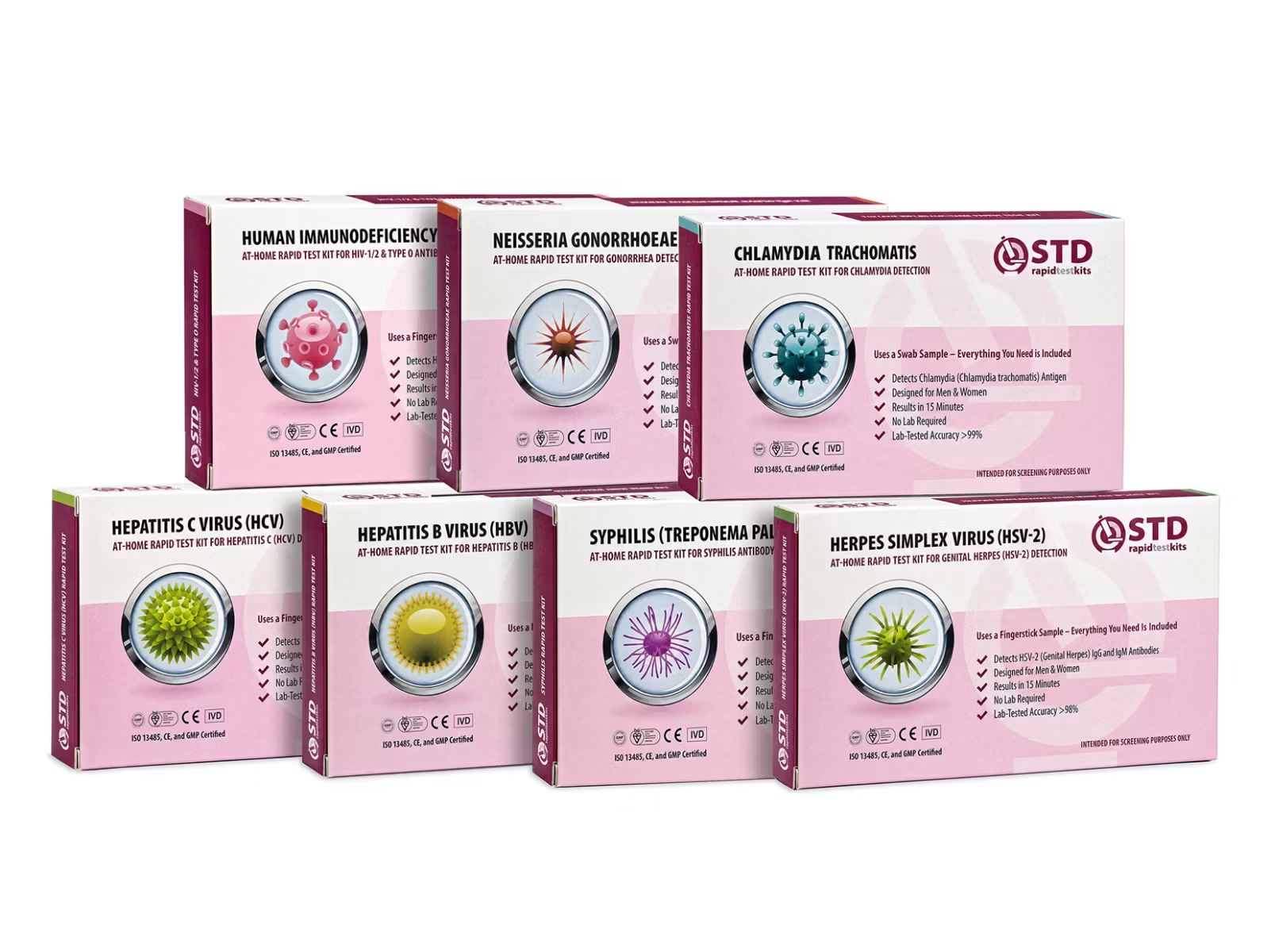
This article is published by stdrapidtestkits.com, which sells at-home STI testing kits. We recommend products based on fit-for-purpose for the reader's concern, not commercial benefit. Our 7-in-1 home rapid panel covers HIV, syphilis, chlamydia, gonorrhea, hepatitis B, hepatitis C, and herpes type 2, using a combination of fingerstick blood drops and self-collected swabs. The chemistry is lateral-flow immunoassay, and results read at home within about 15 minutes. It is a screening tool, not a laboratory NAAT. Lab NAAT testing is the recommended diagnostic approach for chlamydia and gonorrhea per the CDC's STD treatment guidelines. A positive home result is worth confirming with a lab test, and a negative result around a high-risk exposure should be repeated after the window period.
For HPV specifically, the home-testing pathway looks different. The actionable steps are vaccination if you are eligible, visual symptom awareness for warts, and regular dental and primary care visits where a clinician can spot oropharyngeal changes early.
Frequently Asked Questions
- Can men get tested for HPV at home?
- Home HPV testing is not an option for men under current FDA approvals. Our rapid HPV swab kit is designed for vaginal self-collection only. For men, the clinical pathway is a visual exam, anal Pap testing for higher-risk individuals, or an ENT referral for oropharyngeal symptoms. What home tests can do alongside vaccination is screen for co-occurring STIs: HIV, syphilis, chlamydia, gonorrhea, herpes, and hepatitis B and C.
- How effective is Gardasil 9 in men specifically?
- Trials and real-world surveillance show Gardasil 9 prevents around 90% of HPV infections from the nine covered types, along with the corresponding genital warts, in men. Direct cancer-prevention data in men is still maturing because HPV-linked cancers develop decades after infection, but Australian and U.S. data show declining HPV-16 prevalence in vaccinated younger men and early signs of falling oropharyngeal cancer rates in cohorts old enough to have received the vaccine as teens.
- What are the side effects of the HPV vaccine in men?
- The most common side effects are local: soreness, redness, or swelling at the injection site, usually resolving in 1 to 2 days. Mild systemic effects (low-grade fever, headache, fatigue) occur in a minority of recipients. Fainting after injection is more common in adolescents than adults, which is why the CDC recommends 15-minute observation after the shot. Serious adverse events are rare and have not been linked to long-term health problems in the large post-licensure safety datasets the CDC and FDA monitor.
- Should I get vaccinated if I have already had HPV?
- Usually, yes. Prior infection with one or a few HPV types is common, but full exposure to all nine types covered by Gardasil 9 is rare. The vaccine still protects against types you have not yet encountered. It will not clear an existing infection or treat existing warts. The conversation with a clinician is worthwhile through age 45 under the shared clinical decision-making guidance.
- Does insurance cover the HPV vaccine for adult men?
- For ages 9 to 26, the vaccine is covered without cost-sharing under the Affordable Care Act's preventive services requirement for most U.S. insurance plans, and is available free through the Vaccines for Children program for uninsured children. For ages 27 to 45, coverage varies by insurer and may require prior authorization. List price is around $200 to $250 per dose (three doses for adults starting after age 15). Local health departments and pharmacies often have lower cash-pay pricing if you are uninsured.
- Does HPV cause infertility in men?
- HPV itself is not an established cause of male infertility. Some research has linked HPV DNA in sperm to reduced motility, but the clinical significance remains uncertain. The infertility-related risk from HPV is downstream: if a man develops HPV-linked cancer that requires pelvic radiation, chemotherapy, or major surgery, treatment can affect fertility. Sperm banking before cancer treatment is a routine conversation in oncology clinics for that reason.
- How long does it take after HPV exposure to develop cancer?
- Genital warts can appear within weeks to months of exposure. HPV-linked cancers operate on a much longer timeline. Persistent infection with a high-risk type for 5 to 10 years can produce precancerous changes, and progression to invasive cancer typically requires another decade. This long latency is precisely why vaccination in adolescence has such a large long-term impact: it prevents infections that would not produce cancer until the recipient's 40s, 50s, or beyond.
- If I am vaccinated, do I still need STI screening?
- Yes. Gardasil 9 protects against nine HPV types only. It does not protect against chlamydia, gonorrhea, syphilis, HIV, hepatitis B or C, herpes, or trichomoniasis. Routine sexual health screening based on your individual risk profile remains important regardless of HPV vaccination status. The CDC's screening guidance recommends annual screening for sexually active people under 25 and risk-based screening for older adults.
- U.S. Centers for Disease Control and Prevention. HPV resource center, including prevalence in U.S. adults, ACIP-aligned vaccination guidance, and prevention information.
- U.S. Centers for Disease Control and Prevention. HPV-associated cancer surveillance and program information.
- U.S. Centers for Disease Control and Prevention. STD treatment guidelines, including the recommended diagnostic approach for chlamydia and gonorrhea.
- World Health Organization. Fact sheet on human papillomavirus and cancer, global clinical context and cancer mechanisms.
- World Health Organization. 2023 briefing summarizing global HPV prevalence in men aged 15 and older (roughly one in three, with about one in five carrying a high-risk type).
- U.S. National Cancer Institute. HPV and cancer overview, including the 70% oropharyngeal-cancer attribution and 90%-plus anal-cancer attribution.
- American Cancer Society. Anal cancer information, including risk factors and elevated risk in HIV-positive MSM.
- American Cancer Society. Key Statistics for Penile Cancer, including U.S. incidence and mortality figures.