Published: September 2025 | Last updated: May 2026 | Editorial review and quality control: Martina N.
Two weeks after a sexual encounter sits in a strange middle place. It is late enough that some infections might be showing symptoms, but early enough that "nothing yet" does not necessarily mean you are in the clear. If you are scanning your body, checking for changes, or replaying the encounter, you are in the window where most people do exactly that.
This guide separates what is genuinely plausible at day 14 from what is not, what your symptoms could mean (and what they usually do not), and which tests are reliable now versus the ones worth waiting on. Most readers in this window turn out to be fine, and a calm structured next step beats spiraling through search results.
Key Takeaways
- By day 14, chlamydia and gonorrhea swab tests are usually reliable. HIV, syphilis, and HSV antibody blood tests often need 4 to 12+ more weeks to confirm.
- Per the CDC, most STIs cause no symptoms, so feeling fine at two weeks is not a reliable green light.
What "Two Weeks" Actually Means in Sexual Health Terms
Different infections have different incubation periods (the gap between exposure and symptoms) and different window periods (the gap between exposure and when a test can reliably detect them). The two are not the same thing, and at day 14 they can disagree by weeks.
Bacterial infections like chlamydia and gonorrhea are usually detectable on a swab around the two-week mark because the bacteria are replicating at the site of infection and shedding enough genetic material to register. Bloodborne and antibody-based infections like HIV, syphilis, and herpes simplex virus take longer because your body needs time to mount a measurable antibody response. Antibody production typically ramps up between 3 and 12 weeks post-exposure, depending on the pathogen and your immune system, per CDC HIV testing guidance and the CDC STI Treatment Guidelines.
That gap is why "two weeks" can be the right time to test for one infection and far too early for another from the same encounter. It is also why a single negative test at day 14 rarely tells the full story for a high-risk exposure.
Can STD symptoms show up exactly 2 weeks after sex?
Yes for some infections, no for others. Chlamydia, gonorrhea, and herpes can produce symptoms in the 7 to 14 day range. Syphilis, HIV, and trichomoniasis can take longer (often 3 weeks to 3 months) to cause symptoms, and many people never get symptoms at all. Two weeks is also when chlamydia and gonorrhea swab tests are first reliable. For HIV, a 4th-generation lab antigen/antibody test detects most cases by 18 to 45 days; home rapid antibody tests need closer to 3 months for full confidence. Syphilis and herpes antibody blood tests usually need to be repeated at 4 to 12 weeks for a confirmatory answer.
Which Infections Tend to Show Symptoms by Day 14
The table below shows the typical symptom-onset window for the most common STIs, with the caveat that "typical" is doing a lot of work. CDC data on STI prevalence consistently shows that most chlamydia and gonorrhea infections are asymptomatic, and that is the rule, not the exception.
| Infection | Typical symptom-onset window | What people most often notice |
|---|---|---|
| Chlamydia | 1 to 3 weeks (most cases are asymptomatic) | Mild burning when urinating, light discharge, pelvic ache, or nothing detectable |
| Gonorrhea | 2 to 14 days | Discharge, painful urination, throat discomfort after oral exposure |
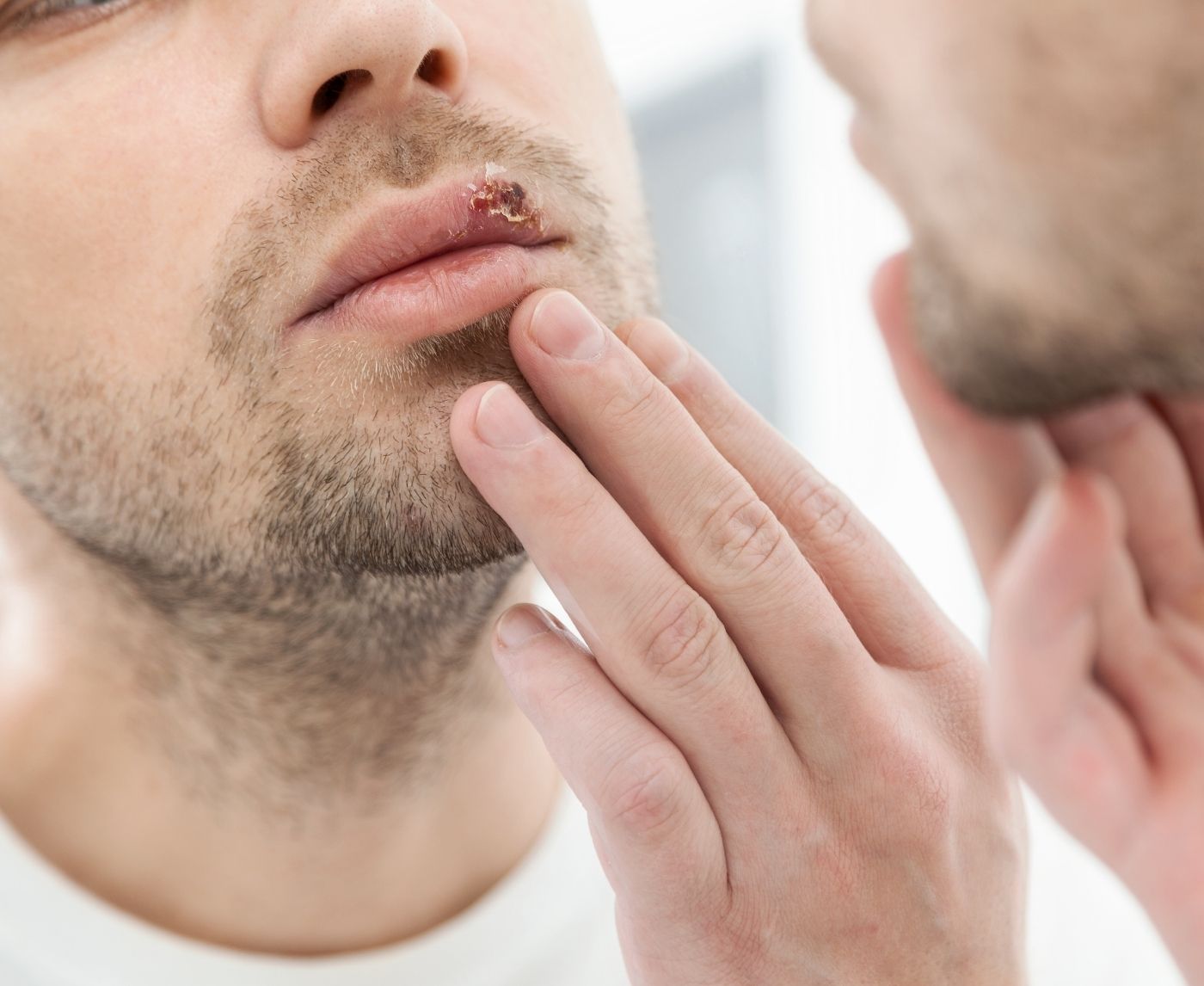
| Herpes (first outbreak) | 2 to 12 days | Tingling or itching, then small blisters or shallow sores; many first infections are very mild |
| Syphilis (primary) | 10 to 90 days | One firm, painless sore (chancre) where contact occurred; easy to miss if internal |
| Trichomoniasis | 5 to 28 days | Itching, frothy discharge, or no symptoms in roughly half of cases (per CDC STI data) |
| HIV (acute) | 2 to 4 weeks | Flu-like illness in some people (fever, sore throat, rash), though no symptoms is common |
When Day-14 Sensations Are Not Actually an STI
A lot of what people notice in this window has nothing to do with infection. The body reacts to friction, new microbiome contact, soap or laundry detergent changes, dehydration, and stress. Hyper-vigilance amplifies all of it. Once you start looking for changes, you find them.
Common look-alikes that get filed under "symptoms" without much basis include the patterns below.
| What you might feel | Common non-STI explanations |
|---|---|
| Burning when urinating | Mild urinary tract infection, dehydration, soap irritation, friction |
| Itching | Yeast overgrowth, contact dermatitis, shaving regrowth |
| Small bumps near the genital area | Ingrown hairs, blocked sebaceous glands (Fordyce spots), folliculitis |
| Sore throat after oral sex | Cold or flu virus, post-nasal drip, dry-air irritation |
| Vaginal discomfort | Bacterial vaginosis (not an STI), pH changes from a new partner's biome, menstrual-cycle changes |
Test Accuracy Lags Symptom Timing
The most common misunderstanding around day 14 is treating a single negative test like a final answer. A test result is only as useful as the window period of the test you took. Two weeks is genuinely early for several infections.
The table below shows what a 14-day test result can and cannot tell you. The lab NAAT references are the public-health gold standard for bacterial STIs; the at-home rapid kits on this site use lateral-flow chemistry, which the next section explains in more detail.
| Infection | Is a day-14 test useful? | When (if ever) to retest |
|---|---|---|
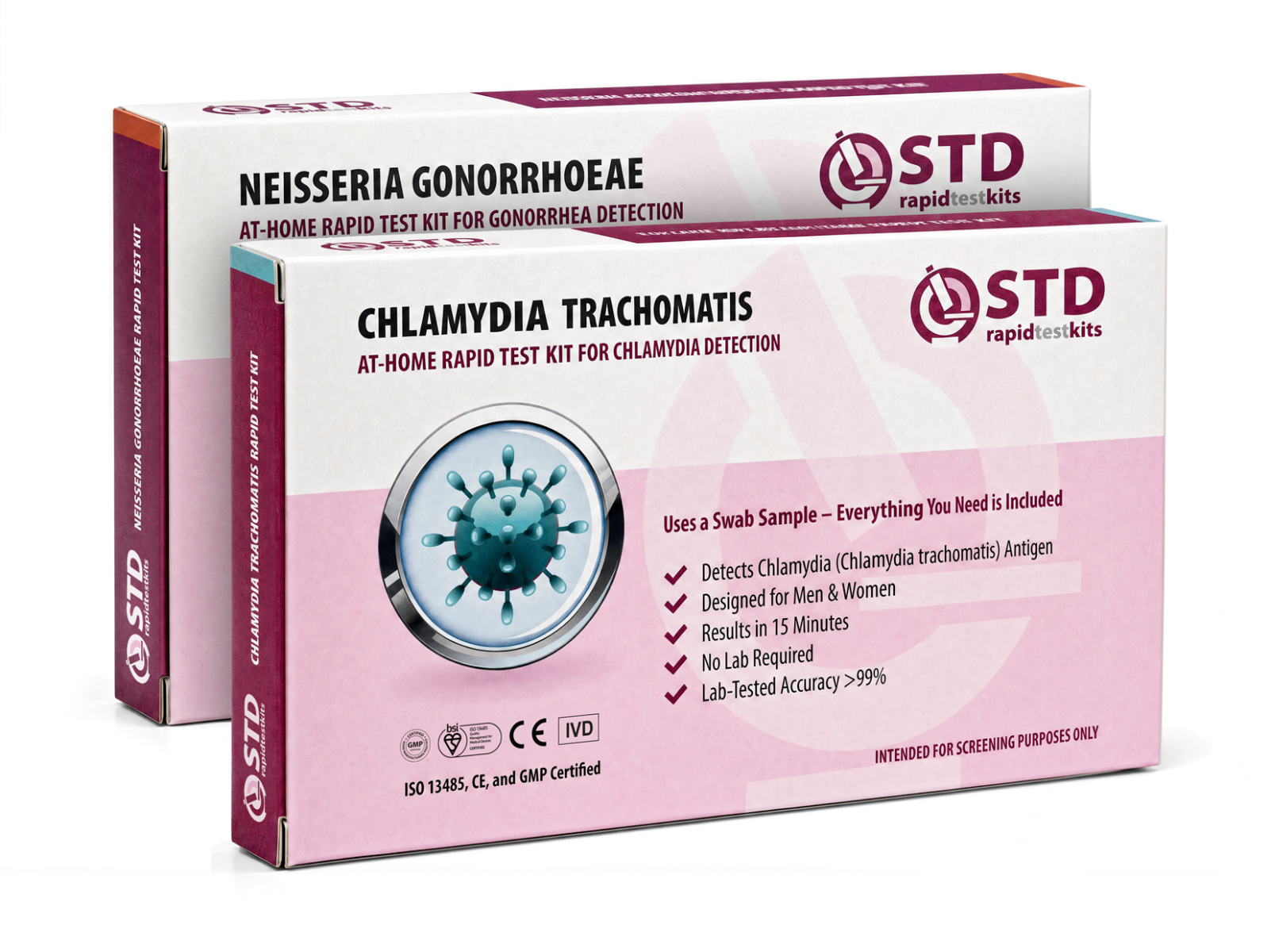
| Chlamydia (swab) | Yes. Chlamydial DNA is usually detectable from about 1 to 2 weeks post-exposure. | Retest only if symptoms develop or further exposure occurs |
| Gonorrhea (swab) | Yes. Similar 1 to 2 week detection window. | Retest if symptoms persist or new exposure occurs |
| Syphilis (treponemal antibody blood test) | Often too early. Antibodies usually become detectable from 3 to 6 weeks. | Repeat at 6 to 12 weeks if exposure risk was real |
| HIV (antigen/antibody) | Lab 4th-generation tests detect most cases by 18 to 45 days. Rapid home antibody tests often need closer to 3 months for full confidence. | Repeat at 6 weeks and 3 months if exposure was high-risk |
| HSV-1 / HSV-2 (blood antibody) | Too early. Antibodies typically take 6 to 12+ weeks. | Repeat at 12 weeks. A swab from an active sore is more accurate than blood at 2 weeks. |
| Trichomoniasis (swab; women) | Yes, if symptomatic and over 1 week post-exposure | Retest if symptoms recur after treatment |
A Note on the Test Technology Behind At-Home Kits
The at-home rapid kits on this site are lateral-flow immunoassays. They use the same sample types as the lab tests (swab or fingerstick blood), but the chemistry is different from the laboratory NAAT/PCR that public-health labs run. Rapid tests are designed for fast, private screening within their validated window. A positive home result is worth confirming with a clinician-ordered lab test, especially for HIV and syphilis, where confirmatory testing is the clinical norm.
None of this means home testing is unreliable. It means the technology is purpose-built for screening, and that is how to treat the result: as a useful signal that either ends the question or directs you to a follow-up. The next section covers when the signal is strong enough to act on now.
Many STIs have no signs or symptoms. The only way to know for sure if you have an STI is to get tested.
How Clinicians Sort Concerning Patterns From Normal Variation
Not every sensation deserves the same response. The pattern of a symptom matters more than its intensity. A mild symptom that worsens, persists, or clusters with others is more clinically informative than a sharp one-off feeling that resolves the same day.
Patterns that raise clinical concern:
- Progression: discomfort that gets worse rather than better over 2 to 3 days
- Clusters: discharge plus burning, sores plus swollen lymph nodes, or fever combined with a rash
- Specific findings: a sore, ulcer, blister, or new bump at a site of recent contact
- Site-specific symptoms: throat pain after oral sex that lasts more than a week, or rectal discomfort after anal sex
- Systemic signs: fever, swollen glands, or unexplained rash in the 1 to 4 weeks after exposure, which can signal acute HIV or secondary syphilis
Patterns that are usually background noise:
- A single fleeting sensation that does not return
- Symptoms that improve within 1 to 3 days without intervention
- Random itches without redness, discharge, or visible change
- Discomfort that maps to a known cause (shaving regrowth, new soap, tight clothing, dehydration)
None of this rules out an asymptomatic infection. Absence of symptoms is not absence of infection, especially for chlamydia, gonorrhea, and trichomoniasis, all of which can sit silently for weeks or months.
What Oral and Protected Sex Change About the Calculation
The body region of exposure changes where symptoms appear, not whether they can appear. After oral sex, gonorrhea and chlamydia can produce mild pharyngitis (sore throat with redness in the back of the throat), or no symptoms at all. Pharyngeal gonorrhea is asymptomatic in most cases, which is why CDC screening guidance recommends pharyngeal swabs for anyone with regular oral exposure to new partners. Rapid swab kits on this site are validated for genital sites only; a throat-only concern is best handled at a clinic that can run a pharyngeal NAAT swab. This site does not sell a throat-swab kit, and that distinction matters when you choose where to test.
Condoms reduce, but do not eliminate, transmission risk. They are highly effective against fluid-borne infections (HIV, gonorrhea, chlamydia) because they create a physical barrier against semen, pre-ejaculate, and vaginal fluid. They are partially effective against skin-to-skin infections (herpes, HPV, syphilis) because the condom does not cover every area of contact. A condom-used encounter is meaningfully lower risk; it is not zero risk. Lubricant breaks, slippage, and partial coverage all factor in.
Highly effective against fluid-borne infections: HIV, gonorrhea, chlamydia, hepatitis B, trichomoniasis.
Partially effective against skin-to-skin infections: herpes (HSV-1, HSV-2), HPV, syphilis. The condom only covers part of the area where these infections can transmit.
Why Acting at 2 Weeks Usually Beats Waiting Another Week
Waiting feels safer because it postpones the decision. Biologically, it does not change what is happening inside the body. Chlamydia and gonorrhea continue to colonize tissue while you wait, and untreated bacterial STIs can progress to pelvic inflammatory disease (in women), epididymitis (in men), reactive arthritis, and infertility in chronic cases per the CDC STI Treatment Guidelines. Earlier treatment is consistently safer than delayed treatment, and the antibiotics involved (typically a single dose or a short course) work the same whether the infection has been present for one week or four.
Testing at two weeks is not premature for bacterial STIs. It is the start of a sensible roadmap that can be completed with one or two follow-ups. A negative chlamydia and gonorrhea swab at day 14 is useful information: it rules out the infections that are reliably detectable now, so any later anxiety has a smaller surface area. The remaining unknowns (HIV, syphilis, HSV antibodies) get addressed at their own windows.
A Two-Week to Three-Month Testing Roadmap
Instead of trying to interpret symptoms perfectly, follow a timeline that works with how each infection actually develops. The pattern below is the same one clinicians use for asymptomatic exposure follow-up, drawn from CDC screening guidance.
- Now (around day 14): chlamydia and gonorrhea swab. If symptomatic, also a baseline syphilis blood test.
- 4 to 6 weeks post-exposure: HIV (a 4th-generation antigen/antibody test detects most cases by this window), repeat syphilis, trichomoniasis if symptomatic.
- 12 weeks post-exposure: confirmatory HIV, HSV-2 antibody blood test, and final syphilis.
- Anytime symptoms develop: test immediately, regardless of where you are in the timeline.
This staggered approach is more accurate than testing once at an arbitrary point, and more reassuring because each result narrows the unknown. A combination kit can simplify the day-14 step by covering multiple infections in one session, with the understanding that the antibody-based components inside a combo may still need a follow-up at their own window.

Questions People Ask at the 2-Week Mark
- I feel completely fine at 2 weeks. Does that mean I'm clear?
- That alone is not enough information. CDC data consistently shows that most chlamydia and gonorrhea infections cause no symptoms, and trichomoniasis is asymptomatic in roughly half of cases. Feeling normal is useful information, but it is not proof. A day-14 swab for chlamydia and gonorrhea, plus a follow-up at 4 to 6 weeks for HIV and syphilis, is the standard way to close the loop on a single exposure.
- Is a faint burn or itch automatic cause for concern?
- Mild, fleeting sensations 2 weeks after sex frequently trace to friction, soap or detergent changes, dehydration, or a mild urinary tract infection. The signal is in the pattern: progressive, persistent, or clustered symptoms warrant testing; one-off sensations that resolve in a day usually do not. A symptom diary over 2 to 3 days is more useful than a single moment's anxiety.
- Can a sore appear 2 weeks after exposure to syphilis?
- It can happen, although the syphilis incubation window stretches from 10 to 90 days, so a 14-day appearance is on the earlier end. A primary syphilis sore (chancre) is typically firm, painless, and singular. It often heals on its own in 3 to 6 weeks, which is why people miss it. If you noticed any such sore, test even if it disappeared.
- What about HIV? Two weeks is on the early end, right?
- A 4th-generation antigen/antibody test (the standard at most US clinics) catches most acute infections by 18 to 45 days. Rapid home antibody tests typically need closer to 90 days for full confidence. A 2-week negative does not rule out HIV. Plan a retest at 6 weeks and again at 3 months if the exposure was meaningful.
- I used a condom. Should I still test at 2 weeks?
- If there was any exposure beyond protected vaginal or anal sex, yes. Condoms are highly effective against fluid-based infections (HIV, chlamydia, gonorrhea) and partially effective against skin-to-skin infections (herpes, HPV, syphilis) because the condom does not cover every relevant area. Lower risk does not equal no risk, and a single swab at 2 weeks is a low-effort way to remove the uncertainty entirely.
- Can STD symptoms come and go?
- Herpes outbreaks can be mild and brief enough to be mistaken for irritation. Chlamydia and gonorrhea discharge can wax and wane. The transient nature of early symptoms is one reason people delay testing; intermittent symptoms are still symptoms worth investigating. If something appeared even briefly, treat it as a reason to test rather than as a sign it resolved.
- I had oral sex only. Does this guide still apply?
- The same general principles apply, with one important caveat. Gonorrhea and chlamydia can colonize the pharynx, and the typical 2-week window still applies. A pharyngeal swab (throat swab) is the recommended sample for these site-specific infections. This site does not sell a throat-swab kit; for an oral-only exposure, a clinic visit with a pharyngeal NAAT is the more accurate choice.
- Is testing at 2 weeks worth it, or should I wait?
- Testing at 2 weeks is worth it for chlamydia and gonorrhea, which are reliably detectable now and are the most commonly transmitted bacterial STIs. For HIV, syphilis, and HSV antibody tests, a 2-week result is informative but not conclusive; plan a follow-up at the appropriate window rather than treating one early test as a final answer.
- If my test result is negative, do I really need to retest later?
- It depends on what you tested for and when. A 2-week negative for chlamydia and gonorrhea is usually conclusive if you have no symptoms and no further exposure. For HIV and syphilis, a 2-week negative does not rule out infection because antibodies take longer to develop. The CDC recommends a confirmatory HIV test at 90 days post-exposure for full reassurance, and a syphilis retest at 6 to 12 weeks if any risk factor was present.
- What if I'm worried about more than one type of infection?
- A combination kit covers multiple STIs in a single test session, which is the cleanest approach when an exposure could plausibly have involved more than one pathogen. Each component is still subject to its own window period, so a combo test taken at 2 weeks gives full-confidence results only for the bacterial swab portion. The antibody-based blood tests inside a combo panel may need a follow-up at the appropriate window for HIV, syphilis, and HSV.
Practical Next Step From Where You Are Now
If your encounter was 14 days ago and you have any of these factors (persistent discomfort, visible changes, a new partner whose history you do not know, or simply a need to settle an open question), a day-14 swab is the right tool for chlamydia and gonorrhea. A follow-up at 4 to 6 weeks closes the gap for HIV and syphilis. Acting now turns a vague worry into specific information you can use, and treats any positive result early enough to avoid complications.
If you are symptom-free and the exposure was low-risk, you can still benefit from baseline testing as part of routine sexual health. The CDC recommends annual screening for sexually active adults under 25 and anyone with new or multiple partners, regardless of symptoms. Two weeks after a new partner is a reasonable starting point if you do not have a screening routine in place yet.
Most readers in this window are fine, the symptoms you may or may not be feeling are not reliable evidence either way, and a structured testing plan turns guesswork into a clean answer over the next couple of weeks. Symptoms are noisy. Testing is calibrated. Your next step is the testing piece.
This article synthesizes current guidance from the U.S. Centers for Disease Control and Prevention, the World Health Organization, and the UK National Health Service on STI incubation periods, symptom patterns, and testing windows. It is written by our editorial team to translate clinical guidance into plain English for people deciding when and how to test. It is not personal medical advice. For symptoms or exposures you are concerned about, consult a licensed clinician.
- U.S. Centers for Disease Control and Prevention. Overview of sexually transmitted infections, including asymptomatic-infection rates and the recommendation to test rather than guess.
- U.S. Centers for Disease Control and Prevention. STI Treatment Guidelines, including diagnostic test types and recommended window periods for chlamydia, gonorrhea, and syphilis.
- U.S. Centers for Disease Control and Prevention. HIV testing window periods for antibody, antigen/antibody, and nucleic-acid tests.
- World Health Organization. Sexually transmitted infections fact sheet, including global prevalence and asymptomatic-rate figures.
- UK National Health Service. STI symptoms, testing, and incubation-period overview, including primary syphilis chancre description and herpes outbreak patterns.
