





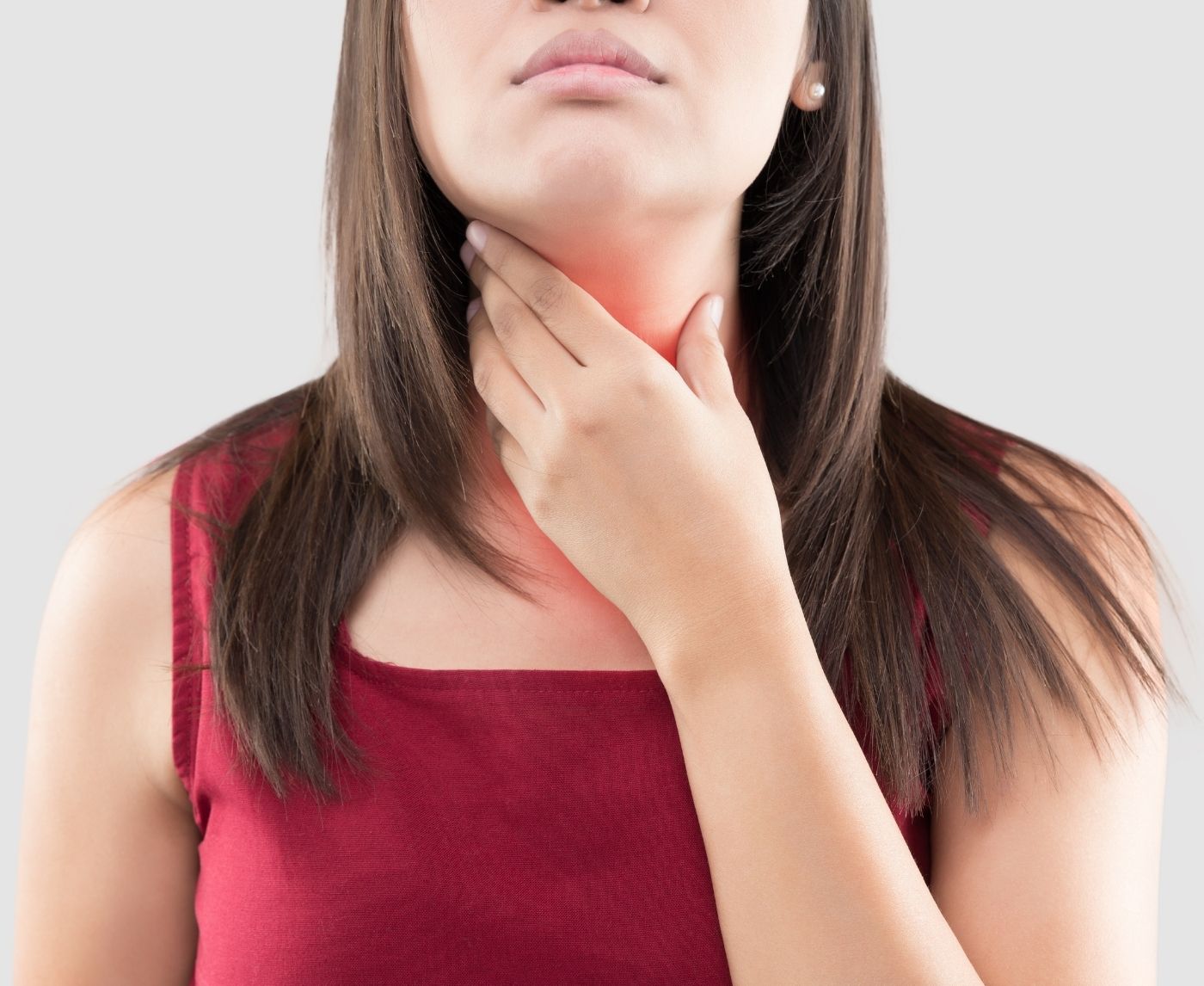

Quick Answer: Yes, a persistent sore throat can be caused by Gonorrhea in the throat (pharyngeal gonorrhea), especially after oral sex, but it is often silent and mimics other more common throat conditions. Because many cases show no obvious symptoms, if you’ve had oral sex (giving or receiving) with a partner whose STI status you don’t know, the safest move is to get tested for throat gonorrhea rather than assuming it’s just a cold or “just a sore throat.”
What Is Pharyngeal (Throat) Gonorrhea?
When people hear gonorrhea they often picture genital discharge or burning urination. What gets less airtime is that the bacteria behind gonorrhea, Neisseria gonorrhoeae, can also infect the throat (pharynx), the mouth, and even the back of the tongue. This is called pharyngeal or throat gonorrhea. The bacteria travel with infected mucous membranes during oral sex. It may also be transmitted when secretions from the genitals or anus come in contact with the mouth or throat. Verywell Health
Because the throat is a less obvious site, and because many people don’t develop textbook symptoms, this form of gonorrhea is often overlooked and under‑diagnosed.
How You Can Get It: Transmission & Risk
In the micro‑scene of sexual health, imagine this: Alexis meets Jordan at a bar. They flirt, share a drink, stray into the private, and engage in oral sex. Neither brings up their STI test history. A few days later, Alexis’s throat starts to feel odd, just a little scratchy. Jordan might feel nothing. What matters is that during that oral sex, if one partner had gonorrhea, the throat is a susceptible site for infection, especially when there’s direct contact between mouth and genitals or anus, and no barrier (such as a dental dam or condom) is used.
Because pharyngeal gonorrhea doesn’t require genital penetration, any act of oral sex (giving or receiving) can lead to infection of the throat. Studies find the risk is lower than for genital or rectal gonorrhea, but it’s real. Verywell Health
It’s particularly common in people who have multiple partners, frequently give or receive oral sex, or use little to no protection during those acts.

People are also reading: Chlamydia in the Mouth: Yes, It’s Real, Here’s What It Feels Like
Signs & Symptoms (and Why They Often Don’t Show)
One of the trickiest things about throat gonorrhea is that it often doesn’t show noticeable symptoms. A large share of people with pharyngeal infection never feel anything. Planned Parenthood
That said, when symptoms occur, they can include:
A persistent sore or scratchy throat that doesn’t respond to typical cold remedies. Redness at the back of the throat, possibly some swelling of the lymph nodes. Mild difficulty swallowing (dysphagia) or the feeling of something being stuck when you swallow. Occasionally, a hoarse voice, though this is less common.
Here’s how this plays out: Maria, a 28‑year‑old bisexual woman, wakes up two weeks after a hookup and thinks her throat is just irritated. She takes lozenges, drinks tea, but the scratchiness lingers. No fever, no runny nose. She assumes it’s post‑viral. A week later she gets tested during routine screening, throat swab comes back positive for gonorrhea. Scenario like this aren’t rare.
Because the bacteria sit in a location that doesn’t always provoke alarm bells (no major pain, no visible discharge like in genital sites), infections linger. One study found that around 25% of men reported sore throat symptoms in the first or second week after infection, significantly more than earlier estimates of under 10%. NIH PMC Study
| Feature | Typical “cold/viral” sore throat | Throat gonorrhea (pharyngeal) |
|---|---|---|
| Onset | Often sudden, with runny nose/cough | May follow oral sex within days; sometimes subtle |
| Other symptoms | Cough, congestion, fever common | No cough or congestion; throat only |
| Duration | Usually 3–7 days | Can persist beyond a week without typical relief |
| Tonsil appearance | Often white patches, pus, tonsil swelling | Often red back of throat; fewer white patches |
Figure 1: Comparing symptoms of common sore throats and pharyngeal gonorrhea.
Check Your STD Status in Minutes
Test at Home with RemediumChlamydia Test Kit
 For Men & Women
 Results in Minutes
 No Lab Needed
 Private & Discreet
Order Now $33.99 $49.00
Why It Matters: Risks & Consequences
Ignoring a sore throat that hangs on after sexual activity might seem harmless, but with throat gonorrhea, there are reasons to act. First, you can infect others, even without knowing you’re infected. Because pharyngeal gonorrhea is often asymptomatic, partners may become infected during oral sex, and the cycle continues silently.
Second, the throat can serve as a “reservoir” for the bacteria, making it harder to eliminate and increasing the risk of transmission. Some research shows that these infections may persist longer than genital ones and may require specific follow-up. NIH Study
Third, untreated gonorrhea (regardless of site) can lead to serious complications, such as spread into the bloodstream, joints, or contributing to increased HIV risk. Planned Parenthood
In short: a “just a sore throat” mindset carries real risk. Getting tested is not over-reacting, it’s proactive sexual wellness.
How Health Care Providers Diagnose It
When you raise the flag with your provider, “I had oral sex, now my throat’s weird and it won’t go away”, they will typically recommend a throat swab for nucleic acid amplification testing (NAAT). These tests detect the DNA of the bacteria. Because that back-of-the-throat location is trickier than bladder or genital swabs, clinicians emphasise correct swabbing technique and often advise retesting after treatment for pharyngeal infections. NIH Study
One admitted challenge is distinguishing residual bacterial material from live infection in the throat, this is why some protocols call for “test-of-cure” (a repeat test 7–14 days after treatment) in cases of pharyngeal gonorrhea.
You might hear the clinician ask: Did you use any barrier protection during oral sex? Have you had other STIs in the past? Do you have symptoms anywhere else (genitals, anus)? Because pharyngeal infection is often part of a broader sexual health picture.
Treatment: What to Expect and What to Do
If the diagnosis is positive for throat gonorrhea, the treatment is straightforward, but the key is getting treated. Clinics follow guidelines such as those from the Centers for Disease Control and Prevention (CDC) and other national bodies. The go-to treatment for uncomplicated gonorrhea (including pharyngeal) is an intramuscular injection of Ceftriaxone. Mayo Clinic
Given the tricky nature of throat infections, some providers will schedule a follow-up swab 7–14 days after treatment to confirm eradication. NIH Study
| Step | What You Do | Why It Matters |
|---|---|---|
| 1. Get treated promptly | Receive antibiotic from clinic | Clears infection, halts transmission |
| 2. Avoid sex until cleared | No oral/genital/anal sex for at least 7 days and until partner(s) treated | Prevents reinfection or spreading |
| 3. Test of cure (pharyngeal cases) | Clinic may re-swab throat 7–14 days later | Pharyngeal site harder to clear, higher risk of lingering bacteria |
| 4. Partner(s) evaluated & treated | Ask partners to get tested/treated too | Breaks the chain of reinfection |
Figure 2: Treatment steps for pharyngeal gonorrhea and why each step matters.
As an example scene: Tariq sits in the clinic, he had a negative genital test but his throat swab came back positive. He gets the injection of ceftriaxone, is told to avoid any sex for a week, and asked to ask his recent partner for testing. Two weeks later, follow-up shows it’s clear. Relief sets in.
It is worth emphasizing: over-the-counter lozenges, mouthwash, or home remedies cannot substitute for antibiotic treatment. According to clinical guidance, oral gonorrhea requires prescription antibiotics. Healthline
When It’s Not Throat Gonorrhea: Differential Diagnoses
That scratchy throat might instead be one of many other common throat conditions. For example, you might have viral pharyngitis, strep throat (caused by Streptococcal pharyngitis), a throat irritation from smoking or reflux, or even an allergy-related sore throat. The difference matters because treatment and risk differ. A handy comparison:
| Condition | Typical Clues | Why Important |
|---|---|---|
| Viral throat infection | Runny nose, cough, body ache | Usually resolves on its own |
| Strep throat | Fever, swollen tonsils with white patches, no cough | Needs antibiotic to avoid complications |
| Throat gonorrhea | Oral sex history, sore throat but no cold symptoms | STD treatment + partner notification required |
Figure 3: Differential diagnoses that help separate STDs from common throat infections.
If you don’t look for oral-sex history, you may mis-attribute a lasting throat irritation to the wrong cause. Experts caution: if you’ve had receptive oral sex (mouth receiving genital/anal contact) or given oral sex without barrier, and the throat stays weird for a week or more, a throat STD test should be part of your evaluation. K Health
Prevention: Because It’s Better Than Re‑Treatment
Prevention isn’t about shame, it’s about control. You deserve to feel confident in your sexual health. That starts with understanding your options. Because no sexual activity is risk-free, the goal is to reduce risk without reducing pleasure or intimacy.
Throat gonorrhea is primarily spread through unprotected oral sex, particularly when giving oral to a partner with an active genital or rectal infection. That doesn’t mean you have to avoid oral sex altogether. Instead, you can:
Use condoms or dental dams during oral sex, especially with new or multiple partners. If this feels awkward, normalize the conversation as a shared wellness move. Get tested regularly, every 3 to 6 months if you have new partners, are non-monogamous, or engage in unprotected oral-genital contact. And most importantly: talk about testing before you hook up. It’s not overkill. It’s care.
If your head keeps spinning, peace of mind is one test away. This at-home combo test kit checks for several common STDs discreetly and quickly, perfect if you’ve had oral sex and want a full panel that includes throat coverage.

People are also reading: Is It a Cold Sore or Something Worse?
Can You Test for Throat Gonorrhea at Home?
Yes, some advanced at-home test kits now include options for oral or throat sample collection. While not all over-the-counter tests include pharyngeal detection, mail-in lab kits often allow you to swab your throat and send it in for laboratory analysis.
Rapid tests that detect gonorrhea are more often geared toward genital or urine samples, but specialized panels, like the Combo STD Test Kit, can guide you based on exposure type and give tailored options.
Here’s a snapshot of test types and what they can detect:
| Test Type | Throat Detection? | Where to Use | Turnaround Time |
|---|---|---|---|
| Rapid in-home swab | Rare (mainly genital) | Self-use, instant result | 10–15 minutes |
| Mail-in throat swab (NAAT) | Yes (with correct kit) | Home swab, mailed to lab | 2–5 business days |
| Clinic-based throat swab | Yes | Primary care, STI clinic | Same-day to 7 days |
Figure 4: Comparison of testing options that detect gonorrhea in the throat.
Need help deciding which test fits your situation? Visit our STD Rapid Test Kits homepage and explore discreet, accurate testing options tailored to your exposure and timeline.
Check Your STD Status in Minutes
Test at Home with RemediumChlamydia & Gonorrhea Test
 For Men & WomenResults in MinutesNo Lab NeededPrivate & Discreet
Order Now $49.00 $98.00
For all 2 tests
What If Your Partner Gave It to You?
This might be the hardest part, not the swab, not even the injection, but the conversation. If you’ve tested positive for gonorrhea in your throat, someone likely passed it to you. That doesn’t always mean they lied, cheated, or knew. Often, they had no clue.
Take Sam, a 35-year-old man who tested positive during routine screening. He’d only had one partner in the past month, a woman he’d dated casually. He didn’t blame her, he simply told her the results and encouraged her to get tested. “I framed it as us both being better off knowing,” he later said. She tested positive too. They both got treated, thanked each other for honesty, and moved on, safer and wiser.
You don’t have to figure out the words alone. Many clinics offer partner notification services, and anonymous notification tools exist. Just Google “anonymous STI partner notification” and you’ll find services like TellYourPartner.org.
Order an at-home combo test kit to make partner conversations easier. When you’ve got results, you’ve got power, and clarity.
How Long Should You Wait to Retest?
If you’ve been treated for throat gonorrhea, your provider may recommend a “test of cure” 7 to 14 days later. This is more common for throat infections than for genital ones. Why? Because gonorrhea bacteria in the throat can be stubborn, and the anatomy makes clearing infection a bit trickier.
If your test came back negative but you still have symptoms, or you think you tested too soon, retesting at 14 to 30 days is reasonable. And if you have new partners, a fresh exposure, or a condom slipped during oral sex? Retest, even if you’ve had no symptoms. That’s not paranoia, it’s wisdom.
STD Rapid Test Kits offers retesting kits for peace of mind, so you can confirm you’re clear and move forward.
FAQs
1. Can I really get gonorrhea from just oral sex?
Yep, you sure can. If your mouth comes into contact with someone’s genitals or anus during oral sex, and they’re carrying gonorrhea, your throat can absolutely catch it. No penetration required, no visible symptoms needed. It’s sneaky like that.
2. But my throat just feels a little scratchy, could that still be gonorrhea?
Totally possible. A lot of people assume it’s allergies, dry air, or leftover karaoke damage. But if it lingers past a few days and you’ve recently had oral sex? It’s worth getting checked. Some folks with pharyngeal gonorrhea feel nothing at all, others feel “off,” but not sick enough to raise alarms.
3. Will it go away on its own if I just wait it out?
Sorry, no. Unlike a sore throat from a cold, gonorrhea doesn’t just peace out after some tea and honey. It needs antibiotics, specifically an injection most of the time. Waiting can lead to bigger problems (and keep passing it to partners without knowing).
4. I already tested for STDs. Isn’t that enough?
Not always. Many clinics don’t automatically test the throat unless you ask or mention oral sex. A urine test won’t catch it if it’s hanging out in your throat. Be direct, ask for throat swabs if you’ve had oral encounters.
5. Can I use mouthwash to kill it?
Wish it were that easy. While there’s been some talk about certain mouthwashes lowering bacterial levels short-term, it doesn’t kill gonorrhea in the throat. Mouthwash = minty fresh. Antibiotics = actual cure.
6. Should I tell my partner if I test positive?
Yes. And no, it doesn’t have to be a fight or a guilt trip. You can say something like, “Hey, I just got tested and something popped up, can you also get checked so we’re both in the clear?” Think of it as a care conversation, not a blame game.
7. What about kissing, can that spread it too?
The science here is fuzzy. Most experts say kissing isn’t a major transmission route for gonorrhea, but deep kissing has come up in a few studies as a possible (though rare) way it spreads. Bottom line: oral sex is the biggie, not smooches.
8. How long should I wait before I get tested?
The golden window is about 7 to 14 days after the encounter. Sooner than that and your body might not have enough of the bacteria to trigger a positive result. If you're anxious and test early, you might still need a retest later just to be sure.
9. If I get treated, am I immune after?
Nope. You can get gonorrhea again if you're exposed again. Treatment clears the infection, it doesn’t create immunity. So if you go right back into the same sexual dynamics (especially without protection), retesting down the line is a good idea.
10. What if I’m scared to go to a clinic?
You're not alone. Whether it’s the stigma, the time, or just not wanting to deal with weird waiting rooms, it’s valid. That’s why at-home testing exists. It’s discreet, accurate, and puts the power in your hands. No small talk with receptionists required.
You Deserve Answers, Not Assumptions
If your sore throat came after oral sex, don't brush it off as nothing. Maybe it’s just seasonal irritation, or maybe it’s gonorrhea quietly taking up residence where you least expect it. Taking a test doesn't mean you're guilty. It's taking charge of your health, comfort, and peace of mind.
Don't wait and wonder, get the clarity you deserve. This at-home combo test kit checks for the most common STDs discreetly and quickly, including the ones that can affect your throat.
How We Sourced This Article: We combined current guidance from leading medical organizations with peer-reviewed research and lived-experience reporting to make this guide practical, compassionate, and accurate.
Sources
1. Planned Parenthood – Gonorrhea Overview
2. NIH Study: Testing and Detection of Pharyngeal Gonorrhea
5. Healthline – Oral Gonorrhea Basics
6. K Health – Gonorrhea in the Throat
7. The Occurrence of Single-Site Pharyngeal Neisseria gonorrhoeae in Female Sex Workers
8. The Management of Gonorrhea in the Era of Emerging Antimicrobial Resistance
9. The Use and Performance of Oral–Throat Rinses to Detect Pharyngeal Gonorrhea
About the Author
Dr. F. David, MD is a board-certified infectious disease specialist focused on STI prevention, diagnosis, and treatment. He blends clinical precision with a no-nonsense, sex-positive approach and is committed to expanding access for readers in both urban and off-grid settings.
Reviewed by: Dr. Nadine Okoro, MPH, PhD | Last medically reviewed: October 2025
This article is for informational purposes and does not replace medical advice.


