Published: July 2025 | Last updated: May 2026 | Editorial review and quality control: Martina N.
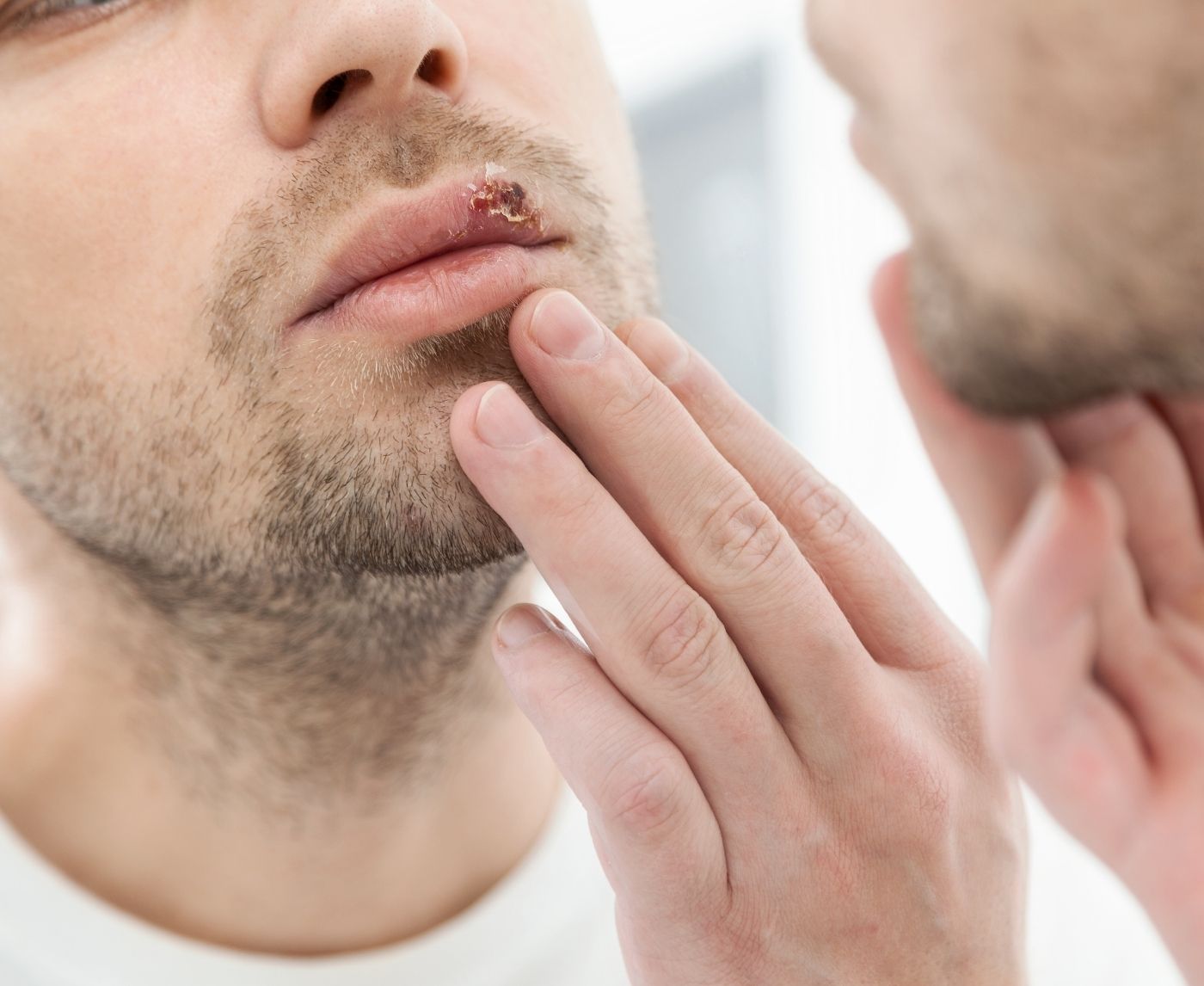
A cold sore is herpes. It is worth saying that out loud because most people do not connect the two: the small fluid-filled blisters that appear on or near the lip are caused by herpes simplex virus type 1 (HSV-1), the same family of viruses that causes genital herpes. WHO estimates that 3.8 billion people under age 50 (about 64%) globally carry HSV-1 (WHO), and most of them have no idea.
But not every sore that shows up in the lip area is a cold sore. A handful of other things look similar, and a few of them matter clinically. This guide walks through what a classic cold sore looks like, what mimics it, and the small but important set of patterns that mean you should swap "cold sore" for a different working diagnosis.
Key Takeaways
- A cold sore is herpes simplex virus type 1 (HSV-1). WHO estimates about 64% of people under 50 worldwide carry it, often without ever knowing.
- A single, painless, firm sore that lasts more than two to three weeks is not a typical cold sore. That pattern fits a primary syphilis chancre and warrants testing.
When "Just a Cold Sore" Is Actually Herpes
"Cold sore" and "fever blister" are everyday names for what dermatologists, the CDC, and the NHS call recurrent oral herpes. Both terms describe the same thing: an outbreak of HSV-1 on or near the lip border (CDC; NHS).
HSV-1 sets up a lifelong infection. After the first exposure, the virus retreats into nerve cells (specifically, the trigeminal ganglion at the base of the skull) and stays there. Periodically it reactivates, travels back along the nerve to the skin, and produces an outbreak. Triggers vary by person, but common ones include physical or emotional stress, sun exposure, fever or illness, dental work, hormonal shifts, and lip trauma.
Most people pick up HSV-1 in early childhood through ordinary non-sexual contact: a kiss from a relative, sharing a cup, an exposure that happened before the immune system had antibodies to block it. WHO puts the global figure at roughly 3.8 billion people under age 50, about 64% of that population (WHO).
One reframe to sit with: "I have HSV-1" and "I have herpes" are the same statement. The two terms have been culturally separated, but medically they are not.
Is a cold sore the same thing as herpes?
Yes. A cold sore is an outbreak of herpes simplex virus type 1 (HSV-1), part of the same family as genital herpes (HSV-2). WHO estimates about 64% of people under age 50 globally carry HSV-1, often without symptoms. A typical cold sore tingles, blisters, crusts, and heals within 7 to 14 days. A lip lesion that is single, painless, firm, and lasts more than two to three weeks does not fit that pattern; that is a primary syphilis chancre until proven otherwise.
What a Typical Cold Sore Looks Like
Cold sores follow a predictable five-stage cycle. Knowing the stages is the easiest way to separate a cold sore from things that look like one but behave differently.
- Tingling (prodrome). Twelve to twenty-four hours before any visible mark, the area feels tight, itchy, or burning. This is the earliest signal that an outbreak is starting; topical antivirals work best applied right at this stage.
- Red bump. A small red papule appears, almost always on or just above the vermillion border (the sharp edge where lip skin meets facial skin).
- Cluster of fluid-filled blisters. Within a day, several small clear vesicles form a tight cluster, often described as grape-like.
- Ulceration and weeping. The vesicles rupture and leak fluid, leaving a shallow yellow-pink ulcer. This is the most contagious stage; HSV-1 sheds heavily into the surface fluid and surrounding saliva.
- Crust and heal. The sore scabs over within a couple of days, the scab cracks and flakes off, and the skin returns to normal usually within 7 to 14 days from the first tingle (NHS).
A few patterns matter for differential diagnosis: cold sores almost always recur in the same spot, because the same nerve branch reactivates. They cluster, they hurt or burn, they crust, and they go away in roughly two weeks. If your "cold sore" does not match those features, it may not be one.
Cold Sore Versus the Look-Alikes
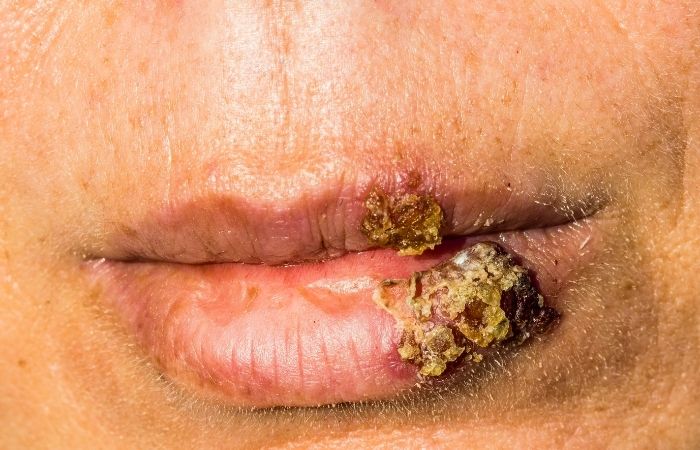
Several other lesions can show up in roughly the same neighborhood and confuse the diagnosis. The visible differences are subtle, but the workups are different. The four most common look-alikes appear below.
The Three Things That Distinguish Them
Three features do most of the diagnostic work between a cold sore and its look-alikes.
Pain. A classic cold sore tingles, then burns, then aches when ulcerated. A primary syphilis chancre is famously painless, the diagnostic flag clinicians look for. The CDC describes the chancre as "usually (but not always) firm, round, and painless" (CDC). A canker sore is sharply painful but does not crust. Impetigo causes mild discomfort; the visible giveaway is the honey-colored crusting.
Location. Cold sores live on the lip border or just above. Canker sores live inside the mouth (cheek lining, gums, tongue). Syphilis chancres can show up at any site of contact, including the lips, tongue, and inside the mouth (CDC). Impetigo is usually around the nose, mouth, or chin in children and can spread.
Course. Cold sores follow the prodrome-blister-crust-heal cycle in 7 to 14 days. Canker sores heal in 7 to 14 days but never crust. A syphilis chancre "usually lasts 3 to 6 weeks and heals regardless of whether you receive treatment" (CDC), with no scab cycle. Impetigo spreads if untreated and usually needs a topical or oral antibiotic to clear.
| Condition | Pain | Location | Duration | Crusts? |
|---|---|---|---|---|
| Cold sore (HSV-1) | Painful, burning | Lip border, vermillion edge | 7 to 14 days | Yes |
| Syphilis chancre | Painless | Any contact site (lip, mouth, genitals) | 3 to 6 weeks | No |
| Canker sore | Sharply painful | Inside the mouth (cheek, gum, tongue) | 7 to 14 days | No |
| Impetigo | Mild discomfort | Perioral skin, nose, chin | Spreads until treated | Yes (honey-colored) |
Red Flags That Mean It Is Not a Typical Cold Sore
The following patterns warrant more than topical antiviral cream and waiting:
- Single, firm, painless ulcer with a clean rolled border. This is the classic look of a primary syphilis chancre. The painlessness is the key flag; people often ignore it because it does not hurt (CDC).
- Persists more than two to three weeks. Cold sores heal. A sore that does not, regardless of pain, deserves clinical attention.
- Came with fever, swollen lymph nodes, or feeling generally unwell. A first HSV-1 outbreak in adulthood (primary herpetic gingivostomatitis) can include systemic symptoms. So can syphilis or another infection. Worth getting checked.
- Spreading, or showing up in unusual places. Spread to the eye is herpetic keratitis and is a medical emergency. Spread to fingers (herpetic whitlow) is uncomfortable but treatable. Either pattern means see a clinician.
- First time ever, after recent oral sex with a new partner. A primary HSV-1 infection acquired through oral sex is possible. So is a syphilis chancre. So is oral gonorrhea. Testing is reasonable.
- Frequent recurrences. If outbreaks are happening multiple times a year, ask a clinician about daily suppressive antiviral therapy, which the CDC notes can lower transmission risk to partners (CDC).
Eye involvement is the most serious common complication of oral HSV-1. If you have a cold sore alongside eye pain, light sensitivity, or any change in vision, see a clinician promptly. Untreated ocular HSV (herpetic keratitis) can scar the cornea and damage sight.
How Cold Sores Spread (and Why You Can Have HSV-1 Without Symptoms)
HSV-1 transmits through direct skin-to-skin contact with the affected area. The awkward part is that it can shed even when there is no visible sore, called asymptomatic viral shedding. The CDC notes that "most people with oral herpes do not have any symptoms" (CDC).
The main routes:
- Kissing. Direct contact with the lip area is the most efficient transmission route, including during asymptomatic shedding.
- Oral sex. HSV-1 can spread to genital skin and cause genital herpes; an increasing share of new genital herpes diagnoses are HSV-1 acquired through oral sex (CDC).
- Sharing items that touch the mouth. Cups, utensils, lip balm, towels. Less efficient than direct contact but possible during an active outbreak.
- Childhood exposure. Many people acquire HSV-1 in early childhood through routine non-sexual contact and never develop noticeable symptoms until years later, if at all.
One implication: "they said they are clean" is not informative for HSV-1. Most people who carry the virus do not know they do, and a routine STI panel does not always include HSV-1 antibody testing. WHO puts the global figure at about 64% of people under 50 (WHO). If you are having your first cold sore in adulthood, that does not necessarily mean someone recently transmitted the virus to you. The virus can lie dormant for years before reactivating.
Many people aren't aware they have the infection and can pass along the virus to others without knowing.
Recurring Cold Sores: What to Do About Them
If you get cold sores multiple times a year, the virus is reactivating in response to specific triggers. Knowing which trigger is yours helps reduce frequency.
| Common trigger | Why it reactivates HSV-1 | What helps |
|---|---|---|
| Stress (physical or emotional) | Stress hormones suppress local immune control of the latent virus | Sleep, exercise, stress management |
| UV exposure to lips | UV damages keratinocytes and immune cells in lip skin | SPF lip balm, hat with brim |
| Fever or other illness | Acute infection distracts the immune system | Treat the underlying illness |
| Dental work or lip trauma | Direct nerve disturbance | Discuss prophylactic antiviral with the dentist if you have frequent outbreaks |
| Hormonal cycle | Some women report outbreaks aligned with menstruation | Track and discuss suppressive therapy if cyclical |
How to Reduce Cold Sore Frequency
There is no cure for HSV-1, but the management toolkit is well established:
- Topical antivirals. Docosanol (Abreva) is sold over the counter and can shorten an outbreak by about a day if applied at the first tingle.
- Prescription oral antivirals. Acyclovir and valacyclovir are more effective than topical treatment. Used either episodically (at the first sign of an outbreak) or daily as suppressive therapy if outbreaks are frequent.
- Sun protection. Lip balm with SPF reduces UV-triggered reactivation in people whose outbreaks correlate with sun exposure.
- Reduce sharing during an outbreak. Cups, utensils, and lip products can transfer the virus to people you live with while the sore is active.
Daily suppressive antiviral therapy with acyclovir or valacyclovir can reduce both outbreak frequency and asymptomatic shedding, which lowers transmission risk to partners (<a href="https://www.cdc.gov/herpes/about/index.html" target="_blank" rel="noopener">CDC</a>). Worth raising with a clinician if your outbreaks are happening multiple times a year or if you have a partner who does not carry HSV-1.
When (and How) to Test
The right test depends on the question you are trying to answer, and three questions come up most often:
1. "Is this specific sore herpes?" A viral swab with PCR, collected by a clinician within the first 72 hours of the sore appearing. A home antibody test cannot answer this question; it tests blood, not the lesion.
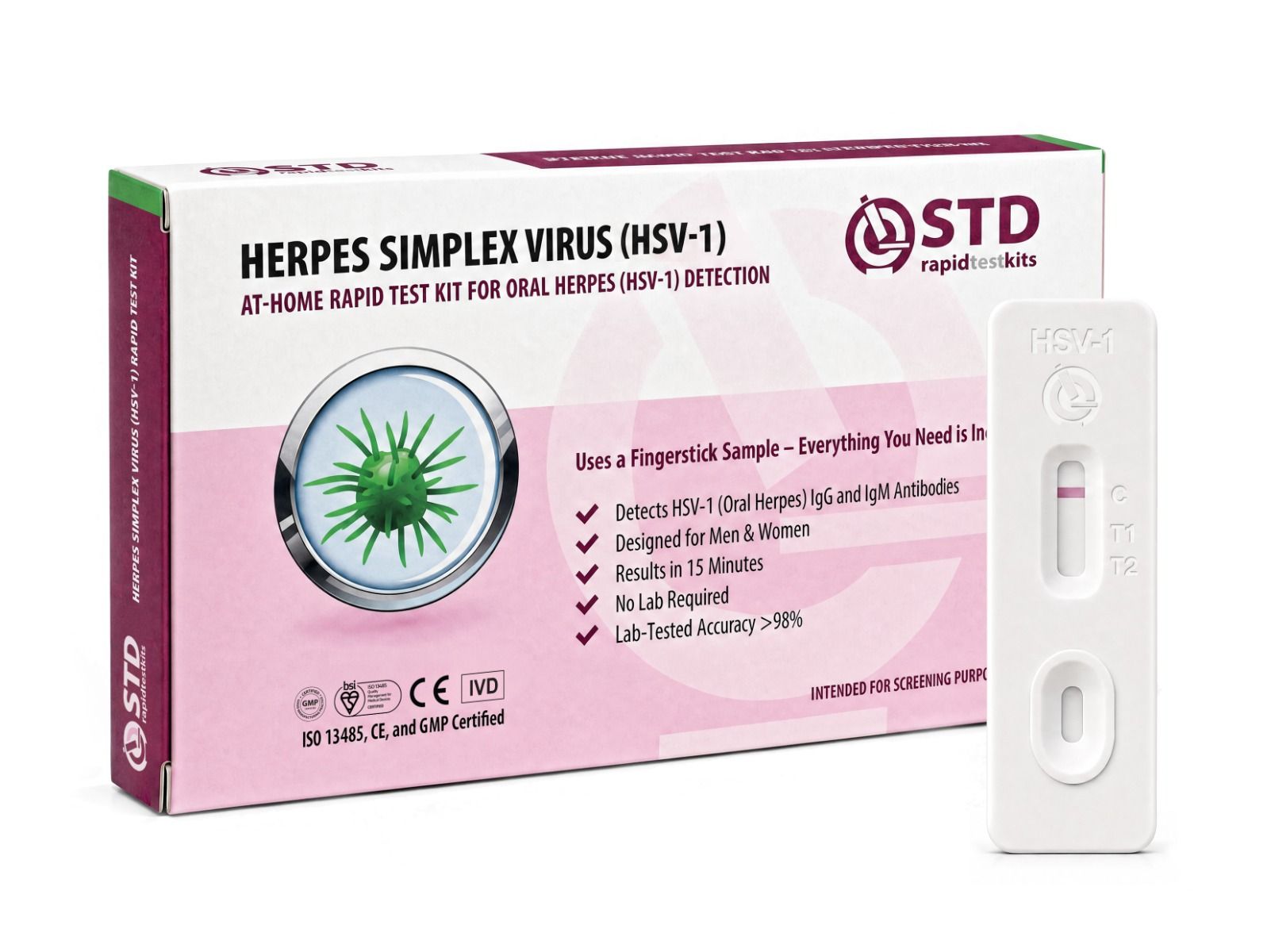
2. "Have I ever been exposed to HSV-1?" A blood antibody test. At-home rapid antibody tests fit here, with the caveat that they need at least 12 weeks from exposure to detect seroconversion reliably. Antibody tests cannot tell you when you were exposed, only that you were.
3. "Could this lip sore be syphilis or another STI?" A full STI panel including a syphilis blood test, plus clinician evaluation of the sore. This is especially relevant if the sore is painless, firm, and persistent, the chancre pattern.
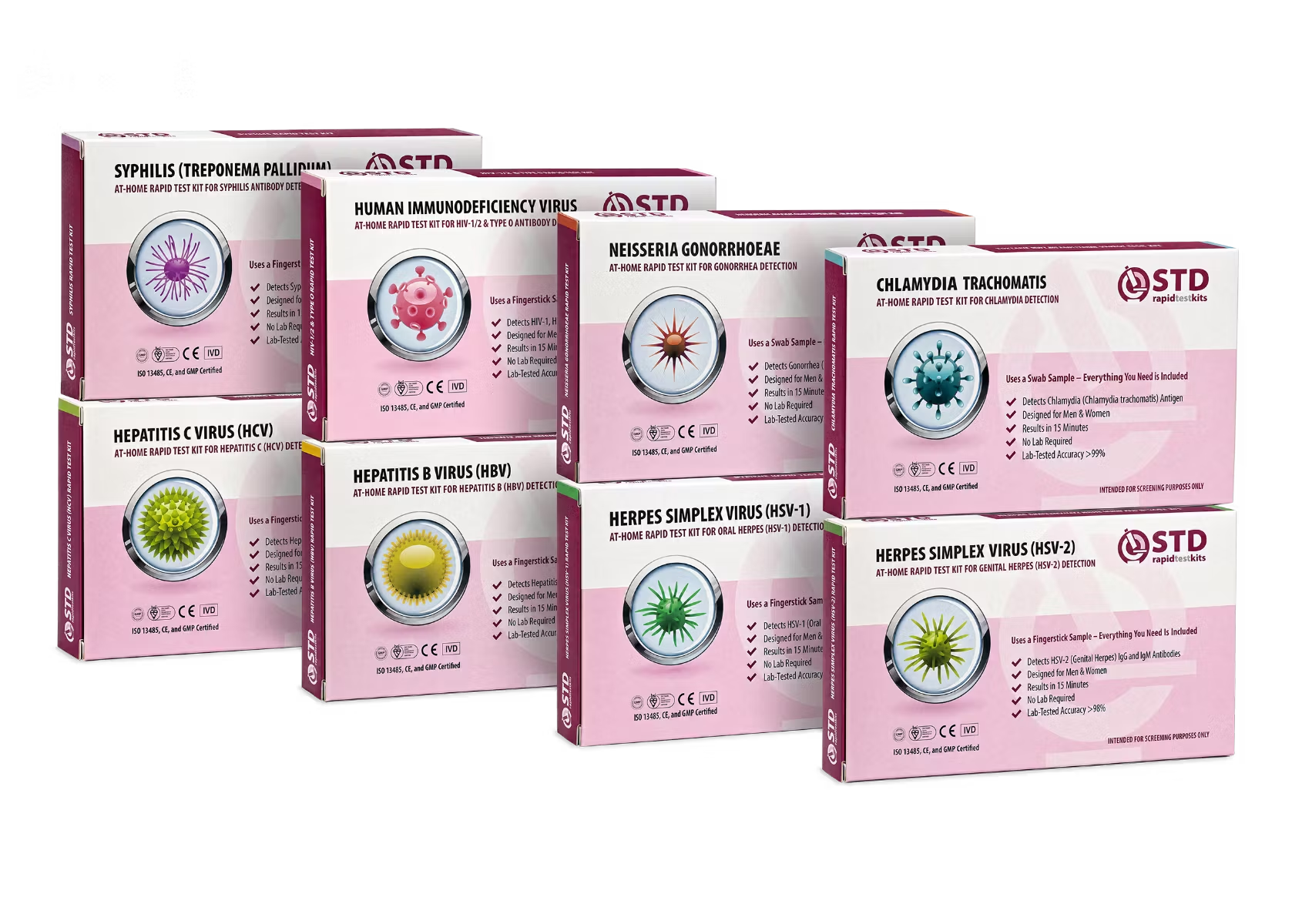
If you have never had a baseline STI screen and want a snapshot across the most common infections, an at-home combination panel covers HIV, syphilis, hepatitis B, hepatitis C, chlamydia, gonorrhea, and herpes antibodies. It is a different tool from a clinician swab on an active sore, but it tells you what you have been exposed to in the past.
If you have an active sore in front of the mirror right now, the most direct test is a viral swab with PCR, done by a clinician within the first 72 hours of the sore appearing. A blood antibody test confirms whether you have ever been exposed to HSV-1 (useful context if you have never had a confirmed cold sore), but it cannot tell you whether the specific sore you are looking at is herpes. We sell the antibody test, not the lesion swab; honest framing matters here.
A Quick Word on the Word Itself
"Is it herpes?" lands harder than "is it strep?" even though HSV-1 is more common, less dangerous, and arguably more easily transmitted than streptococcus. The cultural weight of the word herpes is out of proportion to its medical reality. Most people who carry it never know it. Cold sores are a routine part of human life and they are not a moral failing.
Wanting clarity is not paranoia; it is responsibility. Knowing what you carry lets you talk honestly with partners, manage outbreaks intelligently, and rule out the small percentage of cases where the sore turns out to be something else.
Putting it in perspective
- WHO estimates about 64% of people under age 50 globally carry HSV-1, most without symptoms.
- A first cold sore in adulthood does not mean a recent transmission; HSV-1 can stay dormant for years before its first reactivation.
- An honest conversation with a partner is more useful than guilt about carrying a virus that roughly two-thirds of the world's adults under 50 share.
FAQs
- Is a cold sore the same thing as herpes?
- Yes. Cold sores are caused by herpes simplex virus type 1 (HSV-1), a herpes virus. "Cold sore" and "recurrent oral herpes" describe the same condition.
- Can I get HSV-1 from kissing someone without a visible sore?
- Yes. HSV-1 can shed asymptomatically through saliva, even when no sore is visible, per CDC. That is why many people contract HSV-1 without knowing exactly when or from whom.
- How long does a typical cold sore last?
- The full outbreak cycle, tingle to healed scab, runs about a week to two weeks for most people. A sore still open at three weeks no longer fits the cold sore pattern; that timeline matches a syphilis chancre instead, which warrants a test.
- What does a syphilis chancre look like compared to a cold sore?
- A primary syphilis chancre is usually a single, firm, painless ulcer with a clean rolled border, often on the lip or inside the mouth, lasting 3 to 6 weeks if untreated, per CDC. A cold sore is a cluster of small painful fluid-filled blisters that crust and heal in two weeks. Painlessness and persistence are the chancre's flags.
- Can a cold sore appear inside my mouth?
- Possible during a first HSV-1 infection (called primary herpetic gingivostomatitis), more common in children. Recurrent cold sores in adults usually appear on the outer lip border, not inside the mouth. A painful ulcer inside the cheek or on the gum is more often a canker sore.
- What is the difference between HSV-1 and HSV-2?
- HSV-1 most commonly causes oral herpes (cold sores). HSV-2 most commonly causes genital herpes. Either can occur in either location through skin-to-skin or sexual contact.
- Should I tell a partner that I get cold sores?
- Yes, particularly before oral sex or kissing during an active outbreak. HSV-1 can spread to genital skin through oral sex and is increasingly the cause of new genital herpes diagnoses, per CDC.
- Are at-home herpes tests accurate?
- If you are looking at a sore right now, an at-home blood antibody test will not confirm whether that specific sore is herpes; only a clinician-collected viral swab within the first 72 hours can. The at-home test answers a different question, namely whether you have ever been exposed to HSV-1, and it needs 12 or more weeks from exposure to be reliable.
- U.S. Centers for Disease Control and Prevention. About Genital Herpes: HSV-1 and HSV-2 transmission, asymptomatic shedding, and suppressive therapy guidance.
- U.S. Centers for Disease Control and Prevention. About Syphilis: primary chancre appearance (firm, round, painless), location, and 3 to 6 week course.
- NHS. Cold sores: symptoms, stages, triggers, treatment, when to see a clinician, and the 7 to 14 day healing window.
- World Health Organization. Herpes simplex virus fact sheet: global HSV-1 prevalence (about 64% of people under 50) and asymptomatic infection.
- NHS. Mouth ulcers (canker sores): how they differ from cold sores by location and surface.
- Mayo Clinic. Cold sore: symptoms, causes, five-stage cycle, and complications including ocular HSV.
