Published: July 2025 | Last updated: May 2026 | Editorial review and quality control: Martina N.
Can a cold sore really cause genital herpes?
Yes. A cold sore is active HSV-1 on the skin. During oral sex it can transfer to a partner's genital tissue and become a lifelong genital infection. Transmission is possible during the blister stage, during the prodrome (tingling or burning before a sore), and during asymptomatic shedding when nothing is visible. An antibody blood test is reliable from about 6 weeks after exposure.
Yes, the virus that causes a cold sore on someone's lip can give another person genital herpes during oral sex. The same virus, herpes simplex type 1, infects whichever tissue it touches first. If it touches the genitals, the genitals become its new home, and the result is genital herpes that behaves much like the cold sore version did on the mouth.
Most people are taught that cold sores and genital herpes are separate problems. They are not. They are caused by closely related viruses (HSV-1 and HSV-2) that operate by the same biological rules once they enter human tissue. The only thing that determines whether you call it 'oral' or 'genital' herpes is where the virus first crossed into the skin.
This article walks through how that transmission actually happens, when the risk is highest, what testing looks like after a possible exposure, what treatment options exist, and what to say to a partner if you think it has already happened.
Key Takeaways
- HSV-1 from a cold sore can cause genital herpes when it reaches a partner's genital tissue during oral sex, including before a blister appears and during asymptomatic shedding.
- After a possible exposure, antibody blood testing becomes reliable around 6 weeks, with a second test at 12 to 16 weeks for confirmation.
Can a Cold Sore Cause Genital Herpes?
Yes. A cold sore is an active outbreak of HSV-1 on the lip or surrounding skin. During oral-genital contact, the virus can transfer from infected oral tissue onto the partner's genital mucosa. There is no biological barrier inside the human body that keeps HSV-1 confined to the mouth. The virus infects whichever epithelial cells it can reach, replicates locally, and travels along nearby nerve fibers to set up a permanent presence in the nerve ganglia closest to that entry point.
The location of the infection is determined by where HSV-1 enters the body, not by the type of virus. Lips become a cold sore. Genital tissue becomes genital herpes. The mechanism is identical.
This shift has already changed the epidemiology of genital herpes. According to the World Health Organization fact sheet on herpes simplex virus, an estimated 3.8 billion people under age 50 worldwide have HSV-1, most acquired orally in childhood. A growing share of new genital herpes cases, particularly in younger adults in higher-income countries, is now caused by HSV-1 transmitted through oral sex rather than HSV-2 transmitted through genital-genital contact.
That trend is real, well-documented, and almost never explained outside of clinical settings. Cold sores have been normalized for decades as a minor cosmetic issue, while genital herpes has been treated as a separate, more serious diagnosis, even though the underlying biology is the same.
The World Health Organization estimates that around 3.8 billion people under age 50 (roughly 64 percent of the global population in that age range) carry HSV-1. Most acquired it orally in childhood from non-sexual contact, often kissing from family members or sharing utensils.
How HSV-1 Moves From Mouth to Genitals During Oral Sex
Transmission itself is mechanically simple. HSV-1 spreads through direct skin-to-skin contact between infected oral tissue and the thin mucosal surfaces of the genitals. Genital mucosa, including the vulva, vaginal walls, cervix, urethral opening, glans, and foreskin, is highly absorbent. Sexual activity also creates microabrasions, microscopic breaks in the surface that nobody can see or feel but that give the virus easy access.
Once HSV-1 crosses that barrier, it enters epithelial cells and begins replicating within hours. From the entry site, viral particles travel along sensory nerve endings to the dorsal root ganglia (clusters of nerve cells near the spine), where the virus establishes lifelong latency. This is the phase that makes herpes infections permanent: even after the visible symptoms resolve, the virus is still resident in the nerve cells, dormant between reactivations.
The exposure does not have to be repeated, prolonged, or involve ejaculation. A single oral-sex encounter that coincides with active viral shedding from the giving partner's mouth is enough. That is why one-time exposures from a partner who 'had a cold sore last week' show up so often in clinic histories.
The CDC's guidance on STI risk and oral sex lists herpes among the infections oral sex can pass between partners, noting that anyone exposed can acquire an infection in the mouth, throat, genitals, or rectum. Transmission runs in both directions, mouth-to-genitals and genitals-to-mouth, and the oral-to-genital direction has become more common simply because oral HSV-1 is so widespread.
HSV-1 transmission does not require repeated exposure, prolonged contact, or ejaculation. A single oral-sex encounter that lines up with active viral shedding can establish a permanent genital infection in the receiving partner.
Cold Sore Stages: When the Risk Is Highest
Cold sores cycle through predictable stages, and each stage carries a different level of contagiousness. The visible blister is the loudest signal, but it is not the only window during which HSV-1 can transfer to a partner.
The earliest phase is called the prodrome. Tingling, burning, itching, or tightness around the lip means the virus is already replicating and traveling along nerve fibers back to the skin. At this point there is no visible lesion yet, but viral shedding has already begun. Many transmissions happen during prodrome because the giving partner has no obvious reason to pause.
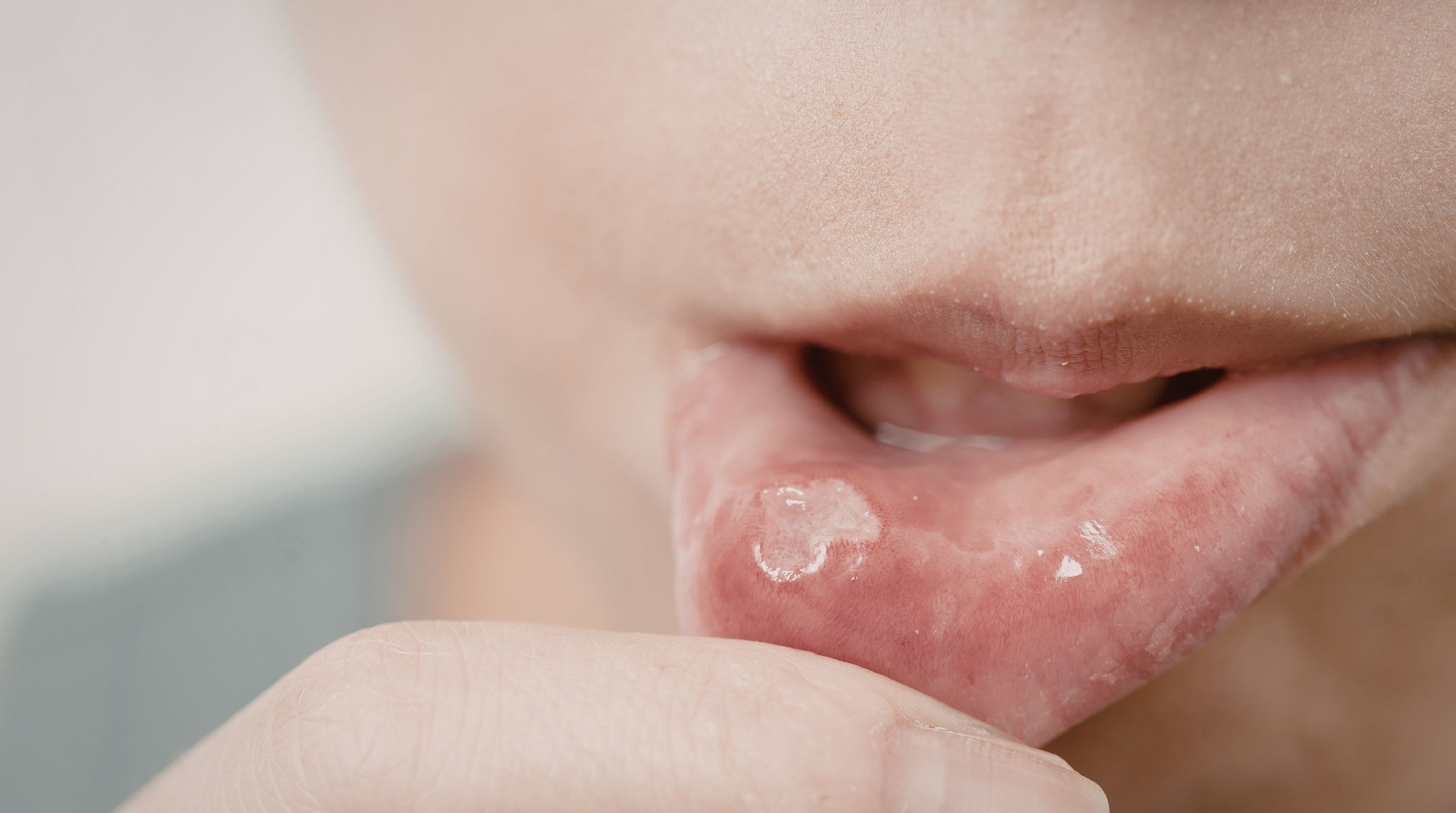
The active phase is the classic cold sore: a cluster of small fluid-filled vesicles on a red base, typically on the upper lip vermillion border. This is when viral concentration on the skin is highest and transmission risk is greatest.
The crusting phase, when the vesicles rupture and form a yellowish honey-colored scab, still carries meaningful transmission risk. The crust contains viral particles, and the surrounding skin is still actively shedding.
The healing phase looks normal but can still shed virus for several days after the visible lesion resolves. This is one reason 'wait until it is gone' is not a sufficient rule. Per the NHS cold sores guidance, the area remains contagious until the skin has fully healed and returned to baseline.
Asymptomatic Shedding: When Herpes Spreads Without a Sore
One of the most counterintuitive facts about HSV-1 is that the virus does not need to produce a visible cold sore to be transmissible. The virus periodically reactivates inside the nerve ganglia, travels back to the skin, replicates briefly at the surface, and either causes a visible blister or sheds without producing one. This second outcome, called asymptomatic shedding, is a normal part of how the virus behaves.
Studies tracking oral HSV-1 in people with a known history of cold sores have detected viral DNA on lip and surrounding tissue on a small but meaningful proportion of days sampled, even when no visible lesion is present. The exact frequency varies by individual, by time since first infection, by recent stress or illness, and by immune status, but the principle is consistent: silent shedding is part of the virus's lifecycle, not an exception to it.
Practically, this means oral sex carries some transmission risk even when the giving partner feels completely fine and shows no sore. The absence of a visible lesion lowers the risk compared to an active outbreak; it does not eliminate it.
Two implications follow. First, 'I do not currently have a sore' is one signal among several, not a guarantee of safety. Second, partners cannot tell from looking, and neither can the person carrying HSV-1.
This article is published by stdrapidtestkits.com, which sells at-home STI testing kits. Product recommendations below are based on fit-for-purpose for the reader's concern, not commercial benefit.
HSV-1 vs HSV-2: How They Behave Once They Are Genital
HSV-1 and HSV-2 are closely related viruses in the same family. They can both infect oral or genital tissue. Once established, however, they behave a little differently, and that difference matters for prognosis.
HSV-1 prefers oral tissue. When it ends up in the genitals through oral sex, it can cause an initial outbreak, but recurrences are usually less frequent and milder than HSV-2 recurrences. Many people with genital HSV-1 have only one or two outbreaks ever; some never have a second one. HSV-2 prefers genital tissue and tends to reactivate more often, with more frequent symptomatic episodes and higher rates of asymptomatic shedding from the genital area, per the CDC's about-genital-herpes page, which notes that repeat outbreaks are especially likely in people with HSV-2.
This is meaningful when someone receives a genital herpes diagnosis. If type-specific testing confirms HSV-1, the long-term outlook is generally better than the same diagnosis from HSV-2. That does not change the fact that the infection is permanent, that it can still be passed on, and that emotional support is warranted, but it does change practical expectations about how often the virus is likely to flare up.
The other side of this is that doctors sometimes do not specify which type was detected unless the patient asks. Knowing the type helps with prognosis, with partner conversations, and with deciding whether daily suppressive antivirals make sense.
| Feature | HSV-1 | HSV-2 |
|---|---|---|
| Usual home location | Mouth, lips | Genital area |
| Main route of spread | Kissing, sharing utensils, oral sex | Genital sex |
| Genital outbreaks (typical) | Often 0 to 1 after first episode | Several per year initially, declining over time |
| Asymptomatic shedding rate | Lower in genital area | Higher in genital area |
| First-episode severity | Variable, often milder if from oral source | Often more pronounced |
| Detected by antibody blood test? | Yes (type-specific) | Yes (type-specific) |
Testing After Possible Oral-Genital Exposure
If you have had oral sex with a partner who has a cold sore history, or you have given oral sex while carrying HSV-1, testing is the way to move from anxiety to information. Timing matters because every test has a window period: a span of time during which the test cannot yet produce a reliable result, even if infection has occurred.
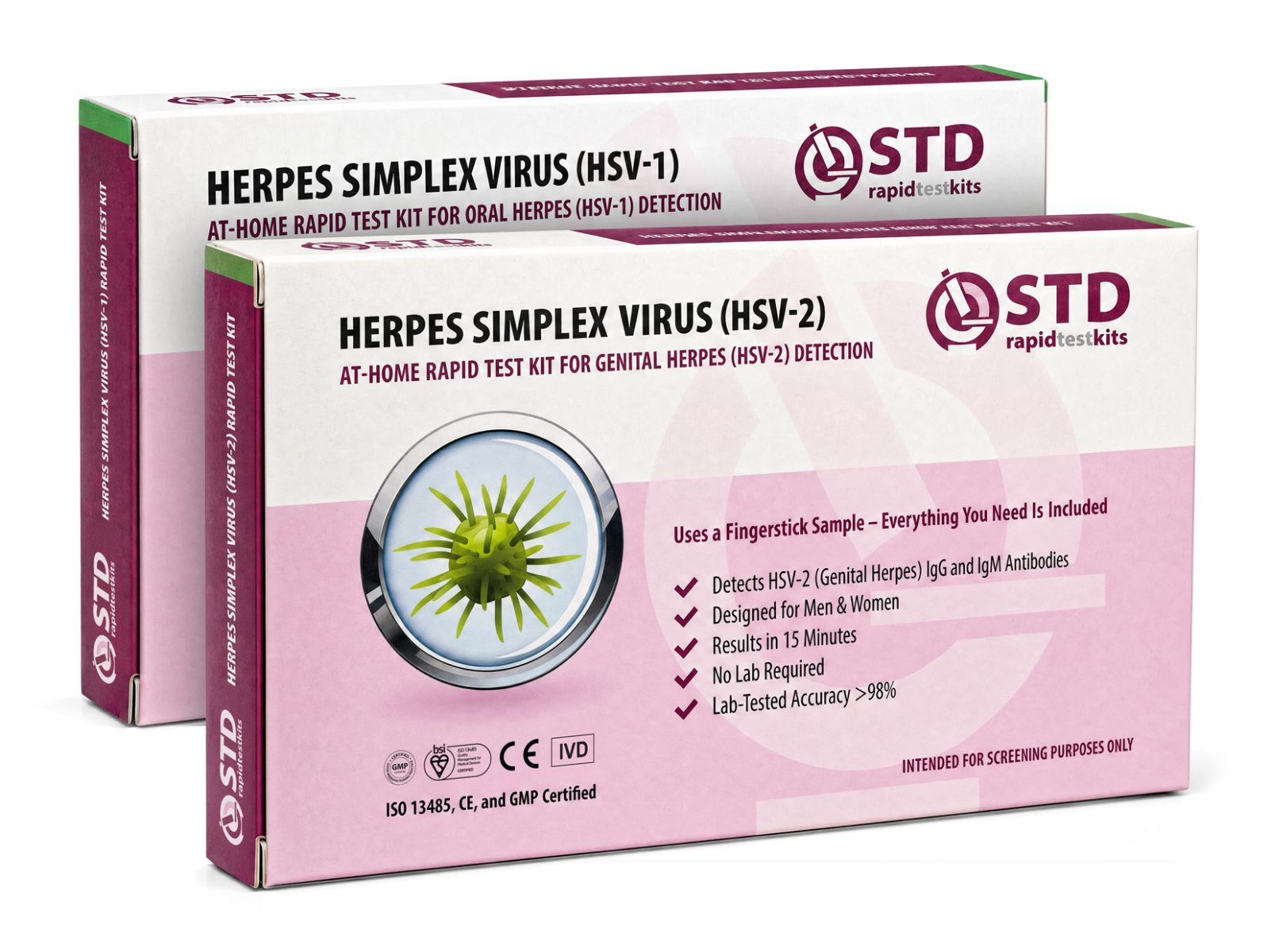
For herpes, the most common at-home option is a type-specific HSV IgG antibody blood test, which detects antibodies the immune system produces in response to HSV-1 or HSV-2. Antibodies typically reach detectable levels around 6 weeks after exposure for most people, though seroconversion can take up to 12 to 16 weeks in some individuals. A swab taken directly from an active sore is the most accurate option during a visible outbreak. If a genital lesion appears, getting it swabbed within the first day or two of symptoms gives the lab the best chance of a clear answer; the sample is run as a PCR or viral culture, which can also identify whether the virus is HSV-1 or HSV-2. Without a sore, blood-based IgG antibody testing is the practical option.
One important note on test types: IgM antibody tests are not recommended for routine HSV diagnosis. They produce frequent false positives and cannot reliably distinguish recent infection from past infection or from cross-reactivity with other viruses. Type-specific IgG testing is the standard for at-home and clinic use alike.
Herpes is also left off most routine STI panels by default, and that omission is intentional. Guidelines do not recommend screening people who have no symptoms, partly because the virus is so common that a positive antibody result on its own rarely changes treatment. If you are ordering a screen and want HSV included, choose a panel that explicitly lists HSV-1 and HSV-2 antibody testing, or ask the clinic to add it. Oral-genital contact can transmit more than herpes, so a comprehensive screen covering chlamydia, gonorrhea, syphilis, HIV, and hepatitis B and C often makes more sense than a single-test approach after a known exposure.
| Infection | When to test after exposure |
|---|---|
| Chlamydia | From 14 days |
| Gonorrhea | From 21 days |
| Syphilis | From 6 weeks |
| HIV (4th-generation antibody/antigen) | From 6 weeks for early indicator; retest at 12 weeks for confirmation |
| Herpes (HSV-1 and HSV-2 IgG antibodies) | From 6 weeks; retest at 12 to 16 weeks if early result is negative |
| Hepatitis B | From 6 weeks |
| Hepatitis C | From 8 to 11 weeks |
What Your Herpes Test Result Actually Means
A negative herpes antibody result means the test did not detect HSV-1 or HSV-2 antibodies in your blood at the time of the sample. If you tested before the 6-week window, this can be a false negative: your immune system may not have produced detectable antibodies yet. The infection itself is not ruled out until the window has closed, which is why retesting matters when an early test is negative and exposure is recent.
A positive HSV-1 antibody result means your body has produced antibodies to HSV-1 at some point. It does not specify when the infection occurred or where the virus is sitting (mouth or genitals). Most adults with HSV-1 acquired it orally in childhood from a non-sexual source, so a positive HSV-1 antibody test on its own does not prove genital infection. If you have new genital symptoms and a positive HSV-1 antibody result, the natural assumption is genital HSV-1; a swab from an active lesion can confirm.
A positive HSV-2 antibody result almost always reflects genital infection, since HSV-2 oral infection is relatively rare. This finding is more clinically actionable, and most clinicians will discuss suppressive antivirals if outbreaks are frequent or if a partner is HSV-negative.
Repeat testing makes sense in two scenarios: an early negative within the window period, or a borderline result that needs confirmation. Borderline results often involve antibody index values sitting near the assay's lower detection threshold (sometimes called 'low-positive' or 'equivocal'), and a follow-up draw 2 to 4 weeks later usually clarifies whether the value is climbing toward a true positive or hovering at assay noise.
Negative within the window period: Not yet conclusive. Retest at 12 to 16 weeks if exposure was recent.
Positive HSV-1 antibody: Confirms HSV-1 infection somewhere in your body but does not specify oral versus genital. Most adults acquired HSV-1 orally in childhood.
Positive HSV-2 antibody: Almost always reflects genital infection. Worth a clinician conversation about suppressive antivirals, especially if a partner is HSV-negative.
Treatment Options for Genital HSV-1
Genital HSV-1 cannot be cured. Once the virus settles into the dorsal root ganglia, it stays there for life. What treatment offers is control over outbreaks, faster recovery from each one, and a meaningful reduction in transmission risk to partners.
Two treatment approaches exist. Episodic therapy means starting antivirals at the first sign of an outbreak, ideally during the prodromal tingling or burning before a lesion appears. Started early, episodic therapy typically shortens the outbreak by a day or two and reduces symptom intensity.
Suppressive therapy is daily antiviral use, regardless of whether symptoms are currently present. The NHS genital herpes guidance notes that people who have more than six outbreaks a year may benefit from taking antiviral medicine regularly for 6 to 12 months. Clinical evidence also supports that daily suppression reduces the rate of asymptomatic viral shedding, lowering transmission risk when a partner is HSV-negative. Suppression is typically considered when outbreaks are frequent, when they are particularly severe, or when a partner is HSV-negative and the couple wants to minimize transmission risk.
A clinician can help weigh which approach fits a given person, since genital HSV-1 generally recurs less often than HSV-2 and daily suppression is less commonly needed. As Mayo Clinic notes, herpes signs and how often outbreaks recur vary widely from one person to the next, and many people have mild symptoms or none at all. The three standard antivirals are acyclovir, valacyclovir, and famciclovir, all prescription-only in most countries. Acyclovir is the oldest and least expensive but requires more frequent dosing; valacyclovir has the longest half-life and the most convenient once or twice-daily schedule for suppressive use; famciclovir is the alternative when valacyclovir is not tolerated.
Episodic therapy: Start antivirals at the first prodrome sign (tingling, burning). Shortens each outbreak and reduces symptom intensity.
Suppressive therapy: Daily antiviral use. Typically considered when someone has more than 6 outbreaks per year, when outbreaks are particularly severe, or when a partner is HSV-negative and the couple wants to reduce transmission risk.
How to Lower the Risk of Passing HSV-1 During Oral Sex
Understanding how HSV-1 spreads makes prevention concrete rather than vague. None of the steps below eliminate risk completely, because asymptomatic shedding is always possible, but each one substantially lowers the probability that oral shedding leads to genital infection.
Avoid oral sex during any visible cold sore. The active phase is when transmission risk is highest. Avoid it during prodrome too: tingling, burning, or itching means the virus is on its way to the surface even before a blister forms.
Wait until the lesion has fully healed and the surrounding skin has been back to baseline for several days. The crusting and early-healing phase still sheds virus, per the NHS cold sores guidance referenced earlier in this article.
Use barrier methods. Dental dams during oral-vulvar or oral-anal contact, and condoms during oral-penile contact, reduce direct skin-to-mucosa exposure at the covered area. They do not cover every surface, so risk is reduced rather than eliminated.
Daily suppressive antiviral medication, as discussed in the treatment section above, reduces both outbreak frequency and asymptomatic shedding. This is worth discussing with a clinician if you have frequent recurrences or an HSV-negative partner.
| Step | Why it lowers risk |
|---|---|
| Avoid oral sex during a visible cold sore | Active blisters carry the highest viral load on the skin |
| Avoid oral sex during prodrome (tingling, burning, itching) | Virus is already shedding before the blister appears |
| Wait until skin has been fully healed for several days | Crusting and early healing still shed virus |
| Use dental dams or condoms during oral sex | Reduces direct skin-to-mucosa contact at the point of exposure |
| Discuss daily suppressive antivirals with a clinician | Lowers both outbreak frequency and asymptomatic shedding |
| Test after a known exposure at the correct window | Initial test meaningful from 6 weeks; retest at 12 to 16 weeks for full confidence |
If You Think You Passed Herpes to a Partner
This is the harder piece of the conversation. Many people who pass HSV-1 from a cold sore to a partner had no idea it was possible. The guilt and panic that follow are real, but they are not useful guides to action. The useful next steps are practical.
Start by getting tested yourself. Knowing your HSV type and current status helps you have a clearer conversation. If you have not had a confirmed HSV-1 diagnosis, an antibody test confirms it.
Tell the partner directly and without elaborate framing. A short, honest message like 'I had a cold sore around the time we were together, I have just learned that HSV-1 from cold sores can transmit to genitals during oral sex, and I wanted you to know so you can decide whether to get tested' is enough. They may already know; they may be relieved to hear from you; they may need time. Any of those reactions is reasonable.
If they have symptoms, suggest a clinic swab during an active lesion (most accurate) or an antibody blood test if no lesion is present. The window for antibody testing is the same 6 to 16 weeks discussed earlier in the testing section: an initial test at 6 weeks, with a retest at 12 to 16 weeks if the first result is negative.
The shame spiral that often follows transmission deserves its own attention. HSV-1 is the most common viral infection in human adults; the World Health Organization estimates that about 64 percent of the global population under 50 carries it. A genital herpes diagnosis is a medical event, not a moral failing. Most people who acquire genital HSV-1 from an oral source did so through a single ordinary encounter with a partner who themselves had no idea they were shedding. The reframing that helps most is treating it the way you would treat passing on any other common, manageable infection: not desirable, not your fault if you did not know, and worth being honest about now that you do.
An estimated 3.8 billion people under age 50 (64%) globally have herpes simplex virus type 1 (HSV-1) infection, the main cause of oral herpes. Less commonly, HSV-1 can be transmitted to the genital area through oral-genital contact to cause genital herpes.
Should You Test After a Possible Cold-Sore Exposure?
Do you have a visible genital sore or blister right now?
Yes: Get it swabbed by a clinician within the first day or two of symptoms. A PCR or viral culture from an active lesion is the most accurate test and can tell you whether it is HSV-1 or HSV-2.
Has it been at least 6 weeks since the possible exposure?
Yes: Take a type-specific HSV IgG antibody blood test now. If it is negative and the exposure was recent, retest at 12 to 16 weeks to cover slower seroconverters. A reactive result is worth confirming with a clinic-ordered laboratory test.
No: It is still early for an antibody blood test. Note the exposure date, watch for symptoms, and plan to test once you reach the 6-week mark. If a sore appears in the meantime, get it swabbed straight away.
Guidance only. A healthcare provider can advise based on your specific situation.
Frequently asked questions
- Can a cold sore really cause genital herpes?
- Yes. A cold sore is HSV-1 active on the skin. During oral sex, that same virus can transfer to a partner's genital tissue and establish a lifelong genital HSV-1 infection. The biology is the same; only the entry point changes.
- If I have HSV-1 from childhood cold sores, can I still pass it genitally?
- Yes. Most adults who carry HSV-1 acquired it orally in childhood from non-sexual contact. That same oral HSV-1 can shed during reactivations and cross to a partner's genitals during oral sex. Childhood acquisition does not protect a future partner from genital exposure.
- How soon after exposure would genital herpes symptoms appear?
- When symptoms appear at all, they usually show up 2 to 12 days after exposure, often around 4 days. A first genital outbreak can include painful blisters or sores, itching, and sometimes flu-like aches or swollen glands, but many people have symptoms so mild they never connect them to herpes, and some have none at all. Note that this symptom timeline is separate from blood testing: an antibody blood test still needs about 6 weeks to become reliable.
- How long after a possible exposure should I wait to test?
- For an antibody blood test, wait at least 6 weeks for a meaningful first result. If that result is negative and exposure was clearly recent, retest at 12 to 16 weeks to cover slower seroconverters. If you have an active lesion now, a clinic-administered swab is more accurate than waiting for an antibody test.
- Can HSV-1 spread without a visible cold sore?
- Yes. The virus can shed from oral tissue during prodrome (the tingling-burning phase before a blister appears) and during asymptomatic episodes when no symptoms are present. Studies have detected viral DNA on lip and surrounding tissue on a meaningful proportion of sampled days even in people who feel well. The visible blister stage carries the highest risk, but it is not the only risk window.
- Do condoms or dental dams fully prevent transmission?
- No. They lower the risk significantly by reducing direct skin-to-mucosa contact at the covered area, but herpes can spread from skin that is not covered. Combining barriers with avoidance during outbreaks and during prodrome is more protective than barriers alone.
- Is genital HSV-1 less serious than HSV-2?
- It usually recurs less often. People with genital HSV-1 commonly have one or two outbreaks ever, while people with HSV-2 tend to have more frequent recurrences and higher rates of asymptomatic genital shedding. The infection is permanent in both cases, but the long-term burden is generally lighter with HSV-1. Telling future partners before oral-genital contact is still worthwhile regardless of type.
- Is there a cure for genital HSV-1?
- No. Once HSV-1 enters the body it stays in the nerve ganglia for life. There is no medication that eliminates the virus. Antiviral medications (acyclovir, valacyclovir, famciclovir) shorten and soften outbreaks when taken episodically, or reduce outbreak frequency and asymptomatic shedding when taken daily for suppression.
- World Health Organization. Herpes simplex virus fact sheet. Source for the global HSV-1 prevalence figure (3.8 billion people, 64% of those under 50) and the oral-to-genital transmission statement quoted in this article.
- U.S. Centers for Disease Control and Prevention. About genital herpes. Reference for recurrence patterns and the note that repeat outbreaks are especially likely in people with HSV-2.
- U.S. Centers for Disease Control and Prevention. About STI risk and oral sex. Lists herpes among the infections oral sex can transmit between partners.
- NHS. Cold sores guidance. Source for cold sore stages, contagiousness across the cycle, and healing timelines.
- NHS. Genital herpes guidance. Source for episodic and suppressive antiviral treatment, including the 'more than six outbreaks a year' threshold for regular antiviral medicine.
- Mayo Clinic. Genital herpes symptoms and causes. Reference for symptom variability between individuals, prodrome, and outbreak management.
