
Published: September 2025 | Last updated: May 2026 | Editorial review and quality control: Martina N.
Pain, burning, or unusual discharge after a first sexual encounter is one of the most-searched, least-explained things in sexual health. Most of those symptoms come from new mechanical loading: tissue stretch, friction, dryness, the body adjusting to something it has not done before. A smaller share comes from infection.
Some of those same symptoms are how a sexually transmitted infection picked up during that exact encounter announces itself, on a delay of days or weeks. The hard part is telling the two apart, especially when there is no comparison data from prior sexual experience. This article walks through which symptoms point to ordinary first-time soreness, which point to something that needs a test, and how the timing of each pattern usually tells you which one you are dealing with.
Key Takeaways
- Mild soreness, light pink spotting in the first 24 hours, and a brief sting during one or two trips to the bathroom are usually friction, not infection.
- Symptoms that worsen after 48 hours, include sores or fever, or change discharge color or smell are more consistent with a sexually transmitted infection and warrant a test.
What counts as normal soreness, and what does not
The body's response to first penetrative sex is mostly about new mechanical loading. The vaginal wall, the labia and vulvar tissue, the foreskin and frenulum, the urethral opening, none of these have moved through this exact range of motion before, and minor irritation for 24 to 48 hours is common. Light pink spotting can happen if a small capillary in the vaginal wall is bumped, if the cervix gets pressed at a steep angle, or if a hymenal remnant tears. A brief sting during the next urination, especially after a long session or when the perineum is tender, is also not unusual.
The cluster of symptoms that usually falls inside the ordinary first-time range:
- Soreness or rawness in the vaginal opening, on the vulva, or along the shaft and frenulum, fading over one to two days
- One or two episodes of light pink spotting within the first 24 hours, then nothing
- Mild burning during urination on day one, especially after extended or vigorous sex
- A short emotional dip or anxiety surge that has no physical correlate
- Slight muscle ache in the inner thighs, hips, or lower abdomen the next day
The cluster that does not:
- Pain that worsens rather than fades after 48 hours
- Discharge that turns yellow, green, gray, or smells fishy or foul
- Visible sores, blisters, ulcers, warts, or scabbed lesions on the genitals, around the anus, or in the mouth
- Fever, chills, body aches, swollen lymph nodes in the groin, pelvic pain, or testicular pain
- Bleeding that recurs hours or days after the first encounter, especially without a period explanation
- Burning during urination that lasts more than two days or returns after seeming to settle
The CDC's overview of STI signs and symptoms describes the same split. Mild post-coital irritation usually resolves within two days. Anything escalating after that window deserves attention regardless of how recently the exposure happened.
If any symptom is worse at 48 hours than it was at 24, shift from watching to testing. Soreness that improves is friction. Soreness that deepens is a signal.
Why one encounter can transmit an infection
The intuition that STIs require repeat exposure or many partners is wrong, and it gets a lot of people in trouble. A single sexual contact can transmit chlamydia, gonorrhea, herpes, syphilis, HPV, HIV, hepatitis B, or trichomoniasis. Whether transmission happens depends on the partner's status, the type of contact, and a degree of luck. It does not depend on cumulative experience.
According to CDC STI burden estimates, roughly 1 in 5 people in the United States had an STI on any given day in the most recent prevalence figure, and people aged 15 to 24 account for nearly half of new infections each year. Most chlamydia and gonorrhea infections produce no early symptoms in the carrier, which means a partner who genuinely believes they are uninfected often is. This is why people who report only one or two lifetime partners still get diagnosed. The infection was already in the pool of people having sex; a sexual history was never the entry ticket.
Sex education in many places skips testing windows, asymptomatic carriage, and skin-to-skin transmission, leaving people without an accurate map of how STIs actually move. A first-time encounter that turns into a positive test result usually reflects how late accurate information reaches people, after the encounter rather than before.
Most people carrying chlamydia or gonorrhea have no idea they are infected. A first-time test is a sensible response to that reality, not an overreaction.
How long after exposure do STD symptoms appear?
Most sexually transmitted infections do not announce themselves the morning after sex. Each one has its own incubation period, the gap between when an infection is acquired and when symptoms or detectable antibodies first appear. If you woke up sore the day after a first encounter, the math says that soreness is almost certainly mechanical. Real STI symptoms tend to arrive later, in a range that varies meaningfully by pathogen.
The typical windows reported in current public-health guidance from the CDC, the NHS, and the WHO, and from assay manufacturers' instructions for use:
- Chlamydia. Symptoms in 1 to 3 weeks if they appear at all. Most cases stay asymptomatic, especially in women. Earliest reliable test result around 2 weeks post-exposure.
- Gonorrhea. Symptoms in 2 to 14 days. Earliest reliable test around 1 to 2 weeks.
- Genital herpes (HSV-1 or HSV-2). A first outbreak of small painful blisters or ulcers in 2 to 12 days. Per assay-label guidance, blood antibody tests need 6 to 12 weeks to turn positive; the exact window varies by assay, with some IgG tests requiring up to 16 weeks for full seroconversion.
- Syphilis. A single painless ulcer (chancre) in 10 to 90 days, with an average of about 21 days. Blood tests usually positive within 3 to 6 weeks.
- HIV. Acute flu-like symptoms in 2 to 4 weeks for many newly infected people, though not all. Antigen-antibody tests detect HIV from about 18 to 45 days post-exposure, depending on the test generation.
- HPV. Warts (when they appear at all) within months of exposure. Cervical cell changes can take years. There is no FDA-approved blood test for HPV; cervical screening is the standard for women.
- Trichomoniasis. Symptoms in 5 to 28 days. Often asymptomatic in men. Detectable on swab or urine test within 1 to 2 weeks.
This range explains the classic pattern that catches people off guard: feeling fine the next day, noticing something off a week or two later. The first 48 hours of post-coital soreness is mostly friction. Day 5 through day 21 is when STI symptoms most often appear. Symptoms that begin or worsen during that window are the testing trigger.
One more piece of context that surprises people: many STIs never produce symptoms at all in the person carrying them. Chlamydia and HPV are the standout examples. You can feel fine and still test positive. Screening tests exist for that exact gap, the difference between symptoms and infection.

Why condoms reduce risk but don't eliminate it
Condoms and dental dams work. They prevent pregnancy with high efficacy and they cut the per-act transmission risk for fluid-borne STIs (HIV, gonorrhea, chlamydia, hepatitis B, trichomoniasis) by a large margin when used correctly. The "when used correctly" qualifier is the part that matters here.
Skin-to-skin infections live outside the covered area, which is one place residual risk hides. Herpes, HPV, and primary syphilis can spread through contact between any infected skin and partner skin: the base of the shaft, the scrotum, the vulva and labia, the inner thighs, the perianal area, and the mouth all sit outside what a condom covers. The CDC notes that condoms reduce transmission of these infections meaningfully but do not eliminate it.
Real-world use accounts for the rest. Putting a condom on partway through, taking it off before withdrawal, slippage, breakage, expired or oil-lubricated condoms, and inconsistent use across multiple acts in one session all reintroduce exposure. The gap between using condoms "regularly" and using them correctly every time is wider than most people realize.
Oral sex deserves its own line. Most people in their first sexual experiences do not use barriers for oral, and most STIs that transmit through oral contact (gonorrhea, chlamydia, herpes, syphilis, HPV) do not need fluid exchange to move, only mucosal contact. A pharyngeal gonorrhea infection, for example, often produces no sore throat at all, and the carrier can pass it back to the genitals later through subsequent contact.
Use protection consistently. Post-exposure testing covers the residual risk that no barrier eliminates.
Open the wrapper carefully (no teeth). Pinch the tip to remove air. Roll on before any genital contact, not partway through. Use water-based or silicone-based lube only; oil weakens latex. Hold the base when withdrawing. Replace between sex acts and between vaginal and anal use. Check the expiry on the wrapper, even on a fresh pack.
Soreness or warning sign? A practical decision guide
In the days after first-time sex, the most useful question is whether things are getting better, holding steady, or getting worse. The trajectory matters more than the absolute symptom on day one. Soreness that fades is doing what soreness should do; soreness that deepens is asking for a test.
Use this sequence:
- Day 0 to 48 hours. Mild soreness, brief stinging during one or two urinations, light pink spotting that stops, a mild emotional rattle. Hydrate, take ibuprofen if needed, avoid soap or scented products on the irritated area, and skip another sex session for at least 48 hours. If symptoms are stable or improving, this pattern is consistent with mechanical irritation.
- Day 2 to 7. Symptoms should be fading. If burning during urination is still present, getting more painful, or now accompanied by frequency or urgency, get tested for chlamydia and gonorrhea. If pelvic pain is sharp or new, or if testicular pain is present, see a clinic the same day to rule out pelvic inflammatory disease or epididymitis (bacterial inflammation of the tube behind the testes). Left untreated, chlamydia and gonorrhea can progress to pelvic inflammatory disease in women or epididymitis in men, both of which carry a small but real risk of long-term fertility impact. Early antibiotic treatment almost entirely eliminates that risk, which is the argument for testing sooner rather than watching longer.
- Day 5 to 21. The classic STI symptom window. New burning, unusual discharge, sores, blisters, ulcers, painless lumps, swollen groin nodes, fever, fatigue, or rash all warrant a test in this window. Symptoms that come, go, and come back fit the herpes prodrome pattern (the tingling, itching, or burning that often precedes an outbreak by a day or two) especially well.
- Day 21 to 90. Test for syphilis if no symptoms have shown up but exposure was definite. Get an antigen-antibody HIV test. Repeat chlamydia and gonorrhea testing if you missed the first window. A negative test in this range with no symptoms is solid reassurance.
- Day 90 plus. Time for the last-window tests. Herpes blood antibody testing is reliable by 12 weeks. A negative HIV test with no symptoms by 90 days post-exposure rules out HIV with very high confidence.
If at any point sores appear, fever shows up, or pelvic or testicular pain is severe, skip the timeline and get seen the same day.
The emotional weight of first-time anxiety
Not all symptoms are physical. The emotional layer of a first sexual experience can be genuinely heavy, and a body that does not feel right after sex is also a body that interrupts sleep, mood, and concentration. The pattern of opening five tabs, comparing your symptoms to strangers on Reddit, and convincing yourself in alternating directions over the same hour is so common that researchers have a name for it: sexual health anxiety.
It tends to spike in young adults after a first or early sexual experience, especially when the encounter included an element of surprise (a new partner, a new act, less protection than planned, alcohol, ambiguity about consent). Among young adults who delay testing, reported barriers more often involve stigma and anonymity concerns than physical access to a clinic, a pattern documented in CDC and public-health surveys on adolescent sexual health.
What helps more than another search result is concrete information about what is and is not normal, plus the act of testing itself. Anxiety thrives on uncertainty, and a clear result, positive or negative, is what shrinks it.
Many people who have an STI have no symptoms. Without testing, STIs often go undiagnosed, and untreated infections can lead to serious health consequences and pass to sex partners.
When and how to test, calmly
Testing sits closer to taking your blood pressure or running a pregnancy test. You are answering a question your body cannot answer alone. The two routes available to most people are clinic testing and at-home rapid testing, and the right one depends on what you want from the result.
Clinic testing is the right choice when:
- You have visible sores, ulcers, or warts that need direct examination and possibly a swab-based PCR test
- You have fever, severe pelvic or testicular pain, or any sign of pelvic inflammatory disease, which needs same-day antibiotics
- You want a full screen with laboratory NAAT-grade sensitivity, including pharyngeal and rectal swabs if oral or anal sex were involved
- You want a clinician's eyes on the symptom along with the test, especially for ambiguous lesions
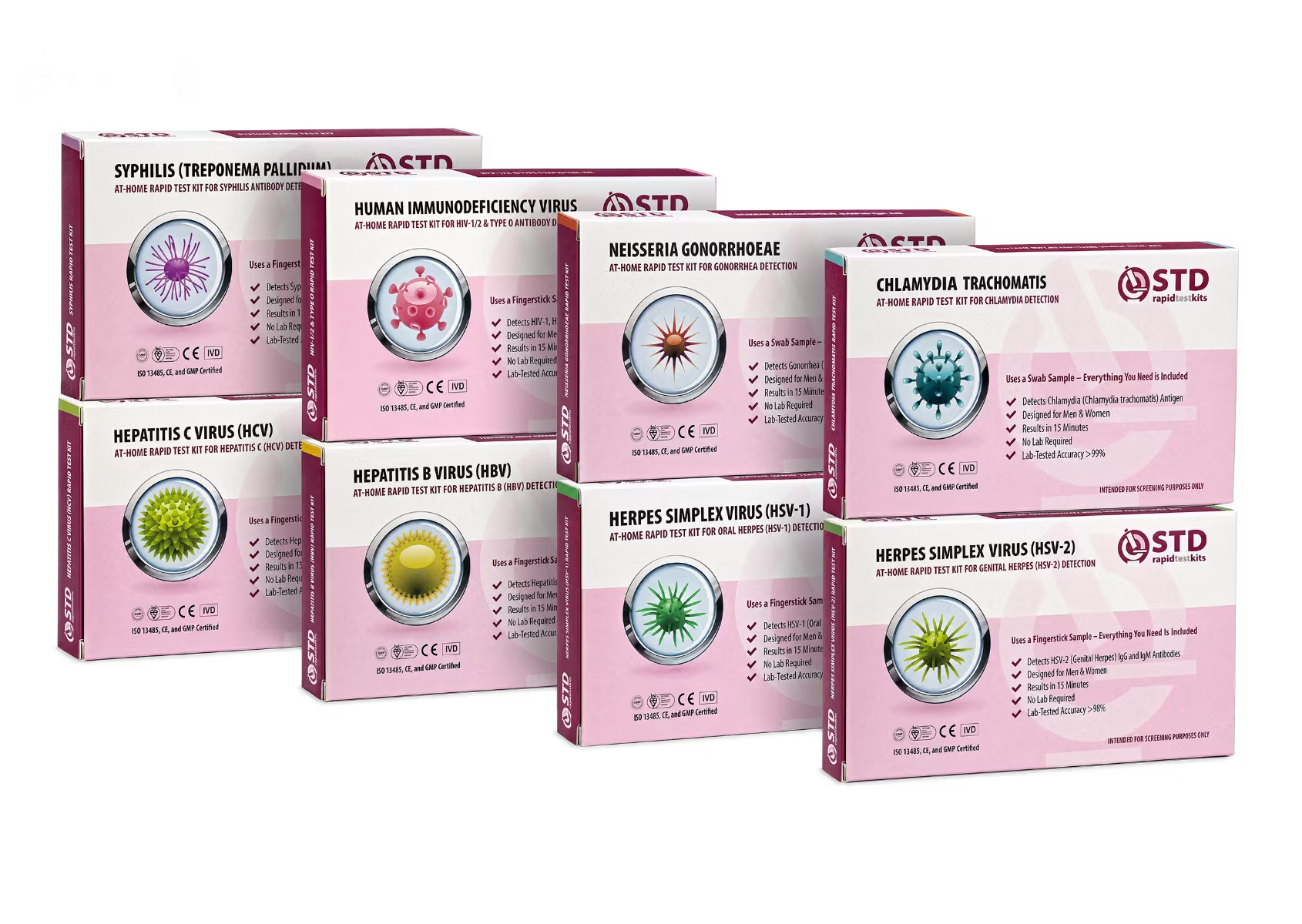
At-home rapid testing is the right choice when:
- You are mostly asymptomatic and want screening peace of mind after a defined exposure
- Privacy or scheduling is a barrier to a clinic visit
- You are inside the right testing windows (chlamydia or gonorrhea after about 2 weeks, syphilis after about 3 to 6 weeks, HIV after about 18 to 45 days depending on the test, HSV antibody after 12 weeks)
- You are willing to follow a positive at-home result with a confirmatory clinic test, since rapid lateral-flow chemistry is a screen and not a final lab diagnosis
The two routes are complementary. A negative at-home rapid test taken inside the testing window is solid reassurance for most people without symptoms. A positive at-home result, or any result paired with persistent symptoms, is the moment to bring a clinician in.
Frequently asked questions
- Could a single first-time encounter really give me an STI?
- Yes. STIs do not require repeat exposure or many partners. One contact with an infected partner is enough to transmit chlamydia, gonorrhea, herpes, syphilis, HPV, HIV, hepatitis B, or trichomoniasis if the conditions allow. The likelihood per single act is lower than for repeated exposure, but it is not zero, and someone has to be the first one to find out.
- How many days after sex should I wait before testing?
- For the most common bacterial infections (chlamydia and gonorrhea), a useful result is available within about 2 weeks of exposure. The standard practice is a first round at 2 weeks plus a confirmatory round at 6 to 12 weeks, since testing too early returns false negatives. For the longer-window infections: syphilis blood tests turn positive within 3 to 6 weeks, HIV antigen-antibody tests are accurate by about 18 to 45 days, and herpes blood antibody testing is reliable at 12 weeks.
- I bled a little after my first time. Is that normal or a problem?
- Light pink spotting in the first 24 hours is common and usually mechanical, especially if the cervix was bumped or a hymenal remnant tore. Heavy bleeding, bleeding that recurs hours or days later without a period, or bleeding accompanied by pain or discharge changes is not in the ordinary range and should be evaluated by a clinician.
- We used a condom the whole time. Do I still need to test?
- Condoms cut transmission risk significantly but not to zero. Skin-to-skin infections like herpes, HPV, and primary syphilis can spread through any uncovered skin contact, and slippage or partial use can re-introduce fluid exposure. If you have any symptoms, or if peace of mind matters, a screening test inside the right window is a reasonable next step.
- I have no symptoms. Should I bother testing?
- Yes, especially after a first or new sexual encounter. Most chlamydia infections produce no symptoms in women, and roughly half produce no symptoms in men. HPV is mostly silent. HIV can be silent for years before the immune system shows strain. Asymptomatic carriage is the rule rather than the exception for several common STIs, which is why screening exists.
- The next-morning burning during urination, is that always an infection?
- Usually not. Day-one urinary burning after first-time sex is most often friction-based or dehydration-related and resolves within 24 hours. If burning persists past 48 hours, returns after seeming to settle, or is accompanied by frequency, urgency, or unusual discharge, get tested for chlamydia and gonorrhea, and consider a urinary tract infection.
- Can I get an STI from oral sex without intercourse?
- Yes. Pharyngeal gonorrhea, oral chlamydia, oral herpes, and oral HPV transmission all occur through oral contact. Syphilis chancres can appear in the mouth or on the lips. Most oral STIs do not produce a sore throat at all, so absence of throat symptoms does not rule out infection. Barriers (condoms for fellatio, dental dams for vulvar or anal contact) reduce risk.
- What if I am scared a clinician will judge me?
- That fear is widespread and rarely justified at sexual-health-focused clinics, where staff see hundreds of post-first-time visits a year. If a clinic visit still feels too exposing, an at-home rapid test taken in your own bathroom is a valid first step. A positive result there can be confirmed at a clinic later, on your own timing, with the test result already in hand.
- U.S. Centers for Disease Control and Prevention. About sexually transmitted infections, overview of common STIs and signs and symptoms.
- U.S. Centers for Disease Control and Prevention. STI prevalence, incidence, and cost estimates in the United States.
- U.S. Centers for Disease Control and Prevention. About genital herpes, transmission and symptom overview.
- U.S. Centers for Disease Control and Prevention. HIV testing, antigen-antibody and RNA test windows.
- World Health Organization. Sexually transmitted infections (STIs) fact sheet.
- NHS. Sexually transmitted infections (STIs), symptoms, testing, and treatment timing.
