

Published: July 2025 | Last updated: April 2026 | Editorial review and quality control: Martina N.
The bump near your lip wasn't there yesterday. Maybe it tingles. Maybe it just feels off. Now you're standing at the bathroom mirror trying to work out whether what you're looking at is a cold sore, a stress pimple, dermatitis from a new lip balm, or something that needs a clinic visit.
Most lip rashes turn out to be something other than herpes. Knowing the difference saves you the panic spiral, and on the small percentage of times that it really is a cold sore, getting clear about the timeline helps you avoid passing it on. The script of a classic cold sore is specific enough that you can usually rule it in or out by watching what happens over the next 24 to 48 hours.
How can I tell if my rash is a cold sore?
Classic cold sores follow a recognizable script: a tingling or burning patch comes first, then small fluid-filled blisters appear in a tight cluster at the lip border within a day, weep, crust over with a yellow scab, and heal in 7 to 10 days. Most non-herpes rashes (acne, contact dermatitis, eczema, angular cheilitis) skip the tingle stage, don't form clustered fluid blisters, and don't follow the same crust-and-heal cycle. If you have an active blister now, a clinic swab (PCR) within 48 hours is the most reliable confirmation. For past exposure (sore is gone, or you never had a clear lesion), a fingerstick blood antibody test reads accurately from about 12 weeks after the suspected exposure.
Key Takeaways
- Classic cold sores start with tingling or burning, then form a tight cluster of fluid-filled blisters at the lip border that weep, crust, and heal in 7 to 10 days. Scattered itchy bumps that don't follow this cycle usually aren't herpes.
- An active sore is best confirmed by a clinic swab (PCR) within 48 hours. For past exposure, a blood antibody test reads accurately from about 12 weeks after the suspected exposure.
How a classic cold sore unfolds
Oral herpes (HSV-1) follows a predictable script in most people. The virus sits dormant in nerve cells near the face most of the time, then reactivates when something triggers it: a stressful week, a sunburn on the lip, a fever, hormonal shifts during a period, or a run-down immune system. The trigger doesn't cause new infection. It wakes up an infection you've had for a long time, often acquired in childhood through a kiss from an infected family member.
The first sign is the prodrome. Six to 48 hours before any visible bump, the future site of the sore feels off. People describe it as tingling, itching, burning, or tight. Some say it feels like static under the skin. The skin itself looks normal at this stage. This is your earliest warning, and it's the single best clue that what's coming is herpes rather than acne or dermatitis.
Within a day or two, small fluid-filled vesicles appear, typically in a tight cluster at the vermillion border (where the lip meets the regular skin of the face). Less commonly the cluster forms at a corner of the mouth, on the chin, or just inside a nostril. The vesicles are clear at first, then can turn yellowish.
After two to four days the vesicles break and weep, leaving shallow ulcers that sting. A yellowish crust forms over the ulcer. The crust eventually flakes off, leaving pink new skin underneath. Total timeline from first tingle to fully healed is usually 7 to 10 days. A first-ever outbreak can take up to two weeks and may come with fever, sore throat, and swollen neck glands.
Recurrent outbreaks tend to happen in the same anatomical spot each time, because the virus traveled down a specific nerve fiber to reach the surface. People who get recurrent cold sores often recognize the location pattern: same upper lip corner, same spot at the edge of the nostril, same point on the chin.
What an everyday rash looks like instead
Most non-herpes rashes around the mouth break the cold-sore script in at least one obvious way. The break is usually visible within a day or two of watching the rash, which is why patience is the cheapest and often the most useful diagnostic tool.
Acne and folliculitis form discrete papules or pustules. They are tender to touch, but the skin doesn't tingle in advance. They don't appear as a tight blister cluster, and they don't move through the weeping-and-crusting cycle. Most resolve in three to five days with no specific treatment, sometimes leaving a small post-inflammatory mark.
Contact dermatitis (a reaction to a new toothpaste, lip balm, sunscreen, or food) presents as a flat or slightly raised red rash that itches or burns. It tends to spread across an area rather than cluster in one spot. Removing whatever caused it usually clears it within a few days. The clue is timing: a new product introduced in the past two weeks lines up too neatly with the rash to ignore.
Eczema (atopic dermatitis) makes the skin around the mouth dry, scaly, and red, often with cracks. It worsens in winter or during stress and improves with bland moisturizer. Itchy, gradual onset, no fluid blisters.
Angular cheilitis cracks the corners of the mouth, with redness and sometimes mild scaling, but no fluid blisters. It's usually triggered by saliva pooling at the corners (in older adults, denture wearers, or after orthodontic work), nutritional deficiencies (B vitamins, iron), or yeast overgrowth. Often bilateral, while a typical cold sore cluster is on one side only.
Run the bump in the mirror through these three checks:
- Did the area tingle, sting, or burn for several hours before anything was visible?
- Are the bumps a tight cluster of small fluid-filled blisters at the lip border, rather than a single papule or a diffuse rash?
- Is the lesion cycling through weep, yellow crust, and peel within a 7 to 10 day window?
Three yeses point toward a cold sore. One or zero usually means something else, and watching the spot for another 24 to 48 hours will clarify which.
The most common cold-sore mimics, side by side
Several conditions get mistaken for herpes often enough that recognizing each one is worth a few minutes. None are dangerous in the way an untreated bacterial infection can be, but they each get treated differently.
- A pimple at the lip border. Single tender raised papule, often with a central white tip; no surrounding cluster of blisters; no preceding tingle. Resolves in two to five days.
- Folliculitis. Inflamed hair follicle, usually after shaving or waxing; small red pustules along the upper lip or chin; tracks with hair growth, not nerve pathways.
- Contact dermatitis. Flat or mildly raised red rash, itchy or burning; often diffuse rather than clustered; correlates in time with a new product (a different toothpaste surfactant, a fragranced lip balm, a sunscreen).
- Eczema flare. Dry, scaly, red patches that wax and wane with weather and stress; itchy more than painful; no blistering and no crust over a healing ulcer.
- Angular cheilitis. Cracked, red, sometimes scaled corners of the mouth; no vesicles; commonly affects both corners, while a typical cold sore cluster is on one side.
- Perioral dermatitis. Tiny red papules and pustules around the mouth, sometimes around the nose and eyes, often triggered by topical steroid creams or heavy occlusive cosmetics; persists for weeks at a time, doesn't follow the cold-sore 7-to-10-day cycle.
- Sunburn or wind chap. Sore, dry, peeling lip after sun or cold exposure; uniform across the lip surface, no discrete blisters or clusters.
- A canker sore. Round shallow ulcer with a white or yellow base and red rim, located on the inside of the lip, cheek, or tongue (mucosal surfaces only). Recurrent cold sores are almost always on the outside lip skin in a healthy adult.
If your bump fits one of the rows above and breaks the cold-sore script (no tingle, no clustered fluid blisters, no crust-and-heal cycle), watch for two days, treat for the most likely cause, and re-evaluate only if the picture changes.
Tingle vs itch: the most useful early clue
The single most reliable cold-sore tell is the prodrome sensation, and it's worth learning to recognize.
A cold sore tingle feels like a localized nerve symptom: pinpoint or coin-sized, sharp or static-like, sometimes a brief burning or stinging. It is not a generalized itch. People describe it as feeling like the skin is buzzing or about to bruise. The sensation typically arrives 6 to 48 hours before any visible bump, and it stays in one specific small spot you can point to.
An itchy rash, by contrast, feels diffuse. It crawls. You want to rub or scratch the entire patch. The itching is consistent for hours and tends to worsen if you scratch (more inflammation, more histamine release). Eczema, contact dermatitis, hives, and insect bites all present this way.
The other tells: a cold sore tingle precedes any visible change, while an itchy rash is a response to skin that's already inflamed and visibly different. A cold sore tingle is in a coin-sized spot; an itchy rash spreads across an area.
If what you're feeling is itchy, diffuse, and the skin already looks reactive, herpes is the less likely answer. If it's a sharp localized buzz with normal-looking skin and no obvious itch, watch that spot for the next 24 hours, when most cold sores make themselves visible.
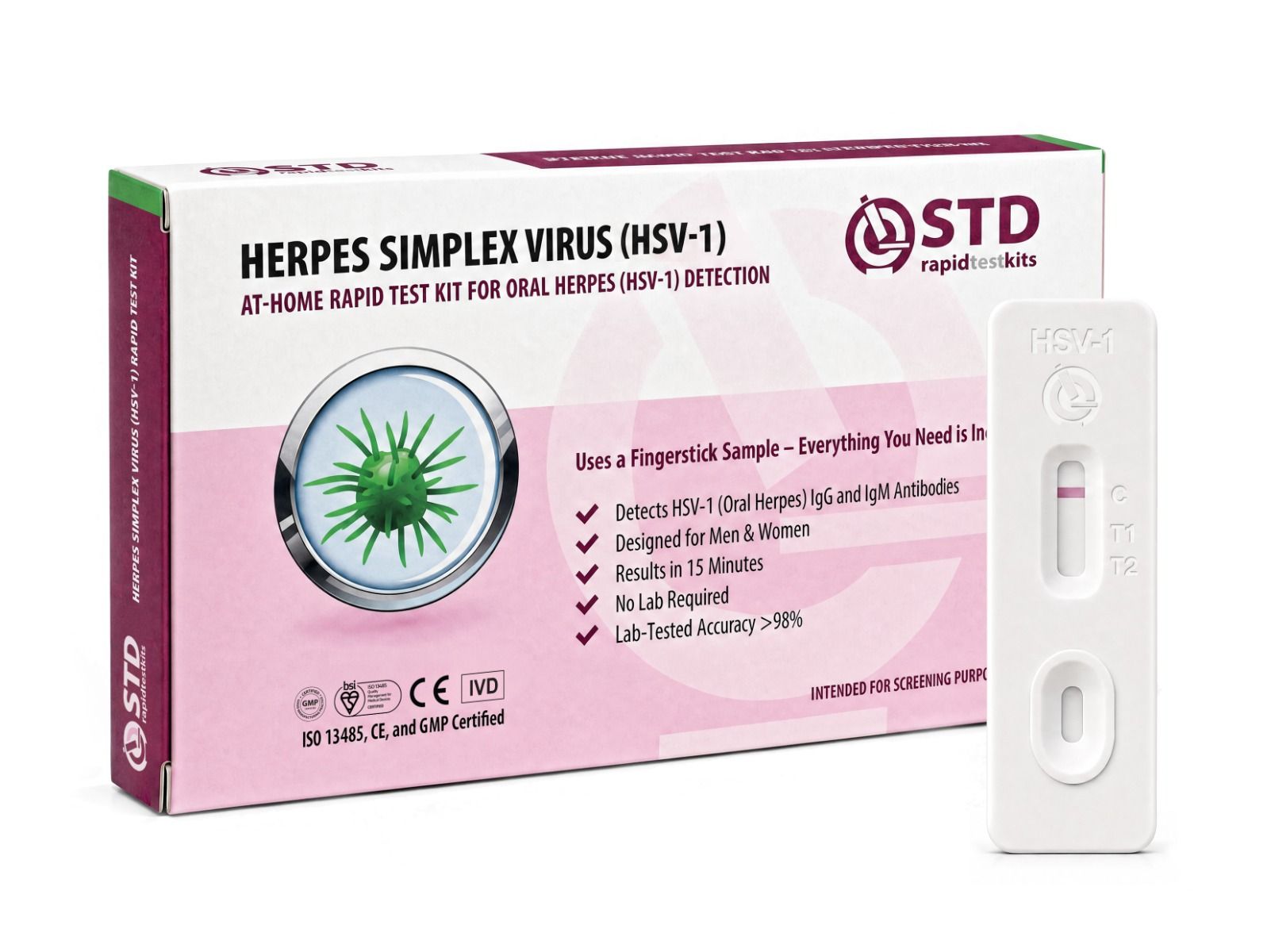
This article is published by stdrapidtestkits.com, which sells at-home rapid STI tests. Our HSV-1 and HSV-2 products are fingerstick blood antibody tests; they confirm past exposure once antibodies have developed (typically 12+ weeks after exposure), and they do not replace a clinic swab on an active lesion. We recommend tests based on fit-for-purpose for the reader's situation, not commercial preference.
When herpes doesn't look like the textbook image
The descriptions above cover the typical recurrent cold sore. A first-ever outbreak, or an outbreak in someone with a weakened immune system (chemotherapy, HIV, advanced age, certain medications), can break that pattern.
A primary HSV-1 infection in the mouth or throat can present as widespread, painful ulcers across the gums, tongue, and inside of the cheeks, often with fever, swollen neck glands, and difficulty eating. This is more common in children's first exposure (called primary herpetic gingivostomatitis) but young adults occasionally present this way too, especially after a new oral-genital contact.
In immunocompromised adults, lesions can be larger, slower to heal, and located in atypical places (face, hands, neck). They may not form classic vesicles; instead they appear as crusted patches or non-healing ulcers that hang around for weeks.
The recurrence clue still helps even when the visible lesion is atypical. If a small spot returns to the same anatomical place every few weeks or months, especially after a stressful week or a sunny weekend, that recurrence pattern is suggestive of HSV reactivation. A blood antibody test (after roughly 12 weeks since the original exposure) confirms whether you carry HSV-1, HSV-2, or both, even when the active sore is hard to read visually.
Most cold sores resolve on their own. A few patterns are worth a clinic visit within the week, not a wait-and-see:
- A first-ever outbreak with widespread inner-mouth ulcers plus fever, swollen neck glands, or difficulty eating or swallowing.
- A sore that recurs to the same spot every few weeks or months but never forms classic vesicles, where you want clarity on whether HSV is the underlying cause.
- Any lesion that hasn't healed after two weeks in someone who is immunocompromised (chemotherapy, HIV, transplant medications, advanced age).
- A painful banded rash on one side of the face or scalp that follows a single nerve line, which can be shingles and benefits from antivirals started within 72 hours.
When to test, and which test answers which question
The right test depends on what you're trying to find out. Two distinct questions need two different test types, and using the wrong tool for either one wastes time and money.
Question 1: Is the sore I have right now actually herpes? The most reliable answer comes from a swab test (PCR or, less commonly, viral culture) performed on fluid from a fresh, unbroken vesicle. Sensitivity drops sharply once the lesion crusts, so timing matters: ideally within the first 48 to 72 hours of the blister stage. Swab/PCR testing for active oral lesions is done in clinic settings. We don't sell an at-home swab kit for active oral lesions; any reader with an active sore who wants laboratory confirmation should book a same-week clinic appointment with their primary care provider, an urgent-care clinic, or a sexual health clinic.
Question 2: Have I ever been infected with HSV-1, HSV-2, or both? This is what an antibody (IgG) blood test answers. After an initial infection, the immune system makes IgG antibodies that stay in the blood for life. The test reads positive once antibodies have developed, which typically takes about 12 weeks but can take longer in some people. A blood antibody test won't tell you when you were infected, won't distinguish a recent infection from a years-old one, and won't tell you whether the specific sore you had last week was the cause. What it does tell you, reliably, is whether you carry the virus.
What about IgM? Some labs offer HSV IgM testing as a marker of recent infection. The CDC STI Treatment Guidelines specifically recommend against using IgM for HSV diagnosis: cross-reactivity is high and false positives are common. Stick with type-specific IgG-based antibody testing.
Practical rule: if you have an active sore, see a clinic this week for a swab. If the sore is gone (or you never had a clear lesion and just want to know your HSV status), an at-home blood antibody test from 12+ weeks past the suspected exposure is a reasonable starting point.
How cold sores spread, even when nothing's visible
HSV-1 transmits through direct contact with infected skin or secretions: kissing, sharing utensils, sharing lip balm or razors during an outbreak, and oral-to-genital contact (which is how HSV-1 increasingly causes genital herpes in younger adults).
The virus sheds most heavily during a visible outbreak, especially during the weeping ulcer stage. It also sheds intermittently from skin that looks completely normal. This pattern, which the CDC describes as asymptomatic viral shedding, is part of why the virus spreads widely (see CDC STI Treatment Guidelines for an overview).
The asymptomatic shedding pattern is the reason HSV-1 is so widespread: most people who carry it don't know they do, and they pass it on without ever having had a visible cold sore. The World Health Organization estimates roughly two-thirds of the global population under age 50 carries HSV-1.
If you have an active sore right now, the practical precautions are:
- No kissing, oral sex, or shared lip products until the sore has fully crusted and the crust has fallen off naturally on its own.
- Wash your hands after touching the sore (or applying any cream to it). Avoid touching your eyes; HSV-1 can cause a serious eye infection (herpetic keratitis) if it transfers to the eye.
- Use a separate towel and skip cosmetic concealer over the sore. The makeup brush spreads virus and slows healing.
- Tell partners. Most adults already carry HSV-1, but giving them the chance to make their own choice is the right move, and it removes the shame loop the next time someone in the relationship has a flare.
Self-care while you watch the timeline
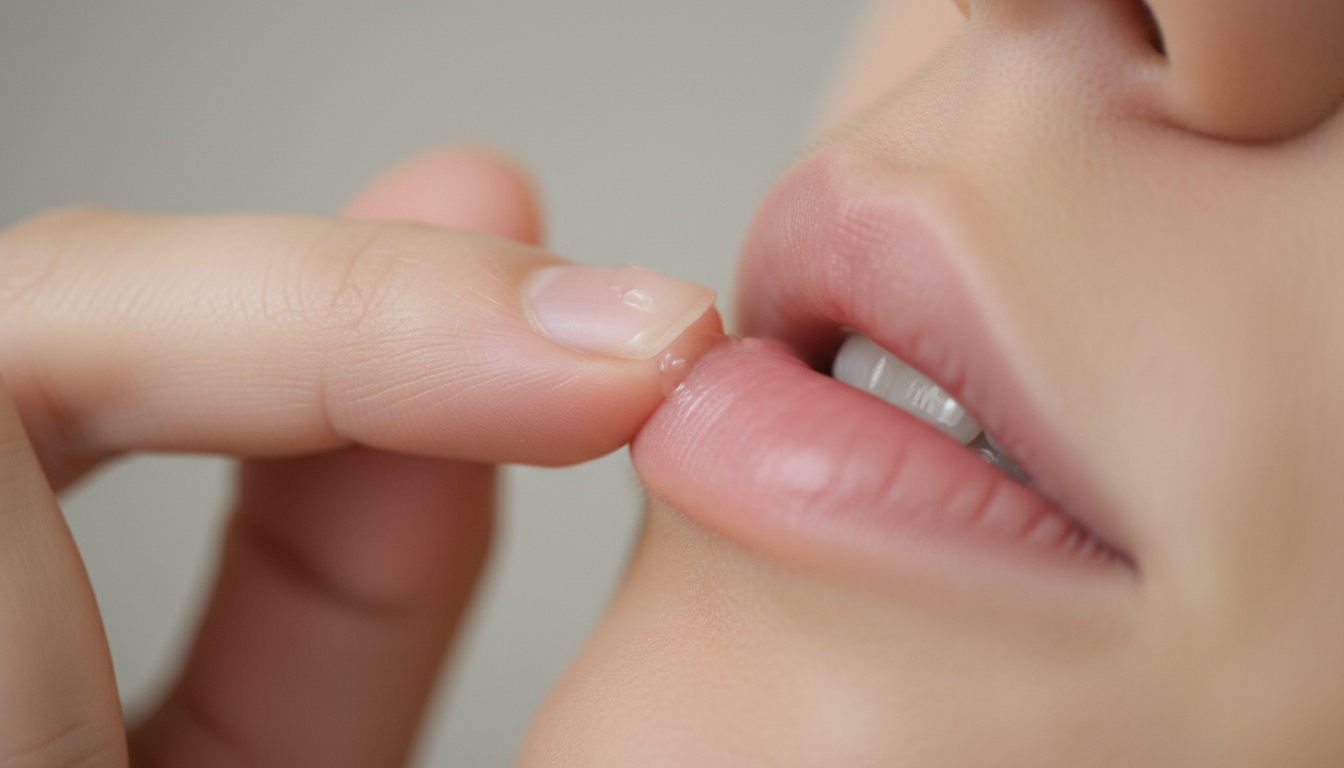
If you're not yet sure whether what you have is a cold sore, the next 24 to 48 hours of observation will usually clarify things. Treat the spot gently while you watch.
- Keep it clean and dry. Wash with mild soap and lukewarm water once or twice a day. Don't scrub.
- Skip exfoliants and acids. Salicylic acid, retinoids, and benzoyl peroxide can irritate the area whether the cause is herpes or something else, and they may slow healing.
- Plain occlusive moisturizer is fine. Petrolatum (Vaseline) protects the skin without adding active ingredients. Avoid heavy fragranced balms during the active phase.
- Don't pop it. Whether it's a pimple or a vesicle, breaking the surface increases secondary infection risk and (for cold sores) spreads virus to nearby skin and to your fingers.
- If a tingle turns into a vesicle within 24 hours, over-the-counter antiviral cream (docosanol/Abreva) can shorten the outbreak modestly when applied at the prodrome stage. Prescription oral antivirals (acyclovir, valacyclovir, famciclovir) are more effective, especially for frequent outbreaks. Talk to a provider if you're getting six or more outbreaks a year; daily suppressive therapy can drop that frequency dramatically.
Early action helps. Overreacting can add stress that itself triggers the next outbreak. Be calm, be observant, and use testing if and when the timeline says you should.
When it might be something else worth a clinic visit
A handful of other infections produce blisters, crusts, or rashes around the mouth and can look concerning. Most are uncommon in healthy adults but worth recognizing.
Impetigo is a bacterial skin infection (usually Staphylococcus aureus or Streptococcus pyogenes) that produces honey-colored crusted lesions, often around the nose and mouth. Most common in children, but adults with broken skin (eczema, a small cut, an existing cold sore) can pick it up. It needs antibiotic treatment; it won't clear on its own.
Shingles (herpes zoster) is a reactivation of the chickenpox virus. It produces a painful, banded rash along one side of the face or scalp that follows a single nerve dermatome. The pain is often severe and the rash dramatic. Antiviral treatment within 72 hours of symptoms reduces complication risk. This one is a same-day clinic call.
Hand, foot, and mouth disease (coxsackievirus) produces small painful ulcers inside the mouth alongside a rash on the palms and soles of the feet. Most common in children under 10 and in adults caring for them.
Primary syphilis can occasionally produce an oral chancre: a single firm, painless ulcer at the lip or in the mouth. It's painless and slow-healing rather than the burning, fast-cycling pattern of HSV. Rare but worth asking a clinician about if a non-tender ulcer persists past two weeks.
Oral cancer is uncommon but worth flagging because the symptom that prompts a visit is often a sore that simply won't heal. Any oral or perioral lesion that has been present for more than three weeks without healing deserves a clinical look.
If a sore is dramatically painful, very large, persists past two weeks, recurs in a banded pattern, or is accompanied by fever or swollen lymph nodes, see a clinician this week rather than waiting it out.
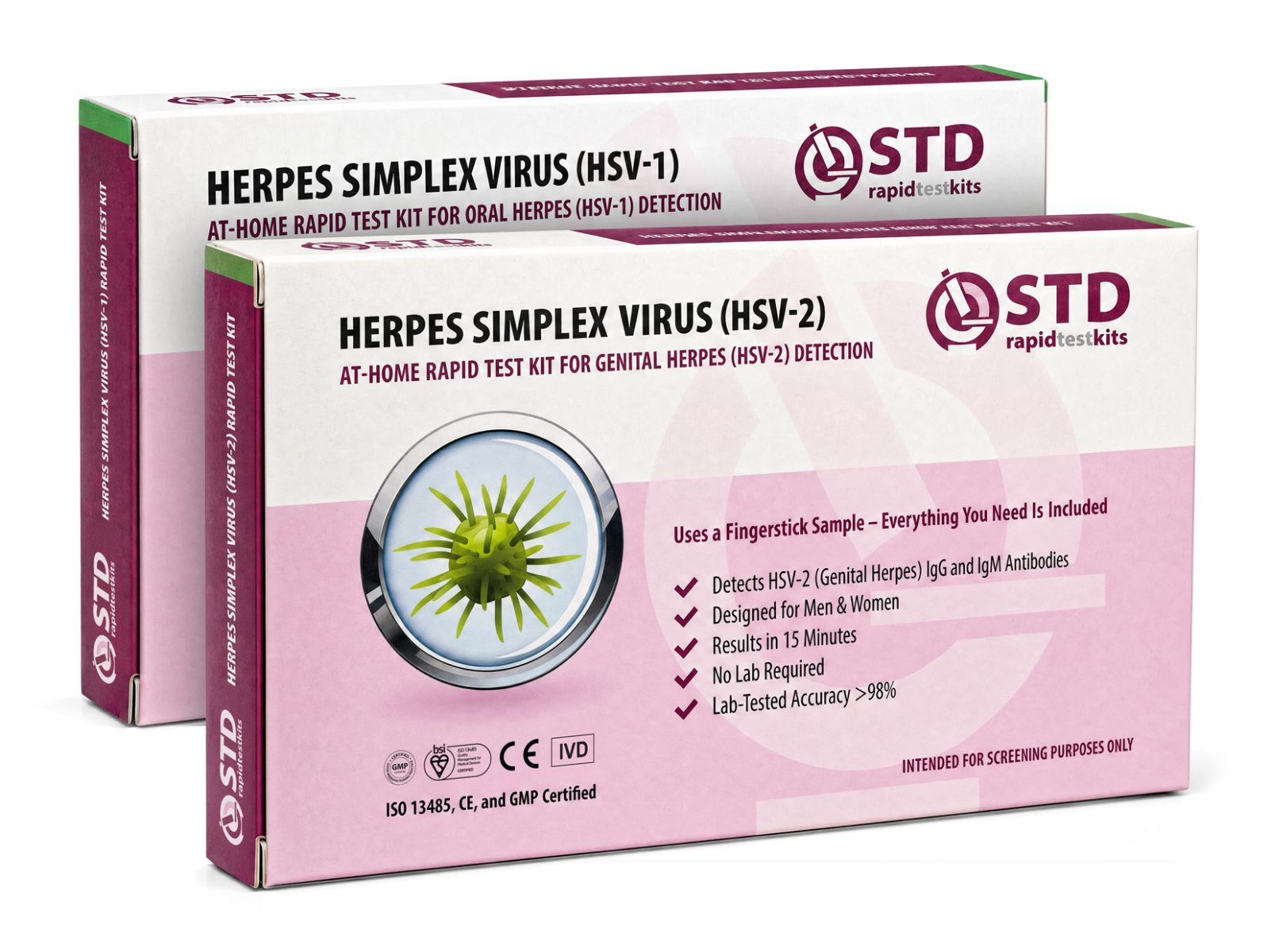
Most people with herpes have no symptoms or only mild symptoms. Many people aren't aware they have the infection.
The bottom line
Most lip rashes turn out to be something other than herpes. The cold-sore script (tingle, then a tight cluster of fluid blisters, then weep, crust, heal in 7 to 10 days) is specific enough that you can usually rule it in or out by watching the timeline for 24 to 48 hours. If the rash matches that script and you want laboratory confirmation, a clinic swab during the active vesicle stage gives the most reliable answer. If the sore is already gone, or if you simply want to know your HSV status, an at-home blood antibody test 12+ weeks after the suspected exposure works well. If the rash breaks the script (no tingle, no clustered fluid blisters, no crust-and-heal cycle), treat for the most likely non-herpes cause, watch for a few days, and re-evaluate only if the picture changes.
Frequently asked questions
- How can I tell a cold sore apart from a pimple?
- Cold sores typically begin with a tingling or burning sensation 6 to 48 hours before any visible bump and then form a tight cluster of small fluid-filled blisters at the lip border. Pimples don't tingle in advance, appear as a single tender papule (often with a central white tip), and don't progress through the vesicle-weep-crust cycle of HSV. If your bump skipped the tingle stage and stays as one isolated lump, a pimple is the more likely cause.
- Can I have a cold sore without ever seeing a clear blister?
- Yes. Some recurrent outbreaks are mild and may produce a small red patch with mild crusting and no obvious vesicle stage, especially in people who've carried the virus for many years. The recurrence pattern (same spot, same trigger) is itself a clue. If a sore returns to the same anatomical place every few weeks or after stress, ask about HSV testing even if it doesn't look textbook.
- Are cold sores contagious before the blister forms?
- Yes. Viral shedding begins during the prodrome (the tingling stage) and remains highest during the weeping ulcer stage. The sore stays contagious until the crust has fully detached on its own and the underlying skin is intact. Asymptomatic shedding (no visible sore) also occurs intermittently, which is one reason HSV-1 spreads so widely.
- Should I pop a cold sore?
- No. Breaking the vesicles spreads virus to nearby skin and your fingertips, increases the risk of secondary bacterial infection, and slows healing. Let the lesion run its natural cycle. Over-the-counter docosanol cream applied at the tingle stage can shorten the outbreak modestly. Prescription oral antivirals are more effective, especially for frequent outbreaks.
- Does a cold sore mean I have herpes?
- Yes. Cold sores are caused by herpes simplex virus, most often HSV-1 and occasionally HSV-2. The word herpes carries social weight that the medical reality doesn't support: HSV-1 oral infection is extraordinarily common, with the WHO estimating roughly two-thirds of the world's under-50 population carries the virus. Many people pick it up in childhood from a relative's kiss.
- Can a cold sore appear inside my mouth?
- In recurrent outbreaks in healthy adults, cold sores are typically on the outer lip skin, not on the gums or palate. Sores inside the mouth in a recurrent pattern are unusual; canker sores (aphthous ulcers, not viral) are the more common cause of inner-mouth ulcers. A first-ever HSV infection (primary herpetic gingivostomatitis) can produce widespread inner-mouth ulcers, more often in children than adults.
- What triggers cold sore outbreaks?
- Common triggers include emotional stress, sun exposure (intense UV on the lips), fever or other illness, hormonal shifts (menstruation), local trauma to the lip, dental work, and a run-down immune system. Daily SPF lip balm and stress management can reduce outbreak frequency for many people. If you're getting six or more outbreaks a year, talk to a provider about daily suppressive antiviral therapy.
- How accurate are at-home herpes blood tests?
- Sensitivity and specificity for HSV IgG are generally in the mid-to-high 90s on product validation, provided the test is run after the 12-week seroconversion window. The chemistry is lateral-flow on a fingerstick blood sample, the same format as many clinic-based rapid tests. A laboratory-based ELISA confirmation is reasonable if a result is unexpected, the timing is borderline, or the result will affect a major decision.
- U.S. Centers for Disease Control and Prevention. Herpes (genital and oral): symptoms, transmission, testing, and treatment overview.
- World Health Organization. Herpes simplex virus fact sheet, including global prevalence figures for HSV-1 and HSV-2 and notes on asymptomatic infection.
- U.K. National Health Service. Cold sores: symptom timeline, typical course, self-care, and when to see a clinician.
- U.S. National Library of Medicine, MedlinePlus. Cold sores: causes, symptoms, recurrence triggers, and treatment options.
- U.S. Centers for Disease Control and Prevention. Sexually Transmitted Infections Treatment Guidelines: genital herpes diagnosis (PCR vs serology), the recommendation against IgM testing, and overview of asymptomatic viral shedding.
- American Academy of Dermatology. Herpes simplex: patient-facing overview of HSV-1 and HSV-2 types, cause, and recurrence patterns.
