Published: November 2025 | Last updated: May 2026 | Editorial review and quality control: Martina N.
The morning after a new exposure, a small patch of redness can feel like a verdict. Most of the time it isn't one. Irritation in sensitive skin areas is one of the most common reasons people search for sexual-health answers, and the cause is usually simpler than the search results make it look. Latex, lubricant, friction, shaving, even a new laundry detergent can leave skin red, itchy, or briefly swollen. A few sexually transmitted infections can do the same. What separates them is usually how the symptoms behave over the next several days.
This guide walks through what each type of rash typically looks like, when each tends to appear, and how to decide whether the right next step is waiting things out or getting tested.
Key Takeaways
- Allergic skin reactions usually appear within minutes to a few hours of contact and improve within a few days once the trigger is removed.
- STD rashes follow a delay (2 to 12 days for herpes, 10 to 90 days for syphilis per the CDC) and tend to evolve into blisters, ulcers, or systemic symptoms rather than fade.
Why So Many People Confuse Allergic Reactions With STDs
Skin is the body's first alarm system. When something irritates it, the reaction can look dramatic: redness, swelling, itching, small bumps, a burning sensation. The same symptoms can also appear in the early stages of some sexually transmitted infections, which is why even experienced clinicians slow down before drawing conclusions.
Three things make the confusion common. First, the timing windows can overlap at the edges. A latex sensitivity might flare within an hour, but a delayed contact reaction can take 24 to 72 hours to show up, which is also when an early herpes outbreak might appear. Second, the genital area has thin, sensitive skin that reacts strongly to friction, shaving, moisture, and new products, so the visual cues that help in other body regions are noisier here. Third, online image searches reliably surface worst-case photos, which biases how people interpret what they see on themselves.
The goal isn't to panic or to dismiss what you notice. It is to recognize how each kind of rash behaves over time.
Timing edges overlap. Delayed contact reactions and early herpes can both surface a day or two after exposure. Genital skin is noisy. Friction, shaving, moisture, and product changes routinely produce harmless irritation. Search results are biased toward worst case. Image searches surface dramatic photos that prime readers to interpret normal redness as infection.
What an Allergic Rash Usually Looks and Feels Like
An allergic skin reaction happens when the immune system reacts to something that touched the skin. The trigger may be latex, a lubricant additive, a spermicide, a fragranced soap, a laundry detergent residue, or even a fabric. Latex condom sensitivity is among the more common contact triggers seen in sexual-health settings, often discovered after switching condom brands or trying a product with new additives.
The most reliable clue is speed. Most allergic reactions appear within minutes to a few hours of exposure, and many people notice itching or redness within the first hour. Location is the other distinguishing clue: reactions map closely to where the irritant touched the skin, along the shaft if a condom was the trigger, broader if a lubricant or wash was responsible, more focal if a spermicide pooled in one spot.
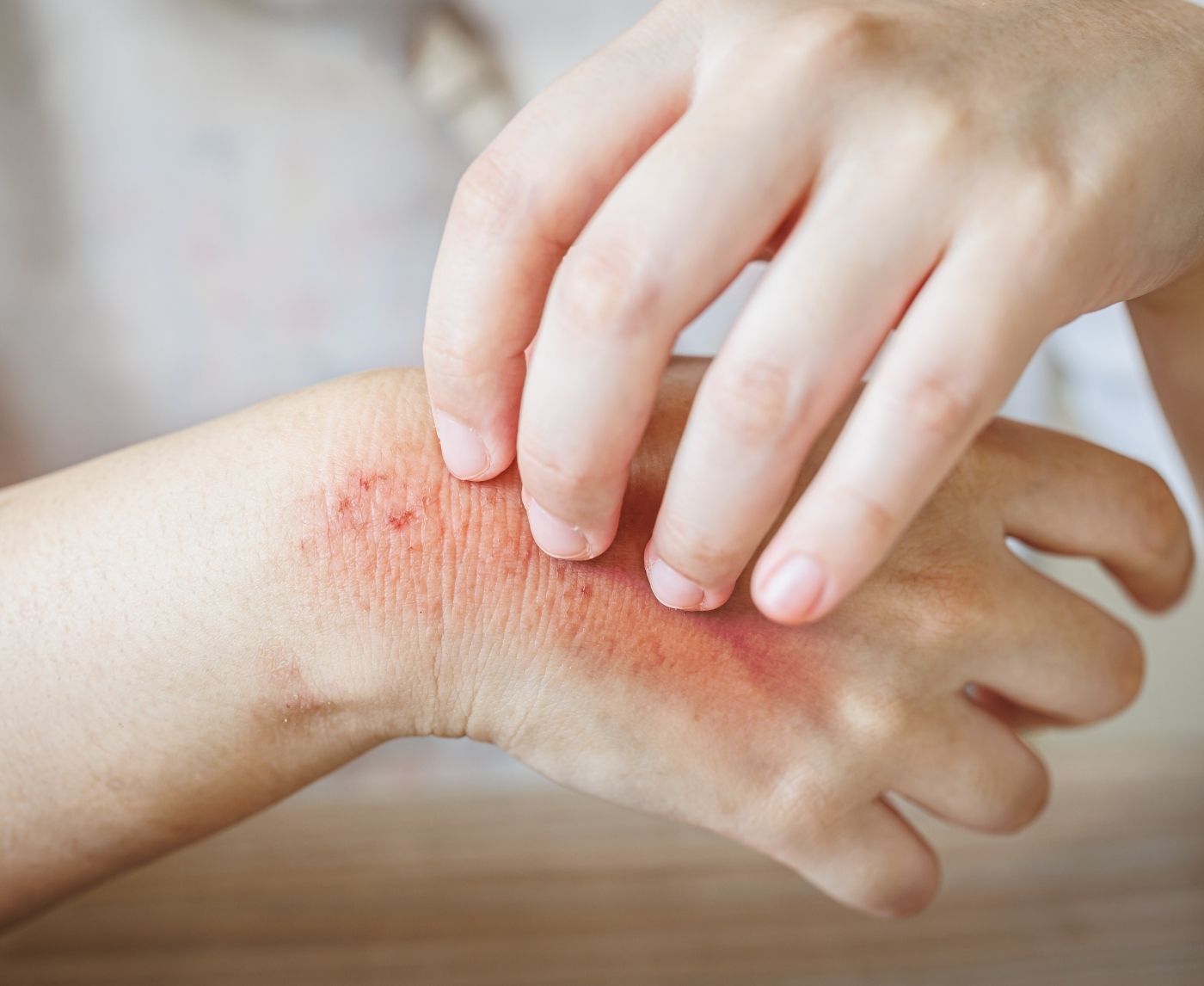
The rash itself tends to look diffuse and uniform: flat or slightly raised, pink to red, sometimes a little swollen, often itchy or stinging rather than painful. There are no fluid-filled blisters, no ulcers with rolled borders, no clustered vesicles. Most contact reactions settle within a few days once the irritant is removed.
| Symptom | What It Often Feels Like | Typical Timing |
|---|---|---|
| Redness | Warm or flushed skin in a defined area | Minutes to hours after contact |
| Itching | Persistent urge to scratch | Often begins within an hour |
| Swelling | Mild puffiness where the product touched | Within hours |
| Small raised bumps | Diffuse irritation patches, no fluid centers | Within hours |
| Burning sensation | Stinging rather than sharp pain | Soon after exposure |
How STD Rashes Develop Differently
Sexually transmitted infections behave on a different clock because they involve microorganisms entering the body, multiplying, and triggering an immune response. That biology takes time, which is why STD symptoms rarely show up the same day as exposure.
Per CDC guidance on genital herpes, a first herpes outbreak typically appears 2 to 12 days after exposure, often as a small cluster of tingling, then vesicles, then shallow painful ulcers. Syphilis is slower: the CDC's STI program pages describe a primary chancre appearing 10 to 90 days after exposure (average around 21 days), usually as a single painless ulcer with a firm rolled border. Chlamydia and gonorrhea less often cause a rash at all; they more commonly produce burning urination, unusual discharge, or pelvic discomfort 1 to 3 weeks after exposure.
The other signature of infection-related skin findings is progression. Allergic rashes typically stay roughly the same and then fade. STD rashes change. A small irritation can become a vesicle, then unroof into an ulcer, then crust over several days. When skin findings evolve in a recognizable sequence like that, clinicians stop thinking irritation and start thinking infection.
Defining skin findings by infection
- Herpes: tight cluster of small fluid-filled vesicles, evolving into shallow painful ulcers within days.
- Primary syphilis: single painless ulcer (chancre) with a firm rolled border.
- Secondary syphilis: non-itchy rash often including palms and soles, weeks after the chancre.
- Chlamydia and gonorrhea: most often no rash at all; burning urination or unusual discharge instead.
A Visual Guide to the Most Common Rash Patterns
Pattern matters more than a single snapshot. The figures below show what dermatology and sexual-health references typically use to teach the difference between an irritant reaction and the most common STD-related skin findings. None of these images are diagnostic on their own; they are reference patterns for context.
Timing Tells a Story
If clinicians lean on any single clue, it is timing. The body's two systems (immune response to a chemical irritant, and immune response to a multiplying microorganism) run on different clocks, and that gap is usually the first thing that tells two rashes apart.
When the skin meets something it reads as irritating, mast cells release histamine and related signals within minutes. That is why itching, redness, and small swelling so often show up within an hour, sometimes before someone is even out of bed. Contact reactions can also be delayed by 24 to 72 hours when the trigger is a slower-acting sensitizer, but they still resolve once the trigger is removed.
Infections follow a slower biology. Bacteria or viruses have to enter the body, replicate, and reach a threshold the immune system can detect. The CDC labels this gap the incubation period, and during that window a person can feel completely normal while still carrying an active infection.
| Condition | When Symptoms Usually Appear | Typical Pattern |
|---|---|---|
| Allergic reaction (latex, lubricant, soap) | Minutes to a few hours after contact | Sudden itching, redness, diffuse irritation |
| Herpes (HSV-1 or HSV-2) | 2 to 12 days after exposure (CDC) | Tingling, then clustered fluid-filled blisters, then shallow painful ulcers |
| Primary syphilis | 10 to 90 days after exposure (CDC) | Single painless ulcer (chancre) with raised firm border |
| Secondary syphilis | Weeks to a few months after the chancre | Non-itchy rash often including palms and soles |
| Chlamydia | 1 to 3 weeks after exposure | Often no skin findings; burning urination or discharge |
| Gonorrhea | 2 to 10 days after exposure | Often no skin findings; discharge or burning urination |
What's the fastest way to tell an STD rash from an allergic rash?
Timing is the strongest single clue. Allergic skin reactions usually appear within minutes to a few hours of contact with the trigger (latex, lubricant, soap, spermicide) and start to fade within a few days once the trigger is removed. STD rashes appear after a delay (2 to 12 days for herpes, 10 to 90 days for syphilis per the CDC) and tend to evolve into blisters, ulcers, or systemic symptoms rather than fade. If a rash gets worse over several days, or appears alongside sores, fever, or unusual discharge, testing is the safest next step.
Common Triggers and Common Misreadings
Clinicians describe two opposite misreadings that send people in the wrong direction. In the first, a person notices redness or itching the morning after sex with a new partner, jumps straight to infection, and spends hours scrolling worst-case photos. A clinic visit often traces the symptom back to something simple: a scented lubricant, a switched detergent, a recently changed condom brand. Once the trigger is removed, the irritation fades within a day or two.
The opposite pattern is more concerning. Someone notices small bumps a few days after sex and decides they must be shaving irritation or a soap reaction. Days later the bumps turn painful, fluid-filled, and clustered. By the time testing happens, it is herpes, and a window where antiviral medication could have shortened the outbreak has closed.
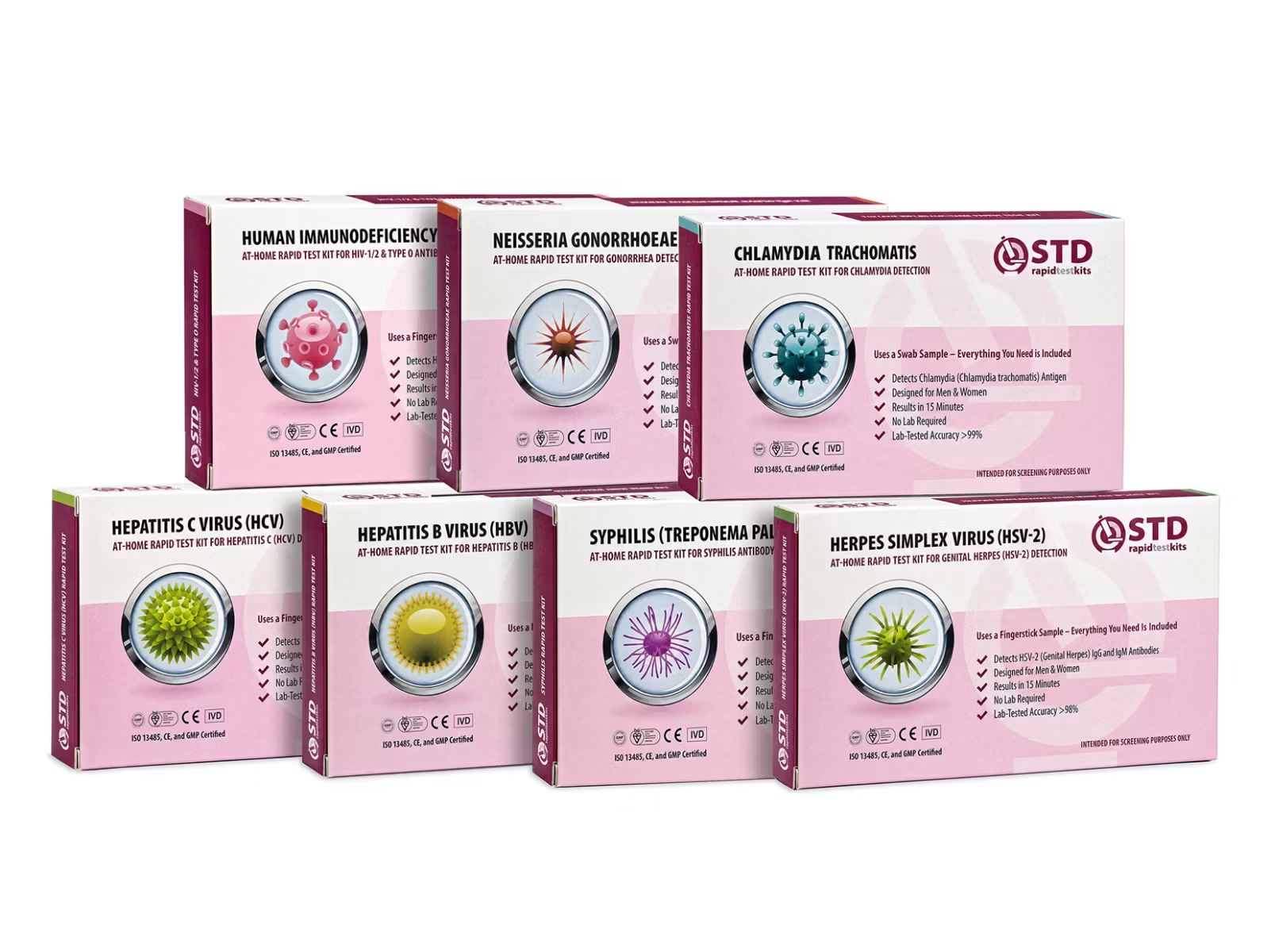
stdrapidtestkits.com publishes this article and sells the at-home kits described below. Product mentions reflect what each kit actually tests, not commercial benefit; the article also flags situations where a clinic visit is the better fit.
What Clinicians Look For During an Evaluation
When someone walks into a sexual-health clinic with a new rash, the visit usually starts with questions rather than swabs. When did it appear? What changed in the days before, in soaps, condoms, lubricants, partners, shaving routine? Did anything else come with it, like fever, fatigue, swollen lymph nodes, or a sore throat? Those answers narrow the list before a physical exam even begins.
The visual exam then looks for pattern signatures. Uniform pink redness with mostly itching usually points to an irritant reaction. A tight cluster of small fluid-filled blisters over a pink base points to herpes. A single round painless ulcer with a firm rolled border raises the question of syphilis. A widespread non-itchy rash that includes the palms or soles raises the question of secondary syphilis. Most experienced clinicians can sort the leading possibilities within a few minutes of looking.
If the picture is clearly irritation and the symptoms are already resolving, the visit may end with reassurance and a few product swaps. If the picture is ambiguous, or if the rash is evolving, testing is the part of the visit that turns guesswork into a clear next step.
Most people who have genital herpes have either no symptoms or very mild symptoms that go unnoticed or are mistaken for another skin condition.
Myths That Get in the Way of Recognizing Symptoms
A few persistent ideas about STIs make recognition harder than it needs to be. The first is that STD symptoms always look dramatic. In reality, the WHO STI fact sheet notes that many sexually transmitted infections are asymptomatic or produce only mild signs that are easy to dismiss. People often expect severe pain or obvious sores, and miss the subtler picture in front of them.
The second myth is that allergic reactions cannot happen during sex. Contact irritation is common, and the genital area's thin skin reacts more strongly than most other body regions to friction, chemicals, and fragranced products. Treating any new redness as automatically infectious is as misleading as assuming none of it could be.
The third myth is that condoms eliminate every reaction. Condoms substantially reduce STI transmission, and the latex itself, or the lubricant or spermicide on it, can drive a contact reaction in sensitive users. Polyurethane and polyisoprene condoms are typical alternatives when latex is the trigger.
STD symptoms always look dramatic. Many infections are asymptomatic or produce only mild signs that are easy to miss. Allergic reactions can't happen during sex. Genital skin reacts strongly to friction, chemicals, and fragranced products; contact irritation is common. Condoms eliminate every reaction. Latex itself, plus lubricant or spermicide coatings, can trigger contact reactions; non-latex options usually fix it.
When Testing Becomes the Smart Next Step
Testing is not a verdict on behavior. It is the way to replace uncertainty with information, and that information almost always leads to a better outcome than waiting and worrying.
Most clinicians suggest testing in three situations: a rash that does not improve within several days of removing likely triggers; sores, blisters, or ulcers of any kind; and any exposure where protection wasn't used and a clear answer would be useful. The two timing tables above show why this works: each STI has a typical window in which a test starts to detect it, and waiting too long past symptom onset rarely changes the answer.
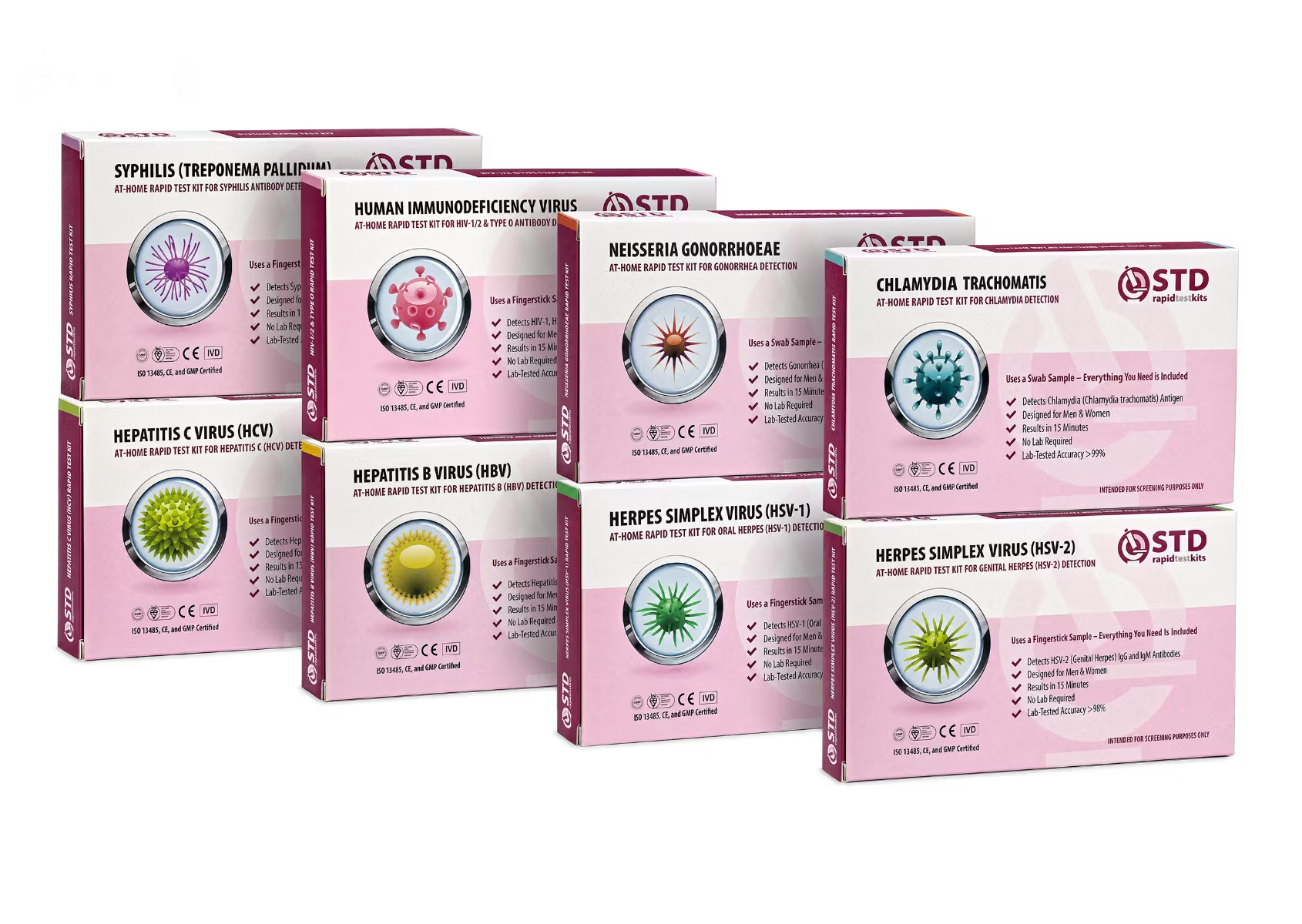
At-home rapid tests using lateral-flow chemistry let people screen in private for the most common STIs without booking a clinic appointment. They serve a different function than clinical NAAT testing. Rapid tests give a fast private answer on whether a common infection is detectable, while clinical NAAT remains the confirmatory standard for symptomatic cases. Used together they cover both the late-night question (am I likely positive for something common?) and the diagnostic question a clinician needs to answer for treatment.
Frequently Asked Questions
- Can an STD rash really look like a simple allergic reaction?
- Yes, in the first day or two. Early herpes or syphilis lesions can start as a small red patch or a couple of bumps that resemble irritation. The difference shows up in how the rash behaves over the next several days: an allergic reaction quiets down once the trigger is gone, while an infection tends to evolve into vesicles, ulcers, or systemic symptoms.
- I noticed itching right after sex. Is that probably an allergy?
- Often yes. Itching within minutes to a couple of hours is the signature of a contact reaction (latex, lubricant, soap, spermicide). Most STIs need days to produce visible symptoms because the microorganism has to multiply first.
- How long should an allergic rash last?
- Most contact reactions fade within a few days once the trigger is removed, sometimes a bit longer if shaving or friction made the skin extra reactive. If the same rash is still present a week later, or is getting worse rather than better, that is a signal to consider other causes.
- Can condoms cause reactions that look like STD symptoms?
- Yes. Latex sensitivity, lubricant additives, and spermicide coatings can all produce redness, itching, or swelling exactly where the condom touched. Switching to non-latex options like polyurethane or polyisoprene usually resolves the issue within a couple of days.
- If the rash disappeared after two days, should I still worry about an STD?
- Probably not, but context matters. Quick-resolving irritation is typical of allergies, friction, or shaving. If the rash appeared a few days after sex (not within an hour), or came with sores, fever, or unusual discharge, testing for peace of mind is still reasonable.
- Could shaving bumps or ingrown hairs be mistaken for STD symptoms?
- Frequently. Shaving irritation produces small red bumps that can look concerning. Ingrown hairs usually appear exactly where hair was shaved, often have a visible hair trapped under the skin, and improve as the skin heals over a few days.
- Do all STIs cause visible rashes?
- No. Chlamydia and gonorrhea often produce burning urination or discharge instead of skin findings, and many people have no symptoms at all. That is why routine testing matters even when everything looks normal, especially after a new partner.
- When is testing the safest choice?
- When symptoms last longer than a few days, change in appearance, or appear several days after a sexual contact. Testing converts an ambiguous picture into a clear next step instead of an open-ended spiral of midnight searches.
Clarity Over Guesswork
Rashes in intimate areas trigger a particular kind of anxiety because the cost of guessing wrong feels high in both directions. Treating an allergy as an infection sends people into days of unnecessary worry. Treating an infection as an allergy delays treatment that could shorten an outbreak or limit transmission.
The good news is that the two usually separate themselves over a few days. Allergic reactions appear quickly, stay roughly the same, and fade once the trigger is removed. STD rashes appear after a delay, evolve in a recognizable sequence, and often come with other clues like fever, swollen lymph nodes, or systemic symptoms. When the picture is genuinely ambiguous, an at-home screen or a clinic visit replaces speculation with a clear answer.
Practical next steps
- If the rash appeared within hours of contact with a new product, remove the likely trigger (condom brand, lubricant, body wash, detergent) and watch for 48 to 72 hours.
- If the rash evolves into blisters or ulcers, persists beyond 3 to 4 days, or appears alongside sores or fever, screen at home or see a clinic.
- Treat any positive at-home result as a screening signal; confirm with clinic testing and follow current treatment guidance.
This guide synthesizes current public-health guidance on STI symptoms and timing (CDC, WHO, NHS) with dermatology references on contact dermatitis. Specific window-period figures for herpes (2 to 12 days) and syphilis (10 to 90 days) are drawn from current CDC fact sheets. Clinical pattern descriptions follow standard dermatology atlas conventions. Product recommendations describe what each kit actually tests and are placed where they fit the section's topic.
- U.S. Centers for Disease Control and Prevention. STI program overview including transmission, symptoms, and testing guidance.
- U.S. Centers for Disease Control and Prevention. Genital herpes topic hub covering symptom presentation, asymptomatic shedding, and testing guidance.
- World Health Organization. Sexually transmitted infections fact sheet covering global incidence and the asymptomatic nature of many STIs.
- UK National Health Service. Sexually transmitted infections overview covering common symptoms and when to test.
- DermNet NZ. Contact dermatitis clinical reference covering diagnosis, presentation, and management.
