
Published: October 2025 | Last updated: April 2026 | Editorial review and quality control: Martina N.
Which STD test should I order if I'm not sure what I need?
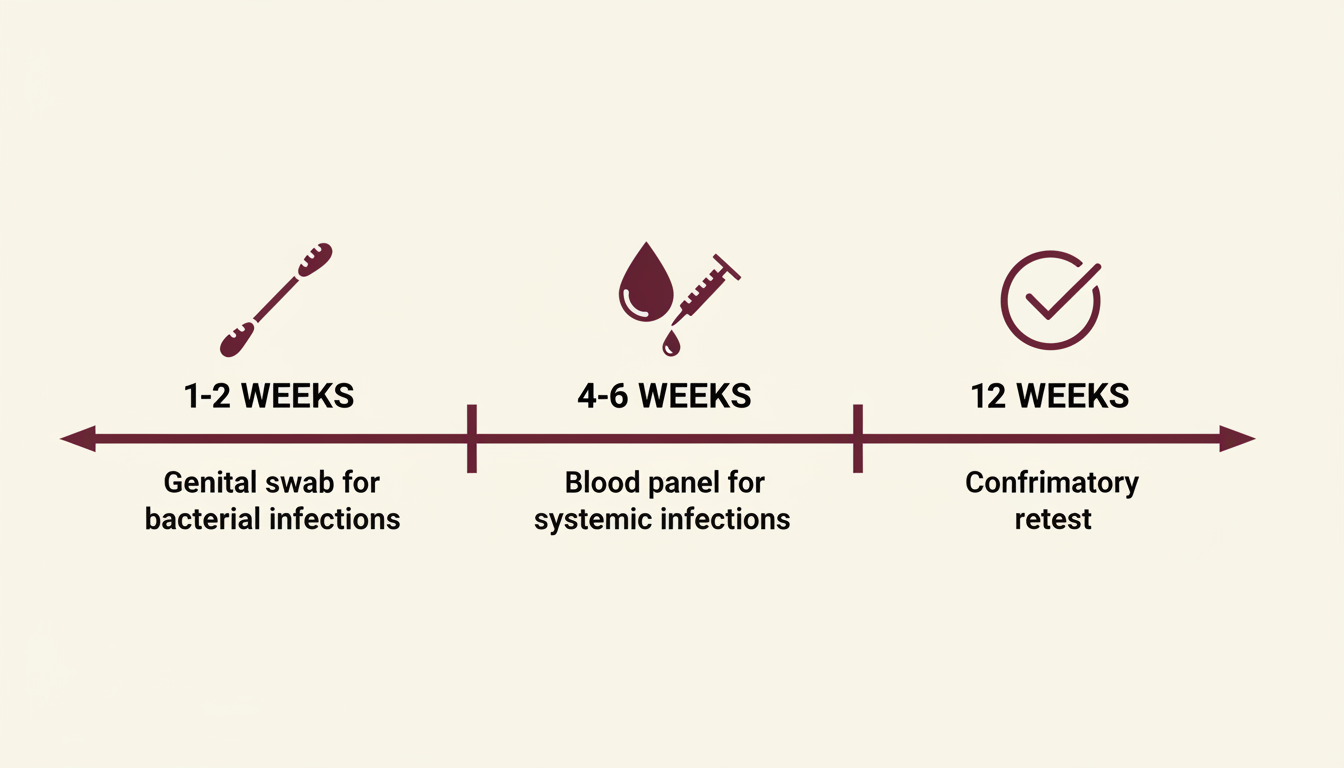
Start with a chlamydia and gonorrhea swab around 1 to 2 weeks after the exposure (these show up first), then add HIV and syphilis testing at 4 to 6 weeks, with a confirmatory retest for both at 12 weeks. If you genuinely don't know what you were exposed to or you have vague symptoms with no clear cause, a 6-in-1 or 7-in-1 combo panel covers the bases without you having to guess. Most readers do not need to test the day after sex: testing too early is the single biggest reason people get falsely reassuring results.
Key Takeaways
- The right test depends on three things: how long ago the exposure was, what part of the body was involved, and whether you have symptoms. Get those three answers first, then pick the kit.
- Most rapid home tests are lateral-flow immunoassays, not lab NAATs. They are reliable for screening when used inside the right window, and a positive result is worth confirming with a clinical lab.
Maybe a condom broke, or a partner texted something vague about their last test, or nothing concrete happened and you just woke up with a tingle and your brain ran with it. Whatever brought you here, the question is the same: which test do you actually need, and when do you take it?
This guide answers that question by situation, not by panic. It maps your specific timeline (yesterday versus last month), your specific exposure (vaginal, oral, or a mix), and your symptoms (or lack of them) to the test that will give you a reliable answer. No moralizing. No upselling. Just the right kit at the right time, with a clear plan for when to repeat.
Window periods tell you when to test
Every infection has a stretch of time after exposure when it cannot be reliably detected, even if you are infected. Public health guidance calls this the window period. Test inside that window and you can get a false negative that feels like a clean bill of health but is really just biology buying time. Most people who feel let down by an at-home test took it too early, not because the kit failed.
The U.S. Centers for Disease Control and Prevention publishes detection windows on its STI information hub, and the NHS does the same on its STI overview. Both agencies emphasize that exact windows vary by test technology (a 4th-generation HIV antigen/antibody assay catches infection earlier than a pure antibody test, for example). The numbers below are practical screening windows that work for the majority of readers using rapid lateral-flow home kits.
| Infection | Earliest reliable detection | Confirmatory retest |
|---|---|---|
| Chlamydia | 1 to 2 weeks | 3 months if ongoing exposure |
| Gonorrhea | 1 to 2 weeks | 3 months if ongoing exposure |
| Trichomoniasis | 1 to 4 weeks | After treatment if symptomatic |
| Syphilis (antibody) | 3 to 6 weeks | 12 weeks for full reliability |
| HIV (antigen/antibody) | About 4 weeks | 12 weeks for confirmation |
| Herpes (HSV-2 IgG antibody) | 12 weeks | 16 weeks if early result is negative |
| Hepatitis B and C | 8 to 12 weeks | 6 months if high-risk exposure |
Match the test to the sample site
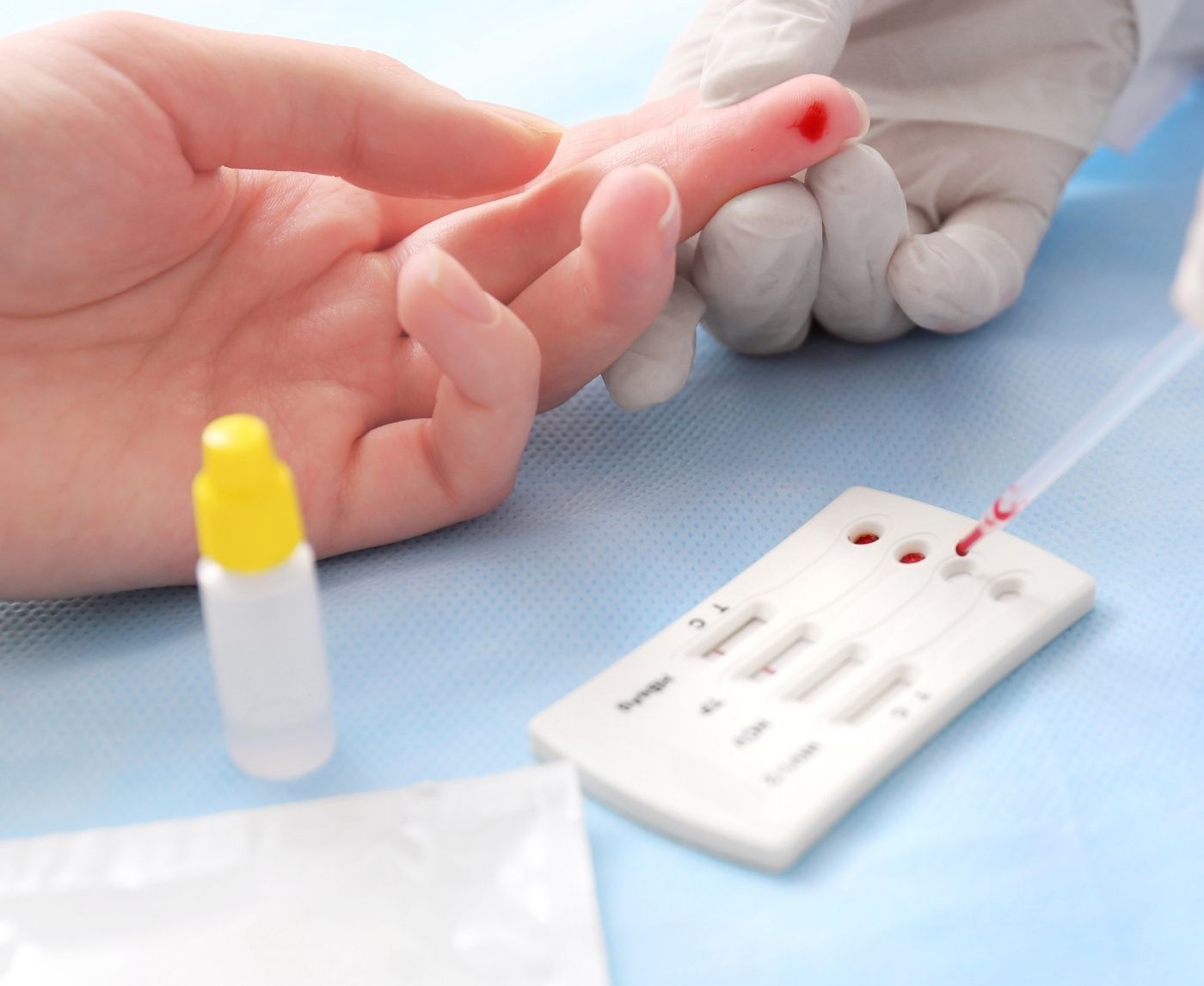
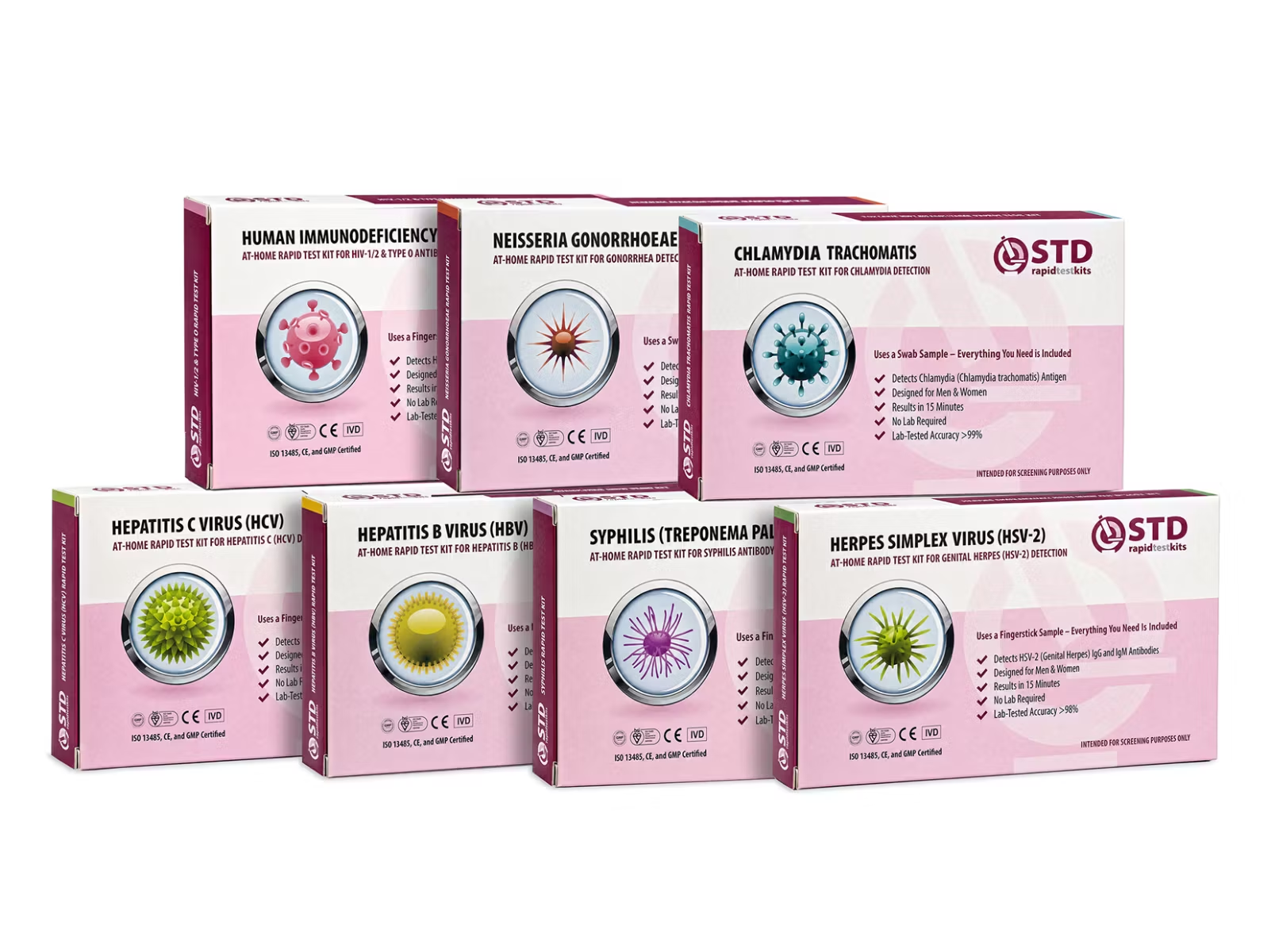
The other half of choosing well is the sample. A swab from the wrong place, or a blood test for an infection that calls for a swab, will miss real infections regardless of timing. The big distinction: bacterial infections in the lower genital tract (chlamydia, gonorrhea, trichomoniasis) are caught by a self-collected swab of the affected mucosa, while infections that go systemic (HIV, syphilis, hepatitis B and C, HSV-2 antibodies) need a fingerstick blood sample.
One important caveat for this site's catalog: at-home rapid kits for chlamydia and gonorrhea are validated for genital self-swab. They are not throat or rectal swabs. If you specifically had unprotected oral or receptive anal sex and want those sites tested, that is a clinic visit, not a home kit. The CDC recommends extragenital testing for people with those exposures on its gonorrhea overview, and a clinician can collect those samples cleanly. Our home kits remain useful for the same exposure event for the genital and bloodwork side.
| Infection | Test technology | Sample type | Site validated |
|---|---|---|---|
| Chlamydia | Rapid lateral-flow immunoassay | Self-collected swab | Genital (vaginal or penile) |
| Gonorrhea | Rapid lateral-flow immunoassay | Self-collected swab | Genital (vaginal or penile) |
| Trichomoniasis | Rapid lateral-flow immunoassay | Vaginal self-swab | Female genital only |
| HPV | Rapid lateral-flow immunoassay | Vaginal self-swab | Female genital only |
| HIV | Rapid lateral-flow antibody test | Fingerstick blood | Systemic |
| Syphilis | Rapid lateral-flow antibody test | Fingerstick blood | Systemic |
| HSV-1 or HSV-2 | Rapid lateral-flow antibody test | Fingerstick blood | Systemic (not topical) |
| Hepatitis B and C | Rapid lateral-flow antibody test | Fingerstick blood | Systemic |
Your situation, your test
Most readers arrive with one of a handful of stories. Find the one closest to yours, then follow the timeline in that section. The point is not to test the moment you sit down with the kit; the point is to test at the moment when the result is actually trustworthy.
One-night stand, no condom
Three days later is too early. The combination of bacterial infections (chlamydia, gonorrhea, trichomoniasis) needs about a week to show up on any test, and the systemic infections (HIV, syphilis) need a month or more. A practical timeline looks like this: at day 7 to 14, swab for chlamydia and gonorrhea (and trichomoniasis if anatomically applicable). At week 4 to 6, add a fingerstick HIV and syphilis test. At week 12, repeat the HIV and syphilis pair to confirm. If at any point along the timeline a real symptom shows up (burning, discharge, sores, fever), shift to clinical care rather than waiting for the next scheduled retest.
Vague unease, no specific event
You do not need a precipitating event to deserve a test. Trichomoniasis, HSV-2, and HPV can be present with vague or zero symptoms, and routine screening is exactly what public health agencies recommend. The right move here is a wider panel rather than a single-infection kit. A 6-in-1 or 7-in-1 combo covers chlamydia, gonorrhea, syphilis, HIV, and the hepatitis pair in one visit, removing the guesswork about what to order.
Oral or receptive anal exposure only
This is the case where home swab kits cover only part of the picture. Oral and rectal site infections need pharyngeal or rectal swabs, which our catalog does not include. If your only exposure was oral or receptive anal sex, see a clinic for site-specific swabs. Our HIV and syphilis blood tests still cover the systemic risk from the same exposure event, and a clinic visit handles the local-site question that a home swab kit cannot answer.
Going condom-free in a new relationship
This is the moment full-panel testing was made for. Both partners get screened at the same baseline before the change, and a positive result becomes a treatment plan to work through together. A typical pair of panels covers chlamydia, gonorrhea, syphilis, HIV, and hepatitis B and C. Add HSV-2 antibody testing if either partner has had unexplained outbreaks or known exposure. The CDC outlines the same approach on its STI information hub; routine pre-relationship testing is standard practice. For a focused pre-relationship screen covering the three most commonly tested STIs, the 3-in-1 kit below handles chlamydia, gonorrhea, and syphilis in a single home kit.
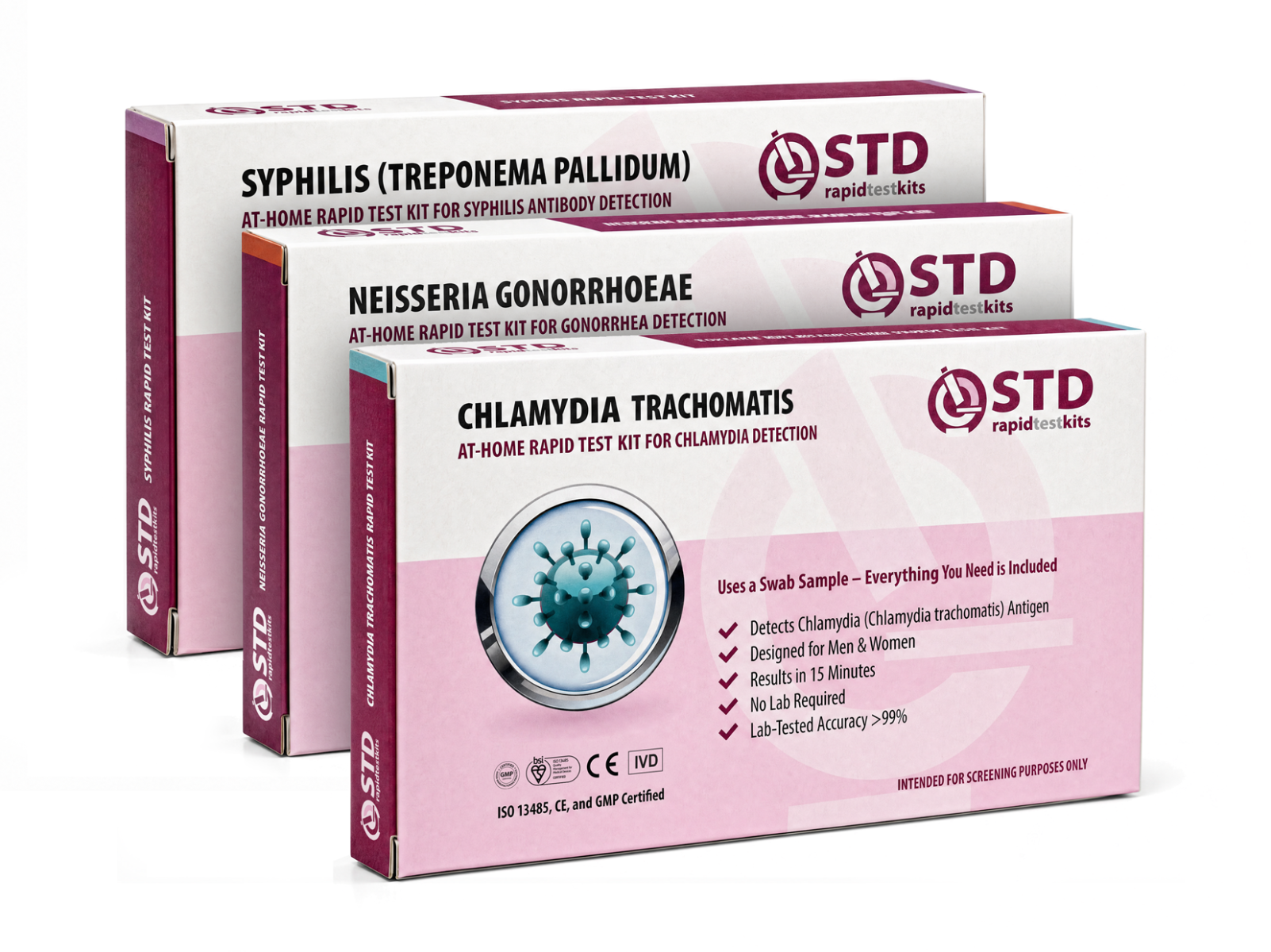
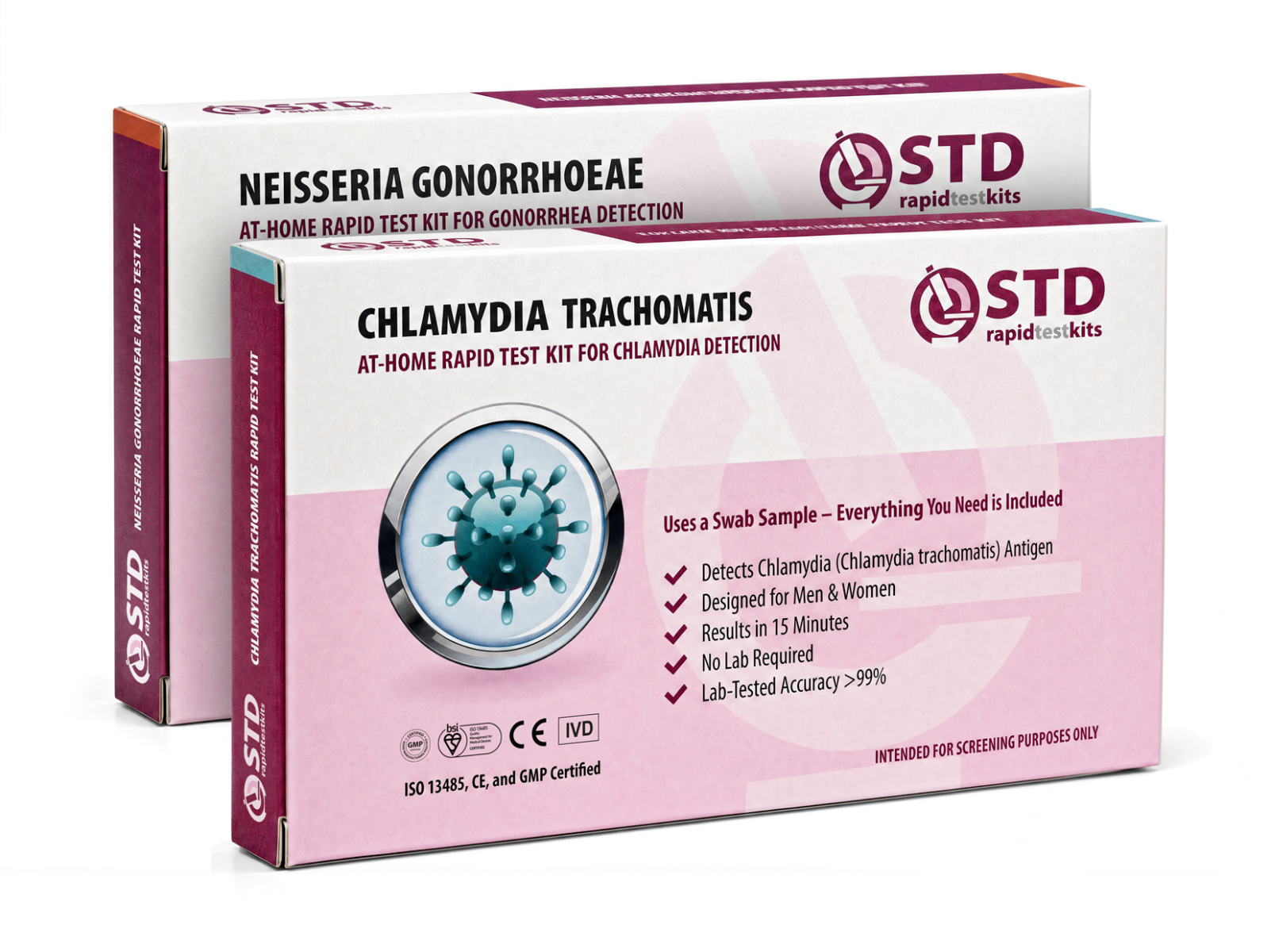
If you have a defined exposure and reasonable timing, a focused two-test pair (genital swab plus blood panel) covers the most common bacterial and systemic infections without overspending. A full 7-in-1 panel makes more sense when you genuinely don't know what you were exposed to, or when you want a reset baseline before a new relationship. Both approaches are valid; the question is what answers you actually need. The kits linked in this article are from our own catalog; we recommend them based on fit for the situation, not because they are ours.
Tested already? Here is when to repeat
One of the most common follow-up questions: I tested early, the result was negative, do I have to do this again? Often yes, and the answer depends on which infection you tested for. Antibody-based tests (HIV, syphilis, HSV-2) need time for the body to build a measurable antibody response, and that response can take weeks. A truly negative test outside the window is reassuring; a negative test inside the window is just biology not having had time yet.
Use the table below as a baseline. If a real symptom shows up between the first test and the retest date, do not wait for the calendar; talk to a clinician.
| First test was inside the window for | Retest at | Why it matters |
|---|---|---|
| HIV | 12 weeks post-exposure | Antigen/antibody assays reach full reliability around the 12-week mark |
| Syphilis | 6 to 12 weeks post-exposure | Antibody response can take up to 6 weeks to become detectable |
| HSV-2 antibody | 12 to 16 weeks post-exposure | IgG seroconversion is slow; some readers need a 16-week recheck |
| Chlamydia or gonorrhea (after treatment) | 3 weeks post-treatment | NAAT-style tests can detect dead bacterial DNA earlier and produce a misleading positive |
| Hepatitis B or C | 8 to 12 weeks post-exposure | Antibody response varies; high-risk exposures get a 6-month recheck |
Where to test: home, mail-in, or clinic
The right venue depends on what you are trying to learn. At-home rapid kits are fastest and most private, and they are honest about what they are: lateral-flow screening tests, useful inside the right window, with a positive result worth confirming at a lab. Mail-in lab kits add a few days of turnaround in exchange for nucleic acid amplification (NAAT) sensitivity and a formal lab report. Clinic-based testing is the right call for symptomatic cases, complex situations, and exposures that require throat or rectal swabs that home kits do not cover.
Mayo Clinic's overview of sexually transmitted infections covers the case for clinical evaluation when symptoms are present and the reasons clinicians sometimes recommend combining home screening with clinic confirmation. None of the three venues is universally better; the question is fit for purpose.
Home rapid kit: 15-minute result, maximum privacy, lateral-flow chemistry, best for screening inside the right window.
Mail-in lab kit: 2 to 5 business days, lab-grade NAAT or serology, best for documentation and high-sensitivity confirmation.
Clinic visit: same-day to one week, full clinical exam, best for active symptoms, throat or rectal swabs, or complex exposure histories.
What if the result comes back positive?
A positive result on a screening test is information, not a verdict. Bacterial infections (chlamydia, gonorrhea, trichomoniasis, syphilis) are curable with a short course of antibiotics; the CDC's treatment guidelines lay out specific regimens for each. Viral infections (HIV, hepatitis B, HSV) cannot be cured but are highly manageable, and modern HIV treatment is effective enough that someone diagnosed and treated early can expect a near-normal life expectancy. The hardest part is often the partner-notification conversation, and several public-health departments now run anonymous notification services to soften the social cost.
Practical next steps after a positive home-test result: confirm with a clinical lab if the infection is HIV or syphilis (a positive screen on a lateral-flow test is worth a confirmatory NAAT or treponemal panel). Start treatment promptly. Notify recent partners (anonymously is fine; partner-notification platforms exist for exactly this). Plan a post-treatment retest at the appropriate interval, usually 3 to 12 weeks depending on the infection.
All sexually active people can benefit from talking openly with their healthcare provider about their sex lives and getting tested. Testing is the only way to know for sure if you have an STI.
After treatment, after travel: edge cases
Two situations come up often enough to deserve their own paragraph. First, post-treatment retesting. If you have just finished antibiotics for chlamydia or gonorrhea, wait at least 3 weeks before retesting. Some lab tests can pick up residual nucleic-acid debris from cleared infections and produce a misleading positive if you test too soon. Second, the post-trip catch-up. Travel intimacy (a fling at a wedding, a connection at a retreat, a long weekend with an old partner) is one of the most common scenarios that prompt readers to look up testing windows. The cadence is the same as for any other unprotected exposure: bacterial swabs at 1 to 2 weeks, blood panel at 4 to 6 weeks, confirmation at 12 weeks. The fact that the exposure happened far from home does not change the biology.
WHO's STI fact sheet notes that more than a million curable STIs are acquired worldwide every day, most of them asymptomatic. Routine testing is a standard part of sexual health care for any sexually active adult.
After finishing antibiotics for chlamydia or gonorrhea, wait at least 3 weeks before retesting. Some tests detect residual bacterial DNA from a cleared infection and can produce a misleading positive result if you test too soon. The CDC also recommends a separate 3-month retest for chlamydia and gonorrhea because reinfection from an untreated partner is the most common cause of a second positive.
Frequently asked questions
- I have no symptoms. Do I really need to test?
- Yes. Most chlamydia and gonorrhea infections are completely silent, and trichomoniasis, HSV, and HPV often produce vague symptoms or none at all. The whole point of routine screening is to catch infections before they cause downstream complications or get passed on.
- How soon after sex can I test and get a real answer?
- It depends on the infection. Chlamydia and gonorrhea are reliably detected from about 1 to 2 weeks. HIV (antigen/antibody) and syphilis are reliable from about 4 to 6 weeks, with a confirmation retest at 12 weeks. HSV-2 antibody testing waits 12 to 16 weeks. Testing the day after a hookup will not give you a useful result for any of these.
- I used a condom. Do I still need to test?
- Condoms substantially reduce risk for fluid-borne infections (HIV, gonorrhea, chlamydia) but they do not cover skin-to-skin transmission for HSV and HPV, which can be transmitted from areas the condom does not cover. If you used a condom and the encounter was otherwise unremarkable, your overall risk is low, but periodic screening is still appropriate for sexually active adults.
- Should I order a single-infection kit or a full combo panel?
- Single-infection kits make sense when you know exactly what you were exposed to (a partner disclosed a specific diagnosis, for example). A full panel makes more sense when you don't know, or when you have multiple risks, or when you simply want a consolidated baseline. Combo kits are usually more cost-effective per infection covered.
- Can I get reinfected after treatment?
- Yes. Antibiotic treatment cures the current infection but does not produce immunity. If a partner is not treated at the same time, or if you have a new exposure, you can absolutely catch it again. The CDC recommends a 3-month post-treatment retest for chlamydia and gonorrhea precisely because reinfection is so common.
- What does an inconclusive result mean?
- It usually means the test could not produce a clear positive or negative. Common causes are insufficient sample volume, testing too early in the window period, or the kit being exposed to extreme temperatures during shipping. Treat an inconclusive result as a prompt to retest, not as a clean result.
- Are at-home rapid tests as accurate as a clinic test?
- At-home lateral-flow rapid tests are reliable for screening when used inside the correct window period, with sensitivity and specificity in the high 90s for most infections. Laboratory NAAT and serology tests are more analytically sensitive, especially for very early or very low-level infections. The two are complementary: rapid tests are excellent for screening, lab tests are the gold standard for confirmation. A positive home result is worth confirming at a lab.
- How often should I test if I have multiple partners?
- The CDC recommends sexually active adults with multiple partners screen for chlamydia, gonorrhea, syphilis, and HIV at least annually, and every 3 to 6 months for higher-risk patterns. If something specific happens between scheduled tests (a condom break, a partner with new symptoms, your own new symptoms), do not wait for the next routine date.
Pulling it together
The decision framework is consistent regardless of your situation: timing first, sample site second, symptoms third. Test at the right window, confirm positives at a lab, and follow the retest schedule above. For active symptoms, an unusual exposure route, or a result that surprises you, a clinician is the right next step rather than a second home kit.
- U.S. Centers for Disease Control and Prevention. STI information hub, including window periods and screening cadence guidance.
- U.S. Centers for Disease Control and Prevention. HIV testing overview and antigen/antibody window-period guidance.
- U.S. Centers for Disease Control and Prevention. Gonorrhea overview, including extragenital screening guidance for oral and rectal exposure.
- U.K. National Health Service. STI overview and testing guidance for the general public.
- World Health Organization. Sexually transmitted infections fact sheet, global incidence and screening rationale.
- Mayo Clinic. Sexually transmitted infections symptoms-causes overview and clinical evaluation guidance.
