Published: October 2025 | Last updated: May 2026 | Editorial review and quality control: Martina N.
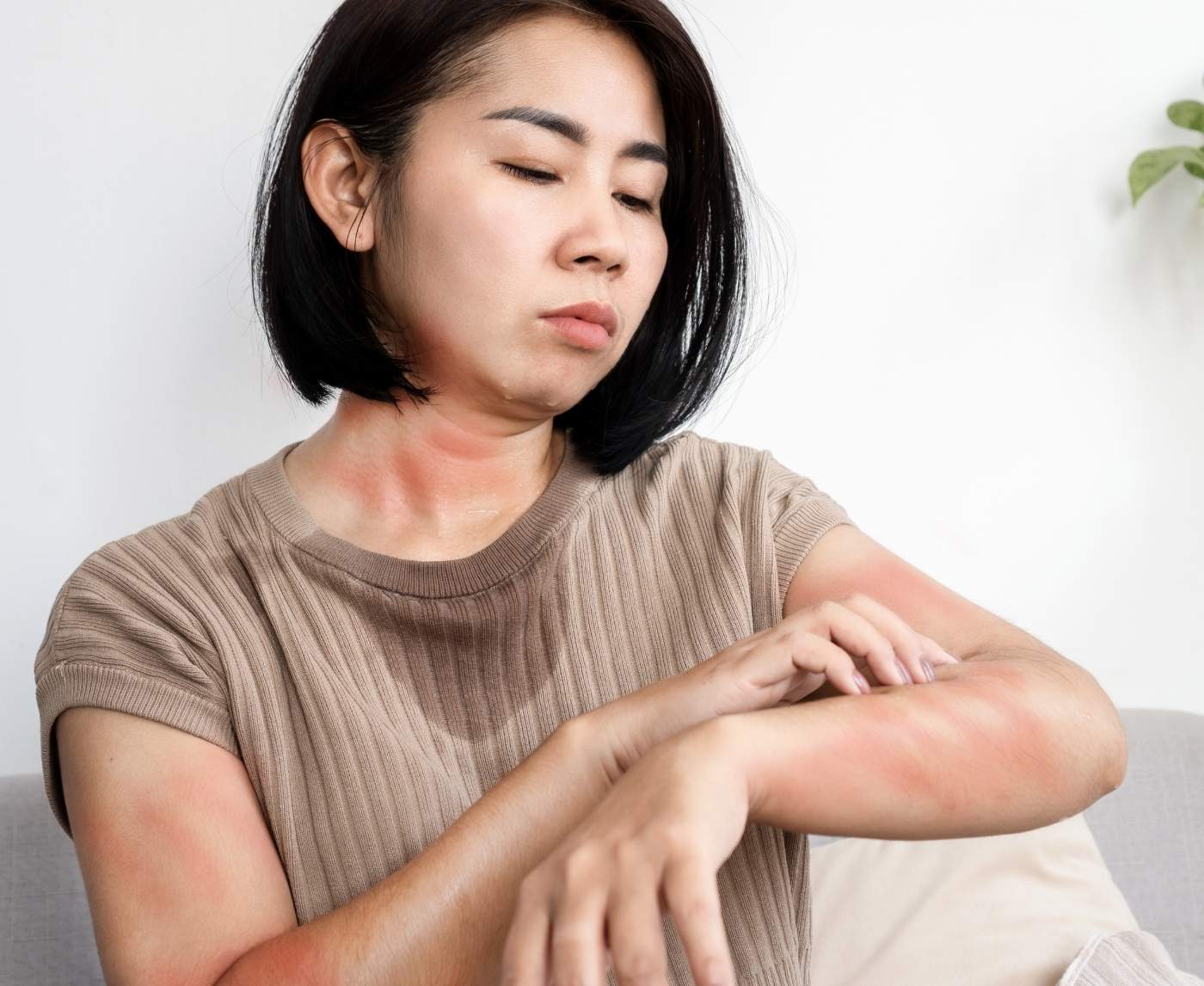
A rash that shows up after sex feels alarming, especially at 1 a.m. with a flashlight in hand. The reassuring reality is that genital skin reacts quickly to friction, sweat, shaving, lubricants, latex, and even a partner's body wash. Most rashes that appear within hours of sex are mechanical or allergic, not infectious.
Sexually transmitted infections follow biological clocks. They have incubation periods, usually days to weeks. So the timing of your rash often tells you more than the appearance does. This guide walks through what each pattern looks and feels like, when the timing actually fits an STI, and when home testing or a clinic visit makes sense.
Key Takeaways
- Most rashes appearing within hours of sex are caused by friction, heat, or allergic reactions, not by sexually transmitted infections.
- Herpes, syphilis, and HIV are the three STIs most associated with visible rashes, and each follows a distinct timeline that helps separate it from skin irritation.
First, Breathe: Most Post-Sex Rashes Are Not STIs
Your skin is reactive. It responds quickly to friction, moisture, shaving, sweat, new products, and new partners. It does not need an infection to look angry. After sex, your genital skin has often been exposed to heat, rubbing, bodily fluids, lubrication, latex, and microtears you cannot see. That combination alone can create redness or small bumps within hours.
STIs work differently. Most of them follow a biological clock that involves an incubation period. If a rash appeared within a few hours, it is far more likely to be mechanical or allergic than infectious. That does not mean you should ignore it. It means you evaluate it calmly, watch how it behaves over the next 48 to 72 hours, and respond based on what your skin actually does next.
If redness appeared within hours of sex and is not blistering or spreading, the biological clock for STI incubation has not had time to run. Keep the area dry and friction-free, then check back twice over the next two to three days. Improvement points to irritation; escalation tells you when to test.
Which STIs Actually Cause a Visible Rash?
Not every sexually transmitted infection causes a visible rash. Chlamydia and gonorrhea, the two most common bacterial STIs, are typically internal infections of the urethra, cervix, throat, or rectum. They rarely produce a skin rash. When people search for information on an STI rash, they are usually worried about a smaller group of infections known for skin involvement: herpes (HSV-1 and HSV-2), syphilis, and sometimes acute HIV. Each has a distinct timeline and appearance.
The CDC's 2021 STI Treatment Guidelines identify herpes simplex virus and primary syphilis as the most common causes of genital ulcer disease in the United States. Acute HIV can produce a flat, generalized rash with flu-like symptoms two to four weeks after exposure.
| Infection | Typical Onset After Exposure | What It Usually Looks Like | Pain or Itch? |
|---|---|---|---|
| Herpes (HSV-1 / HSV-2) | Days to two weeks | Clusters of fluid-filled blisters that break into sores | Often painful or tingling |
| Syphilis (primary) | 3 to 6 weeks | Single painless firm sore; later, widespread rash including palms and soles | Usually not itchy |
| HIV (acute phase) | 2 to 4 weeks | Flat red rash with flu-like symptoms | Typically not itchy |
Timing Matters More Than You Think
When the rash appeared is one of the most useful clues you have. STIs do not arrive instantly. Herpes symptoms typically appear within days to two weeks of exposure (see the CDC's About Genital Herpes page for symptom overview). Primary syphilis sores appear 3 to 6 weeks after exposure. Acute HIV symptoms, including the characteristic rash, typically appear 2 to 4 weeks after exposure (CDC, About HIV).
Compare that to a rash that showed up the same night. Biology does not move that fast for an STI. If your rash appeared within hours, the leading suspects are friction, heat, sweat, shaving, or a contact reaction to something on the skin. Coincidence is also possible. Your skin reacts to dozens of variables, and not every reaction is caused by the most recent encounter.
| When It Appeared | Most Likely Causes | Less Likely Causes |
|---|---|---|
| Within hours | Friction, heat rash, allergic reaction, shaving irritation | Herpes (rarely that fast), syphilis, HIV |
| Days to two weeks later | Herpes, yeast infection, ongoing irritation | Syphilis, HIV |
| 2 to 4 weeks later | Acute HIV rash (with flu-like symptoms) | Friction, heat rash |
| 3 to 6 weeks later | Primary syphilis sore, secondary syphilis rash | Friction or heat-related issues |
The Common Non-STI Causes: Friction, Heat, and Allergic Reactions
Friction burn is incredibly common. Longer sessions, less lubrication, or vigorous movement can create red patches that feel raw or tender. These usually improve within 24 to 72 hours if you avoid further irritation. Heat rash can appear as tiny red bumps in areas where sweat gets trapped: inner thighs, groin folds, under the scrotum, around the vulva. Sweating, tight clothing, and not showering soon after all make heat rash more likely.
Allergic reactions can happen to latex condoms, lubricants, spermicides, or even a partner's body wash. These often show up as redness, itching, or small raised bumps within minutes to hours after contact, and they often line up exactly where the offending product touched the skin.
| Cause | Onset | Typical Location | How Long It Lasts |
|---|---|---|---|
| Friction burn | During or right after sex | Shaft, labia, perineum, areas of direct rubbing | 24 to 72 hours |
| Heat rash | Hours later, after sweating | Inner thighs, groin folds, under scrotum, around vulva | 1 to 3 days once cool and dry |
| Allergic / contact reaction | Minutes to a few hours after contact | Wherever the latex, lubricant, or product touched | Until product is stopped; then 1 to 4 days |
What Each Type of Rash Looks Like
Texture, sensation, and pattern matter more than panic. A friction-related rash usually looks like flat redness or chafed skin. It may feel tender, almost like a carpet burn, especially during urination or when fabric rubs against it. There are no fluid-filled blisters, no deep ulcers, and no spreading clusters.
Herpes typically starts with tingling or burning before visible lesions appear. Then come small, grouped blisters filled with clear fluid. They break open, forming shallow, painful sores. That clustered blister pattern is a major clue. Syphilis in its first stage does not look like a rash at all. It usually presents as a single, firm, painless sore called a chancre. Many people miss it precisely because it does not hurt. Weeks later, secondary syphilis can produce a more generalized rash, sometimes even on the palms of the hands or soles of the feet, which is a distinctive feature.
An allergic reaction tends to be itchier than infectious rashes. It may appear symmetrical where the contact occurred, for example, exactly where a condom touched or where lubricant was applied. It can also spread slightly beyond the genital area if your immune system is reacting strongly. Heat rash looks like tiny red bumps clustered in friction zones and sweat-trapping skin folds.
Pain, Itch, or Nothing at All?
Some of the more concerning infections do not itch much. Early HIV rash is typically described as flat, red, and not especially itchy, and it usually appears alongside flu-like symptoms such as fever, sore throat, swollen lymph nodes, or body aches. If your rash is intensely itchy and improves with antihistamines or cool compresses, that leans toward allergic or heat-related causes.
If it burns sharply, especially with small grouped blisters, that pattern is more consistent with herpes. If it does not hurt at all and looks like a firm sore, that is when syphilis testing becomes important. Painless does not always mean harmless. The chancre of primary syphilis is famously easy to miss precisely because it does not hurt. There is also the category of barely-there rashes: mild redness without bumps, without pain, and without progression often resolves on its own within a couple of days.
Intense itch + fast onset + improves with antihistamine: likely allergic or contact reaction. Sharp burn + grouped small blisters: consider herpes. Firm painless sore that lingers: consider syphilis testing. Flat red rash + fever and body aches 2 to 4 weeks after a high-risk exposure: consider acute HIV evaluation.
Location Tells a Story
Where a rash appears can narrow things down further. A rash confined to inner thighs or skin folds often suggests heat rash or sweat irritation. If bumps are directly on the shaft of the penis, the labia, or around the anus, especially if clustered, herpes becomes more plausible. A single firm but painless sore on the genitals is classic for primary syphilis.
Irritation respects friction zones. It shows up where skin rubs skin or where tight clothing traps moisture. Infections tend to follow predictable biological patterns. Clinicians commonly see cases where a patient is convinced a post-sex rash is herpes, only to find it was razor burn from same-day shaving combined with prolonged friction. Two days of gentle care and the redness fades.
Most people with genital herpes have no symptoms or have very mild symptoms. Mild symptoms may go unnoticed or be mistaken for other skin conditions like a pimple or ingrown hair.
Red Flags That Deserve Immediate Attention
Most post-sex rashes are benign, but certain patterns warrant quicker evaluation. Rapidly spreading redness, significant swelling, pus, severe pain, or fever is not a wait-and-see situation. Those symptoms could signal a bacterial skin infection unrelated to STIs, or a complication that needs antibiotics.
If you develop painful urination, unusual discharge, swollen lymph nodes in the groin, or flu-like symptoms alongside a rash, testing becomes more urgent. When systemic symptoms appear, it is time to move from guessing to confirming. And if you experienced a high-risk exposure (unprotected sex with a new partner, a known positive partner, or a condom break), testing provides clarity regardless of how mild the rash looks.
One specific case deserves its own paragraph: if the exposure was high-risk for HIV (for example, unprotected receptive anal sex, a partner with known positive HIV status and no confirmed undetectable viral load, or a broken condom during such an encounter) the 72-hour PEP (post-exposure prophylaxis) window matters. PEP is most effective when started within hours of exposure and loses effectiveness after 72 hours. A rash appearing two to four weeks later is a reason to seek same-day evaluation, not a reason to wait.
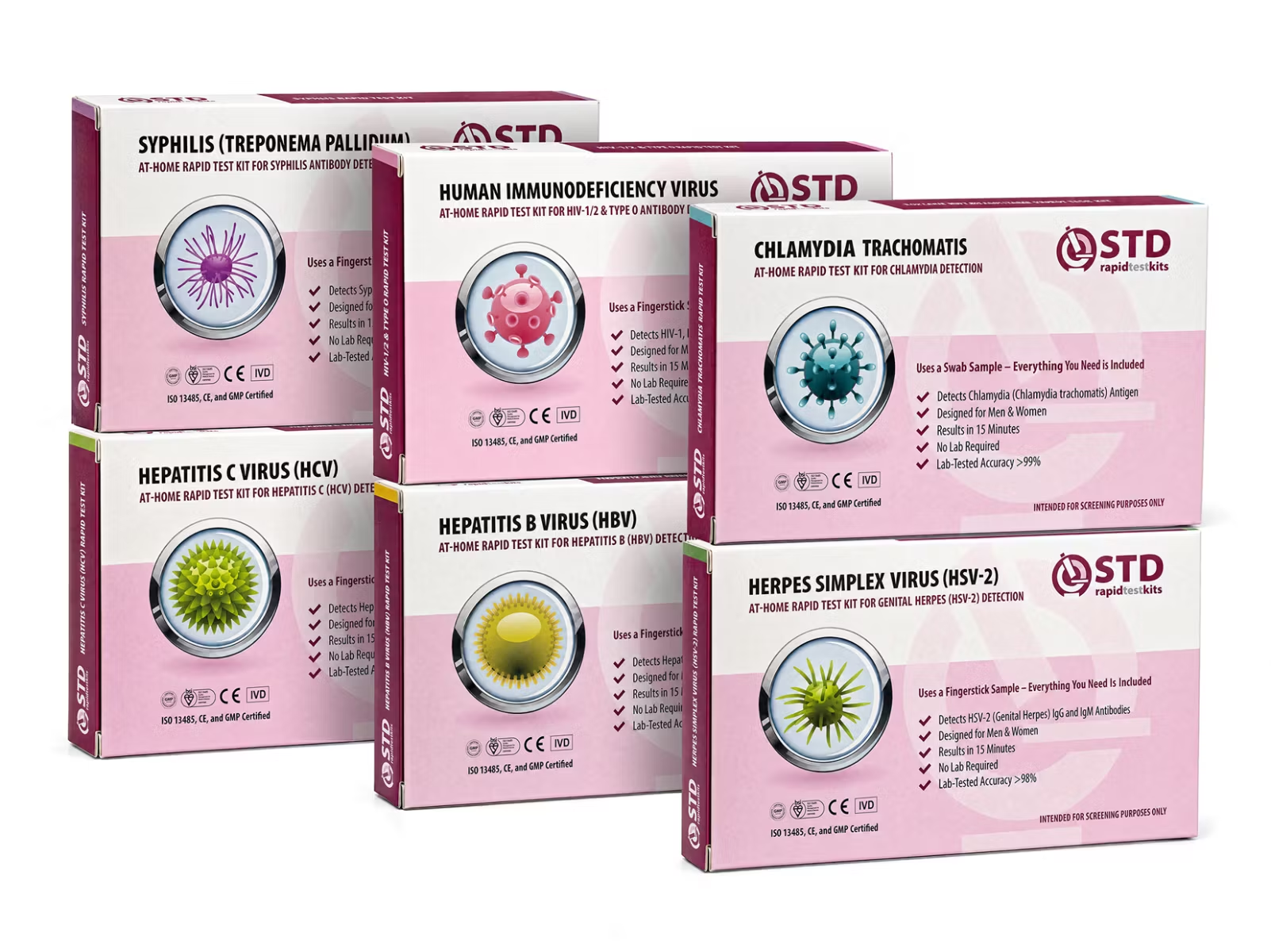
This article is published by stdrapidtestkits.com, which sells at-home STI rapid test kits. The product recommendations below reflect our catalog and are matched to the rash scenario being discussed, not promoted regardless of fit. For situations our home tests do not cover (such as PCR swabbing of an active herpes lesion), we say so plainly.
When Testing Actually Makes Sense
Do you need an STI test? It depends on timing and exposure. If your rash appeared within hours and is already improving, testing immediately is unlikely to change anything. Most infections have incubation periods (the time between exposure and detectability) that are longer than a day. For accurate results, you need to wait for the right window for each infection.
Below is simplified testing guidance grounded in standard medical timelines from the CDC STI Treatment Guidelines.
| Scenario | Testing Recommendation |
|---|---|
| Painful clustered blisters within days to two weeks of exposure | Clinic PCR swab of an active lesion (most accurate for active herpes) |
| Single painless sore 3 to 6 weeks after exposure | Blood test for syphilis |
| Flat red rash and flu-like symptoms 2 to 4 weeks after high-risk exposure | HIV antigen / antibody (4th generation) clinic test |
| Rash improving within 72 hours, no other symptoms | Monitor; testing optional unless other risk factors exist |
About Home Antibody Tests vs Clinic Swabs
An important distinction for people worried about an active blister or sore: at-home rapid tests are mostly fingerstick blood antibody panels. They detect your immune response to an infection, which takes time to develop. For herpes specifically, blood antibody tests work best 12 or more weeks after exposure to allow seroconversion. For an active lesion you suspect is herpes, a clinic-administered PCR swab of the lesion gives the most accurate answer in the short term.
For HIV, home antibody-based rapid tests are most reliable from about 45 to 90 days after exposure; 4th-generation clinic tests can detect antigen earlier, from around 18 to 45 days. For syphilis, home blood tests are generally reliable from 3 to 6 weeks after exposure. Matching the right test to the right window is what makes a result meaningful, and a too-early negative can give false reassurance.
If you currently have a painful blister or open sore and want a definitive answer this week, a clinic PCR swab of the lesion is the most accurate option. Home blood antibody tests answer a different question (whether you have seroconverted in the past), not whether today's lesion is herpes.
How Long Should a Post-Sex Rash Last?
Time is one of the most honest diagnostic tools you have. A friction burn or heat rash typically improves within 24 to 72 hours once the area is kept clean, dry, and free from further rubbing. The redness fades and tenderness softens over a day or two, and the skin may lightly peel as it heals.
Herpes lesions follow a more defined arc. Tingling or burning may come first, then visible blisters, then open sores, then crusting over several days. The full cycle often lasts 7 to 14 days during an initial outbreak. Syphilis sores can linger for three to six weeks if untreated, even when painless, which is part of why they get missed.
| Cause | Typical Resolution Window | What You Should See |
|---|---|---|
| Friction or heat irritation | 1 to 3 days | Steady fading, mild peeling as it heals, no new spots |
| Herpes initial outbreak | 7 to 14 days | Tingling, then clustered blisters, then sores, then crusting |
| Untreated primary syphilis sore | 3 to 6 weeks | Single firm painless sore that lingers rather than fading |
What to Do Right Now Instead of Spiraling
First, give the skin a break: avoid further friction, wear loose breathable clothing, skip new soaps or scented products, and keep the area clean and dry. Second, observe without obsessing. Check once or twice a day, not every fifteen minutes; you are looking for progression, not perfection.
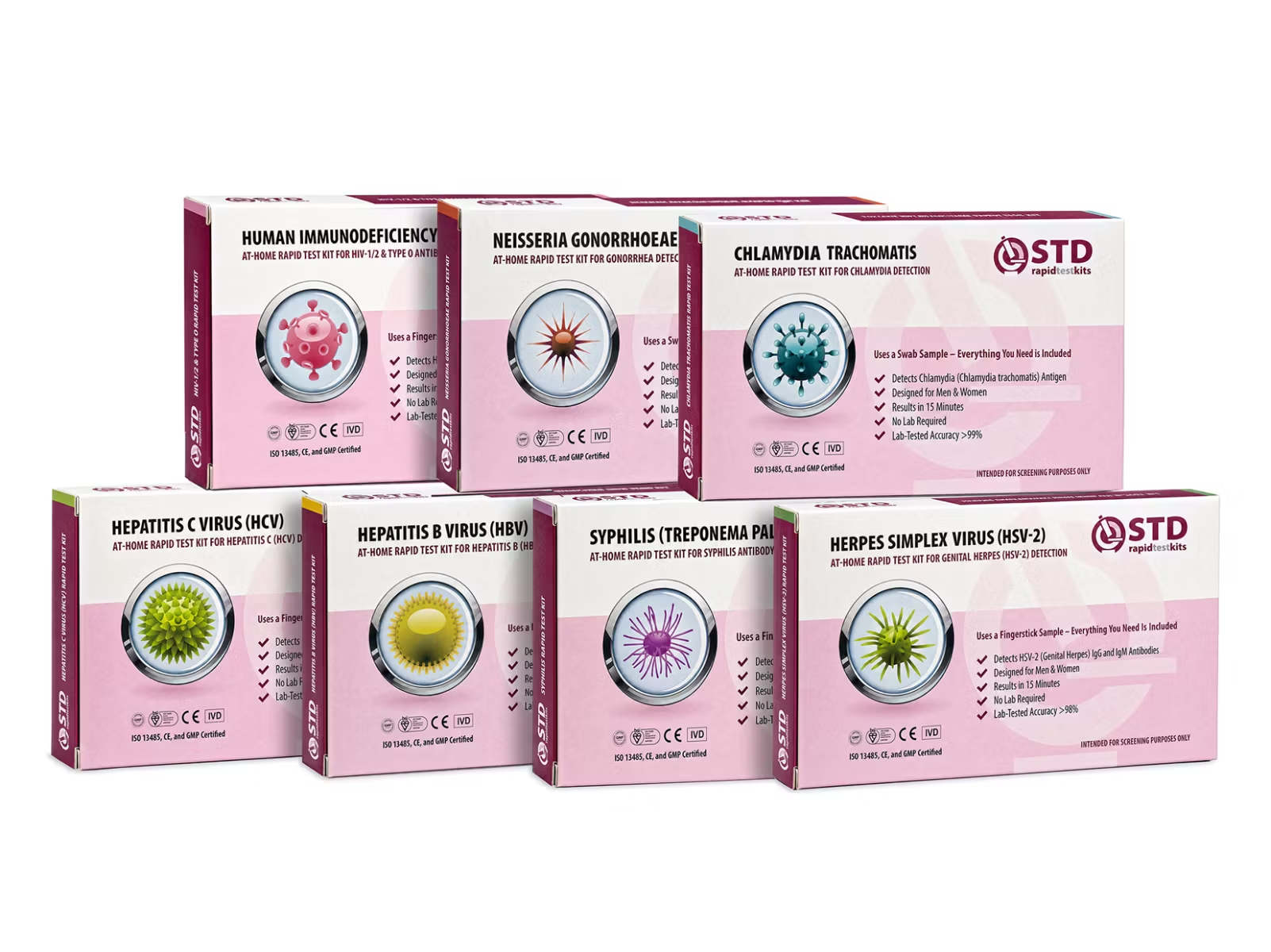
Third, decide rationally about testing based on timeline and risk, not fear. If you are within a few days of exposure and have no blistering or systemic symptoms, waiting for the appropriate window period improves test accuracy. If you are past the typical incubation window for infections like herpes or syphilis and symptoms align, that is when a targeted test makes sense. Combination panels are useful when uncertainty is high. A comprehensive option like the 7-in-1 home test kit screens for multiple infections discreetly from home.
Not improving at 72 hours? Blisters forming or an open sore lingering? Fever, swollen glands, or unusual discharge alongside the rash? That is the signal to match your timing to a specific test window: clinic PCR swab for an active lesion, blood antibody panel for syphilis or HIV once the incubation window has passed.
A Calmer Way to Think About It
Before labelling a rash, check whether it is actually changing. Irritation peaks and then fades; infectious rashes often evolve, with blisters forming, sores opening, and new spots appearing over days. Then ask whether the timeline fits. Syphilis and HIV incubate over weeks, not hours, so a rash discovered the morning after sex is far more likely to be friction or heat than either of those infections.
Finally, account for what else was happening. Same-day shaving, a new lubricant, prolonged or rougher-than-usual friction, tight clothing afterward, sweating in the groin folds: skin does not react in a vacuum. If any of those variables apply, give the area 48 to 72 hours of gentle care before escalating to testing. If things worsen, blister, ulcerate, or align with known incubation timelines, test. If they fade within two to three days, the mechanical variables almost certainly account for it.
Three decision checkpoints before labelling a rash
- Is it changing or stable? Improvement over 48 to 72 hours points toward irritation; escalation points toward infection.
- Does the timeline fit an STI incubation window? Same-night onset rules out syphilis and HIV; days to two weeks fits herpes; 2 to 6 weeks fits HIV or syphilis.
- What other variables were present? Same-day shaving, friction, sweat, tight clothing, and new products often explain rashes that feel suspicious.
Clarity Over Catastrophizing
A rash after sex can feel like a verdict. But most of the time it is just skin responding to friction, sweat, or contact. If something does not resolve, if blisters appear, if timing lines up with a known incubation window, or if you simply want certainty, testing is a calm and rational next step.
You can explore discreet options through STD Rapid Test Kits, including the combined herpes HSV-1 and HSV-2 antibody panel for blood-based confirmation 12 or more weeks after exposure, and comprehensive multi-infection panels for broader screening.
Next steps at a glance
- Painful clustered blisters now: clinic PCR swab of the active lesion gives the most accurate short-term answer.
- Single firm painless sore 3 to 6 weeks after exposure: blood test for syphilis.
- Rash and flu-like symptoms 2 to 4 weeks after a high-risk exposure: clinic 4th-generation HIV antigen / antibody test.
- Rash fading inside 72 hours with no other symptoms: monitor, no urgent test needed.
FAQs
- I noticed redness right after sex. Did I just catch something?
- Probably not. Infections do not usually work that fast. If redness showed up the same night, especially after a longer session, friction, or shaving, irritation is the leading suspect. Your skin is reactive, and same-day onset rarely fits the biology of an STI.
- It burns when I pee. Does that automatically mean herpes?
- Not automatically. Friction alone can make skin raw enough to sting during urination. Herpes tends to involve distinct clusters of blisters that open into sores, often with tingling beforehand. Generalized redness without blisters does not yet point to herpes.
- What if it does not itch at all? Is that suspicious?
- Not necessarily. Some irritation barely itches. Some infections do not itch either. The more useful question is whether the rash is evolving, spreading, or turning into blisters. A stable patch of redness that fades in a couple of days tells a different story than lesions that progress.
- Can you get an STI rash without any other symptoms?
- Yes, but it depends on the infection. A primary syphilis sore can appear without pain. Early HIV rash usually comes with flu-like symptoms. Herpes often announces itself with tingling or sensitivity before sores appear. A completely isolated, mild rash that resolves quickly is less characteristic of these infections.
- I shaved earlier that day. Could that really be the explanation?
- Often yes. Shaving creates microscopic breaks in the skin. Add friction, sweat, and body fluids, and you have the conditions for razor burn or folliculitis. It can look and feel dramatic without being infectious.
- If it was an allergic reaction, would it show up that fast?
- Allergic reactions can be fast. Latex, lubricant, or spermicide reactions can appear within minutes to hours. They are often itchy, sometimes puffy, and usually line up exactly where contact happened. Switching products and seeing the pattern disappear is a strong clue.
- How do I know when it is time to stop monitoring and actually test?
- Test if blisters form, if an open sore lingers, if you develop fever or swollen glands, or if your exposure risk was high enough that waiting is mostly fueling anxiety. Match the test to the right window: clinic PCR swab for an active herpes lesion, home or clinic blood antibody test for syphilis or HIV after the incubation period has passed.
- What if it is already fading? Did I overreact?
- Responding to uncertainty is human. A rash improving within 48 to 72 hours that never developed into blisters or ulcers was almost certainly irritation. Skin heals quickly when given a break from friction, sweat, and new products.
How We Sourced This Article: This guide was informed by current guidance from major public health organizations including the U.S. Centers for Disease Control and Prevention (CDC), the World Health Organization (WHO), and the UK National Health Service (NHS). Clinical specifics on rash appearance, incubation periods, and testing recommendations draw on peer-reviewed dermatology and infectious-disease literature.
- U.S. Centers for Disease Control and Prevention. Genital Herpes fact sheet covering symptom patterns and asymptomatic transmission; source of the verbatim quote on missed or misinterpreted symptoms.
- U.S. Centers for Disease Control and Prevention. Syphilis fact sheet covering primary chancre presentation, secondary rash distribution, and staging.
- U.S. Centers for Disease Control and Prevention. About HIV, covering acute infection symptoms and the 2 to 4 week timeline for the characteristic rash.
- U.S. Centers for Disease Control and Prevention. 2021 STI Treatment Guidelines, Genital Ulcer Disease section, identifying HSV and primary syphilis as the most common ulcerative causes.
- World Health Organization. Sexually Transmitted Infections fact sheet covering global epidemiology and core symptom patterns.
- UK National Health Service. Genital Herpes overview describing primary outbreak progression, the blister-to-sore arc, and typical outbreak duration.
