
Published: December 2025 | Last updated: May 2026 | Editorial review and quality control: Martina N.
Atlanta's HIV numbers are stubbornly high, and the most common explanation circulating in dating apps and gay social spaces, that bottoms catch HIV and tops mostly don't, is wrong in ways that matter. The metro area consistently ranks among the top U.S. cities for new HIV diagnoses, with Black men who have sex with men carrying the heaviest disease burden (CDC HIV surveillance data). When you actually look at what's driving transmission, sexual position turns out to be one minor variable inside a much larger story about access, stigma, and uneven prevention.
The top/bottom framing tells some men they don't need to test, lets others avoid disclosing their status, and pulls attention away from the structural reasons HIV keeps spreading in specific Atlanta neighborhoods. This article walks through what the numbers show, where prevention works and where it falls apart, and what readers can practically do about it, including testing privately at home if a clinic visit feels like too high a hurdle.
Key Takeaways
- Sexual position is a small variable in HIV risk. Partner viral load, condom use, PrEP adherence, and how often you test matter far more.
- Atlanta's elevated HIV rates, especially among Black MSM, track uneven PrEP access, testing deserts, and stigma, not individual behavior alone.
What Atlanta's HIV numbers show
The Atlanta metro region (Fulton, DeKalb, Gwinnett, Cobb, and Clayton counties combined) reports some of the highest new HIV diagnosis rates in the country year after year. Most new diagnoses are among men who have sex with men, and within that group, Black/African American MSM account for a disproportionate share of new diagnoses nationally (35% of new MSM diagnoses in 2022, against a much smaller share of the population) (HIV.gov U.S. statistics).
That disparity is worth pausing on. It is not behavioral. Researchers have documented that when you control for the things people do, condom use, partner counts, drug use, the racial gap in diagnoses persists. What changes the picture is the network and the system around the person: how prevalent HIV already is in their dating pool, how easy it is to get on PrEP, whether they have insurance, whether their nearest free clinic is reachable by bus, and whether they trust the people behind the counter.
The table below sketches what the local data says against the assumptions that get repeated online.
| Risk Factor | Common Online Assumption | What Atlanta Data Shows |
|---|---|---|
| Sexual position | Bottoms get HIV; tops are mostly safe | One variable among many. Tops still acquire HIV, especially from partners with undiagnosed or unsuppressed virus. |
| Race | All gay men face equal risk for similar behavior | Black MSM are diagnosed at several times the rate of white MSM with similar or lower-risk behaviors. |
| PrEP access | Anyone can walk into a clinic and get it | PrEP uptake is sharply lower in low-income and Black communities across metro Atlanta. |
| Testing frequency | Sexually active people test routinely | Many delay testing because of cost, stigma, or distance, leading to late diagnoses and ongoing transmission. |
Why sexual position is a poor screen for HIV risk
The biological reality is straightforward. Receptive anal sex (bottoming) carries a higher per-act transmission risk than insertive anal sex (topping), because the rectal lining is thin, vascularized, and easier for HIV to cross than the urethral lining of the penis (CDC on HIV transmission). That direction of risk is well established. Two important things follow from it, and they're routinely missed in online debates.
First, the insertive risk is not zero. It compounds with frequency. Someone who tops several partners a month over a year, especially in a high-prevalence community like Atlanta's, accumulates real exposure. Microtears, untreated STIs (syphilis, herpes, gonorrhea), and a partner with a high viral load all push that risk upward.
Second, the per-act picture assumes the receptive partner has no protection at all. Add condoms (substantial risk reduction with consistent use), PrEP (about 99 percent risk reduction when taken as prescribed), or a partner who is virally suppressed on treatment (effectively zero sexual transmission risk), and the picture changes entirely. The position becomes the smallest variable in the equation.
The practical takeaway: if your strategy for not getting HIV is "I top," you are managing one minor lever and ignoring four bigger ones.

Stigma works as a logistical barrier, not just a feeling
When public-health discussions mention HIV stigma, it can sound like a soft factor: hurt feelings, gossip, awkwardness. In Atlanta, stigma is a logistical force. It changes whether and where people test, how openly they talk about status, and whether they will walk into a clinic that everyone in the neighborhood knows is the HIV clinic.
Researchers studying testing barriers in the South consistently find a few patterns. People avoid testing locations where they might be seen by family, neighbors, or coworkers. Men who are not out to their families avoid sites that might generate paperwork their family could see. Undocumented residents avoid sites that ask for ID. Religious environments, common across the metro, raise the social cost of being seen seeking sexual-health services.
The numbers reflect this. A meaningful share of HIV-positive people in Georgia learn their status late, sometimes after the virus has been transmitting for years. That late-diagnosis pattern is not a character flaw. It is what happens when seeking a test feels like an admission, and when the nearest free testing site requires two bus transfers, time off work, and a neighborhood the patient does not want to be seen in.
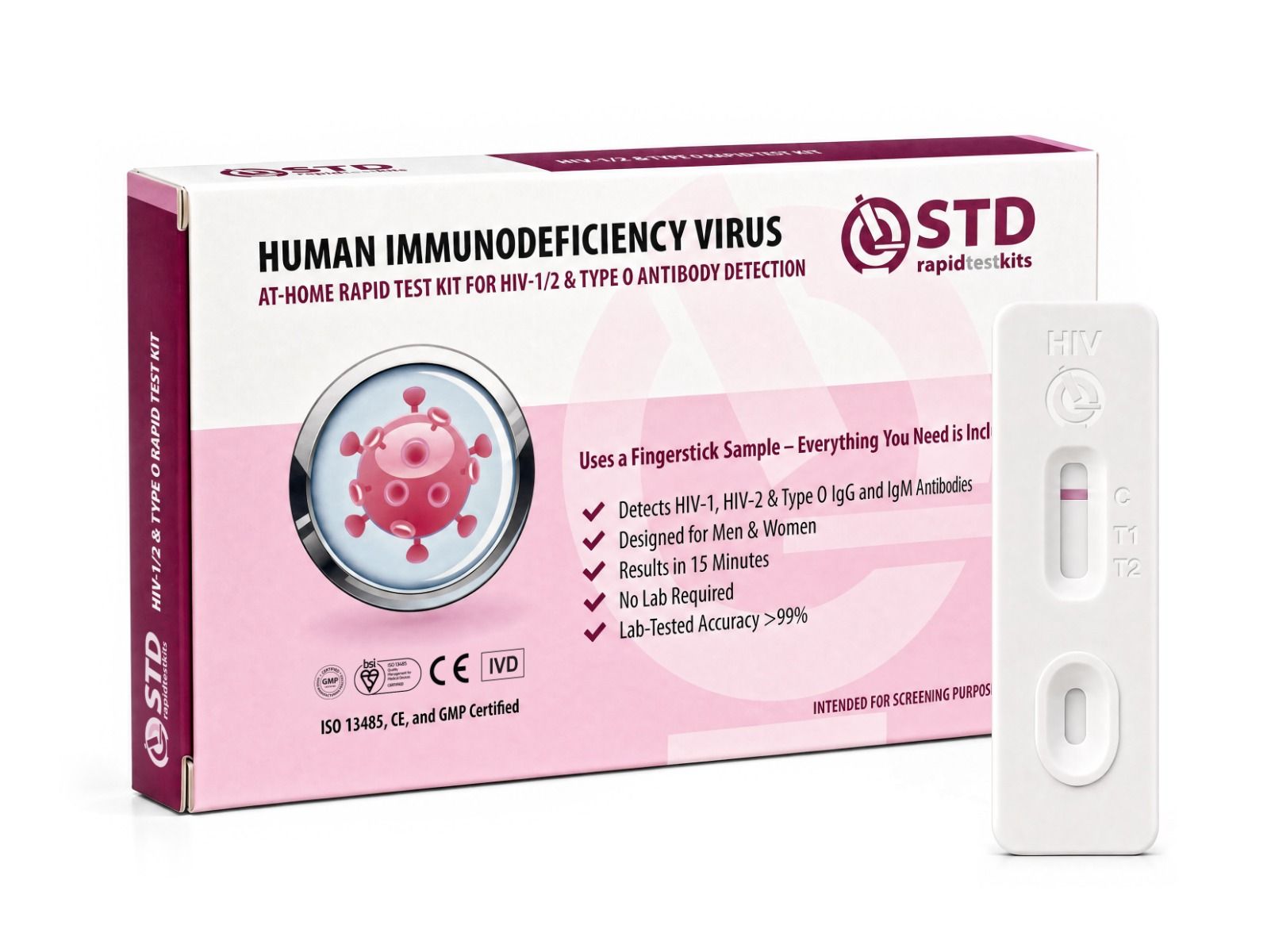
That is also why discreet at-home testing exists. It removes the location, the waiting room, and the pharmacist's gaze from the equation, leaving only the question the person came to ask: am I positive or not.
Why knowing about PrEP isn't the same as getting it
PrEP (pre-exposure prophylaxis) is one of the most effective HIV prevention tools ever developed. Taken consistently, it reduces the risk of acquiring HIV from sex by about 99 percent (HIVinfo NIH PrEP fact sheet). Long-acting injectable forms now extend coverage between doses, making adherence easier for people whose lives are not built around remembering a daily pill.
Knowing PrEP exists, however, is not the same as starting it. Awareness is high in Atlanta's gay nightlife scene; uptake among the people who would benefit most is much lower. Several things stack. PrEP requires a prescriber, baseline labs, and quarterly follow-up. Many of the high-prevalence ZIP codes in metro Atlanta (parts of 30315, 30310, 30318, 30314 among them) have fewer LGBTQ-affirming providers per capita and longer appointment waits. Insurance complicates things further: people on marginal coverage can navigate copays and prior authorizations, but "navigate" is the operative verb. People without coverage face the patient-assistance maze (Ready, Set, PrEP and similar programs exist, but reaching them requires a level of system-fluency that varies widely).
The result: a medication that is essentially free for most people who can find their way to it, and out of reach for many who can't.
Awareness of PrEP in Atlanta is high; uptake among the communities who would benefit most is sharply lower. The gap is driven by insurance friction, prescriber scarcity in the high-prevalence ZIP codes, transportation, and stigma around being seen asking for it. Knowing PrEP exists and being able to start PrEP are different problems requiring different fixes.
How prevention strategies compare in practice
Different prevention tools have different real-world ceilings, and almost none of them are about sexual position. The table compares the major options against the friction Atlanta readers run into.
| Prevention Method | Effectiveness With Correct Use | Real-World Barriers in Atlanta | Common Misconception |
|---|---|---|---|
| Daily oral PrEP | About 99% reduction in sexual HIV risk | Insurance friction, prescriber shortages in high-need ZIPs, mistrust of the medical system | "Only for promiscuous men" |
| Long-acting injectable PrEP | Comparable to daily oral when adherent | Limited provider availability, supply and cost | "Not really available yet" |
| External condoms | About 70 to 90% reduction with consistent use | Cost, embarrassment buying, partner pushback | "Not needed if your partner is on PrEP" |
| Routine HIV testing | Diagnostic, not preventive (enables U=U) | Stigma, transportation, time off work, fear of result | "You'd know if you had it" |
| Treatment as Prevention (U=U) | Effectively zero sexual transmission when virally suppressed | Late diagnosis, treatment gaps, medication cost | "Positive partners can't be safe" |
Insertive partners are not in the clear
The cultural shorthand that tops are at low risk has done real damage in Atlanta. It convinces some men they don't need to test on any regular schedule. It gives others a rationale for not asking partners about status. And it lets a few avoid PrEP entirely on the theory that they don't need it.
The biology disagrees. Insertive partners have mucosal tissue along the urethra and the inner foreskin (when present) that can transmit HIV. The risk per act is lower than for receptive partners, but it accumulates with frequency, with the prevalence of the people you are sleeping with, and especially in the presence of other STIs. Untreated syphilis, herpes ulcers, or even active inflammation from gonorrhea or chlamydia can raise the per-act transmission risk for both partners.
Atlanta's MSM community has a high baseline HIV prevalence, which means even a partner you'd describe as low-risk has higher background odds of being undiagnosed-positive than a partner from a lower-prevalence city. "He looks healthy" and "he says he's negative" are not the same as "he tested last month and is on suppressive treatment" or "he is on consistent PrEP." The first two are inferences. The second two are evidence.
The practical advice for insertive partners is the same as for receptive partners: test on a routine schedule (every 3 months if you have multiple or new partners, at least annually if you don't), consider PrEP if you're sexually active in a high-prevalence community, and treat any STI symptoms promptly, none of which depends on which position you prefer.
Test every 3 months if you have multiple or new partners. Consider PrEP if you are sexually active in a high-prevalence community like Atlanta's MSM scene. Treat any STI symptom (sores, discharge, burning) promptly, since untreated STIs raise per-act HIV risk for both partners.

What at-home testing changes for the people who need it most
One of the most important shifts in HIV testing over the last decade has been the move away from clinic-only testing. Rapid lateral-flow tests, both fingerstick blood and oral-fluid versions, can be done privately, with results in about 15 to 20 minutes. They are not laboratory NAATs (which look for the virus directly and shorten the window period), but they are reliable for screening once you are past the post-exposure window.
That window matters. Antibody-based rapid tests typically detect HIV between 23 and 90 days after exposure, with most people testing reliably positive by 12 weeks if infection occurred (CDC HIV testing window periods). If you are testing earlier than 12 weeks and get a negative, plan a follow-up at the 12-week mark to be sure.
What at-home testing changes for Atlanta specifically: it removes the variables that keep people away from clinic-based testing. There is no waiting room. Nobody at the front desk knows you. Discreet packaging arrives at your address (no one sees "HIV TEST" on the box). You take the test at the time of day that works for you, in the room you choose, with whatever support person (or none) you want.
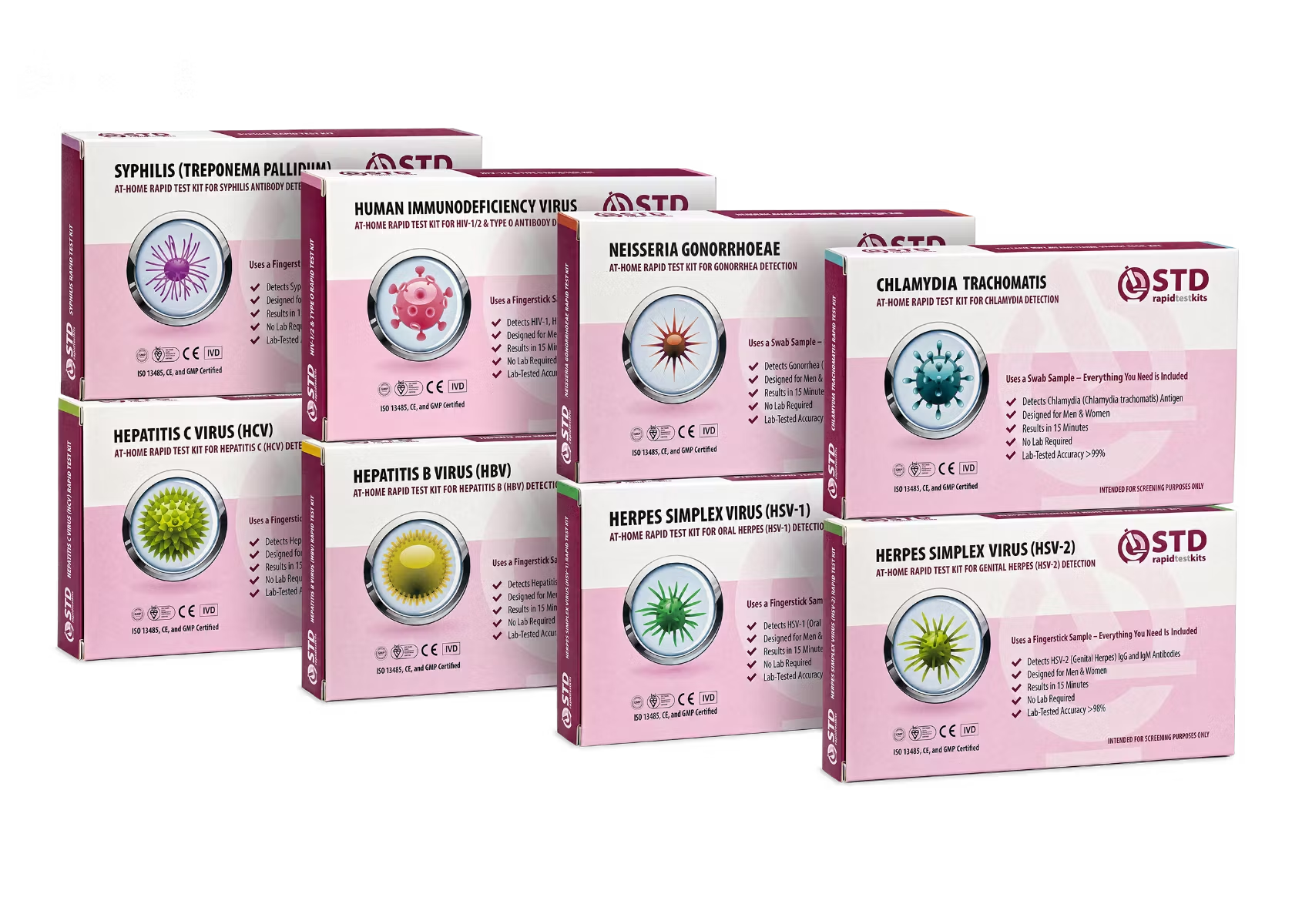
The trade-off is honesty about what at-home tests do and don't cover. They screen for HIV antibodies. A reactive at-home test should always be confirmed with a clinic-based laboratory test, both because it makes treatment-pathway logistics easier and because the lab can confirm with a second methodology. They also don't replace routine STI panels for syphilis, gonorrhea, or chlamydia, which need their own dedicated swab or blood test.
What to do after a positive result
If a test comes back positive, the most important thing to know is that HIV in 2026 is a manageable, treatable chronic condition, not the death sentence the public-health imagination still attaches to it. Over 1.2 million people in the U.S. are living with HIV, and people on consistent treatment are living longer, healthier lives (CDC HIV statistics).
The treatment pathway is straightforward. A confirmed positive result leads to baseline labs (CD4 count, viral load, resistance testing) and a starting antiretroviral therapy (ART) regimen. Modern ART is typically a single daily pill, often a combination of two or three drugs in one tablet, with a side-effect profile most people tolerate well. Within weeks to months, most people on consistent treatment achieve viral suppression: the virus is in the body, but the amount circulating is so low that standard tests can no longer measure it.
That suppression has a critical consequence. People with an undetectable viral load do not transmit HIV sexually. This is the U=U principle (Undetectable equals Untransmittable), and it is supported by years of large-scale clinical research (HIV.gov on treatment as prevention). It changes what a positive diagnosis means for the rest of someone's sexual life.
Practical first steps after a positive at-home result: confirm with a clinic-based lab test, get linked to an HIV care provider (Atlanta has multiple Ryan White-funded clinics that take patients regardless of insurance status), and take a breath. The first 48 hours after a positive result are the hardest. The week after that gets meaningfully easier.
After a positive result
- Modern ART is typically a single daily pill; most people on consistent treatment reach viral suppression within weeks to months.
- Once your viral load is undetectable, you cannot transmit HIV to a sexual partner. This is the U=U principle.
How to talk to partners without panic
Disclosure is uncomfortable, and the cultural script for it is thin. A few patterns make it easier in practice. Lead with the testing routine, not the result: "I get tested every three months, and I think we should both be in the habit of sharing results before sex." That makes status conversations a baseline expectation rather than an alarm bell.
If you are the one with a positive result, naming it directly tends to land better than hinting. "I tested positive for [infection], I'm on treatment, here's what that means for us" gives the partner real information instead of a vague sense that something is wrong. For HIV specifically, mentioning U=U and your viral load status (if you know it) changes the conversation from "are you safe to be with" to "here's the actual risk picture."
For casual partners or hookups where direct conversation isn't feasible, anonymous partner notification services exist through the Georgia Department of Public Health and several community clinics. They contact past partners on your behalf without naming you. Anonymous notification has limits. It does interrupt transmission chains that would otherwise keep going.
When people with HIV take HIV medicine as prescribed and get and keep an undetectable viral load, they have effectively no risk of transmitting HIV through sex.
Atlanta's HIV crisis is about access, not position
If there is one thing to take away from the data, it is that the popular framing has the variables backwards. Sexual position is the lever people fixate on because it feels intuitive and personally controllable. The variables that move HIV rates in Atlanta (PrEP access, testing frequency, viral suppression in the partner pool, neighborhood-level prevalence, the trust gap between Black communities and the medical system) are bigger, slower, and harder to change.
That doesn't mean individuals are powerless. Testing on a routine you can sustain, getting on PrEP if your sex life puts you in a high-prevalence dating pool, treating other STIs promptly, and being willing to have status conversations with partners are all within reach. At-home rapid tests remove one of the bigger friction points (the clinic visit) for a lot of people. Combined kits give a fuller sexual-health picture in one package.
The system around all of that needs to change too: more PrEP prescribers in the ZIP codes that need them, more affordable, walk-in testing, and less stigma in the spaces where these conversations need to happen. Until that catches up, the most useful thing any individual reader can do is ignore the position-based folklore and act on what the evidence shows.
Practical next steps
- Test on a sustainable routine: every 3 months if you have multiple or new partners, at least annually otherwise.
- Consider PrEP if you are sexually active in a high-prevalence community, and treat any STI symptom promptly.
- Have status conversations with partners. At-home rapid tests remove the clinic-visit friction when that is the barrier.
FAQs
- Can you really get HIV if you only top?
- Yes. Insertive (top) partners face a lower per-act risk than receptive (bottom) partners, but the risk is not zero. Microtears, other STIs like syphilis or herpes, and a partner with a high viral load all push that risk up. In a high-prevalence community like Atlanta's MSM dating pool, even routine topping accumulates real exposure over time. Position is one variable among many, not a shield.
- Why are HIV rates in Atlanta so high?
- The Atlanta metro is consistently among the top U.S. metros for new HIV diagnoses each year, per CDC surveillance. The drivers are systemic rather than behavioral: a high background HIV prevalence in the local MSM dating pool, fewer LGBTQ-affirming PrEP prescribers in the ZIP codes where new diagnoses cluster, transportation and time-off-work barriers to clinic testing, and persistent stigma in conservative and religious community settings. CDC investigators have documented rapid transmission clusters in metro Atlanta neighborhoods where several of these factors overlap.
- How soon after sex should I test for HIV?
- It depends on the test. Lab-based 4th-generation antigen/antibody tests can detect HIV in most people 18 to 45 days after exposure. NAAT tests (which look for the virus directly) detect it earlier, around 10 to 33 days. At-home rapid antibody tests are reliable between roughly 23 and 90 days after exposure, with a conservative all-clear at 12 weeks. If you test earlier than 12 weeks and get a negative, plan a confirmatory test at the 12-week mark.
- What is PrEP, and why don't more eligible people take it?
- PrEP is a daily pill (or a long-acting injection) that reduces HIV risk by about 99 percent when taken as prescribed. Awareness is widespread, but uptake is uneven. Insurance friction, scarcity of LGBTQ-affirming providers in high-need neighborhoods, transportation, and lingering stigma (the idea that asking for PrEP signals something about you) all reduce the number of people who actually start it. Patient-assistance programs cover much of the cost for uninsured patients, but navigating them takes a level of system fluency many people don't have.
- Can someone with HIV transmit it to me if they're undetectable?
- No, not through sex. People with HIV who take treatment consistently and maintain an undetectable viral load have effectively zero risk of transmitting HIV to a sexual partner. This is the U=U (Undetectable equals Untransmittable) principle, and it is supported by years of large clinical studies. A partner who is positive, on treatment, and virally suppressed is a safer sexual partner from an HIV standpoint than a partner whose status is unknown.
- Do at-home HIV tests work?
- Yes, when used correctly and at the right time after exposure. FDA-approved at-home tests, both fingerstick blood and oral-fluid versions, are accurate for screening when you are past the post-exposure window period. A reactive (positive) result should always be confirmed with a clinic-based laboratory test, both for treatment linkage and to rule out the rare false positive. Negative results within the window period should be re-tested at 12 weeks for confirmation.
- How often should I get tested if I'm sexually active?
- CDC suggests at least annual HIV testing for sexually active adults. For men who have sex with men, especially in high-prevalence cities, every 3 to 6 months is the more relevant cadence, particularly if you have multiple or new partners or use any drugs during sex. Routine testing, the kind you do whether or not you suspect anything, is what catches infections early enough to treat without complications.
- Is it safe and discreet to order an at-home test online?
- Yes. Reputable kits ship in plain packaging without external labels identifying the contents. You take the test in your own space, on your own schedule, without a clinic visit or a pharmacist interaction. Rapid kits give a result in about 15 minutes; mail-in lab kits use a secure online portal for results. Either format keeps the experience private, which for many readers is the difference between testing and not testing.
- U.S. Centers for Disease Control and Prevention. HIV surveillance data, U.S. statistics, and demographic disparities.
- HIV.gov. U.S. statistics on HIV diagnoses, including breakdowns by race/ethnicity and transmission category.
- U.S. Centers for Disease Control and Prevention. HIV transmission: how the virus is and is not transmitted, and relative risk of different sexual activities.
- National Institutes of Health, HIVinfo. Pre-Exposure Prophylaxis (PrEP) fact sheet, including the about-99% effectiveness figure for consistent use.
- HIV.gov. HIV treatment as prevention and the Undetectable equals Untransmittable (U=U) principle.
- U.S. Centers for Disease Control and Prevention. HIV testing overview, including antibody test window periods.
