Can You Get an STD from Trying on a Bikini? The Real Risk
How real is the STD risk from trying on a swimsuit?




- Trying on a swimsuit is extremely low-risk for STD transmission. Most STI pathogens lose viability within minutes once they are off skin and exposed to air.
- If you developed itching, redness, or burning after a fitting-room visit, the cause is far more likely contact dermatitis, heat rash, or a yeast imbalance than an infection.
Published: November 2025 | Last updated: May 2026 | Editorial review and quality control: Martina N.
The panic usually feels bigger than the trigger. You tried on a bikini at a store, noticed afterward that the liner was damp, missing, or peeled to one side, and now your brain is running every worst-case scenario it can think of. You are not alone. Search data shows thousands of people Google variations of 'can you get herpes from a swimsuit' and 'STD from trying on underwear' every month, often after a fitting-room moment that lasted ninety seconds.
The short version: trying on a swimsuit is an extremely low-risk activity for STD transmission. The longer version, with the science behind why, the actual causes of post-fitting-room irritation, and when testing makes sense even without sexual contact, is below. We will also walk through the edge cases where the risk is not zero.
Key Takeaways
- Trying on a swimsuit is extremely low-risk for STD transmission. Most STI pathogens lose viability within minutes once they are off skin and exposed to air.
- If you developed itching, redness, or burning after a fitting-room visit, the cause is far more likely contact dermatitis, heat rash, or a yeast imbalance than an infection.
How STDs Spread, and Why Swimsuits Are a Bad Vehicle for Them
For a sexually transmitted infection to actually transmit, three things usually need to line up: a viable pathogen in sufficient quantity, direct contact with a mucous membrane (vulva, urethra, anus, mouth, or eye) or with broken skin, and a long enough contact time for the pathogen to gain a foothold. According to the U.S. Centers for Disease Control and Prevention, the standard routes for the most common STIs are vaginal, anal, or oral sex, plus skin-to-skin genital contact for viruses like herpes simplex and HPV.
Swimsuit fabric is hostile to almost all of these pathogens. The bacteria and viruses that cause STIs are adapted to the warm, wet, host-rich conditions inside the body, not to a dry, oxygen-exposed cotton-poly blend hanging on a fitting-room hook. Once they are off skin, most of them degrade within minutes. The table below summarizes what each common STI needs to spread and how that lines up with trying on clothing.
| STI | Survival on Fabric | How It Actually Spreads | Risk From Trying on a Swimsuit |
|---|---|---|---|
| Herpes (HSV-1, HSV-2) | Minutes, longer only if moist | Skin-to-skin contact with active or shedding lesion | Extremely low |
| Chlamydia | Dies quickly off the body | Unprotected vaginal, anal, or oral sex | Negligible |
| Gonorrhea | Minutes on dry surfaces | Fluid contact with mucous membranes | Very low |
| Trichomoniasis | Up to a few hours in moisture | Vaginal-fluid contact, almost always sexual | Low, possible only in rare wet-fabric scenarios |
| HPV | Unclear, mostly skin-to-skin | Intimate skin contact, usually genital | Unlikely but not formally proven zero |
| HIV | Rapidly inactivated outside the body | Blood, semen, vaginal, or rectal fluid into mucosa or bloodstream | Effectively zero |
Why You Might Feel Symptoms After Trying On Swimwear
You are not imagining the post-fitting-room itch, the redness, or the burning when you pee a day later. The symptoms are real. They just usually have nothing to do with an STD. Skin in the groin area is some of the most reactive tissue on the body: thin, warm, often shaved or waxed, and quick to flare under friction or chemical exposure.
Bikini liners and the fabric itself are coated with sizing agents, anti-static chemicals, and sometimes dyes that have not been washed out yet. Plastic guards crinkle and trap heat. Synthetic swimwear does not breathe. Add a tight fitting-room schedule and a body that is already a little dehydrated from a long shopping day, and you have the recipe for several common, non-infectious skin reactions.
The likely culprits behind genital or groin irritation after trying on swimwear:
- Friction or chafing from tight elastic edges and unfamiliar fabric tension.
- Allergic or irritant reaction to detergent residue, sizing chemicals, or fabric dyes.
- Heat rash from prolonged warmth and trapped sweat in the crotch area.
- Yeast overgrowth, especially in warm humid skin folds or after recent antibiotics, hormonal shifts, or a high-sugar weekend.
- Contact dermatitis triggered by shared liners, plastic guards, or fragranced fitting-room cleaning sprays.
How Long Can STDs Actually Survive on Fabric?
This is the question that drives most fitting-room anxiety, and the science is relatively settled. Most STD pathogens cannot survive long on a dry, ventilated surface like a swimsuit. They lose viability within minutes to a couple of hours once removed from the warmth, moisture, and oxygen profile they need inside a human host. Even in controlled lab conditions, organisms like Neisseria gonorrhoeae and Chlamydia trachomatis show sharp drops in viability on dry surfaces within an hour.
'Survival' is also not the same as 'transmissible.' A pathogen detectable on a surface by a sensitive lab test is not necessarily an infectious dose, and even when it is, it still needs a route into your mucous membranes to cause an infection. A quick try-on, especially over your own underwear and through an intact hygienic liner, simply does not create that route. The CDC and WHO both treat fabric-mediated transmission as theoretical rather than a recognized route of population-level spread.
| STD | Approximate Surface Survival | Practical Infectiousness Off-Body |
|---|---|---|
| Herpes simplex (HSV) | Minutes to about an hour in warm moist conditions | Unlikely unless direct contact with an active lesion within minutes |
| HIV | Rapidly inactivated outside the body | No documented transmission through fabric |
| Trichomoniasis | Up to a few hours in damp environments | Possible only in rare wet-fabric or shared-towel scenarios |
| Gonorrhea | Minutes to hours on moist tissue, much less on dry fabric | Very unlikely on dry, ventilated swimwear |
| Chlamydia | Does not survive long outside the body | Negligible surface risk |
| Syphilis | Treponema pallidum is fragile outside humans | Not a documented surface-transmission risk |
What If the Liner Was Missing or the Swimsuit Was Wet?
Most fitting-room anxiety centers on exactly this gray-area scenario. Most retail swimwear includes a hygienic liner, a thin plastic or paper shield in the crotch area meant to act as a barrier between the garment and your skin. Sometimes the liner has fallen out. Sometimes a previous shopper peeled it off. Sometimes the suit feels noticeably damp, and you cannot tell if it is from a cleaning spray, sweat, or something else.
If the liner is missing and the fabric is damp, your theoretical risk increases slightly. The realistic risk is still very low, because the chain of events required is narrow: the previous shopper would need to be actively shedding an STD pathogen, the pathogen would need to survive the minutes between try-ons, the fabric would need to make direct contact with broken skin or a mucous membrane on your body, and the dose would need to be infectious. Each link in that chain is unlikely on its own. All four happening at once is rarer still.
The infection most often cited in this scenario is trichomoniasis, because the parasite can persist for a few hours in moisture. Even there, the route still requires direct contact between the damp infected fabric and your vaginal mucosa, which a brief try-on through underwear does not provide.
Direct genital contact with a damp, liner-free swimsuit immediately after someone with an active herpes lesion or trichomoniasis discharge wore it. This is the narrow scenario where transmission becomes biologically plausible, but it remains rare in practice. Major public-health bodies including the CDC and WHO list sexual contact and perinatal transmission as the recognized routes, not fabric.
When Testing Makes Sense, Even Without Sex
STD testing is not gatekept by sexual history. You do not need a partner's permission, a doctor's referral, or a risk profile that meets someone else's threshold. If something is on your mind, that is a valid reason to test. A negative result is useful information. A positive result, if one happens for reasons unrelated to the swimsuit, is the start of treatment that protects your future health.
The most common practical reasons people choose to test after a non-sexual event:
- Persistent genital symptoms: burning, itching, rash, sores, or unusual discharge that has not resolved within 3 to 5 days of trying basic skin care.
- Direct contact with a visibly damp garment or a shared towel that touched intimate areas of someone else within minutes of you using it.
- A weakened immune system (chemotherapy, advanced HIV, organ-transplant recipient) where extra caution about even low-probability exposures is reasonable.
- Unrecognized skin-to-skin contact, such as a friend's underwear borrowed in a pinch, or close intimate contact during a massage or party where lines were less clear.
- Anxiety that is interfering with sleep, focus, or daily life. Sometimes the test is the fastest way to reclaim your mental space.
This site sells rapid at-home STD test kits. The products recommended in this article are chosen based on relevance to the topic and reader concern, not commercial benefit.
Wash It Before You Wear It
This is the most universally useful takeaway, and it has nothing to do with STDs. Retail clothing passes through manufacturing lines, shipping containers, warehouse stockers, store associates, and an unknown number of shoppers before it reaches your bag. The exposure profile is mostly skin oils, fabric finishes, and the general indoor microbiome, none of which is dangerous to a healthy adult, but all of which can irritate sensitive skin.
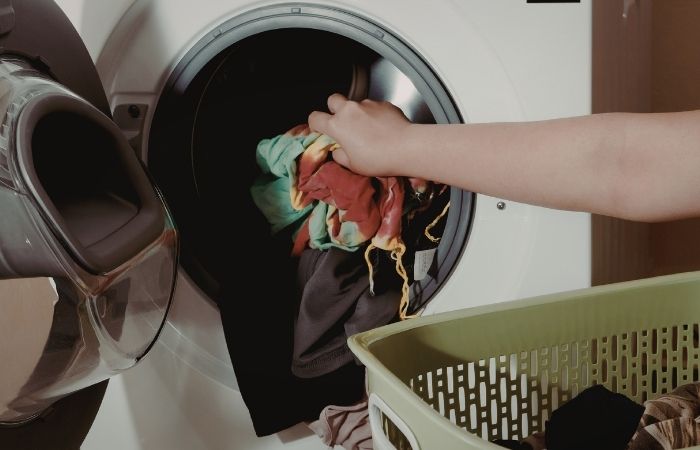
Swimsuits are an especially good candidate for a pre-wear wash because they sit close to mucous-adjacent skin, trap heat against the body, and tend to be made from synthetic fibers that hold onto sizing chemicals. A short cycle in warm water with a gentle detergent, followed by a full air-dry, is plenty. Skip the bleach; it degrades elastane and does not meaningfully improve hygiene.
If you are trying on in-store, wear your own underwear underneath the swimsuit. If the liner is missing, damp, or visibly stained, put the suit back and try another one.
Is It Ever Possible to Get an STD Without Sex?
Yes, but the routes are narrow and almost always involve direct, prolonged contact with mucous membranes or open skin, not incidental fabric exposure. Herpes simplex can transmit through skin-to-skin contact with an active or shedding lesion, including oral-to-genital touching and shared sex toys without protection or cleaning between users. HPV is a skin-contact virus that does not need fluid, but it still requires intimate genital-skin contact, not a brief fabric brush in a fitting room.
Other STIs (chlamydia, gonorrhea, trichomoniasis, HIV, syphilis, hepatitis B and C) almost always need fluid-to-mucosa contact. That means vaginal, anal, or oral sex, sharing injection equipment, or in much smaller numbers perinatal transmission from a parent to an infant during birth or breastfeeding. According to the World Health Organization, fabric-mediated transmission is not a recognized route for any of these infections at a population level.
The gray-area scenarios that can create real exposure look different from a fitting-room try-on. Borrowing a friend's wet bathing suit and wearing it for hours after they wore it, sharing a damp towel right after someone with a known active infection used it, skin-to-skin contact during a massage that involved genital fluids, or a partial-clothes-on intimate encounter where boundaries blurred more than you remember. These are situations where testing is reasonable.
Wearing a friend's still-wet bathing suit for hours after they wore it. Sharing a heavily damp towel within minutes of someone with a known active infection using it on intimate skin. A massage or partial-clothes-on intimate encounter where genital fluids touched skin you do not remember covering. These are narrow but real exposures, and they look very different from a ninety-second fitting-room try-on through a hygienic liner.
Other Skin Conditions That Mimic STD Symptoms
Suppose your STD panel comes back clean. You are still itchy, red, or sore a week after the fitting room. Groin skin reacts faster than most other body areas to mechanical and chemical insults, and a few common conditions can mimic STD symptoms closely enough to scare anyone. The most likely non-STI culprits clinicians see after a swimwear or shared-fabric incident:
- Folliculitis: small, pus-tipped bumps centered on hair follicles, usually from shaving, friction, or warm trapped sweat.
- Vulvovaginal yeast imbalance: thick white discharge, intense itching, and burning, often triggered by sweat, hormonal shifts, antibiotics, or a sugar-heavy diet swing.
- Allergic contact dermatitis: itchy, red, sometimes weeping patches from detergent residue, fabric dyes, or fragranced products.
- Miliaria, or heat rash: tiny pinpoint bumps from blocked sweat ducts when sweat cannot evaporate from trapped humid skin.
- Bacterial folliculitis or, rarely, skin infections involving staph or MRSA after sustained contact with a heavily contaminated shared damp item such as a public-gym towel.
You Are Not Overreacting
Fitting-room anxiety is not silly. When something touches intimate skin, the brain runs threat-assessment routines that are bigger than the actual statistical risk, and that response is protective most of the time. If the worry will not let go, a negative test result is the fastest way to resolve it. Trying on a swimsuit is almost never a real STD-transmission event. Post-fitting-room itching is almost always skin reacting to friction, heat, sizing chemicals, or a passing yeast imbalance.
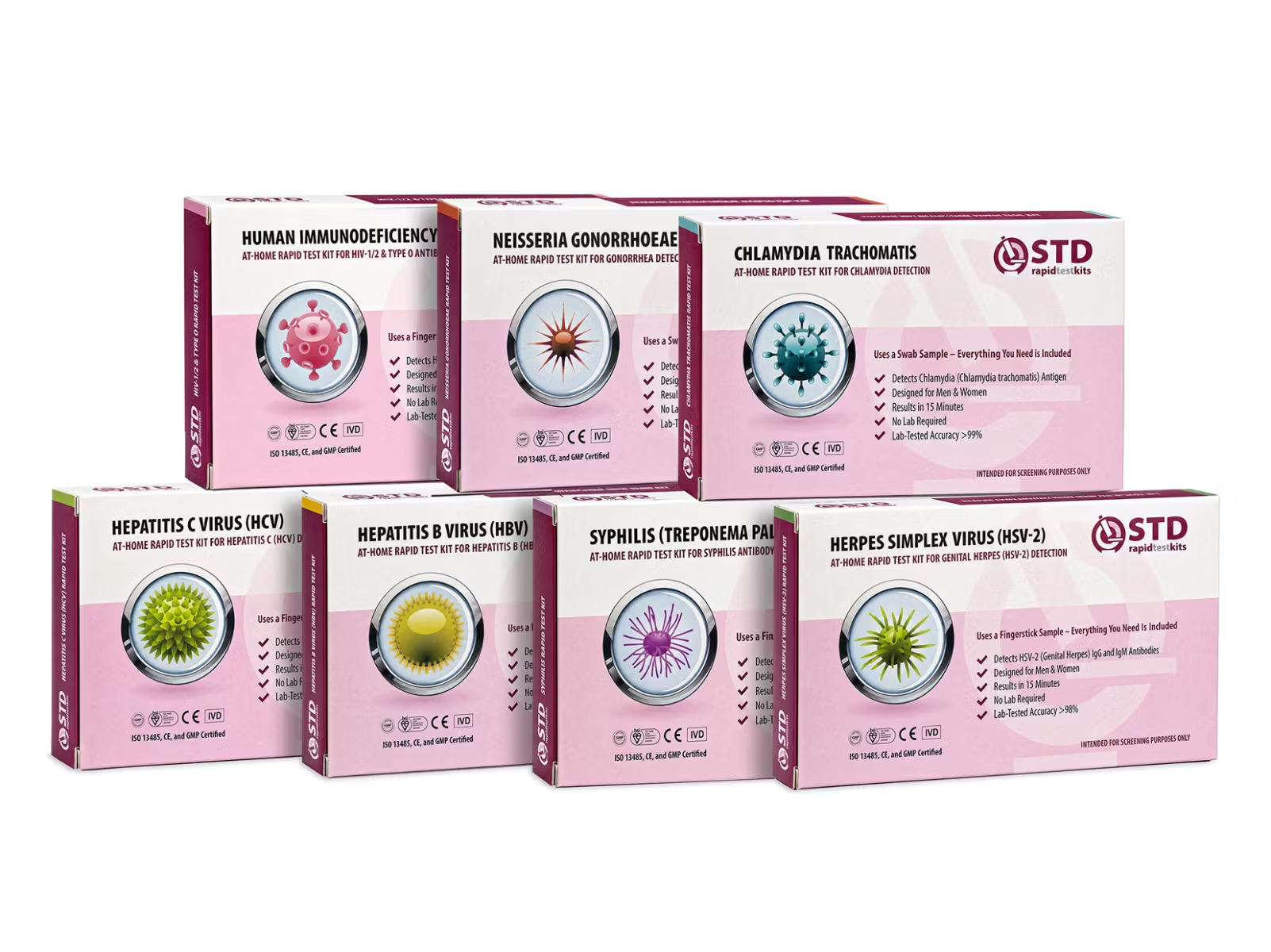
An at-home rapid test will tell you what you need to know in about fifteen minutes, in private, on your own schedule. That is a reasonable thing to buy, not an overreaction. And if you have been meaning to do a baseline check anyway, this is as good a moment as any to do it.
You will not get herpes from toilet seats, bedding, or swimming pools. You also will not get it from touching objects, such as silverware, soap, or towels.
Frequently Asked Questions
- I tried on a bikini and now I am itchy. Did I catch something?
- Almost certainly not. The post-fitting-room itch is far more likely a reaction to detergent residue, sizing chemicals, friction, or trapped heat than an STD. Watch the area for two or three days. If it settles with a gentle moisturizer, looser cotton clothing, and an over-the-counter anti-itch cream, it is irritation. If it spreads, develops blisters or sores, or comes with abnormal discharge, see a clinician or run a home test.
- What if the suit was actually wet when I tried it on?
- A noticeably wet suit is a fair reason to feel uneasy, but it is still a very low-probability route for STD transmission. The pathogens that worry people most (herpes, gonorrhea, chlamydia, trichomoniasis) need warmth, moisture, and quick access to mucous membranes. Most lose viability within minutes once they are off skin. If you want certainty, an at-home rapid test taken at the right window after the suspected exposure will give you a real answer.
- Is herpes really that fragile outside the body?
- Herpes simplex virus is genuinely fragile outside the body; it breaks down quickly when exposed to air, drying, and temperatures outside the warm range it needs inside humans. Lab studies have detected residual viral particles on surfaces for short periods, but viral detection by a sensitive lab test is not the same as an infectious dose. Real-world transmission through inanimate objects is not a recognized route per the CDC.
- Does a missing hygienic liner make a meaningful difference?
- Slightly. The liner is a barrier between the garment and your skin, so missing it brings the fabric into more direct contact with your underwear or, if you tried on without underwear, with your skin. The total risk still depends on whether the previous shopper was infectious and how quickly you tried it on after them. The risk moves from near-zero to still-low. If you cannot stop thinking about it, that is a reason to test.
- Could I have picked up trichomoniasis from the fabric?
- Trichomoniasis is the closest thing to a real fabric concern, because the parasite can survive a few hours in moist environments. Even so, the route still requires the parasite to reach the vaginal mucosa in a viable state, which means direct, prolonged contact between damp infected fabric and your genital tissue. A try-on session through your underwear and a liner is well outside that risk envelope.
- How soon would symptoms show up if I did catch something?
- It depends on the pathogen. Herpes outbreaks usually start 2 to 12 days after exposure. Trichomoniasis can take 5 to 28 days. Chlamydia and gonorrhea symptoms (when they appear at all, and often they do not) typically show within 1 to 3 weeks. HIV antibody seroconversion takes about 23 to 90 days depending on the test generation. If two weeks have passed with no symptoms, your fitting-room anxiety is probably running ahead of your body.
- How do I know I did not pick something up earlier that is only now showing?
- You do not, without testing. Many STIs are asymptomatic for weeks or months, and a current symptom flare can be unrelated to the swimsuit. If the fitting-room incident is the trigger that finally prompts you to check your overall STI status, that is a perfectly reasonable use of the moment. Test, get the information, and move forward.
How we sourced this article: We summarized current guidance from the U.S. Centers for Disease Control and Prevention, the World Health Organization, the U.K. National Health Service, and the National Institutes of Health on STI transmission routes and environmental viability. Where we describe how skin reacts to swimwear, we summarize standard dermatology references on contact dermatitis and folliculitis. This is editorial summary, not personal clinical advice. For symptoms that concern you, see a licensed clinician.
- U.S. Centers for Disease Control and Prevention. Genital herpes basic information, including environmental and inanimate-object transmission guidance (toilet seats, towels, swimming pools).
- U.S. Centers for Disease Control and Prevention. Sexually transmitted diseases home page with overview of transmission routes for chlamydia, gonorrhea, syphilis, and trichomoniasis.
- World Health Organization. Sexually transmitted infections fact sheet covering global epidemiology and the recognized transmission modes.
- National Institutes of Health, HIVinfo. Understanding how HIV is transmitted, including the rapid environmental inactivation of the virus outside the body.
- U.K. National Health Service. Sexually transmitted infections (STIs) overview page with symptoms, testing windows, and transmission information.