
Published: December 2025 | Last updated: May 2026 | Editorial review and quality control: Martina N.
If you searched “STD symptoms” and found nothing matching what you feel, you might assume you are in the clear. The biology of sexually transmitted infections does not follow that logic. Most common STIs spend long stretches doing exactly what they need to spread, while causing no symptoms at all. The U.S. Centers for Disease Control and Prevention notes that many STIs cause no symptoms, and that infections can still pass to sexual partners during those silent periods (CDC, About Sexually Transmitted Infections).
This article is a plain-English explanation of why symptoms are an unreliable trigger for testing, which infections are most likely to spread silently, how at-home and clinic-based testing works when nothing feels wrong, and what to do if a test comes back positive without warning. Every claim links to a current CDC, WHO, NHS, or NIH source you can read in full. The short version: you can carry, transmit, and develop complications from an STI without ever noticing. Regular screening, not symptom monitoring, is how public-health systems catch these infections in time.
Key Takeaways
- The CDC states that many STIs cause no symptoms, and infections can still pass to sexual partners during those silent periods.
- Asymptomatic transmission is documented for chlamydia, gonorrhea, HSV-2, HPV, early-stage HIV, and primary syphilis. Regular screening is the only reliable way to catch these infections in time.
Why Symptoms Are Not a Reliable Signal
The biology of most sexually transmitted infections favors silent persistence. A pathogen that causes obvious symptoms early tends to be diagnosed and treated quickly, which limits how far it spreads. Pathogens that delay symptoms (or skip them entirely) keep their hosts circulating and infectious. The CDC's overview page on STIs notes that many STIs cause no symptoms and that asymptomatic infections can still be passed to sexual partners (CDC, About STIs). The pattern is most pronounced in chlamydia, where the CDC's chlamydia fact sheet describes most infections as causing no symptoms in either sex, with women especially likely to remain unaware (CDC, About Chlamydia).
Two specific points are worth knowing. First, the body's immune response to an STI is often mild at the surface, especially when the infection sits in tissues that do not produce strong nerve signals (the cervix, the rectum, the pharynx). Chlamydia in the cervix may cause subtle changes in discharge that get attributed to a normal cycle. Gonorrhea in the rectum may cause no perceptible change at all. Pharyngeal gonorrhea behaves similarly: the infection persists, the throat looks normal, and the person feels fine.
Second, the timing of any symptoms (when they appear) usually lags behind the infectious window. A primary syphilis chancre takes 10 to 90 days to appear after exposure, is often painless, and tends to sit in places people do not routinely examine (cervix, rectum, oral cavity). HIV's acute retroviral syndrome (fever, sore throat, rash) is often dismissed as flu in the 2 to 4 weeks post-exposure window when transmission risk is at its highest. By the time symptoms appear, the person may have been infectious for weeks.
Public-health screening guidance reflects this fact. The CDC recommends annual chlamydia and gonorrhea screening for all sexually active women under 25 regardless of symptoms, and similar age-and-risk-based screening for HIV, syphilis, hepatitis B, and hepatitis C in adolescents and adults (CDC, STI Screening Recommendations).
A primary syphilis chancre takes 10 to 90 days to appear, and HIV's acute symptoms (fever, sore throat, rash) start 2 to 4 weeks after exposure. By the time anything visible shows up, the person can already have been infectious for weeks. Waiting for symptoms before testing means waiting through the period when transmission risk is highest.
Which Common STIs Spread Most Often Without Symptoms
The infections in the table below account for the largest share of new STI diagnoses in the U.S. Each one has a well-documented asymptomatic phase during which transmission continues. The relative frequencies vary across age groups, anatomical sites, and partner counts, but the overall pattern is consistent across CDC and WHO surveillance reports (WHO, STIs Fact Sheet).
A note on what the table does not cover: trichomoniasis is asymptomatic in many infected women and in most infected men, but it is most commonly diagnosed during clinical evaluation rather than at-home testing. Mycoplasma genitalium is increasingly recognized as a frequently asymptomatic infection, but it lacks routine screening guidance from the CDC for the general population.
| STI | Asymptomatic pattern | Still contagious? | Most common transmission route |
|---|---|---|---|
| Chlamydia | Most infections cause no symptoms in women; many cause no symptoms in men | Yes | Vaginal, anal, oral contact |
| Gonorrhea | Frequently silent in rectal and pharyngeal sites | Yes | Vaginal, anal, oral contact |
| HSV-2 | Most carriers do not recognize an outbreak (CDC) | Yes (asymptomatic shedding) | Skin and mucosal contact |
| HPV | Most infections silent and self-clearing | Yes | Skin-to-skin genital contact |
| HIV | Acute symptoms often mild and missed | Yes | Blood, semen, vaginal fluid, breast milk |
| Syphilis | Early chancre often painless and unnoticed | Yes | Direct contact with chancre or rash |
Transmission Is Not Limited to Penetrative Sex
Penetrative vaginal or anal sex is one transmission route, but it is far from the only one. Several STIs spread through skin-to-skin contact, oral sex, or shared mucosal exposure. Risk assessment based only on penetrative contact systematically understates real exposure.
Pharyngeal gonorrhea, contracted through oral sex, can colonize the throat without causing pain or visible inflammation. The CDC's Treatment Guidelines explicitly note that pharyngeal infections are often missed because they do not trigger the burning urination or discharge that flag genital infections. A person with throat gonorrhea can still transmit during oral-genital contact for weeks before clinical detection. (Note: throat-swab testing for gonorrhea is performed in clinic. The at-home rapid kits sold on this site are validated for genital sample types only.)
Genital HSV-1 and HSV-2 spread during periods of asymptomatic viral shedding from skin that looks completely normal to both partners. The CDC's herpes overview describes how the virus can be released from the skin even without a visible sore, and this asymptomatic shedding is a major driver of new HSV-2 transmission between partners (CDC, About Genital Herpes).
Primary syphilis presents as a chancre, a single painless ulcer that often heals on its own without treatment. Chancres located in the cervix, rectum, or oral cavity routinely go unnoticed. The infection then progresses to a secondary stage with a wider rash that can also be missed before entering a multi-year latent phase. HPV spreads through skin-to-skin genital contact, and the majority of HPV infections cause no visible warts or symptoms. The immune system clears most HPV infections within 1 to 2 years, but a fraction persist and drive the cervical, anal, and oropharyngeal cancers tracked by national surveillance.
The takeaway for risk assessment: a person who did not have penetrative sex with a new partner can still acquire HSV, syphilis, gonorrhea, HPV, or trichomoniasis from the encounter. An honest exposure history accounts for every type of intimate contact, including kissing during a primary syphilis chancre, oral sex, genital skin contact during foreplay, and shared sex toys without barriers between users.

Asymptomatic Does Not Mean Inactive
The word “asymptomatic” describes what the host experiences. It says nothing about what the pathogen is doing. A chlamydial infection in the cervix continues to multiply, ascend toward the upper reproductive tract, and shed organisms into vaginal secretions whether or not the person feels anything. The same dynamic operates for gonorrhea, trichomoniasis, and the early stages of HIV, syphilis, and HSV-2.
For chlamydia specifically, untreated cervical infections are a leading preventable cause of pelvic inflammatory disease (PID) in the U.S., per CDC surveillance. PID is itself often subclinical: many women who develop tubal damage from chlamydia have no recollection of pelvic pain, fever, or other PID symptoms. The infection caused real anatomical damage without ever generating a complaint that would have brought them to a clinic.
For HSV-2, the relevant biology is asymptomatic viral shedding. The CDC's herpes overview describes how skin can release the virus even without a visible sore, and this is why most new HSV-2 infections are acquired from partners who did not know they were carriers (CDC, About Genital Herpes).
For HIV, the early acute infection (the first 2 to 4 weeks after exposure) is the period of highest viremia and highest per-act transmission risk. Symptoms during this period are often mistaken for influenza or dismissed entirely. The CDC's HIV testing guidance recommends fourth-generation antigen-antibody tests precisely because they detect acute infection earlier than antibody-only tests.
The clinical implication: testing windows, screening intervals, and partner notification protocols are designed around what the pathogen does, not around what the patient feels. Public-health guidance leans hard on routine screening for sexually active adults under 25, men who have sex with men, pregnant patients, and anyone with new or multiple partners since their last test (CDC, Screening Recommendations).
Many STIs do not cause symptoms (asymptomatic). Even without symptoms, your health can be affected. Many STIs can be passed to sexual partners by people without symptoms.
How Testing Works When You Feel Fine
At-home rapid tests and clinic-based screening both work when you have no symptoms. The choice depends on which infections are relevant to your exposure history, how much time has passed since possible exposure, and how much privacy matters to you.
For bacterial infections (chlamydia, gonorrhea, trichomoniasis), the sample is a self-collected swab or a urine sample (in clinic). At-home rapid lateral-flow tests detect bacterial antigens directly from the swab and produce a result in approximately 15 minutes. Lab-based NAAT (nucleic acid amplification testing) is the diagnostic gold standard and has higher analytical sensitivity than rapid lateral-flow chemistry. The two are complementary screening tools, not equivalents.
For blood-borne infections (HIV, syphilis, hepatitis B, hepatitis C, HSV-2 antibody), the sample is a fingerstick blood drop. Rapid tests detect antibodies (and for fourth-generation HIV tests, also the p24 antigen) and give a result in about 15 to 20 minutes. Confirmatory lab testing is recommended for any positive home rapid result.
A few practical pointers from the CDC's STI testing page (CDC, How and When to Get Tested):
- Choose a test panel that matches your exposure type. A genital swab kit alone will not catch syphilis or HIV; a fingerstick blood kit alone will not catch chlamydia.
- Time the test to fall outside the relevant window period. Testing too early causes false negatives.
- Expect to repeat testing for new exposures. A negative result confirms only what was detectable at the moment of sampling.
- Confirm positive home results with a clinic-based test, especially for HIV and syphilis, where confirmatory staging is part of standard treatment planning.
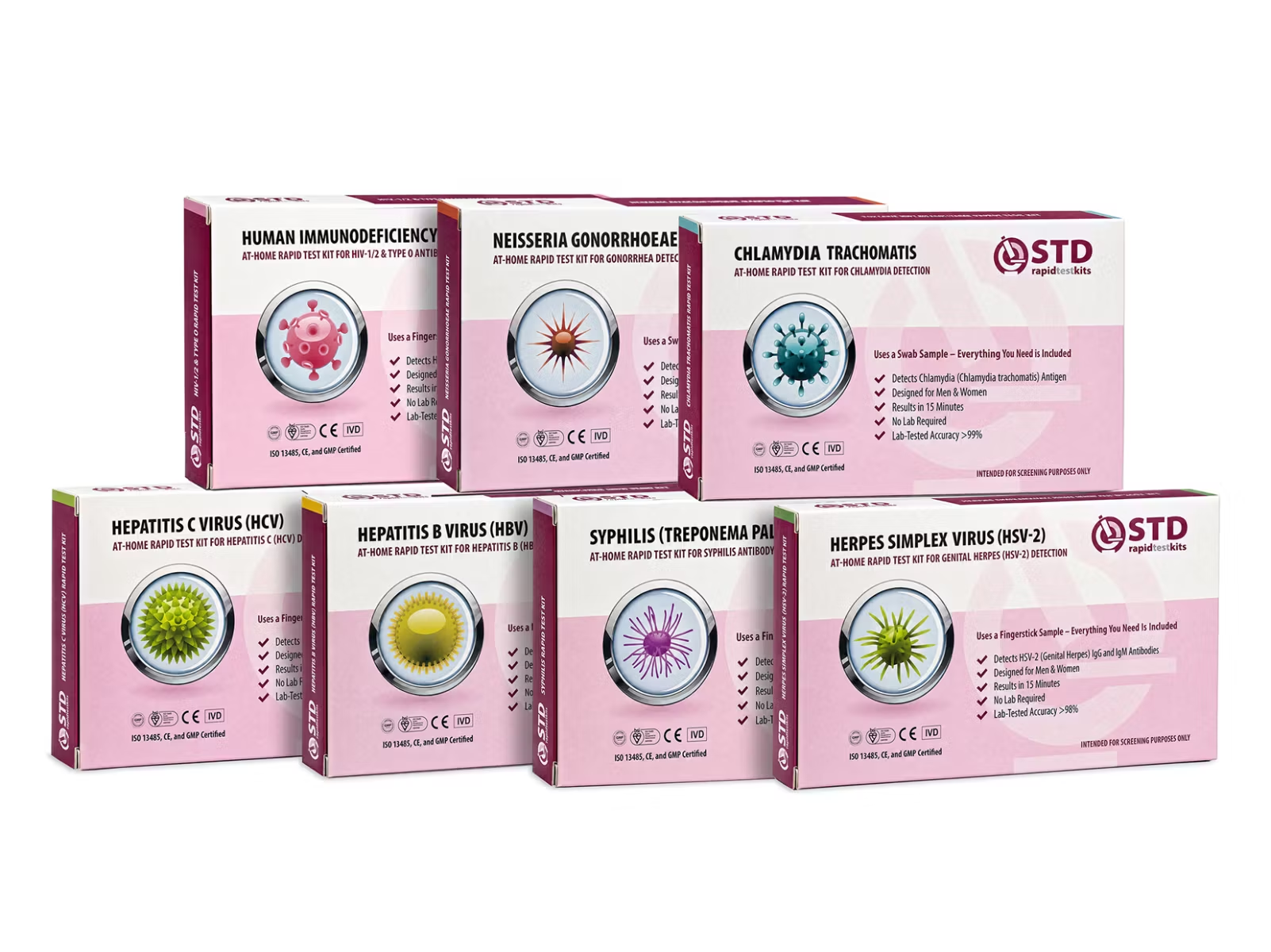
The 7-in-1 panel below covers the chlamydia, gonorrhea, syphilis, HIV, hepatitis B, hepatitis C, and herpes screens that account for the bulk of asymptomatic risk.
Window Periods and the False-Negative Trap
Every STI test has a window period: the time after exposure during which the test cannot reliably detect the infection. Test inside the window and a real infection can return a false negative. Each pathogen has its own window because each test detects a different signal: bacterial DNA or antigens for chlamydia and gonorrhea, antibodies for syphilis and HSV-2, and antigen plus antibodies for fourth-generation HIV tests.
Approximate window periods, drawn from CDC guidance and rapid-test manufacturer labels:
- Chlamydia and gonorrhea (lab NAAT or at-home rapid antigen test): detection becomes reliable from roughly 7 to 14 days post-exposure. Re-testing at 3 weeks closes most uncertainty.
- HIV (fourth-generation antigen-plus-antibody lab test): typically reliable by 18 to 45 days. Rapid antibody-only home tests are reliable later, by approximately 23 to 90 days.
- Syphilis (treponemal antibody test, the kind that detects antibodies the body makes against the syphilis bacterium): typically reliable by 3 to 6 weeks, with a 12-week confirmatory window for confident negativity.
- Hepatitis B (HBsAg test, which looks for the surface antigen on the hepatitis B virus): typically reliable by 4 to 10 weeks.
- Hepatitis C (anti-HCV antibody test, which detects antibodies against hepatitis C): typically reliable by 8 to 11 weeks; some labs use HCV RNA testing for earlier detection.
- HSV-2 (type-specific antibody test): typically reliable by 12 weeks, with some assay labels recommending a confirmatory re-test at 16 weeks.
A negative test taken inside its window is not a clean bill of health. It is a snapshot of what was detectable at that moment, and it does not rule out a new infection acquired in the days before testing. The standard recommendation is to retest at the window's close for any negative result that came too soon.
False negatives also occur outside the window for technical reasons: improper sample collection, an expired kit, exposure to extreme temperatures during shipping, and (rarely) low-bacterial-load infections that fall below the rapid test's analytical sensitivity.
A test taken before its window period closes can miss a real infection. For most chlamydia and gonorrhea kits, that means waiting at least 14 days after exposure. For HIV antibody home tests, 23 to 90 days. For syphilis and HSV-2 antibody panels, up to 12 weeks (with some HSV-2 assay labels suggesting a 16-week re-test for confidence). Repeat testing at the window's close gives a more reliable answer than a single early test.
What to Do If You Test Positive Without Symptoms
A positive result on an asymptomatic test is a clinical fact, not a judgment. Most curable STIs (chlamydia, gonorrhea, syphilis, trichomoniasis) are treatable with a single visit or short course of antibiotics. Viral STIs vary: HSV is managed (not cured) with antivirals; HPV typically self-clears within 1 to 2 years; HIV is managed long-term with antiretroviral therapy that can keep viral load undetectable and untransmittable; hepatitis B is manageable with antivirals; hepatitis C is curable with modern direct-acting antiviral therapy.
The next steps after a positive home result follow a predictable sequence:
- Confirm with a clinic-based test. Rapid lateral-flow home tests are screening tools. A confirmatory lab NAAT for chlamydia or gonorrhea, treponemal-plus-non-treponemal staging for syphilis, or supplemental Western blot or NAAT for HIV is the standard of care before treatment starts.
- Tell recent partners. The CDC's standard look-back window for partner notification is the past 60 days for chlamydia and gonorrhea. For syphilis and HIV the look-back window is longer (3 months for primary syphilis, 6 months for secondary, longer for HIV depending on staging). A direct conversation is most effective. Anonymous partner notification services like TellYourPartner.org and state-level partner-services programs are available when direct conversation is not safe or feasible.
- Get treated. First-line regimens are well-established and outlined in the CDC's STI Treatment Guidelines. For chlamydia, a 7-day course of doxycycline. For uncomplicated gonorrhea, a single intramuscular dose of ceftriaxone. For early syphilis, a single intramuscular dose of benzathine penicillin G.
- Re-screen at the appropriate interval. The CDC recommends re-testing for chlamydia and gonorrhea at 3 months after treatment, regardless of symptom status, because reinfection rates are high. Annual screening continues for sexually active people in higher-risk groups.
The goal is to break the transmission chain rather than to assign blame. A diagnosis caught early and treated promptly typically heals without long-term complications. A diagnosis avoided through silence or shame can progress to PID, infertility, neurosyphilis, or AIDS-defining illness.

The Cost of Waiting Too Long
Untreated STIs cause progressive damage that often becomes apparent only after the easy treatment window has closed.
Untreated chlamydia and gonorrhea are leading preventable causes of pelvic inflammatory disease (PID) in the U.S., and PID is the strongest known risk factor for tubal infertility, ectopic pregnancy, and chronic pelvic pain. A meaningful fraction of women with untreated chlamydia go on to develop PID, and a subset of those experience long-term fertility consequences (CDC, About STIs).
Untreated syphilis progresses through primary, secondary, latent, and tertiary stages over months to decades. Tertiary syphilis can cause cardiovascular damage (aortitis, aortic aneurysm) and neurological damage (neurosyphilis with stroke, dementia, and peripheral neuropathy). All of these are preventable with a single penicillin injection at the early stages.
Untreated HIV progresses to AIDS over an average of 8 to 10 years without antiretroviral therapy, with steeply higher transmission risk during periods of high viremia and worse treatment outcomes than diagnoses caught early. HPV-driven cervical changes typically develop over 5 to 10 years after persistent infection. Routine Pap screening combined with HPV co-testing catches these changes during the precancerous phase, when treatment is straightforward.
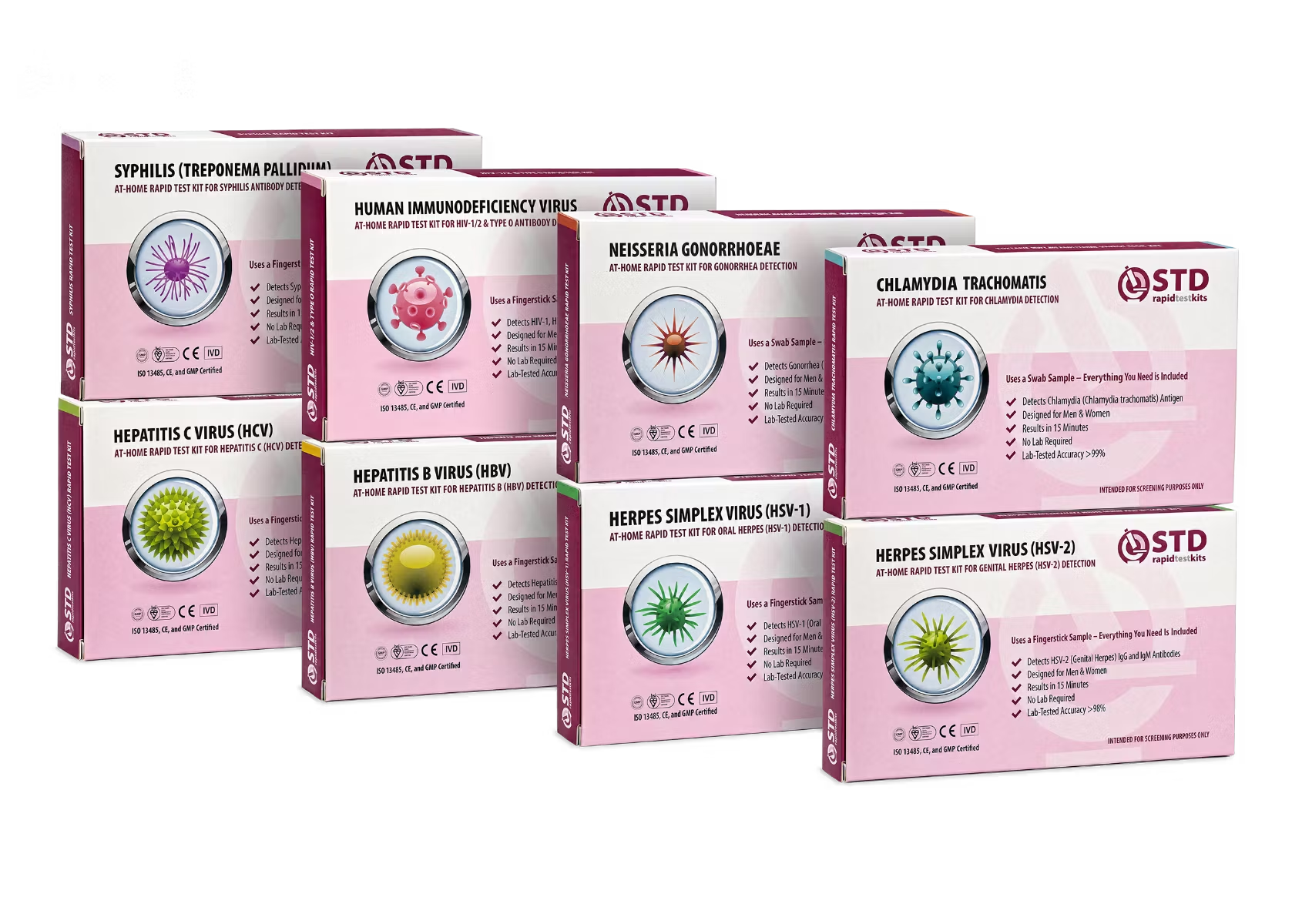
None of these progressions announce themselves with early symptoms that would prompt a test. The only way to catch them in time is regular screening. The 8-in-1 panel below is the broadest single-kit at-home option for someone who wants comprehensive screening without scheduling a clinic visit.
When Should You Actually Test? CDC Screening Guidelines
The CDC's screening guidance, simplified by group:
- Sexually active women under 25: chlamydia and gonorrhea annually.
- Sexually active women 25 and older with new or multiple partners: chlamydia and gonorrhea annually.
- Men who have sex with men: chlamydia, gonorrhea, syphilis, and HIV at least annually; every 3 to 6 months if multiple or anonymous partners. Add hepatitis C screening at least annually for those living with HIV or on PrEP.
- All adolescents and adults aged 13 to 64: HIV at least once, with repeat testing for those with ongoing risk.
- Pregnant patients: chlamydia, gonorrhea, syphilis, HIV, and hepatitis B at the first prenatal visit; repeat in the third trimester for higher-risk patients.
- Anyone with a new partner, multiple partners, or a partner who tested positive: a full panel before next contact, and again at the relevant test's window-period closure.
These intervals are written for asymptomatic people. Symptoms drive only a minority of new diagnoses each year; most are caught by the schedule above. A practical heuristic: if you have had a new partner since your last test, or if your last full panel was more than 12 months ago, you fall inside one of the groups above. Home rapid tests close the gap between a clinic visit and “I am overdue but have not gotten around to it.”
FAQs
- Can you spread an STI without knowing you have one?
- Yes. Asymptomatic transmission is the dominant mode of spread for most common STIs. Chlamydia, gonorrhea, HSV-2, and HPV all transmit during periods when neither partner notices anything unusual. The CDC's prevention guidance is built around this fact, which is why screening is recommended on a schedule rather than only when symptoms appear.
- Which STIs are most likely to be asymptomatic?
- Chlamydia is the standout: most infections cause no symptoms in women, and many cause no symptoms in men. Gonorrhea is frequently silent in rectal and pharyngeal sites. Most HSV-2 infections go unrecognized for years. HPV is asymptomatic in the majority of people who acquire it. Early-stage HIV and primary syphilis are also often missed.
- If I test negative right after a possible exposure, am I in the clear?
- Probably not. A test taken inside its window period can miss a real infection. For most rapid kits, that means waiting roughly 14 days post-exposure for chlamydia and gonorrhea, 23 to 90 days for HIV (depending on test generation), up to 12 weeks for syphilis, and around 12 weeks for HSV-2 antibody tests (some assay labels recommend a 16-week re-test). A confirmatory retest at the window's close gives a more reliable result.
- How often should I test if I am sexually active and have no symptoms?
- The CDC's screening schedule is the practical answer: annual chlamydia and gonorrhea testing for sexually active women under 25 and for any sexually active adult with new or multiple partners. Men who have sex with men should consider testing every 3 to 6 months, plus annual hepatitis C if they live with HIV or take PrEP. Pregnant patients screen at the first prenatal visit and again in the third trimester if higher-risk. Everyone aged 13 to 64 should have at least one HIV test in their lifetime, with repeats based on ongoing exposure.
- Can rapid at-home tests detect asymptomatic infections?
- Yes. Home kits use the same sample types as their lab counterparts: a self-collected swab for chlamydia, gonorrhea, trichomoniasis, and HPV; a fingerstick blood drop for HIV, syphilis, hepatitis B, hepatitis C, and HSV-2 antibodies. The chemistry is rapid lateral-flow, which has lower analytical sensitivity than lab NAAT or PCR. So a positive home result should be confirmed in clinic, and a single home test does not replace a clinic-based confirmation when treatment decisions are at stake.
- What should I tell a partner if I test positive without symptoms?
- Be direct, factual, and as soon as practical. A simple script: “I tested positive for [infection]. I had no symptoms, but I wanted to give you a chance to test and treat.” Anonymous notification services (TellYourPartner.org, state-level partner services) are available if direct conversation is not safe or feasible.
- Do condoms protect against asymptomatic STIs?
- Condoms reduce but do not eliminate transmission risk. They are highly effective for fluid-borne infections (chlamydia, gonorrhea, HIV) and significantly less effective for skin-contact infections (HSV, HPV, syphilis chancres on uncovered skin). Combined with regular testing, they meaningfully lower risk.
- How long can an STI stay hidden before causing health problems?
- The window varies. Chlamydia and gonorrhea can lead to PID and tubal damage within months. Syphilis progresses through latent stages over years before causing cardiovascular or neurological damage. Untreated HIV can progress to AIDS over 8 to 10 years. HPV-driven cervical changes typically develop over 5 to 10 years. Earlier diagnosis means simpler treatment in every case.
Our article was constructed based on current advice from the most prominent public health and medical organizations, and then molded into simple language based on the situations that people actually experience. Specific stats and recommendations are linked inline to current CDC, WHO, NHS, and NIH publications. We do not provide clinical diagnosis. For symptoms or a new exposure that concerns you, see a licensed provider.
- U.S. Centers for Disease Control and Prevention. About Sexually Transmitted Infections. Background on prevalence and asymptomatic transmission for chlamydia, gonorrhea, and other common STIs.
- U.S. Centers for Disease Control and Prevention. About Chlamydia. Fact sheet on chlamydia symptoms, transmission, and the high frequency of asymptomatic infection.
- U.S. Centers for Disease Control and Prevention. How and When to Get Tested for STIs. Public guidance on test timing, sample types, and confirmatory testing.
- U.S. Centers for Disease Control and Prevention. STI Treatment Guidelines: Screening Recommendations. Age- and risk-based screening intervals for asymptomatic populations.
- U.S. Centers for Disease Control and Prevention. About Genital Herpes. Asymptomatic viral shedding and transmission dynamics for HSV-2.
- World Health Organization. Sexually Transmitted Infections (STIs) Fact Sheet. Global prevalence and asymptomatic transmission of major STIs.
- UK National Health Service. Sexually Transmitted Infections (STIs). Patient-facing reference on common STI symptom presentations, asymptomatic spread, and testing.
- National Institute of Child Health and Human Development. Sexually Transmitted Diseases (STDs) Topic Overview. Plain-language reference on STI biology, transmission, and prevention.
