Published: July 2025 | Last updated: May 2026 | Editorial review and quality control: Martina N.
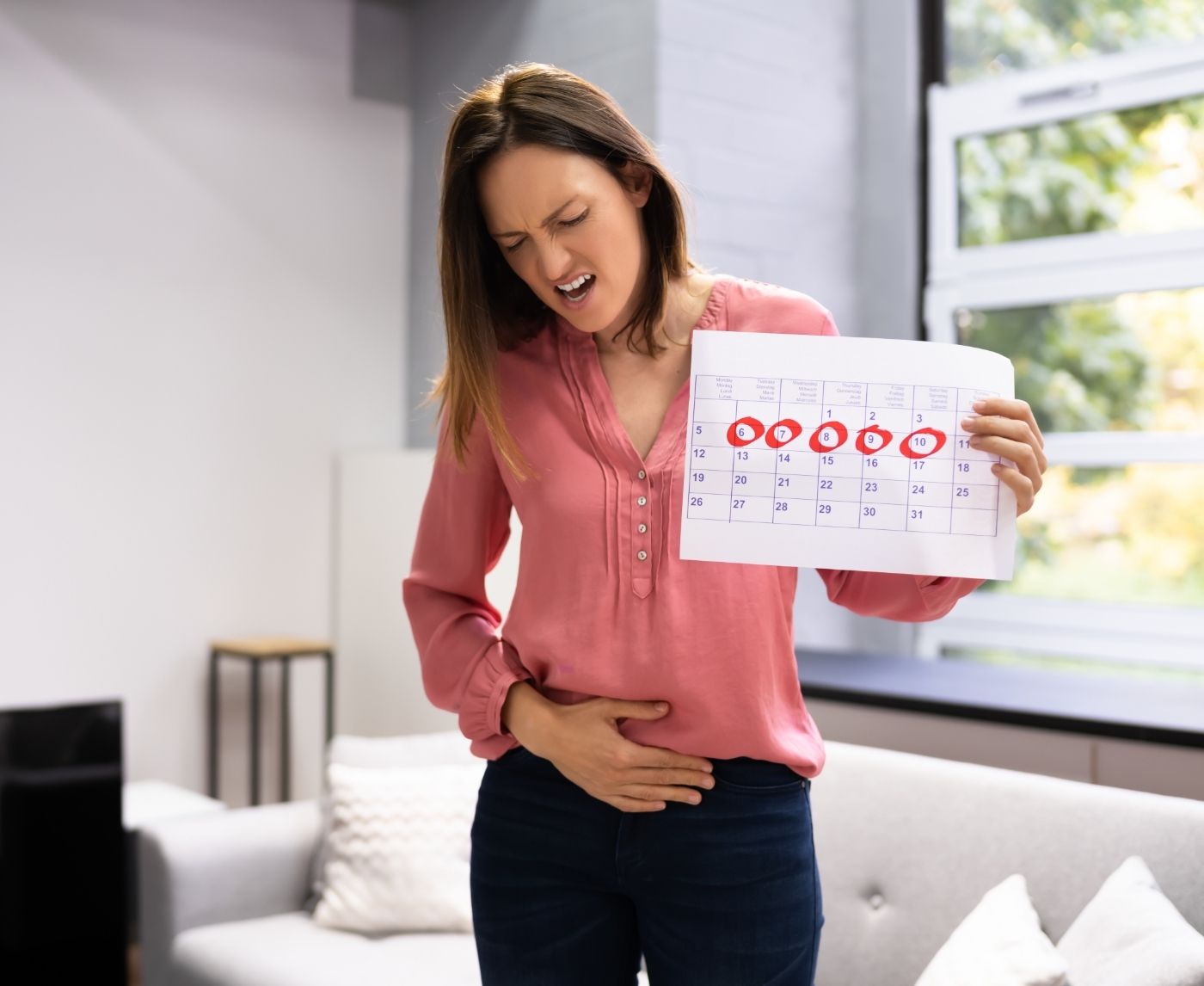
You took a risk, your period started, and now you are staring at an at-home test kit wondering whether bleeding will ruin the result. The short answer is reassuring: for most STI tests, your menstrual cycle does not change accuracy in any meaningful way.
The longer answer matters too. Whether waiting helps and when waiting changes nothing are two different questions. This guide separates biology from anxiety so you can decide whether to swab, draw blood, or hold off a couple of days.
Key takeaways
- Fingerstick blood tests and most vaginal swab tests stay reliable during menstruation. The variable that moves accuracy is timing after exposure, not where you are in your cycle.
- Waiting until your period ends only changes the picture in narrow cases: a vaginal swab during very heavy flow, or testing before you have reached the window period for the infection you are checking.
What menstruation changes about testing (and what it doesn't)
Menstrual flow is blood, cervical mucus, and the shed lining of the uterus leaving the body through the vagina. It does not change whether Chlamydia trachomatis or Neisseria gonorrhoeae are present in your cervix or urethra. It does not erase the parasite that causes trichomoniasis. And it does not interfere with the antibody production that drives blood-based testing for HIV, syphilis, or hepatitis.
What menstruation can do, in a narrow set of cases, is make sample collection a bit messier. A messier sample is still a readable one. Modern molecular assays are designed to find tiny amounts of pathogen genetic material against a background of mixed cells and fluids, including blood. The detection chemistry does not care that you are bleeding.
The practical question is whether the sample you collect at home contains what the test needs to find. For fingerstick blood and clinic-collected urine, the answer is almost always yes. For vaginal swabs, the answer depends on how heavy your flow is.
Patient-collected vaginal swab specimens are equivalent in sensitivity and specificity to those collected by a clinician using NAATs.
How each test type holds up during your period
Different tests use different sample types, and each handles menstrual blood differently. Our at-home rapid kits are lateral-flow tests, not laboratory NAATs, but the same principle holds on either chemistry: the test looks for specific pathogen targets, and bleeding does not erase those targets.
| Test type | What it detects | Does menstrual blood affect it? | Should you wait? |
|---|---|---|---|
| Vaginal swab (rapid lateral-flow or lab NAAT) | Chlamydia, gonorrhea, trichomoniasis, HPV | Heavy bleeding can dilute the sample with blood | Wait only if flow is unusually heavy |
| Urine NAAT (clinic-collected) | Chlamydia, gonorrhea | Minimal impact if first-catch sample is collected properly | Usually no need to wait |
| Fingerstick blood (rapid lateral-flow) | HIV, syphilis, hepatitis B, hepatitis C, HSV antibodies | No impact | No need to wait |
| Venous blood draw (clinic) | HIV, syphilis, hepatitis panels | No impact | No need to wait |
The real timing question: window periods after exposure
If we are going to talk about accuracy honestly, we have to talk about window periods. Most false negatives do not come from testing during a period. They come from testing too soon after exposure, before the infection has reached detectable levels.
The CDC's HIV testing overview notes that fourth-generation antigen/antibody combination tests detect most HIV infections within about 18 to 45 days, while RNA tests can detect HIV as early as 10 to 33 days. Chlamydia and gonorrhea tests typically reach reliable sensitivity around two weeks after exposure. Syphilis antibody tests may take several weeks to become reactive after exposure, with reliability climbing further over the following weeks; consult the CDC's syphilis resources or your clinician for current guidance on the right retest mark.
None of those numbers shift with your cycle.
| Infection | Best time for high confidence | Sample type used in our kits |
|---|---|---|
| Chlamydia | About 14 days after exposure | Vaginal swab |
| Gonorrhea | About 14 days after exposure | Vaginal swab |
| Trichomoniasis | 2 to 4 weeks after exposure | Vaginal swab (women only) |
| Syphilis | Several weeks; reliability climbs further with time | Fingerstick blood (antibody) |
| HIV | 6 weeks for standard screening; 10 to 33 days for RNA; 18 to 45 days for Ag/Ab | Fingerstick blood (antibody) |
| Hepatitis B and C | 12 weeks for high confidence (HBsAg / HCV Ab) | Fingerstick blood |
Practical sample collection during your period
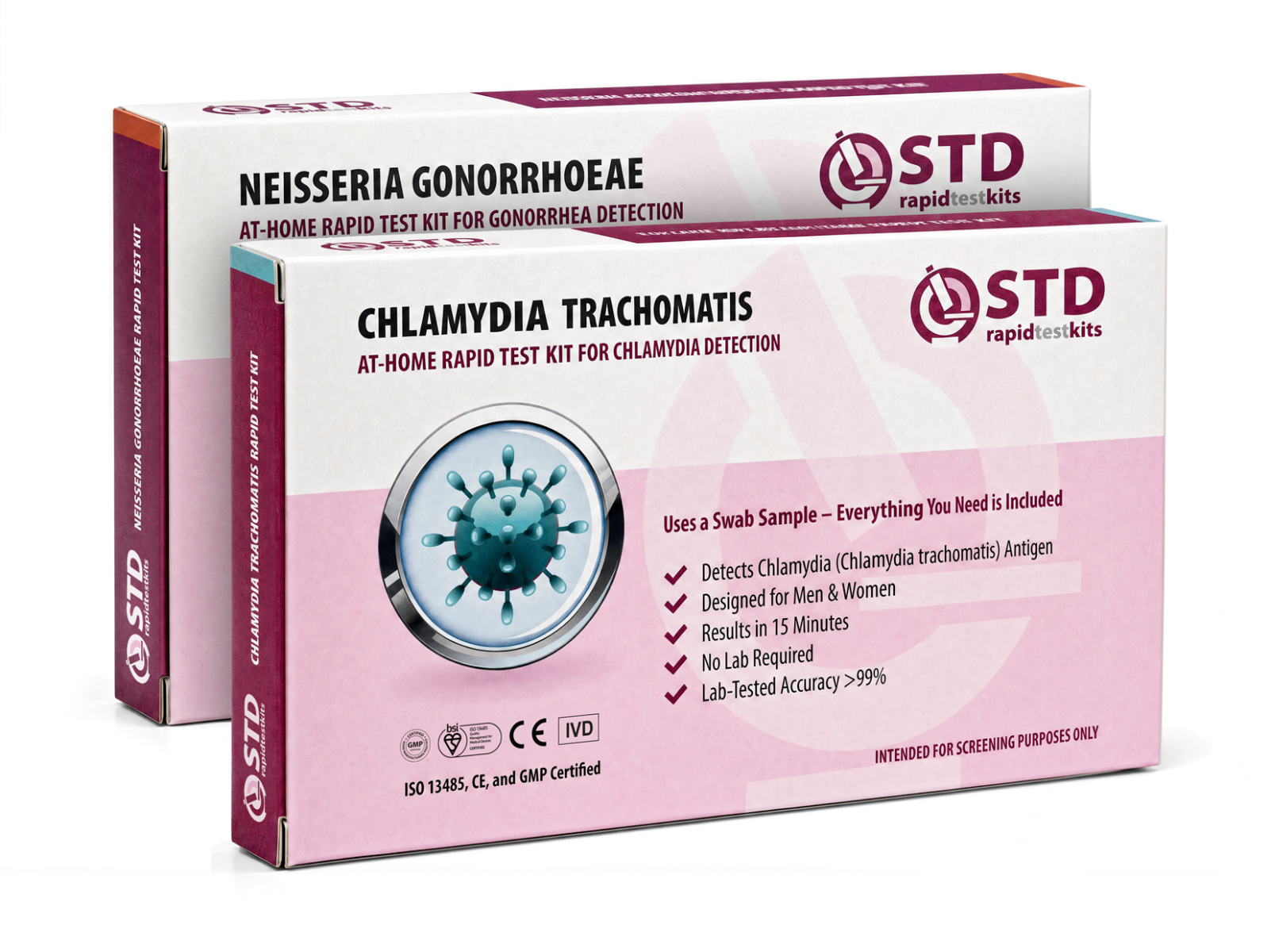
If you are using one of our rapid chlamydia and gonorrhea swab kits, aim for mid-vaginal collection rather than near the vaginal opening, where blood flow concentrates. On a light or moderate flow day, that is usually enough to capture cervical cells along with everything else.
For fingerstick blood tests (HIV, syphilis, hepatitis B or C, and our HSV antibody panels), menstruation has zero impact. The capillary blood in your fingertip carries the same antibody markers regardless of cycle phase. Your systemic immune response does not pause for a period.
If you are taking a urine-based test through a clinic, collect the first portion of your stream rather than midstream, and avoid wiping immediately before. Light contamination with menstrual blood does not invalidate molecular detection, and a clinician can guide collection if you are unsure.
When heavy bleeding is worth waiting out
There is a narrow set of situations where delaying makes sense. The reason is sample quality. Bacteria and viruses live the same way from day three to day six of a cycle; what changes is the proportion of blood in a swab sample.
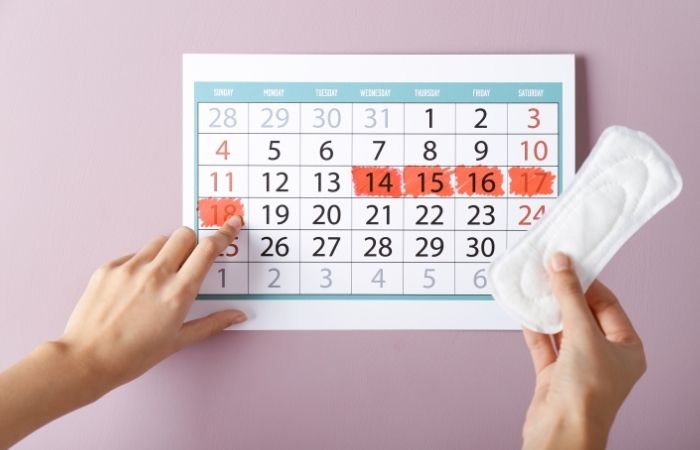
If you are soaking through a tampon or pad every hour, passing large clots, or experiencing what clinicians call heavy menstrual bleeding (HMB), a vaginal swab may collect more blood than vaginal cells. The test can usually still process the sample, but a lighter-flow sample is easier to read and less likely to produce an inconclusive result line on a rapid cassette.
For most people on most cycle days, this is not the situation. If your flow is moderate or light, there is no biological advantage to waiting.
One scenario where you should not wait at all: severe symptoms during a period. Pelvic pain, fever, foul-smelling discharge, or pain on urination warrant prompt clinic care, not patience with an at-home test.
You are soaking through a pad or tampon within an hour. You are passing large clots. You are experiencing the heaviest day of an unusually heavy cycle. These are the conditions where a vaginal swab sample can be diluted enough to risk an inconclusive cassette line. For a fingerstick blood test, none of this applies.
Period bleeding vs other bleeding worth investigating
This is where searches get frantic. "Bleeding after sex or period?" "Spotting vs STD?" "Is this normal?" When you are already on your period, every cramp and color shift can feel suspicious.
Most bleeding patterns are exactly what they look like: a normal menstrual cycle. Some infections, particularly chlamydia, gonorrhea, and trichomoniasis, can cause irregular spotting between periods or bleeding after intercourse. Clinicians recognize this pattern as a sign of cervicitis, the inflammation of the cervix that often accompanies these infections.
| Feature | Typical period | Possible STI-related bleeding |
|---|---|---|
| Timing | Predictable monthly cycle | Between periods, or after sex |
| Flow pattern | Starts heavier, then tapers | Light spotting or unexpected bleeding |
| Other symptoms | Cramps, fatigue, mood shifts | Pelvic pain, unusual discharge, odor |
| Duration | About 3 to 7 days | Irregular or persistent spotting |
Does period sex change anything about testing?
A common myth says STI risk drops during menstruation, or that testing during a period is pointless because everything gets flushed out. Neither is true. Blood can increase the efficiency of certain transmissions, particularly bloodborne viruses like HIV and hepatitis B or C, because blood is one of the fluids that carries those viruses at higher concentrations. Bacterial infections like chlamydia and gonorrhea do not get rinsed away by menstrual flow.
If exposure happened during your period, your testing timeline anchors to the date of that exposure, not to when your cycle ends.
Myth 1: STI risk drops during menstruation. The opposite can be true for bloodborne viruses, where the presence of blood can raise transmission efficiency.
Myth 2: Testing during a period is pointless because the infection gets flushed out. Nothing gets flushed out. Bacteria and viruses live where they live, regardless of cycle phase.
Decision guide: test now or wait?
Test now if:
- It has been more than 14 days since a potential chlamydia or gonorrhea exposure, your flow is light to moderate, and you want answers.
- You are using a fingerstick blood test (HIV, syphilis, hepatitis, herpes antibody panels). Bleeding has no effect on these.
- You have specific symptoms that worry you, even if they appeared during your period.
Wait a couple of days if:
- You are using a vaginal swab and your flow is unusually heavy (soaking protection within an hour, passing large clots).
- You have not yet reached the window period for the infection you are testing for. In that case, the wait is about biology, not menstruation.
See a clinician now if:
- You have severe pelvic pain, fever, foul-smelling discharge, or other signs that could point to pelvic inflammatory disease (PID). Untreated chlamydia can progress to PID, and the CDC notes that treatment delays have been associated with PID complications in some women, with PID itself a known route to infertility and ectopic pregnancy.
The bottom line
Your period is not a barrier to clarity. It is not a reset button for risk, and it is not a reason to delay answers that could protect you and your partners. If you are inside the proper window period and your only hesitation is bleeding, you can test. If your flow is unusually heavy and you want the cleanest possible swab sample, waiting a couple of days is reasonable but not required.
If you are past the window period and your flow is not unusually heavy, you can test today.
Test today if you are past the relevant window period and your flow is light to moderate, or if you are using a fingerstick blood test on any cycle day.
Wait a day or two only if you are using a vaginal swab and your flow is unusually heavy. The wait is about sample quality, not about whether bleeding hides an infection.
See a clinician now if you have severe pelvic pain, fever, or foul-smelling discharge, regardless of where you are in your cycle.
Frequently asked questions
- Can I take an STI test while I am on my period?
- Yes. Fingerstick blood tests and most vaginal swab tests stay accurate during menstruation, and clinic-collected urine tests do too. If your flow is very heavy and you are using a swab, waiting a day or two for lighter flow can make collection easier, but it is not medically required.
- Will menstrual blood cause a false negative?
- Not in any meaningful way for modern molecular or lateral-flow tests. These assays detect specific bacterial or viral targets, not blood. The most common cause of a false negative is testing before the window period has passed, not testing during a period.
- Can my period cause a false positive on an STI test?
- No. Menstrual blood does not contain bacterial DNA from chlamydia or gonorrhea, and it does not trick antibody tests for HIV or syphilis into reading positive. A positive result during your period should be treated as clinically meaningful and confirmed through standard follow-up.
- I tested during my period and it was negative. Should I trust it?
- 14 days after exposure for chlamydia and gonorrhea, 6 weeks for HIV and syphilis. If you hit both windows, the negative is reliable. Bleeding on the day of testing did not change the math; the window period did. If you tested early, retest at the right mark.
- Is it safer to wait until my period ends, just to be sure?
- Usually no. Waiting feels strategic but rarely changes the outcome. The exception is heavy flow with a vaginal swab, where a couple of days of lighter bleeding can produce a cleaner sample. If you are using a blood test or your flow is moderate, there is no biological reason to wait.
- Does a urine STI test work during my period?
- Yes. Clinic-collected first-catch urine remains reliable for chlamydia and gonorrhea NAAT during menstruation. Light blood contamination does not interfere with the molecular detection process. Our at-home kits use vaginal swabs and fingerstick blood rather than urine, but the same principle applies across sample types: bleeding does not erase the pathogen targets the test looks for.
- If I had sex during my period, when should I test?
- Count from the date of exposure, not from when your cycle ends. About 14 days after exposure is the reliable mark for chlamydia and gonorrhea. HIV and syphilis need longer (typically four to six weeks for high confidence). Bleeding on the day of testing does not change those windows.
How we sourced this article: This guide synthesizes current recommendations from the U.S. Centers for Disease Control and Prevention (CDC) and the UK's National Health Service (NHS) on STI screening, testing-window periods, and sample-collection technique. We reviewed the CDC STI Treatment Guidelines for chlamydia, gonorrhea, and screening, plus the CDC's HIV testing overview, to clarify how menstrual cycle phase intersects with test performance. This article is published by stdrapidtestkits.com, which sells at-home STI testing kits; products are recommended based on fit for the reader's concern, not commercial benefit.
- U.S. Centers for Disease Control and Prevention. STI Screening Recommendations, including testing intervals for chlamydia, gonorrhea, syphilis, and HIV.
- U.S. Centers for Disease Control and Prevention. Chlamydial Infections Treatment Guidelines, including the statement that patient-collected vaginal swab specimens are equivalent in sensitivity and specificity to clinician-collected specimens using NAATs, plus PID complication context.
- U.S. Centers for Disease Control and Prevention. Gonococcal Infections Treatment Guidelines, including testing intervals and specimen recommendations for gonorrhea screening.
- U.S. Centers for Disease Control and Prevention. HIV Testing Overview, including window-period estimates for antibody, antigen/antibody, and RNA tests.
- U.S. Centers for Disease Control and Prevention. Syphilis Treatment Guidelines, including serologic testing methodology and treatment intervals.
- U.K. National Health Service. Sexually transmitted infections (STIs) overview page covering symptoms, testing, and when to seek care.
