Published: July 2025 | Last updated: May 2026 | Editorial review and quality control: Martina N.
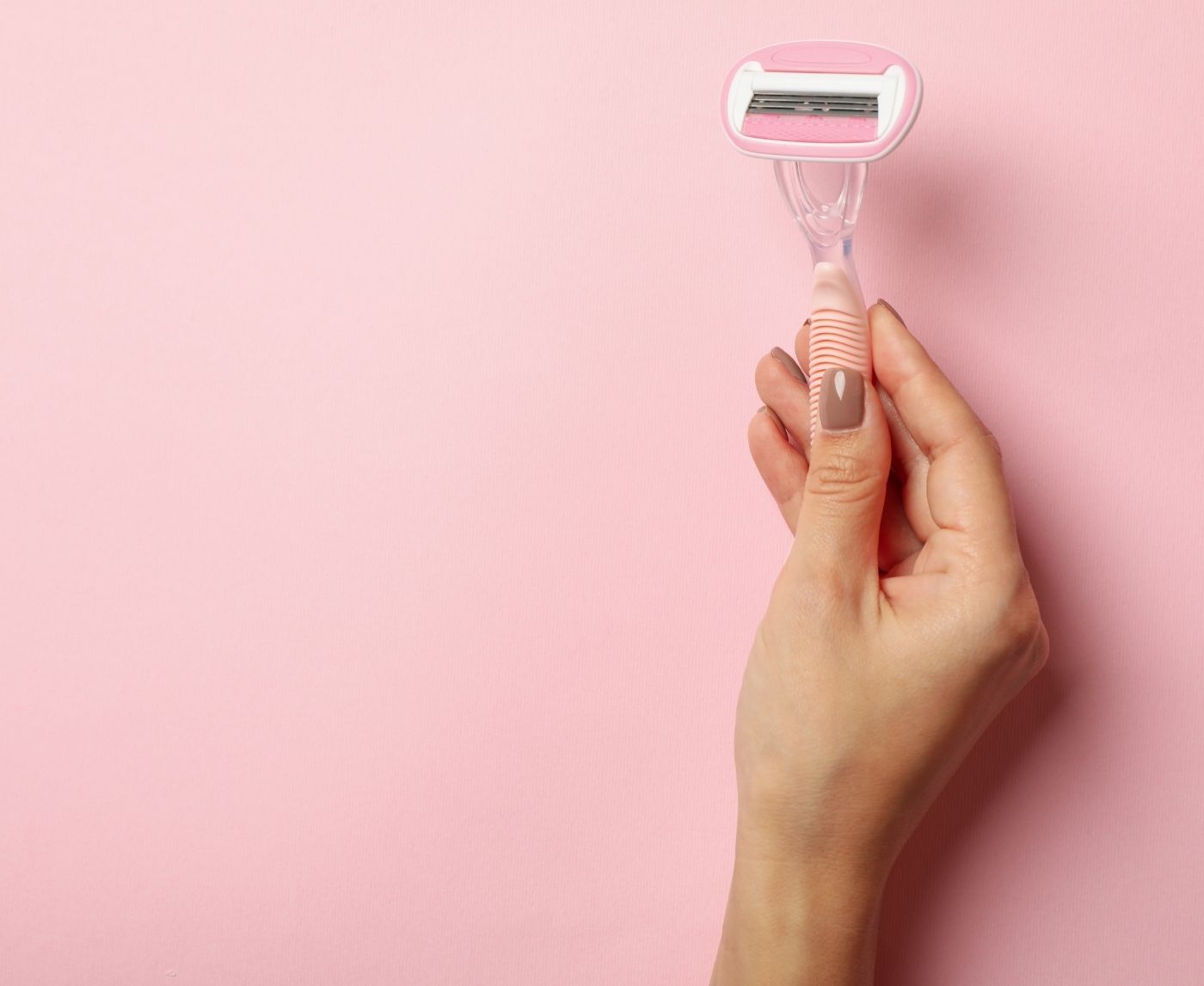
Shaving or waxing your pubic hair does not give you an STI. The razor isn't the infection. Bacteria and viruses don't spawn from a wax strip or a shaving cream can. What grooming changes is the condition of your skin afterwards, and that small change is what most readers are worrying about when they search this question.
Three things factor in simultaneously. First, microtears do happen, even when you can't see them. Second, certain STIs (herpes, HPV, syphilis) transmit through direct skin-to-skin contact, which means a compromised skin barrier matters. Third, most groomed-skin worry turns out to be ordinary irritation that heals on its own within a week. Sorting which is which is what the rest of this article is for.
Key Takeaways
- Shaving and waxing don't transmit STIs on their own, but the microtears they leave behind can lower your skin's defense against herpes, HPV, and syphilis if exposure happens within 24 to 48 hours.
- Most post-grooming skin worry is folliculitis or razor burn that fades within a week. STI symptoms (clustered blisters, painless ulcers, persistent warts) follow a different pattern and timeline.
How shaving and waxing create a window for infection
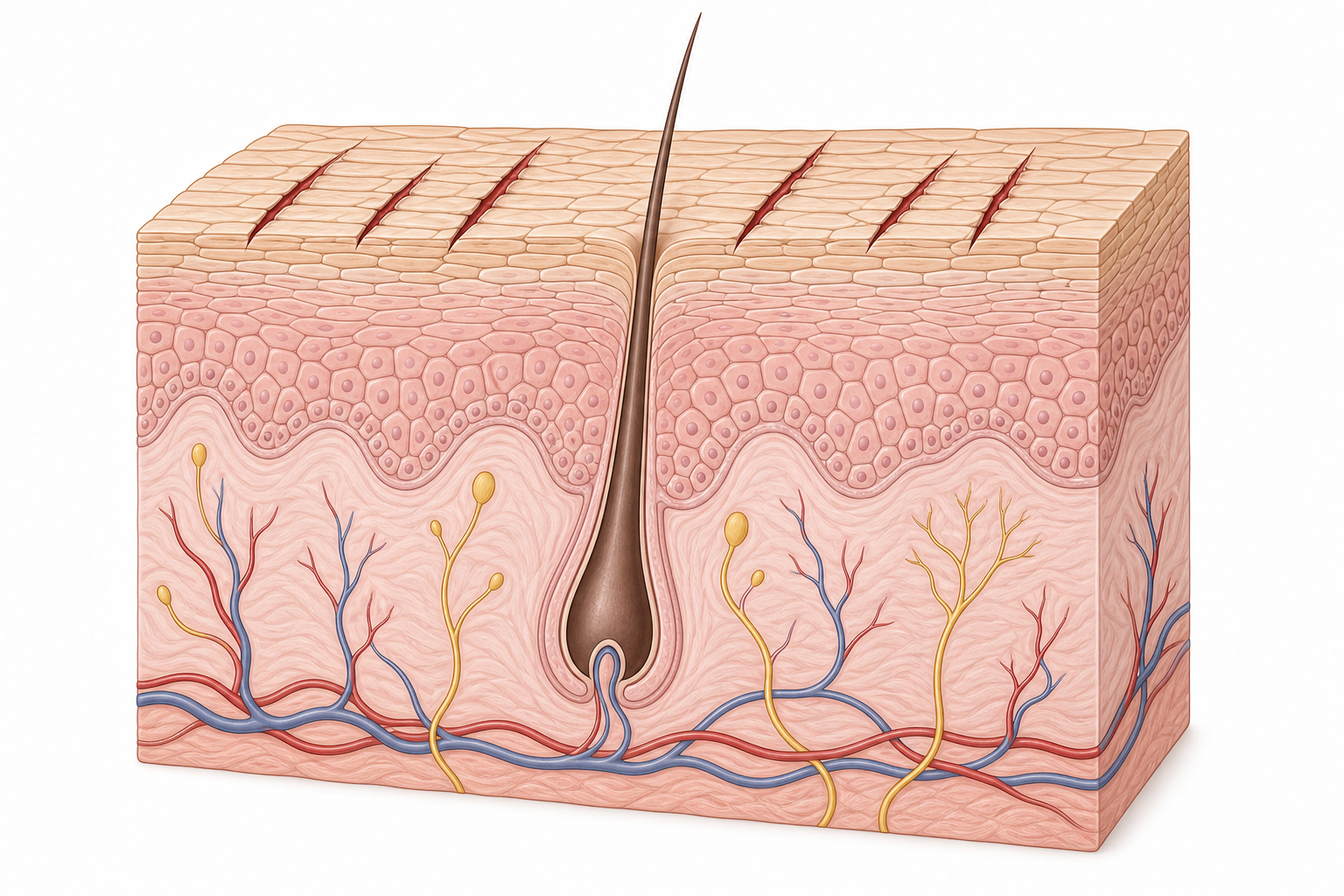
Your skin is a working barrier. The outer layer (the stratum corneum) is essentially a brick wall of dead cells held together with lipids. It blocks most pathogens from reaching the living tissue and immune cells underneath. When you shave, even with a fresh razor and proper cream, you scrape and abrade that barrier. Most of those abrasions are too small to see, but they're real. Waxing pulls hair from the follicle and can take a thin layer of skin with it, leaving similar microscopic damage across a wider surface area.
Once the barrier is compromised, two separate things can happen. The first is a bacterial problem. Bacteria already on your skin (most commonly Staphylococcus species) can colonize an open follicle and cause folliculitis: small pus-filled bumps centered on hair shafts. MedlinePlus describes folliculitis as damaged follicles becoming infected with staph bacteria, with shaving as a recognized trigger and recommends switching to a clean razor or an electric razor each time.
The second, and more relevant to STI risk, is what happens during sexual contact in the day or two after grooming. Three of the most common viral STIs (herpes simplex virus, human papillomavirus, and early-stage syphilis) can transmit through skin-to-skin contact alone. The CDC's genital herpes page notes that HSV passes through vaginal, anal, or oral contact with someone who has the infection, and the virus can shed from the surrounding skin without a visible sore.
Skin that has been freshly shaved is, briefly, more permissive to that contact. The hair follicles are open. The thin epithelium is microscopically nicked. Local immune cells are still ramping up their inflammatory response. None of this matters if there's no exposure. All of it matters if exposure happens in the wrong window.
The 24 to 48 hours after grooming is when hair follicles are open and surface microtears have not yet closed. If skin-to-skin contact with a viral STI happens in that window, the skin barrier offers less resistance than usual. After 48 hours, most surface damage is repaired and the barrier returns to baseline.
Razor burn or something else? How to tell
The first 48 hours after grooming are noisy. Almost everyone gets some redness, some itching, maybe a few small bumps. The trick is knowing what timeline and pattern looks like normal irritation versus something that needs attention.
Within hours of shaving: Razor burn is surface-level redness and itching, usually across the whole shaved area, sometimes with tiny pinpoint bumps where the blade caught the skin. It feels tender to touch but doesn't throb or ooze. Contact dermatitis from a new shaving cream presents the same way and tends to resolve once the irritant is gone.
Day 2 to 3: Ingrown hairs start showing up, especially in coarse or curly hair. They look like single bumps with a visible curled hair underneath, sometimes with a small white pustule. Folliculitis can also appear here as multiple small red bumps centered on hair follicles, sometimes with pus. Both usually resolve on their own within a week with warm compresses and avoidance of further shaving.
Day 4 to 10: This is the window where viral STI symptoms typically begin if exposure happened around the time of grooming. The WHO fact sheet on herpes simplex virus describes the prodrome: symptoms often begin with tingling, itching, or burning near where the sores will appear. Then small fluid-filled blisters cluster together and break, forming painful sores that the CDC notes may take a week or more to heal. That distinction matters: razor burn rarely lasts past day 3 or 4. A blistering, cluster-forming sore that appears in week one is following a different script.
Beyond a week: Most grooming irritation is fully healed. If you still have a single painless ulcer, persistent painless wart-like bumps, or worsening symptoms (burning when you pee, swollen lymph nodes near the groin, fever), the pattern no longer fits razor burn. The CDC describes the primary syphilis chancre as firm, round, and painless. HPV warts are usually painless, persistent, and can be flesh-colored or pink. Neither is normal post-shave skin.
If a sore lasts longer than 7 to 10 days, blisters cluster together, you have burning when you urinate, or you feel swollen lymph nodes in your groin, this is no longer a grooming question. See a clinician for a swab or a blood test. Self-diagnosing from internet photos is unreliable, and early treatment for an actual STI matters.
Which STIs the research links to grooming
The most-cited paper on this question is a 2017 study by Osterberg and colleagues in Sexually Transmitted Infections (a BMJ journal), which surveyed 7,580 US adults aged 18 to 65 about pubic hair grooming and self-reported lifetime STI history. The headline finding: 74% of participants reported grooming, and people who groomed regularly, especially "extreme groomers" (defined as removing all pubic hair more than 11 times a year), had higher odds of reporting a past STI than non-groomers. The association was strongest for the skin-to-skin viral infections: herpes, HPV, and molluscum contagiosum. It was also present, though weaker, for chlamydia and gonorrhea.
That's an association, not proof of causation, and the authors are careful about the distinction. The data can't say whether grooming itself caused those infections, or whether people who groom more are also having more partners or more frequent sexual contact. The most likely answer is both: grooming creates a brief window of skin vulnerability, and the people who groom regularly tend to be people who are also sexually active in ways that bring exposure.
HIV is the fear most readers bring to this search, so it deserves a direct answer. Grooming does not meaningfully raise HIV transmission risk. HIV requires mucosal membrane contact, bloodstream exposure, or breast milk, not the surface-level skin disruption that shaving creates. The one narrow exception is a shared razor that contacts fresh blood from an infected person, which is part of why the no-razor-sharing rule exists.
What the research is clearer about is the bacterial side. Folliculitis directly follows shaving and waxing in a meaningful percentage of people. Rare but documented case reports describe MRSA (methicillin-resistant Staphylococcus aureus) outbreaks following pubic hair removal, particularly in shared environments like gyms or locker rooms where the bacteria can spread by skin or surface contact. These are not sexually transmitted, but they are real grooming-related infections that can mimic an STI in appearance.
The takeaway: when this article and others say grooming "increases STI risk," it's that narrow set of skin-to-skin viral infections the research points to. It's not a generic raised risk for everything, and it's not catastrophic. It's a measurable but moderate uptick that depends heavily on what kind of contact happens after the grooming.
Three persistent myths about grooming and STIs
Myth 1: Shaving directly causes STIs. It doesn't. Razors, wax, and depilatory creams don't generate viruses or bacteria. The infection has to come from a partner, from a contaminated tool, or from a colonized environment. What shaving does is reduce the body's barrier to an infection that's already nearby. If your tools are clean and you have no exposure to anyone carrying an STI, shaving is just shaving.
Myth 2: Waxing is safer than shaving. Not in the way most people assume, and sometimes the opposite. Waxing pulls hair from the follicle and removes more of the surrounding skin layer than shaving does. The exposed surface is wider, and the follicles are open at the root. Hot wax can cause minor burns, especially with DIY kits. The combination of broken skin and follicle openings is, in some ways, a larger window than the parallel scrapes that shaving leaves. The trade-off is that waxing is less frequent, so the cumulative number of healing days per year may be lower.
Myth 3: If it itches, it's just razor burn. This is the riskiest myth on the list, because herpes outbreaks and contact irritation can both start with itching. The WHO herpes fact sheet describes symptoms beginning with tingling, itching, or burning before visible blisters appear. HPV can cause itching around painless warts. Even chlamydia and gonorrhea, though usually internal, can produce itching at the urethra or rectum that's hard to attribute to anything visible. Itching alone doesn't tell you which one. The timeline and what comes next does. If itch turns into clustered blisters, persistent warts, or burning urination, the answer is testing.
HSV-1 is mainly transmitted via contact with the virus in sores, saliva or skin surfaces in or around the mouth. If symptoms occur, they often begin with tingling, itching or burning near where the sores will appear.
Safer grooming, less risk
None of this means you have to stop. Grooming is a personal choice, and the goal is keeping the barrier intact, the tools clean, and the timing smart. The practices below are the ones that meaningfully change risk, based on what folliculitis research and CDC guidance broadly converge on.
- Don't groom right before sex. Give your skin at least 24 to 48 hours to heal before any oral, anal, or genital contact with another person. The skin's normal repair processes close most microtears in that window.
- Use a fresh, single-use razor. Dull blades drag and increase microtears. Reused razors can also harbor bacteria from previous shaves. Don't share razors with anyone, even a long-term partner. Bloodborne pathogens like hepatitis B and C can transfer on razor surfaces.
- Trim before you shave. Coarse pubic hair tugs against a blade. Trimming with scissors or an electric trimmer first reduces blade resistance, which reduces nicks. For some people, trimming alone (no shave, no wax) is the most skin-friendly option and preserves a good chunk of the natural barrier.
- Shave with the grain, not against it. Going against the direction of hair growth gets a closer shave but increases ingrown hairs and folliculitis. With the grain is less aggressive and heals faster.
- Moisturize after, with something gentle. A fragrance-free lotion or pure aloe gel calms inflammation and helps the barrier reconstruct. Avoid alcohol-based aftershaves on the genital area: they sting and can prolong irritation.
For waxing specifically, treat the post-wax skin like a small burn: clean, undisturbed, no new friction. Disinfect the area before and after. Wait 24 to 72 hours before sexual contact. If you're using DIY wax, follow temperature instructions carefully. Most wax burns happen because the wax was hotter than the package directed.
One question worth answering directly: does pubic hair actually protect you from STIs? Probably yes, marginally. The hair acts as a small physical buffer against direct skin-to-skin contact during friction, and the follicle structure helps trap and slow surface bacteria. It's not a barrier in the public-health sense (a condom is). But the research is consistent that going completely bare is associated with slightly more skin-to-skin transmission events than partial trimming or no removal.
Disclosure: stdrapidtestkits.com publishes this article and sells the at-home rapid tests referenced below. We recommend products based on fit for the reader's concern, not commercial benefit.
When to test and what to choose
The right test depends on what you're worried about and how much time has passed. Window periods exist for a reason: tests look for either the pathogen itself or the antibodies your immune system makes in response, and both take time to reach detectable levels.
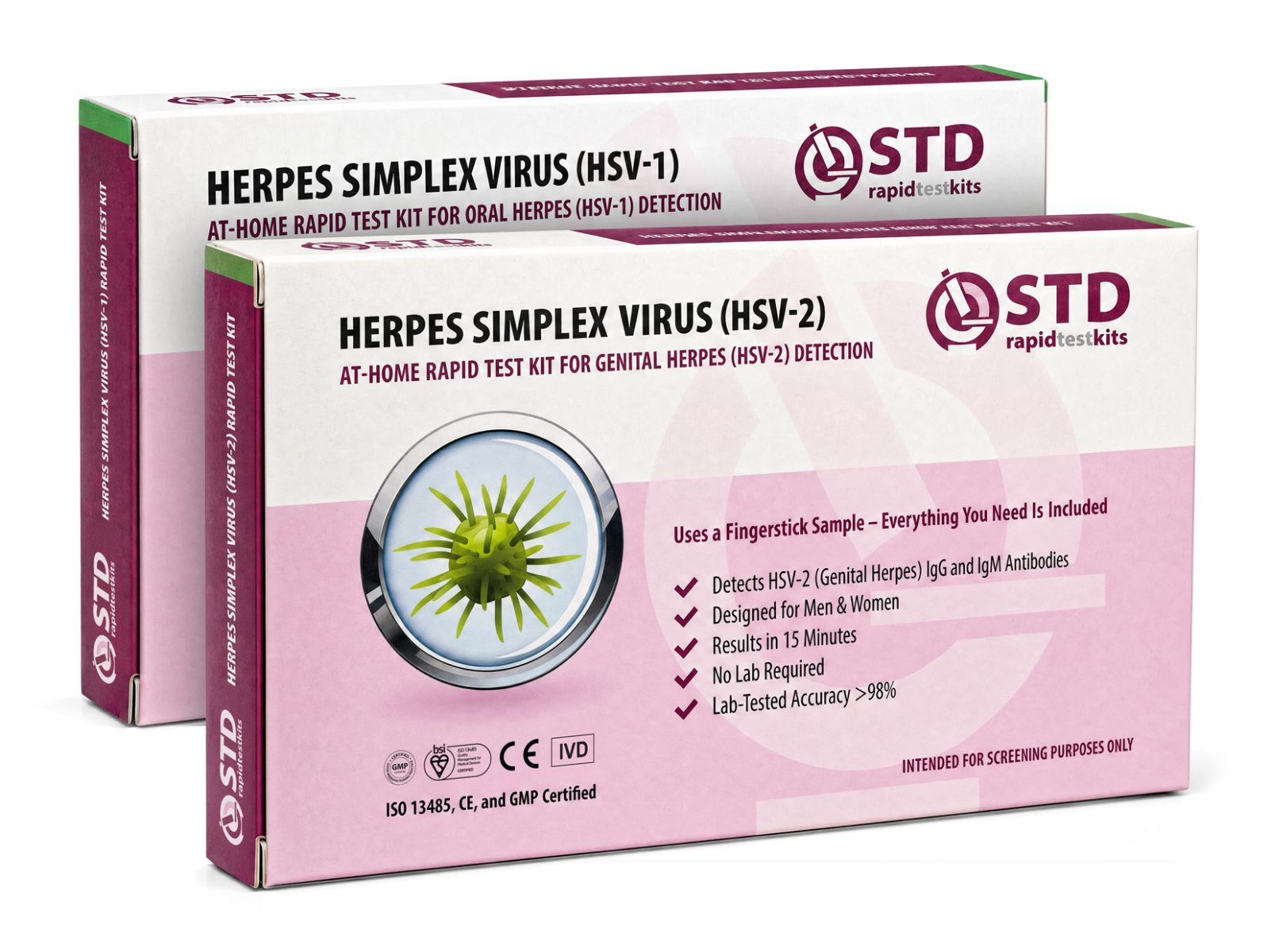
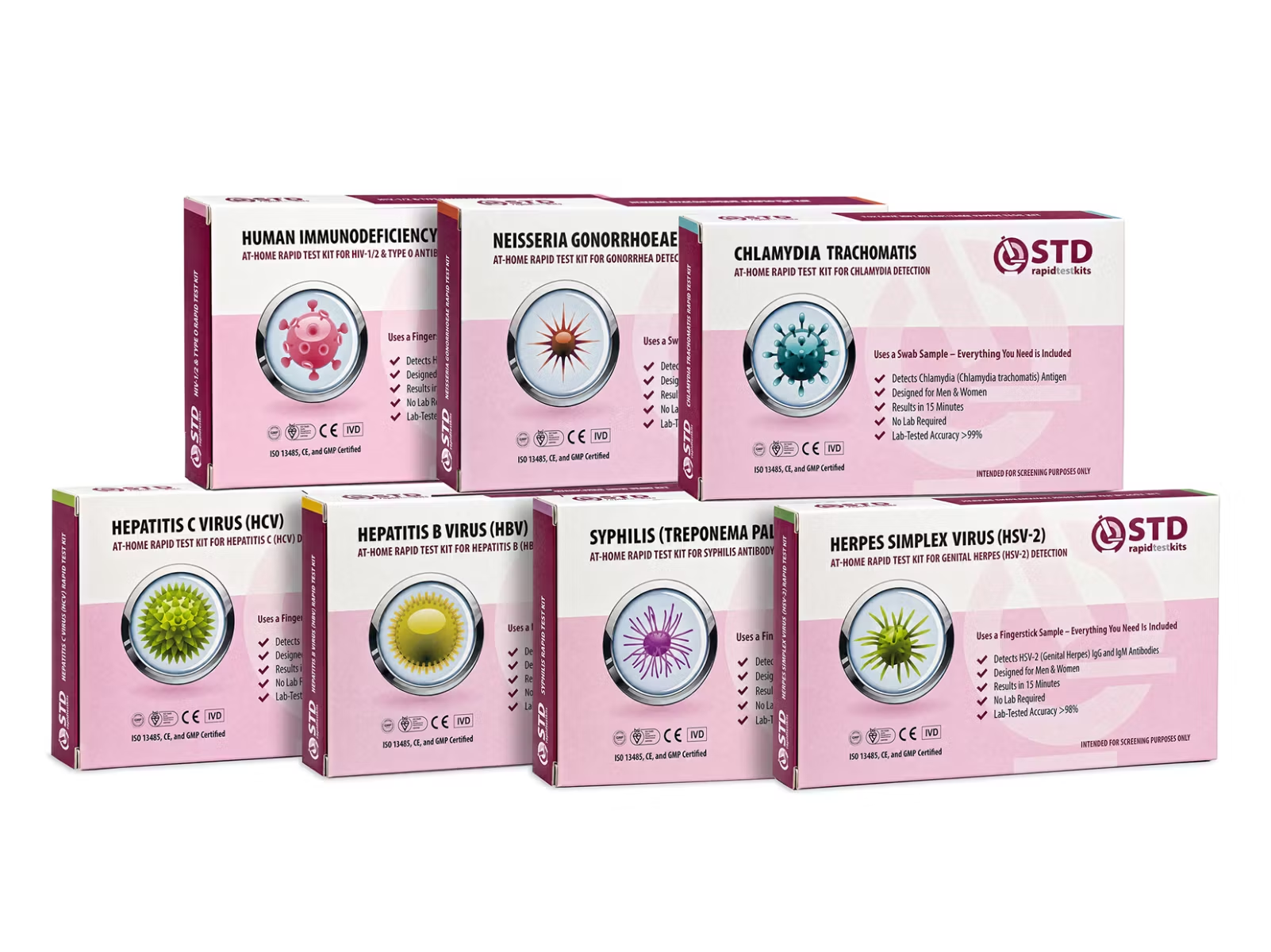
If you have a visible sore right now (clustered blisters, a single painless ulcer, persistent wart-like growths), the most accurate test is a swab or PCR taken from the lesion at a clinic. At-home rapid kits, including the ones we sell, are blood antibody tests for herpes, syphilis, HIV, and the hepatitis viruses, plus self-collected swab tests for chlamydia, gonorrhea, trichomoniasis (women only), and HPV (women only). They don't identify what's living in a current sore. Don't wait around testing yourself if you have an active lesion that's been there longer than a few days; see a clinician.
If you had a possible exposure but no current symptoms, at-home rapid tests are a good fit, with these timing rules:
- Chlamydia and gonorrhea (self-collected swab): typically detectable 7 to 14 days after exposure.
- Syphilis (rapid blood antibody): usually detectable 3 to 6 weeks after exposure, with 12 weeks being the more conservative window for a confident negative.
- HIV (rapid blood antibody): the at-home rapid test is most accurate from about 90 days post-exposure. For earlier results, a fourth-generation lab test (antigen and antibody) can detect HIV from around 18 to 45 days.
- Herpes (HSV-1 and HSV-2 blood antibody): typically requires 12 or more weeks for a reliable result. A negative before 12 weeks doesn't fully rule it out.
The CDC's screening recommendations include annual chlamydia screening for sexually active women under 25 and risk-based screening for older adults. If you're regularly sexually active and not testing on some predictable cadence, a yearly check-in is the baseline.
Our at-home kits are rapid lateral-flow immunoassays. They're designed for screening with a 15 to 20 minute turnaround. A positive result on any rapid test is worth confirming with a lab follow-up: rapid tests are less analytically sensitive than the NAAT or PCR done in a clinical lab. They're complementary tools, not equivalents. At-home for speed and privacy, lab for confirmation when needed.
The bottom line
Grooming doesn't give you an STI. It changes the conditions of your skin in a way that, paired with the right exposure event, can slightly raise risk for a narrow set of skin-to-skin viral infections. Most of the bumps and itches that follow a shave are folliculitis or razor burn that resolves on its own within a week. The minority that don't resolve, or that follow the herpes, syphilis, or HPV pattern, are worth taking seriously and testing for.
The practical version: trim before shaving, use clean tools, wait at least a day before sexual contact, and treat any sore that's still there past day seven as a question for a clinician or a home test, not for Google Images.
FAQs
- Can shaving directly give me an STI?
- Shaving doesn't generate STIs on its own. Razors, wax, and creams don't carry the infections. What grooming does is leave microtears that can lower your skin's barrier against skin-to-skin infections like herpes, HPV, and syphilis if exposure happens in the next day or two.
- How long should I wait between grooming and sex?
- Most guidance puts the safe healing window at 24 to 48 hours after shaving and 24 to 72 hours after waxing. That's enough time for most surface microtears to close and for inflammation to settle. The wider window after waxing reflects the deeper tissue disturbance.
- Is waxing safer than shaving?
- Not in the way most people assume. Waxing leaves a wider raw surface and opens the hair follicles at the root. It's less frequent than shaving, so the cumulative number of healing days per year can be lower, but each waxing session creates more skin disturbance than a single shave.
- How do I tell razor bumps from herpes?
- Location is the first clue: razor bumps are centered on individual hair follicles and fade within 3 to 4 days. Herpes lesions cluster, blister, and worsen before healing, typically appearing 4 to 10 days post-exposure. Blistering or grouping past day 4 is the signal to get tested.
- Does pubic hair actually protect against STIs?
- Marginally, yes. The hair acts as a small physical buffer during skin-to-skin friction and helps trap surface bacteria. It's not a substitute for condoms or other barrier methods, but the research is consistent that fully bare skin is associated with slightly higher rates of skin-to-skin transmission events than partial trimming or no removal.
- Should I share razors with my partner?
- No. Even rinsed razors can carry blood and skin cells from the previous user. Hepatitis B and C, in particular, can transfer through shared razor blades. The same applies to any shared tool that contacts broken skin: tweezers, epilator heads, dermaplaning tools.
- Can shaving give me HIV?
- Not from the act of shaving itself. HIV transmission requires mucosal membrane contact, bloodstream exposure, or breast milk, not the surface-level skin disruption that shaving creates. The narrow exception is a shared razor that contacts fresh blood from an HIV-positive person, which is why no one should share razors.
- When should I see a clinician instead of testing at home?
- If a sore lasts longer than 7 to 10 days, blisters cluster, you have burning when you urinate, swollen lymph nodes near your groin, or fever, see a clinician. Those patterns are not grooming irritation, and clinic testing is more accurate than rapid antibody testing for an active sore.
- U.S. Centers for Disease Control and Prevention. About Genital Herpes. Transmission, symptoms, and outbreak progression for HSV-1 and HSV-2.
- U.S. Centers for Disease Control and Prevention. STI Screening Recommendations. Annual chlamydia screening for sexually active women under 25 and risk-based screening for older adults.
- U.S. Centers for Disease Control and Prevention. About HPV. Transmission of human papillomavirus through intimate skin-to-skin contact.
- U.S. Centers for Disease Control and Prevention. About Syphilis. Description of primary chancre as firm, round, and painless, and transmission routes.
- MedlinePlus Medical Encyclopedia, U.S. National Library of Medicine. Folliculitis. Bacterial colonization of hair follicles after shaving and prevention guidance.
- World Health Organization. Herpes simplex virus fact sheet. Global epidemiology, skin-to-skin transmission, and prodrome symptoms (tingling, itching, burning) for HSV-1 and HSV-2.
- Osterberg EC, Gaither TW, Awad MA, et al. Correlation between pubic hair grooming and STIs: results from a nationally representative probability sample. Sexually Transmitted Infections, 2017. Survey of 7,580 US adults linking extreme grooming to higher self-reported STI history.
