
Published: September 2025 | Last updated: May 2026 | Editorial review and quality control: Martina N.
Sex after 50 is a normal part of adult life, and the public-health conversation has been slow to catch up. The Centers for Disease Control and Prevention tracks rising case counts of gonorrhea, syphilis, and chlamydia across adults over 55, while herpes and HPV remain extremely common at every age. The reasons aren't biological. Most older men were never taught to think of safe sex outside of pregnancy prevention. If you stopped using condoms thirty years ago inside a long marriage and have stepped back into a dating pool, the rules of the game have changed in ways nobody briefed you on.
This guide covers what's actually different now, which symptoms older men miss, when to test, what at-home testing can and cannot do for you, and how to bring the conversation up with a new partner.
Key Takeaways
- STI case counts in adults over 55 have climbed sharply over the past decade per CDC surveillance, with gonorrhea, syphilis, and herpes leading the rise in men.
- Two changes cut most of the risk: consistent condom use with new partners, and a baseline STI screen before stopping protection inside a new relationship.
This Isn't a Youth Problem Anymore
If you think STIs are something only twenty-somethings need to worry about, you're in good company, and the data says otherwise. CDC surveillance reports show sharp increases in syphilis and gonorrhea cases among adults aged 55 and older over the past decade, with men accounting for the majority of new syphilis diagnoses in that group. Chlamydia is rising too, just more quietly.
Three things are converging. First, condom use drops sharply after 50 because pregnancy is no longer the driver, and people forget that latex was always doing two jobs. Second, dating apps and a more open culture around late-life dating have raised partner counts for people who hadn't been on the market in decades. Third, the immune system shifts with age in ways that can make some infections slightly easier to acquire and slower to clear.
There's also a diagnostic gap, which matters more than most people realize. Symptoms in older men often get pinned on something else. Burning while urinating becomes a prostate problem. A skin lesion becomes a shaving cut. Joint aches, fatigue, and a faint rash get filed under aging. Chlamydia, syphilis, herpes, and HPV can all hide behind those everyday complaints, which is exactly why the CDC's screening guidance emphasizes testing based on behavior and exposure, not age alone.
Three forces converge for men over 50: condoms dropped out of the routine when pregnancy stopped being the driver; new dating apps and a more open late-life dating culture raised partner counts for people who hadn't been on the market in decades; and age-related immune shifts can make some infections slightly easier to acquire and slower to clear. Each of these is addressable.
Common STI Symptoms Older Men Miss
Many STIs are silent, especially in men over 50. Silent isn't the same as harmless. Left untreated, chlamydia and gonorrhea can damage the reproductive tract and raise the risk of acquiring HIV from a later exposure. Untreated syphilis can eventually affect the cardiovascular system and central nervous system, which is why the Mayo Clinic's STI overview stresses early screening over symptom-spotting. The table below shows what to watch for, and the everyday conditions each infection commonly gets mistaken for.
| STI | Common Symptoms in Men | Frequently Mistaken For |
|---|---|---|
| Gonorrhea | Burning urination, discharge, swollen testicles, sore throat | Prostatitis, UTI, viral pharyngitis |
| Chlamydia | Mild discharge, testicular ache, often no symptoms at all | Aging-related discomfort, overexertion |
| Herpes (HSV-1 / HSV-2) | Itchy or painful sores on genitals, mouth, or anus; tingling before outbreak | Razor burn, hemorrhoids, allergic skin reaction |
| Syphilis | Painless sore (chancre), rash on palms or soles, fatigue, patchy hair loss | Skin allergy, age spots, viral rash, arthritis |
| HPV | Genital warts (may not appear); silent in most cases | Skin tags, moles, seborrheic keratoses |
| HIV | Flu-like illness 2-4 weeks after exposure; often no early symptoms | Cold, flu, fatigue |
Oral and Anal Sex Carry Real STI Risk
One of the most common myths in this age group is that non-penetrative sex doesn't really count. It does. Gonorrhea, chlamydia, herpes, syphilis, and HPV can all transmit through oral or anal contact, often without a single noticeable symptom at the exposed site. The CDC's screening guidance specifically calls out site-specific testing (throat and rectal swabs) for people who have had oral or anal sex with new partners.
We do not sell pharyngeal (throat) or rectal swab kits at home. Our at-home kits cover genital self-swab samples and fingerstick blood tests. If your concern is a specific oral or anal exposure event, the right next step is a clinic visit where they can take site-specific swabs, which standard rapid kits cannot replicate. We say this plainly because the alternative (selling you a genital swab as if it answered the throat question) would be misleading.
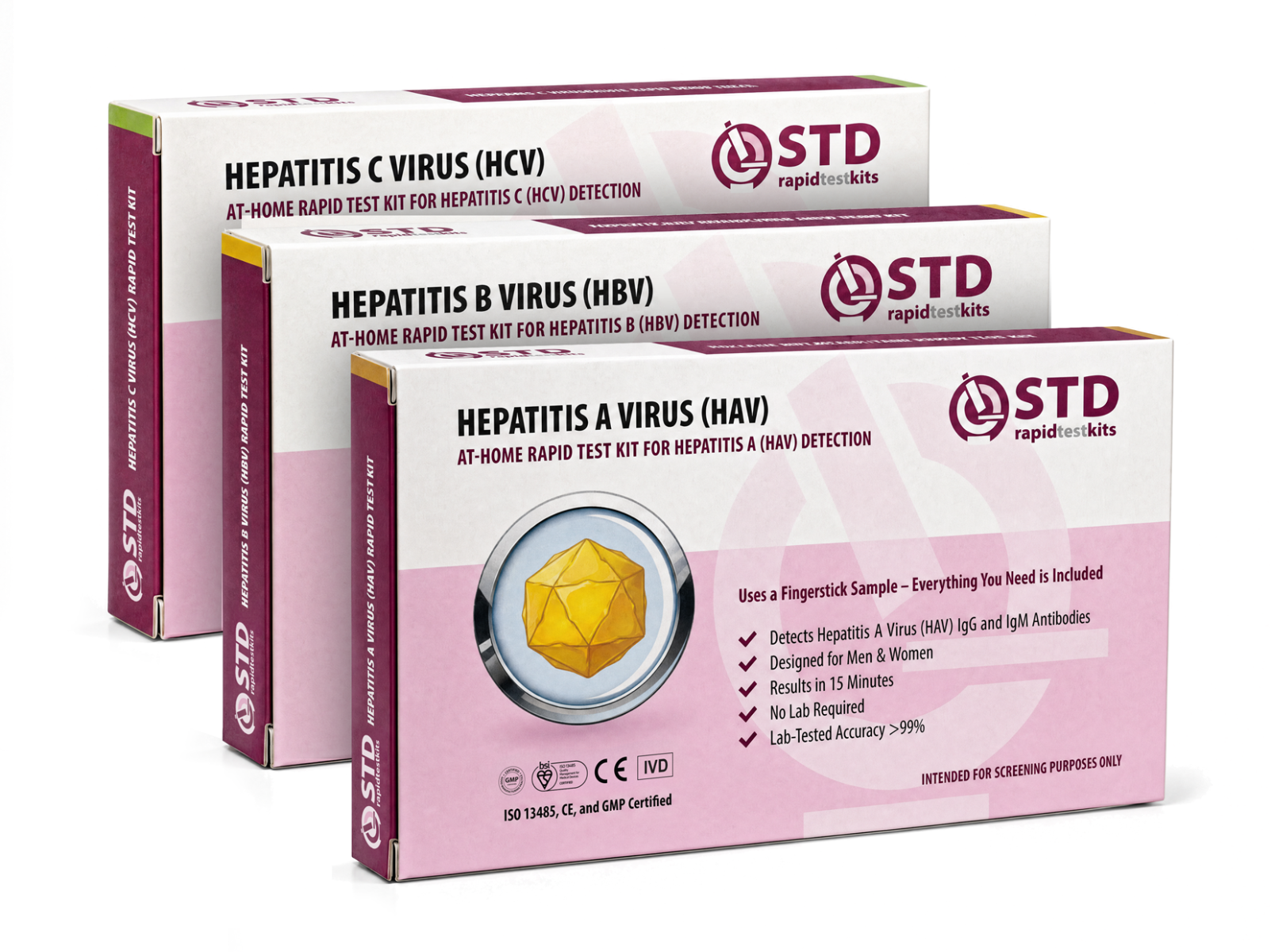
What our kits do answer well in that scenario: the parallel blood-borne risk from the same exposure. HIV, syphilis, hepatitis B, and hepatitis C are systemic infections that show up on a fingerstick blood test regardless of which body site the exposure was. If you had recent oral or anal contact and want fast at-home reassurance on the blood-side of the question, a combo blood panel covers it; pair that with a clinic swab for the local site, and you have a full answer.

When Should You Actually Get Tested?
The single biggest testing mistake at every age is testing too early. Most STI tests work either by detecting the pathogen's DNA (NAAT / PCR), the pathogen itself (antigen tests), or the body's antibody response. All three need time after exposure to become reliably detectable, and rapid lateral-flow at-home tests sit on the conservative end of that timing.
The windows below reflect CDC screening guidance and the typical performance ranges for at-home rapid kits versus laboratory NAAT testing. Lab NAAT will generally pick up chlamydia and gonorrhea slightly earlier than rapid lateral-flow kits, and HIV NAAT in particular can detect infection before antibody-based methods.
| Infection | Reliable Testing Window After Exposure | Earliest Possible Detection |
|---|---|---|
| Chlamydia | 14 days (rapid swab) | Lab NAAT may detect from day 7 |
| Gonorrhea | 14 days (rapid swab) | Lab NAAT may detect from day 7 |
| Syphilis | 3-6 weeks (blood antibody) | Some labs detect earlier; rapid tests less so |
| HIV | 4-12 weeks (antibody rapid); 2-4 weeks (lab NAAT) | Lab NAAT earliest |
| Herpes (HSV-2) | 6-12 weeks (blood antibody); some assays recommend confirming at 16 weeks if first result is negative | Visible sores can be swabbed at a clinic immediately |
| Hepatitis B / C | 8-12 weeks (antibody) | Lab NAAT can detect earlier |
Should You Retest? Yes, and Here's When
One test is rarely the whole answer. Retesting matters when your first test was inside the window above, when symptoms changed after a negative result, or when you've had additional partners since the initial test. STI testing is a process, not a one-and-done event. Older adults benefit from the second look in particular because immune responses and symptom presentations can be muted. A negative test taken five days after a high-risk exposure tells you very little; the same test taken three weeks later tells you a lot.
A practical retesting schedule:
- Exposed recently, tested early: retest 14-28 days later for chlamydia and gonorrhea; retest at 12 weeks for HIV; retest at 6-8 weeks for syphilis if the initial test was taken within the first 3 weeks of exposure.
- Had a negative result but symptoms appeared afterward: retest within 1-2 weeks of symptom onset.
- Treated for an STI: retest at 3 months to confirm cure and check for reinfection (CDC recommends this for chlamydia and gonorrhea specifically).
- Multiple partners or ongoing new partners: a routine screen every 3-6 months.

Condoms and Communication: Both Still Matter
If you're having sex with a new partner, you need to talk about protection. Condoms aren't just for avoiding pregnancy; they remain the single most effective barrier against gonorrhea, chlamydia, syphilis, HIV, and most other genital-fluid-transmitted infections. Consistent condom use remains the most reliable barrier against fluid-transmitted STIs, the same conclusion reached by every major public-health body including the CDC, WHO, and NHS.
Studies consistently show condom use drops sharply after 50, particularly in heterosexual men. Reasons range from discomfort with current sensation to fit issues to simple awkwardness raising the subject, and each has a practical fix. Today's condom market includes thinner walls, wider-fit styles, latex-free options for sensitivity, and added-lubricant variants that address friction and dryness changes that can happen for either partner with age.
The other half is the conversation itself. If you haven't had the safe-sex talk in decades, the simplest script that works: "Hey, I really like where this is going. Before we stop using protection, I'd like us both to get tested. Is that okay with you?" It's direct, respectful, and shows you take both of you seriously. Most adults respond well.
- Ultra-thin: maintains sensation while meeting the same barrier specifications.
- Wider-fit: addresses the common complaint that standard condoms are too tight at the base.
- Latex-free (polyisoprene or polyurethane): for latex sensitivity or for use with oil-based lubricants.
- Added-lubricant variants: reduce friction, relevant as natural lubrication changes with age for both partners.
How to Bring It Up Without Killing the Mood
Talking about STIs with a new partner can feel like uncharted territory when you're both in your 60s or 70s. You might worry it'll seem paranoid, kill the moment, or imply something about your past. Bringing it up marks you as a responsible adult, and most people in this age group find it more attractive, not less, when a date treats sexual health like the practical topic it is.
A few openers that have worked for readers, in their own words:
- "I've been out of the game for a while. I want to be smart about this. Have you been tested recently?"
- "I care about you, and I want both of us to feel good and safe. Let's get tested before we stop using protection."
- "How do you usually handle protection? I want us to be on the same page about it."
- "Would you want to test together? We can order kits, do it side by side, and have an answer in 15 minutes."

Modern Condom Options for Older Men
If you haven't bought condoms in twenty years, or ever, you're not alone. Many older men find the pharmacy aisle (or the online equivalent) overwhelming. Protection today isn't what it was in 1985, though. The options that exist now fit better, feel better, and break less.
Things worth knowing: ultra-thin variants maintain sensation while still meeting the same barrier specifications. Wider-fit styles address the common complaint that standard condoms are too tight at the base. Latex-free polyisoprene and polyurethane versions are available for anyone with latex sensitivity or for use with oil-based lubricants. Added-lubricant variants reduce friction, which becomes more relevant as natural lubrication changes with age for both partners.
Two often-skipped points. First, fit matters more than most men realize. Condoms that are too tight tend to break; ones that are too loose can slip off. Manufacturers publish sizing charts, and a few minutes spent finding the right fit pays back in reliability. Second, condoms aren't your only tool. The CDC notes that HPV and hepatitis B vaccinations remain effective for adults who haven't already received them, and routine testing inside an ongoing relationship is the back-up that catches the silent infections condoms don't always block (skin-to-skin transmission of herpes and HPV around the condom edge is real).
Stigma Doesn't Retire. Neither Should Honesty.
There's a quiet message older adults absorb from popular culture: that STIs only happen to people who were irresponsible or immature. It's a lie, and a counterproductive one. STIs are infections, not moral verdicts. The longer a person waits to test or treat because of shame, the more harm the silence does (both to themselves and to anyone they're sleeping with).
The most useful thing an older man can do is treat sexual health the same way he'd treat blood pressure or cholesterol: as a normal adult health number that gets checked, gets discussed, and gets handled. Talk to your primary care doctor about routine screening. Talk to a new partner about testing before the protection conversation gets harder. Talk to friends if you feel like it; you'll probably discover several of them have been quietly thinking about the same things.
Testing is a sign of self-respect, not guilt. Treatment is care for your future, not regret for your past. And asking the question ("Should I get tested?") is almost always worth the small cost of finding out.
STIs are infections, not moral verdicts. They're medical facts that respond to medical care. The only people who lose anything from a positive result are the ones who let shame keep them from acting on it.
CDC recommends that everyone aged 13 to 64 be tested for HIV at least once as part of routine health care, and sexually active people may benefit from more frequent testing based on their behaviors and exposures.
Your Sexual Health Is Still Your Health
Maybe you haven't thought seriously about your sexual health since the Reagan administration. Maybe you assumed that chapter was over. Whether you're casually dating, entering a new relationship after a long marriage, or exploring intimacy after loss, your body, your choices, and your safety still matter. They don't expire.
The hard part is already done if you've read this far; you've educated yourself. The next step depends on where you are. If you've recently had a new partner and haven't tested, schedule a baseline screen, either at home for the panel we cover, or at a clinic for site-specific swabs. If you're about to have the protection talk with someone new, you now have a script. If you've been ignoring a symptom, today is a fine day to stop. Most STIs are treatable, the rest are manageable, and either result is better than not knowing.
Frequently Asked Questions
- Can older men actually get STIs?
- Yes. CDC surveillance has shown rising STI case counts in adults over 55 for more than a decade. Gonorrhea, syphilis, and chlamydia are climbing fastest, and herpes and HPV are extremely common at every age. The myth that STIs are a young person's problem is one of the biggest reasons rates keep rising in this group.
- I have no symptoms. Should I still test?
- If you've had a new partner since your last screen, yes. Many STIs are silent in men, especially chlamydia, HPV, and early HIV. You can feel completely fine and still transmit something to a partner. Testing isn't only about you.
- How long after sex should I wait before testing?
- Most rapid swab tests for chlamydia and gonorrhea are reliable from about 14 days post-exposure. HIV antibody tests stabilize around 4 to 12 weeks; HIV NAAT detects sooner. Syphilis blood tests are reliable from 3 to 6 weeks. Herpes blood antibody testing typically becomes reliable at 6 to 12 weeks, with some assays recommending a confirming test at 16 weeks if the initial result was negative. If you test early and get a negative but something still feels off, retest.
- Do I still need condoms if pregnancy isn't a concern?
- Condoms were never only about pregnancy. They block the fluids and skin contact that transmit gonorrhea, chlamydia, syphilis, and HIV. If pregnancy risk no longer drives your decision, the infection-prevention case stands just as strongly.
- I haven't dated in decades. How do I even start the testing conversation?
- A simple, low-pressure opener works: "It's been a while for me, and I want both of us to feel comfortable. How do you usually handle this stuff?" You don't need a script longer than that. Most adults welcome the topic when it's framed as mutual care rather than suspicion.
- Can I catch something from oral sex or 'just fooling around'?
- Yes. Gonorrhea, chlamydia, herpes, syphilis, and HPV can all transmit through oral or anal contact, often without symptoms at the exposed site. Skin-to-skin transmission of herpes and HPV doesn't require penetration at all. If genitals, mouths, or fluids are involved, some level of risk is involved.
- What if I test positive? Do I have to tell anyone?
- Recent partners deserve a heads-up so they can test and protect themselves. You don't need to make it dramatic; a factual message works. Some public-health programs and online services offer anonymous partner-notification options if a direct conversation feels too difficult.
- Are at-home rapid tests reliable enough?
- Modern at-home lateral-flow tests are validated to high sensitivity and specificity when used within their intended testing window and per the instructions. They're not laboratory NAAT tests; positives are best confirmed at a clinic, and negatives inside the window may need a retest. For screening between clinic visits or for a quick read after a low-risk concern, they're a useful tool.
- U.S. Centers for Disease Control and Prevention. STI Statistics and Surveillance. Trends in case counts by age group, including adults aged 55 and older.
- U.S. Centers for Disease Control and Prevention. Screening Recommendations and Considerations Referenced in the 2021 STI Treatment Guidelines. Site-specific testing guidance for oral, rectal, and genital exposures.
- U.S. Centers for Disease Control and Prevention. HIV Testing Basics. Routine testing recommendation for adults 13-64 and frequency guidance for higher-exposure groups.
- Mayo Clinic. Sexually Transmitted Diseases (STDs): Symptoms and Causes. Overview of common STI symptoms and complications across age groups.
- Mayo Clinic. Senior Sex: Tips for Older Men. Practical guidance on sexual health in older adulthood, including STI considerations after long-term partnerships end.
- U.K. National Health Service. Sexually Transmitted Infections (STIs). Overview of common STIs, prevention, and when to get tested.
