

Published: September 2025 | Last updated: April 2026 | Editorial review and quality control: Martina N.
Most people who carry chlamydia or gonorrhea have no idea they have it. The CDC's About Chlamydia page states plainly that chlamydia often has no symptoms but can still cause serious health problems. Gonorrhea behaves much the same way for many people in the early weeks of infection. That silence is the part that actually causes harm. While you feel fine, the bacteria can keep climbing into reproductive tissue, scarring it, and quietly closing options you assumed you would always have.
This guide covers what the bacteria do over time, why fertility damage often surfaces years later as an unexpected finding, and what early testing and treatment can prevent. It also includes the long-term reproductive picture for both sexes, so you have the whole timeline in one place.
What happens if you don't treat chlamydia or gonorrhea?
Both bacteria can spread silently from the cervix or urethra into reproductive organs, causing pelvic inflammatory disease (PID), epididymitis, scar tissue, and reduced fertility. Less common complications include throat, rectal, and eye infections, reactive arthritis, and a higher risk of acquiring HIV. Antibiotics resolve most cases when caught early. Rapid antigen tests are most reliable from about 14 days after possible exposure. The CDC recommends retesting roughly three months after treatment because reinfection is common.
Key Takeaways
- Most chlamydia and gonorrhea infections cause no symptoms, yet they can scar reproductive tissue within weeks of exposure.
- Both are bacterial infections. They will not clear on their own, but a short course of antibiotics resolves the vast majority of cases caught early.
Why these infections slip past unnoticed
The first thing worth understanding is how often chlamydia and gonorrhea cause nothing at all. The WHO chlamydia fact sheet notes that many infected people have no symptoms or only mild symptoms, and that signs can take up to three weeks to appear. Gonorrhea follows a similar pattern, particularly in the throat and rectum where it almost never causes obvious complaints.
When symptoms do appear, they tend to be the kind a busy person can dismiss. A short stretch of stinging when urinating. Light spotting that lines up roughly with a missed period. A vague pelvic heaviness that you blame on cycle timing. A thin discharge that fades after a few days. None of those by themselves feel like a reason to take time off work and visit a clinic.
People also delay testing for reasons that have nothing to do with carelessness. Some cannot easily afford a clinic copay. Some worry about a paper trail in shared insurance. Many quietly hope the discomfort will fade the way a head cold does. It does not. Chlamydia and gonorrhea are bacterial, and bacterial infections of the reproductive tract are not something the immune system reliably clears on its own.
By the time scrotal swelling or deep pelvic ache becomes impossible to ignore, the bacteria have often been moving through internal tissue for weeks. Mild burning at the urethra can transition into deeper pelvic ache or cramping. Scrotal discomfort can become a one-sided swelling that feels like a pulled muscle but is actually inflammation building in the epididymis. The damage continues quietly even when outward symptoms stay mild.
Easy-to-dismiss patterns that often turn out to be early infection:
- A short stretch of stinging when urinating
- Light spotting that lines up roughly with a missed period
- A vague pelvic heaviness blamed on cycle timing
- A thin discharge that fades after a few days
- One-sided scrotal ache that feels like a pulled muscle
A rough timeline of untreated infection
Damage from untreated chlamydia or gonorrhea does not appear all at once. It builds in stages, and each stage gives the immune system more inflamed tissue to scar over. The table below maps how the picture typically changes over weeks and months. Numbers are approximate ranges drawn from CDC and WHO public-health guidance, not a strict per-person schedule.
| Time since exposure | What is typically happening inside | What you might feel |
|---|---|---|
| Days 1 to 7 | Bacteria attach to mucosal cells in the cervix or urethra and start replicating | Usually nothing |
| Weeks 2 to 4 | Local inflammation in the cervix, urethra, throat, or rectum | Mild burning, light discharge, mild pelvic ache, or no signs at all |
| Months 1 to 3 | Possible upward spread to uterus, fallopian tubes, or epididymis | Pelvic ache, painful sex, scrotal pain, or still no symptoms |
| Beyond 3 months | Scar tissue can begin forming in inflamed reproductive tissue | Often silent until fertility testing or pregnancy attempts reveal damage |
How untreated infection damages female fertility
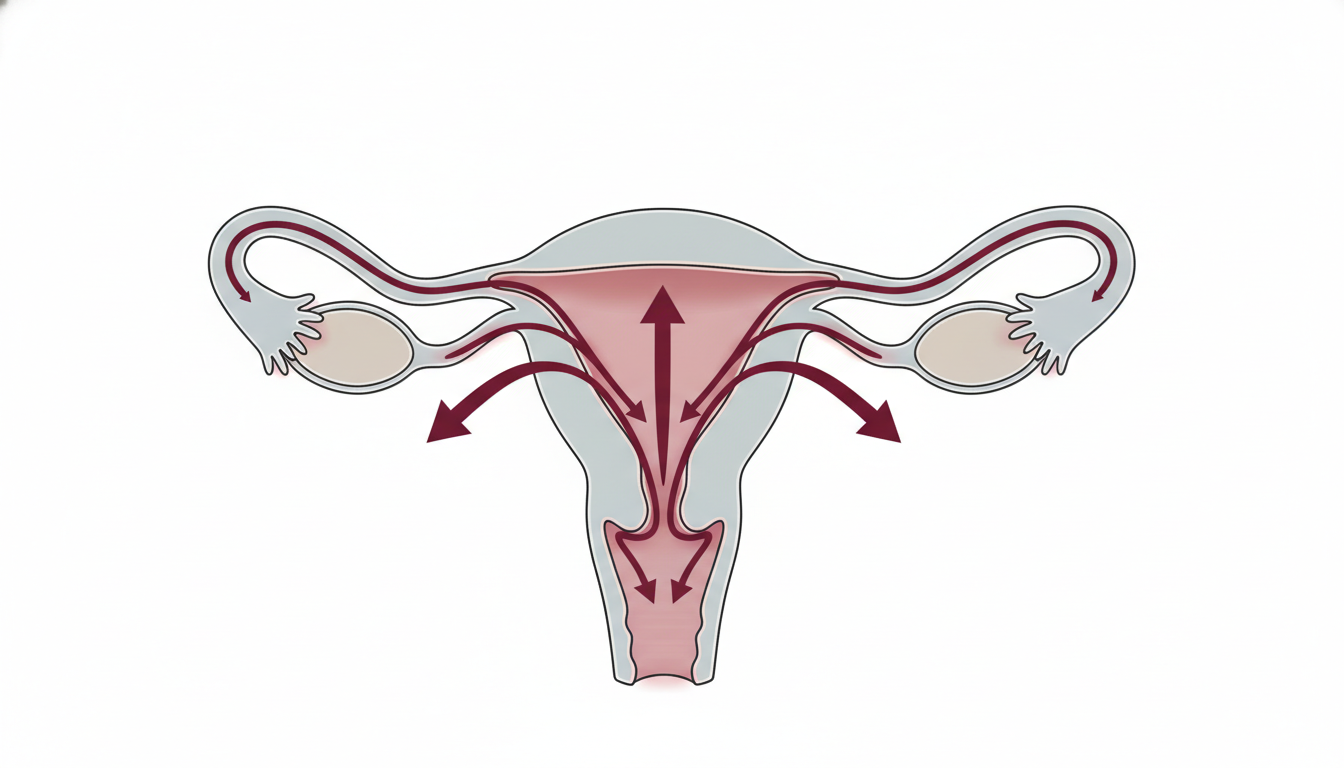
When chlamydia or gonorrhea moves upward from the cervix, the destination is usually the uterus and fallopian tubes. The result is pelvic inflammatory disease, often shortened to PID. The CDC's About PID page identifies chlamydia and gonorrhea as common causes of PID, and lists scar tissue, ectopic pregnancy, infertility, and chronic pelvic pain as the long-term complications when treatment is delayed.
The mechanical problem is the scarring itself. Fallopian tubes are narrow channels lined with delicate cilia that move the egg toward the uterus. When the lining is inflamed for weeks, the body lays down scar tissue while it heals. That scar can narrow, kink, or completely close the tube. Eggs cannot reach the uterus. Sometimes a fertilized egg gets stuck partway, which becomes an ectopic pregnancy, a condition that requires emergency care.
The damage is also cumulative. The NHS PID page lists abscesses in the fallopian tubes or ovaries, long-term pelvic pain, and a higher risk of ectopic pregnancy as complications. Clinicians consistently observe that the risk of permanent damage is lower when antibiotics start promptly and higher after repeated untreated episodes. Many women learn they have had PID only when fertility testing turns up blocked tubes years later, occasionally without ever having been formally diagnosed with chlamydia.
The reproductive picture extends past the tubes. Chronic cervical inflammation changes mucus quality, and persistent infection can disrupt the vaginal microbiome that supports both conception and a healthy early pregnancy. The image below is a stylized look at how the infection ascends.
The same infections quietly affect male fertility
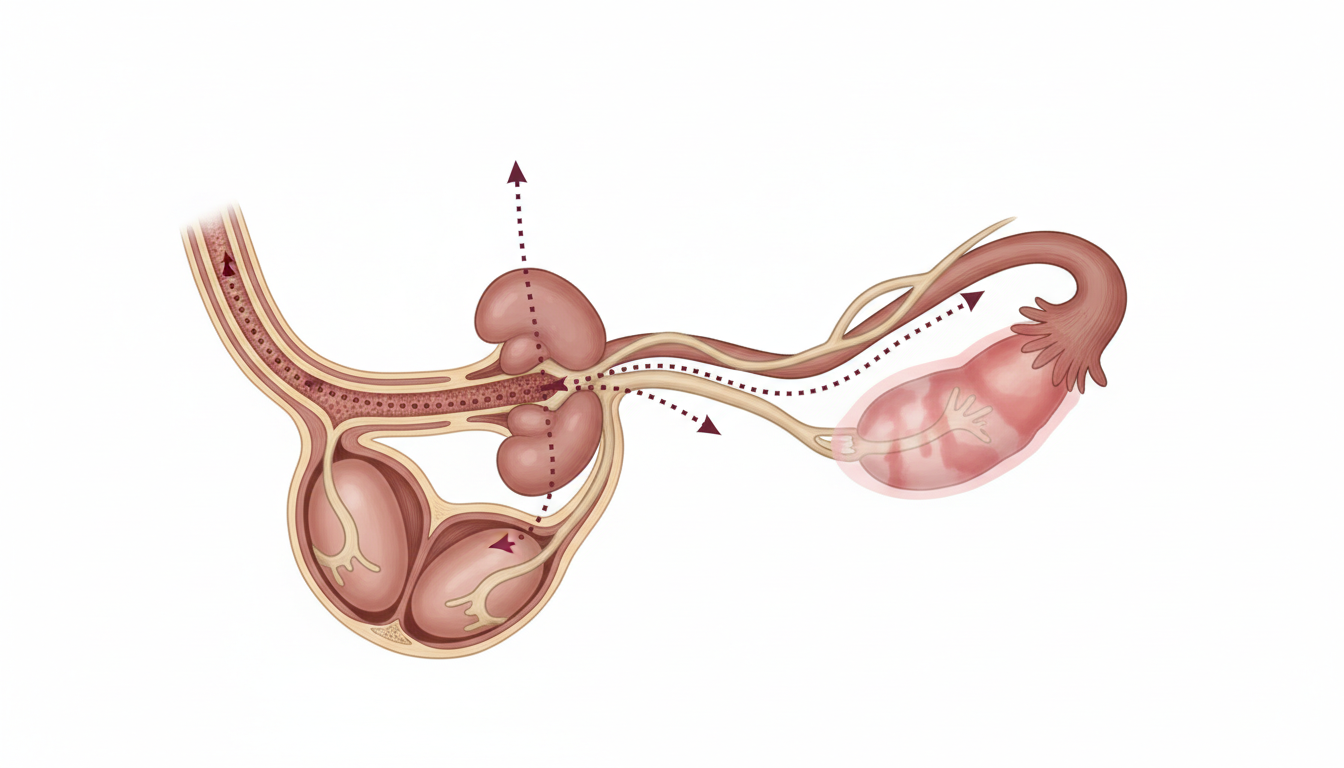
The myth that chlamydia and gonorrhea only damage female fertility is wrong, and it costs men years of unexplained sperm-quality problems. In men, both bacteria can infect the urethra first, then move into the epididymis, the coiled tube behind each testicle that stores and matures sperm. The clinical name for inflammation there is epididymitis. The CDC's About Gonorrhea page notes that untreated gonorrhea can cause a painful condition in the tubes attached to the testicles and, in some cases, lead to infertility.
Epididymitis often does cause some symptoms, including a one-sided ache or swelling in the scrotum, but the discomfort can be mild enough to dismiss as a pulled muscle or a sleeping-position issue. When epididymitis goes untreated, scarring can narrow or close the tube. Sperm are still produced, but they cannot pass through normally. The condition has its own clinical name, obstructive azoospermia, and it is one of the patterns fertility specialists look for when a sperm analysis comes back unexpectedly poor.
Gonorrhea in particular can also reach the prostate. Prostatic inflammation tends to be subtler than scrotal pain, sometimes showing up only as ejaculation discomfort, a vague pelvic heaviness, or as a finding on a semen analysis with reduced motility and abnormal morphology. Chlamydia has been associated with similar reductions in sperm quality and DNA integrity, though it is sometimes harder to link a current sperm problem to a specific past infection.
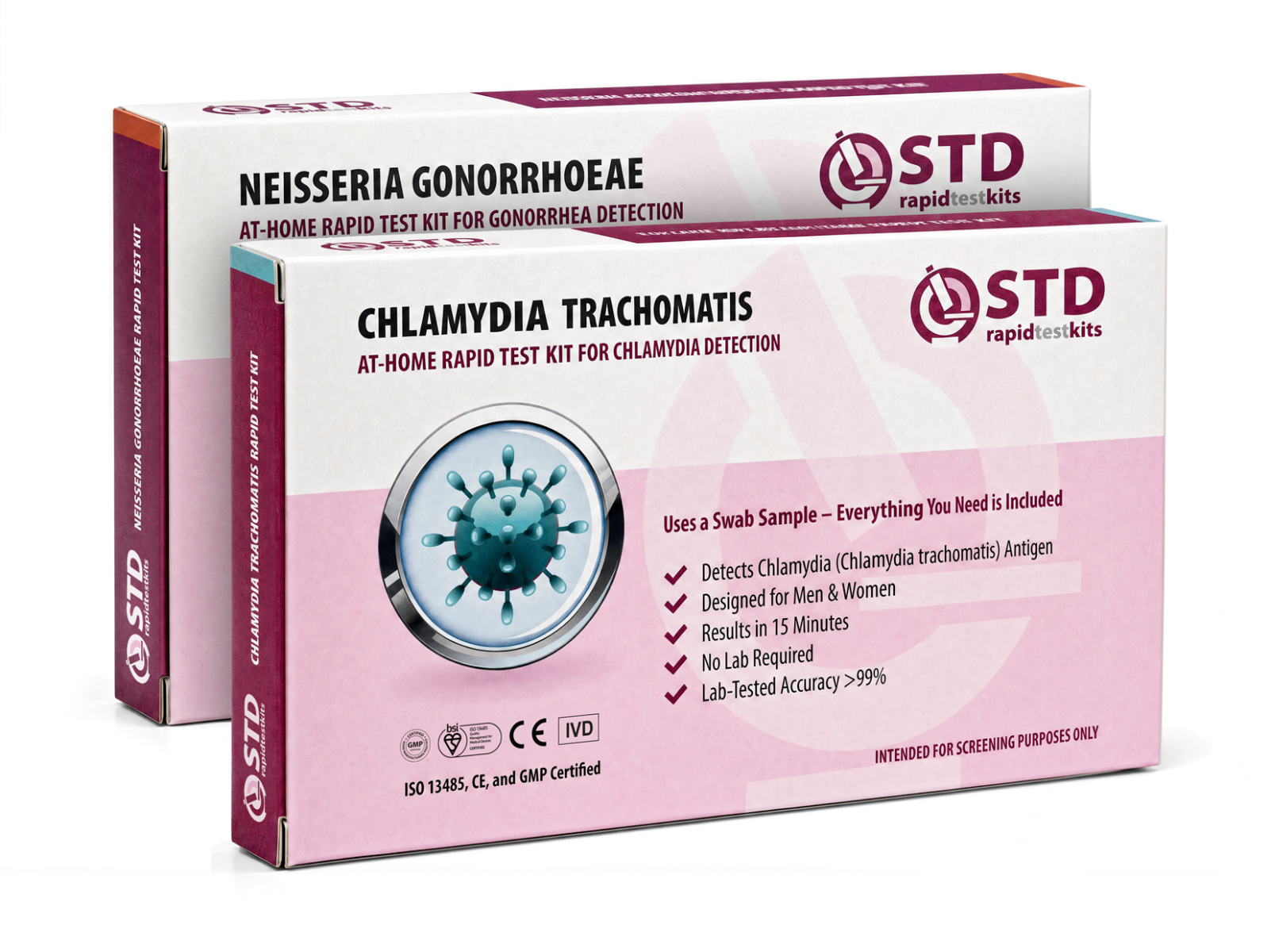
The pattern many men report at fertility clinics is the one to watch for: no current symptoms, no memory of having an infection, and a sperm analysis that is unexpectedly poor when a couple tries to conceive. Antibody testing for past chlamydia exposure is one way clinicians work backward to a likely cause, even when there was never a documented diagnosis at the time. Note that stdrapidtestkits.com publishes this article and sells at-home rapid kits for chlamydia and gonorrhea, including the swab combo below.
What chlamydia and gonorrhea do beyond the reproductive tract
Most people picture these as strictly genital infections. They are not. Both bacteria can colonize the throat, the rectum, and the eyes, depending on the route of exposure or accidental hand-to-eye contact. The NHS gonorrhoea page lists infections of the anus, throat, and eyes alongside the more familiar genital symptoms, and explicitly warns that newborns can develop sight-threatening eye infections from gonorrhea passed during birth.
Reactive arthritis is a less common but documented downstream complication, particularly with chlamydia. It typically appears one to six weeks after the initial infection as one or more painful, swollen joints, sometimes accompanied by eye irritation and urinary symptoms. The link is well established in clinical guidance and is one of several reasons providers take chlamydia seriously even after the genital symptoms have faded.
Increased HIV susceptibility is the third issue worth naming. The CDC notes that gonorrhea may increase the chance of getting or giving HIV, because the inflammation it causes disrupts mucosal surfaces that HIV exploits during sexual contact. Chlamydia raises the same risk for similar reasons. Carrying either infection while sexually active raises the per-act probability of acquiring HIV, which is one of the most practical reasons to test even when you feel fine.
- Throat, rectal, and eye colonization. Both bacteria infect non-genital mucosal sites, often without symptoms. Pharyngeal and rectal infections need a swab from that specific site to detect.
- Reactive arthritis. One to six weeks after a chlamydia infection, painful joint swelling can appear, sometimes with eye irritation or urinary symptoms.
- Higher HIV susceptibility. The mucosal inflammation caused by either infection makes it easier for HIV to establish during sexual contact.
Reinfection is more common than people expect
Treating an infection once does not give you immunity. The CDC and WHO both recommend retesting roughly three months after treatment for chlamydia and gonorrhea because reinfection rates are high, especially in people under 30 and especially when partners are not treated at the same time. The pattern is straightforward: you finish your antibiotics, your partner does not, you have sex again, the infection comes back. Sometimes from the same partner. Sometimes from a new one.
This is also why both partners need to be treated, and why both need to abstain from sex for the full course of antibiotics plus the recommended waiting period. Reinfection is not a moral failure. It is a partner-coordination problem, and it is one of the strongest predictors of cumulative damage like PID and epididymitis.
If symptoms return after treatment, that is not a sign the antibiotics failed. It is almost always a fresh infection from a partner who was not treated in parallel. The right move is to retest and re-treat, ideally with the partner present.
Even if your treatment went smoothly and any symptoms cleared, retesting roughly three months later is still recommended. Reinfection from an untreated partner is the single most common reason chlamydia and gonorrhea come back, and a follow-up test is a quiet, cheap insurance policy.
Telling a partner without making it dramatic
Disclosure feels worse than it usually goes. Most people, given clear information, are grateful to be told and want to test. Two practical approaches work well: a short factual text or a face-to-face conversation in a private setting.
Several state and national health services offer anonymous partner-notification tools that send a text message without naming you, which can help when you cannot easily reach a former partner directly. Some clinics also provide expedited partner therapy in jurisdictions where it is allowed, which lets a primary partner be treated without their own clinic visit.
If you used barriers correctly and consistently, the chance of transmission is lower, but it is not zero. Both chlamydia and gonorrhea can transmit through oral and anal contact as well as vaginal intercourse, and shared sex toys are a documented route too. A current negative test for you does not retroactively prove your previous partners were uninfected, which is why the conversation is still worth having.
The opener can be as plain as: "My most recent test came back positive for X. I want you to be able to test and treat too." You do not have to explain when, how, or with whom. You do not need to apologize beyond the basics. Most people respond with concern for both of you, not blame.
If you have been carrying it for a while, here is the next step
If reading this made you suspect you might have been carrying chlamydia or gonorrhea for weeks or months, the realistic next move is testing rather than worrying. The most reliable window for a swab-based test is from about two weeks after the possible exposure for both infections, though specific kits vary slightly. After that point, a swab-based rapid test will detect bacterial antigens directly. If your last possible exposure was longer ago than two weeks, you can test now.
Because chlamydia and gonorrhea frequently coexist with other infections, the most useful single test is one that screens for several conditions at once. A six-in-one panel covers chlamydia and gonorrhea along with HIV, syphilis, hepatitis B, and hepatitis C, which is the cluster of coinfections clinicians most often look for together. The panel uses a mix of self-collected swab and fingerstick blood samples and gives results in roughly 15 minutes per assay.
If a result is positive, primary care or a sexual-health clinic can prescribe antibiotics. Treatment is short and effective for both chlamydia and gonorrhea. The earlier the antibiotics start, the smaller the chance of any of the long-term complications described above. If you suspect PID, epididymitis, or any complication beyond the basic infection, an in-person evaluation is the right call: a rapid antigen test detects the bacteria, but it cannot tell you whether scarring has already started, and that requires imaging or a clinical exam.
This article is published by stdrapidtestkits.com, which sells at-home rapid STI tests. Recommendations here are based on what fits the reader's concern, not commercial benefit. For active symptoms, pregnancy, or treatment, see a licensed provider.
FAQs
- Can chlamydia or gonorrhea ever go away without antibiotics?
- Almost never. Both are bacterial infections that need antibiotics to clear. Symptoms sometimes fade as the bacteria move deeper into reproductive tissue, but the infection itself does not resolve, and damage often continues silently while you feel fine.
- How long can I have either infection without knowing?
- Months, sometimes years. The WHO and CDC both note that many infections are asymptomatic. People often discover an old infection only when a partner tests positive, or when fertility testing reveals scarring that points to a past episode.
- What is the testing window after possible exposure?
- For both chlamydia and gonorrhea, swab-based rapid tests are most reliable from about 14 days after exposure. CDC guidance also recommends retesting roughly three months after treatment because reinfection is common.
- Can men become infertile from untreated chlamydia or gonorrhea?
- Yes. Both infections can cause epididymitis or prostatitis. Untreated cases can scar the epididymis to the point of obstructive azoospermia, where sperm are produced but cannot exit normally. Sperm motility and morphology can also be reduced even without obvious symptoms.
- Do these infections always show up in the genitals?
- No. Both bacteria can colonize the throat or rectum and can also cause conjunctivitis through hand-to-eye contact. Pharyngeal and rectal infections frequently cause no symptoms at all and require a swab from that specific anatomical site to detect.
- Is there a vaccine for chlamydia or gonorrhea?
- Not currently. Neither infection has an approved vaccine, though research is ongoing. Prevention right now relies on consistent barrier use, regular testing, treating partners, and reducing the number of overlapping sexual partners.
- Will my STI test detect complications like PID or epididymitis?
- No. STI tests detect the bacteria. Diagnosing PID, epididymitis, or scarring requires a clinical evaluation, often with a pelvic exam, ultrasound, or semen analysis. A negative current STI test does not rule out scarring left behind by a past infection.
- Can chlamydia or gonorrhea be passed even when there are no symptoms?
- Yes, and this is the main reason the infections are so common. People without symptoms are still contagious through vaginal, oral, and anal contact, and through shared sex toys. Testing is the only reliable way to know.
- U.S. Centers for Disease Control and Prevention. About Chlamydia, including the prevalence of asymptomatic infection and risk of long-term complications.
- U.S. Centers for Disease Control and Prevention. About Gonorrhea, covering complications such as epididymitis, PID, scar tissue blocking the fallopian tubes, ectopic pregnancy, infertility, and increased HIV risk.
- U.S. Centers for Disease Control and Prevention. About Pelvic Inflammatory Disease (PID), including its link to untreated chlamydia and gonorrhea and its long-term complications.
- World Health Organization. Chlamydia fact sheet, covering global epidemiology, asymptomatic presentation, and complications including PID, infertility, and ectopic pregnancy.
- UK National Health Service. Gonorrhoea condition page, covering symptoms in different anatomical sites and complications including infertility.
- UK National Health Service. Pelvic Inflammatory Disease (PID) page, covering complications such as abscesses, long-term pelvic pain, fertility problems, and ectopic pregnancy risk.
